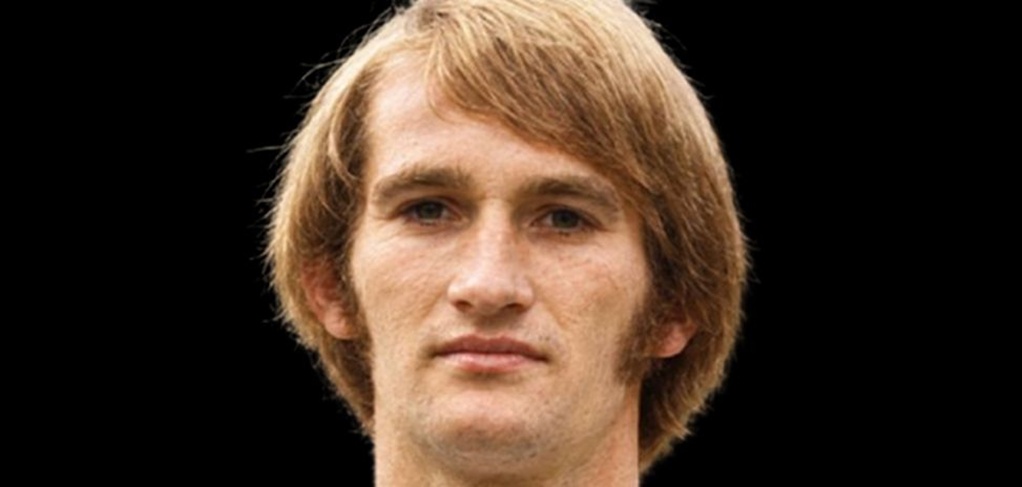
Iain Frederick Phillip, 14 February 1951, Dundee, Scotland.
PART ONE
Breaking into Dundee’s senior side as a teenager, Iain Phillip did not arrive with the trumpets blaring, but rather crept into contention through consistency. Between 1970 and 1972 the centre-half accumulated 61 appearances for the Dark Blues, laying the groundwork, brick by unspectacular brick, for everything that followed. That platform was solid enough to attract attention from south of the border, and partly into the 1972–73 season Phillip swapped the banks of the Tay for the bustle of south London, joining First Division Crystal Palace in a transfer reportedly worth £120,000.
It was a considerable outlay for a defender still establishing himself, but Crystal Palace, managed by Bert Head and fighting a losing battle against relegation, needed reinforcements who understood the defensive arts. The Selhurst Park club had gained promotion to the First Division in 1968–69, yet had spent every season since scrapping for survival rather than pushing for anything grander, and Phillip’s arrival was meant to stiffen a defence that had grown leaky. His move to the capital duly threw him headlong into a different rhythm of football altogether, and English football in that era was played at a pace and with a physicality that Scottish football, for all its own combative reputation, rarely matched week in and week out.
The young Dundonian had to adjust quickly or be found out, and he made his debut for the Eagles in a 2–0 loss to newly promoted Norwich City at Selhurst Park on 30 September, hardly the gentlest of introductions. But he stuck at it, and in doing so gave himself an education in the game that would pay dividends for the remainder of his time in football. The results that followed did little to suggest Crystal Palace’s troubles were behind them. A week after the defeat against Norwich, on 7 October, Palace lost 1-0 to Coventry City at Selhurst Park, and although a point was salvaged on 14 October with a 1–1 draw with Wolverhampton Wanderers at Molineux, the pattern of struggle resumed soon enough.
Arsenal defeated Crystal Palace 3–2 at Selhurst Park on 21 October, and West Ham United then inflicted a heavier blow, winning 4–0 at Upton Park on 28 October. Amid all that difficulty, however, there came a first sign of encouragement, since Palace beat Everton 1–0 at Selhurst Park on 4 November, and though the following weeks brought a run of draws rather than victories, 2–2 against Derby County away on 11 November, 2–2 to Leeds United at home on 18 November, and a goalless stalemate with Chelsea away on 25 November, at least the concessions had steadied. A 2–1 defeat against Ipswich Town at Portman Road on 9 December kept Palace anchored towards the wrong end of the Division One table, but nothing in that sequence of results prepared anyone at the club for what was about to happen on their own ground.
On 16 December, when Manchester United, sitting only a couple of places and a couple of points above bottom-of-the-table Palace, arrived at a Selhurst Park pitch that more closely resembled a ploughed field than a football surface. Nobody among the 40,000 or so inside the ground gave the home side much hope, and fewer still expected what unfolded. Don Rogers, freshly arrived from Swindon Town, slipped a delightful pass through for full-back and captain Paddy Mulligan, who steered the ball beyond Alex Stepney to open the scoring, and although Ian Storey-Moore twice threatened an equaliser for the visitors, first with a fierce drive that Palace goalkeeper John Jackson somehow kept out, the home side doubled their lead just before the interval when Mulligan collected another exquisite Rogers pass and curled a second past Stepney with real conviction.
Whatever hope Manchester United carried into the dressing room at half-time evaporated inside two minutes of the restart, as Rogers rounded Stepney to make it three. Further goals from Alan Whittle, newly signed from Everton and revelling in his home debut, and then a second from the irrepressible Rogers during the closing stages of the match, completed a startling 5–0 rout that remains, to this day, one of the most one-sided results either club has recorded against the other. For Phillip, marshalling a defence that for once had precious little to do, it was a reminder of what English football could offer on its finest afternoons, even if, in the main, his months at Crystal Palace were spent grinding out results against relegation rather than basking in glory.
After the mauling of Manchester United, Crystal Palace were quickly brought down to earth, however, as the club suffered a 2-1 defeat against Leicester City at Filbert Street on 23 December. And although Palace responded with a 3–0 victory over Southampton at Selhurst Park on Boxing Day, they were beaten 1-0 by title challengers Liverpool at Anfield on 30 December to close out a year of extremes, one that had swung between humiliation and celebration almost from week to week.
PART TWO
The new year would bring no immediate change of fortune, since Crystal Palace succumbed to a 2–0 defeat at the hands of Newcastle United at St James’ Park on 20 January, though Bert Head’s troops did at least hold Bill Nicholson´s Tottenham Hotspur side to a goalless draw at Selhurst Park the following week. League form then improved markedly for a fortnight, as West Bromwich Albion were walloped 4–0 at The Hawthorns on 10 February and Stoke City were edged out by a 3–2 margin at Selhurst Park seven days later, offering the first extended flicker of momentum Palace had managed all season.
That flicker did not last. Crystal Palace fell 2–0 to Coventry City at Highfield Road on 2 March, and a goalless draw against Birmingham City on 6 March was followed by another stalemate, 1–1 with Wolverhampton on 10 March. Palace then suffered three successive defeats, against Sheffield United, West Ham United and Arsenal on 13, 24 and 26 March respectively, results that left them firmly entrenched in the relegation zone and Head’s position under mounting scrutiny. On 28 March, with the drop looming, Head departed as team manager by mutual consent, moving upstairs to a general manager’s post that he would hold until the end of the season, and two days later the chairman Raymond Bloye turned to the flamboyant and outspoken Malcolm Allison to try to save Crystal Palace from the Second Division.
Allison had built his own reputation the hard way as a player, first with Charlton Athletic and then, more substantially, with West Ham United, before finishing out his playing days with non-league Romford. As a manager he had cut his teeth at Bath City and Toronto City before taking charge of Plymouth Argyle, and he had spent the years since 1965 at Manchester City, first as Joe Mercer’s assistant and then, from 1971, as manager in his own right, a period that had brought the Football League title, the FA Cup, the Football League Cup and the UEFA European Cup Winners’ Cup to Maine Road. None of that silverware, though, could disguise the size of the task now facing him at Crystal Palace, and it was against Chelsea, managed by Dave Sexton, at Selhurst Park on 31 March that Allison took his seat in the home dug-out for the first time.
The Croydon club won the match 2–0 and both goals came from Scotsmen. Iain Phillip put the hosts ahead in the first half with his only goal in a Crystal Palace shirt, a rare and treasured moment of personal reward plucked from an otherwise grim season, and in the second period Glaswegian Jim Cannon, making his own debut that afternoon, headed home to seal a comfortable win. It was, in its way, a fitting snapshot of Allison’s arrival: instant impact laced with the promise of what was still to come, even if the wider picture at the club remained bleak.
That bright interlude, however, did little to arrest Crystal Palace’s decline. Sheffield United completed a double over Palace by winning 2–0 at Bramall Lane on 7 April, Manchester United defeated them 2–0 at Old Trafford on 11 April, and a 1–1 draw with Ipswich Town at Selhurst Park on 14 April offered only brief respite. On 20 April, Allison’s Palace were beaten 1–0 by Leicester City at Selhurst Park, and the following day they were demolished 4–0 by Leeds United at Elland Road. Three days after that, on 24 April, Norwich City completed the picture of collapse by overcoming Crystal Palace 2–1 at Carrow Road, a result that all but confirmed what everyone at the club had long feared. Only in the final fixture of the campaign, a surprise 3–2 victory over none other than Manchester City at Maine Road on 28 April, did Palace manage anything resembling a flourish, though by then the destination of their season had long since been settled.
Crystal Palace were relegated to the Second Division at the end of the 1972–73 campaign, the fate that had loomed over the club for much of the second half of the year finally confirmed, and their four-season stay in the top flight, the longest in the club’s history to that point, was brought to an end. Phillip’s own stay in south London proved comparatively brief, amounting to 35 league appearances and that single, well-remembered goal against Chelsea, before he returned north the following season to re-join Dundee. And although his time with Palace was somewhat short, he had sharpened his defensive instincts against opposition of a calibre he might not otherwise have faced so regularly, an education that would stand him in good stead through more than another decade of Scottish football still to come.
PART THREE
Back at Dens Park for the 1973–74 season, Iain Phillip soon discovered that Dundee had ambitions of their own, and he became a central figure in one of the club’s proudest days when they managed to defeat a strongly fancied Celtic side 1–0 in the final of the Scottish League Cup. Jock Stein´s Celtic side arrived at Hampden Park as overwhelming favourites, laden with the sort of pedigree that had made them the dominant force in the domestic game for the best part of a decade, but Dundee’s defensive discipline on the day, with Phillip a key component of a backline that refused to be rattled, ensured the underdogs left with the trophy. It was the sort of triumph that validated everything he had worked towards since his teenage debut, proof that graft and organisation could still topple star quality when the occasion demanded it, and he settled into a further four seasons at the club, amassing 129 appearances between 1974 and 1978 and establishing himself as one of the most dependable defenders on either side of the Tay.
In November 1978, however, Phillip made the short but symbolically loaded move across the city to Dundee United, joining for a transfer fee somewhere in the region of of £25,000, and in doing so he crossed one of Scottish football’s more pointed local divides without the cushion of a spell elsewhere to soften the transition. Under Jim McLean, a manager who had himself once played for Dundee and who was steadily building Dundee United into one of the most progressive and effective clubs north of the border, Phillip found a role that suited both his temperament and his talents perfectly.
McLean’s Tangerines were no longer content merely to make up the numbers in the Premier Division, and Phillip’s calm authority at the back became a fixture of a side that was learning to win. Consecutive Scottish League Cup triumphs in 1979–80 and 1980–81 underlined that transformation vividly, and Phillip was there for both, adding two further medals to the one he had already collected with Dundee and completing an unusual distinction: a Scottish League Cup winner with each of the city’s rival clubs, and three times over in total.
Tannadice also offered him nights of a different flavour altogether, as European football became a regular feature of the club´s calendar, and he found himself pitting his wits against continental opposition of genuine standing, including memorable victories over Anderlecht, Monaco, Slask Wroclaw, Winterslag and PSV Eindhoven, results that did much to announce United as a side capable of competing well beyond Scotland’s borders. Supporters at Tannadice took to him quickly, admiring not only his composure under pressure and his consistency week after week, but also his aerial strength and his sharply timed challenges, qualities that made him a mainstay of the side through some of the most successful years the club had known.
His final season in tangerine, 1982–83, brought perhaps the sweetest reward of all, as Dundee United were crowned Scottish Premier Division champions, a remarkable achievement for a club that had spent so long in the shadow of Glasgow’s two giants, and although Phillip’s involvement that season was necessarily limited by then, appearing on five occasions as the title was secured, he could still count himself part of a squad that had rewritten the club’s history. In total he made 88 appearances for United across those five years.
By the time he left Tannadice, Phillip was the wrong side of thirty, but rather than easing quietly into retirement he opted to keep playing, joining Scottish League Division One side Raith Rovers midway through the 1983–84 season, and it was here that a new dimension of his contribution began to emerge. No longer the man expected to chase down every ball or dominate every aerial contest, he instead became something closer to a guiding hand for the younger players finding their feet in the professional game around him, offering the sort of composure in the dressing room and calmness on the pitch that only comes from having already seen most of what football can throw at a man.
Phillip´s influence at Stark’s Park in Kirkcaldy, though measured in something other than silverware, was significant all the same, and over three seasons there, from 1983 to 1986, he made 70 appearances, still turning in performances that belied his years even as his role shifted from spearhead to mentor. When that spell drew to a close he moved on to Arbroath, where he closed out his playing days between 1986 and 1988, adding a further 51 league appearances at Gayfield before finally calling time on a period in the game that had begun, all those years earlier, with a shy teenager breaking into Dundee’s first team.
Across Dundee, Crystal Palace, Dundee United, Raith Rovers and Arbroath, he made 434 league outings in total, a figure that stands as eloquent testimony to durability as much as to ability, and although the goals were never really his business, scoring only a handful across nearly two decades of senior football, that was never really the point of a player built to stop things happening rather than to make them happen at the other end. He was, in the truest sense, a defender’s defender: reliable when the pressure was greatest, adaptable when the team needed him to be, and respected in every dressing room he walked into, whether that dressing room belonged to the club of his birth or to whichever rivals he found himself lining up against on any given Saturday.