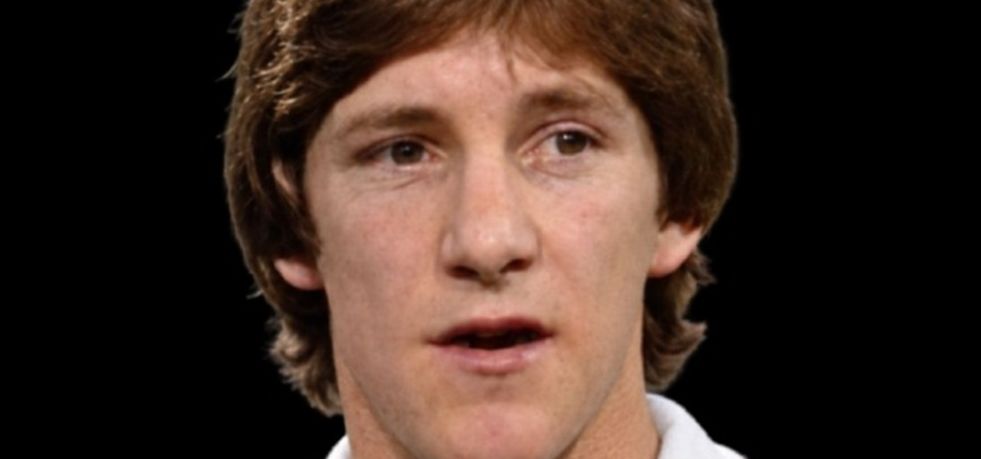
Gordon Alec Hill, born Sudbury-on-Thames, England, April 1, 1954.
PART ONE
Gordon Hill initiated his football career with Millwall where he emerged as a promising outside left under the sound leadership of Benny Fenton. Known for his dazzling footwork and ability to score from distance, Hill debut for the Lions came in a 2-1 Division Two win over Sheffield Wednesday at The Den on the 7th of April 1973
His dribbling and creativity on the left wing made him a fan favourite, cementing his status as one of Millwall’s most exciting young talents. However, as Millwall struggled to break into the upper echelons of English football, it became apparent that Hill’s talent needed a bigger stage.
At the end of the 1974-75 season, Hill´s career was about to take an interesting detour across the Atlantic. In the summer of 1975, he ventured across the Atlantic to join the Chicago Sting in the North American Soccer League. The NASL was in its heyday, attracting European talent looking for new challenges, and Hill’s short stint with the Sting proved to be a productive one.
He was named to the NASL All-Star team, further showcasing his skill on the global stage. Playing in the NASL gave Hill a taste of international football, and while he enjoyed his time in Chicago, bigger challenges awaited back in England. His success in the NASL had put him on the radar of several top-tier clubs, and it wasn’t long before Manchester United came knocking.
Following 22 goals in 91 Second Division appearances for Millwall, Hill signed with United for a bargain transfer fee of £70,000 in November 1975, marking the beginning of the most iconic period of his career.
Hill, who was sometimes guilty of overdoing the showmanship, was handed his Division One debut for Manchester United by Tommy Docherty in a 2-0 triumph over Ron Saunders´ Aston Villa side at Old Trafford on the 15th of November 1975 and quickly made his presence felt by forming a formidable wing partnership with fellow flank forward Steve Coppell who had arrived from League Division Three team Tranmere Rovers for a transfer fee of £60,000 the previous season.
Hill registered his first Football League goal for Manchester United when he found the back of the onion bag in a 4-1 demolishing of Sheffield United at Bramall Lane on the 13th of the following month and hit the winner in a narrow 1-0 First Division victory against Wolverhampton Wanderers at Old Trafford a week later.
Manchester United controlled proceedings from the beginning, but the hosts squandered a string of decent goalscoring opportunities and their fans had to wait until the very last minute of the game before seeing the ball in the back of the net. With only a few seconds left of normal time, Coppell delivered a dangerous corner-kick from the right which found its way to Hill who struck a ferocious shot from inside the penalty area past the arms of away goalkeeper Phil Parkes and into the roof of the net to give United a deserved win over Wolves.
The result took Manchester United to second place in the top-flight table, level on 30 points with leaders Liverpool, but with inferior goal-average. At the other end of the standings, however, Burnley, Wolverhampton, and Sheffield United all found themselves in the drop zone with 15, 13, and 5 points respectively.
During the 1975-76 campaign, Manchester United injected loads of positivity into English soccer with an adventurous approach to attacking football which suited his playing style perfectly and he registered both goals in the 2-0 FA Cup Semi-Final victory against Derby County at Hillsborough on the 3rd of April 1976 as he helped the red shirts reach the final, only to succumb to a 1-0 defeat at the hands of Second Division Southampton.
He returned to Wembley Stadium the following year, however, to pick up an FA Cup winner’s medal when Docherty´s United edged out North West enemies Liverpool by 2-1 thanks to second-half goals by striking partners Stuart Pearson and Jimmy Greenhoff.
PART TWO
Gordon Hill was undoubtedly one of the finest players of his generation during his time at Manchester United, blending skill, pace, and intelligence with an attacking prowess that set him apart.
Despite his popularity among fans, Hill’s time at United came to a controversial end in 1978 when manager Dave Sexton sold him to Derby County, who were by then managed by Docherty, for a fee of £250,000 after having scored 51 goals in 134 appearances in all competitions for the Reds. Many fans were unhappy with the decision, as Hill was United’s top scorer and a vital part of the team, but his move to Derby nevertheless marked the start of the next chapter in his footballing journey.
After a promising start, however, he suffered a knee injury early in his tenure that would ultimately hinder his progress, and despite spending two seasons at the club he struggled to regain the form that had made him a star at Manchester United. Nevertheless, he still managed to contribute when fit, although his time at Derby did not quite reach the heights of his United days. In 1979, Hill made the move to Queens Park Rangers, seeking a fresh start in his career.
Rangers offered him a chance to re-establish himself in English football, and although he showed glimpses of his former brilliance, injuries continued to plague his performances. Still, Hill remained a respected figure, known for his resilience and professionalism during his stay at Loftus Road. After his time at Queens Park Rangers, Hill opted for a new challenge and returned to North America in 1981, joining the Montreal Manic of the NASL.
The Londoner thrived in the NASL’s more open, attacking style of play, making an instant impact during his first season in Montreal. His performances earned him praise from both fans and pundits alike, and Hill began the 1982 season with high expectations. However, after only five games in the 1982 campaign, the Manic traded Hill to his former club, the Chicago Sting.
His return to Chicago, this time for an indoor stint in the Major Indoor Soccer League, allowed him to display his skills in a more confined environment. Yet Hill’s desire for new challenges saw him continue to move across teams and leagues. Hill’s time in North America also included stints with the San Jose Earthquakes, New York Arrows, and the Kansas City Comets of the MISL.
Despite the indoor format of these leagues, Hill continued to excel, demonstrating that his skill set transcended playing surfaces. The latter stages of his active career saw Hill venture back to Canada to play for Inter-Montreal in the Canadian Professional Soccer League in 1983. His ability to adapt to various environments was on full display during these years, showcasing not only his skill but also his resilience in navigating the challenges of different leagues.
By 1985, Hill sought new experiences in European football, joining FC Twente in the Dutch Premier Division. In the 1985-86 season, Hill played 19 games, scoring four goals, further adding to his international credentials. Though his time in the Netherlands was relatively short, it represented Hill’s adventurous spirit and determination to explore different football cultures.
The following year, Hill played in Finland for HJK Helsinki. While his stint there was brief, he continued to prove that he could still perform at a high level, scoring twice in as many appearances. Returning to England in the twilight of his career, Hill played for Stafford Rangers and later reunited with his former Manchester United teammate Stuart Pearson at Northwich Victoria.
While his playing days were nearing their end, Hill’s love for football never waned. In 1991, Hill embarked on a new challenge, becoming the managing director, head coach, and player for the Nova Scotia Clippers in the Canadian Soccer League. Hill guided the team to the playoffs in their only year of existence, showing his leadership qualities off the pitch as well.
An England player, Hill was given his international debut for The Three Lions by former Leeds United boss Don Revie in a 3-2 win over Italy at Yankee Stadium in New York in the USA Bicentennial Cup Tournament on the 28th of May 1976 and went on to collect a total of six senior caps for the country of his birth.
Though injuries and circumstances may have affected parts of his career, Hill remains a beloved figure in football history—an icon of Manchester United, a magician on the wing, and a true football journeyman who carved out a remarkable career on his terms. Hill’s individual accomplishments speak volumes about his talent. He was Manchester United’s top scorer in the 1976-77 and 1977-78 seasons, and his key role in United’s FA Cup triumph in 1977 will forever be remembered by fans.
His inclusion in the NASL 1st All-Star team in 1975 highlights his international appeal, while his leadership role with the Nova Scotia Clippers underscores his ability to transition into coaching and management.