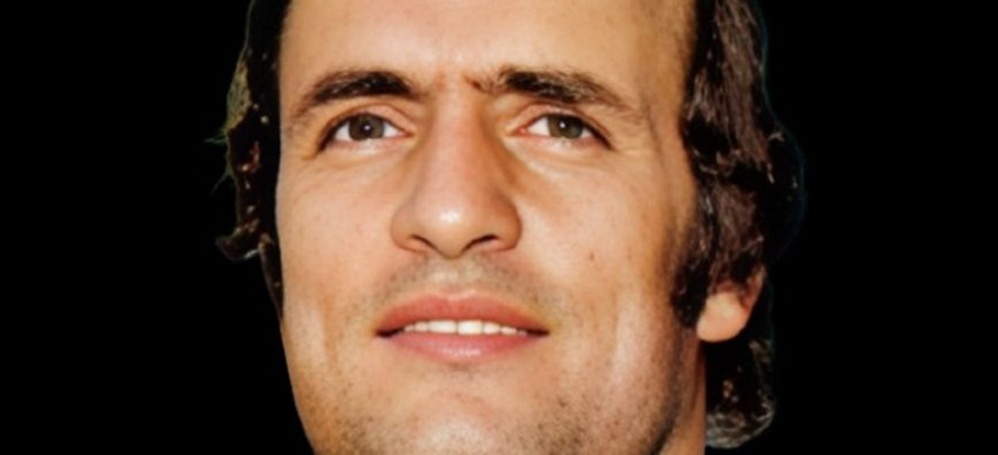
Franco Superchi, born 1 September 1944, Allumiere, Latium, Italy.
PART ONE
Franco Superchi was one of the most understated yet consistent goalkeepers in Italian football history, whose career spanned over two decades and left an indelible mark on the clubs he served.
From a young age, football became a central part of his daily routine. His first exposure to the sport came in informal matches played with friends in the narrow streets of Allumiere, where makeshift goals and worn-out balls sparked both imagination and competition. On top of that, the support of his family encouraged his pursuit of structured football, leading him to join local Allievi and Juniores teams, where he began to hone his reflexes, positioning, and reading of the game.
By the age of 15, Superchi had already made his debut in the Promozione league with Bettini Quadraro, signaling a remarkable early aptitude for the goalkeeper’s craft. This period laid the groundwork for a career defined by consistency, adaptability, and a flair for acrobatic saves.
Superchi’s transition into professional football came in 1963 when he signed with Tevere Roma, a Serie C club competing in the challenging lower tiers of Italian football. During his first season, opportunities were scarce, with only two appearances in which he conceded three goals, yet these brief outings allowed him to familiarize himself with the pace and intensity of senior-level play.
By contrast, the 1964–65 season saw a significant step forward: Superchi played 21 games, conceding 27 goals, a remarkable achievement considering the often porous defences typical of lower-division teams. His growing command in the penalty box, sharp reflexes, and composure under pressure began to attract the attention of scouts from bigger clubs, and it became evident that he possessed the talent necessary for Serie A football.
Notably, his standout performances included crucial saves in matches against promotion contenders, preserving draws and occasionally snatching victories from the jaws of defeat. These displays of reliability and agility ultimately paved the way for his move to ACF Fiorentina in 1965, marking the beginning of a period that would define his professional legacy.
Superchi’s arrival at Fiorentina coincided with a team in transition, as the club sought to consolidate its status among Italy’s elite. Initially, he was the third-choice goalkeeper behind established figures such as Enrico Albertosi and Alfredo Paolicchi, which necessitated patience and persistence. During these early years from 1965 to 1968, appearances were limited, yet each opportunity allowed him to refine his command of the penalty area and understand the tactical demands of Serie A, where even minor mistakes were punished ruthlessly.
In addition, his exposure to European competition, including preliminary matches in the Inter-Cities Fairs Cup, provided a broader understanding of varied playing styles, helping him develop anticipatory skills and improve decision-making under pressure. While some observers doubted whether his relatively modest height would be a limitation, Superchi quickly demonstrated that agility, reflexes, and positioning could compensate for physical stature, especially against top forwards who relied on speed and technical skill rather than aerial duels.
It was during the 1968–69 season that Franco Superchi’s talents truly shone. Establishing himself as Fiorentina’s first-choice goalkeeper, he played an instrumental role in guiding the team to their second Serie A championship. Over 30 league matches, he conceded just 18 goals and kept 14 clean sheets, a remarkable feat in a season that saw fierce competition from Cagliari and Milan.
One of his most memorable moments came on 11 May 1969 against Lazio, when he made a critical first-half save which preserved a 2–0 lead and effectively secured the Scudetto for Fiorentina. Also, his contributions in defence allowed the team’s midfield and forwards, led by Giancarlo De Sisti, to play with greater freedom, demonstrating the interconnected nature of goalkeeping and team dynamics.
Superchi’s influence extended beyond domestic competition. During the 1969–70 European Cup, the dedicated shot stopper featured in matches against Dynamo Kyiv and Celtic, providing clean sheets that highlighted his composure under severe pressure.
His performances against Celtic, in particular, were lauded for his precise positioning and decisive interventions, proving that Fiorentina’s defensive solidity relied as much on the goalkeeper’s intelligence as on the defenders’ tactical discipline. In fact, these experiences cultivated a depth of understanding that would define his approach to goalkeeping in the years to come.
Throughout his eleven-year tenure at Fiorentina, Superchi amassed 301 appearances across all competitions, balancing high-profile league and cup matches with European campaigns. During the 1974–75 Coppa Italia, he was instrumental in the final against AC Milan, keeping a clean sheet in the first leg and contributing to the aggregate 3–2 victory, which marked Fiorentina’s fourth national cup triumph.
By contrast, in the later years, his playing time diminished as younger talents emerged, yet his mentorship and professionalism continued to influence the squad positively.
PART TWO
Following his departure from Fiorentina in 1976, Franco Superchi embraced a fresh challenge with Hellas Verona. At 32, he joined a team striving for stability in Serie A after recent promotions and relegations, and he immediately became the undisputed first-choice goalkeeper.
Over four seasons, he made 145 appearances, amassing 54 clean sheets and conceding 156 goals. His presence in goal was pivotal during mid-table campaigns in 1976–77 and 1977–78, where Verona’s defensive resilience often depended on his acrobatic saves and tactical awareness.
Despite a relegation in 1978–79, Superchi remained a pillar for Verona, displaying the professionalism and reliability that had defined his career. The following season in Serie B, he guided the team to a respectable fifth-place finish, proving that his abilities were not merely tied to top-flight glory but also to steadying teams during transitional periods.
A veteran between the sticks, Superchi´s tenure at Verona emphasized the importance of leadership in goalkeeping, as he organized the backline and mentored younger defenders, ensuring that the club maintained structural cohesion even in challenging circumstances.
In 1980, he joined AS Roma as a veteran backup to Franco Tancredi, a rising star in Italian goalkeeping. While he made just one Serie A appearance during the 1982–83 season—a brief substitute outing against Torino—his contributions extended beyond match statistics.
By maintaining high standards in training, offering tactical insights, and fostering a professional environment, Superchi helped Roma achieve the 1982–83 Serie A title, ending a 41-year championship drought. In addition, he was part of the squad that secured Coppa Italia victories in 1980–81 and 1983–84, providing invaluable depth and stability to a team competing on multiple fronts.
This phase of his career highlighted the often-underappreciated role of experienced players in elite squads, where influence off the pitch can be as crucial as performance on it. Superchi’s ability to transition into a supportive role while maintaining readiness exemplified the professionalism required of athletes seeking longevity in competitive football.
At the twilight of his career, Superchi returned to his roots by joining Civitavecchia Calcio in Serie C2, close to his hometown of Allumiere. Over 21 appearances in the 1984–85 season, he contributed leadership, experience, and technical expertise to a team navigating lower-division competition. Retiring on 1 July 1985, Superchi concluded a professional journey spanning more than two decades, approximately 398 league appearances, and an enduring record of 115 top-flight clean sheets.
Standing at 1.80 meters, Superchi relied on quick reflexes, explosive agility, and precise positioning rather than imposing physicality. His strengths included exceptional shot-stopping, acrobatic dives, and an uncanny ability to read the game, which allowed him to compensate for aerial limitations. Still, his flair occasionally led to errors, though his consistency and reliability remained unmatched, particularly in high-stakes Serie A matches.
Superchi’s mental resilience, anticipation, and organizational skills also enabled him to maintain defensive cohesion, making him a respected figure among defenders and midfielders alike. His approach epitomized the evolution of goalkeeping in Italy during the 1960s and 1970s, blending athleticism with strategic awareness to meet the tactical demands of Serie A.
His legacy lies not only in his on-field achievements but also in his influence on goalkeeping culture. Despite never earning a senior cap for Italy due to competition from Dino Zoff and Enrico Albertosi, his professionalism, mentorship, and reliability earned respect across clubs and generations. Post-retirement, he served as a goalkeeping coach at Roma’s youth academy and local clubs, further cementing his impact on Italian soccer.
Superchi’s career has been celebrated in biographies and commemorations marking anniversaries of Fiorentina and Roma’s title-winning seasons. These acknowledgments attest to his enduring presence in the memories of fans, teammates, and the broader footballing community.