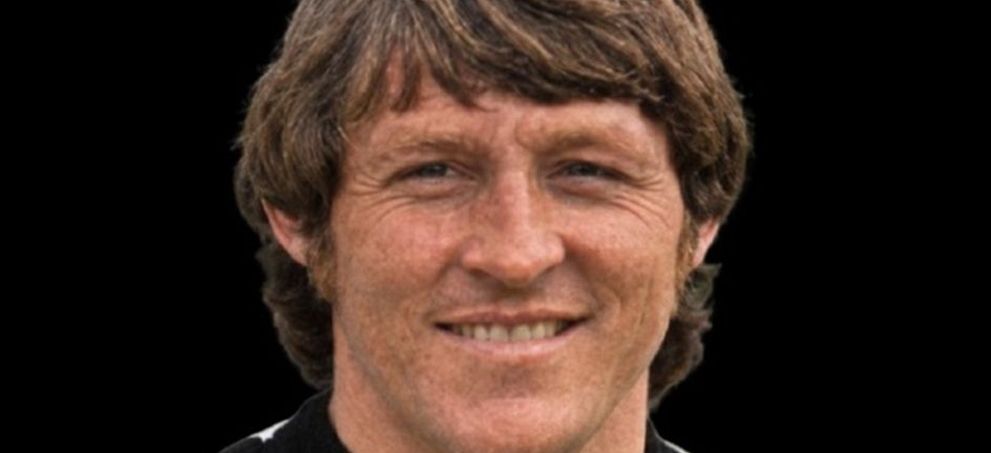
Charles Alfred Crickmore, born 11 February 1942, Hull, England.
PART ONE
Charlie Crickmore knew Boothferry Park long before thousands of spectators began paying to watch him race along its left wing, because the Hull-born youngster entered his hometown club through the working entrance rather than the players’ door, joining Hull City as a member of the ground staff and attending to the ordinary jobs which had to be completed around the stadium while hoping that somebody would eventually notice what he could do with a football. Bob Brocklebank, the Hull manager, recognised that there was more to the local lad than enthusiasm, and in 1959 Crickmore was handed his senior debut as a left winger, beginning a playing life which would take him through six Football League clubs and almost 400 senior appearances.
Hull were then operating in the Second Division, where the football was quick, physical and unforgiving, and Crickmore entered a team which was fighting to hold its position rather than pushing towards the leading places. The 1959–60 season became a severe examination for everybody at Boothferry Park as City finished 21st, close to the bottom of the table, and a young flanker trying to establish himself could expect little protection from experienced defenders who understood precisely when to tackle, when to lean into an opponent and when to prevent him from turning. Crickmore kept returning for the ball, however, because his value depended on making himself available and taking those defenders on, and his readiness to attack from the left gave Hull a way of moving rapidly from defence into the opposing half at a time when much of the pressure was travelling in the other direction.
He was not merely a touchline runner, for he could move into the penalty area when an attack developed on the opposite side, and his timing and spring made him unusually effective in the air for a wide player, particularly when he arrived beyond the main body of defenders at the far post. Over three seasons he accumulated 58 appearances and scored 14 goals, a useful return from a winger whose main responsibility was to supply chances for others, and those figures showed that he was capable of finishing attacks as well as starting them. Brocklebank left in May 1961 and Cliff Britton succeeded him, but the managerial change did not bring Crickmore’s progress to an end, because by 1961–62 he had moved beyond the status of an eager local prospect and become a regular member of Hull’s first team.
Yet regular football at his boyhood club did not guarantee that Crickmore would remain there, and in 1962 Hull accepted a £3,000 offer from Bournemouth & Boscombe Athletic, sending the 20-year-old south for the first major change of his playing days. Leaving his hometown and the familiar surroundings of Boothferry Park demanded an adjustment away from the field as well as on it, although Bournemouth offered him something every ambitious young footballer needed: the chance to play frequently and develop through the weekly demands of League competition.
The club were in the Third Division, one level below Hull, but this was no comfortable retreat, because the division contained experienced professionals, ambitious sides and grounds where a winger could expect an afternoon of hard challenges if he looked remotely dangerous. Crickmore adapted quickly, using his pace more intelligently as he gained experience and learning how to vary his play rather than attempting to beat the full-back in the same fashion every time. He could go outside and cross with his left foot, but he could also move infield, exchange passes and arrive in scoring positions, while his willingness to keep running ensured that Bournemouth retained width even during difficult spells. The move gave him regular first-team football, and it also placed him in a side capable of competing near the upper end of the table rather than merely worrying about trouble below, with Bournemouth finishing fifth in 1962–63 and improving to fourth in 1963–64.
Those two finishes demonstrated how close Bournemouth were to mounting a successful promotion challenge, although the club could not quite turn its competitiveness into a place in the Second Division, and Crickmore’s four seasons on the south coast ultimately brought 142 appearances and 19 goals. The appearance total tells much of the story because wingers were exposed to tackles, knocks and repeated physical punishment, yet he continued to play with the directness that made him vulnerable to all three, and his selection week after week showed how strongly Bournemouth valued the outlet he provided. His goals were useful rather than spectacular in number, but judging him solely by that column would miss the larger purpose of his work, for a well-flighted cross which allowed a centre-forward to score counted for nothing in Crickmore’s personal total even though it might have decided the match.
He became especially adept at crossing while on the run, striking the ball before defenders could reorganise themselves, and that ability separated him from wide men who possessed speed but offered too little at the end of it. Additionally, his movement towards the back post meant opposing full-backs could not simply forget about him after Bournemouth switched an attack to the right, because he remained capable of meeting the return delivery with a firm header. By the summer of 1966 Crickmore was 24, experienced but still at an age when his strongest years ought to have been ahead, and Gillingham decided that those qualities were worth bringing back into the Third Division.
PART TWO
Charlie Crickmore moved on to Gillingham in June 1966 and found the finest sustained form of his Football League years, scoring more regularly while continuing to create from the left, and although Gillingham finished 11th in 1966–67, their winger’s performances attracted attention beyond Priestfield. The football suited him because it allowed him to attack defenders directly and arrive in the box with purpose, while the understanding accumulated through his years at Hull and Bournemouth meant that his running now had greater calculation behind it. He knew when to remain wide and stretch the defence, when to dart between full-back and centre-half, and when to delay his cross until support reached the penalty area, but the raw speed which had first marked him out had not disappeared.
Across his time with Gillingham he made 63 appearances and scored 17 goals in all competitions, an excellent rate for an out-and-out winger, and those goals confirmed that his aerial ability and sharpness around the far post were becoming increasingly important parts of his game. His stay lasted only until November 1967, yet it did enough to change his standing and his value, because Second Division Rotherham United paid a reported £20,000 to sign him. Five years earlier Bournemouth had obtained him from Hull for £3,000, so the increased fee measured the improvement of a footballer who had left home as a promising youngster and developed into a proven, productive winger.
The move to Rotherham should have represented another upward step, but football seldom arranges itself as neatly as a transfer fee suggests, and Crickmore’s stay at Millmoor lasted barely two months. He played eight times and scored one goal, yet for whatever combination of tactical, personal or footballing reasons, the move did not settle into anything permanent, and by January 1968 he was on his way again. Norwich City brought him to Carrow Road and returned him to the Second Division, where his pace offered an immediate option on the left, although his debut on 20 January ended in a 1–0 defeat away to Portsmouth. A losing start did not prevent him from establishing himself, and during the remaining months of 1967–68 he made 14 appearances and scored twice, giving Norwich a winger who could carry the ball over distance and turn a defensive clearance into an attack before opponents had recovered their shape.
The move also returned him to southern football after his brief spell in Yorkshire, and his four seasons with Bournemouth had already taught him how to settle far from Hull. Norwich supporters soon saw the familiar qualities: the burst outside the defender, the cross delivered at speed and the determination to appear at the far post when the ball came from the other flank, but they also saw a player with enough league experience to understand that a winger sometimes had to retain possession rather than attack at every opportunity.
Crickmore’s fullest season at Norwich came in 1968–69, when he appeared 31 times and scored five goals as City finished 13th in the Second Division, safely positioned in mid-table but some distance from the promotion places. He could be dangerous without dominating every match, which is often the truth about wide players whose involvement depends partly upon whether teammates can supply them with usable possession, but he remained capable of unsettling a defence whenever the game opened up.
The following campaign brought 19 appearances and three goals before his departure, and one of his most memorable Norwich contributions came in the League Cup at Portman Road, where City defeated rivals Ipswich Town 4–2 in a second-round tie. Hugh Curran scored a hat-trick, rightly taking the largest share of attention, while Crickmore converted a penalty for Norwich’s other goal, and winning so decisively on the ground of a local rival gave the result a value beyond simple progress into the next round. Still, he was playing less frequently during the 1969–70 campaign and, after 64 Norwich appearances and ten goals spread across three partial seasons, the time arrived for another move. He was 28 by March 1970, young enough to contribute but old enough to know that sitting outside the first team would not suit him, and Notts County offered the regular football and clear purpose which he required.
PART THREE
Dropping from the Second Division to Division Four might have looked like a retreat from a distance, but Charlie Crickmore found a side preparing to move in the opposite direction, and his transfer to Notts County in March 1970 placed him inside one of the strongest teams at that level. The early appearances allowed him to become accustomed to his new teammates before the 1970–71 season, when County attacked the division with consistency and confidence under legendary Meadow Lane manager Jimmy Sirrel and eventually finished as champions. Crickmore was ever-present through all 51 competitive matches and scored 12 goals, remarkable work for a winger who had already spent more than a decade taking tackles and making repeated high-speed runs, and his reliability gave the side a settled attacking shape from one week to the next. He supplied crosses, stretched compact defences and added goals of his own, including the back-post headers which had long made him more dangerous than his position suggested.
Fourth Division grounds could be tight, the pitches uneven and the marking fierce, but such conditions did not remove his willingness to take the ball and run, while the experience acquired in the higher divisions helped him recognise openings before less seasoned opponents could close them. County’s title was no minor consolation for leaving Norwich; it was a championship won through the accumulation of hard results across a full season, and Crickmore had played in every match as the club secured promotion.
There should have been more football after that success, with Crickmore and Notts County returning to the Third Division in 1971–72, but an early-season broken leg brought his playing days to a sudden and painful end. The injury was especially damaging for a footballer whose game depended upon acceleration, balance and the confidence to commit his body while running directly at defenders, and he could not recover sufficiently to resume League football. He retired in the summer of 1972 at only 30, having recorded 399 senior appearances, including cup matches, and 74 goals for Hull City, Bournemouth & Boscombe Athletic, Gillingham, Rotherham United, Norwich City and Notts County.
Those totals were achieved over 13 years and across three divisions, but the bare numbers cannot show the full cost of maintaining his style, because every dash along the touchline invited another challenge and every cross delivered without checking his stride required precise technique. Nor do they record the opportunities he created for centre-forwards, the defenders drawn out of position or the relief he supplied to teammates by carrying the ball away from their own goal. His ending was cruelly early, especially after the championship season in which he had not missed a competitive match, but it did not erase the achievement of a local ground-staff boy who had become a dependable Football League winger.
After retiring, Crickmore returned to East Yorkshire and settled in Thorngumbald, near Hull, where he exchanged the routine of professional football for work carrying a very different sort of responsibility. He joined the Humberside Fire and Rescue Service and served as a firefighter for 23 years, remaining there until the mid-1990s, and the discipline, fitness and calm judgement demanded by that occupation would have been familiar to somebody who had spent his adult life working within a team.
When his time in the fire service ended, he worked as a caravan inspector and later instructed heavy goods vehicle drivers, including personnel connected with the Ministry of Defence, applying his practical knowledge to safety and training. Yet football did not disappear from his life, because he qualified as a Class 1 referee and officiated in local Saturday and Sunday competitions, particularly the Hull Sunday League, continuing well into his 60s. Players sometimes changed their manner when they realised that the referee had once played nearly 400 senior matches, and the respect was understandable, for Crickmore knew every small trick a winger, defender or centre-forward might attempt and could hardly be fooled by protests claiming otherwise. He also played local rugby league for West Hull, an activity which said plenty about his appetite for sport after a broken leg had removed him from the professional game.