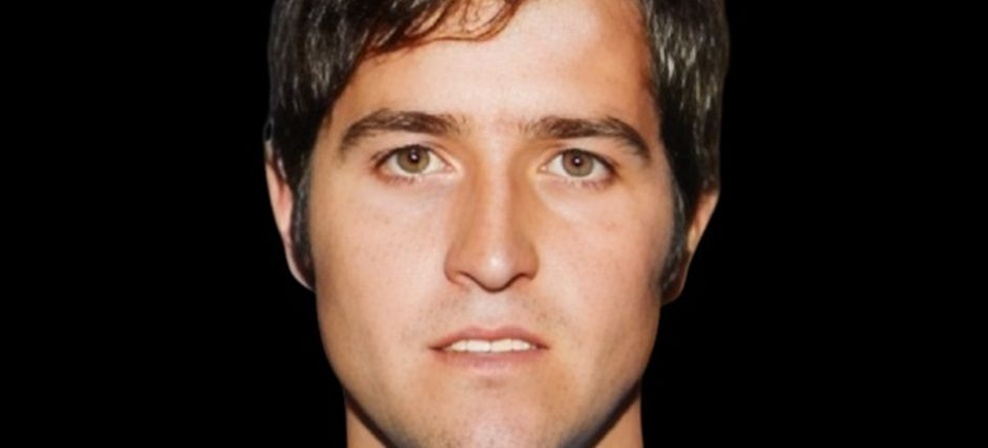
Giancarlo De Sisti, born 13 March 1943, Rome, Italy.
PART ONE
Giancarlo De Sisti grew up in a city where football was both religion and release, and so it felt almost inevitable that the midfielder would find his way into the ranks of A.S. Roma, the club that mirrored his own identity.
His Serie A debut arrived on 12 February 1961, and it came in a 2–1 defeat away to Udinese Calcio, a modest beginning on paper, yet one rich in significance because the young De Sisti found himself sharing the dressing room with the great Juan Alberto Schiaffino, whose influence proved invaluable. Consequently, De Sisti did not attempt to dominate immediately, but instead observed, absorbed, and refined his craft, learning that control of a match often comes not from flamboyance, but from clarity.
During his first spell with Roma between 1960 and 1965, De Sisti steadily evolved from a promising youngster into a dependable midfield presence, and although the team itself experienced mixed fortunes, there were moments of triumph that hinted at his growing importance. Notably, Roma lifted the Coppa Italia in 1964, and while De Sisti was not yet the finished article, he contributed to a squad that showed resilience and ambition, qualities that would soon define him personally.
As often happens in football, progress required change, and in 1965 he made a move that would shape his legacy, joining ACF Fiorentina, a club with its own proud traditions and a hunger for success. This transition, while challenging, proved transformative, because they offered him the platform to fully express his abilities, and more importantly, to become the central figure in a team built around intelligence rather than spectacle.
At Fiorentina, De Sisti’s style matured into something unmistakable, and it was here that his reputation as a deep-lying playmaker truly took hold. He did not rely on bursts of speed or elaborate dribbling, but instead on positioning, awareness, and an almost surgical precision in passing, and because of this, he became the player teammates instinctively looked for when under severe pressure.
The pinnacle of this period arrived in the 1968–69 season, when Fiorentina secured the Serie A title, only the second in the club’s history, and a triumph built on cohesion and intelligence rather than individual flair. De Sisti, operating as the team’s metronome, ensured that every movement had purpose, and thus Fiorentina were able to outthink as well as outplay their opponents. That title win remains one of the defining achievements of his career, not because of personal accolades, but because it showcased his ability to elevate an entire team.
After nearly a decade with Fiorentina, De Sisti returned to Roma in 1974, bringing with him experience, leadership, and a deep understanding of the game. This second spell, lasting until 1979, saw him guide younger players while continuing to perform with the same efficiency that had defined his career. Additionally, he added another Coppa Italia to his collection in 1979, a fitting conclusion to his time on the pitch.
By the time he retired, De Sisti had established himself as one of Italy’s most intelligent midfielders, a player whose influence extended beyond statistics, and whose legacy was built on consistency and clarity. Unlike more flamboyant contemporaries such as Gianni Rivera or Sandro Mazzola, De Sisti operated in the background, yet his contribution was no less significant, and in many ways, it was indispensable.
PART TWO
On the international stage, Giancarlo De Sisti earned himself his first cap for the Italian national team in 1967, marking the occasion in style with a 5–0 victory over Cyprus national football team in a UEFA European Championship qualifier. This introduction to international football came at a time when Italy was rebuilding, and De Sisti’s composure offered a sense of stability in midfield.
And when Italy hosted the UEFA Euro 1968, De Sisti found himself at the heart of a team chasing glory on home soil. The tournament itself was unusual, featuring a replayed final against Yugoslavia national football team after the first match ended goalless, yet in the decisive replay, Italy triumphed 2–0, and De Sisti’s presence in midfield provided the balance and control required for victory. At just 25, he had become a European champion, a milestone that confirmed his place among the elite.
But international football would soon present an even greater challenge and at the 1970 FIFA World Cup in Mexico, De Sisti was part of an Italian side that would capture global attention. The tournament is remembered for its drama, particularly the epic semi-final against West Germany, a match often referred to as the “Game of the Century,” and although De Sisti was not always in the spotlight, his role in maintaining structure was vital.
Italy reached the final, only to face the brilliance of Brazil, and despite their efforts, they were defeated 4–1, finishing as runners-up. Yet, even in defeat, De Sisti’s performances reinforced his reputation as a player who could operate at the highest level, maintaining composure against the most formidable opponents.
In 1980, De Sisti went into management as he took charge of his former team Fiorentina and he immediately demonstrated the same tactical awareness that had defined his playing days. In the 1981–82 season, Fiorentina came agonisingly close to winning the league, only to be edged out by Juventus, a near-miss that highlighted both his capabilities and the fine margins of football.
Unfortunately, his managerial career was interrupted in 1985 when he was diagnosed with a brain abscess, forcing him to step away from the game at a time when his career was gaining momentum. Despite this setback, De Sisti’s resilience shone through, and he returned to coaching later that year with Udinese.
He also contributed to the development of Italian football through roles with youth and military teams, and notably led the Italian military side to victory in the 1991 Military World Championship, a lesser-known but meaningful achievement. Yet, his time in club management gradually came to an end, with a brief stint at Ascoli Calcio concluding in early 1992.
Beyond coaching, De Sisti played a significant role off the field, and on 3 July 1968, he was among the founders of the Italian Footballers’ Association, alongside figures such as Giacomo Bulgarelli, Ernesto Castano, and Giacomo Losi, with Sergio Campana serving as president. This initiative demonstrated his commitment not only to the game, but to the welfare of those who played it.
Even so, his connection to football never faded, and in later years he worked as a television and radio pundit, offering insights shaped by decades of experience. In 2003, he briefly returned to coaching with S.S. Lazio’s youth team, although the role was short-lived following the arrival of Roberto Mancini.