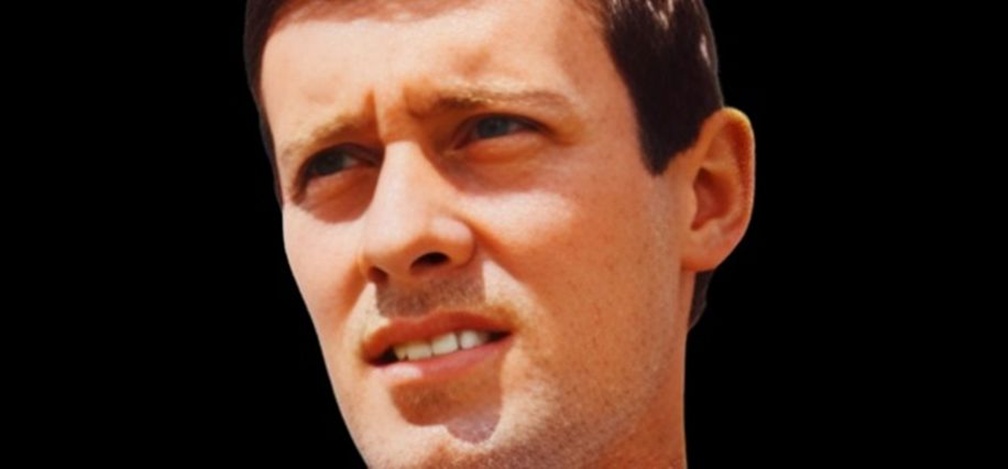
Roberto Rosato, born 18 August 1943, Chieri, Piedmont, Italy.
PART ONE
While many youngsters chased glory with the ball at their feet, Roberto Rosato gravitated toward the defensive arts, embracing the responsibility that came with protecting rather than dazzling.
His early development within the youth system of Torino FC proved crucial, because it was there that he learned the discipline and structure required at the highest level, and where he absorbed the traditions of a club steeped in history and resilience. Yet, breaking into senior football is never straightforward, and Rosato’s journey required patience as much as talent, but when his opportunity finally arrived on 2 April 1961 in a 1–1 draw against ACF Fiorentina, he seized it with a composure that belied his age.
And although that debut might have seemed like a small step at the time, it marked the beginning of a steady ascent, because Rosato quickly established himself as a reliable figure in Torino’s defence, blending physical presence with tactical awareness in a manner that earned the trust of teammates and coaches alike.
Rosato´s six seasons at Torino were not defined by headlines or silverware, but by consistency, and by the gradual building of a reputation as a centre-back who could be relied upon in the most demanding situations, which, in the unforgiving environment of Serie A, is no small achievement.
His tally of 131 league appearances and four goals during that period tells only part of the story, because numbers rarely capture the essence of a defender’s contribution, and Rosato’s true value lay in the countless duels won, the crosses cleared, and the attacks snuffed out before they could gather momentum.
Football careers often hinge on moments of transition, and in 1966, he found himself at a crossroads, because a move to AC Milan offered both opportunity and pressure in equal measure. But when he made his debut for Milan on 4 September 1966 in a 3–0 victory over Pisa SC, he did so not as a prospect but as a player expected to contribute immediately, and in a team brimming with ambition, there was little room for hesitation.
And yet, Rosato adapted seamlessly, integrating into a defensive unit that would soon become one of the most formidable in Europe, alongside names that carried weight and reputation, and together they forged a back line that combined discipline with intelligence. Besides, the presence of players like Fabio Cudicini behind him and Karl-Heinz Schnellinger beside him created a framework of stability, while the tactical acumen of Giovanni Trapattoni added another layer of understanding to Milan’s defensive approach.
Success soon followed, because the 1967–68 season saw Milan claim the Serie A title, and Rosato’s role in that triumph was both significant and symbolic, representing his arrival among Italy’s elite defenders. Nereo Rocco´s men also went on to capture the 1968 UEFA European Cup Winners’ Cup, a victory that underscored their growing stature and hinted at even greater achievements to come.
The following year delivered the pinnacle, because in 1969, the Red and Blacks conquered Europe by winning the UEFA European Cup, defeating Ajax of Amsterdam 4–1 in the final, a match that showcased not only attacking brilliance but also defensive solidity, with Rosato playing his part in keeping one of Europe’s most exciting teams at bay. That triumph was followed by success on the global stage, as Milan secured the Intercontinental Cup later in 1969, further cementing their status as one of the world’s leading clubs.
PART TWO
While Milan continued to compete at the highest level, maintaining consistency required constant effort and adaptation, particularly as opponents evolved and new challenges emerged. Throughout this period, Rosato remained a central figure contributing to additional Coppa Italia victories and another Cup Winners’ Cup triumph in 1973, and demonstrating a longevity that speaks volumes about his professionalism and resilience.
The centre-back was also making his mark on the international stage, and his debut for Italy on 13 March 1965 against West Germany at the Volksparkstadion in Hamburg proved to be a defining moment. Because in that match, an evenly contested 1–1 draw, he delivered a performance of such authority that he earned the nickname “The Hammer of Hamburg”; a moniker that captured both his physicality and his uncompromising style.
As his international career progressed, he became a regular presence in Italy’s defence, contributing to a period of renewed competitiveness for the Azzurri and establishing himself as a trusted figure within the squad. Also, his inclusion in the squad for the 1968 European Championship on home soil placed him at the heart of a historic campaign, one that would see Italy claim its first continental title.
But the path to glory was anything but straightforward, because the semi-final against the Soviet Union ended goalless after extra time, and Italy advanced only after a coin toss, a moment of fortune that highlighted the fine margins in tournament football. And yet, the final against the Socialist Federal Republic of Yugoslavia required even greater resolve, as Italy drew 1–1 in the initial match before securing a workmanlike 2–0 victory in the replay, with goals from Pietro Anastasi and Gigi Riva sealing the title.
Rosato’s contribution to that triumph, though perhaps less celebrated than that of attacking players, was vital because defensive stability provided the platform upon which success was built. The victory also resonated beyond football, offering a sense of unity and pride to a nation navigating social and political challenges, and reinforcing the role of sport as a unifying force.
But if Euro 1968 marked a peak, then the 1970 FIFA World Cup in Mexico presented a different kind of stage, one defined by drama, intensity, and moments that would be etched into football history. And indeed, the semi-final against West Germany, a 4–3 victory after extra time, is widely regarded as the “Match of the Century,” a contest that tested the limits of endurance and showcased the very essence of the game.
Rosato’s iconic goal-line clearance during that match, denying Gerd Müller what could have been a decisive goal, clearly reflected his awareness and determination, a single moment that encapsulated his career. The final against Brazil proved a step too far, though, as Italy succumbed to a 4–1 defeat at the hands of a team inspired by Pelé. As the years progressed, Rosato’s international career gradually wound down, but his legacy within the national team remained intact, defined by 37 caps and a reputation for reliability and strength.
In 1973, Rosato left Milan to join Genoa CFC, marking the beginning of a new chapter that, while less glamorous, was no less important. After making 84 appearances for the Red and Blues, he moved to Valle d’Aosta Calcio where he ended his playing days in 1979, having amassed 450 league appearances.