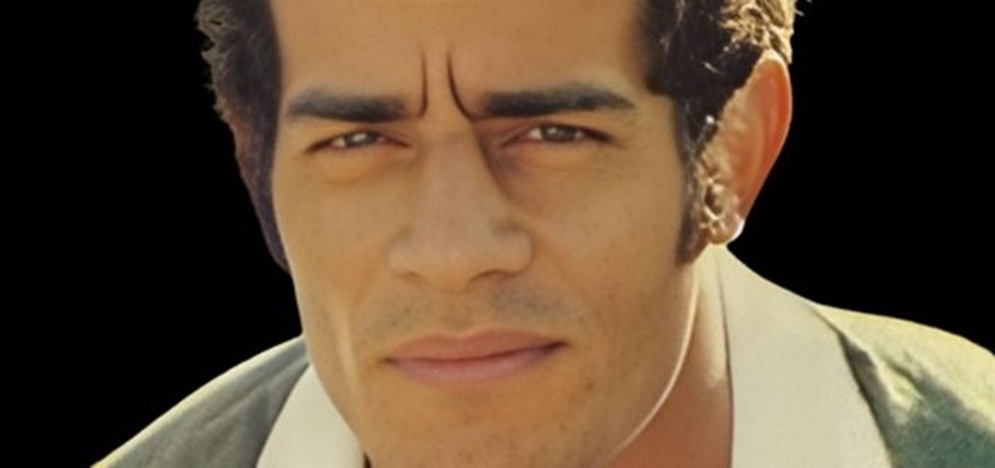
Hector Rodolfo Baley, born November 16 1950, Ingeniero White, Bahía Blanca, Argentina.
PART ONE
Hector Baley´s upbringing unfolded during a time when Argentine football was sharpening its identity, blending grit with technique, and that environment, raw and demanding, shaped the goalkeeper he would become.
As a young man, Baley’s physical presence stood out, tall and composed at 1.86 meters, and yet his early steps into football were not marked by immediate stardom but rather by the kind of slow, grinding progression that tests resolve more than talent. When he joined Estudiantes de La Plata in the late 1960s, he entered not a welcoming stage but a fiercely competitive dressing room under Osvaldo Zubeldía, where innovation, discipline, and ruthless standards defined every training session and every matchday selection.
Estudiantes at that time were not just successful; they were revolutionary, redefining how football could be played with tactical precision and psychological edge, and for a young goalkeeper like Baley, breaking into such a side was akin to scaling a mountain that grew steeper with every step. However, opportunity came sparingly, and between 1968 and 1971, he managed only three league appearances, a statistic that might suggest stagnation but in truth masked years of learning, absorbing, and preparing under pressure.
Those early years, limited in minutes but rich in experience, placed him within one of the big clubs of the era, and he was part of a squad that lifted major honours including the Copa Libertadores and the Intercontinental Cup, achievements that would later lend weight to his career even if his role was peripheral. In addition, being surrounded by seasoned professionals and exposed to high-stakes football instilled in him a calmness that would define his style, a goalie who relied less on theatrics and more on positioning and anticipation.
Building upon those formative seasons, Baley knew that if he were to forge a meaningful career, he needed minutes, responsibility, and the chance to stand on his own rather than in the shadow of others, and so his move to Colón de Santa Fe in 1973 marked a turning point. Therefore, what followed was not a sudden explosion of brilliance but a steady accumulation of trust, as he began to play regularly in the Argentine Primera División, finally testing himself against the relentless demands of top-flight football.
At Colón, Baley found rhythm, and rhythm for a goalkeeper is everything, because confidence grows not from isolated saves but from continuity, from week after week of reading the game, commanding the box, and learning from both mistakes and successes. Across 79 league appearances between 1973 and 1976, he established himself as a dependable presence, not flamboyant but reliable, not headline-grabbing but quietly effective.
However, football rarely offers linear progress, and even as Baley gained experience, he remained outside the elite circle of Argentine goalkeeping, a position dominated by larger personalities and more celebrated names. Nevertheless, his performances did not go unnoticed, and in 1976 he made the move to Huracán, a club with a richer profile and greater expectations, signalling that his career was beginning to ascend.
At Huracán, the demands intensified, and the stage grew larger, and Baley responded with consistency, accumulating 112 appearances over three seasons, a figure that speaks not only to his durability but also to the trust placed in him by coaches and teammates alike. These years coincided with a period when Argentine football was brimming with talent, and every match felt like a proving ground, where a single error could cost dearly and a single save could earn lasting respect.
As a result, Baley’s reputation solidified—not as a superstar, but as a professional who could be counted upon, who understood his role, and who delivered when called upon, and in a team sport, that kind of reliability is often the glue that holds everything together. Consequently, it was during this period that his performances began to draw the attention of the national selectors, leading to his inclusion in the Argentina squad in 1976.
Stepping into the national team setup meant confronting a new reality, because standing in his path was River Plate goalkeeper Ubaldo Fillol, a man of exceptional ability and commanding presence in the penalty area, who had already established himself as the undisputed number one.
But Baley did not shrink from the challenge; instead, he embraced his role as a backup, understanding that even the second-choice goalkeeper must be ready at a moment’s notice.
PART TWO
Hector Baley´s debut forthe country of his birth in 1976 marked the start of an international career defined more by readiness than by opportunity, His inclusion in the squad was not merely symbolic, though, as it reflected a level of trust from the coaching staff, who valued his composure and reliability.
At club level, another significant chapter awaited, as Baley transferred to Independiente in 1978, a move that placed him within one of Argentina’s most storied clubs, known for its success both domestically and internationally. Hence, teaming up with Independiente was not just a step up but a test of his ability to perform under heightened expectations and in a side accustomed to winning.
That same year, Argentina hosted the FIFA World Cup, and Baley found himself included in the squad, a moment that would define his career in ways both profound and paradoxical, because while he would become a World Cup winner, he would do so without playing a single minute. Just being part of that squad meant living through the intensity, the pressure, and the ultimate triumph of Argentina’s first World Cup victory.
The tournament itself unfolded as a dramatic journey, culminating in the final against the Netherlands at the River Plate Stadium in Buenos Aires, where Argentina triumphed 3–1 after extra time, with a brace from Valencia striker Mario Kempes and one goal by Independiente winger Daniel Bertoni sealing the victory for the hosts. And consequently, Baley, though an unused substitute, stood among the champions, a testament to the collective nature of football, where every squad member contributes to the whole.
What is worth to remember is that the narrative of the 1978 World Cup extended beyond the pitch, as it took place under a military dictatorship, a context that has since sparked debate and reflection, and Baley would later revisit these themes in the documentary “Mundial 78. Verdad o mentira.” His presence in that film highlighted his role not just as a player but as a witness to a complex moment in history.
Returning to club football, Baley’s time at Independiente included a significant achievement, as the team won the Primera División Nacional championship in 1978, beating River Plate in the final with a 2–0 win in the decisive second leg. He played in that game, contributing to a victory that remains one of the highlights of his career.
Despite this success, his time at Independiente was marked by competition for places, and his appearances were more limited compared to his spell at Huracán, totalling 31 league matches and several appearances in the Copa Libertadores. Yet, he remained a vital squad member, valued for his experience and professionalism.
Building upon this phase, Baley joined forces with Talleres de Córdoba in 1981, embarking on the longest and perhaps most defining chapter of his club career, where he would spend the next six seasons and make 156 appearances. Therefore, Talleres became the stage where he truly settled, bringing together the lessons of his earlier years and applying them with consistency.
At Talleres, Baley was not just a player but a leader within the squad, and his presence in goal provided stability, a crucial element in a league as competitive as Argentina’s. In this way, his performances helped the team remain competitive, even if major trophies eluded them during his tenure.
Meanwhile, on the international stage, Baley’s footballing days reached its final chapter with the 1982 FIFA World Cup in Spain, where he was once again selected as a reserve goalkeeper, alongside Fillol and Nery Pumpido of Vélez Sarsfield. But just like in 1978, he did not feature in any matches, as Argentina struggled to replicate their previous success and were eliminated in the second group stage.
His final appearance for Argentina came earlier that year, in March 1982, in a 1-1 friendly with West Germany, bringing his international career to a close with 12 caps. And while he never became the first-choice goalkeeper, his consistent inclusion in the squad over several years underscored his value to the team.
Of course, football can be unforgiving, and in February 1983, during a game against Estudiantes de La Plata, he suffered a serious injury following a collision, forcing him off the field on a stretcher. The match ended in a 2–0 defeat for Talleres, and the injury served as a reminder of the physical risks inherent in the game. Even so, his resilience allowed him to continue playing, and he remained with Talleres until his retirement in 1987, bringing to a close a career that spanned nearly two decades and 381 appearances.
Beyond the statistics and the matches, Baley’s career carries a broader significance, as he is one of only a handful of Afro-Argentine players to have represented the national team, highlighting an often overlooked aspect of Argentina’s footballing history. Besides, his presence in the squad reflects both the diversity and the challenges within the sport, where representation has not always mirrored the population.
After retiring from football, he largely stepped away from the public eye, with limited involvement in coaching or administration, Instead, he chose a quieter life away from the spotlight that had never fully embraced him anyway and his appearance in the 2007 documentary provided a rare glimpse into his reflections on his life.