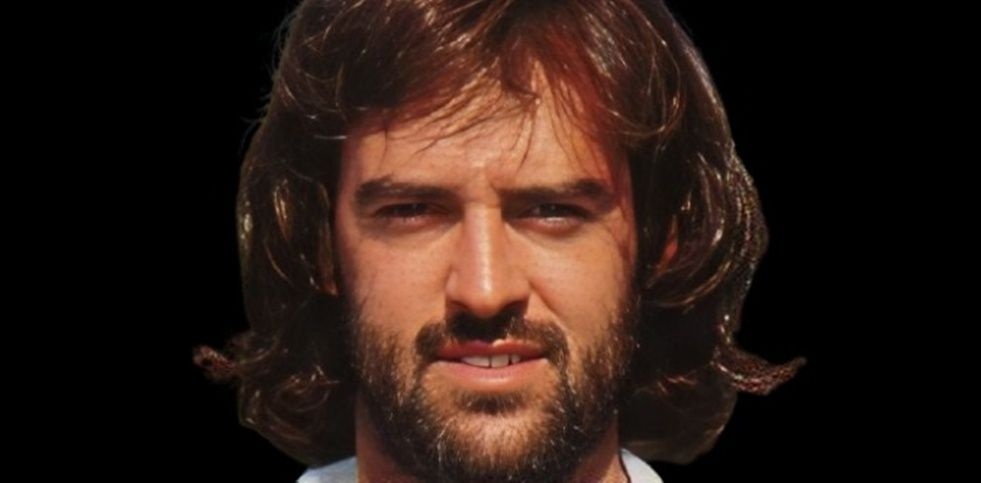
Marco Osio, born 13 January 1966, Ancona, Marche, Italy.
PART ONE
Born in Ancona on the Adriatic coast of the Marche region, Marco Osio grew up with the particular hunger of a boy from a footballing family in a footballing country, where the game is not merely a sport but a language, a religion, and a community all folded into one.
Before the glory came the groundwork, and in Osio’s case the groundwork was laid at Torino, one of Italian football’s great traditional clubs, a side that carried history in its bones and expected its young players to earn every single minute of opportunity they were given. He joined the youth ranks there and spent his formative years absorbing the club’s standards, its rhythms, its demands, developing the positional sense and the tireless engine that would later become his calling card in the professional game.
Torino did not immediately throw open the door to first-team football. The senior squad was competitive, the standards were high, and patience was required, a quality that Osio, to his credit, possessed in considerable measure. Those years in the youth system hardened him in ways that pure talent cannot manage on its own. They taught him about the gap between potential and achievement, about the daily discipline required to bridge that gap, and about the importance of being genuinely useful to a team rather than simply talented within it. Also, they gave him a foundation of technical understanding and tactical awareness that would serve him throughout the entirety of what followed.
Recognition, however, remained frustratingly elusive at Torino, and by 1986, with the clock ticking on youth and the need for real competitive minutes becoming urgent, Osio made the move that his career demanded. He signed for Empoli, and with that decision, a new phase began.
At Empoli, Osio got what he had been unable to get at Torino; regular football against professional opposition, the kind of baptism by experience that tells a young player things about himself that no training session can reveal. He learned quickly, as he always seemed to, and the qualities that had been developing quietly through his youth began to emerge with greater clarity in the context of genuine competitive matches.
His time at Empoli was not lengthy, but it was significant. He showed the composure under pressure and the intelligent distribution that would later define him, and he demonstrated that he could handle the demands of professional Italian football without being overwhelmed by them. Even so, there was a sense that this was not the destination but the preparation. And so when Parma came calling in 1987, he was ready. More than ready, in fact. He was exactly what they needed.
Parma in 1987 were not the force they would become. They were a club with ambition and a certain local pride but without the trophies, the prestige, or the established identity that would later make them one of the most recognisable names in European football. They were grinding their way up through the Italian football pyramid, competing in Serie C1 and straining toward something better, something bigger, something worthy of the passion and investment being directed at them.
Into this environment came Osio, and the fit was so precise, the match between player and club so natural and complete, that it is tempting in retrospect to believe the whole thing was somehow planned. He gave Parma exactly what a rising club needs in midfield: energy, intelligence, positional discipline, and a personality strong enough to hold things together when the pressure mounted. And the fans recognised it immediately, which is why they gave him the nickname that would follow him for the rest of his career. It is a nickname that tells you everything you need to know about how a set of supporters viewed their player: The Mayor.
PART TWO
Parma slowly but surely began to climb, and Osio was at the heart of that ascent in every meaningful sense. Serie C1 gave way to Serie B, and then Serie B gave way to the top flight, the glittering, brutal, unforgiving world of Serie A, where the margins are tiny and the opposition is merciless and where only the genuinely good survive. Yet Osio not only survived but thrived, providing the platform from which Parma’s more celebrated attacking talents could express themselves. His ability to link defence and attack with intelligent, quick distribution, to receive the ball under pressure and make the right decision instantly, became one of the most reliable weapons in Parma’s tactical arsenal.
Parma now found themselves in a position to actually compete for silverware against the biggest clubs in the country, and in 1992, they seized that opportunity with both hands. The Coppa Italia that season brought them face to face with Juventus, the most decorated, most powerful, most resource-rich club in Italian football, across two legs, and Parma beat them.
It was a genuinely extraordinary achievement for a club of Parma’s recent history and relative resources, and the triumph sent a message to Italian football that something real and significant was happening in Emilia-Romagna. Osio’s contribution was characteristically vital without being conspicuous ; the steady midfield presence that allowed the whole machine to function, the reliable distributor who ensured that possession was not wasted and that the team’s shape held firm when the pressure intensified. Others grabbed the headlines, as others often did. But the people who understood football knew what The Mayor had contributed.
But if the Coppa Italia represented the moment Parma announced themselves to Italian football, then the European Cup Winners’ Cup final of 1993 was the night they announced themselves to the entire continent, and they did it in the most magnificent possible venue; the old Wembley Stadium in London, a ground that carried within its famous twin towers nearly seven decades of football history and the kind of atmosphere that physically presses down on players who have never experienced anything quite like it before.
The date was the 12th of May 1993. The opponents were Royal Antwerp of Belgium, themselves appearing in their first-ever European final, making it a contest between two clubs for whom this occasion was entirely new territory. Wembley had hosted the Cup Winners’ Cup final once before back in 1965 when West Ham United had beaten 1860 Munich 2–0 in front of 98,000 people, the largest crowd ever to watch a Cup Winners’ Cup final anywhere in the world. That record still stood in 1993, and the atmosphere in the old stadium for this latest showpiece retained the particular magic that had always made Wembley a special destination.
It was also, though nobody could have known it with certainty at the time, the last European club final to be staged at the old Wembley, since the stadium was subsequently closed and eventually rebuilt entirely, which gave the occasion a retrospective significance that only deepened the sense of history hanging over every pass, every tackle, and every goal.
Parma opened the scoring in the 10th minute, and the manner of it was unusual. Antwerp’s goalkeeper Stevan Stojanovic misjudged a corner and the ball fell to Parma’s captain Lorenzo Minotti, who hooked it home from the left of the penalty area with an opportunism that delighted the Italian supporters packed into one end of the great old ground. Antwerp, to their considerable credit, responded with pace and purpose. Within two minutes they were level: Alex Czerniatynski played a through ball to Francis Severeyns, who struck it left-footed past the goalkeeper to make it 1–1, and suddenly the final had the tension and the drama that everyone had hoped for.
Yet from that point Parma gradually established control, and their superiority began to tell. Alessandro Melli headed them 2–1 ahead after half an hour, meeting a cross from the right with a clean, powerful finish that gave Stojanovic no chance and settled some of the Italian nerves in the stands. And then, six minutes from the final whistle, Stefano Cuoghi curled a shot past the goalkeeper from inside the 18-yard area to make it 3–1, and the game was decided.
Parma had won their first European trophy. In only their second season of European competition, they had reached a final and won it. They were the first Italian side to appear in a Cup Winners’ Cup final since Sampdoria had done so in both 1989 and 1990. For Antwerp, it was heartbreak, their first and, to date only appearance in a European final had ended in defeat against an Italian side who were simply better on the night and better prepared for the occasion.
For Osio, it was the summit of his playing career, and it had arrived at a pace that few inside or outside the club could have predicted just six years earlier when he had signed from Empoli for a club still competing in the third tier of Italian football. He had gone from relative obscurity to European champion, and he had done it by being exactly the player his team needed him to be at every stage of the voyage; dependable, intelligent, selfless, and indefatigably committed to the collective cause.
Parma’s involvement in European competition during this period extended beyond the Cup Winners’ Cup, as the club also tested themselves in the UEFA Cup against continental opposition of varying quality and ambition. These campaigns required tactical flexibility and the ability to adapt to styles of play that differed significantly from the Serie A environment; quicker transitions, different pressing triggers, unfamiliar pitches and atmospheres in far-flung corners of the continent.
Osio thrived in these contexts, because the qualities that had always defined him, reading the game, positioning intelligently, distributing quickly and accurately, translated across different European styles rather better than more technically flamboyant players sometimes managed. His ability to adapt without losing his own identity within the team’s structure made him particularly valuable in matches where the tactical picture was complicated or uncertain, and managers who understood what they had in him used him accordingly.
By 1993, after six seasons that had taken him and the club from the Italian third division to European glory, the time came to move on. Six years is a long time in football, long enough to become a legend at a club, and long enough to recognise when a chapter has reached its natural conclusion. There had been interest from Sampdoria, one of Italy’s most respected clubs, but that potential move did not materialise, and instead Osio returned to the club where his story had first taken shape. He went back to Torino. And in doing so, he closed one circle and opened another.
PART THREE
Osio´s second spell at Torino lasted two seasons and offered a very different kind of experience from his first connection with the club. He was now a European champion, a player of genuine pedigree and established reputation, and he brought all of that experience to a dressing room that could benefit from it. The trophy cabinet at Torino during these seasons did not grow as a result of his presence, and the upward momentum that had defined his Parma years was absent, but that is not to say the period was without value or meaning.
Specifically, Osio contributed the kind of mature, experienced professionalism that helps younger players develop and helps clubs maintain standards during difficult periods. He was no longer the hungry young midfielder building toward something; he was now the veteran who had already built it and could help others understand what that required. It was a different kind of contribution, but football needs those contributions just as much as it needs the goals and the trophies.
And then came the move that nobody had entirely anticipated. In 1995, he signed for Palmeiras of São Paulo, one of the giants of Brazilian football, and in doing so joined an extremely short list of Italian players willing to venture into the very different world of South American football at the peak of their careers.
Brazil was a genuine culture shock in every meaningful sense. The rhythm of the game was different — more fluid, less rigidly structured than Italian football, with different priorities in terms of positional discipline and defensive organisation. The pace of matches differed. The training environment differed. The relationship between players and fans differed. Even the weather and the language were new challenges to be navigated and overcome, and Osio had to adjust with a speed and openness that not every European player arriving in South America manages successfully.
In contrast to the structured, tactical intensity of Serie A, where every positional detail was planned and rehearsed to the point of obsession, Brazilian football at club level offered something more instinctive, more expressive, and in some ways more demanding of individual adaptability. Still, Osio adapted. His playing time at Palmeiras was limited — he was never going to be a first-choice starter at a club of that stature in the middle of his thirties — but his presence within the squad added a European dimension and a certain authority that the coaching staff valued.
And he did win something. In 1996, Palmeiras claimed the Paulista Championship, the São Paulo state title that carries enormous prestige within Brazilian football, and Osio was part of that squad. It was a trophy that few Italian midfielders of his generation could claim on their CVs, and it gave his career an exotic and distinctive quality that set him apart from the majority of his peers. Notwithstanding his limited minutes on the pitch, lifting another trophy in another country on another continent was a genuine achievement, and it added a dimension to his career story that is genuinely unusual.
After Brazil, Osio came home to Italy and entered the final phase of his playing career, the kind of phase that most professionals navigate with a mixture of pragmatism and quiet determination. The top-level clubs were behind him now and what remained was the slow, gradual winding down through the lower divisions, where experience and intelligence and professionalism still have genuine value even when the legs are beginning to have their say about how many years are left.
He took on roles with smaller clubs, contributing what he had always contributed, solid, reliable, intelligent midfield play, while the game shifted around him and younger players took centre stage. There is no glamour in this phase of a career, but there is dignity in it when it is handled well, and Osio handled it the way he had handled every other phase: with commitment and without complaint.
He retired in 2001, bringing to a close a career that had stretched across more than fifteen years, taken him from the youth ranks of Torino to European glory in London, and included a detour through São Paulo that remains genuinely unique in the context of Italian football of his era.
PART FOUR
In 2001, Osio took on the role of assistant manager at Brescello, a Serie C2 club, where the environment was modest but the learning opportunities were genuine and substantial. In the same way that he had once moved from Torino’s youth system to Empoli to get his professional education, he now moved into the coaching world through the lower leagues, learning the craft from the ground up rather than assuming that what he had learned as a player would automatically translate to the technical area.
By 2002, he had been promoted to head coach, and the new chapter was fully open. The demands were different, tactical planning, team selection, man-management, motivation, dealing with the media and the expectations of club owners and supporters, but Osio brought to each of these challenges the same quality that had always made him a useful person to have around: the ability to think clearly, work hard, and maintain standards even when circumstances were difficult.
From December 2003 to February 2005, he took charge of Valle d’Aosta in Serie D, navigating the particular challenges of lower-league management; limited budgets, limited squad depth, the constant pressure of immediate results in a context where the resources to produce them are stretched thin. Likewise, a brief spell with Pergolese toward the end of the 2005–06 season gave him further experience of the kind that sharpens a young manager’s instincts and fills in the gaps that theory cannot cover.
The 2006–07 season brought the moment that his coaching career had been building toward; a genuine, tangible achievement that demonstrated his ability to organise and inspire a team. Taking charge of Crociati Parma, he guided them to victory in the Eccellenza and secured promotion to Serie D, a result that was met with real celebration and that offered Osio a glimpse of what it felt like to deliver results as a manager rather than simply survive the constant pressure of the role.
Needless to say really, the success at Crociati Parma reinforced his credentials and opened the door to a slightly bigger stage. In July 2007, Osio was appointed as the head coach of Nuorese in Serie C2, a step up in terms of the level and the expectation attached to it, and a genuine opportunity to show what he actually could do against stronger opposition.
But Nuorese did not start well. One point from three matches, a return that would test any manager’s composure and authority, proved enough for the club to make a change, and Osio was dismissed in September. It was a sharp and painful reminder of how little time management affords when results do not come quickly enough, and it said more about the impatience of the environment than about any fundamental failing in the man.
Even so, he kept going, because that is what he had always done. On the 12th of January 2011, he took charge of Fortis Juventus in Serie D, stepping into the role mid-season with the club in need of steady hands and clear thinking. He provided what he could in a difficult situation, and the experience added another layer to his understanding of the challenges that lower-league management presents.
Then came the most emotionally charged appointment of his coaching career. On the 29th of November 2011, Osio became head coach of Ancona 1905, his hometown club, the team from the city where he had been born 45 years earlier, the club that carried with it all the particular weight and significance of personal history and community identity. It was the kind of appointment that resonates beyond the purely professional, and he must have felt, in some quiet part of himself, that this was a moment worth having. Yet it did not last. By the 3rd of February 2012, just over two months after his arrival, the spell had ended by mutual agreement, and another chapter closed before it had really had the chance to find its shape.
Beyond his active career, he had dedicated more than a decade to coaching, to the unglamorous and demanding work of trying to pass on what he knew and understood about the game to younger players and smaller clubs at the lower end of the football pyramid. He had kept going through the setbacks and the sackings, through the failed appointments and the mid-season rescues, because that is what people with genuine commitment to football do when playing days are over. The Mayor of Parma. There are worse things to be remembered as. Considerably worse.