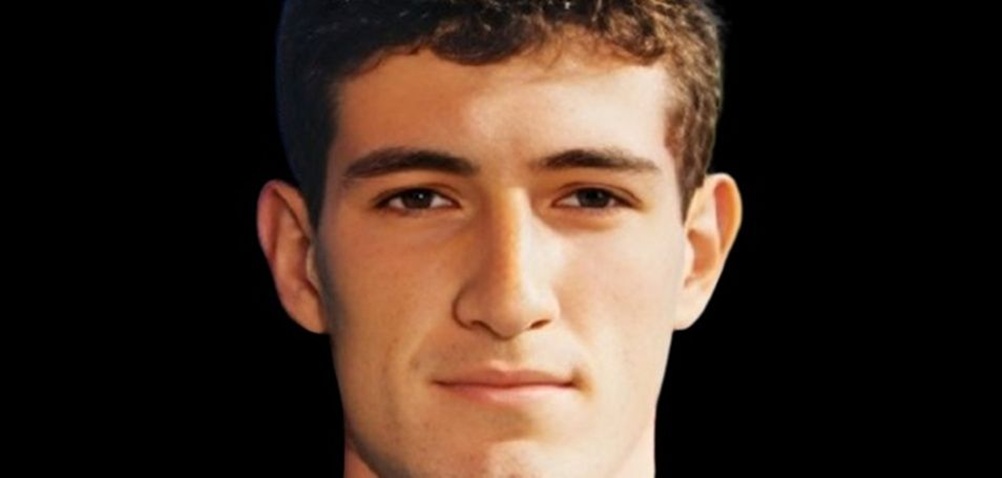
Ciro Ferrara, born 11 February, 1967, Naples, Italy.
PART ONE
Cico Ferrara joined Napoli’s youth system in 1980 with quick feet and an old head on young shoulders. The academies of Italian football in those days were rigorous, demanding, and unforgiving of weakness, and yet Ferrara thrived, graduating from the primavera squad in 1984 and immediately beginning to attract attention from the senior coaching staff.
He accumulated 14 appearances in that first full season, which is no small number for a teenager at a club competing in Serie A, and those who watched him then talk about a youngster who seemed to already understand the geometry of defending — the angles, the timing, the capacity to be in the right place before the danger had even fully announced itself.
By the following season, Ferrara had cemented himself in the starting eleven, and the calls for senior international recognition were growing louder. He was elegant but not soft, composed but never passive — a defender who could read the game as fluently as a conductor reads a score, but who could also be fearsome when the moment demanded it. Zbigniew Boniek, a man who played against the very best defenders Europe had to offer, would later state flatly that Ferrara was the best defender he ever faced.
To understand what Ferrara achieved with Napoli, you have to understand what Napoli was in the late 1980s. Diego Maradona was the magician pulling the strings, conjuring performances that left the rest of Italian football simultaneously awestruck and furious, and Ferrara was one of the men tasked with ensuring that defensive solidity matched that attacking brilliance. Together, they made Napoli genuinely dangerous on every front.
In the 1986-87 season, Napoli won their first ever Serie A title, and Ferrara was part of a defensive structure that made it possible. Still in his early twenties, he had quickly established himself as one of the most reliable defenders in the division, and in 1987 the Coppa Italia followed — Napoli completing a domestic double that sent the city of Naples into scenes of delirious celebration the likes of which the streets had rarely seen.
But perhaps the most memorable achievement of Ferrara’s Napoli years came in 1989, when the club reached the UEFA Cup final against Stuttgart. Ferrara scored one of Napoli’s goals as they clinched the trophy, contributing at the attacking end of the pitch in the manner that would come to define him — a defender who was never purely defensive, who understood that a goal at one end was just as valid a contribution as a tackle at the other. The following season, 1989-90, brought a second Serie A title and the Supercoppa Italiana, the latter won against the very club that would soon become his new home: Juventus.
By the time the 1990 World Cup arrived on Italian soil, Ferrara had earned his place in Azurri folklore and was part of the squad as Italy marched to a third-place finish in front of their own passionate supporters. The experience of playing a World Cup at home, under that weight of national expectation, forged something in Ferrara that would serve him for years to come — a mental toughness that went beyond what any training ground session could manufacture.
PART TWO
In the summer of 1994, Ciro Ferrara packed his bags and headed north to Turin, joining Juventus under manager Marcello Lippi in a transfer that, with the benefit of hindsight, looks like one of the most sensible pieces of business the Old Lady ever conducted. Ferrara was 27 — at or near the peak of his powers — and Lippi knew exactly what he was getting: a defender of world-class calibre, a leader in the dressing room, and a man who had already won almost everything there was to win in Italian football.
He was immediately integrated into the starting 11 and made over 40 appearances across all competitions in that first season alone, even contributing a goal — a defender’s goal, efficient and purposeful rather than spectacular, but no less valuable for that. The relationship between Ferrara and Juventus quickly became something beyond that of a player and his club. He was the cornerstone of what many observers considered the best defensive unit in world football, and the list of partners he formed alongside reads like a who’s who of Italian and European defending.
Mark Iuliano, Paolo Montero, Moreno Torricelli, Gianluca Pessotto, Lilian Thuram, Igor Tudor, Gianluca Zambrotta, Nicola Legrottaglie, Fabio Cannavaro, Alessandro Birindelli — Ferrara played alongside all of them, adapting his game to each partnership with the flexibility that only truly intelligent defenders possess. Teams that fell behind against Juve knew the horror of what awaited them, because clawing back a goal against this backline was a task that bordered on the impossible, and even the bravest opposition attackers would feel the walls closing in.
Ferrara captained the side between 1995 and 1996, before the armband passed to Alessandro Del Piero, and during that brief captaincy period he embodied everything a football captain is supposed to be — communicative, demanding, uncompromising in his standards but human in his dealings with teammates. Ryan Giggs, a player who faced the very best defenders in the world during his distinguished career at Manchester United, singled out Ferrara and his defensive colleague Paolo Montero as the hardest opponents he ever encountered, noting that both men were ferociously physical in their challenges.
The 1996-97 season stands out as perhaps Ferrara’s finest at Juventus. He scored four goals in 32 Serie A appearances — an extraordinary return for a central defender — and was capped eight times for the Italian national team, confirming that he remained among the elite at international level as well. Juventus won the Scudetto that season, continuing a period of domestic dominance that saw the club collect Serie A title after Series A title, and Ferrara was at the beating heart of it all.
In total, across his 12 years at Juventus, Ferrara accumulated a trophy haul that most footballers could only dream about: six Serie A championships with the Turin club, further Coppa Italia and Supercoppa Italiana honours, and success in European competition including the UEFA Champions League, the UEFA Cup, the Intercontinental Cup, and the European Super Cup. Eight Serie A titles in total across his career — a number that places him among the most decorated players in the history of Italian football.
Ferrara was quick and athletic, commanding in the air, ferocious in the tackle but never reckless — a player whose anticipation meant that, more often than not, the tackle was never even necessary because he had already positioned himself to cut out the danger before it materialised. He could play as a man-marker or in a zonal system, at centre-back or at full-back on the right flank, and he adapted to every formation and every instruction with the professional’s instinct for problem-solving. He was also known, perhaps surprisingly given how aggressive defenders could be in that era, as a fundamentally fair and correct player — someone who competed to win, but who did so within the rules.
Also contributing to his longevity was his professionalism off the pitch and his commanding presence in the dressing room — that indefinable quality that coaches value enormously and that younger players absorb simply by being in the same environment as it.
At international level, Ferrara earned 49 caps for Italy, making his senior debut in a friendly against Argentina and going on to represent his country at the 1988 Summer Olympics, at the UEFA European Championships in 1988 and 2000, and at the 1990 World Cup on home soil. For a defender of his quality and the competitive strength of the Italian squad throughout his career, 49 caps perhaps understates his contribution, but the nature of Italian football in that era meant that competition for places was fierce beyond measure.
His playing career wound down quietly rather than dramatically. He made just four Serie A outings in his final season, the natural tailing-off of a body that had given everything across more than two decades of top-level football. He retired in May 2005 at the age of 38 — an age at which many players have long since hung up their boots, but which, for Ferrara, represented a genuinely graceful exit. He had outlasted almost every contemporary and had done so without the sharp decline that afflicts so many athletes in the final phases of their careers.
The subsequent Calciopoli scandal, which engulfed Italian football in 2006, resulted in Juventus having their 2004-05 Serie A title revoked, a bitter postscript to the careers of those who had contributed to it. But no scandal could diminish what Ferrara and his generation had achieved together, and the football world knew it.
PART THREE
Ferrara’s transition into coaching began naturally enough, as part of the Italian technical staff for the 2006 FIFA World Cup under his old manager Marcello Lippi. Italy’s victory in Germany that summer — on penalties against France in a final forever associated with Zinedine Zidane’s extraordinary act of self-destruction — gave Ferrara a World Cup winner’s medal, the one prize his playing career had denied him, and it arrived through the back door of coaching in the most dramatic possible fashion.
After the tournament, he joined Juventus’ staff, working within the academy structure as youth system chief and dealing with the organisational aspects of developing the next generation. He took his UEFA Pro License coaching badges in July 2008, training at Coverciano in Florence, the spiritual home of Italian football coaching, and the expectation was that management at the highest level was simply a matter of time.
That moment arrived sooner than anticipated. When Juventus sacked Claudio Ranieri following seven league games without a win in the 2008-09 season, Ferrara was named interim head coach on 18 May 2009, with the season almost over and the task of securing second place in the league table his immediate priority. He rose to it brilliantly, leading Juventus to victories of 3-0 over Siena and 2-0 over Lazio, ensuring the club finished above rivals Milan. The board was impressed enough to offer him the job on a permanent basis, and on 5 June 2009, Juventus formally confirmed his appointment as manager for the following season.
What followed was one of the most difficult debut seasons any manager of a major European club has experienced in recent memory. Ferrara brought in significant reinforcements — Brazilian internationals Diego and Felipe Melo, World Cup-winning defenders Fabio Cannavaro and Fabio Grosso, and young Uruguayan Martín Cáceres on loan — and began the season promisingly, winning his first four league matches in succession.
But European failure cut the legs from beneath the campaign. A 4-1 home defeat by Bayern Munich in the UEFA Champions League, in a match where a draw would have been sufficient to advance, represented a catastrophic evening at the Stadio Olimpico and one from which Juventus’ season never truly recovered. Despite a derby victory over Inter, the club lost repeatedly to sides they were expected to beat and the Italian media circled with the particular savagery they reserve for managers of the big clubs who are stumbling.
Ferrara’s absence from a scheduled gathering of all Serie A managers and coaches in Rome, where he was represented instead by director of sport Alessio Secco and a 23-year-old Claudio Marchisio, struck observers as either deeply peculiar or deeply telling. Six days later, Juventus were eliminated from the Coppa Italia, losing 2-1 to Inter at the San Siro, and that was enough. The board acted, Ferrara was sacked, and Alberto Zaccheroni was brought in to complete the season.
He returned to management in October 2010, appointed head coach of the Italy under-21 national team with former teammate Angelo Peruzzi as his assistant, and found a degree of stability and satisfaction in the development role that the intensity of club management had denied him. The Azzurrini remained unbeaten in the qualifying campaign for the 2013 UEFA European Under-21 Championship for the best part of two years under his guidance, which was no small achievement.
In July 2012, he left the under-21 setup to take charge of Sampdoria in Serie A, newly promoted and full of hope for the season ahead, but the appointment ended in disappointment when he was dismissed in December 2012 after just five months. His managerial role then took him to China and Wuhan Zall, a journey that reflects the increasingly global nature of football careers for European managers of the modern era.
Ciro Ferrara will be remembered, first and most powerfully, as a defender of the highest class — elegant and physical in the same breath, intelligent and fierce in the same challenge, a man who could play any position across the back line and make it look like the only position he had ever known. He won eight Serie A titles, a UEFA Champions League, a UEFA Cup, the Intercontinental Cup, the European Super Cup, two Coppa Italia trophies, three Supercoppa Italiana honours, and a World Cup medal as a coach.
He played 49 times for the country of his birth and was praised by Ryan Giggs as the toughest opponent he faced, and by Zbigniew Boniek as simply the best defender he ever encountered.