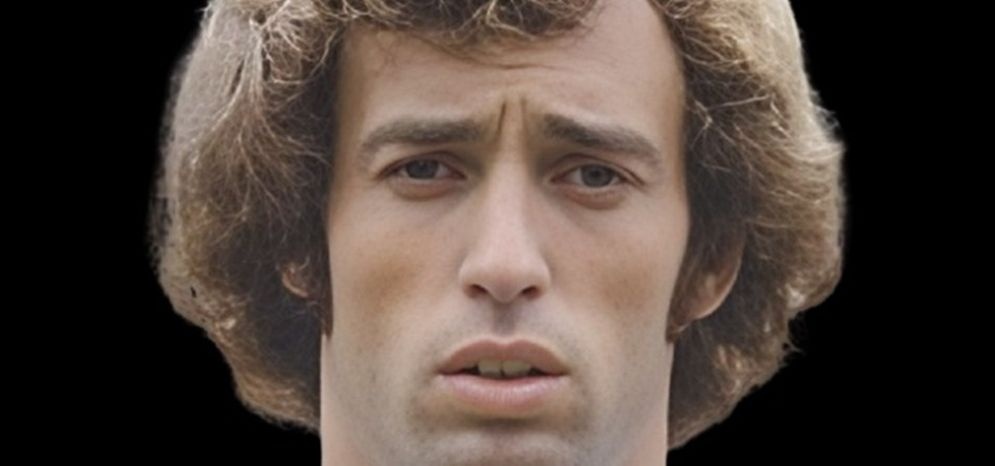
Enrique Ernesto Wolff , born 21 February ,1949, Victoria, Buenos Aires, Argentina.
PART ONE
Enrique Wolff was a devoted Racing Club supporter from his earliest years, attending matches at the Estadio Presidente Perón with his father and brother, watching from the terraces and feeling what every Argentine boy who loves his club feels — that particular mixture of pride and anxiety and belonging that football generates in people who take it seriously. Those experiences did not merely entertain him. They shaped the way he understood the game, the way he would later talk about it, and the way he would eventually play it.
Wolff started out as an attacker, drawn to the glamour of scoring goals and the approval that comes with it, but Racing Club’s youth system recognised something in him that suited defensive roles and moved him accordingly, and the transition proved to be the making of him as a professional. By 1967, his development had been rapid and thorough enough that Juan José Pizzuti, the coach of the first team, made the decision to promote the 18-year-old to the senior squad and assign him the position of right-back, a role that demanded tactical awareness, the ability to read an opponent’s movement, and the discipline to hold a defensive line while also contributing going forward when the moment was right. Wolff had all of those qualities, and he was about to demonstrate them on the biggest stages that Argentine — and eventually European — football had to offer.
Before his senior debut with Racing and before the extraordinary events of that extraordinary year, Wolff had already contributed to a significant piece of international football history at youth level. Argentina’s under-20 team competed in the South American Youth Championship in Asunción, Paraguay, between 3 March and 29 March, 1967, and the tournament that followed was a tense and complicated affair that tested nerves as much as footballing ability. The squad, coached by Juan Carlos Giménez and Mario Imbelloni, navigated the group stage with one win, one draw, and one loss, and their progression to the semi-finals required a playoff against Colombia that could not be separated by football alone — it was decided, in the manner of those times, by a coin toss. Argentina called correctly and advanced.
In the semi-finals, they were rather more convincing, beating Brazil 2–0 in a result that cleared the path to the final, where hosts Paraguay waited. The final itself went to extra time with the game ending 2–2, goals by José Pasternak and Marcos Ricciardi having brought Argentina level, and when extra time produced no winner, the outcome was decided by another coin toss — Argentina’s second of the tournament, and their second successful call. It was an unconventional way to win a championship, but the title was genuine and the qualification it brought for the 1967 Pan American Games in Winnipeg was real. Wolff contributed to the defensive unit throughout, bringing the discipline and positional intelligence that had earned him his place in the squad, and the experience of winning at international level, however the margins were determined, was formative.
Building upon that youth championship success, Wolff’s promotion to Racing’s senior squad in 1967 placed him at the centre of one of the most celebrated periods in Argentine club football history. His senior debut came on July 16, 1967, in a league match against Boca Juniors at La Bombonera — and if you are going to make your first appearance in professional football, doing so in the most charged fixture in the city against one of the most passionate crowds in the country is as demanding a baptism as the game can offer. Racing won 2–1, with Wolff starting at right-back, and the victory confirmed that he was not merely a promising prospect but a player capable of performing when the stakes and the atmosphere were at their most intense.
PART TWO
The 1967 campaign was extraordinary for Racing Club in ways that went far beyond any single league result. The side won the Argentine Primera División title, which was achievement enough, but they also won the Copa Libertadores — South America’s premier club competition — and then encountered Scottish giants Glasgow Celtic in the Intercontinental Cup, the contest between the champions of Europe and the champions of South America that served as the de facto world club championship.
The first leg at Hampden Park in Glasgow offered a glimpse of what was to come, and even though Jock Stein´s Celtic secured a 1–0 victory courtesy of a towering header from their captain Billy McNeill nine minutes past the hour mark, the match was overshadowed by Racing’s relentless fouling and gamesmanship. Nevertheless, for young Wolff, the experience of witnessing such a high-pressure European night was invaluable, and it sharpened his understanding of how fine the margins could be at the highest level.
Back in Avellaneda for the second leg, the atmosphere at the Estadio Presidente Perón on 1 November was electric and volatile, and events before kick-off hinted at the chaos ahead when Celtic shot stopper Ronnie Simpson was struck by an object from the crowd and forced out of the match. As a result, his replacement John Fallon stepped into a cauldron, and although Celtic took the lead once more, Racing responded with determination as Norberto Raffo and Juan Carlos Cárdenas found the net in a 2–1 victory that levelled the series. That equaliser in the tie ensured a decisive play-off in Montevideo, and by then tensions had reached boiling point, with neither side willing to concede an inch, and discipline hanging by a thread. Meanwhile, Enrique Wolff, still absorbing lessons from the side-lines and training ground, was witnessing a spectacle that would shape his understanding of football’s darker edges as much as its glory.
The play-off match at the Estadio Centenario in Montevideo on 4 November descended into chaos almost from the first whistle, and the Paraguayan referee struggled to maintain control as fouls, protests and confrontations erupted across the pitch, forcing riot police to intervene repeatedly. Furthermore, six players were sent off in a night of disorder, including four from Celtic and two from Racing, yet remarkably Bertie Auld refused to leave the field after his dismissal and continued playing, adding to the surreal nature of the contest. Amid the turmoil, one moment of clarity decided everything, and in the second half Cárdenas hit the decisive goal that secured a 1–0 victory for Racing, sealing the Intercontinental Cup and etching their name into history as the first Argentine side to claim the trophy. Consequently, the triumph was celebrated wildly in Buenos Aires, and for Wolff it represented not just a team achievement but a formative chapter in his own development.
The years that followed his debut were years of consolidation and growth, and Wolff gave Racing Club six seasons of committed, consistent service that lasted until 1972 and produced 165 appearances along with 31 goals — a remarkable return for a defender, reflecting the degree to which he contributed to attacks from the right-back position through overlapping runs and set-piece involvement. He was not merely a stopper, not simply a man whose job began and ended with preventing the opposition from scoring, but a dynamic presence on the right side of the defence who understood that the full-back role in modern football required a capacity to contribute in both directions, and he exercised that capacity regularly and effectively.
His style combined physicality with tactical intelligence in a way that made him difficult to play against — physical enough to deal with the direct challenges that Argentine football frequently demanded, but smart enough to read the game and position himself in a manner that reduced the need to rely on physicality alone. He anchored Racing’s backline during a period that, while it never quite replicated the extraordinary heights of 1967, maintained the club among the serious contenders in Argentine football, and by the time he left for River Plate in 1972, he had established himself as one of the outstanding defenders of his generation in the country.
The move to River Plate in 1972 represented a different kind of challenge, because River were not Racing and the expectations that came with the club’s history and its enormous support base were of a different character and intensity. He debuted for River in the 1973 season and played through 1974, accumulating 37 league outings and contributing 6 goals, but the period was defined more by transition than by sustained dominance — River were working through a period of recalibration, and while Wolff’s defensive contributions were valued, the club was not the force it would become later in the decade under the management of Ángel Labruna.
What that stint at River did, however, was position him perfectly for the next chapter. European football had been watching South American talent with increasing interest during the early 1970s, and clubs in Spain in particular had identified the Argentine market as a source of technically accomplished, tactically educated players who could adapt to the demands of La Liga. Wolff was precisely the kind of player those clubs were looking for — experienced at the highest level of Argentine football, versatile enough to play across the defensive line, and possessed of a footballing intelligence that translated across different systems and cultures.
In 1974, he signed with Las Palmas in Spain’s La Liga, making him one of the early wave of Argentine players to make that transatlantic crossing at a time when the movement of South American talent to European football was just beginning to gather momentum. Las Palmas, based on Gran Canaria, were not among the grandes of Spanish football — they were a club of modest means and mid-table ambitions — but they offered him what he needed at that stage of his development: regular football in a serious European league, time to adapt to the particular demands of Spanish football, and the chance to demonstrate his quality to a wider audience.
Over three seasons from 1974 to 1977, he made 93 league appearances and scored 7 goals, and the adaptation, while not without its challenges, was ultimately successful. Spanish football in the mid-1970s emphasised technical possession and tactical discipline over the physical directness that characterised parts of the Argentine game, and Wolff had to recalibrate aspects of his approach to suit the environment. Language presented its own complications in the early months, and the cultural adjustment of living and working in a place so different from Buenos Aires was real. Nevertheless, he earned respect within the club and within the league for his leadership qualities and his defensive reliability, and his contributions from set pieces provided Las Palmas with an additional attacking threat from unlikely sources that helped the island club maintain their mid-table status through those three seasons.
Additionally, Wolff´s time at Las Palmas gave him something that would prove invaluable in the next move — a thorough understanding of how Spanish football worked, of its rhythms and its demands and its particular culture, so that when the opportunity came to step up to one of the most famous clubs in the world, he was not arriving as an outsider navigating an unfamiliar environment but as a man who had already served his European apprenticeship and was ready for whatever came next.
PART THREE
The call from Real Madrid came in the summer of 1977, and whatever Wolff might have expected from his football when he left Victoria as a teenager to attend matches at El Cilindro, it is doubtful that the Santiago Bernabéu featured prominently in his imagination. Yet there he was, signed by one of the greatest clubs in the history of the sport, joining a squad that included the technically exceptional Uli Stielike in midfield, the accomplished Vicente del Bosque, and a defensive unit featuring Pirri and Benito, all of them under the management of Luis Molowny, who was tasked with returning them to domestic dominance after a period in which they had not quite imposed themselves on La Liga with the authority their history demanded.
Wolff slotted in at right-back and immediately established himself as a starter, and over two seasons from 1977 to 1979 he made 68 La Liga appearances and scored four goals while contributing to 17 clean sheets — numbers that reflect not merely his individual quality but the collective defensive organisation of a side that was being rebuilt into champions. The 1977–78 season culminated in the La Liga title, and Wolff’s role in securing it was direct and measurable: on April 16, 1978, at the Santiago Bernabéu, Real Madrid overcame Cádiz 2–0 in a match that clinched the championship with three games still to play, and Wolff scored one of the goals — a defender contributing to a title-winning performance on the biggest stage he had yet occupied, in front of a crowd whose capacity for celebration and whose intensity of expectation were unlike anything the Argentine league or Las Palmas could have prepared him for. The Bernabéu in full voice for a championship confirmation is an experience of a very particular kind, and Wolff was in the middle of it.
The following season, 1978–79, he remained a regular and integral presence as Real Madrid defended their title successfully, navigating a competitive campaign with the consistency that distinguishes championship-winning sides from those who merely challenge for honours. To win La Liga twice in consecutive seasons is an achievement that demands sustained quality from every position on the pitch, and Wolff’s contribution to the right-back role across both those campaigns was a significant part of why it was achieved. He also featured in four UEFA European Cup matches during his time at the club, scoring once in continental competition, which added an international dimension to a period already distinguished by domestic success.
The Copa del Rey campaign of 1978–79 brought a different kind of experience. Real Madrid reached the final, which was played against Valencia at the Vicente Calderón Stadium — a final that Wolff played in as part of a team that had every reason to expect success given their league form. Valencia won by a 2–0 score, but not without a moment of particular drama involving Wolff himself: late in the match, he stepped up to take a penalty that had the potential to alter the course of the game, struck it well enough, but watched it hit the post rather than go in, denying the equaliser and, ultimately, any chance of a comeback. It is the kind of moment that stays with a player — not because of failure in any simple sense, but because of the precision of the memory, the clarity with which you can recall the approach, the impact, the sound of the ball on the post, and the silence that follows a moment of collective disappointment.
Along with his club activities, Wolff had been building an international record with the Argentina senior team since his debut on June 22, 1972, in a friendly against Colombia in Montevideo that Argentina won 4–1. Over the next two years he accumulated 27 caps, scoring one goal in the pre-World Cup period, and in 1974 he travelled to West Germany as part of Argentina’s squad for the FIFA World Cup under coach Vladislao Cap, with Roberto Perfumo serving as captain of a side that found itself in a period of transition.
The summer of 1974 arrived with a different feel, and not just because the world’s best gathered in the Federal Republic of Germany between 13 June and 7 July for the FIFA World Cup, but also because a brand-new prize glistened at the end of the road, the sleek FIFA World Cup Trophy crafted by Silvio Gazzaniga replacing the retired Jules Rimet prize that Brazil had claimed forever in 1970, and so the stage was set for a tournament that felt both fresh and fiercely contested. The Argentinians, for their part, found themselves in Group 4 alongside Poland, Italy, and Haiti, and Wolff started all three group stage games, playing at right-back throughout. After suffering a 3-2 defeat to Poland in the first match, Argentina drew 1-1 with Italy before they trashed Haiti by a solid 4-1 margin to secure their advancement to the second round. Wolff’s defensive positioning and reliability throughout those three games provided the backline with a degree of organisation that at least kept the team competitive even when the results were not going their way.
The second group stage saw Argentina pitted against the Netherlands, Brazil, and East Germany in Group A. Following a heavy 4-0 loss to the Dutch, they fell 2-1 against Brazil then shared the spoils in a 1–1 draw with East Germany in the final fixture. These results meant they were eliminated from the competition, but Wolff had appeared in every game and provided consistent defensive service throughout, which in the context of a squad that was acknowledging its own limitations against the top sides of world football at that moment, was a contribution of genuine value. After the World Cup, his move to Europe with Las Palmas and then Real Madrid effectively ended his international availability — the distance, the competition for places, and the logistical realities of playing in Spain while the national team prepared in Argentina all combined to limit further selection — and the 1974 tournament proved to be the concluding chapter of his time in the Albiceleste.
After leaving Real Madrid in 1979, Wolff returned to Argentina and signed with Argentinos Juniors, making eight appearances in the Primera División before the stint concluded without the goals or the sustained involvement that had characterised his earlier years. Two years on, in 1981, he made one final appearance in professional football with Club Atlético Tigre in the Argentine Second Division, playing seven games before retiring at the age of 32. It was a quiet ending to a playing record that, across his entire club career, amounted to 378 outings and 48 hits — substantial figures for a man who spent most of those years as a defender, and who brought to every club he served the same qualities of tactical intelligence, physical commitment, and the will to contribute in both directions of the pitch that had defined him from his earliest days in Racing’s youth system.
There is something quite fitting about the fact that his last professional engagement was with a modest Argentine club rather than on a grand stage — because Wolff was never someone defined primarily by the grandeur of his surroundings, but by the quality and consistency of his contribution within them, whether that surroundings was a youth team in Buenos Aires, a mid-table outfit in the Canary Islands, or the Santiago Bernabéu during a title-winning season.
PART FOUR
Retirement from playing did not represent a withdrawal from football but rather a redirection of everything that Wolff had spent his career accumulating — the tactical understanding, the personal experience, the capacity to articulate what the game feels like from the inside — into a new medium. He worked his way toward broadcasting through the late 1980s, and in 1992 he launched Simplemente Fútbol, a television programme dedicated to football analysis that would run, in various forms and on various networks, for more than three decades and become one of the most recognisable names in South American sports media.
The programme’s premise was straightforward but its execution reflected a genuine passion for the game and an ability to communicate it: Wolff brought his firsthand experience as a player for Racing, River, Las Palmas, and Real Madrid to the analysis of contemporary matches, tactical patterns, and player performances, grounding what could have been abstract discussion in the specific physical reality of what it actually feels like to play at the highest level. He blended technical expertise with personal anecdote in a way that made the programme compelling for serious analysts and casual supporters alike, and the show expanded from its local origins to national reach on the Telefe network between 1993 and 1996 before moving to Fox Sports Americas in 1998, where production values improved and distribution across Latin America widened considerably.
By 2000, Simplemente Fútbol had moved to ESPN Latin America, and the combination of the programme’s established reputation and ESPN’s regional reach made it a fixture in the sports media landscape across the Spanish-speaking continent. Over 30 years of continuous airing, winning multiple awards for innovative football journalism along the way, it became the kind of programme that viewers returned to not merely for information but for the quality of the engagement — because Wolff had built something that felt genuinely personal and genuinely passionate in the way that the best sports broadcasting always does.
Joining ESPN fully in the early 2000s expanded Wolff’s broadcasting role beyond Simplemente Fútbol into the daily rhythms of sports news and analysis. He anchored the First Edition of SportsCenter for the South Cone region, co-hosting with Enrique Sacco on ESPN Latin America and providing the kind of knowledgeable, confident commentary that comes from having actually played the game at the level he had played it. The combination of his daily SportsCenter duties and the ongoing Simplemente Fútbol commitment made him one of the most visible and productive figures in the network’s Spanish-language output, and his coverage extended far beyond Argentine domestic football.
Wollf provided commentary for UEFA Champions League matches, bringing his experience of European football — specifically his two La Liga-winning seasons with Real Madrid — to an audience that valued the perspective of someone who had competed at that level. His World Cup coverage was extensive and deeply informed: he had attended every World Cup since 1982 as a journalist, with ESPN coverage beginning from 2002 onward, and the depth of context he brought to each tournament — tactical, historical, personal — gave his analysis a dimension that straightforwardly statistical commentary could never match. Additionally, he covered the 2012 Summer Olympics in London as a torchbearer, which was a recognition of his standing in Argentine sporting culture that went beyond his professional role and acknowledged the broader contribution he had made to the country’s relationship with sport.
The awards that accumulated over those decades of broadcasting work included the Martín Fierro — one of the most prestigious honours in Argentine television — and the Broadcasting Prize from the Argentine Association of Football Broadcast Technicians, both of which recognised the consistent quality and integrity of his work. In 2000, he also founded his own production company, to create content focused on themes of teamwork and leadership — extending his influence beyond sports broadcasting into the adjacent territories of organisational culture and human performance, where his footballing experience gave him genuine authority.
On May 30, 2024, after 32 years of broadcasting that had begun with the launch of Simplemente Fútbol in 1992, Wolff was laid off from ESPN as part of a broader restructuring of the channel’s operations. The decision also brought Simplemente Fútbol to an end on the network, concluding the longest-running programme of its kind in Argentine sports media and marking the close of a sustained contribution to football broadcasting that had no real equivalent in the region. He reflected on what the programme had meant during its run — not in terms of ratings or commercial performance but in terms of the quality of the conversation it had sustained about football over three decades, the way it had shaped how fans and analysts alike thought and talked about the game.
There is a particular kind of loss that comes with the end of something that has been present for so long that it has become part of the texture of daily life for the people who followed it, and Simplemente Fútbol had achieved that status across an entire continent. Quique Wolff’s voice had been part of South American football’s soundtrack since 1992, and its absence from ESPN’s schedule after May 2024 left a gap that the network will find difficult to fill with something of equivalent authenticity and depth.