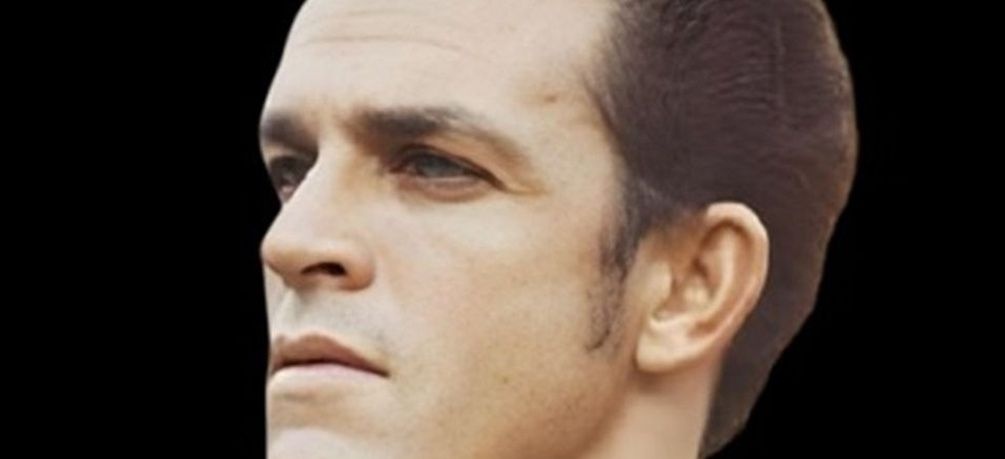
José de Anchieta Fontana, born December 31, 1940, Santa Teresa, Brazil.
PART ONE
In 1958, Fontana signed his first professional terms with Vitória Futebol Clube, and though this initial step was modest, a talented teenager finding his feet in state-level competition, it mattered enormously, because every good story needs its first chapter and this was his. A year later he moved to Rio Branco Atlético Clube, also from Espírito Santo, and the difference was immediately apparent, because at Rio Branco he was no longer a promising youngster to be looked after but a player expected to contribute, to start, to influence matches from the back and organise those around him. He would remain at Rio Branco for four years, between 1959 and 1962, and in that time the Campeonato Capixaba — the state championship — became his stage.
Rio Branco won the Campeonato Capixaba in 1959, and Fontana was part of a backline that earned its share of the credit, not the kind of credit that appears in flashing headlines but the solid, dependable kind that coaches and teammates notice and quietly respect. He would win it again in 1962, bookending his time at the club with state championship medals that meant a great deal to the community in Espírito Santo, even if the wider Brazilian football world had not yet taken notice. But that was about to change, because the things Fontana was doing in those regional matches — the decisive interventions, the authoritative challenges, the cool management of dangerous attacking situations — were increasingly drawing admiring glances from talent scouts and coaches whose territories stretched well beyond the borders of a single state.
His transfer to Vasco da Gama in 1962 was the moment that took him from a talented regional defender into a national figure, and even then it didn’t happen with fanfare or noise, but rather with quiet efficiency, the kind that tends to characterise the careers of defenders everywhere. Vasco were one of the great forces in Brazilian football, with a proud history and a passionate fanbase centred on Rio de Janeiro, and they needed bodies in their backline who could handle the physical and tactical demands of the top flight, including the Campeonato Carioca and the various interstate competitions that made the Brazilian football calendar of the 1960s so relentlessly demanding. Fontana arrived and took his place in the starting eleven with a speed that tells you everything about his readiness for the challenge.
The years between 1962 and 1968 represent the centrepiece of Fontana’s club career, a six-year stretch at Vasco in which he became not merely a reliable performer but an institution, one of those players whose presence on the teamsheet was itself a source of reassurance for supporters. His role was that of the stopper, the quarto-zagueiro in Brazilian football terminology, the man whose first and most essential obligation was to prevent the opposition’s most dangerous attacker from functioning freely, and Fontana was extraordinarily good at it, combining physical authority with enough technical quality to ensure he was never simply a battering ram but always a footballer who happened to be very difficult to get past.
But the chapter of his Vasco da Gama story that truly belongs in the history books is the partnership he formed with Brito, a fellow centre-back who would also go on to represent Brazil at the highest level, and between them these two men constituted one of the most formidable defensive partnerships that Brazilian football produced during the entire decade. They were different in certain respects but together they were extraordinarily complementary, covering each other’s angles, communicating constantly, and presenting opposing forwards with the kind of unified wall that is simultaneously simple in concept and nightmarish in execution.
PART TWO
Fontana also contributed to tangible silverware during this period, with the Taça Guanabara arriving in 1965 and the Torneio Rio–São Paulo following in 1966, and though neither trophy carries the weight of a national title, both mattered to Vasco and both had Fontana’s defensive fingerprints all over them. The Torneio Rio–São Paulo, in particular, was a competition that brought together the best clubs from Brazil’s two greatest cities, which meant facing Santos, São Paulo, Palmeiras, Corinthians, Fluminense, and Flamengo — in other words, some of the most talented attacking players in the world at a time when Brazilian football was arguably at its absolute peak. Fontana stood against all of them, and stood firm.
One match from 1968 has become something of a defining image in the retelling of his Vasco years: a match against Botafogo at the Maracanã, that cathedral of Brazilian football filled to its extraordinary capacity, in which Fontana was assigned to deal with an attacker named Sicupira and did so with such relentless effectiveness that Botafogo’s attacking threat was essentially neutralised from the moment the referee blew his opening whistle. A clean sheet was the result, a crucial league encounter won without conceding, and while defenders almost never receive the individual praise that the occasion demands, those who were there understood precisely whose contribution had made it possible. It was, in miniature, the story of Fontana’s entire approach: quiet, controlled, unspectacular in the romantic sense, and absolutely devastating in its effectiveness.
He faced the greatest players of his generation during those Vasco years, and the name that stands above all others is Pelé, because in the 1960s Brazilian football meant confronting Santos at some point, and confronting Santos meant confronting a player who was, quite simply, the best that football had ever produced. Fontana went toe to toe with Pelé in those inter-state and Carioca competitions, and while we cannot claim that he always came out on top — nobody always came out on top against Pelé — he held his own with a consistency that earned the respect of everyone who watched Brazilian football closely.
Against Amoroso of Botafogo, against the other sharp forward lines of the era, he maintained the same qualities: ferocious in the tackle, intelligent in his positioning, and somehow — remarkably, given the nature of the football being played around him — never sent off in his entire professional career. That last detail alone tells you a great deal about Fontana’s self-control, his understanding that aggression divorced from intelligence is merely chaos, and that the most dangerous defender is not the one who lunges but the one who waits.
The nickname that accumulated around him during these years was O Xerife — The Sheriff — and it fitted him with the exactness of a glove cut to measure, because a sheriff does not merely respond to trouble but prevents it, does not merely arrive after the chaos but ensures it does not begin, and that was precisely how Fontana approached his craft. He managed the space around him with an authority that communicated itself to opponents before they had even made their runs, and in doing so he gave his teammates the freedom to play with a confidence that only comes when you trust absolutely the foundations beneath you.
In 1969, Fontana made the move that would define the final chapter of his club career, transferring from Vasco da Gama to Cruzeiro Esporte Clube in Belo Horizonte, and it was at Cruzeiro that he would play until retiring in 1972. The timing was significant in ways that went beyond the merely professional, because the Brazilian national team was building towards the 1970 World Cup in Mexico and Fontana was now very much part of the conversation about who should be in Mário Zagallo’s squad, a conversation that would ultimately resolve itself in his favour. Cruzeiro in those years was a club of genuine ambition, with players like Tostão and Dirceu Lopes providing attacking quality that ranked among the finest in South America, and Fontana’s defensive solidity formed the rearguard behind which those creative forces could flourish.
The reunion with Brito at Cruzeiro added a particular warmth to his time there, because here were two men who had already proven their understanding of each other’s game at Vasco, now brought back together at a club that could harness their combined experience in the service of competitive national campaigns. In 1972, Cruzeiro won the Campeonato Mineiro, the state championship of Minas Gerais, and Fontana was part of that triumph even as his career was winding down and the physical demands of top-level football were beginning to tell in ways that no amount of professionalism and dedication can entirely resist forever. He began, during these final years at Cruzeiro, to take on a more mentoring role within the squad, guiding younger defenders with the quiet authority of a man who has seen and done enough to know exactly what works and what doesn’t, a transmission of knowledge that is among the most valuable things any experienced player can offer their club.
He retired in 1972 at the age of 31, rescinding his contract early and stepping away from the professional game citing the challenges of balancing a demanding football schedule with the realities of family life, and while the decision was no doubt difficult in some respects, it also reflected a clarity of purpose that was entirely in keeping with the man himself. He had played over a decade of high-level football, he had reached the absolute summit of the sport, and he had done it all without compromising the values — of discipline, professionalism, and controlled aggression — that had carried him from those junior pitches in Vitória to the grandest stage of all.
PART THREE
The international story of Fontana runs from 1966 to 1970, a period during which he managed to earn himself eight caps for the Brazil national team, and while that number might seem somewhat modest set against some of the more celebrated footballers of the same generation, it is a number that carries inside it a FIFA World Cup winner’s medal, which immediately places it in quite a different category from most careers however long or celebrated they might otherwise have been.
His performances at Vasco in the late 1960s were what caught the attention of the national selectors, because when you are consistently dismantling some of the best attacks in South American football week after week, it becomes impossible for the people who pick Brazil squads to look away, and so Fontana’s name began to appear in the planning documents and the discussions that preceded call-ups, and then it began to appear on the actual call-up lists themselves. The path from the Campeonato Carioca to international football is one that many talented players have walked but that relatively few have completed successfully, because the step up in quality, pace, and tactical complexity is enormous, and some players who look exceptional at domestic level find the international environment simply too demanding. Fontana was not one of those players.
Under Zagallo, who was himself a former player with a profound understanding of what Brazilian football required from its defenders, Fontana took part in the preparatory camps and friendlies that preceded the 1970 tournament, including matches against Argentina and Paraguay in early 1970 that served as both rehearsal and selection trial rolled into one. He acquitted himself without blemish in those preparations, confirming what Zagallo already suspected: that here was a man whose temperament and technical authority were equal to the demands of the greatest tournament in football, that he would not be overawed by the occasion or rattled by the quality of the opponents, but would simply go about his business in the way he always had, which is to say with tremendous effectiveness and a minimum of unnecessary drama.
When Zagallo named his 22-man squad for the 1970 FIFA World Cup in Mexico, Fontana was on the list, and Brazil’s backline was anchored by quality at every position, with Carlos Alberto at right-back, Brito once more his defensive companion, and an understanding throughout the squad that the defensive platform they would provide was the foundation upon which the magnificent attacking talent — Pelé, Jairzinho, Tostão, Rivelino, Gérson — would be given freedom to express itself. That attacking brilliance is what most people remember about that Brazil team, and rightly so, because it was genuinely unlike anything the world had seen, but brilliance in attack is always built on solidity at the back, and the defenders in Zagallo’s squad, Fontana among them, understood and embraced that responsibility fully.
In the group stage, Brazil were placed in Group III alongside Czechoslovakia, England, and Romania, and it was in two of those matches that Fontana made his World Cup appearances. The first came on 3 June 1970, in Guadalajara, when Brazil faced Czechoslovakia and ran out 4-1 winners in a performance that announced their intentions to the tournament with considerable force. Fontana entered the match in the 88th minute, replacing Wilson Piazza as Brazil were cruising, a late contribution that was about maintaining shape and seeing the match home rather than influencing the result, but a World Cup cap nonetheless, and one that a boy from Santa Teresa could never have dreamed of in any literal sense.
Four days later came his more substantial contribution, because on 10 June, again in Guadalajara, Fontana started the match against Romania and played the full 90 minutes in a narrow 3-2 triumph that was considerably tighter and more demanding than the encounter with Czechoslovakia had been, a game in which Brazil’s lead was never entirely comfortable and the defensive work required was genuine rather than merely ceremonial. Romania were not a team to be dismissed — they had players of real quality and a tactical organisation that gave several opponents difficulties throughout the tournament — and the fact that Brazil secured the two points without Fontana making any significant defensive errors speaks well of his contribution on a day when the pressure was real and the stakes were high.
He did not appear in the knockout rounds, neither the quarter-final nor the semi-final against Uruguay in Guadalajara on 17 June, nor in the final itself on 21 June in Mexico City, where Brazil faced Italy and produced one of the most celebrated performances in the history of the competition, winning 4-1 with goals from Pelé, Gérson, Jairzinho, and Carlos Alberto, that last one — the fourth — still regularly described as the finest team goal ever scored and the perfect encapsulation of what that Brazil side represented. Fontana watched from the dugout and from the bench as those events unfolded, but watching was not passive for a man of his competitive nature, because he had trained every day in preparation for those matches, had been part of the collective atmosphere and tactical preparation that Zagallo had built with such care, and had contributed his own performances to the earlier stages of the campaign that helped secure Brazil’s place in the latter rounds.
After the final whistle confirmed Brazil as World Champions for the third time in history — having won in 1958 and 1962 — Fontana joined his teammates in the celebrations that followed, first in Mexico City and then on the journey back to a Brazil that received them with the kind of joy that only a nation which understands football at the cellular level can truly generate. For Fontana, who had grown up in a house where brothers chased dreams on the dusty pitches of Espírito Santo, whose early ambitions had been nurtured through the modest state competitions of the Campeonato Capixaba rather than in any of the grand arenas where his career eventually took him, the moment of standing among World Champions was the furthest possible distance from where he had started, and it meant everything.
His eight international caps for his country, all earned without scoring a single goal and all as part of an unbeaten record with the national team, might look understated when placed beside the careers of players who accumulated 50 or 60 appearances, but the quality of the squad Fontana was competing for a place in was simply extraordinary, and the fact that he earned inclusion at all — let alone in a World Cup-winning party — is itself a remarkable testament to how highly Zagallo and the Brazil selectors rated his qualities.