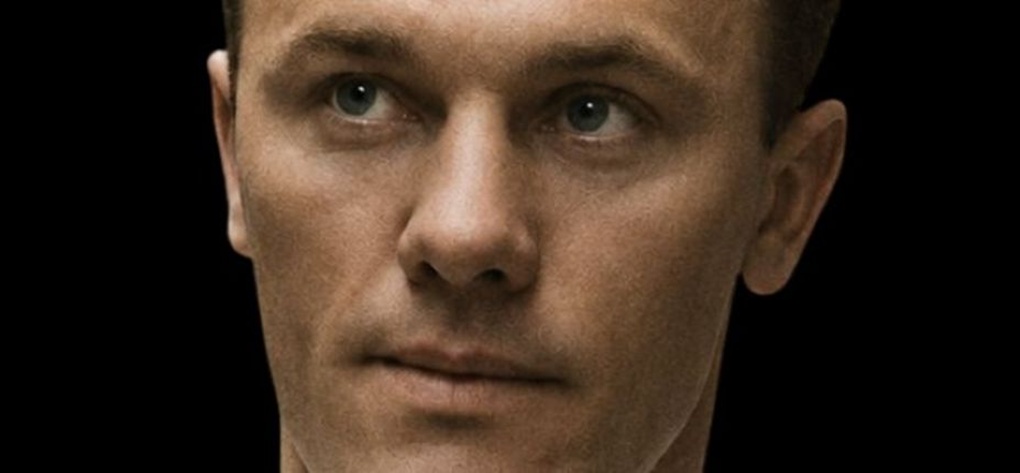
Jan Popluhar, born 12 September, 1935. Bernolakovo, Slovakia.
PART ONE
Jan Popluhar took his first steps in the game at Red Star Brno, but it was when he joined SK Slovan Bratislava that his story truly began. The Slovan coach Leopold Stastny was well known inside the game for handing out nicknames to his players, and Popluhar’s came quickly and stuck fast. Because he was good-looking and good-natured, with a broad smile that lit up the dressing room, the coach called him Bimbo, and so the great man was known across Slovak football circles from that moment on, a nickname that carried warmth rather than mockery and told you everything about how his teammates and supporters felt about him.
Over 262 league appearances for Slovan Bratislava in the famous sky-blue shirt, he scored 21 goals from the back — a remarkable return for a central defender in that era, and evidence of a player who contributed at both ends of the pitch rather than simply patrolling his own half. Furthermore, he brought to those performances a composure and authority that made him the cornerstone of one of the most competitive club sides in Eastern European football through the late 1950s and 1960s.
Back-to-back Czechoslovak Cup wins arrived in 1962 and 1963, and then a third came in 1968, by which point Popluhar had been the beating heart of Slovan Bratislava´s defence for well over a decade and was approaching the end of his time at the Tehelne Pole Stadium. Yet the cup medals were in some respects the least of what he achieved in those years, because his international reputation had by then grown to a scale that few footballers from behind the Iron Curtain ever reached.
He had first appeared for Czechoslovakia at the 1958 World Cup in Sweden, which gave him his first taste of the world stage, and two years later he was part of the national side that claimed the bronze medal at the European Nations’ Cup, a competition that would later become the European Championship and whose early editions were played in a format far more unforgiving than the expanded modern tournament. However, it was the 1962 World Cup in Chile where Popluhar did the thing that made him truly immortal in the history of the game, and it happened not through a last-ditch tackle or a crucial header on the goal-line but through an act of plain human decency that most players — even decent ones — might not have thought to make.
In the group stage, Czechoslovakia faced Brazil, the holders and the most celebrated team on earth, and during the match the young Pelé — already the most recognisable footballer on the planet despite being only 21 years old — went down injured. Popluhar could have done what most defenders of any era would do: play on, keep the game moving, let the referee handle it. Instead, he immediately drew the official’s attention to Pelé’s condition, making sure the Brazilian received proper care rather than pressing any advantage his side might have gained. It was instinctive, unselfconscious, and utterly characteristic of the man, and the footballing world took note.
He was later awarded the World Fair Play Award for that gesture, a recognition that placed him in a very small and distinguished company of sportsmen who had put humanity above competition at a critical moment, but the award mattered less than the fact itself — which was simply that Popluhar saw a man in pain and did the right thing without hesitation or calculation.
Despite their generosity of spirit off the ball, Czechoslovakia were anything but pushover opposition on it, and Popluhar anchored the defence as his country progressed through the 1962 tournament all the way to the final in Santiago, where they locked horns with Brazil again on 17 June, in front of close to 70,000 spectators. The Brazilians emerged 3-1 winners — Amarildo, Zito and Vava scoring for the holders, with Adolf Scherer’s early goal the only reply — but the silver medal told its own story about how far this Czechoslovak generation had pushed one of the greatest international sides the game has ever seen.
PART TWO
On 23 October 1963, a special match was staged at Wembley to mark the centenary of the Football Association, and the occasion demanded a team of the finest footballers in the world to face an England eleven.
Popluhar was selected alongside his Czechoslovak teammates Svatopluk Pluskal and Josef Masopust, and in that same side he found himself playing alongside Alfredo Di Stefano, Raymond Kopa, Denis Law, Eusebio and Ferenc Puskas — a gathering of talent that has probably never been matched before or since in a single fixture. England won the game 2-1, but in truth the scoreline was almost incidental: the significance lay in the fact that Popluhar had been judged worthy of standing in that company, and the selectors were not wrong.
In 1965, despite the outstanding form of his Czechoslovak teammate Josef Masopust — who had won the Ballon d’Or in 1962 and remained one of the supreme midfielders of the European game — it was Popluhar who was elected Footballer of the Year in Czechoslovakia, a recognition that spoke to his consistent excellence and to the esteem in which he was held by those who watched the domestic game most closely. In the same year he also took the ADN Eastern European Footballer of the Season award, meaning that his reputation stretched well beyond his own country’s borders.
World Soccer magazine named him to its World XI in 1964, 1967 and 1968 — three separate selections across four years, which is as clear an expression as any of sustained quality at the very top of the game. Not one nomination, not a brief moment of recognition, but a pattern of excellence that the sport’s most authoritative voices kept returning to across the back end of one of football’s greatest decades.
After 1969, his club path wound through Lyon in the French first division, where he spent two seasons, and then through Zbrojovka Brno, before he fetched up at Austrian amateur club SK Slovan Vienna, where he took on the combined role of player and coach and began passing on everything he had learned across a remarkable playing life. In all competitions across all clubs his tally came to 308 appearances, which for a defender of his generation represents an extraordinary span of service at a high level.
In 2000, Slovak football paid him its highest possible tribute by electing him the best Slovak footballer of the twentieth century — a verdict that encompassed a hundred years of the game in a footballing nation that has produced genuine world-class players across multiple generations. Three years on from that, UEFA named him as the Slovak Golden Player for the European jubilee celebration, an honour bestowed across the continent on players who had defined the game in their respective countries.
And then there is the asteroid. In 2002, the Near Earth Asteroid Tracking programme discovered a small body in the solar system at Palomar Observatory, and it was a suggestion by Slovak amateur astronomer Stefan Kürti that led to the official designation of asteroid 267585 Popluhar — confirmed by the Minor Planet Center on 15 June 2011. Most footballers get a stand named after them if they are very lucky, or a road near the ground, but Jan Popluhar has a piece of the universe bearing his name, and it seems entirely right.