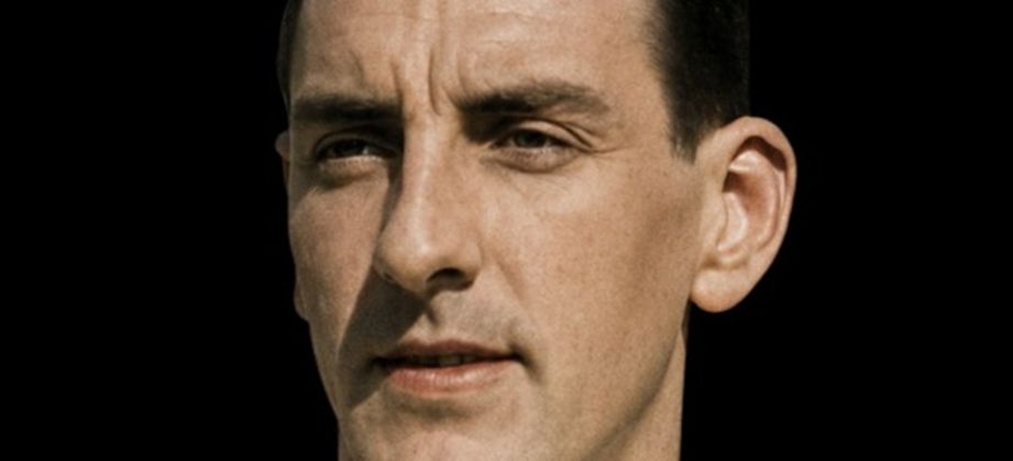
Andrej Kvasnak, born 19 May, 1936, Kosice, Slovakia.
PART ONE
Andrej Kvasnak came up through the domestic game with Dukla Pardubice and Jednota Košice before finding his true stage at Sparta Prague, and across those three clubs he made 251 league appearances in the Czechoslovak First League, scoring 83 goals — a total that, for a player whose primary function was to operate as an attacking midfield schemer rather than a conventional forward, is frankly startling. Both of his league titles came with Sparta, and in the red and white of that club he produced the kind of sustained excellence that persuaded the national selectors that he was not merely a useful option but an indispensable one.
The label of forward that has sometimes been attached to him is, in truth, a misleading one, because what Kvasnak actually offered was something more subtle and more valuable: the ability to dictate the tempo of a game from deep positions, to find a pass that nobody else had seen, and to arrive late into the penalty area at precisely the right moment to finish with either foot or, when the situation demanded it, with a head that was far more dangerous in the air than his slight frame might have suggested. He was, in short, the kind of player who makes everyone around him better, and the Czechoslovak national side of the early 1960s was already very good indeed before he walked into it.
Before he established himself in the senior side, Kvasnak served a careful apprenticeship with the Czechoslovakia B team, appearing nine times between 1956 and 1959 and scoring once, and it is worth pausing on that detail because it tells you something important about how seriously the Czechoslovak football authorities took the process of developing their best players and introducing them to international demands without rushing them into the full glare of competitive football before they were ready. When Kvasnak did make his senior debut, he was already a rounded and complete player, and the evidence is there in the statistics: 47 caps between 1960 and 1970, 13 goals, and a partnership in the centre of the park with Josef Masopust that gave Czechoslovakia something genuinely special at the heart of their midfield.
The 1960 European Nations’ Cup was Kvasnak’s first major tournament, and Czechoslovakia came away from it with the bronze medal — a decent enough outcome, even though the squad was already good enough to suggest that better things lay ahead. Two years later the Czechoslovakians proved it, and the 1962 World Cup in Chile stands as the high point of Kvasnak’s time in the national side and one of the great underappreciated achievements in the history of the game.
Czechoslovakia navigated the group stage with considerable efficiency, finishing second behind Brazil but comfortably clear of Mexico and Spain — and the point about Spain is worth making explicitly, because that Spanish side contained the naturalised Ferenc Puskas and, in name at least, Alfredo Di Stefano, who was called up despite injury and did not play. To finish above a group containing those names, however compromised Spain were by circumstance, required real quality, and Czechoslovakia had it in abundance.
In the quarter-finals they faced Hungary, and a composed 1–0 victory put them into the semi-finals, where only a little under 6,000 spectators turned up to Estadio Sausalito in Vina del Mar — a modest crowd that had more to do with the organisers switching venues to accommodate Chile’s unexpected progress than any lack of interest in the match itself. Czechoslovakia beat Yugoslavia 3–1 and were through to the final.
PART TWO
Santiago’s Estadio Nacional, in front of a boisterous crowd of nearly 70,000 people, staged the final on 17 June 1962, and for a glorious fifteen minutes it looked as though the impossible might actually happen.
A long ball from Adolf Scherer found Josef Masopust, and Masopust — Kvasnak’s midfield partner, the man with whom he had built such an instinctive understanding across dozens of international matches — slid it past goalkeeper Gilmar to give Czechoslovakia the lead. It was, in every sense, a goal that the partnership had made possible, because the supply line that Kvasnak provided throughout the tournament had freed Masopust to express himself at the highest level, and here was the reward.
Brazil hit back within two minutes through Amarildo, who finished after an error by goalkeeper Viliam Schrojf, and the momentum shifted in a way that Czechoslovakia could not fully resist, though they competed with great credit for the remainder of the match. Zito made it 2–1 midway through the second half, and a second Schrojf error allowed Vava to hit the third, and so the final ended 3–1 to Brazil — a successful defence of the title they had first won in Sweden in 1958, this time without Pele, who had been injured in the group stage and was replaced throughout the knock-out rounds by Amarildo. The silver medal that Kvasnak and his teammates carried home from Chile represented the finest result the country had ever achieved in the World Cup.
Still, Kvasnak was not finished with the international stage, not by a long stretch. He continued to represent Czechoslovakia throughout the 1960s, and one of his most important contributions came in the qualifying campaign for the 1970 World Cup in Mexico, when he converted a penalty against Hungary in a play-off that helped Czechoslovakia reach the finals — a moment of nerve and precision from a player who had been in the game for well over a decade and still had the composure to step up in the biggest moments. He appeared at the 1970 tournament in Mexico and finally retired from international football at the age of 34, having given fourteen years of service to his country across two continents and three World Cups.
His club path after Sparta took him to Belgium in 1969, where he spent three seasons with Racing Mechelen in the second tier of the Belgian league before hanging up his boots for good in 1972, and there is something quietly admirable about a player of his quality choosing to keep playing competitive football at a decent level into his mid-thirties rather than coasting through on reputation alone. He had never been that kind of footballer — he had always worked, always thought, always contributed — and even at the end that did not change.