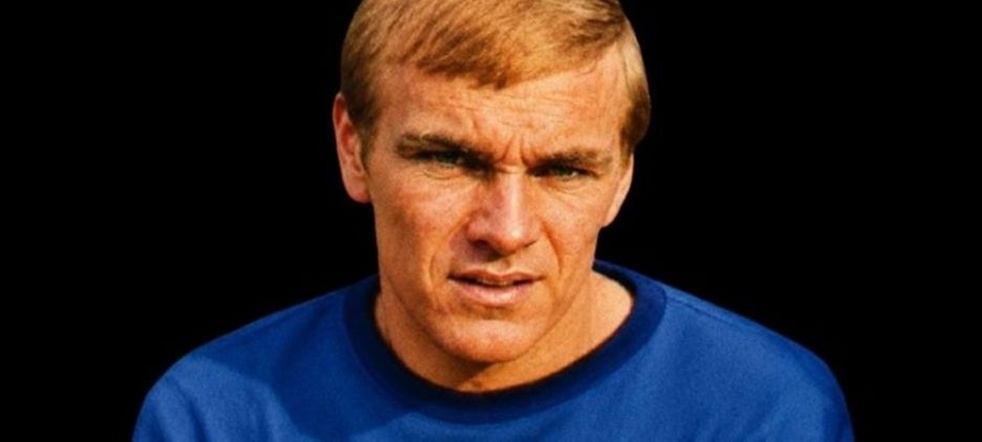
Alan William Cocks, born 7 May 1951, Burscough, England.
PART ONE
At the age of sixteen, Alan Cocks signed schoolboy forms for Chelsea Football Club in October 1967. Chelsea were not just a football club in 1967 — they were a statement, a mood, a brand that somehow captured the spirit of swinging London even as their results remained stubbornly inconsistent, and for a teenager from Burscough, the sheer scale of the thing must have been intoxicating and terrifying in roughly equal measure. He had impressed sufficiently in local football to catch the eye of Chelsea’s scouts, which was no small thing, and in signing those schoolboy forms he crossed a threshold that most boys of his age and background could only dream about.
He turned professional with the club in May 1969, committing himself to the structured world of a top-division outfit at a time when Chelsea, under the mercurial stewardship of Tommy Docherty, were trying to build something genuinely exciting. The training regimes at Stamford Bridge were intense and methodical, built around physical conditioning and tactical discipline in the fashion of the age, and the young Cocks threw himself into it with the kind of wholehearted enthusiasm that youth tends to supply in generous quantities. Between 1967 and 1970 he accumulated 42 appearances across Chelsea’s youth and reserve teams, operating primarily as a centre forward and displaying the goal-scoring instincts and direct, forceful style that had first attracted attention back in Lancashire. He featured in the 1967-68 FA Youth Cup campaign and spent long hours developing alongside emerging talents of his generation, none more gifted than the brilliant Alan Hudson, whose subsequent career would trace a very different arc to that of his young striking partner.
However, and this is the word that matters most when you are telling Alan Cocks’ story, none of it was ever going to be enough while Peter Osgood was around. Osgood. The King of Stamford Bridge, the most naturally gifted English centre forward of his generation, a man who seemed to carry the ball on a piece of invisible string and who could score goals of such casual, imperious beauty that even opposing fans forgot, for a moment, to be hostile. Cocks was a decent young forward. Osgood was a phenomenon. And in football, as in life, the presence of a phenomenon tends to make life extremely difficult for everyone who occupies a similar position in the pecking order, because a manager with Osgood available at centre forward has precisely no reason to look elsewhere, and so Cocks found himself doing what so many promising youngsters did at big clubs in that era — training hard, playing reserve football, improving incrementally, and never quite getting the chance to show what he could do on a Saturday afternoon when it actually counted for something.
The breakthrough, when it came, arrived in January 1970 in the rather less glamorous surroundings of Griffin Park, Brentford, which is as far from the King’s Road in spirit as it is possible to get while remaining within the boundaries of Greater London. Brentford were playing in the Fourth Division, which in 1970 was as far down the Football League as it was possible to descend without falling out of the pyramid entirely, and they needed fresh legs and fresh ideas in their forward line during the final months of the 1969-70 season. Cocks arrived on a two-month loan, an eighteen-year-old with a point to prove and the energy of someone who has spent three years waiting for precisely this kind of opportunity.
Under manager Frank Blunstone, who had taken charge of the club earlier that season, Cocks adapted quickly to the demands of competitive senior football, which is a different world from reserve football in ways that are difficult to explain to anyone who has not experienced both. Reserve football is controlled and technical and largely bloodless. Fourth Division football on a Tuesday night at Griffin Park, with the wind coming off the Thames and a crowd of a few thousand making the kind of noise that only small, passionate crowds can make, is something else entirely — it is physical and urgent and unforgiving, and it requires a certain kind of mental toughness alongside whatever technical ability you might possess.
Cocks managed to make 11 league appearances during his loan spell and scored 2 goals, which may not sound like a world-beating return but must be understood in context. He had never played senior competitive football before. He was operating in unfamiliar surroundings with teammates he barely knew. And yet he contributed meaningfully, and his first goal, which arrived in early March 1970 in a home match against Northampton Town, was exactly the kind of strike that a young forward needs to score early in his senior career — a goal that mattered, that secured vital points, that reminded everyone watching that this young man from Burscough had something real to offer. His second goal came later that month in a 4-1 defeat away to Oldham Athletic, which was a much less satisfying context, but the goal was his regardless, and he had done enough to demonstrate that the step up from reserve football to the Football League was one he could handle.
Brentford finished fifth in the Fourth Division that season, which was a decent outcome and placed them within touching distance of the promotion places, and while Cocks returned to Chelsea at the end of his loan spell without any suggestion of a permanent deal being forthcoming, he left Griffin Park with his confidence considerably bolstered and his understanding of what professional football actually required considerably sharper than it had been in January.
PART TWO
The summer of 1970 brought a release from Chelsea and, with it, the necessity of finding a new home, and Cocks signed professional terms with Southport in July of that year, which meant swapping London entirely for the Lancashire coast and the bracing realities of life as a Fourth Division professional in a club that was small, underfunded, financially precarious, and desperately hoping that someone like Alan Cocks might help them achieve the promotion they had been chasing for years. This was, as his admirers at the time would have noted, his first full-time professional contract, because the Chelsea arrangement had always existed in the shadow of the first team’s needs and priorities, and there is something both exciting and clarifying about signing for a club that actually wants you, that has chosen you specifically and is building its forward line around you and players of your type.
Alex Parker was the Southport manager, a former Everton and Scotland defender of some distinction who had moved into management with the kind of no-nonsense directness that distinguished players from that era tend to bring to the dugout. He had assembled a squad that mixed experience with youth, and around Cocks in the forward line he had Tony Field, an experienced striker who would go on to score 9 league goals that season and provide the kind of senior guidance that a young forward needs alongside him. The two of them formed a reasonable partnership, and the 1970-71 season, while ultimately disappointing in terms of Southport’s collective ambitions, gave Cocks his longest sustained run in senior football.
He made 24 league appearances, with one coming as a substitute, and scored 7 goals, which represented a perfectly respectable return for a player still finding his feet at this level. He also appeared in cup competitions, bringing his total contribution across the season to 25 games and 7 goals, and while he struggled for consistency in the early weeks — just one goal in his first dozen outings, which is the kind of drought that tests the nerve of even the most self-possessed forward — he found form in the latter stages of the campaign and contributed meaningfully to a team that was, in truth, never quite good enough to do what it had set out to do.
The season itself had a kind of cruel structure that football regularly imposes on clubs with aspirations that slightly exceed their means. Southport began with genuine momentum, accumulating 22 points from their opening 16 fixtures and generating real belief among their supporters, who came to Haig Avenue in the modest but enthusiastic numbers that characterised attendances at this level — an average of 2,856 per game, which tells you something about the scale of the operation and the financial pressures that went with it. But then the wheels came off, as they so often do, and five consecutive defeats in the mid-season spelled the end of any realistic promotion hopes and sent the club into a scramble for mid-table respectability that they eventually achieved with a final placing of eighth and 48 points from 46 games.
There were moments of genuine excitement along the way, heavy home victories over Newport County, who were beaten 6-1, and Scunthorpe United, who were beaten 5-1, providing glimpses of what this side could achieve when everything clicked, but those flashes were too infrequent to suggest a promotion-winning team, and the defensive vulnerabilities that allowed opponents into games regularly undermined the attacking work that Cocks and Field and their teammates contributed up front. Cocks himself missed patches of football due to a recurring groin injury that had troubled him previously, which limited his impact at exactly the moments when consistency was most required.
Parker was dismissed at the end of the season, which prompted the squad overhaul that in turn led to Cocks being released in the summer of 1971, and with his release came the end of his Football League career, which had lasted, in total, just over a season of full-time involvement. He was twenty years old. In different circumstances, at a different club, in a different era, perhaps things might have gone another way. But football is not a game of different circumstances — it is a game of the circumstances you are given, and the circumstances that were given to Alan Cocks did not quite allow his talent to flourish at the level he had once dared to hope it might.
What followed was the long, unhurried, thoroughly respectable second chapter of a football life that had been reoriented but not ended. He moved into non-league football, signing for Great Harwood initially, and then resurfacing at Skelmersdale United during the 1973-74 season, where he appeared in matches against his former club Southport in the small-world manner that non-league football specialises in. From 1974 to 1976 he was at Runcorn, playing consistently in their non-league campaigns and, again, encountering Southport along the way, as though some gravitational pull kept drawing him back towards that particular corner of his football life. And eventually he returned to his Lancashire roots with Lathom and Burscough British Legion, embracing semi-professional football close to home for the mixture of financial and personal reasons that draw players at the end of their competitive years back to familiar ground.