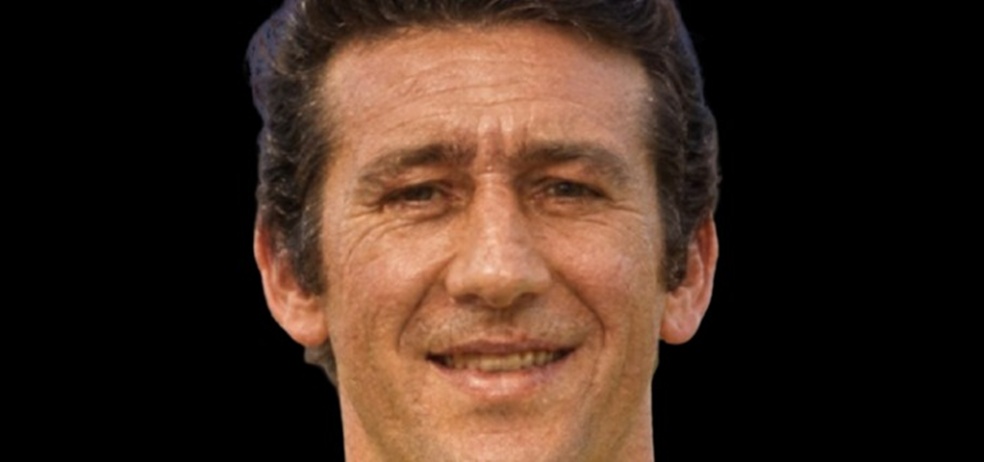
Kenneth Brown, born 16 February 1934, London, England.
PART ONE
A Londoner, Ken Brown grew up close enough to West Ham’s world to understand what the club meant to the district, but his first organised football came with Neville United, a local Dagenham side, and it was from there that the Hammers brought him into Upton Park, signing him as a professional on 16 October 1951. He was a tall, composed defender who read danger early and preferred a sensible clearance to an unnecessary flourish, yet first-team football did not arrive quickly, for Malcolm Allison was established at centre-half and West Ham were developing a group of players who would eventually change the club’s direction. National service between 1952 and 1954 interrupted Brown’s progress as well, so his early years required persistence, but he advanced through the reserve side and finally made his senior debut for the Irons in a closely contested 1-1 Second Division draw against Rotherham United at Millmoor on 21 February 1953, replacing Allison and beginning an association with West Ham that would last for more than fifteen years.
Brown’s first five seasons brought only occasional senior appearances, and a less patient player might have looked elsewhere, but he stayed at Upton Park, continued learning his position and gradually became part of the footballing discussion taking place behind the scenes, where Allison, Noel Cantwell and other strong personalities talked about training, tactics, diet and how the game could be played with greater thought. West Ham were still in the Second Division and had been there since 1932, while their support remained large enough to demand better, yet manager Ted Fenton was constructing a side containing John Bond, Andy Malcolm, Ken Tucker, Malcolm Musgrove, John Dick and Vic Keeble, and Brown’s development gave it a dependable centre-half who could hold the defensive line together.
By the beginning of 1957–58, he had secured his place, and once established he missed only one league match as West Ham won the Second Division championship, taking 57 points from 42 games and finishing one point above Blackburn Rovers. The football was lively and attack-minded, with Dick scoring 21 league goals and Keeble contributing 19, but those figures were supported by a defence in which Brown supplied calmness, positional sense and strength in the air, and after years spent waiting for regular selection he had become one of the men upon whom the side depended. Promotion was not merely a personal reward, because it returned West Ham to the First Division after an absence of 26 years and placed Brown in the top flight at the age of 24, fully prepared by the slow and sometimes frustrating education that had preceded it.
Life in the First Division brought stronger forwards, quicker attacks and far less room for error, but Brown adjusted without fuss, and West Ham did considerably more than scrape through their first season after promotion, finishing sixth in 1958–59 and showing that Fenton’s side possessed enough quality to trouble established opponents. Brown’s performances also took him into the England reckoning, which was no small achievement at a time when Billy Wright had dominated the centre-half position and when competition for international places was severe, and on 18 November 1959 he was selected to face Northern Ireland at Wembley in the British Home Championship. England won 2–1 through goals from Bobby Charlton and John Connelly, while Jimmy McIlroy replied for the visitors, but Brown was not chosen again, leaving him with the single cap that confirmed the regard in which he was held without becoming a lengthy international run.
His value to West Ham was more lasting, for he remained a regular through the early 1960s as the club moved from the Fenton years into the management of Ron Greenwood, appointed in 1961, and Greenwood wanted defenders who could control the ball and begin attacks rather than treating possession as something to be removed at the first opportunity. Brown suited that approach because he was strong without being reckless and uncomplicated without being crude, while the emergence of Bobby Moore beside him created a central partnership in which Moore’s passing and anticipation were balanced by Brown’s concentration, covering work and willingness to deal with the opposing centre-forward.
West Ham’s league results remained uneven, but Greenwood was building a cup side of considerable threat, with Jim Standen in goal, Bond and Jack Burkett operating at full-back, Brown and Moore in the centre, and an attack featuring Peter Brabrook, Ronnie Boyce, Johnny Byrne, Geoff Hurst and the young John Sissons. The first major reward arrived in the FA Cup of 1963–64, although the road to Wembley contained enough difficult moments to test every part of the team, as West Ham overcame Charlton Athletic, Leyton Orient, Swindon Town, Burnley and Manchester United before meeting Second Division Preston North End in the final on 2 May 1964.
Preston were given the lead by Doug Holden following ten minutes of play, Sissons equalised quickly and Alex Dawson put the Lancashire side 2–1 ahead shortly before half-time, but Hurst levelled seven minutes after the resumption and Boyce headed the deciding goal in the final minute of the encounter, giving West Ham a 3–2 victory and their first FA Cup. Brown’s contribution was less likely to dominate the headlines than the goals, yet the final required him to cope with Dawson’s power and the remarkable presence of Preston’s 17-year-old midfielder Howard Kendall, and he kept working through a match in which West Ham twice had to recover from behind. That triumph also carried West Ham into European competition, and for Brown it completed an extraordinary change from the reserve defender who had waited years for his chance to an FA Cup winner standing at Wembley alongside a new generation of international players.
The European Cup Winners’ Cup of 1964–65 took West Ham through a demanding series of home-and-away contests, beginning against La Gantoise of Belgium and continuing through ties with Spartak Prague, Lausanne-Sports and Real Zaragoza, and Brown played his part in a campaign that required rather more control than a straightforward domestic cup run. West Ham beat La Gantoise 2–1 on aggregate and Spartak Prague 3–2, then defeated Lausanne 6–4 across two open quarter-final matches before overcoming Zaragoza 3–2 in the semi-final, which sent them back to Wembley on 19 May 1965 for a final against TSV 1860 Munich.
The German side were dangerous and the match remained goalless for more than an hour, but Alan Sealey scored twice in three minutes, first finishing after Boyce had opened the defence and then converting the rebound when Hurst struck the crossbar, and West Ham won 2–0 in front of 97,974 spectators. Brown and Moore had supplied the firm centre from which the victory could be built, dealing with Munich’s movement while allowing West Ham’s attacking players to keep pressing, and their partnership was a fine example of two defenders with different qualities working for the same purpose. Brown was also part of the side that shared the 1964 Charity Shield with Liverpool following a 2–2 draw at Anfield, but the European victory gave West Ham their greatest prize to that point, and it meant that within twelve months he had collected winners’ medals in two major finals at Wembley.
PART TWO
Age and the physical demands of top-flight football eventually reduced Ken Brown’s appearances, although West Ham United acknowledged his long service with a testimonial before he left the club in May 1967, by which time he had made 386 Football League appearances and scored four league goals. John Bond, his close friend and former team-mate, had already moved to Torquay United, and Brown followed him to Plainmoor for a £4,000 fee, exchanging the First Division and European nights at Upton Park for Third Division football on the Devon coast.
It was a considerable change in setting but not in his approach, because Torquay needed experienced players who could organise those around them, and Brown gave the club two seasons, amassing 42 league appearances and finding the back of the net once. His playing days in the Football League ended in 1969, yet he was not quite finished, for in May of that year he joined forces with Southern League outfit Hereford United, where John Charles was manager, and spent one last season on the field.
Charles understood centre-forward play as well as almost anybody, having excelled for Leeds United, Juventus and Wales, so Brown’s final year placed him under a man who knew precisely what was demanded of a centre-half, but by 1970 his own thoughts were moving towards coaching. He had spent nearly two decades absorbing ideas from Allison, Fenton, Greenwood and Charles, and although their methods differed, each had shown him something about organisation, man-management or the value of giving intelligent footballers responsibility.
When Bond became manager of Bournemouth & Boscombe Athletic in 1970, Brown joined him as trainer, while Reg Tyrrell served as assistant manager, a distinction sometimes lost in later accounts but important in describing the work Brown initially performed. Bournemouth had just dropped into the Fourth Division, yet Bond quickly revived them, and with Ted MacDougall scoring at a remarkable rate they won promotion in 1970–71 before challenging strongly in the Third Division the following season, finishing runners-up to Aston Villa. Brown’s responsibility centred on preparing the players and maintaining their fitness, but the position also allowed him to study Bond’s bold management at close range, and the pair developed a partnership strong enough to continue when Norwich City called in November 1973.
Bond replaced Ron Saunders at Carrow Road and brought Brown with him as assistant manager, taking charge of a club that had reached the First Division for the first time in 1972 but was finding survival difficult, and although Norwich were relegated at the end of 1973–74, they responded by winning promotion immediately and reaching the League Cup final in 1975. Aston Villa beat them 1–0 at Wembley through Ray Graydon’s late goal after Kevin Keelan had saved his penalty, but Norwich were soon established again in the First Division, and Brown became an increasingly important figure on the training ground as Bond reshaped the squad through players such as Martin Peters, Colin Suggett, Ted MacDougall, Phil Boyer and later goalkeeper Chris Woods.
PART THREE
Ken Brown spent almost seven years as John Bond’s assistant, which gave Norwich City valuable continuity. The arrangement ended in October 1980, however, when Bond departed for Manchester City and Brown was asked to take charge. It was a difficult point at which to become a manager, because Norwich were already involved in a struggle near the bottom of the First Division, and although Brown worked to steady the side he could not prevent relegation at the end of 1980–81. His response showed the practical quality that had marked him as a player, for he retained his composure, adjusted the team and secured promotion at the first attempt in 1981–82, when Norwich finished third in the Second Division behind Luton Town and Watford.
The return to League Division One was followed by three seasons of survival battles, but Brown kept Norwich competitive despite financial restrictions and the frequent need to sell leading players, while his recruitment repeatedly uncovered footballers capable of improving at Carrow Road. Dave Watson arrived from Sunderland and developed into an England centre-half, Steve Bruce was taken from Gillingham after higher-profile clubs had passed him by, and John Deehan, Mick Channon, Asa Hartford, Martin O’Neill and Mark Barham gave the East Anglia side experience, movement and attacking variety at different points. Brown was not a theatrical manager and did not try to dominate every conversation, but his teams were organised, physically prepared and encouraged to play, and that mixture carried Norwich towards a campaign in which triumph and disappointment arrived almost together.
Norwich’s 1984–85 League Cup run began without any clear suggestion that Wembley was waiting, but victories over Preston North End, Aldershot, Grimsby Town and Sunderland carried Brown’s side into a two-legged semi-final against Ipswich Town, their East Anglian rivals. Ipswich won the first leg 1–0 at Portman Road through Mich d’Avray, leaving Norwich with a difficult task at Carrow Road, but Deehan wiped out the deficit and Steve Bruce headed the decisive goal near the end, sending the Canaries through 2–1 on aggregate.
Sunderland were their opponents at Wembley on 24 March 1985, and the final was settled early in the second half when Gordon Chisholm deflected Asa Hartford’s shot into his own net, although Norwich still had to survive Clive Walker striking a penalty against the post before completing a 1–0 victory. Brown had now won major trophies at Wembley as both player and manager, but there was no uncomplicated celebration, because Norwich’s league position remained dangerous and the season ended with relegation from the First Division despite a total of 49 points, an unusually high figure caused partly by the tightness of the table and the continuation of two points for a win.
Once again Brown was required to rebuild immediately, and once again he brought Norwich back at the first attempt, but the 1985–86 promotion was stronger than the achievement four years earlier because the Canaries won the Second Division championship and finished nine points clear of runners-up Charlton Athletic. After losing their opening three away matches they settled into a steady rhythm, climbed into the promotion places and then put together an 18-match unbeaten league sequence, while Kevin Drinkell scored 22 league goals and the defence of Woods, Bruce and Watson provided the side with a powerful base. Promotion was secured with a 2–0 victory at Bradford City in April 1986, the championship was guaranteed by a 1–1 draw at Stoke City, and a 4–0 home win over Leeds United completed a season in which Brown had answered relegation with authority.
Norwich did not return to the First Division merely to survive, either, for in 1986–87 they rose to the top of the table during the opening months and eventually finished fifth, the highest position the club had achieved up to that time. Drinkell scored 16 league goals, Bruce contributed from central defence, Bryan Gunn established himself in goal after arriving from Aberdeen, and players such as Ian Culverhouse, Mike Phelan, Mark Barham and David Williams helped Norwich become one of the division’s hardest teams to beat. Only champions Everton lost fewer league matches, while Brown’s side finished above clubs with far greater resources, including Arsenal, Manchester United and Tottenham Hotspur.
That fifth-place finish should have provided Brown with time, but football rarely grants managers as much security as their previous results appear to deserve, and Norwich began 1987–88 poorly, winning only three of their opening 14 league matches. Chairman Robert Chase dismissed Brown on 9 November 1987, ending an association with the club that had lasted fourteen years and included work as Bond’s assistant, seven years as manager, two immediate promotions, a Second Division championship, the 1985 League Cup and a fifth-place finish in the First Division. He soon returned to management with Shrewsbury Town, taking over during the 1987–88 season and helping them remain in the Second Division, but his stay was brief, and on 6 July 1988 he was appointed manager of Plymouth Argyle.
Home Park presented a different challenge, and Brown guided Plymouth to 18th place in the Second Division in 1988–89, but the following season became more difficult and he was dismissed on 6 February 1990. It was his final senior managerial post, although his influence continued through the footballers he had signed and encouraged, many of whom went on to achieve success elsewhere, and through his son Kenny, a defender who began under him at Norwich before playing for Plymouth, West Ham and several other clubs.