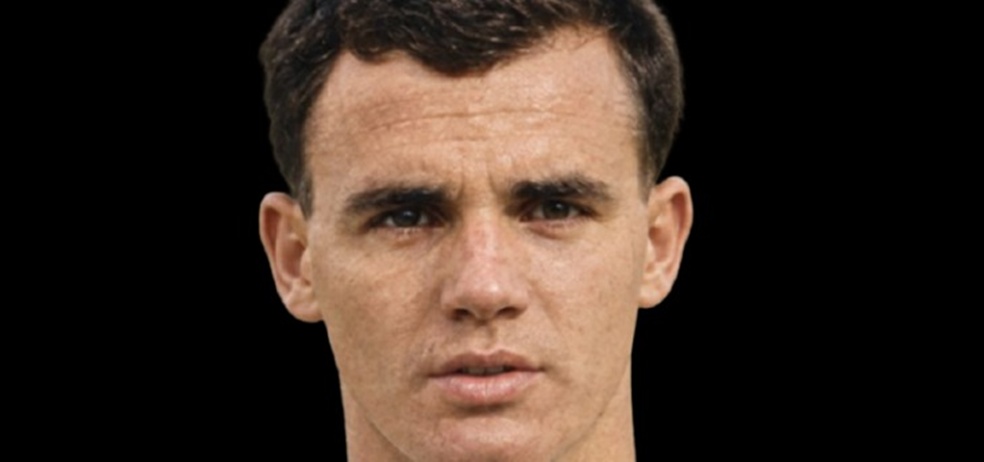
Arthur Stewart, born 13 January 1942, Ballymena, Northern Ireland.
PART ONE
Arthur Stewart started out as a teenager on the books of his hometown club Ballymena United in 1957 before Glentoran came calling in 1961, and it was there, at the Oval, that the wing half first made his name. The move from Ballymena to East Belfast brought Stewart into a club with high expectations, and although he was young and still learning the demands of senior football, he soon became trusted in a team that was gathering pace. Glentoran won the Gold Cup in 1962–63, giving Stewart his first major medal at the Oval, and that success was followed by the Irish League championship in 1963–64, when the Glens finished above Linfield after a season in which consistency mattered every bit as much as flair.
Stewart was not there merely to fill a shirt because his steady work in midfield helped hold the side together, and while others might catch the eye with a dribble, a shot or a decisive goal, he supplied much of the strength behind them. Another prize arrived in 1964–65 when Glentoran won the Irish Cup, defeating Coleraine 2–1 in the final at Windsor Park, and by then Stewart had grown from a promising recruit into one of the dependable figures in a side capable of winning different competitions in different ways. Glentoran could pass and attack, but they could also stand their ground when matches became tight, and Stewart’s willingness to compete without losing his head suited them perfectly as they established themselves among the leading clubs in Northern Ireland.
By the beginning of 1966–67, Stewart had already collected enough medals to satisfy many players, but that season raised Glentoran to a new level and placed him at the centre of one of the finest campaigns in the club’s history. The Glens won the Ulster Cup, the Gold Cup, the City Cup and the Irish League championship, four trophies gathered through months of sustained form rather than one brief run, and Stewart’s presence gave the side balance as the demands of league and cup football accumulated. The Gold Cup final brought a stirring 5–2 victory over Crusaders at Windsor Park, and although Crusaders gained revenge by beating Glentoran 3–1 in the Irish Cup final, that defeat could not remove the scale of what had already been achieved. Glentoran had shown that they could keep winning across several competitions, and Stewart, now 25, had reached the point where international recognition could no longer be delayed.
His first senior appearance for Northern Ireland came against Wales at Windsor Park on April 12, 1967, and the match finished goalless, yet the result mattered less to Stewart than the fact that years of solid Irish League football had at last earned him a place at that level. It was the first of seven full caps, while he also represented his country at amateur level and appeared for the Irish League representative side, proof that his contribution was valued well beyond the Oval. The Irish FA records that Stewart won seven senior caps, beginning against Wales in April 1967.
That successful season had barely finished when Stewart and his Glentoran team-mates were asked to take part in an adventure unlike anything they had previously known, for the newly formed United Soccer Association in North America imported complete foreign clubs and placed them behind local identities for its 1967 competition. Glentoran became the Detroit Cougars, exchanged East Belfast for the United States and stepped into a strange new football setting in which the players represented a city thousands of miles from home, but Stewart adapted quickly and played 12 league matches, scoring twice.
The Cougars did not win their division, even though the trip offered Stewart a view of professional football on a wider scale and gave him experience that would become useful when North America called again later in his playing days. There was something fitting about Stewart´s part in the venture because he was never a footballer who appeared unsettled by unfamiliar surroundings, and whether at the Oval or in Detroit, his game rested on sound judgement rather than conditions being exactly to his liking. Once the American schedule was finished Stewart returned to Glentoran, but his performances had already attracted interest elsewhere, and before 1967 was out he received the opportunity to enter English League football at a club whose fortunes were about to change sharply.
On December 2, 1967, Stewart signed for Derby County, joining a Second Division club managed by Brian Clough and assisted by Peter Taylor, and although Derby were struggling for consistency during that first season under their new management team, important foundations were being laid. Clough and Taylor had already brought in Roy McFarland, John O’Hare and Alan Hinton, while Kevin Hector supplied goals, and Stewart entered a changing room in which standards were being raised and weak performances were not easily excused.
Derby had started 1967–68 well enough to raise hopes, but their league form fell away badly and they eventually finished 18th in the table. Their real success came in the League Cup, where victories over Hartlepools United, Birmingham City, Lincoln City and Darlington carried them into a two-legged semi-final against Leeds United, and Stewart arrived in time to take part in that contest. Derby lost the first leg 1–0 at home on January 17, 1968, and were then beaten 3–2 away on February 7, going out 4–2 on aggregate, with Stewart scoring County’s late second goal in Yorkshire. He was not an automatic choice throughout his time at Derby, but he made 30 league appearances and his stay included the remarkable transformation of 1968–69, when the club surged to the Second Division championship and promotion. Clough’s side finished seven points clear of Crystal Palace, losing only five of their 42 league fixtures, and even though Stewart was no longer at the heart of every match, he belonged to the group that helped carry Derby out of Division Two and into the top flight.
Stewart remained at Derby during the club’s return to the First Division in the 1969–70 campaign, when Clough’s men confounded expectations by finishing fourth, and the contrast with the struggling side he had joined little more than two years earlier could hardly have been greater. He had seen the club change its habits, strengthen its team and develop the hard confidence that would eventually bring Derby the League championship in 1971–72, although Stewart had left before that title was won and should not be credited as a member of the championship squad.
His time in England nevertheless gave him valuable experience of Clough’s forceful management and Taylor’s careful eye for players, and it also accounted for the remaining appearances in his seven-match Northern Ireland record during 1967 and 1968. Competition for places at Derby was fierce, particularly as the club continued to recruit and improve, so Stewart decided in the summer of 1970 that regular football and a return home offered him more than waiting on the edge of the first team. In August he re-joined Ballymena United, returning to the club where he had started 13 years earlier but coming back as a seasoned international who had won trophies with Glentoran, played in America and helped Derby rise into the First Division.
PART TWO
Arthur Stewart´s second spell at Ballymena soon became about far more than playing, because in 1971 he was appointed player-manager and asked to guide the side while continuing to operate on the field, a demanding double duty that required him to select and organise men who were also his team-mates. Stewart responded by leading Ballymena to the City Cup in his first season in charge, ending the club’s 11-year wait for a senior trophy, and the achievement mattered deeply at a Showgrounds where supporters had gone too long without a day of celebration. His calm authority suited management because he knew what footballers required but did not confuse sympathy with softness, and he could demonstrate his instructions during matches instead of delivering them only from the touchline.
Ballymena became competitive again, although turning improvement into a steady supply of trophies proved difficult, and the 1973–74 season brought both recognition and frustration. Stewart was named Ulster Footballer of the Year, an exceptional honour for a player carrying managerial duties as well, while Ballymena reached the Irish Cup final and the Blaxnit All-Ireland Cup final, only to lose both to an excellent Ards side. The Irish Cup final at Windsor Park ended in a 3–1 defeat, and the Blaxnit final was settled over two legs, leaving Ballymena with the painful knowledge that a promising season had twice carried them to the last obstacle but no farther.
Even so, Stewart and Ballymena did not allow those defeats to finish their work, and in 1974–75 the Gold Cup was won, giving the manager another trophy and confirming that the revival had produced something solid. The same season also brought another final, but Coleraine denied Ballymena in the Ulster Cup, and results became more difficult to sustain as Stewart’s long period of responsibility began to take its toll. Being a player-manager offered direct control on the field, but it also meant carrying two sets of worries every Saturday, since he had to consider his own performance while judging the shape and mood of the entire side, and after almost five years in charge his second Ballymena spell ended early in 1976.
He joined Distillery in March, yet the arrangement lasted only briefly because another offer arrived from across the Atlantic, this time from New Jersey Americans of the American Soccer League. Stewart accepted a well-paid five-month contract and returned to North America nine years after his summer with the Detroit Cougars, but now he travelled as an experienced professional in his mid-thirties rather than a member of a full Glentoran party experiencing the country together.
When the American season ended, Stewart returned to Northern Ireland during 1976–77 and spent short periods with Bangor and Cliftonville, and although neither stop developed into a lasting home, he still possessed enough ability and understanding to interest one of his former clubs. Glentoran appointed him player-manager in May 1977, bringing him back to the Oval ten years after the four-trophy season and asking him to restore direction to a side that remained rich in expectation. The return began encouragingly, particularly in Europe, where Glentoran faced Icelandic champions Valur in the opening round of the European Cup and advanced 2–1 on aggregate after winning 1–0 at home and drawing 1–1 in Reykjavik.
That success earned a meeting with Juventus, and the difference in money, reputation and international standing appeared enormous, but Stewart’s Glentoran refused to be overwhelmed. Juventus won the first leg 1–0 in Belfast and completed a 5–0 aggregate victory in Turin, yet the narrow score at the Oval gave Glentoran supporters a night of considerable pride, for their side had kept close company with one of Europe’s strongest clubs and made the Italian champions work for every opening.
Domestic football also produced a reward as Stewart led Glentoran to the Gold Cup in 1977–78, adding another success to the trophies he had won at the club as a player, but the Irish League championship went to Linfield and the pressure attached to management at the Oval never disappeared. Stewart continued to play when required, making 15 league appearances during this final Glentoran period, although by then his thinking from the touchline mattered more than his work in midfield, and in December 1978 he resigned to become head coach of New Jersey Americans. It was his third move across the Atlantic, counting the Detroit Cougars summer of 1967, and the appointment showed how strongly his earlier work in American football had been remembered.
Still, Northern Ireland remained home, and in 1981 Stewart returned to take charge of Ballyclare Comrades before later managing Ballymoney United, continuing to pass on the practical knowledge accumulated through more than two decades as a player and manager. There were no grand airs about Stewart’s football because his strength had always come from understanding the match in front of him, accepting responsibility and making the people around him more secure.