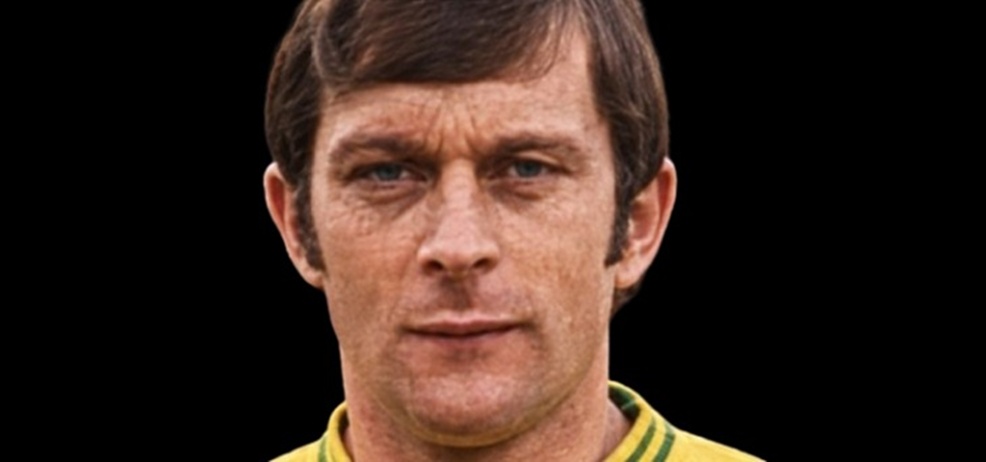
David Stringer, born 15 October 1944, Great Yarmouth, England.
PART ONE
Dave Stringer signed for Norwich City in 1964, a twenty-year-old whose game was built on positioning rather than pace, on reading the play rather than chasing it, and on a bone-deep reliability that would come to define him. Norwich in the mid-1960s were unremarkable, a mid-table Second Division outfit with grand ambitions and precious little to show for them, and for the first eight years of his time in amber and yellow, the top flight of English football remained a distant, almost fanciful dream. Nonetheless, Stringer went about his business, learning the trade in front of crowds who valued substance over style, and building the kind of understanding with his fellow defenders that only comes from years spent shoulder to shoulder in the same colours.
Norwich were, by most honest assessments, footballing driftwood throughout this period, neither good enough to climb nor poor enough to sink, and yet within that mediocrity Stringer was quietly becoming indispensable. He was not the sort of centre-half who caught the eye with a flourish, nor the type to make the back pages with a mistimed lunge; instead, he defended with an almost old-fashioned discipline, clearing his lines, marshalling the players around him, and trusting that the unglamorous work would eventually be rewarded. It was.
The 1971–72 season proved to be the making of both club and man. Norwich City began that August campaign with a 1-1 draw to Luton Town at Kenilworth Road and ended it, some forty-two league fixtures later, as champions of the Second Division, promoted to the First Division for the very first time in the club’s history. It was, by any measure, a remarkable transformation of a club that had spent the best part of a decade treading water. The season had its stumbles but the underlying consistency told its own story: twenty-one wins, fourteen draws, only seven defeats, and fifty-seven points gathered from a division that also contained Birmingham City, Millwall, Queens Park Rangers, and Sunderland, none of whom could quite live with Norwich’s momentum. Along the way there was an eye-catching run to the League Cup fifth round, in which Brighton, Carlisle again, and Grimsby Town were dispatched before Chelsea finally ended the adventure at Carrow Road.
Amid all of it, Stringer was voted Norwich City’s Player of the Year by the club’s own supporters, a distinction that mattered enormously to a man who had never sought the limelight but who had, by common consent of the terraces, been the beating heart of a promotion-winning defence. It is worth pausing on the timing of that honour, because it fell in precisely the season that Norwich made history, which meant that the fans who chose him were not simply rewarding a good season in isolation — they were recognising the player who had underpinned the club’s greatest leap forward to that point. Few accolades in football carry more weight than being singled out by your own supporters in your club’s finest hour.
Promotion brought with it an entirely different examination, and Stringer, characteristically, did not shirk it. He would go on to represent Norwich in two League Cup finals at the old Wembley Stadium, both of them agonisingly close and both of them ultimately lost. The first came in March 1973, when Norwich were defeated 1–0 by Tottenham Hotspur in front of a crowd of one hundred thousand, substitute Ralph Coates settling the contest with a low finish from the edge of the box.
Two years later, in March 1975, Norwich returned to the national stadium once more, this time against an Aston Villa side managed by Ron Saunders — the same Saunders who had lost the 1973 final with Norwich before switching allegiances — and once again the Canaries came away empty-handed, beaten 1–0 courtesy of a Ray Graydon follow-up after Kevin Keelan had saved Graydon’s initial penalty. Two Wembley appearances, two narrow defeats, and yet Stringer’s role in getting Norwich to the very brink of major silverware, not once but twice, spoke to the consistency that had characterised his whole time at the club.
Throughout these years in the top division, Stringer remained the dependable presence at the centre of the Norwich defence, and while the club oscillated between First and Second Division football across the decade, he simply carried on doing what he had always done: defending calmly, organising those around him, and giving everything for the shirt he had worn since he was twenty years old. By the time his playing days at Carrow Road drew to a close, he had made a staggering total of 499 appearances for Norwich City across all competitions, a figure that places him among the true giants of the club’s history and one that, remarkably, very few players anywhere in English football can match at a single club.
PART TWO
In September 1976, with his thirty-second birthday not far away, Dave Stringer left Norwich City for Cambridge United on a free transfer, a move that on the surface looked like the natural winding-down of a long playing spell but which, in practice, proved to be anything but. Cambridge United were managed by Ron Atkinson, a man not yet the household name he would become, but already possessed of a sharp eye for the right signing at the right moment, and Big Ron knew precisely what he was getting. Stringer’s arrival, crucially, allowed Brendon Batson to revert to his best and most natural position at right-back, freeing him from centre-half duties and completing a Fourth Division side that Atkinson was quietly assembling into something formidable. Alongside Alan Biley and Tom Spriggs, each of them signed for the modest sum of two hundred and fifty pounds, Batson formed the nucleus of the promotion push, but as Atkinson himself would later reflect, it was Stringer’s arrival that provided the icing on the cake.
Big Ron, never a man short of a confident soundbite, compared the thirty-one-year-old Stringer to Bobby Moore, then plying his trade for Fulham in the twilight of his own storied time in the game, suggesting Dave could offer United precisely the kind of calm, experienced authority that Moore was providing further down the M11. It was praise of the highest order, and Atkinson went further still, describing Stringer as a model professional — a man who used his strength and his reading of the game to defend quietly, efficiently, and without fuss, exactly as he had done throughout his years at Norwich. The Championship-winning Cambridge side of 1976–77 was now essentially in place, and it duly delivered the Fourth Division title that season, with Stringer’s experience proving the perfect foil for a squad otherwise built on youthful hunger and Atkinson’s shrewd bargain-basement dealing.
For the following three seasons, Stringer missed just two league games as United achieved successive promotions, climbing from the Fourth Division to a place in the old Second Division for the very first time in the club’s history. At his side throughout stood Steve Fallon, and between them these two formed the sort of defensive partnership around which entire promotion campaigns are built; all the best sides, it is often said, are constructed on foundations like these, and Cambridge United’s rise through the divisions in the late 1970s owed an enormous debt to the understanding these two men shared.
Ahead of that momentous first season in the second tier, Stringer, drawing on experience nobody else in the Cambridge dressing room possessed, warned his colleagues that the football would move faster even than it had in the First Division — he had, after all, played in both, and he knew whereof he spoke. His warning was heeded, and though the step up was considerable, United acquitted themselves well, finishing a highly creditable twelfth, with Stringer duly voted the supporters’ Player of the Year for his efforts — an echo, seven years on and at a different club entirely, of the very same honour Norwich fans had bestowed on him in 1972.
Fate, however, has a habit of intruding on even the most reliable of careers in football, and in February 1980 a hamstring injury sustained against Charlton Athletic rudely interrupted Stringer’s remarkable run in the Cambridge side. With Lindsay Smith preferred alongside Fallon the following season, Stringer’s time at the Abbey Stadium was drawing to a natural close. In total, across four seasons and all competitions, he made 181 first-team appearances for Cambridge United, and though goals were never remotely his stock in trade, he did manage to find the net once, in only his fourth outing for the club.
The circumstances of that solitary goal deserve retelling in full, because they capture something of the man’s good fortune as much as his talent: playing Halifax at The Shay, Stringer struck a free-kick from fully fifty yards out, deep inside his own half, and with the aid of a stiff and obliging breeze the ball sailed clean over the startled goalkeeper’s head and into the back of the net. It was, by any definition, an unlikely way for a defender of his type to open his account, but then football has always had room for such quirks.
PART THREE
October 1980 brought Dave Stringer full circle, as he accepted an offer to return to Norwich City and take charge of the club’s youth team, a role that suited both his temperament and his accumulated football knowledge perfectly. Where he had once organised back-fours as a player, he now set about organising the development of Norwich’s next generation, and the results came quickly enough: in 1983, his young Canaries lifted the FA Youth Cup, seeing off Everton over a dramatic two-legged final and subsequent play-off, with Paul Clayton’s goal at Goodison Park settling the tie in Norwich’s favour. It was a triumph built on the kind of patient, unglamorous groundwork that had characterised Stringer’s own playing days, and it marked him out, well before he ever took charge of a first-team dugout, as a coach capable of shaping talent rather than merely managing it.
From there, Stringer progressed to take charge of the reserve team, continuing to bridge the gap between Norwich’s youth structures and the senior side, quietly building both a reputation and a network of trust throughout the club. By the start of the 1987–88 season he had been promoted again, this time to assistant manager under Ken Brown, and when results turned sour that autumn — Norwich winning only a handful of league games and slipping toward the foot of the First Division — chairman Robert Chase took the drastic step of sacking Brown in November 1987. Stringer, initially on a caretaker basis before the appointment was made permanent, stepped up to take the reins of the senior side for the first time.
It was, by anyone’s estimation, a baptism of fire. Norwich were flirting dangerously with relegation when Stringer took over, but under his calmer, more considered stewardship the club steadied itself sufficiently to finish the season in fourteenth place, comfortably clear of the drop. Along the way, in 1988, Stringer made a decision that would prove enormously consequential for English football more broadly, if not immediately for Norwich itself: he released a young reserve-team striker named Dion Dublin, allowing him to join Cambridge United — the very club where Stringer himself had ended his playing days — on a free transfer. Dublin would go on to score prolifically for the Abbey Stadium club before earning a million-pound move to Manchester United and, later, a fine top-flight career with Coventry City and Aston Villa; Stringer’s release of him was, in hindsight, one of those quiet footnotes that ripple outward through the game in ways no one could have predicted at the time.
If 1987–88 had been about consolidation, the following season became something else entirely: a genuine, unlikely tilt at the very top of English football. Norwich were tipped by most observers to struggle again in 1988–89, yet instead they surged to the top of the First Division by September, and by the end of October held a six-point lead over Arsenal, having played a game more besides. The lead could not be sustained indefinitely against clubs with considerably greater resources, but Norwich held their position at the summit until December and ultimately finished the campaign in fourth place. Alongside that extraordinary league form, Stringer’s side also reached the semi-finals of the FA Cup that season, eventually falling to Everton, and in doing so came remarkably close to a genuine assault on the domestic double, an achievement that had been managed only a handful of times in the entire history of English league football.
The two seasons that followed, 1989–90 and 1990–91, were more modest by comparison — Norwich finished tenth and then fifteenth respectively — but there were still moments of real substance, not least a memorable FA Cup run in 1990–91 that included a live-television victory over Manchester United before the Canaries were eventually undone by Nottingham Forest in the quarter-finals. Stringer’s Norwich were, throughout this period, never a fashionable team, and never blessed with the biggest budget in the division, yet they consistently punched above their station, drawing praise even from unlikely quarters for the collective, selfless nature of their football.
Stringer’s final full campaign in charge, 1991–92, brought both the best and the worst of his time as manager into sharp focus. Norwich reached the semi-finals of the FA Cup for a second time under his stewardship, narrowly losing 1–0 to Sunderland, and also progressed to the quarter-finals of the League Cup, losing at Tottenham Hotspur. In the league, however, results told a far less flattering story: Norwich sat a respectable thirteenth in late March, but a dismal run thereafter, in which the club won just once from its final eight matches, dragged them down to eighteenth place by the season’s close. One day before the final fixture of that campaign, with the writing plainly on the wall, Stringer handed in his resignation, bringing to an end nearly five years in the manager’s chair and, though nobody quite knew it at the time, bringing to a close the only managerial post he would ever hold.