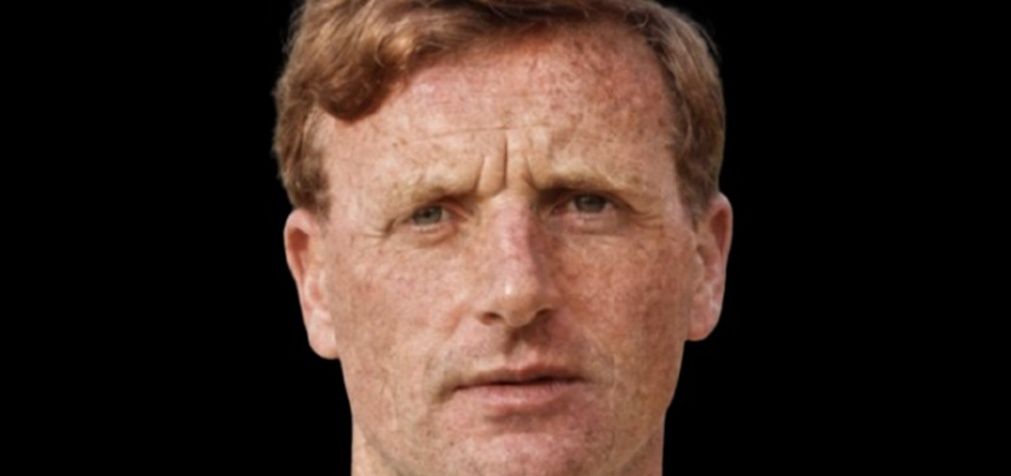
Leonard Allchurch, born 12 September 1933, Swansea, Wales.
PART ONE
Having captained Swansea Schoolboys and represented Wales at schoolboy level, Len Allchurch joined Swansea Town and signed professional forms in October 1950, shortly after his 17th birthday, at a time when the club were playing in the Second Division and when gaining a regular place in the side demanded patience as well as ability. Ivor had already begun to attract national attention at Vetch Field, but Len worked his way forward at his own pace, learning the trade in a period when wingers were expected to take kicks, ride tackles, provide chances and still contribute goals, and there were no substitutes waiting to rescue an injured player or spare tired legs.
That environment hardened him without making him hard, and the distinction mattered, because throughout all the years that followed the flanker retained a calmness which opponents found difficult to disturb. Allchurch was handed his senior debut for the Swans at 17 and gradually became an established member of the Swansea side, although his progress was built over seasons rather than announced by one sudden burst, and that suited both his temperament and his method of playing.
Swansea were a strong Second Division club during much of the 1950s, often capable of giving the leading sides a difficult afternoon at Vetch Field but unable to put together the sustained run required for promotion, and Len grew into the team as it went through those repeated efforts to reach the top flight. He operated mainly from the wing, carrying the ball with control rather than needless show, and he knew when to attack the full-back, when to turn away and keep possession, or when to release a pass before a defender could close him down.
Besides supplying opportunities for others, he developed into a useful scorer, and his league figures from that first Swansea spell — 49 goals in 276 appearances — show that he was far more than a touchline provider. He could arrive in shooting positions, strike accurately and take advantage when a defence became preoccupied with the men through the middle, while his work without the ball gave the side balance. The brothers sometimes appeared together for Swansea, and those occasions naturally drew attention, but the partnership worked because their games were different enough to complement one another, with Ivor’s wider range and authority allied to Len’s direct movement and alert wing play.
As the decade advanced, Len became one of Swansea’s most reliable performers, and the recognition that followed was earned by consistent work rather than publicity. He appeared in Welsh Cup finals in 1956 and 1957, when Swansea finished as runners-up, and he remained with the club after Ivor left for Newcastle United in 1958, a separation that could have left a damaging gap but instead gave the younger Allchurch still greater responsibility. Len was no longer merely one half of a celebrated pair at Vetch Field, and although the Swans continued to find promotion beyond them, his form remained good enough to bring enquiries from larger clubs.
PART TWO
Sheffield United manager John Harris was among those watching closely during the 1960–61 season, because the Blades had begun their Second Division promotion challenge in encouraging fashion but had lost momentum, and Harris wanted an experienced, creative attacker who could give the side fresh purpose during the closing weeks. An initial offer was rejected by Swansea, yet United returned and completed the transfer in March 1961, with contemporary accounts differing over whether the final fee was £14,000 or £18,000. Whatever the precise figure, it represented a substantial investment in a 27-year-old winger, and Sheffield United were not buying a prospect who might help them in some distant season; they were buying a finished player who was expected to make a difference immediately.
And that is exactly what Allchurch did. Sheffield United had spent more than two decades outside the First Division, and with the 1960–61 campaign entering its decisive stage there was little room for a new signing to settle slowly, but Len scored on his debut and struck six goals in his first eight matches as the Blades recovered their drive and secured promotion as Second Division runners-up behind Ipswich Town. It was an exceptional beginning, not because he attempted to dominate every match, but because he supplied what a tense promotion side needed: composure, experience, sound decisions and goals at the proper time.
Harris had judged the situation correctly, and Allchurch had responded without appearing weighed down by the urgency surrounding him, while the supporters at Bramall Lane quickly recognised that their new man combined the habits of an old-fashioned winger with the instincts of an inside-forward. He could stretch a defence by remaining wide, or he could move into the channels and create uncertainty, and when the ball reached him he rarely wasted it through impatience. Thus a transfer made during a faltering run became one of the moves that carried Sheffield United over the line, and after 11 seasons at Swansea, during which he had developed from a schoolboy prospect into a Welsh international, Allchurch had reached the First Division.
Life in the top flight placed different demands upon him, but Allchurch handled the change and remained an important part of Harris’s side as Sheffield United re-established themselves among the leading clubs. The Yorkshire outfit finished fifth in 1961–62, an excellent return for a newly promoted team, and Allchurch’s intelligence suited a well-organised line-up which contained several strong and dependable performers, including goalkeeper Alan Hodgkinson and the vastly experienced Joe Shaw.
Allchurch never needed to receive the ball every few seconds to influence play, because his positioning gave team-mates an outlet and his movement forced opposing defenders to make uncomfortable choices, while his goals continued to provide proof that he could finish attacks as well as begin them. The Blades could be hard to break down and quick to exploit an opening, and Len’s ability to change the pace of an attack made him particularly useful, for he might carry the ball forward himself, combine with a colleague or deliver early rather than allow a defence to become set. He remained at Bramall Lane through the 1961–62, 1962–63, 1963–64 and most of the 1964–65 seasons, playing against the strongest sides in England at a time when pitches were heavy, tackles were firm and protection for skilful wide men was limited. Yet he neither hid from that physical challenge nor became drawn into needless arguments, and his disciplinary record stayed clean.
PART THREE
International football had already recognised Len Allchurch before his move to Sheffield, for his first Wales appearance came against Northern Ireland at Windsor Park on April 20, 1955, when Wales won 3–2 and Len played alongside Ivor in the national side. Sharing the field for their country was a considerable family achievement, although Ivor’s established status and the heavy competition for attacking places meant Len never gathered the number of caps his club form might have suggested.
Even so, Allchurch took part in Wales’s qualifying programme for the 1958 World Cup and appeared in two important matches, playing in the 4–1 victory over East Germany at Ninian Park on September 25, 1957, and then in the 2–0 play-off win away to Israel on January 15, 1958. Wales completed the job with another 2–0 victory in the return match at Ninian Park and reached the World Cup finals for the first time, and Len was selected in the squad that travelled to Sweden. He did not appear during the tournament itself, where Wales advanced from their group, defeated Hungary in a play-off and then lost 1–0 to Brazil in the quarter-final through a goal scored by the 17-year-old Pelé, but selection for such a small and fiercely contested squad still represented a major mark of standing.
Allchurch continued to be considered by Wales after Sweden, although appearances came intermittently, and his final international was the 4–0 defeat by England at Ninian Park on October 12, 1963. That match brought him his 11th cap and closed an eight-year international span in which he had played without scoring, but the bare total does not convey the quality required to enter a Welsh attack containing men such as Ivor Allchurch, John Charles, Cliff Jones and Terry Medwin.
Competition was severe, opportunities were fewer than they became in later eras and international programmes were shorter, so a player could remain highly regarded while spending long periods outside the side. Furthermore, Len’s selection for the 1958 party meant that both Allchurch brothers were members of the only Wales team to reach a World Cup finals tournament until 2022, even if their experiences in Sweden were different. Ivor played and scored during the competition, while Len waited for an opportunity that did not arrive, but there was no disgrace in that, and his contribution to the qualifying effort remained part of the story. By the time his Welsh appearances ended, Len had also shown that he could transfer his Second Division form into the First, and he was continuing to produce goals for Sheffield United against a higher standard of opponent.
His spell at Bramall Lane eventually produced 146 appearances and 37 goals in all competitions, including 123 league outings and 32 league goals, and those figures underline the value he supplied during four demanding years. Yet football was changing around him, younger players were coming through and, as the 1964–65 season moved towards its close, the time arrived for another move. Some accounts have placed his departure in March 1965, but Sheffield United and Swansea records identify September 1965 as the point at which he joined Stockport County, and the later date also fits his Stockport debut on September 6.
The transfer cost £10,000, which made him the most expensive signing in Stockport’s history at that time, and it was a remarkable show of ambition from a Fourth Division club taking a 31-year-old winger from the First Division. Compared with the crowds and standard he had known at Bramall Lane, Edgeley Park represented a sharp change, but Allchurch did not treat it as a comfortable posting or an excuse to wind down. Stockport wanted the experience and craft of a senior professional who could help a struggling side improve, and he arrived ready to play, not merely to lend his name to the team sheet.
His County debut came against Tranmere Rovers on September 6, 1965, in a 2–1 defeat, and the result gave an honest indication of the work ahead because Stockport were not transformed overnight by one expensive signing. Allchurch had moved from a well-established First Division club to a side near the bottom of the Football League, where grounds were tighter, matches could become untidy and skilful players were often given little time on the ball, but he adjusted because his game had always been based as much upon thought as pace.
He understood how to find room before receiving possession, how to protect the ball without becoming involved in wrestling contests and how to guide less experienced colleagues through difficult periods. The first season brought improvement without promotion, yet the foundation had been laid, and in 1966–67 Stockport produced the campaign their supporters had been waiting for. County won the Fourth Division championship, finishing above Southport, Barrow and Tranmere Rovers, and Allchurch’s experience helped turn a collection of players into a side capable of dealing with the pressure that grows when promotion becomes a serious possibility. That Division Four title added another promotion to his record, but it was achieved in circumstances far removed from Sheffield United’s rise six years earlier, and that contrast revealed the range of his contribution. At Bramall Lane he had been the last important addition to a team already pursuing a top-flight place, whereas at Stockport he became part of a longer rebuilding job and helped lift a club from the bottom division into the Third.
PART FOUR
Len Allchurch remained at Edgeley Park after promotion and continued to give Stockport County steady service, eventually making 131 league appearances and scoring 16 league goals between 1965 and 1969. Age naturally took something from his speed, but it could not remove his touch, judgement or understanding of the match, and he adapted by choosing his forward runs carefully and by making the ball do more of the work. Defenders might have expected an older winger to fade after an hour, particularly on a difficult surface, but Allchurch conserved his effort intelligently and remained capable of creating danger late in games. Moreover, he became a useful example to younger professionals because his standards did not depend upon the size of the crowd, the division or the glamour of the opposition.
By 1968–69, his fourth and final season at Stockport, Allchurch was 35, but his value had not gone unnoticed and he was named the club’s player of the year. It was a fitting reward for someone whose influence could not be measured solely by goals, because his discipline, consistency and willingness to play for the team had helped County move forward during his time there. He had arrived as the club’s record signing, a former Welsh international dropping from the First Division to the Fourth, and such a player might easily have been regarded with suspicion if his performances had lacked commitment, but there was never any sense that Allchurch believed the level was beneath him.
Still, South Wales remained home, and in July 1969 he returned to Swansea, nine years after Ivor had left Vetch Field and eight years after his own departure for Sheffield. The club were now called Swansea City rather than Swansea Town following the change made in 1969, and they were in the Fourth Division, so this was not a sentimental return to the same place he had left; the name, level and circumstances had altered, even though the ground and its supporters were familiar.
Allchurch’s second Swansea spell began when he was approaching 36, yet he became a regular rather than an occasional attraction, and in 1969–70 he helped City win promotion from the Fourth Division under manager Roy Bentley. Len played throughout a campaign in which Swansea secured third place behind Chesterfield and Wrexham, and his contribution gave him the unusual distinction of earning promotion from three different divisions with three clubs: from the Second with Sheffield United in 1961, from the Fourth with Stockport County in 1967 and again from the Fourth with Swansea in 1970.
The return also allowed him to complete unfinished business at his hometown club, because his first long spell had brought many fine afternoons without the league promotion Swansea desired, whereas the older Allchurch now helped deliver one near the end of his professional playing days. He remained for the 1970–71 season in the Third Division and continued to appear frequently, and across those final two Swansea years he added 71 league appearances and 11 goals.
Combined with his earlier figures, that gave him 347 Football League matches and 60 league goals for the Swans, a substantial body of work spread across two periods separated by eight years. In the summer of 1971, after ending his professional playing days at Swansea at the age of 37, Allchurch joined Haverfordwest and continued playing outside the Football League. It was a quieter final stage after more than 600 league matches, but it kept him involved in the game that had occupied his adult life since he signed professional forms in 1950.
His final Football League totals stood at 604 appearances and 108 goals: 347 appearances and 60 goals for Swansea, 123 and 32 for Sheffield United, and 131 and 16 for Stockport County, with the remaining difference between league and overall club totals accounted for by cup matches. Numbers alone cannot explain why he remained valuable into his late thirties, but they do show remarkable durability, while the complete absence of a booking or caution says even more. This was not a timid player avoiding contact, for a winger in the 1950s and 1960s could not survive that way, but a controlled competitor who accepted hard treatment, kept his head and answered opponents with football. After leaving the game, Allchurch became a hotelier in Swansea and later ran a leather-goods business, maintaining his close ties to the city where he had been born, raised and first recognised as a player.