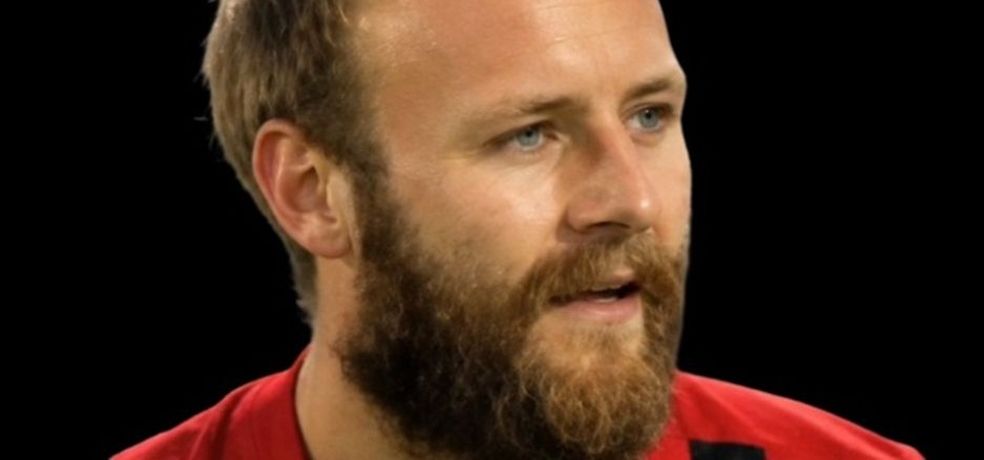
Curtis Garry Edwards, born 12 January 1994, Middlesbrough, England.
PART ONE
Curtis Edwards began his football at Thornaby before joining Middlesbrough’s academy at twelve, and the years he spent with his local professional club took him through youth football, a scholarship and into the professional ranks without bringing the first-team place he wanted. When Middlesbrough released him in March 2013, he was nineteen and still young enough to find another opening, but trials with Birmingham City, Bristol City, Hartlepool United and Hibernian failed to produce a contract, leaving him with the difficult business of deciding what to do when the routine which had shaped his life no longer existed. Edwards later admitted that he enjoyed some of the freedom, spending time with friends and making up for things he felt he had missed, yet that freedom also drew his attention away from the work required to establish himself elsewhere.
Darlington offered him senior football in September 2013, and he made his debut on 19 September in a 3–1 Durham Challenge Cup victory over Harton & Westoe, giving him a competitive match to concentrate on after months in which his prospects had depended upon impressing people during trials. He reached ten appearances by the end of October, but his early involvement did not develop into a secure place, and although he had agreed an eighteen-month contract, he moved back to Thornaby in late December. His father, Paul, was the club’s assistant manager, and the familiar surroundings brought an encouraging start when Edwards appeared in a fine 4–0 triumph against Seaham Red Star on 29 December before scoring in a 6–3 victory over Tow Law Town on 11 January 2014.
Edwards then moved on to Spennymoor Town in February 2014, but that spell proved brief and he returned in April, scoring soon afterwards in a 5–3 win over Brandon United as another attempt to settle elsewhere ended with him back at the club where his football had begun. He continued to find the net during the 2014–15 season against opponents including Seaham Red Star, Heaton Stannington and Billingham Town, showing that the technical grounding acquired at Middlesbrough remained useful, but the performances did not tell the whole story of a young player whose commitment was less dependable than his talent. Edwards acknowledged afterwards that he had not given everything at Darlington and Spennymoor, and that nights out and the company of friends had distracted him, an admission which matters because his difficulties cannot fairly be explained as a succession of managers overlooking someone who was doing everything possible to succeed.
Playing alongside his brother Kieran and under his father’s sound guidance kept him involved, but family encouragement could not supply the determination he needed to bring himself, and a change of surroundings eventually offered a chance to recover it. Brian Wake, another Middlesbrough-born football man, was managing Ytterhogdals IK in Sweden and invited Edwards to try his luck there in the summer of 2015, presenting an opportunity which was modest in status but demanding in what it required.
Ytterhogdal competed in Division 3, the fifth level of Swedish football, and Edwards therefore had to leave home without the comfort of knowing that a major club or a lucrative contract was waiting for him. He joined in July and scored three times in ten league appearances during his first spell, beginning to turn his football into something purposeful again through matches in which the important question was what he could contribute that afternoon, rather than what he might once have become at Middlesbrough.
PART TWO
After returning to Thornaby in October 2015, Curtis Edwards went back to Ytterhogdal in February 2016, and his second spell brought stronger evidence that he was applying himself, with six goals in ten league appearances and a hat-trick against Team TG in a cup match on 22 June. Wake’s involvement became important again when he recommended the midfielder to Östersunds FK, whose manager, Graham Potter, was willing to assess players from outside the usual recruitment routes, and Edwards impressed during a trial which included a friendly appearance. The move took him from the fifth level into the Allsvenskan, a considerable increase in the demands placed upon his passing, movement and concentration, but on 6 August 2016 he started against GIF Sundsvall, played the full match and helped create a goal in an impressive 4–0 victory.
That immediate contribution gave him a convincing introduction to top-flight football, and goals against BK Häcken and Helsingborg followed as he established himself in a side which finished eighth in the league. By the start of 2017, Potter could use Edwards in several areas of midfield or on the right of the defence, making his adaptability an advantage in a team whose shape could change according to the opposition. On 13 April he played throughout the Svenska Cupen final against IFK Norrköping as Östersunds won the match by a comfortable 4–1 score, securing the club’s first major trophy and entry into the Europa League qualifiers, while giving Edwards a winner’s medal less than a year after he had been playing far below the Allsvenskan. Two goals against AFC Eskilstuna later that month and an influential performance in the 2–1 win over Hammarby on 7 May maintained his domestic contribution, but the cup victory had also created a European programme which would ask considerably more of Potter’s squad.
Östersunds began that programme against Galatasaray in July 2017, beating the Turkish club 2–0 at home before drawing 1–1 away, and the aggregate victory immediately demonstrated that Potter’s players could compete against opponents with far greater European experience. Fola Esch of Luxembourg were beaten in the next round, leaving PAOK between Östersunds and the group stage, and although a 3–1 first-leg defeat in Greece put them in a difficult position, it left an away goal which could still become valuable if they produced the right return performance. Before that return, Edwards suffered a domestic setback when he was dismissed for a second booking in a 3–0 league defeat by AIK on 20 August, a reminder that the excitement of the European ties did not excuse a loss of discipline in the matches played between them.
Four days later, Östersunds beat PAOK 2–0 at home and advanced on away goals with the aggregate score level at 3–3, completing a third qualifying success and earning a place alongside Zorya Luhansk, Hertha Berlin and Athletic Club. Edwards was part of the squad which had reached that stage, and his contribution continued as Östersunds opened the group with a 2–0 away win over Zorya on 14 September before beating Hertha 1–0 at home on 28 September. Six points from two fixtures gave them an excellent start, but Athletic’s visit on 19 October brought another demanding examination, and after Aritz Aduriz had opened the scoring and Alhaji Gero had equalised, Edwards met the ball outside the penalty area with a controlled volley to put Östersunds 2–1 ahead. Iñaki Williams later equalised, making the result 2–2, but Edwards’s finish had supplied a clear example of his growing confidence.
A 1–0 defeat in Bilbao on 2 November ended Östersunds’ unbeaten group start, but they recovered with a 2–0 home victory over Zorya on 23 November, the fifth fixture of the group, to secure qualification for the knockout rounds. Edwards was involved in the move which produced Dmytro Hrechyshkin’s own goal, and Saman Ghoddos scored the second before a 1–1 draw away to Hertha completed a campaign worth eleven points, leaving the Swedish side second behind Athletic on the head-to-head record. The draw paired them with Arsenal, and the first meeting in Östersund on 15 February 2018 ended in a 3–0 defeat which appeared to leave Potter’s team with little prospect of progressing, but Edwards started again at the Emirates Stadium a week later as the visitors made the return much less comfortable for their hosts than the opening result had suggested.
A Calum Chambers own goal, produced by Hosam Aiesh’s effort, and a strike from Ken Sema sent Östersunds 2–0 ahead in the first half, bringing the aggregate deficit down to one goal and rewarding their determination to attack rather than merely complete the tie. Sead Kolašinac scored after the interval, easing Arsenal’s position, and although Östersunds won the match 2–1, they were eliminated 4–2 on aggregate, closing their European programme with an away victory which reflected the standard they had reached.
Edwards had played both legs, and once the Swedish league season began he continued contributing, scoring in a 2–1 victory over IFK Göteborg on 15 April before adding goals against GIF Sundsvall and IK Sirius in May. Potter left for Swansea City that summer, removing the manager who had brought him into the Allsvenskan, but Edwards remained involved across midfield and defensive roles, and his performances under different circumstances gave further substance to a professional revival which now depended upon regular work rather than the chance of another trial.
Into 2019, Edwards continued to contribute at Östersunds, helping create two goals in a 3–2 win over Falkenberg in April and scoring in a 1–1 draw with Elfsborg, while a brief interruption through a knee problem was followed by his return to the starting side. As the end of his contract approached, other Swedish clubs took an interest, and on 31 July Djurgården announced his arrival on a three-and-a-half-year agreement, giving him a place in a team already competing at the top of the Allsvenskan. His debut against IK Sirius on 10 August brought a goal after only six minutes in a resounding 4–0 victory, an introduction which allowed him to make an immediate impression rather than spend the opening weeks trying to persuade his new club that he could contribute.
Edwards made twelve league appearances during the remainder of the season, eleven of them starts, and those figures show how directly he was involved in the title challenge, with the decisive afternoon arriving at IFK Norrköping on 2 November. Rasmus Lauritsen and Sead Hakšabanović put the home side 2–0 ahead, leaving Djurgården needing a recovery to collect the point required, but Jesper Karlström reduced the deficit in the fiftieth minute and Mohamed Buya Turay equalised in the sixty-fifth, turning a dangerous position into the 2–2 draw which secured the championship.
Djurgården finished one point ahead of both Malmö and Hammarby and won the league for the first time since 2005, giving Edwards a title to accompany his Östersunds cup medal. His first full season in Stockholm brought twenty-five league appearances and three goals in 2020, but opportunities became much scarcer in 2021 as competition for midfield places increased, and he left the Stockholm side in 2022. From there, Edwards went on to play for a number of clubs, including Woking, Notts County, and Gateshead.