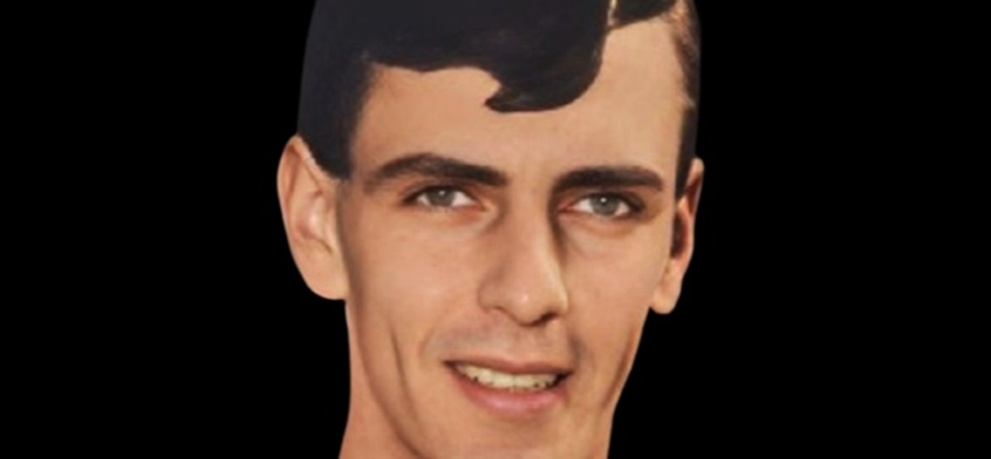
Cesar Luis Menotti, born 22 October, 1938, Rosario, Santa Fe Province, Argentina.
PART ONE
Born in the gritty, industrious city of Rosario, Cesar Luis Menotti grew up in the Barrio Fisherton neighbourhood, a place that bred tough, proud football men and demanded that you earned everything the hard way.
Rosario had football sewn into its very fabric, and Menotti absorbed it all — the rivalries, the passion, the arguments in the street about whether the game should be played with beauty or brutality. Those arguments never really left him, and in time he would answer them on the grandest stage of all.
Menotti was a forward — angular, intelligent, a thinker on the pitch before thinking on the pitch was a fashionable concept — and he debuted for his hometown club Rosario Central on 3 July 1960, helping the Estadio Gigante de Arroyito men to a 3–1 victory over Boca Juniors in the Primera Division. It was, by any measure, a fine way to announce yourself, and the striker from Fisherton spent four seasons at Central before the restlessness that would define his entire life began to assert itself.
In November 1963, while still at Rosario Central, he was selected to play in a friendly for River Plate against Juventus of Turin, and though the game ended 2–1 in the favour of the Old Lady, Menotti got himself on the scoresheet — a consolation goal, yes, but a goal all the same, and a sign that the man could perform at the highest level. The following June, he found the net again in another exhibition defeat, this time a 2–1 loss to Nacional in Montevideo, and interestingly, the Uruguayan giants were so impressed that they approached him about signing. He declined, but the fact that they asked tells you the impression he made.
In 1964, he made the move to Racing Club, and then a year later transferred again to Boca Juniors, the club with whom he would win the Primera División title in 1965 — his first significant honour as a player and a taste of triumph that stayed with him long after his boots were hung up. But Menotti was never a man who settled comfortably, and in 1967 he took what was then the deeply unusual step for an Argentine footballer of heading to the United States to play in the North American Soccer League, making 29 outings for the New York Generals. The NASL was a curious, colourful experiment — part sport, part showbusiness — and his time there exposed him to a different world, a different way of thinking about football as entertainment and spectacle.
Then came what might be the most remarkable chapter of his playing days. In 1968, Menotti joined Santos of Brazil, and in doing so became a teammate of the greatest footballer who ever lived. Edson Arantes do Nascimento, known to the planet simply as Pele, was at this point in the full blazing glory of his powers, and playing alongside him gave Menotti an education that no coaching manual could have replicated. Santos won the Campeonato Brasileiro Serie A that year, meaning Menotti added a Brazilian championship to his Argentine one, and the experience of watching Pele operate at close quarters embedded itself deep in Menotti’s football thinking. When he later spoke about football being an expression of culture, you could trace those convictions directly back to those afternoons on Brazilian training pitches, watching Pele do things that seemed to defy physics and common sense in roughly equal measure.
After Santos, Menotti signed with Clube Atletico Juventus, a Sao Paulo club, and it was there that he ended his active playing days in 1970, stepping away from the pitch at 31 with a career that had taken him from the backstreets of Rosario to the samba-drenched stadiums of Brazil, with New York somewhere in between. It had not been the career of a superstar, but it had been the career of a traveller and a learner, and those qualities would prove far more useful in the years ahead.
Retirement, for a certain kind of footballer, is a door closing. For Menotti, it was a window being flung open. He became friends with coach Miguel Juarez, and the pair travelled together to the 1970 FIFA World Cup in Mexico — a tournament that turned out to be the most beautiful football competition ever staged, with Brazil under Mario Zagallo producing football of such startling, luminous quality that it made grown men weep.
Menotti watched it all with the intensity of a scholar, and he was transfixed. The Brazilians — Pele, Jairzinho, Tostao, Rivelino, Gerson — played with a freedom and an intelligence that suggested football could be something more than a contest; it could be a statement about who you were and where you came from. Menotti returned to Argentina changed, and he worked as a coaching assistant under Juárez at Newell’s Old Boys, learning the craft, testing his ideas, and building towards something he could not yet fully articulate but could feel in his bones. The apprenticeship did not last long before Menotti was ready to make his own mark.
In 1973, Menotti took charge of Huracan, a Buenos Aires club without the resources or glamour of the big names, and proceeded to make them champions of Argentina. The 1973 Torneo Metropolitano was won by a Huracán side that played football of such invention and verve that the media fell over themselves to find new ways to praise them. The squad featured players of real quality — Carlos Babington, a cultured midfielder who could play with both feet; Miguel Brindisi, quick and technically brilliant; Roque Avalllay, a tough and reliable defender; and René Houseman, a wiry, electrifying winger who could skin full-backs for fun. But what made this Huracán team special was not the individuals, it was the collective spirit and the style that Menotti had instilled in them — attacking, fluid, brave on the ball, committed to playing through pressure rather than around it.
Argentine football circles regard that Huracan side as one of the finest club teams that the country has ever produced, which is saying something in a nation that has generated River Plate and Boca Juniors teams of genuine world class down the decades. For Menotti, the title was validation. His ideas worked. His philosophy was not just theory scribbled on a notepad but a genuine, practical method for winning football matches.
PART TWO
The Argentine Football Association had been watching, and in 1974 they came calling. Menotti was appointed head coach of the Argentina national team, stepping into one of football’s most pressurised environments — a country that lived and breathed the game, that expected excellence as a birthright, that would settle for nothing less than the World Cup when the tournament arrived on home soil in 1978.
He had four years to prepare, four years to build, and he set about it with the methodical intensity of a man who had been planning for this moment since he stood on that Mexican hillside in 1970 watching Pele and company play football from another planet. But before the triumph of 1978, there was a controversy that threatened to define Menotti in a different way entirely — the decision to leave Diego Maradona out of his World Cup squad.
Maradona was 17 years old in 1978, already being spoken of in terms usually reserved for gods, and the pressure on Menotti to include him was intense, personal, and nationwide. Diego was a phenomenon, visibly different from every other footballer on the planet, and the Argentine public wanted him on that pitch. Menotti, however, refused. He explained his reasoning calmly and at length — Maradona was a genius, undoubtedly, but he was still a teenager, and the weight of a home World Cup final, the noise of the El Monumental Stadium, the savage attention of the world’s press, was simply too much for any teenager to carry. Menotti was protecting the boy, even as the boy himself, and much of Argentina, resented him for it.
It was a decision that required real courage, because the easiest thing in the world would have been to include Maradona, let the public celebrate, and shift the responsibility onto the shoulders of a schoolboy if things went wrong. Menotti chose not to do that, and history has been broadly kind to his judgement.
The 1978 FIFA World Cup final, played at El Monumental in Buenos Aires on 25 June 1978, between Argentina and the Netherlands, was an event so saturated in tension, controversy, and extraordinary drama that it retains its power to provoke arguments nearly half a century later.
The build-up to kick-off was itself a kind of theatre. The Dutch accused the Argentines of stalling deliberately, of using every trick available to delay the start and allow the stadium’s atmosphere to reach a fever pitch that might intimidate the visitors from Holland. When the Argentine team finally emerged onto the pitch — five minutes late — the crowd was already in a state approaching delirium, and ticker tape and confetti rained down through the Buenos Aires evening like a snowstorm made of patriotism. Then came the dispute over Rene van de Kerkhof’s wrist bandage. The PSV Eindhoven midfielder had worn a plaster cast throughout the tournament without a word from any opponent, but the Argentines suddenly objected. Italian referee Sergio Gonella upheld the complaint and Van de Kerkhof was forced to apply additional bandaging, which sent the Dutch squad to the edge of an extraordinary walk-off, with players threatening to leave the pitch entirely. The tension was almost unbearable before a ball had been kicked in anger.
When the match finally began, it was played in a febrile atmosphere made worse by the fouls, the stoppages, and the sense that both teams were operating under enormous pressure. Mario Kempes, Menotti’s chosen striker and the tournament’s top scorer, gave Argentina the lead with a composed finish from around 12 yards, slotting the ball beneath Jan Jongbloed with the calm authority of a man putting something valuable into a safe.
The Netherlands came back at Argentina hard, and Rob Rensenbrink, one of the Dutch team’s most dangerous players, had a chance to equalise after receiving a headed pass from Van de Kerkhof, but Ubaldo Fillol blocked his effort and kept the hosts ahead. Eventually, substitute Dick Nanninga pulled the Dutch level when Van de Kerkhof’s cross found him in the box, and Rensenbrink then had an extraordinary opportunity to win the match for the Netherlands in its final minutes, drilling a long shot past Fillol — only to watch it cannon back off the post and safety. It was one of those moments that football serves up occasionally to remind you that it does not care about your plans, and Argentina, shaken but alive, went into extra time.
What followed in those additional 30 minutes has been replayed and debated for decades. Kempes scored the crucial second goal in the 105th minute, arriving in the box with characteristic determination, shrugging off two Dutch defenders who tried to slide through him, seeing his initial shot saved by Jongbloed — but the ball rebounded, struck the Valencia marksman in the knee, then the foot, then cannoned off the goalkeeper´s head in a sequence of contact so farcical and accidental that it might have been choreographed by a silent film comedian, before eventually crossing the chalk line.
Daniel Bertoni, cool and clinical, sealed the championship in the second period of extra time. Kempes made a lung-bursting run deep into the Dutch box, was tackled by a defender, and the ball ricocheted around in a pinball frenzy before dropping at Bertoni’s feet inside the area with Jongbloed stranded out of position. Bertoni did not hesitate, and Argentina were world champions for the first time.
For Menotti, it was the complete vindication of everything he believed football could and should be — an attacking, creative, purposeful game played by players who understood that the ball was not an enemy to be feared but a tool to be used. And yet, even in that moment of triumph, the shadow of Argentina’s ruling military junta — which had seized power in 1976 and was at that very moment conducting a campaign of repression and disappearance against political opponents — hung over the celebrations. Menotti, a professed left-wing socialist, had somehow coached the national team to glory under a right-wing military dictatorship, and it was a contradiction that would follow him for the rest of his life. He addressed it directly, arguing that he had always represented the Argentine people rather than the regime, that football belonged to the workers and not to the generals, but the debate was never fully resolved and perhaps never could be.
In the aftermath of the World Cup, Menotti’s relationship with the Argentine Football Association became strained almost immediately. He demanded a significant pay increase — entirely reasonable given that he had just delivered the country its greatest sporting achievement — and protracted, difficult negotiations followed. The Uruguayan Football Association, sensing an opportunity, came forward with a remarkable offer of US$1.1 million to manage their national team for four years, a sum that reflected the esteem in which Menotti was now held worldwide, but they were unable to persuade him to cross the Río de la Plata.
He stayed with Argentina, and in 1979 he demonstrated that his talent for developing footballers was not limited to the senior game by leading the Argentina under-20 national team to victory in the World Youth Championship in Japan. The star of that team was, of course, Diego Maradona — the same boy Menotti had protected from the pressure of 1978, now unleashed at the youth level and absolutely devastating, making the tournament his personal showcase and confirming that Menotti’s judgement about timing had been entirely correct. The manager and the genius were now properly aligned, and the results were extraordinary.
At the 1982 World Cup in Spain, Menotti finally gave Maradona his senior tournament debut at the age of 21. The tournament, however, did not go as hoped, and Argentina were eliminated in the second round, unable to replicate the magic of four years earlier. Menotti departed the national job with his reputation as Argentina’s most important post-war manager firmly established, even as the disappointment of Spain lingered.
PART THREE
In March 1983, Barcelona made one of the more intriguing managerial appointments in their history, sacking the German coach Udo Lattek and replacing him with Menotti. The Argentine arrived at the Nou Camp and found himself reunited with Maradona, who had signed for the Catalan giants the previous summer, and in the final three months of what remained of the season, the combination produced immediate results.
Menotti led Barcelona to the Copa del Rey, defeating their great rivals Real Madrid in the final, and also to the Copa de la Liga, again at Madrid’s expense — a double over El Clasico rivals in the space of weeks that would have guaranteed any manager a warm welcome in Catalonia for years to come. The following season, he added the Supercopa de Espana, meaning that his time in charge of Barcelona produced three trophies, which by any measure represents a successful stint at one of the world’s biggest clubs.
Yet the relationship with Barcelona was not destined to last. Menotti’s final game in charge came in the Copa del Rey final of 1984, a narrow 1–0 defeat at the hands of Athletic Bilbao, and shortly afterwards he departed. Maradona, controversially, was sold to Napoli that summer, beginning the next extraordinary chapter of a career that Menotti had done much to nurture and shape.
Menotti’s restlessness brought him back to Europe in July 1987, this time to Atletico Madrid, a club that had spent a decade without a league title and was desperate for the kind of football thinking that might break their neighbour’s stranglehold on the Spanish game. He announced himself spectacularly, overseeing a stunning 4–0 victory away at Real Madrid in the derby on 7 November — a result that sent shockwaves through the capital and suggested Atlético might be genuine title contenders.
For a while, it seemed possible. After 23 games of the season, Atlético sat second to Real Madrid and were very much in the race. But then came a run of six matches without a victory, culminating in a damaging 3–1 home defeat to their city rivals on 20 March 1988. The chairman Jesus Gil — a flamboyant, combative, and frequently impossible man who made headlines as readily as his teams did — had already been making his frustrations known to Menotti throughout the season, including pointed conversations about the players’ nocturnal habits before a draw away to Real Sociedad in October. The dismissal came as no great surprise to anyone, though it remained deeply frustrating for a manager who had brought genuine quality to the club and who had deserved better than a season that ended in managerial upheaval.
Back in Buenos Aires in July 1988, Menotti took charge of River Plate, Boca Juniors’ great rivals and one of the most storied clubs in South American football. He brought in several players in an attempt to reshape the squad, and he came intriguingly close to signing Paraguayan goalkeeper Jose Luis Chilavert, a player who would go on to become one of the most colourful and celebrated goalkeepers in world football, though Chilavert’s proposed move fell through after a fortnight of training. River Plate finished fourth in the 1988–89 campaign, which did not satisfy a club of their ambitions, and Menotti moved on.
In July 1990, he took a different kind of challenge, accepting the manager’s post at Penarol of Uruguay, a club going through significant restructuring following the sale of most of the squad that had won the Copa Libertadores in 1987. The club showed genuine promise during a pre-season tour of Europe, which suggested Menotti was doing something right in training, but the league campaign produced only a third-place finish in the Uruguayan Primera División and no Copa Libertadores qualification. In the Supercopa Libertadores — a competition for clubs that had previously won the continent’s premier club tournament — Penarol had a run that produced notable scalps, eliminating both Santos and Boca Juniors before running into Olimpia of Paraguay, who defeated them 7–2 on aggregate in the semi-finals. It was a run that suggested potential rather than delivering achievement, and Menotti’s time in Montevideo ended without silverware.
In 1991, he accepted what might be called a rehabilitation job — taking charge of Mexico, a side that was still recovering from the shameful Cachirules scandal, in which under-age players had been used in a qualifying tournament, leading to Mexico’s ban from the 1990 FIFA World Cup. The country needed credibility restored, and Menotti, with his prestige and his philosophical approach, seemed the right man for the task. He oversaw the early qualifying campaign for the 1994 World Cup but resigned in 1992, and the circumstances of his departure said much about his character. He left in solidarity with two associates who had been forced out of the Mexican Football Federation — walking away from a national team job rather than abandon people he trusted and valued. It was not the pragmatic choice, but he had rarely made pragmatic choices when principle was available.
His third European adventure brought him to Italy, where he took charge of Sampdoria in Serie A in 1997. The squad at his disposal was impressive — Sinisa Mihajlovic, the Serbian enforcer with one of the most powerful free-kicks the game has seen; Vincenzo Montella, the sharp, clever Roman striker; Jurgen Klinsmann, the German World Cup winner still performing at the highest level; and Alain Boghossian, the Argentine-born French midfielder. Despite this talent, Menotti’s spell at Sampdoria did not produce the results expected, and he was replaced by Vujadin Boskov. He had also managed Independiente both before and after his time in Genoa, and his team came runners-up in the 1996–97 Argentine Primera Division — another near-miss in a coaching career that had reached its absolute peak in 1978 and had never quite found that altitude again.
In March 2002, Menotti went home. He was appointed manager of Rosario Central, the club where his career had begun forty-two years earlier, returning to the streets where he had grown up and the stadium where he had first felt the electricity of a crowd responding to football played well. On 1 September 2002, he oversaw their first victory away to city rivals Newell’s Old Boys in twenty-two years — a result that would have meant everything in a city where the two clubs represent not just sporting allegiances but entire ways of seeing the world. But nine winless games followed that high point, and the board decided to dismiss him.
What happened next was entirely in character. Menotti refused to go. He accused the board of cowardice, and said he had only found out about his dismissal through the newspapers rather than from the people who had hired him — a slight that he considered beneath the dignity of both parties. The stand-off was unedifying, but it revealed once more the stubborn, passionate core of a man who felt that respect was not optional.
Menotti returned to Independiente in 2005, amid severe financial difficulties at the club, but resigned on 19 April and issued a sharp criticism of the club’s hierarchy on his way out. Through his friendship with Emilio Maurer, he was subsequently hired as an advisor at Mexican club Puebla, though a prior commitment to serve as a television analyst for TV Azteca at the 2006 World Cup in Germany prevented him from taking the coaching role directly. His coaching staff prepared Puebla in Argentina for a promotion play-off that unfortunately ended in a 5–1 aggregate defeat to Queretaro.
In late August 2007, Menotti went back to Mexico for another managerial appointment, this time at Tecos of the Liga MX. The job produced one moment of pure Menotti — when Pumas UNAM prepared a pitch that had been used for American football, the Argentine manager compared it to having a woman selling tacos while Luciano Pavarotti sang at the opera. The image was perfectly chosen, a little absurd, and absolutely memorable, and it told you that even in the twilight of his managerial career, Menotti’s capacity for colourful self-expression had not dimmed in the slightest. He resigned in January 2008, following a dispute with the board, and brought the curtain down on his active management career.
On 3 February 2017, Guadalajara made him a formal offer to serve as their academy director, and in January 2019, Menotti was appointed director of the Argentina national teams — a role that brought him back into the orbit of the game he had served for six decades, overseeing the structures beneath the senior team and ensuring that Argentine football continued to develop players in the right way.