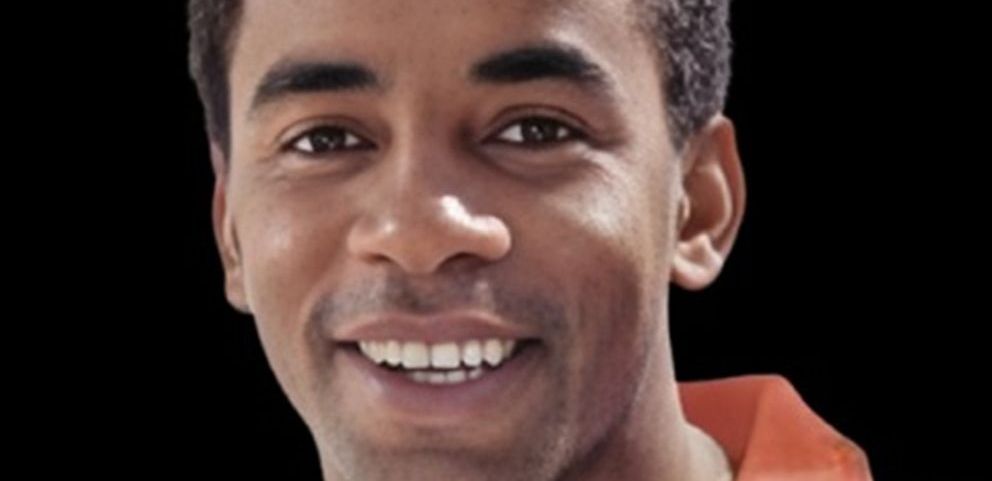
Jorge Luís Andrade da Silva, born 21 April, 1957, Juiz de Fora, Minas Gerais, Brazil.
PART ONE
After joining Flamengo in 1974 as a seventeen-year-old from the interior of Minas Gerais, Andrade progressed through the club’s youth ranks with the steady diligence that would define his entire relationship with the game, and when he made his senior debut for the Scarlet and Black three years later, he had already developed into exactly the kind of midfielder that coaches dream about building a team around — tenacious, positionally intelligent, protective of the defenders behind him and reliably available for the more talented players in front.
What followed his debut was not the kind of fast-burn stardom that generates transfer interest and tabloid columns but something richer and more lasting — an accumulation of appearances, of trusted performances and of quiet authority that, over the years, grew into something that no amount of money can buy at any club. He would make well over five hundred appearances for Flamengo, a figure that places him fifth in the club’s all-time list and puts him in the company of men who dedicated the best years of their professional lives to a single cause, and the weight of that number is only fully felt when you consider that it was accumulated in one of the most competitive football environments on the planet, in an era when Flamengo were competing against the very best Brazil had to offer and frequently winning.
In 1977, with his first-team opportunities at Flamengo still developing, Andrade was loaned out to Venezuelan club Mérida for two seasons, and the move proved unexpectedly liberating — because in Venezuela, freed from the defensive responsibilities that defined his role in Rio, he was used further forward as an attacking midfielder, a position that allowed him to score goals and express himself in ways the demands of Flamengo’s midfield engine room rarely permitted.
He excelled in the role and scored many goals in competitive matches, which added a dimension to his game that he carried back to Brazil and that informed his understanding of attacking patterns throughout the rest of his playing life. The loan, in retrospect, was a masterclass in how a temporary change of environment can accelerate a young player’s development by showing him what else he is capable of, and when Andrade returned to Flamengo he brought with him not only the defensive reliability he had always possessed but also a sharper appreciation of how attackers think and what they need from the man stationed in front of the defence.
The Flamengo he returned to was assembling one of the great Brazilian club teams of any era — a squad which included Zico, arguably the finest Brazilian footballer between Pelé and Ronaldo, as well as Júnior, Leandro, Tita, Adílio and a supporting cast of exceptional quality — and Andrade slotted into the tactical architecture with a naturalness that confirmed he was precisely the right player for the moment. He was not in competition with Zico for headlines; he was the reason Zico could produce headlines, because without the midfield shield that Andrade provided, the space in which those attacking talents operated would have been far more contested and far less productive. The Golden Age which supporters still talk about with a reverence usually reserved for things long lost was built on that balance, and Andrade was as central to it as any of the more celebrated names who attract the wider attention.
In 1988, Andrade made the move to Europe that many of Brazil’s finest players of his generation attempted at some point — a transfer to Italian club Roma for the 1988–89 season — and while Serie A in the late 1980s represented the absolute pinnacle of European club football, with the best players from across the world competing in its eighteen clubs and the tactical demands of the Italian game presenting a genuine test to anyone arriving from South America, his time in Rome was brief and statistically modest.
He made nine appearances without scoring, adapting to a style of play that was considerably more rigid and defensively structured than anything he had encountered in Brazil or Venezuela, and while the experience gave him a first-hand understanding of European football’s rhythms and demands that would later inform his coaching work, the Italian adventure did not produce the sustained run of form that both he and Roma had hoped for. There is no dishonour in finding Serie A in 1988 a difficult environment — it was the toughest domestic league in the world at that moment, and many excellent players from outside Europe found the adjustment harder than expected — but Andrade, being a pragmatic man, recognised that his best football was still being played in Brazil, and returned there accordingly in 1989.
He joined Vasco da Gama, Flamengo’s great rivals in Rio de Janeiro, and spent the 1989–90 campaigns there, making nineteen appearances and contributing defensively to a Campeonato Brasileiro Série A title victory — a champions medal won with a club most Flamengo supporters would struggle to celebrate on his behalf, but a title nonetheless, and further evidence that his value as a defensive midfielder capable of providing structure and solidity was recognised across the Rio rivalry and not just within the confines of his spiritual home. He did not score for Vasco, which was entirely consistent with the role he played there, and when the arrangement concluded he moved into the next phase of his playing life — a long, peripatetic wind-down through the lower tiers of Brazilian football that is common to many players who cannot quite bring themselves to stop competing even when the top-flight opportunities have narrowed.
In 1991, Andrade appeared thirty-three times for Inter de Lages, scoring four goals in what amounted to a productive spell for a player at that stage of his footballing life, and he also made four appearances for Atlético Paranaense that same year before joining Desportiva for the 1992–93 seasons, where he logged eleven appearances. Brief stints at Linhares and CEOV in 1994, Barreira across 1995 and the period from 1996 to 1998, Bacaba in 1995 and Bangu in 1999 completed the picture — a series of small clubs, limited appearances and the steady diminishment of involvement that marks the end of any long professional playing life, even one as richly decorated as his. Across his entire professional record in league competition, Andrade accumulated two hundred and thirty-six appearances and eleven goals, figures that tell one story about his output but say nothing whatsoever about the influence he exercised, the intelligence he brought to midfield or the titles he helped others to win by being exactly where the team needed him.
He finally retired as a player from Flamengo in 1999 at forty-two years old — a remarkable age at which to still be involved with a professional football club in any playing capacity, and a number that speaks both to his physical discipline and to the depth of the bond between player and club that had been forming since 1974. Twenty-five years is a long time by anyone’s reckoning, and to have remained connected to a single footballing institution across a quarter of a century, through loan spells and the European detour and the wind-down years in the lower leagues, is an attachment of a kind that has become genuinely rare in the modern game.
PART TWO
Throughout the finest years of his club form, Andrade also played for Brazil, making his senior international debut on the twenty-eighth of July 1983 in a goalless friendly against Chile in Santiago. He accumulated nine caps for the Seleção between 1983 and 1989, scoring once, and his selections were almost always rooted in the quality of his performance at Flamengo, where his leadership in the middle of the pitch had become sufficiently prominent that national team coaches recognised it could translate to the international stage as well.
The defensive midfielder who makes everything tick rarely becomes a newspaper headline, but the managers who understand football know exactly how much he is worth, and Andrade’s nine caps reflect a period in which Brazil were operating at an extremely high level and competition for every position in the squad was fierce. His first major international tournament was the 1983 Copa América, and he played four matches there — starting all of them as Brazil’s central defensive anchor alongside stars of the quality of Júnior and Sócrates, names that still resonate in discussions of the finest Brazilian players of that era.
He featured in the one-nil group win over Ecuador on the seventeenth of August, then the nil-nil draw with Argentina on the fourteenth of September — a result against their great rivals that required maximum defensive concentration and that Andrade, characteristically, navigated with composure — and then both legs of the semi-final against Paraguay, a one-all draw away from home on the thirteenth of October and a goalless home leg on the twentieth of October that went to extra time and still could not produce a winner, leaving Brazil to exit on the away goals rule. Brazil secured third place with a two-one playoff win over Colombia, though Andrade did not feature in that decider, and the tournament as a whole gave him the kind of high-pressure international experience that most defensive midfielders at that level would value enormously.
The biggest international stage of his life arrived in the summer of 1988, and it came in two connected phases. First came the warm-up matches ahead of the Seoul Olympics — he started in a four-one victory over Saudi Arabia on the thirteenth of July and a two-nil success against Australia on the seventeenth, and then, on the third of August 1988, scored his only international goal in a two-nil friendly win over Austria in front of a crowd of 44,000 spectators at Praterstadion, a confidence-boosting result in a pre-tournament programme designed to sharpen Brazil’s preparations before the Games began. That goal in Vienna was a significant moment — the kind of goal that a defensive minded midfield man marks on his personal ledger with particular satisfaction, because it arrives so rarely and carries such emotional weight — and it came at exactly the right time, providing a lift to a squad that was beginning to focus its energies on the Olympic tournament ahead.
At the 1988 Summer Olympics in South Korea, Andrade was one of three over-age players chosen for Brazil’s under-23 squad — a selection that confirmed his standing within Brazilian football at the time, because the over-age places in an Olympic team are reserved for players whose experience and quality are considered essential to the group’s chances and whose presence can make the difference between contending for a medal and falling at an early stage. He started all four matches from the group stage onward: Brazil beat Nigeria, Australia and Yugoslavia in their group games, then defeated Argentina in the quarter-final and overcame West Germany in the semi-final to reach the gold-medal match.
At the Olympic Stadium in Seoul against the Soviet Union, however, the South Americans lost two-one to Anatoliy Byshovets´ troops following extra time, a defeat which stung deeply given how close the squad had come to achieving what the country had long craved, but the silver medal represented the finest collective achievement of Andrade’s international time with the Seleção, and his defensive work through an undefeated run to the final was a significant part of the reason Brazil got there.
PART THREE
After calling it a day in December 1999, Andrade moved seamlessly into coaching within the Flamengo structure, beginning as an assistant coach during the early part of the 2000s and absorbing the organisational work of management with the same thoroughness he had once applied to positioning himself in midfield. His first opportunities as interim head coach came in 2004, during what was an unsettled and difficult period for Flamengo, and he took temporary charge on two occasions that year — firstly from the seventeenth to the twentieth of August, overseeing three matches and averaging one point sixty-seven per game while focusing on defensive stability, and then again from the fifth of November to the twentieth of December, managing six matches with an improved average of one point eighty-three per game and emphasising counter-attacking play that exploited the pace within the squad.
In 2005 Andrade had a further brief interim stint at the beginning of the Campeonato Brasileiro Série A campaign, including a one-nil defeat against Internacional on the eighth of May, and each of these short-term appointments gave him the practical experience of working under pressure that he would need when the full-time opportunity finally arrived. He also took a brief head coaching role at CFZ in 2004, marking one of his early ventures into management entirely separate from Flamengo, and while the stint was comparatively short it demonstrated a willingness to work outside the comfort of his home club and to test himself in different environments — the same spirit of pragmatic professionalism that had always characterised him as an active footballer and that would continue to define his approach as a coach.
The appointment that changed everything — and that gave Andrade a place in Flamengo’s football history from the dugout as well as the pitch — came on the first of August 2009, when he was named full-time head coach following the dismissal of Cuca. Flamengo were not leading the Campeonato Brasileiro Série A at that point, but Andrade brought to the job the calm authority of a man who had seen everything the club could throw at a person across thirty-five years of involvement, and he knew the squad, the environment and the pressure in a way that no outside appointment could have replicated. What followed over the remainder of that season was, by any measure, remarkable — Flamengo mounted a sustained championship push that grew in conviction and quality as the weeks passed, and on the sixth of December 2009 they clinched the Série A title with a one-nil win over Grêmio on the final day of the season, ending a seventeen-year wait for the national championship that had weighed on the club and its supporters since 1992.
The manner of the title win mattered as much as the result — Andrade deployed a pragmatic four-two-three-one formation that balanced the defensive solidity he had always prized with enough creative freedom in the middle three behind the striker to allow the squad’s technical quality to express itself, and he integrated veterans with youngsters in a way that gave the group both experience and energy. Over his tenure from July 2009 to April 2010, he recorded fifty-one matches with thirty-two wins, ten draws and nine losses — a sixty-nine point three percent points percentage that represents strong, consistent work over a sustained period — and the combination of that record and the manner in which it was constructed confirmed that his promotion from assistant to head coach had been not merely sentimental but entirely justified on footballing grounds.
Following his departure from Flamengo in April 2010, Andrade’s coaching path took him through a series of appointments at clubs operating under varying degrees of pressure and with varying levels of resource — the kind of work that does not attract much national attention but that reveals a coach’s character more clearly than any high-profile job. In September 2010, he joined Brasiliense in the Série B, taking over a team sitting sixteenth in the table with twenty-seven points and a very real prospect of relegation, and brought with him assistant Marcelo Salles from the title-winning Flamengo staff. He focused on steadying a squad of experienced players including Ruy and Acosta, and guided the team to key results — including a one-nil win over Ipatinga — that helped them climb to thirty-one points and finish fifteenth, avoiding direct relegation in circumstances where the danger had been genuine. It was not glamorous work, but it was the kind of effective firefighting that keeps clubs alive, and Andrade did it without drama or complaint.
In October 2011, he joined Paysandu in the Série C with the explicit aim of securing promotion through the remaining group stage matches — the team was second in Group E with six points and needed victories over Rio Branco and América de Natal to advance, which meant the margin for error was essentially nil from the day he walked through the door. Andrade pushed for an attacking approach in the limited time available, but Paysandu suffered a two-one defeat to América de Natal in a crucial fixture that ended their promotion hopes and, shortly after, ended his time at the club. The experience illustrated one of football management’s more frustrating realities — that a short-term appointment with a specific objective and insufficient preparation time is an almost impossible brief to fulfil, however capable the manager involved.
In March 2012, Andrade returned to Rio de Janeiro for a short stint at Boavista, presented on the twelfth of March ahead of a Copa do Brasil first-round return leg against América Mineiro, interrupting personal plans to accept a role he cited his local roots from playing days in Saquarema as part of the reason for taking. Boavista had three points in the Taça Rio group stage and had produced a notable victory over Flamengo, but Andrade’s only match in charge ended in a two-one defeat and his involvement concluded quickly as the club shifted its focus elsewhere — a brief and somewhat awkward episode that nonetheless reflected his willingness to answer the call whenever football presented an opportunity.
By late 2013 and into 2014, he was coaching São João da Barra in the Série B of the Campeonato Carioca, signing for the competition with ambitions of achieving promotion to the state’s elite division and debuting in February 2014. He oversaw ten wins, three draws and three losses across sixteen matches, which gave him the second-best record in the group and represented a genuinely solid campaign in a competitive regional league — yet the team fell short of promotion after elimination in the semi-finals, and Andrade departed by mutual agreement in June, later expressing frustration with the limited resources available at that level of football. It was a sentiment that many coaches who have worked at the top of the game find hard to conceal when operating at the other end of the pyramid, because the gap between what is possible and what is required becomes increasingly visible the further you go from the resources of the major clubs.
His final coaching appointment was at Jacobina in the 2015 Campeonato Baiano, a club newly promoted to the Bahian top flight after twenty years away from it and therefore in exactly the kind of precarious position that demands careful management of limited resources and realistic expectations. He was appointed in December 2014 and oversaw five matches over which the team recorded three draws and two losses with no wins, earning a twenty percent points-per-match rate and leaving Jacobina fifth in Group 2 with three points.
Andrade was dismissed on the second of March 2015 following a one-nil defeat to Colo Colo, and that, as far as the record shows, was the last time he stood in a dugout in a competitive match as head coach — a modest ending, in terms of pure results, to a coaching chapter that had also contained a national championship and a relegation escape and a collection of cup runs and short-term rescues that amounted to a thorough education in every level of the Brazilian football pyramid.