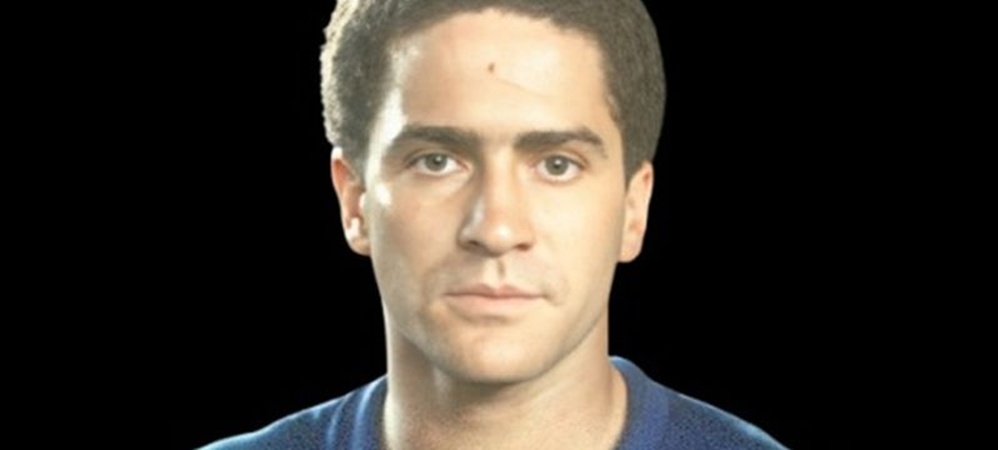
Vanderlei Eustáquio de Oliveira, born 11 June, 1950, Belo Horizonte, Minas Gerais, Brazil.
PART ONE
From the moment Vanderlei Eustáquio de Oliveira pulled on Cruzeiro’s blue-and-white shirt for the first time as a professional in 1969, it was clear that here was a player of exceptional quality. He would go on to be known everywhere simply as Palhinha, and by the time the 1970s were over he had hit thirteen goals in a single Copa Libertadores, commanded the largest transfer fee in the history of Brazilian football at the time, worn the yellow of Brazil sixteen times, and established himself as the most feared centre-forward in his country.
Those early years at Cruzeiro were the foundation of everything — a steady, purposeful accumulation of goals, titles and experience in one of Brazil’s most demanding football environments, where the Campeonato Mineiro pitted Cruzeiro against bitter local rivals Atlético Mineiro in front of crowds whose passion for the fixture bordered on the ferocious. Palhinha thrived in that atmosphere, scoring prolifically in the state championship and helping the club to multiple Campeonato Mineiro titles across the first half of the decade, and in doing so he developed the particular brand of forward play that would come to define him — intelligent movement off the ball, anticipation of where the cross or the through-pass was going to arrive, and a clinical finishing technique that made him a constant source of anxiety for opposition defenders.
Building on those domestic foundations, 1976 brought Palhinha the kind of continental stage on which his abilities could be assessed against the very best South America had to offer, and he seized it with a ferocity that left the rest of the tournament’s participants in no doubt about who the outstanding attacker in the competition was. Cruzeiro entered the Copa Libertadores as one of the most powerful clubs in Brazil, assembling a side capable of competing with the very best from Argentina, Uruguay and the rest of the continent, and Palhinha was their central weapon — the man whose goals, more than any other single factor, drove the club through a competition that they had never previously won. He scored thirteen goals in the tournament, a figure that gave him the distinction of being the Copa Libertadores’ top scorer that year and that remains a mark of individual output in that competition that very few forwards have matched in any era, before or since.
Cruzeiro won the Copa Libertadores for the first time in the club’s history, and Palhinha’s thirteen goals were the beating heart of that achievement — a performance that confirmed him not just as the best forward in Brazil at that moment but as one of the most potent attackers in the whole of South American football. The significance of a club winning the continent’s premier club competition for the first time is considerable in any circumstances, but to do so propelled by a forward scoring at that rate gives the achievement a particularly vivid personal dimension, and Palhinha’s name became inseparably connected to Cruzeiro’s 1976 triumph in the way that the names of decisive players always become fused with the most important moments in a club’s history.
In 1977, the inevitable happened — Corinthians Paulista, one of the biggest clubs in Brazilian football and a team with a following in São Paulo that dwarfs the population of many countries, came calling with an offer that set the entire transfer market talking. The fee was approximately one million US dollars, a figure that established a new record for a transaction involving Brazilian players at that point and that reflected the desperation felt at Corinthians after twenty-three years without a Campeonato Paulista title — a drought so long and so painful that the club’s enormous support had begun to regard ending it as a matter of institutional survival rather than mere sporting ambition. Corinthians needed a game-changer, someone capable of forcing a conclusion to two decades of near-misses and final-day disappointments, and they paid a record price to get one.
The investment was justified almost immediately. Palhinha settled into the Corinthians attack with the ease of a man who had been playing at the highest level for the better part of a decade, and in his very first season at the club he helped deliver the Campeonato Paulista title that the supporters had been waiting for since 1954, a moment of collective joy so intense that the city of São Paulo essentially stopped for the better part of a day. He then contributed to a second state championship in 1979, meaning that across four seasons at Corinthians he was part of back-to-back title wins that transformed the mood and expectations at one of Brazil’s most demanding clubs. Over those four campaigns between 1977 and 1980, he amassed one hundred and eighty appearances for the club and scored forty-four goals, forming attacking partnerships that gave Corinthians a dynamism and a cutting edge in the final third that the club had been lacking, and his relationship with the supporters was one of genuine affection rather than simple professional respect.
In 1980, Palhinha moved to Clube Atlético Mineir, joining a team that already included Reinaldo, Éder and Pedrinho, three players of genuine national standing whose combined attacking threat would have frightened any defence in South America. While with Atlético Mineiro, he registered twenty-seven goals in seventy-seven appearances, and his contributions helped the club to consecutive Campeonato Mineiro titles in 1980 and 1981. But as the 1980s progressed, Palhinha’s path became more peripatetic, reflecting the fluid transfer market of the time rather than any diminishment of his quality.
In 1982, he featured for Santos, the club from the port city that had once been Pelé’s stage and that retained enormous prestige within Brazilian football despite the passing of its greatest era, before a brief appearance with Vasco da Gama that same year. He returned to Cruzeiro for the 1983 and 1984 seasons, completing a circle that had begun in 1969, and played an impactful if limited role in his third stint with the club from Belo Horizonte, adding to the connection between player and institution that had already produced so much of his finest football. He finally retired in 1985 after a short tenure at América Mineiro, where he scored four goals in ten appearances — a tidy, purposeful conclusion to a playing life that had begun sixteen years earlier in the same city, at the same cluster of football clubs that define Minas Gerais football.
PART TWO
Alongside the club form that was generating headlines throughout the Brazilian football press, Palhinha was also building a parallel story at international level, and that story began on the twenty-seventh of May 1973 when he was handed his senior debut for Brazil in a friendly fixture against Bolivia at the Maracanã Stadium in Rio de Janeiro. He was twenty-two years old, starting and playing the full ninety minutes in a five-nil victory — a comfortable enough afternoon against modest opposition but one that confirmed his inclusion in the thinking of coach Mário Zagallo, who had won the 1970 World Cup as manager and was now rebuilding and reshaping a squad amid preparations for upcoming international commitments.
Over the course of 1973, Palhinha featured in three more friendlies as part of Brazil’s European tour — entering as a half-time substitute against Italy, playing forty-five minutes against Austria and completing a full match against Sweden — and in doing so gave himself a thorough introduction to the varying demands of international football in different environments against different tactical approaches. He was not alone in competing for those positions in the Brazilian squad: forwards like Leivinha and Rivellino were also pressing for places, and the level of quality within the pool of attacking players that Zagallo had available meant that no position was guaranteed regardless of how strong a player’s club form happened to be. Even so, Palhinha’s technical skill and his goal-scoring record at Cruzeiro were sufficiently compelling to keep him in the national conversation throughout this period, though he was ultimately not included in the final roster for the 1974 World Cup in West Germany — a decision that reflected Zagallo’s preference for more experienced international players at the tournament.
The Copa América of 1975 gave Palhinha his first major international tournament and confirmed his standing within the Brazilian setup as a forward of genuine influence rather than a peripheral figure. He played in all six of Brazil’s matches — starting four and entering as a substitute in the other two — and contributed three goals during the group stage, a tally that reflected both his continued effectiveness in front of goal and his capacity to perform in competitive international football as well as he did at club level. His brace in the four-nil victory over Venezuela on the thirty-first of July was the most emphatic of those contributions, but the goal in the six-nil thrashing of Venezuela on the thirteenth of August was equally significant in the context of a campaign where offensive firepower was the team’s most obvious weapon.
Brazil topped Group A undefeated, scoring thirteen goals and conceding just one across the group stage, and Palhinha’s three goals were a significant portion of that total — a contribution that made him one of the tournament’s most productive attackers at that stage of the competition. However, the semi-finals brought disappointment rather than triumph. In the first leg against Peru on the thirtieth of September, Brazil lost one-three at home, a result that put them in a difficult position despite Palhinha starting, and although they recovered with a two-nil victory in the second leg on the fourth of October — Palhinha coming on as a substitute in that match — the aggregate scores were level at three-three, the tie was settled by a drawing of lots rather than extra time or penalties, and Brazil went out in a manner that left the squad and the supporters deeply dissatisfied. The group stage had suggested a serious championship challenge; the semi-final exit by lot was a deflating conclusion to a tournament that Brazil had entered as strong favourites.
Four years later, Palhinha was back in the Copa América squad for the 1979 edition, now a more experienced figure within the Brazilian international setup and a player whose contributions were valued for leadership and technical quality as much as for pure goal-scoring. The sharpshooter appeared in four matches for Brazil in the tournament, starting three and coming on as a substitute once, and scored in the semi-final first leg against Paraguay on the twenty-fourth of October — heading in a cross from Zé Sérgio in what proved to be a two-one defeat, a result that left Brazil needing to win the second leg to advance. That second leg on the thirty-first of October ended two-two, and when the aggregate scores were counted Brazil had lost the tie three goals to four — eliminated again at the semi-final stage, again in circumstances that the scoreline over two legs makes seem closer than the overall trajectory of the tie suggested.
In total, Palhinha accumulated sixteen caps for Brazil between 1973 and 1979, with appearances spread across friendlies and the two Copa América campaigns, seven starts and nine substitute appearances across eight hundred and eighty-four minutes of international football. His three appearances in 1976 friendlies added to the picture of a forward who was consistently in the selectors’ thinking throughout the peak years of his club form, and the fact that his sixteen caps included significant minutes in two Copa América tournaments rather than being confined to exhibition matches reflects the genuine respect that successive Brazilian coaches had for what he brought to the squad. He was not a player who won a World Cup or lifted the Copa América — those collective glories lay outside his reach — but he played his part in Brazil’s international efforts across a particularly competitive and complex period in the country’s football history, and he did so with distinction.
After retiring at América Mineiro in 1985, Palhinha moved into management, beginning with the same club where his playing days had ended — a natural enough starting point for a man whose knowledge of football in the Minas Gerais region was as thorough as anyone’s. He went on to manage several teams across Brazil over the following years, a list that included some of the most significant names in the country’s football map: Atlético Mineiro, Cruzeiro as technical coach in 1994, Corinthians in 1989, União São João de Araras, Ferroviário, Inter de Limeira, Villa Nova and Rio Branco de Andradas. The Corinthians appointment in 1989 was the most high-profile of these roles, placing him back at the club where he had broken the transfer record twelve years earlier.
He later described the Corinthians role as overly stressful, a candid admission from a man who had played under pressure for most of his adult life but who found the particular weight of managing one of Brazil’s biggest clubs — with its enormous support base, its ferocious media scrutiny and its institutional impatience — to be a different kind of pressure altogether from anything he had experienced as a player. His tenure at Cruzeiro as technical coach in 1994 brought him back to the club where the most significant chapter of his playing life had been written, and while the precise details of his contribution there were limited in scope, the connection to his football roots gave the appointment a symbolic weight that went beyond the purely practical.
Beyond the coaching stints and the administrative roles, he remained a presence in Brazilian football through the events and commemorations that keep the memory of the game’s history alive — participating in a Radio Bandeirantes interview on Domingo Esportivo in 2019 and again in 2022, attending the 2007 tribute marking thirty years of Corinthians’ 1977 championship triumph and appearing at the 2013 Troféu Telê Santana, an event honouring Cruzeiro’s history, where his connection to the club’s Copa Libertadores triumph was recognised and celebrated. These engagements were not the gestures of a man seeking the spotlight but of someone who felt a genuine and sustained connection to the clubs and teammates that had formed the most important years of his life, and who wanted to honour that connection publicly when the occasions arose.
He led a relatively quiet life in Belo Horizonte after his coaching work tapered off, focused on personal matters in the city where he had been born and where his football story had first taken shape, and health challenges in his later years drew him further from the public gaze. But the contribution he made to Brazilian football between 1969 and 1985, and to the national team between 1973 and 1979, does not require constant celebration to remain significant — it stands on its own, in the record books and in the memories of those who watched him play, as the output of a forward who was genuinely among the best in South America during his peak years and who performed on the biggest stages the game in that part of the world could offer.