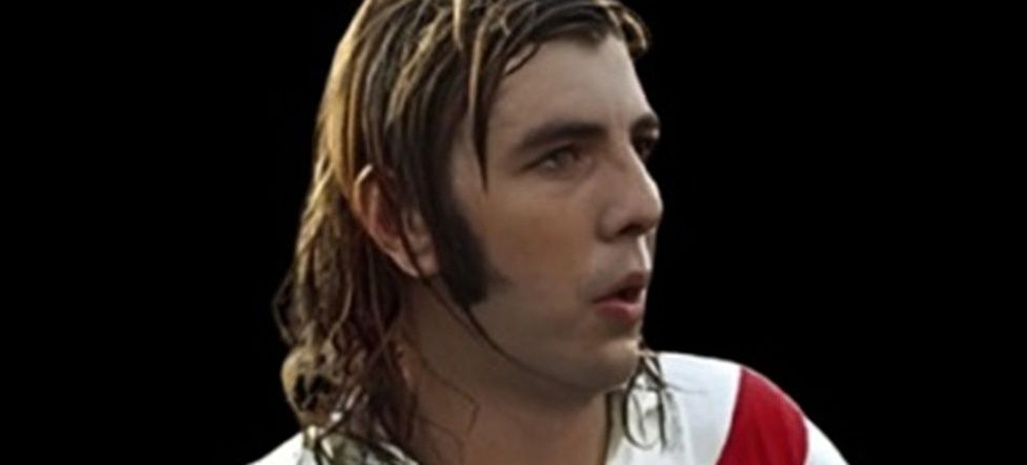
Reinaldo Carlos Merlo, born May 20, 1950, Buenos Aires, Argentina.
PART ONE
Reinaldo Merlo grew up in Argentina during a period when football was not merely a sport but a defining feature of national identity, and the club he chose — or perhaps more accurately, the club that chose him — was River Plate, one of the two great powers of Argentine football and a name recognised across the footballing world. What makes his relationship with River Plate so unusual, and so worth dwelling on, is its totality. He played his entire professional career there, not because other chances never arose but because the connection between man and club ran too deep to be easily severed, and he made over 500 outings in the red-and-white shirt, a number that represents a vast proportion of a working life spent in service to a single institution.
Merlo played as a defensive midfielder, which is to say he was the kind of player who does the work that allows more celebrated teammates to express themselves freely — winning the ball, protecting the back four, reading the game’s rhythms and disrupting the opposition’s — and in that role he became, alongside goalkeeper Ubaldo Fillol and defender Daniel Passarella, one of the three pillars on which River Plate’s great side of the late 1970s and early 1980s was built. That team, managed by the now legendary Ángel Labruna, dominated Argentine football between 1975 and 1981 and won a string of championships that established them as the outstanding club side of their era, and Merlo was at the centre of it all, the midfield engine room alongside Juan José López and the highly gifted Norberto Alonso.
There is a nuance worth understanding here, because Merlo was not the kind of performer who attracted uncomplicated admiration. River Plate’s management valued him as a defensive presence — his reading of the game, his positioning, his ability to win the ball and protect his defenders — but had reservations about his contribution once Los Millonarios actually had possession, and so the club repeatedly signed players designed to complement him or, eventually, to replace him altogether. Among those brought in over the years were Ramiro Pérez, Chamaco Rodríguez, Della Savia, Alfredo de los Santos, and finally Américo Gallego, who was the one who ultimately did earn Merlo’s place in the starting eleven on a permanent basis. In another man, that process might have produced resentment or bitterness, but Merlo absorbed it and kept performing, which tells you something about his character as well as his durability.
There was also, in the twilight of his playing days, a moment of genuine generosity that speaks to the kind of senior professional he was. Before he retired, Merlo took time to mentor a young midfielder who was coming through River’s ranks and who showed considerable promise — a teenager called Néstor Gorosito, who would go on to build his own substantial career in Argentine football. Merlo passed on what he knew, which is the mark of a man thinking beyond his own interests, and the fact that both Gallego and Gorosito would later face Merlo as opposing coaches in the dugout gives the whole story a satisfying circularity.
By the time he retired, Merlo had accumulated seven championship titles with River Plate and had appeared 42 times in the Superclásico — the fixture between River and Boca Juniors, the most charged and combustible game in Argentine football — a total that, by some accounts, was more than any other player in the history of that rivalry. Forty-two times he had walked out into that atmosphere, forty-two times he had felt the full weight of what River versus Boca means to the people of Buenos Aires, and forty-two times he had done his job. It is a record that deserves considerably more recognition than it typically receives outside of Argentina.
PART TWO
After hanging up his boots, Reinaldo Merlo did not simply drift into coaching on the strength of his name and his reputation, as some former players do. He sat down and studied for an official coaching qualification, went through the proper process, earned his matriculation, and then served his apprenticeship in the way that the role demands — training smaller clubs, learning how to manage men and tactics and the thousand pressures that come with being the person whose decisions everyone else has to live with. It took time, and it required patience, but it laid a foundation that would eventually matter.
The call back to River came in 1989, and it came in the company of his old midfield colleague Norberto Alonso, the two of them appointed together to coach the club they had both served so faithfully as players. However, the partnership did not survive the political shifts that followed a change of club president — the incoming president Davicce had made a public commitment during his election campaign to bring Daniel Passarella in as coach, and he kept that promise, dismissing Merlo and Alonso mid-season to make it happen. The cruel irony was that River went on to win the championship under Passarella, and the supporters, to their credit, acknowledged that Merlo had built significant groundwork during his time in charge and deserved a share of the credit. It was not nothing, but it was also not a title on his record, and in football that distinction matters.
A decade passed, and in 1999 Merlo took on a challenge of a quite different kind when he was appointed to manage Atlético Nacional of Colombia. South American football across national borders carries its own specific complications — different footballing cultures, different expectations of how the game should be played, different relationships between manager and players — and Merlo found that his methods, though producing results in terms of performance on the pitch, were not sitting well with the people around him. His decisions proved unpopular, the tension grew, and he resigned from the position before the season was complete. The man who replaced him, Luis Fernando Suarez, went on to win the tournament, but in a pattern that was becoming familiar in Merlo’s story, the fans subsequently gave their departed coach a generous share of the credit for what had been achieved. Once again, Merlo had planted seeds that someone else harvested, and once again, the supporters recognised it even if the record books did not.
Building upon the experience of those earlier management roles — the partial successes, the political complications, the credits received posthumously — Merlo arrived at what most Argentine football people would consider the defining achievement of his time in the dugout. In 2001, he took charge of Racing Club, a club of enormous historical significance in Argentine football but one that had endured a 35-year wait without a championship title, a drought of such duration that it had become part of the club’s painful identity. Racing’s supporters had lived through more than three decades of near-misses and false dawns and the gnawing sense that the title they deserved was always just out of reach.
Merlo ended it. The manner in which he did so is as interesting as the achievement itself, because what he brought to Racing was not tactical revolution or extravagant spending but something more fundamental — a calm, a steadiness, an insistence on focusing on the next game rather than the distant prize. Whenever anxious supporters or impatient journalists pressed him about the championship, he would offer the same reply: paso a paso. Step by step. Take care of the next match, let the table look after itself, and trust the process. It was an approach that required real psychological strength to maintain under the pressure of a club with 35 years of longing behind it, and Merlo maintained it, and it worked. Racing were champions, and Mostaza was a hero in the northeast of Buenos Aires in a way that transcended anything that could be written on a league table.
PART THREE
On top of the Racing title, Merlo’s reputation as a manager capable of handling difficult situations meant that further opportunities continued to arrive, and in 2004, when Carlos Bilardo left Estudiantes, Merlo was the man they turned to. They were in genuine danger of relegation when he took over, and he transformed them — not merely saving them from the drop but turning them into contenders at both the 2004 Apertura and the 2005 Clausura, which is a significant swing in fortunes for any club at that level. He later spoke warmly about his time there, noting with some pleasure that both his professional debut back in 1969 and his first career goal had been scored against Estudiantes, which gave the posting a personal resonance beyond the purely tactical.
Merlo resigned from Estudiantes in August 2005, and within weeks another opening presented itself — this time back at River Plate, where Leonardo Astrada had just left the coaching post and the club needed someone reliable and experienced to step in. Merlo returned, but it did not go well and the reasons why are worth examining because they involve one of the most famous names in the modern history of River Plate. The 2005 Apertura campaign was poor by River Plate’s standards, and on January 9, 2006, Merlo resigned from the coaching position at the Estadio Monumental, with Passarella — in another of those recurring Passarella-Merlo intersections — coming in to replace him once more.
There is, however, a significant dispute about the circumstances of his departure. The version that has circulated widely in Argentine football, and that continues to be discussed, is that Marcelo Gallardo — then a River player of considerable standing — informed Merlo that neither he nor his teammates supported the direction in which the coach was taking the team, and that the resulting confrontations made Merlo’s position impossible and led directly to his resignation. Gallardo has carried criticism for that episode ever since among those who felt that Mostaza was pushed out unfairly, and it remains a sore point in the club’s recent memory.
Following the turbulence of the River departure, Merlo had further spells in management that mixed ambition with difficulty. He returned to Racing Club but without replicating the heights of 2001, and he also took on the unusual challenge of managing Barcelona SC in Ecuador, venturing outside Argentina once more and experiencing the particular demands of coaching in a footballing culture that operates by its own rules and rhythms. Neither posting added to his trophy count, but both demonstrated that he remained active and willing at an age when many former players have long since retreated into comfortable retirement.
In 2009, he became manager of Rosario Central, but the appointment lasted only five games — three wins, one draw, one defeat — before he left, citing personal difficulties with Rosario born player Ezequiel González that had made the working relationship untenable. It was a brief, unsatisfying episode in a managerial record that contained genuine peaks, and the abruptness of it was at odds with the steady, paso-a-paso image that Racing had given him. Even so, three victories from five matches is not a bad return, and in different circumstances the tenure might have extended considerably further.
By February 2013, Reinaldo Merlo was back in the dugout, this time with Club Douglas Haig in the Primera B Nacional — Argentina’s second tier — which represented a different kind of engagement with the game than the high-pressure environments of Racing, River, and Estudiantes, but which demonstrated, perhaps more than anything, that football remained the thing that pulled him back no matter how many times the circumstances of a particular situation had ended in disappointment or controversy.