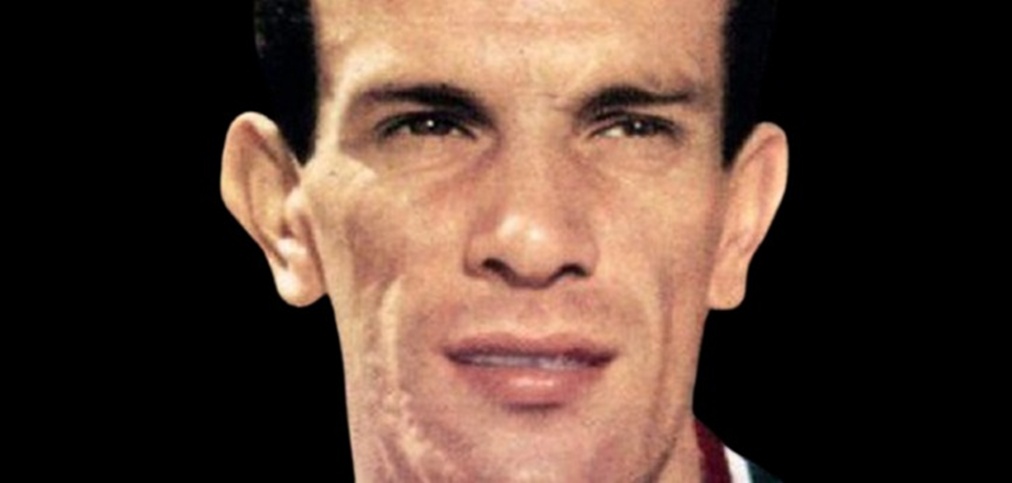
Tele Santana da Silva, born July 26, 1931, Itabirito, Brazil.
PART ONE
Tele Santana had been a Fluminense supporter before he became a Fluminense player, and that distinction matters because it speaks to the depth of his connection with the club and with the footballing culture of Rio de Janeiro, a culture that had always prized flair and technical quality above the more physical virtues that some other footballing traditions held dear. He progressed through the youth ranks at Fluminense and made his debut in 1951, the same year the club won the Campeonato Carioca, and from the very beginning it was clear that here was a player with an unusually sophisticated understanding of what the game required.
Santana played as a right winger, which in the early 1950s in Brazil meant something rather more interesting and dynamic than the traditional English concept of a wide player who stays out on the touchline and waits for the ball, because he had the tactical intelligence to drop deeper when the situation demanded it and contribute to the build-up play in ways that wingers of that particular era were not typically expected to do, and that combination of attacking intent and positional flexibility made him extremely difficult for opposing defenders to manage effectively. Besides, Santana´s passing was precise and his movement was clever, so that even when he did not have the ball he was creating a lot of problems for the opposition by pulling defenders out of position and opening up spaces for his teammates.
Over the course of nine seasons with Fluminense, from 1951 to 1960, he made 558 official appearances and scored 163 goals, numbers that place him third on the club’s all-time list for matches played and among its most prolific historical scorers, which is a remarkable record for a winger in any era but particularly so for one who was operating in the 1950s when football was a rather different physical and tactical proposition. He helped the club win the Campeonato Carioca in 1951 and again in 1959, the Torneio Rio-Sao Paulo in 1957 and 1960, and the Copa Rio in 1952, a collection of honours that reflects the quality of a team built around his contribution and several other fine players of the same generation.
After leaving Fluminense in 1960, Santana had a spell with Guarani that lasted until 1962, followed by brief stints with Madureira in 1962 and 1963 and then Vasco da Gama in 1963, where he brought his playing days to a close at the age of thirty-two, having squeezed the last drop from a body that had served him and his clubs faithfully for 12 professional years. However, the end of playing is not always the end of a man’s involvement in the game, and in Santana’s case it was really only the beginning of the chapter that would define how the world came to know him, because the qualities that had made him an intelligent and tactically aware player were precisely the qualities that were going to make him an exceptional coach.
He spent several years after retiring from playing before taking his first coaching role, and it is reasonable to suppose that those years were ones of observation, reflection, and the gradual formation of ideas about how the game should be played and how a team should be built and managed, because when he did take charge of a team the clarity and conviction of his methods suggested someone who had been thinking about these questions for a long time rather than someone who was making it up as he went. Additionally, the fact that he began with the youth teams at Fluminense in 1967 rather than immediately seeking a senior appointment reflected either a humility about his own readiness or a genuine belief that working with young players was the right way to develop as a coach, and possibly both.
PART TWO
Tele Santana´s debut as a youth coach at Fluminense in 1967 produced immediate results, with the club winning the Campeonato Carioca Juvenil that year and then the Campeonato Carioca Júnior in 1968, back-to-back youth titles that announced him as a coach of real ability and created the argument for giving him the senior squad, which Fluminense duly did in 1969. The results at senior level were immediate and emphatic, because in his debut season he led the club to both the Taca Guanabara and the Campeonato Carioca, a double in his first year in charge that would have been impressive for any experienced coach but was particularly striking for someone making his senior management debut.
Building upon that foundation of instant success at Fluminense, Santana moved to Atletico Mineiro in 1970 and began what would become the most significant domestic coaching relationship of his life, one that he would return to multiple times and that would produce results of genuine historical importance for the club from Belo Horizonte. He won the Campeonato Mineiro with them in 1970, which was a fine state-level achievement, but the truly landmark moment came in 1971 when he guided Atlético Mineiro to the Campeonato Brasileiro Série A, the national championship, which was the club’s first ever title at the highest level of Brazilian domestic competition and remains one of the defining moments in their entire history.
Winning the Campeonato Brasileiro in 1971 with Atletico Mineiro was not simply a footballing achievement but a cultural one, because it proved to the rest of Brazil that excellence in the sport was not the exclusive property of the clubs from Rio de Janeiro and Sao Paulo, that a club from Minas Gerais with its own traditions and its own identity could compete with the biggest names in the country and come out on top, and that message resonated far beyond the football terraces. For him personally, it confirmed that the methods and philosophy he had been developing were not just theoretically sound but practically effective at the very highest level of the Brazilian game, which gave him the confidence and the reputation to operate at the top from that point onwards.
He left Atletico Mineiro, returned briefly, had a short stint at São Paulo in 1973, and then moved to Gremio from 1976 to 1978, where he won the Campeonato Gaucho in 1977, adding another state title to a list of honours that was growing steadily but still, in retrospect, felt like preparation for something larger. There was also a brief spell at Botafogo in 1976 and then Palmeiras from 1979 to 1980, clubs of significant stature in Brazilian football, and what his movement between clubs reflected was partly the normal volatility of Brazilian football management and partly the fact that he was operating at the level where the biggest clubs were willing to recruit him, which meant he was always in demand and always working with squads that had real quality to develop.
Between 1983 and 1985, Santana managed Al-Ahli in Saudi Arabia, and it is worth pausing on this because it is easy to dismiss or overlook his time in the Middle East as an interlude between more glamorous appointments, when in fact what he achieved at Al-Ahli was genuinely impressive by any standard. He won the Saudi League in 1984, the King’s Cup in 1983, and the Gulf Club Champions Cup in 1985, three separate competitions across three consecutive years, and that kind of sustained success in an unfamiliar environment with different cultural and footballing traditions requires significant adaptability and coaching intelligence.
The Saudi Arabia of the early 1980s was not the footballing powerhouse it has since become, but it was a competitive environment with clubs that had resources and ambitions, and Santana’s ability to operate effectively there while maintaining the principled, attacking approach that defined his work everywhere he went suggests that his methods were genuinely transferable rather than dependent on a specific cultural context or a specific type of player. Furthermore, working outside Brazil must have given him a broader perspective on the global game, which in turn would have enriched the tactical thinking he brought back to South America when he returned to take on what would become his most celebrated coaching role.
PART THREE
When Santana took charge of the Brazil national team in 1980, he inherited a squad that had underperformed at the 1978 World Cup relative to expectations and that was carrying a certain kind of institutional anxiety about whether Brazil could still produce the kind of football that the whole world associated with the country, the fluid, instinctive, creative football that had made Pelé and his generation into global icons. Santana’s answer to that anxiety was simple and radical: he was going to pick the most creative players available, give them the freedom they needed, and trust that the results would follow, even if that meant accepting a degree of defensive vulnerability that more cautious coaches would never have tolerated.
The players he assembled around this philosophy were extraordinary, because he had the good fortune to be working at a time when Brazilian football was producing creative midfielders of exceptional quality in unusual abundance, and he was smart enough and brave enough to pick them all. Zico was the creative heart, a player of breath-taking technical ability and goalscoring instinct who was the best Brazilian of his generation; Socrates was a different and equally fascinating presence, tall and elegant and philosophical in his approach to both football and life, a doctor by training who brought an intellectual depth to the game that was entirely his own; Falcao was the dynamic engine of the midfield, powerful and precise and capable of going box to box with an energy and quality that would have made him the best player in almost any other team in the world; and alongside them were Junior and Toninho Cerezo, both of the very highest quality, both capable of controlling the tempo of a match and creating danger in ways that defenders found almost impossible to prepare for.
This midfield — Zico, Socrates, Falcao, Junior, Cerezo — is remembered today as one of the finest ever assembled for a World Cup, not merely in the context of Brazilian football but in the entire history of the tournament, and the football the team played at the 1982 World Cup in Spain justified that assessment fully and without qualification. They won their group with three victories from three, playing football of such technical brilliance and attacking conviction that neutral supporters across the world found themselves hoping Brazil would win the tournament simply because the game deserved a champion who played like that.
The second phase brought Brazil into a group with Italy and Argentina, and they dealt with the Argentines immediately and emphatically, winning 3–1 in a match that showed every element of what Santana’s team was capable of, three goals of real quality and a collective performance of such confidence and authority that it seemed to announce them as the inevitable winners of the tournament. However, football is a sport that has a particular talent for producing outcomes that are structurally unfair, where the better team does not always win because the rules of the game create situations in which a single moment of individual brilliance from the opposition can overturn ninety minutes of collective excellence, and what happened against Italy in their decisive second-phase match was exactly that kind of moment multiplied three times.
Paolo Rossi had been returning to form after a period away from the game and had scored against Argentina in the same group, but nothing quite prepared anyone for what he produced against Brazil on 5 July 1982 in the Estadio de Sarria in Barcelona, because he scored a hat-trick that eliminated what was probably the most talented team in the competition, and he did it in a match that Brazil equalised in twice, fighting back to 1–1 and then to 2–2 before Rossi’s third goal — a close-range finish from a corner — gave Italy a 3–2 win and ended the tournament for Santana’s side. Thus Brazil went home not as champions but as the team that everyone who loved football wished had won, and the 1982 squad has been discussed and mourned and celebrated in roughly equal measure ever since.
The genuine tragedy of 1982 — if that word is not too strong for something that is, in the end, merely a football result — is that Santana had built something genuinely remarkable, a team that embodied a philosophy and played the game in a way that reflected something true and beautiful about what football can be when it is at its most expressive and most human, and then watched it eliminated not because his approach was wrong but because a single player happened to be in the form of his life on the one day it mattered most.
Santana returned to the national team role in 1985 and took Brazil to the 1986 World Cup in Mexico, and in some ways this second tournament tells an even more painful story than the first because the team went through the entire competition in normal time without losing a single match, winning their group and advancing to the quarter-finals without being beaten in ninety minutes, only to encounter France in the last eight and draw 1–1 after a match that contained one of the great what-ifs of football history.
Brazil were level with France in a quarter-final that neither team was finding easy to separate, and then Zico — brought on as a substitute after returning from injury — stepped up to take a penalty in normal time that would have given Brazil the lead, and he missed it, the ball saved by the French goalkeeper Joel Bats, and the match remained tied and went to a penalty shootout and Brazil lost, and Santana was left once again to contemplate the gap between what his team deserved and what the game had given them.
The French team they lost to that day was itself a very fine side, and the shootout result could equally have gone the other way, but the penalty miss by Zico and the subsequent defeat by shootout felt like a cruelty that the tournament’s most consistent side in normal time did not deserve. Despite the result, what Santana had built was a team that played the game with honesty and technical quality, and the fact that they were eliminated twice from World Cups without being beaten in open play across multiple tournament editions says something remarkable about the consistency of his approach and the quality of the teams he produced.
PART FOUR
When Tele Santana took over at Sao Paulo in October 1990, he was arriving at a club that had spent years without a major trophy and that was carrying a quiet sense of underachievement relative to its own expectations and those of its large and passionate supporter base, and the transformation he engineered there over the following five and a half years was the most complete and satisfying chapter of his entire coaching life because it combined the philosophical conviction that had always defined his work with a run of results that proved his ideas were not merely admirable but genuinely dominant.
He won the Campeonato Paulista in 1991 and 1992 and the Campeonato Brasileiro Serie A in 1991, establishing Sao Paulo as the best club in the country before turning his attention to the continental and global stages, and what happened next was extraordinary by any measure of what a South American club can achieve. In 1992, Sao Paulo won the Copa Libertadores — the South American Champions League equivalent — and then went to the Intercontinental Cup, the match between the champions of South America and the champions of Europe, and beat Johan Cruyff’s Barcelona 2–1 in a result that nobody in Europe had seriously anticipated and that sent a message to the entire footballing world about what Santana had built.
If defeating Barcelona was a shock, then what Sao Paulo did in 1993 elevated the club to a level of achievement that has never been matched before or since by a South American club in a single season, because they won not two or three but four separate international competitions that year: the Copa Libertadores, the Intercontinental Cup, the Supercopa Sudamericana, and the Recopa Sudamericana, a quadruple of international titles in a single calendar year that is genuinely without precedent in the history of club football on the continent.
The Intercontinental Cup of 1993 brought them face to face with Fabio Capello’s AC Milan, a team that was in the middle of one of the most dominant periods in European club football, a side built on defensive solidity and devastating counter-attacking football with players of the very highest class in every position, and São Paulo beat them 3–2 in a match that required every ounce of what Santana had taught his players over three years of work and preparation. Moreover, the fact that his teams had now beaten two of the finest clubs Europe could produce in successive years, and done so while playing the kind of attacking, technically sophisticated football that was Santana’s lifelong signature, felt like a vindication that went far beyond trophies and results and touched something deeper about the man’s belief in how the game should be played.
He remained at Sao Paulo until January 1996, having also guided the club to the Recopa Sudamericana in 1994 and the Copa CONMEBOL in 1994, and when he finally left it was as the most decorated club coach in Brazilian history at that point and as someone whose influence on the game was felt not just in the titles his teams had won but in the minds and methods of dozens of players and coaches who had worked under him and carried his ideas forward into their own work.
It would be easy to frame Santana’s philosophy purely in aesthetic terms, to say that he believed in beautiful football and leave it at that, but that would do a disservice to the intellectual seriousness with which he approached every tactical and personnel decision, because the football his teams played was not beautiful by accident or by the random assembly of talented individuals but by design, by a carefully constructed system of principles about how space should be used, how full-backs should be liberated to attack, how midfielders should be chosen for their ability to create rather than merely to prevent, and how trust in players to make decisions for themselves produces better football than rigid instruction.
His famous statement that he would rather lose playing attractively than win through mediocre tactics is sometimes cited as evidence of romanticism or naivety, but that reading misses the point entirely, because he was not indifferent to winning — his record of titles makes that obvious — but was rather making a different claim: that the route to winning at the highest level was through the quality and freedom of the football rather than despite it, and that a team which genuinely believed in its own attacking principles was harder to beat consistently than a team which simply tried to frustrate the opposition. The São Paulo quadruple of 1993 is the most powerful argument in favour of that position, because they beat the best Europe had to offer twice in successive years and they did it playing football that he would have recognised and approved of instantly.
Those who worked with him consistently described a man of calm authority and genuine warmth, someone who communicated his ideas clearly and who had the rare quality of making players feel trusted and valued rather than merely deployed, and that quality — difficult to measure but absolutely real in its effects — was part of what made his teams function as cohesively as they did. Additionally, his long association with Atletico Mineiro, where he remains the record-holding coach with 434 matches, 235 wins, 122 draws, and 77 losses across multiple stints from 1970 to 1988, including a final Campeonato Mineiro title in 1988, reflects a loyalty and an emotional connection to the club from his home state that ran alongside his more celebrated work elsewhere.
He also returned to Fluminense briefly in 1989 and managed Palmeiras in two separate spells, in 1979–1980 and 1990, and took charge of Flamengo in 1988–1989, winning the Taca Guanabara there in 1989, so the breadth of his experience across the major clubs of Brazilian football was almost unparalleled, and each posting added something to the understanding and the confidence that he brought to Sao Paulo in October 1990 when the most remarkable chapter of all began.