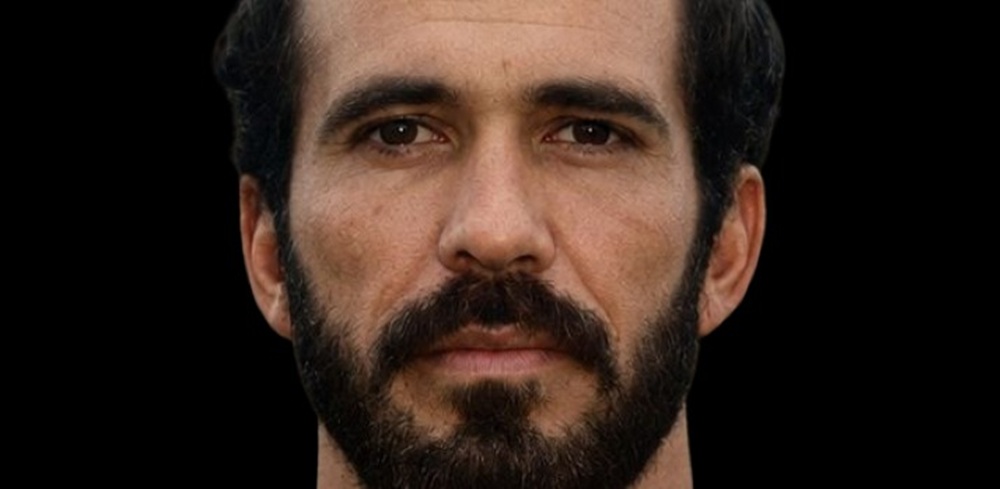
Mário Sérgio Pontes de Paiva, born 7 September 1950, Rio de Janeiro, Brazil.
PART ONE
Mário Sergio joined Flamengo in 1969 and was part of the first-team squad in 1970, when the Scarlet and Black won the Taça Guanabara, but his opportunities were scarce and the midfield combatant only managed to make a handful of appearances, including matches against América-RJ and Palmeiras in the Torneio Roberto Gomes Pedrosa in October. There was unmistakable ability in him, but there was no settled place, and the move that changed everything came in 1971 when he left Rio for Vitória in Salvador.
Vitória gave Mário Sérgio the freedom and responsibility that Flamengo had not been ready to provide, and he answered by becoming one of the finest players the club had seen, operating from the left, moving inside to create and combining with André Catimba and Osni in an attacking unit that older supporters would remember with enormous affection. The 1972 Campeonato Baiano brought the first substantial reward, with Vitória overcoming Bahia in the deciding stage, and Mário Sérgio scored the only goal in the first match before his side won the second 3–1 to secure the title.
Besides supplying the skill, he supplied the talk, promising before the return that he would give away his playing kit and leave the field in his underwear if Vitória won, and that mixture of performance, humour and provocation soon became inseparable from the man. More importantly, his football continued to develop, and in the 1973 national championship he was named the best left-winger in Brazil by Placar, receiving the first of his four Bola de Prata awards. During 1974 he moved increasingly into an organising role, proving that his game was built on much more than dribbling, and another outstanding national campaign brought a second successive Bola de Prata. He had become the directing mind of Vitória’s side, and after four seasons in Bahia the leading clubs of Rio wanted him back.
Fluminense signed him in 1975 and placed him in the first version of the celebrated Máquina Tricolor, where the names around him included Roberto Rivelino, Paulo César Caju, Gil, Manfrini and the young defender Edinho, and with so much invention in one side the ball could travel at a speed that left opponents chasing shadows. Sérgio helped Fluminense win the Taça Guanabara and the Campeonato Carioca in 1975, then remained part of the squad that retained the state championship in 1976, although his relationship with president Francisco Horta deteriorated and the disagreement shortened what might have become one of the defining partnerships in Brazilian club football.
He crossed Rio to Botafogo early in 1976, joining another collection of forceful personalities that included Dé, Renê, Perivaldo, Nilson Dias and, for part of the period, Paulo César Caju. Sérgio remained a marvellous passer who could slow a match, invite an opponent forward and then remove him with one touch, or suddenly quicken the play with a diagonal delivery that few others had spotted. Botafogo, though, were going through a difficult period and major honours did not follow, while a serious knee injury in 1978 interrupted his progress. He was out for four months, attempted to return too quickly and caused further damage to his meniscus, which resulted in another long absence, and by 1979 disagreements with directors had left him looking for another club.
The next stop was Rosario Central in Argentina, where Mário Sérgio played alongside Edgardo Bauza, the rugged defender who would later become a successful coach, but the Brazilian’s stay was brief because his wife remained at home to continue her engineering studies and he never settled fully in Rosario. He returned to Brazil during 1979 and joined Internacional at the suggestion of Paulo Roberto Falcão, a recommendation that said plenty about the respect held for him by the country’s finest midfield player, and the timing could hardly have been better. Internacional, coached by Ênio Andrade, went through that year’s Campeonato Brasileiro without losing a match and defeated Vasco da Gama 2–0 at the Beira-Rio in the second leg of the final on 23 December, having already won 2–0 at the Maracanã, to become the first and still the only undefeated champions in the competition’s history.
Sérgio brought delicacy and invention to a side containing Falcão, Batista, Jair, Valdomiro, Mauro Galvão and the prolific Chico Spina, and although he had spent only a short time at the club before lifting the trophy, he looked completely at home. Internacional then reached the 1980 Copa Libertadores final, drawing 0–0 with Nacional of Uruguay in Porto Alegre before losing the return 1–0 in Montevideo, but Mário Sérgio’s individual level remained high and he collected his third Bola de Prata. When Falcão departed for Roma, additional responsibility fell on him, and he responded with another excellent season in 1981, winning the Campeonato Gaúcho and a fourth Bola de Prata. Four awards in three different roles across eight years showed not merely flashes of brilliance but an ability to remain among the country’s best despite injuries, arguments and continual movement.
PART TWO
International recognition arrived surprisingly late, because Brazil had no shortage of gifted attacking midfielders and Mário Sérgio’s difficult reputation counted against him, but he was finally brought into the side in 1981 and made his first appearance on 23 September in Maceió, when Brazil defeated an Irish combination 6–0. Sérgio then played in a 3–0 triumph against Bulgaria at the Beira-Rio on 28 October, and his involvement continued into the preparations for the 1982 World Cup as Brazil overcame East Germany 3–1 in Natal on 26 January, Czechoslovakia 1–0 at the Morumbi on 3 March and West Germany 1–0 at the Maracanã on 21 March.
Those were not casual appearances in an experimental side, because Telê Santana was assembling one of the most admired Brazilian teams and Mário Sérgio came close to earning a place in Spain, but he was left out of the final group and Éder was selected. Thus a footballer capable of doing almost anything with the ball never appeared at a World Cup, and his senior international record eventually amounted to eight matches, the last three coming in 1985 against Peru, Argentina and Colombia. São Paulo had signed him from Internacional in August 1981, and he made his debut on 16 August before contributing to the Campeonato Paulista triumph later that year. On 4 October, in front of more than 30,000 spectators at the Morumbi, he scored twice as São Paulo thrashed Palmeiras 6–2, giving the crowd a full exhibition of his passing, movement and finishing, but life with coach José Poy was not always comfortable and controversy again travelled beside the football.
One episode at São Paulo followed an away match against São José, when Sérgio fired a revolver into the air as angry supporters gathered around the team’s departure from the Martins Pereira stadium, although he later maintained that the weapon contained blanks and admitted that his actions had been foolish. The nickname Rei do Gatilho, the king of the trigger, followed immediately, and when São José came to the Morumbi the scoreboard introduced him with it, turning a serious incident into part of the public theatre that surrounded him. Yet São Paulo could not find a lasting tactical arrangement that suited both player and coach, and after leaving the club he spent part of 1983 with Ponte Preta, where president Lauro de Moraes had brought together experienced and talented men including Dicá and Jorge Mendonça.
On paper it was a beautifully constructed side, but repeated changes of coach prevented the combination from producing the expected results, and Mário Sérgio stayed for only nine months. Then came one of the boldest selections of his playing life, because Grêmio coach Valdir Espinosa wanted him specifically for the Intercontinental Cup against European champions Hamburger SV in Tokyo. Grêmio had won the Copa Libertadores without him, and there were obvious risks in placing a newcomer straight into such an important match, but Espinosa believed the German side’s power and discipline could be unsettled by a man able to keep possession in the smallest spaces. The decision worked. Mário Sérgio started in midfield at the National Stadium on 11 December 1983, controlled much of Grêmio’s attacking rhythm over 120 minutes and repeatedly provided the passing link to Renato Gaúcho, who scored both goals in a 2–1 extra-time victory. The match record confirms Grêmio’s line-up, the score and Renato’s two decisive goals.
Even after helping Grêmio become world champions, Sérgio did not remain, and in 1984 he crossed Porto Alegre to begin a second spell with Internacional, a move that might have made him unacceptable to both halves of a fiercely divided football city but instead produced an extraordinary scene. At the opening Gre-Nal of the year he represented Inter while carrying his champion’s distinction from Grêmio, and when the ceremonial honours were exchanged he received applause from supporters of both clubs, something achieved by very few players before or since. Internacional won the Campeonato Gaúcho and the Kirin Cup during 1984, after which Sérgio joined Palmeiras and immediately gave a side short of recent success the kind of authority it had been missing.
He played well enough for a Placar cover to announce that Mário Sérgio had returned and football had returned with him, but a positive drug test after a match against São Paulo brought a six-month suspension and badly damaged Palmeiras’ Campeonato Paulista challenge. Mário Sérgio denied deliberately taking cocaine and claimed that he had been framed, while the circumstances became the subject of years of argument, but the suspension stood and another promising spell was broken by controversy. He played again after serving the ban and remained with Palmeiras into 1985, then represented Botafogo of Ribeirão Preto and AC Bellinzona in Switzerland during 1986. Neither stay lasted long, and in 1987 he returned to Bahia for a final attempt to continue playing at the highest level.
The ending was as individual as everything before it. During Bahia’s match against Goiás in the fifth round of the 1987 national championship, coach Orlando Fantoni gave Mário Sérgio the No.10 shirt, and for the opening 45 minutes the veteran summoned enough of the old command to direct the game and help Bahia reach the interval leading 1–0. While his team-mates were still making their way into the dressing room, he had changed out of his kit and made himself presentable, then thanked the players and informed them that he would not return for the second half because his time as a player was over.
There was no farewell tour and no carefully arranged testimonial, just a decision taken during a match when his mind understood what his body could no longer repeat. Across Flamengo, Vitória, Fluminense, Botafogo, Rosario Central, Internacional, São Paulo, Ponte Preta, Grêmio, Palmeiras, Botafogo-SP, Bellinzona and Bahia, he had collected state championships in Bahia, Rio de Janeiro, São Paulo and Rio Grande do Sul, won the undefeated 1979 Brazilian championship and helped Grêmio defeat Europe’s champions in Tokyo. Besides the medals, there were those four Bola de Prata awards in 1973, 1974, 1980 and 1981, evidence of a player who could dominate from the wing or from deeper positions. He was not easy to manage and never pretended otherwise, but team-mates such as Falcão and coaches such as Espinosa spoke of his technical level in terms reserved for very few, because he could make an ordinary passage of play look several steps ahead of everybody else.
PART THREE
Coaching began almost immediately at Vitória in 1987, although the same bluntness that had complicated Mário Sérgio’s playing years also made it difficult for him to remain quietly in one post. After a long gap he took charge of Corinthians in August 1993 and stayed into 1995, producing a side that was often hard to beat while becoming involved in a public dispute with São Paulo coach Telê Santana, who questioned both his methods and his suitability for a major club. Sérgio answered directly, as he always did, and the argument demonstrated that retirement had removed none of his appetite for confrontation.
He later coached São Paulo in 1998, returned to Vitória in 2001 and had his first spell with Atlético Paranaense during the same year, while São Caetano employed him from 2002 into 2003. Further work followed at Atlético Paranaense and Atlético Mineiro, and he also served Grêmio in a technical position in 2005, but his strongest sustained work as a coach arrived with Figueirense in 2007. The Santa Catarina club reached the Copa do Brasil final after overcoming Noroeste, Gama, Náutico and Botafogo, and in the two-legged decider Figueirense drew 1–1 away to Fluminense before losing 1–0 at the Orlando Scarpelli, leaving them beaten 2–1 on aggregate. It was a considerable achievement for the club, although league results declined and Mário Sérgio was dismissed in September. Botafogo appointed him only weeks later, but three defeats against Goiás, Atlético Paranaense and Santos brought the arrangement to an end after just three matches.
Mário Sérgio returned briefly to Atlético Paranaense in August 2008, was dismissed early in September and took over Figueirense again on 16 September, but he could not reproduce the previous year’s cup run and later departed. Portuguesa employed him at the beginning of 2009, and his record there stood at five victories, five draws and two defeats when the club removed him on 6 March following a Copa do Brasil loss to Icasa. Internacional then called on him on 5 October after dismissing Tite, giving him only the closing eleven matches of the Campeonato Brasileiro to rescue a fading title challenge, and he began with a 3–1 victory over Náutico at the Beira-Rio two days later.
Six wins, three draws and two defeats followed under his command, and Internacional entered the final round still capable of becoming champions, but a 4–1 victory over Santo André was not enough because Flamengo defeated Grêmio 2–1 at the Maracanã and took the championship by two points. Inter finished second and qualified for the 2010 Copa Libertadores, yet the club appointed Jorge Fossati for the new season and Mário Sérgio moved on once more. Ceará became his final coaching post in August 2010, though he lasted only a month, winning once in six matches and angering people inside the club by openly questioning the quality of the squad. His eleven-match Internacional record was six wins, three draws and two defeats, figures that showed how close he had come to turning a hurried appointment into a national title.
Television offered a better home for the sharp eye and sharper tongue that clubs had sometimes found exhausting, and Sérgio had already worked for Bandeirantes during the 1990s, appearing at the 1990 and 1994 World Cups alongside the narrator Silvio Luiz. He spoke like somebody who had occupied every part of football—player, coach, director and dressing-room troublemaker—and he did not soften an opinion merely to protect a famous name, while his phrase that a team was beginning to enjoy the game entered common Brazilian football language. Fox Sports recruited him when its Brazilian operation was getting under way in 2012, and over the next four years he became one of the station’s most recognisable analysts, direct but often funny, argumentative but capable of explaining a movement or tactical fault in the language of the supporter watching at home.
On 28 November 2016 he boarded LaMia Flight 2933 as part of the Fox Sports team travelling to Colombia to cover Chapecoense’s first leg against Atlético Nacional in the Copa Sudamericana final, and he was among the 71 people killed when the aircraft crashed near La Unión in Antioquia. He was 66. The terrible circumstances of his death inevitably became attached to the way he is remembered, but the football came first: the low socks, the beard, the disguised pass, the sudden change of pace, the argument with a director and the move to another club, followed by another afternoon in which the ball seemed to wait for his instruction. Mário Sérgio never lived quietly inside the game, and the game was rarely quiet when he was around.