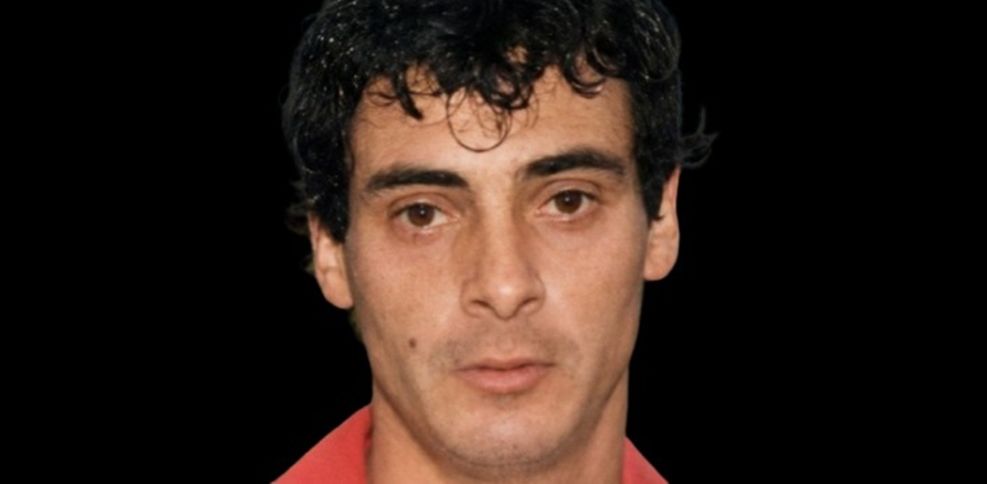
Rubén Fernando da Silva Echeverrito, 11 April 1968, Montevideo, Uruguay.
PART ONE
Rubén da Silva Echeverrito was destined to be nicknamed Polillita, a fond echo of an older namesake, Jorge Polilla da Silva, who had terrorised defences a decade before him. There was no blood relation between the two players, but the football writers of the River Plate press, never ones to miss a tidy line, could not resist the connection, and so the tag stuck to a young and talented forward from Montevideo almost from the moment that he first pulled on a shirt.
That first shirt belonged to Danubio, the modest but proud Montevideo club founded back in 1932 by the Bulgarian émigré brothers Miguel and Juan Lazaroff, whose fondness for the river of their homeland gave the side both its name and its identity, and it was here, amid the yellow and black of a club still carrying the imprint of its immigrant founders, that Da Silva began life as a professional in 1986. He was eighteen years of age, raw, and hungry, and although his first two seasons brought the ordinary apprenticeship of a young forward finding his feet against grown men, it did not take him long to announce himself properly.
By 1988 Da Silva had become the spearhead of a Danubio side chasing the title, and score he did, hammering in twenty-three goals across the campaign, a return that not only carried his club to the Primera División Uruguaya crown but also handed him the division’s top-scorer honours in the same breath. For someone raised in the shadow of Peñarol and Nacional, the two great powers of Uruguayan football, to drag unfashionable Danubio to the summit was no small thing, and word of the up-and-coming striker’s exploits soon travelled north across the River Plate itself.
River Plate of Buenos Aires, one of Argentine football’s true giants, came calling in 1989, and Da Silva crossed the water to join a dressing room stuffed with internationals and egos alike. He arrived in time to be part of the group that lifted the Primera División Argentina in the 1988–89 championship, an early taste of Argentine silverware that might have suggested an easy transition, though in truth the following two seasons demanded rather more patience than glory, as young South American strikers so often discover once they leave home comforts behind. Nonetheless, by 1991 he had done enough to catch European eyes, and a transfer move to Spain followed, taking him to Logroñés, a club rarely troubled by fame but one that offered da Silva a first taste of la Liga football and a fresh, if unglamorous, education in the European game.
Around this same period, Da Silva also had a brief spell in Italian football with Cremonese, the Lombardy club that shuttled between Serie A and Serie B throughout those years. By 1992, however, he was back in the red-and-white of River Plate for a second spell, and this time the goals flowed with real conviction: in the Clausura of 1993 he finished as the tournament’s leading scorer with thirteen goals, a return sharp enough to remind all of Argentina why Montevideo had produced him in the first place. Such form, naturally, could not go unrewarded, but rather than a third contract at the Monumental, it prompted an altogether spicier move.
PART TWO
In 1993 Ruben da Silva swapped the white sash of River Plate for the blue and gold of Boca Juniors, stepping straight into the fiercest domestic rivalry South American football has to offer, the Superclásico itself, and wearing the colours of the club that his former employers regard as their bitterest enemy. Two seasons at La Bombonera followed, during which the Uruguayan built a reputation as an attacker capable of unsettling even the meanest of Argentine back lines, though by 1995 he had moved on again, this time to Rosario Central, a switch that would prove among the most fruitful of his entire spell in Argentine football.
At Central he inherited the responsibility of leading the line and repaid it in full, finishing as the club’s chief marksman as they claimed the Copa Conmebol in 1995 — the competition now recognised as the Copa Sudamericana — with Da Silva himself ending the tournament as its joint top scorer on four goals, level with Argentina’s Horacio Carbonari and Colombia’s Alexander Escobar. Two years later, in the Apertura of 1997, he went one better still on the domestic front, topping the Argentine scoring charts outright with fifteen goals in the colours of Rosario Central, a feat that placed him, for a second time in his Argentine spell, at the very summit of the country’s forwards.
It was during these same Rosario Central years, in the summer of 1995, that Da Silva also found himself involved in one of Uruguayan football’s proudest modern chapters, called up by coach Héctor Núñez into the squad that contested the Copa América on home soil. Playing his club football at Boca Juniors at the time the tournament kicked off, he featured in a Uruguay side built around the elegance of Enzo Francescoli and the predatory instincts of Rubén Sosa, and although Da Silva´s role was more that of a willing squad member than a headline performer, he was very much part of the group that went all the way, beating Brazil on penalties after a 1–1 draw in the final in Montevideo to lift a record-equalling fourteenth continental crown for La Celeste. Across his full spell with the national team, stretching from 1988 through to 2000, Da Silva earned himself twenty-two caps and contributed three goals, a modest tally by the standards of Uruguay’s great forwards but a record built, tellingly, in an era thick with attacking talent competing for the same shirt.
By 1998 the itch to try somewhere new had struck again, and Da Silva packed his bags for Mexico, joining Tecos of Guadalajara for a two-year stay that rounded out the wandering, continent-hopping phase of his playing days; from Montevideo to Buenos Aires, from Spain to Italy and back to Argentina again, and now to the altitude and heat of Mexican football, few Uruguayan forwards of his generation could claim quite so varied a passport. Yet for all the foreign adventures, home always seemed to beckon eventually, and in 2000 he returned to Uruguay, signing for the country’s most decorated club, Club Nacional de Football. It proved an inspired homecoming, for Nacional duly won the Primera División Uruguaya that same year, giving Da Silva a domestic championship in his native land to sit alongside his continental and Argentine honours, a full set, of sorts, gathered across four different countries.
The circle finally closed in 2001, when, after a single season at Nacional, da Silva returned to Danubio, the club that had launched him as a teenager some fifteen years earlier, and he would spend the remainder of his playing days there. It was a fitting stage for a farewell, and in 2004 the story reached its natural conclusion when Danubio once again lifted the Primera División Uruguaya title, with da Silva, now in his mid-thirties and playing out his final months as a professional, part of the squad that delivered it. He retired that year having won league titles in three separate countries, a continental club trophy, and a Copa América winner’s medal besides, a collection few Uruguayan strikers of his era could match, even if his name never quite carried the household recognition of Francescoli or Sosa.
Retirement from active playing, however, did not mean retirement from the game altogether, and Da Silva´s next act took him, somewhat unexpectedly, into coaching. His first post arrived in 2012 back in Uruguay with El Tanque Sisley, though the more substantial phase of his time on the touchline unfolded rather further afield, in Central America. From 2017 to 2018 he headed the youth setup at Santa Tecla in El Salvador before being promoted to take charge of the first team itself in 2018, a spell during which he spoke openly to the local press about the demands of Salvadoran football and the eccentricities of its pitches.
Later that very same year he moved on to Dragón, and between 2019 and 2020 he took charge of Sonsonate, before further appointments followed at Once Deportivo in 2022 and Platense in 2023, a decade-long coaching trail through El Salvador that, while never delivering the silverware of his playing days, kept Polillita da Silva rooted firmly in the game that had carried him from the banks of the Río de la Plata to the pitches of Central America and back again.