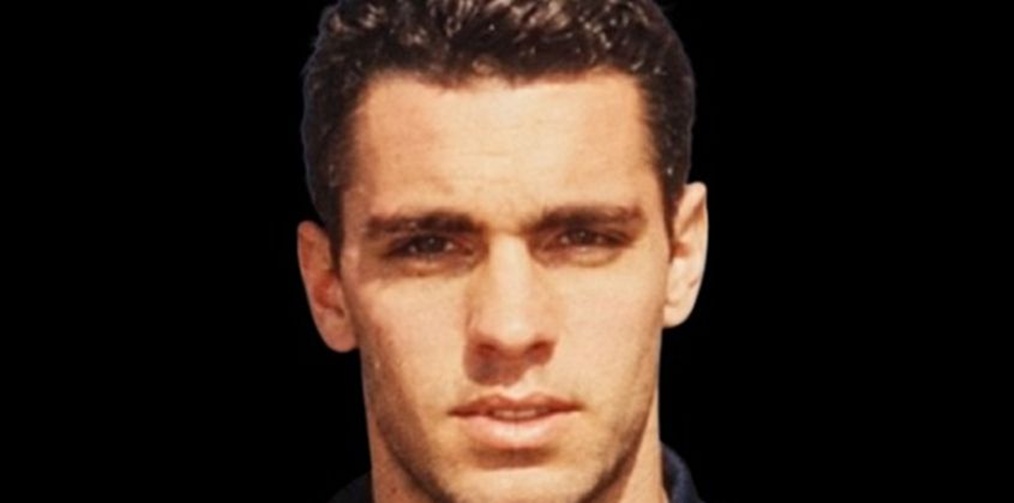
Juan Manuel Cobián, born 11 September 1975, Buenos Aires, Argentina.
PART ONE
Juan Cobián grew up with Boca Juniors close to home and close to his family, but the route from the club’s youth sides to a place in its first team was crowded, and by the time he reached his early twenties he had learned that training beside famous players was a very different thing from being picked to play alongside them. Born in Buenos Aires on 11 September 1975, he entered Boca’s youth system at ten, played first as a central defender and later at right-back, and would have preferred a place in defensive midfield, where he could see more of the ball. He spent time around the senior squad during the mid-1990s and trained with Diego Maradona, while Juan Sebastián Verón, Claudio Caniggia and Juan Román Riquelme were among the other players he encountered there. Those were rich surroundings for a young footballer, and Cobián remembered them warmly years later, but his sole appearance for Boca’s first team came as a substitute in a January 1997 friendly against São Paulo.
There had still been moments worth keeping from those years, and one of Cobián’s strongest memories came after Boca beat River Plate 4–1 at La Bombonera in 1996, when the young reserve player waited near the dressing room as the first team returned from the pitch and Maradona greeted him with an embrace. Yet a fond memory could not supply the regular matches he needed, so Boca sent him on loan to Huracán de Corrientes for the 1997–98 Primera B Nacional season, after Huracán’s brief stay in Argentina’s top flight had ended in relegation.
It was a substantial change from waiting at Boca: he made 32 league appearances, faced the weekly pressure of second-tier football and scored once, although that goal came in an 8–2 defeat by San Martín de San Juan. The score offered him little comfort, but the season gave other clubs something a friendly appearance and a place in Boca’s training sessions could not give them—evidence that he could play regularly against senior opponents. When Sheffield Wednesday brought him to England in the summer of 1998, he had that full season behind him, a Spanish passport that helped make the move possible and a chance to test himself in the Premier League.
The change was immediate. Cobián joined Sheffield Wednesday in August 1998 and, on 15 August, played the full match at Hillsborough as Danny Wilson’s side opened its Premier League season with a 1–0 defeat by West Ham United. A week later, Wednesday won 3–0 away to Tottenham Hotspur, and Cobián was again involved from the start; then came a 1–0 home defeat by Aston Villa on 29 August, a 1–0 loss at Derby on 9 September and a 3–0 victory over Blackburn Rovers three days later. Five league starts inside his first month suggested that he had been brought in to play, and the variation in those results showed him English football at full speed: an away win at Tottenham, tight defeats, and a convincing home victory, all before he had been at the club long enough to settle into a routine. Across the season he would make nine Premier League appearances, seven of them starts, and score no goals.
Wednesday’s League Cup tie with Cambridge United on 16 September gave him a harder evening. The first leg was at Hillsborough, where the Premier League club was expected to take control against lower-division opposition, but an early pass back from Cobián put goalkeeper Kevin Pressman under pressure and Cambridge forward Trevor Benjamin seized the chance to score. Cambridge won 1–0, and although Cobián played the whole match, that opening mistake became the detail by which his part in the game was remembered.
Wednesday still had a second leg in which to recover; on 22 September they drew 1–1 at Cambridge and went out 2–1 on aggregate, but Cobián did not play in that return match. It is easy, with years between the event and the telling, to make one pass sound like the whole of a player’s time at a club, though the dates say otherwise: he remained in Wednesday’s league side, and on 26 September he started against Arsenal. The Cambridge incident was costly, and so was the cup exit, but his place in the team had survived that particular night.
The Arsenal match gave Wednesday a result that looked unlikely late into the afternoon. Cobián started at Hillsborough on 26 September as the home side faced Arsène Wenger’s team, whose line-up included Tony Adams, Patrick Vieira, Emmanuel Petit and Dennis Bergkamp, and the match remained goalless until Lee Briscoe struck in the 89th minute to give Wednesday a 1–0 win. Paolo Di Canio and Martin Keown had both been sent off before half-time, so there had been plenty for the players left on the pitch to handle, and Cobián was still part of the Wednesday side when Briscoe supplied the winner.
A week later, however, Wednesday lost 4–0 away to Middlesbrough, and that 3 October appearance proved to be Cobián’s last league start for the club. He did return twice as a substitute, first when Wednesday won 4–1 at Blackburn on 20 February 1999 and then in a 2–0 defeat at Nottingham Forest on 1 May, but the run of matches that had opened his English spell was over. Seven starts had arrived quickly; after Middlesbrough, he had to wait months for his next league minutes. Cobián eventually left Wednesday in the summer of 1999 despite having reached a level many players never see. Charlton Athletic offered another opening: he joined the London club in August after a trial, but he did not make any league appearances, and his stay ended after only a few weeks. In a later interview, he connected the end of that chance with Charlton’s decision to sign another right-back, Greg Shields, from Dunfermline Athletic.
PART TWO
For Juan Cobián, the important change was plain enough without dressing it up: he had gone from starting Premier League matches in Sheffield to waiting for a chance at Charlton Athletic that never came. Aberdeen then gave him an opportunity to play in Scotland, and after a trial under manager Ebbe Skovdahl he agreed a deal for the 1999–2000 season. He was 24, fit enough to make a fresh attempt at a first-team place and keen to show that the months spent out of Sheffield Wednesday’s side and then out of Charlton’s altogether had not taken the sharpness from his game.
His first Aberdeen league appearance came on 6 November 1999 in a 3–1 defeat away to Dundee United, and his next two took him to St Johnstone on 21 November, where Aberdeen drew 1–1, and Hibernian on 27 November, where they lost 2–0. Those three matches gave him a foothold in Skovdahl’s side, even if Aberdeen’s results were poor, and a Scottish League Cup quarter-final against Rangers at Pittodrie on 1 December offered a bigger stage. Cobián started, but his part in the match ended in the 38th minute when injury forced him off and Scott Perry replaced him.
Aberdeen held Rangers scoreless through normal time, then won 1–0 in extra time when Andy Dow struck in the 118th minute. The result carried Aberdeen into the semi-finals and gave their supporters a night to remember, while the player who had started at right-back could only watch the end of it from the sidelines. His Aberdeen total stopped at three league appearances and one League Cup appearance; the injury he suffered against Rangers meant that the fourth match was also his last in the club’s first team. The problem was a torn hamstring, and Cobián has since described how difficult it was to get back to the pace he had before that December night. He sought another medical opinion in Argentina, returned to Aberdeen and worked hard on his recovery, but when he tested himself again in a reserve match he felt that something remained wrong; his contract was running down, and the time available to convince the club that he could play regularly again was running down with it.
Swindon manager Colin Todd gave him a three-year deal, and Cobián’s first competitive appearance for the club came in a 1–1 League Cup draw with Exeter City on 22 August 2000. Four days later he made his league debut at home to Walsall, who won 4–1, and in September he played in a 1–1 League Cup draw away to Tranmere Rovers before Swindon won 3–2 at Luton Town in the league. There were further chances, including a 4–1 FA Cup victory over Ilkeston Town on 18 November, but the early fixtures did not grow into an extended run in the side. Todd’s departure and Andy King’s arrival changed Cobián’s position at the club, and after he played in a 1–0 defeat away to Walsall on 1 January 2001, first-team league appearances became especially scarce.
He appeared from the bench in Football League Trophy matches at Millwall on 9 January and Southend United on 13 February, then much of his football was played away from Swindon’s league side. The move had begun with a contract that offered some security; within months, he was trying to find a way back onto the pitch. His last recorded Swindon league appearance came as a substitute in a 2–0 defeat at Stoke City on 1 April 2002, nearly twenty months after his debut against Walsall. In all, he made four league appearances for Town, though that figure leaves out his cup games and the long stretches in which he remained at the club without playing league football. By January 2003 his Swindon contract had been cancelled, and he moved to Spain to join CD Linares in the Segunda División B, hoping that a new side and a new league might bring more matches.
Once again his body got in the way: injury restricted him to five league appearances, surgery followed, and his departure from Linares later became the subject of a legal dispute over the terms of his release. His time in Spain was brief, but it was another attempt to play after the frustration of Aberdeen’s treatment room and Swindon’s sidelines, and it showed that he was still looking for a place in which he could put together the regular run of matches he had last enjoyed on loan in Argentina.
Cobián returned to his native Argentina in 2004 and joined forces with Club Almagro, where his recorded league total was four appearances and no goals across his final spell as a player. He later recalled two seasons with Almagro, one in the top division and the next after relegation, and there was nearly another move abroad when the possibility of joining Columbus Crew in the United States arose, but it did not happen. Juan Cobian stopped playing in 2006.