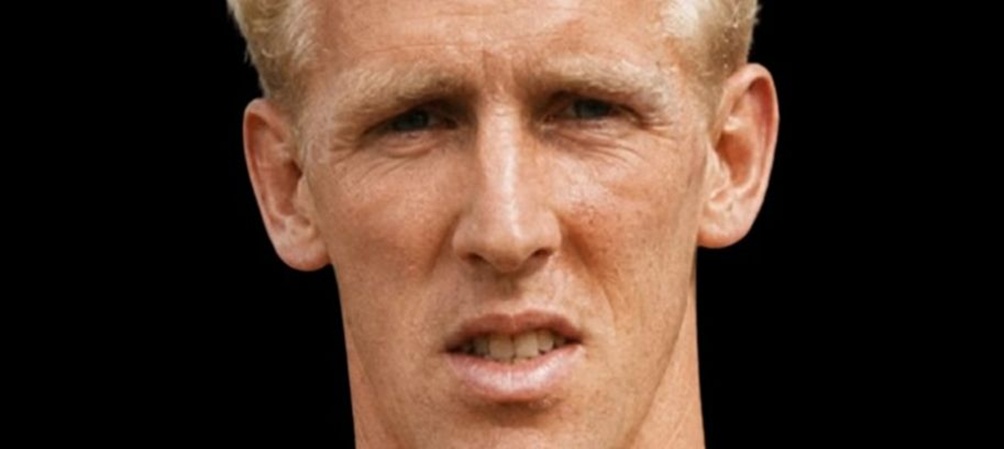
John Francombe Ure, born 7 December 1939, Ayr, Scotland.
PART ONE
Ian Ure came into senior football with the build of a centre-half, the competitive instincts of a boxer and the toughness of a rugby forward, and although the years ahead would bring a Scottish championship, a European Cup semi-final, two painful afternoons at Wembley and demanding spells with Arsenal and Manchester United, the beginning was far removed from the great grounds and the heavy expectations that later surrounded him. Ure grew up in a part of Scotland where sport mattered and where a strong boy with quick reactions was rarely allowed to concentrate on only one game, and at Ayr Academy, a school better known for rugby than football, he became an accomplished all-round sportsman before he had decided which direction his adult life would take.
He played for the school’s First XV by the age of 16, represented the academy at cricket and boxed competitively, and each activity added something useful: rugby encouraged bravery and positional discipline, cricket sharpened his concentration, and boxing taught him to stand his ground when an opponent came at him. Football remained the attraction that would eventually carry him beyond Ayr, but at first it had to fit around everything else, so Saturday could begin with rugby in the morning and continue with a football match in the afternoon, demanding a level of energy that suited a teenager who was already taller and more powerfully built than many of those playing against him.
The local junior game gave Ure his first sustained football education, and it was an uncompromising one because Ayrshire football did not offer much protection to a young centre-half learning when to challenge, when to hold his position and when simply to clear the ball as far away from danger as possible. He appeared for Ayr Albion and was also associated with Dalry Thistle, although accounts of his earliest football differ over the exact sequence, and the important point was that he developed among older players who neither knew nor cared that he had been successful at several school sports.
A mistake brought an immediate punishment, a hesitant tackle invited another challenge, and a high ball dropping into the middle demanded a decision before the opposing centre-forward made it for him, but Ure possessed the frame and temperament to cope, and his progress soon attracted the attention of Jimmy Ross, Dundee’s scout in Ayrshire. Ross saw more than a large young man who could head and tackle because Ure moved well for his size, understood the central position and had the confidence to compete without becoming hurried, and in 1958 he was invited to Dens Park for a trial. Dundee were taking a chance on potential rather than buying a finished defender, but Ure was ready to leave the junior game and accept professional terms, and the move placed him under a manager whose judgement would shape both the player and the finest side Dundee had yet produced.
Bob Shankly did not possess the fame later enjoyed by his brother Bill, but he knew footballers, understood how a side should be balanced and had no interest in complicating instructions that could be expressed plainly, and Ure could hardly have found a better manager for his entry into the senior game. Dundee already had ability throughout the team, although the group that would win the Scottish championship was still being assembled, and the young defender entered a dressing room containing footballers of differing ages and styles rather than a collection built around one star.
Bobby Cox offered authority and calm, Alex Hamilton brought energy and quality from full-back, Bobby Seith had considerable experience, Andy Penman was a gifted attacking player, Alan Cousin supplied direct running, Hugh Robertson could beat defenders from the flank, Bobby Wishart understood the value of intelligent movement, and Alan Gilzean would develop into one of the most dangerous forwards in Scotland. Above them all in experience stood Gordon Smith, already a championship winner with Hibernian and Hearts, whose intelligence and balance remained even as he moved towards the later years of his playing days, and Ure therefore learned in a side where defenders were expected to provide security but where football was not reduced to a succession of hurried clearances.
His introduction was gradual rather than spectacular. Ure made only two league appearances during 1958–59 and seven in 1959–60, which gave him time to watch, strengthen and adjust to the pace of the Scottish First Division, and Shankly resisted the temptation to place too much responsibility on him before he was ready. Senior centre-forwards were cleverer than those he had faced in junior football, and many were physically powerful enough to meet him on equal terms, while movement between the inside-forwards and the main striker could drag an inexperienced centre-half into areas he did not want to occupy. Ure had to learn that size alone settled very little, but he was attentive and determined, and the rugby habit of meeting danger directly remained useful as long as it was controlled.
PART TWO
By 1960–61 he had made the position his own, playing 32 league matches as Dundee finished tenth, and that placing disguised the extent to which Shankly’s team was coming together because the ingredients of a championship side were already present even if the results had not yet become consistent. Ure, still only 21 for most of that season, now stood in the middle of the defence as a first-team player rather than an apprentice waiting for an opportunity, and his speed of development allowed Dundee to approach the following campaign with greater assurance.
The 1961–62 season changed everything, for Dundee moved from an interesting side with good footballers into the strongest team in Scotland, and Ure played in all 34 league matches as the club won the championship for the first time. Their achievement was not constructed on a brief run of fortunate results because Dundee combined attacking imagination with defensive strength, and once they found their rhythm they produced an unbeaten sequence of 20 league games that carried them past rivals with greater money, larger crowds and longer records of success.
Gilzean scored heavily, Penman supplied invention and the experienced Smith gave the attack poise, but Ure’s presence at centre-half allowed the players ahead of him to express themselves because he attacked high balls firmly, covered danger through the middle and imposed himself on opposing forwards. He was not a quiet ornament at the back, nor was he interested in winning admiration for needless delicacy, but he could use the ball sensibly after winning it, and that mattered in a side whose best work depended on possession being directed towards players capable of hurting opponents.
An early sign of Dundee’s strength arrived at Ibrox on 11 November 1961, only three days after Ure had made his senior Scotland debut, when Shankly’s men defeated Rangers 5–1 in a league result that could not be dismissed as a narrow victory stolen through luck or defensive resistance. Rangers were the established power and would finish the season as Dundee’s principal challengers, but the champions-in-waiting attacked them with confidence and exposed weaknesses that few visiting teams could exploit so ruthlessly.
The scale of the win strengthened belief inside the Dundee dressing room, although a championship could not be won on one celebrated afternoon, and the winter demanded patience as each match brought a different problem. Some opponents dropped men behind the ball, others attempted to unsettle the more skilful Dundee players with force, and a few tried to isolate Gilzean by denying him service, but Shankly’s side could alter its approach without losing its identity. When the football flowed they were capable of overwhelming teams, but when conditions turned awkward they possessed defenders prepared to fight for every clearance, and Ure’s mixture of strength and speed made him increasingly important as the pressure grew.
Scotland’s selectors had already noticed him, and on 8 November 1961 he made his full international debut against Wales at Hampden Park in the British Home Championship. A crowd of roughly 75,000 watched Scotland win 2–0, with Ralph Brand and Davie Wilson scoring the goals, and Ure’s inclusion represented an extraordinary rise for a defender who had played only nine league matches during his first two senior seasons. International football placed greater demands on his positioning because mistakes were less easily repaired, but he came through the occasion and gave Dundee further evidence that their centre-half belonged at the highest domestic level.
He also represented the Scottish League during this period, and although competition for the national number-five position would eventually restrict his appearances, particularly with Celtic’s Billy McNeill available, Ure had established himself as a Scotland player before Dundee completed their title win. The timing mattered because international recognition did not arrive as a reward handed out after the championship had been secured; it came while the contest was still unfolding and while Ure’s weekly performances were helping Dundee remain ahead of the established powers.
The decisive afternoon came at Muirton Park on 28 April 1962, when Dundee faced St Johnstone knowing victory would make them champions, and the circumstances ensured there could be no gentle conclusion because the home side were fighting to avoid relegation. Dundee supporters travelled in enormous numbers, filling the ground with dark blue and carrying the anxious confidence of people who knew their club might be only 90 minutes from its greatest day, but football offered no guarantee that the strongest side over an entire season would be spared a final shock.
Ure and the defenders had to resist St Johnstone’s urgency before Dundee’s greater quality told, and Gilzean scored twice while Penman added the other in a 3–0 victory. The result confirmed Dundee at the top with 48 points from 34 matches, three ahead of Rangers, and simultaneously sent St Johnstone down, but for those who had followed Shankly’s team throughout the campaign the championship rested on much more than the final score. It had been secured through balance, consistency and the confidence to play attacking football under pressure, and Ure, ever-present in the league and still only 22, had become a championship centre-half in his fourth season at Dens Park.
PART THREE
Dundee’s success also took them into the 1962–63 European Cup, a competition still young enough to retain an air of mystery for British clubs but already dominated by formidable names, and the first-round draw could scarcely have been harder. Real Madrid had won the opening five tournaments and Benfica the next two, but West German champions Cologne were regarded among the strongest challengers to that pair, while Dundee entered the tie after losing five of their first seven games of the new domestic season. Only Gordon Smith had previous European Cup experience, gathered with Hibernian and Hearts, and almost everybody else was stepping into unfamiliar territory against opponents expected to progress. Yet the lack of continental experience did not make Dundee timid, and on 5 September 1962 a crowd of around 25,000 entered Dens Park hoping merely that the Scottish champions could remain in the contest. By half-time, those expectations had been torn apart.
Dundee attacked from the opening kick and Cologne goalkeeper Fritz Ewert was hurt in an early collision with Alan Cousin, although he remained on the field for the rest of the first half in those days before substitutes were allowed. After nine minutes Karl-Heinz Hemmersbach headed an Andy Penman cross into his own goal under pressure, and two minutes later Bobby Wishart’s mishit shot deceived Ewert in almost comic fashion because a chunk of turf flew one way while the ball travelled another, leaving the goalkeeper diving towards the divot as the shot rolled into the net. Hugh Robertson made it 3–0, Gilzean headed the fourth from Smith’s cross, and Smith himself scored the fifth before half-time as Cologne’s defence collapsed beneath Dundee’s movement and speed.
Ewert could not continue after the interval, so defender Anton Regh took over in goal, and Penman soon added the sixth before Gilzean scored twice more to complete his hat-trick. Alex Hamilton’s own goal supplied Cologne with a late consolation, but 8–1 was a score beyond anything Dundee could reasonably have imagined and one that shook European football because a supposed favourite had been dismantled in less than 70 minutes. For Ure, the first leg had been almost comfortable once Dundee’s attacking surge took command, but the return at Cologne’s Müngersdorfer Stadion was a far more severe examination, and it provided an early example of the extremes that would follow him throughout his playing years.
Cologne attacked furiously before 40,000 supporters and reduced the deficit after seven minutes when Hamilton handled Hans Schäfer’s goal-bound header and Karl-Heinz Thielen—identified in some accounts differently because contemporary reports do not always agree—converted the penalty. Dundee goalkeeper Bert Slater was then badly injured in a collision with Christian Müller and had to leave the field for treatment, forcing 19-year-old Penman to put on the goalkeeper’s jersey, and Cologne took immediate advantage. Müller scored their second, Schäfer added a third shortly before half-time, and an apparently impossible recovery no longer felt entirely absurd because Dundee were shaken, reduced in effect to ten fit men and surrounded by a noise that grew with every German attack.
Slater returned after the interval with his head heavily bandaged, initially appearing on the right wing while Penman remained in goal, before the two exchanged jerseys and restored something closer to Dundee’s normal shape. Even so, Cologne scored a fourth after 57 minutes when Ure turned the ball into his own net while Slater was being impeded, and three minutes later the Scottish centre-half mistimed a challenge to concede another penalty. Had it been scored, Cologne would have stood only two goals away from levelling the aggregate score with half an hour remaining, but Habig struck the crossbar and Dundee survived.
Ure’s evening continued with his name being taken for a comparatively minor foul after he had endured a series of violent challenges that the Danish referee had allowed to pass, and the atmosphere then became dangerous as spectators crowded close to the touchline. Gordon Smith was tripped by a supporter while attempting to run down the wing, and after the final whistle the Dundee players struggled to reach the dressing room as people poured onto the field, but British servicemen stationed nearby helped protect them and the tie finished 8–5 on aggregate. Dundee had progressed, although Ure and his team-mates had learned that European football could bring intimidation, injury and disorder as readily as it brought glamour.
PART FOUR
Sporting Lisbon waited in the second round, and Dundee travelled to Portugal in November without Hamilton, Gilzean and Wishart, three serious absences against a technically assured side. A 1–0 defeat was therefore manageable, with Fernando Mendes scoring the only goal, and Shankly’s players returned home knowing the tie remained within reach. Dens Park was packed long before the second leg, and Gilzean brought the aggregate scores level after 13 minutes before Cousin headed Smith’s cross against the underside of the bar and over the line near half-time.
Dundee continued forward after the break rather than trying to protect their advantage, and Gilzean scored twice more to complete another European hat-trick as the home side won 4–1 on the night and 4–2 overall. Sporting pulled one back through Alexandre Figueiredo, but there was no recovery, and Dundee now stood among the final eight beside Milan, Benfica, Dukla Prague, Feyenoord, Reims, Galatasaray and Anderlecht. The Scottish champions were no longer an interesting newcomer enjoying a single extraordinary result because they had survived hostility in Cologne and recovered from defeat in Lisbon, and each round strengthened the feeling that Shankly’s side possessed the quality to go much further.
Anderlecht had already removed Real Madrid and therefore presented a daunting quarter-final challenge, but Dundee produced arguably the finest away performance in their history at the Heysel Stadium on 6 March 1963. More than 64,000 people filled the ground after Anderlecht moved the match from their own smaller stadium, yet Dundee struck almost immediately when Smith crossed and Gilzean scored before the television cameraman was properly prepared, denying viewers at home a clear sight of the goal. Gilzean added a second after 18 minutes with a powerful shot from distance, and although Anderlecht reduced the deficit from the penalty spot after Cox was penalised for handball, Cousin and Smith scored in the second half to give Dundee a remarkable 4–1 win. Ure’s contribution was less visible than the goals but just as necessary because Anderlecht possessed dangerous attackers and had the encouragement of a huge crowd, and Dundee’s centre-half refused to allow the home side to build the sustained pressure required for a recovery.
The return at Dens Park drew close to 40,000 spectators and Anderlecht, with almost nothing left to protect, attacked from the beginning before Jacques Stockman gave them a first-half lead. Dundee remained composed, and as the contest moved towards its final stages Cousin equalised after 78 minutes and Smith scored four minutes later to complete a 2–1 victory and a 6–2 aggregate success. The club had reached the European Cup semi-final at its first attempt, a feat that placed Ure and his team-mates two matches from a Wembley final, and the opponent would be Milan, a side containing leading internationals from Italy, Brazil and Peru. Dundee’s domestic form had suffered through a severe winter and the growing backlog of fixtures, and their prospects were further damaged when captain Bobby Cox injured his cartilage against Motherwell two days before the journey to Italy, but Shankly’s players had already removed three national champions and travelled to the San Siro believing another could be beaten.
Milan scored through Dino Sani after only three minutes, yet Dundee settled and Cousin headed Penman’s cross past Giorgio Ghezzi midway through the first half to make it 1–1. For a time the Scottish champions matched their hosts, but the loss of Cox weakened the organisation around Ure and the match changed sharply after the interval, with Paolo Barison and Bruno Mora scoring disputed goals before both men struck again near the end. Dundee believed Benítez had crossed from beyond the by-line before Barison’s first goal and protested that José Altafini was offside during another attack, while goalkeeper Slater complained that constant camera flashes behind the goal had interfered with his sight.
Yet the official allowed the goals, Milan repeatedly drew Ure away from the centre before crossing towards the near post, and a contest that had remained level at half-time ended in a crushing 5–1 defeat. The return at Dens Park brought a proud response as Gilzean headed the only goal before the interval, but Penman had another effort disallowed, Dundee were denied a strong penalty claim and Gilzean was sent off late after retaliating against Mario David. A 1–0 victory on the night could not overturn the damage suffered in Milan, and the European adventure ended 5–2 on aggregate against the side that went on to defeat Benfica at Wembley and become the first Italian winner of the competition.
Dundee had won five of their eight European matches, scored 25 goals and beaten Milan at Dens Park, while Ure had faced a range of attacking styles that no domestic season could have provided, and his performances attracted interest from England. He completed 1962–63 with 32 league appearances as Dundee finished ninth, bringing his total to 107 league matches for the club, and Arsenal manager Billy Wright regarded him as the commanding centre-half needed to strengthen a defence that had conceded too freely. The agreed fee in August 1963 was £62,500, widely reported at the time as a world record for a defender, and it carried a weight beyond the simple act of moving from Scotland to London because Ure would now be measured against the price whenever he played well, made a mistake or missed a match. He left Dens Park as a champion and European Cup semi-finalist, but Highbury was waiting with different pressures, and the assured young defender from Dundee would soon discover how quickly English football could turn a large transfer fee into a burden.
PART FIVE
Ian Ure arrived at Highbury in August 1963 with the strongest recommendation any Scottish defender could carry, for he had won the championship with Dundee, helped the club reach a European Cup semi-final and established himself in the Scotland team, but the £62,500 paid for him ensured that his past achievements would offer little protection once he pulled on an Arsenal shirt. The sum was widely described as a world-record fee for a defender, and while forwards were often allowed time to settle because one goal could quickly alter the public mood, a centre-half bought for such an amount was expected to improve the defence from his first afternoon.
Billy Wright believed Ure possessed the strength, height and international experience Arsenal needed, yet the club he entered was far less settled than the Dundee side he had left because Highbury remained caught between memories of former greatness and the increasingly uncomfortable evidence that other English clubs had moved ahead. Arsenal had not won a major honour since taking the First Division championship in 1952–53, and the red shirt still carried enormous prestige, but prestige did not organise a defence, settle a dressing room or provide the consistency required over 42 league matches. Ure therefore moved from a Dundee team in which every player understood his task into an Arsenal side containing considerable attacking ability but too often vulnerable when opponents broke forward, and the difference became painfully clear before his first month in London had ended.
His debut came against Wolverhampton Wanderers at Highbury on 24 August 1963, when a crowd expecting immediate evidence of improvement instead watched Arsenal lose 3–1, and the afternoon offered Ure an abrupt introduction to the impatience surrounding the club. Wolves were no longer the dominant side they had been during the previous decade, but they played with purpose and punished defensive uncertainty, while Arsenal’s new centre-half found himself trying to learn the habits of unfamiliar team-mates in a match that provided neither calm nor reassurance.
There was no time to brood because West Bromwich Albion visited three days later and Arsenal won 3–2, but the defence remained uneasy, and on 31 August Leicester City inflicted a staggering 7–2 defeat at Filbert Street. Four days afterwards West Bromwich beat them 4–0 at The Hawthorns, which meant Ure’s first four league appearances had brought three defeats and 16 goals conceded, a brutal sequence for a man whose transfer had been presented as the answer to Arsenal’s defensive problems. He could hardly be held responsible for every goal because the weaknesses ran through the whole side, yet centre-halves were judged by scoreboards rather than explanations, and the pressure attached to his fee increased with every mistake around him.
Ure later spoke with unusual honesty about the effect of that beginning, admitting that the poor results and the attention they produced had unsettled him, but his response was to keep playing rather than hide behind an injury or request a rest. Arsenal defeated Bolton Wanderers 4–3 and Aston Villa 3–0 at Highbury, then won 4–1 at Fulham and beat Manchester United 2–1, and for a while the results suggested that Wright’s team had recovered, although the scorelines continued to reveal their character.
They could score freely because Joe Baker was sharp through the middle, Geoff Strong offered power, George Eastham supplied imagination and George Armstrong attacked from the flank, but matches frequently became open exchanges in which the defenders were given little shelter. Arsenal scored six against Ipswich Town and six against reigning champions Everton, yet they also drew 4–4 with Tottenham, lost 4–3 at Bolton, conceded five at Manchester City and were beaten 5–0 by Liverpool on the final day. Ure missed only one match during his first season and made 49 appearances in all competitions, including four in the Inter-Cities Fairs Cup, but the enormous workload gave him little chance to pause and adjust, and his first year in England became an education conducted at full speed.
The league table placed Arsenal eighth, and their 90 goals were bettered only by champions Liverpool and runners-up Manchester United, but 82 conceded told the other half of the story and explained why a side with so much attacking strength had never seriously entered the championship argument. Ure was not merely an observer in the chaos because his own form fluctuated, and there were afternoons when a mistimed challenge or uncertain clearance increased the doubts around him, but it was unreasonable to imagine that one defender could repair a structure that exposed its back line week after week.
Alongside him were experienced players such as Terry Neill, John Snedden and Laurie Brown, while Jim Furnell kept goal and Billy McCullough or Jimmy Magill operated at full-back, but Wright altered his combinations without discovering a dependable unit. Ure nevertheless scored his first Arsenal goal during the campaign and retained his Scotland place, and his willingness to appear almost every week showed considerable resilience because a record fee could have become unbearable after such a damaging start. He had known order at Dundee, where Shankly’s team moved together and protected one another, but Arsenal too often required him to defend large spaces against forwards already running at pace, and even a centre-half in peak form would have found that difficult.
PART SIX
European football supplied a reminder of happier days without recreating Dundee’s success. Arsenal entered the Inter-Cities Fairs Cup and began with a 7–1 away victory over a Copenhagen representative side known as Stævnet, but their carelessness appeared again when the Danes won the return 3–2 at Highbury. RFC Liège then drew 1–1 in London and defeated Arsenal 3–1 in Belgium, ending the campaign before Christmas, while the FA Cup brought another disappointment when Liverpool won 1–0 at Highbury in the fifth round. Ure had played in a European Cup semi-final only a few months earlier, and he could compare Dundee’s control and collective belief with Arsenal’s uncertainty without needing anybody to explain the difference.
The London club possessed players of international standard and could overwhelm almost any opponent when its attack found room, but it lacked the defensive habits and emotional steadiness that had allowed Dundee to survive the second leg in Cologne or win under pressure in Brussels. Besides, English football’s crowded programme left little time for careful training between matches, so Wright and his coaches were often attempting to correct faults while preparing for another opponent, and Ure’s first season ended with him physically tired, mentally tested and still carrying the price tag that had accompanied him from Scotland.
The summer of 1964 gave Arsenal an opportunity to strengthen and organise, but the following campaign provided only limited improvement because the team finished thirteenth and again conceded heavily. Ure’s own season was disrupted by injury and reduced form, and after appearing 49 times during his first year he managed 24 matches in all competitions, scoring once in 22 league outings. His physical style exposed him to punishment as well as disciplinary attention because centre-forwards challenged him in the air, elbows arrived with high balls and collisions were accepted as part of the position, while a knee problem eventually required an operation and he also suffered a broken jaw twice during his Arsenal years.
Those injuries mattered, but confidence was equally important, and once a defender became associated with mistakes the crowd’s reaction could change before a match had properly begun. A straightforward clearance brought relief rather than applause, a difficult interception was treated as no more than his duty, and a single error revived every earlier doubt, yet Ure continued to fight for his place and did not allow a difficult spell to push him out of English football.
Arsenal opened 1964–65 poorly, recovered during the autumn and briefly hinted that a challenge might be possible, but inconsistency returned and the campaign drifted. Baker remained a dangerous scorer, Armstrong continued to provide width and Eastham could still control a match when given time, although the balance behind them was uncertain, and Wright increasingly looked like a manager searching for a combination that did not exist within his squad. Ure appeared often enough to remain an important first-team player but not regularly enough to establish the rhythm he had enjoyed at Dundee, and Terry Neill’s experience made the competition at centre-half more demanding.
Arsenal went out of the League Cup to Leicester City and fell at the first stage of the FA Cup against Peterborough United, a Third Division side who won 2–1 at London Road, and that defeat intensified the feeling that the club had lost its direction. Ure’s second season was therefore not a simple decline from the first because Arsenal conceded fewer goals and he added another league goal, but the team slipped five places and finished further from the leading clubs, while the defender who had arrived as a major purchase was now struggling to remain fit and settled.
PART SEVEN
The 1965–66 season became even more uncomfortable. Ure played 21 league matches and made one appearance in the Inter-Cities Fairs Cup, but Arsenal finished fourteenth, their lowest placing for more than 30 years, and the FA Cup brought humiliation when Blackburn Rovers, themselves heading towards relegation, won 3–0 at Highbury in the third round. Crowds declined as frustration replaced expectation, and Wright’s authority weakened because three seasons had passed without serious progress despite the presence of several gifted players. Joe Baker was sold to Nottingham Forest in February 1966, Eastham would soon leave for Stoke City, and the side that had scored so freely during Ure’s first year was breaking apart without having won anything.
The Scottish defender had now experienced both sides of Arsenal’s instability: first the wild, high-scoring football of 1963–64, and then the slower decline of the next two campaigns, when injuries limited him and results deteriorated. He had made more than 20 league appearances in each season, which prevented his contribution from being dismissed, but his record fee no longer seemed a bold statement of ambition and was instead mentioned when supporters considered which of Wright’s decisions had failed.
Wright, one of England’s greatest captains during his playing days, had been unable to transfer his authority on the field into sustained success as a manager, and in June 1966 Arsenal replaced him with Bertie Mee, the club physiotherapist. The appointment surprised English football because Mee had no senior managerial record and initially accepted the position for only one year, retaining the option of returning to his former role if the experiment failed, but he possessed qualities Arsenal badly needed. He was organised, decisive and prepared to seek specialist assistance, and Don Howe, forced towards retirement after breaking his leg, became increasingly important on the coaching side.
Mee did not arrive with a reputation that could control the dressing room automatically, so he established authority through clear decisions, and one of them was to restore Ure as a regular centre-half. The new manager knew the defender’s injury history better than most because he had supervised his treatment, and he also understood that Ure’s weaknesses had been enlarged by the disorder around him. Rather than judge him solely through the costly mistakes supporters remembered, Mee gave him a defined task in a team being rebuilt around greater defensive discipline.
The changes were quickly visible. George Eastham was allowed to join Stoke, George Graham arrived from Chelsea in an exchange involving Tommy Baldwin and £75,000, Bob McNab was signed from Huddersfield Town for £50,000 and Peter Simpson emerged from the youth system, while Frank McLintock’s energy and determination became central to the developing side. Ure responded to the greater structure by making 44 appearances in all competitions during 1966–67, more than he had managed across the preceding season and a half, and Arsenal conceded 47 league goals, their lowest total since the championship season of 1937–38.
The improvement was not created by retreating into permanent defence because Mee still had attacking players capable of taking risks, but Arsenal were more compact and their centre-half was no longer being asked to solve every problem in isolation. McNab’s pace at left-back provided recovery, Peter Storey was developing on the opposite side, Simpson read danger intelligently, and McLintock could support the defence from midfield, so Ure’s physical strengths again became more prominent than his lapses.
PART EIGHT
Mee’s first league match ended in a 3–1 victory at Sunderland on 20 August 1966, and Arsenal followed it by defeating West Ham United 2–1 at Highbury, a useful result against a side containing England’s recently crowned world champions Bobby Moore, Martin Peters and Geoff Hurst. Aston Villa were beaten 1–0 and West Ham held to a 2–2 draw at Upton Park before Tottenham inflicted the first defeat, winning 3–1 at White Hart Lane, and the setback was followed by an uneven autumn. Arsenal fell as low as sixteenth and lost heavily at home to Leicester City, but Mee did not abandon his methods, while Ure retained his place and benefited from the manager’s confidence. The team gradually steadied, and the season ended with an unbeaten sequence of 12 league games that lifted Arsenal to seventh, their best placing since Ure’s arrival. There was no trophy and no sustained championship challenge, but the defensive improvement was substantial, and the centre-half who had appeared to be fading under Wright had again completed a full programme.
Cup football offered smaller signs of progress. Arsenal entered the League Cup for the first time because the final had been moved to Wembley and victory now brought entry to Europe, although Third Division Gillingham held them to a draw before losing the Highbury replay 5–0, and West Ham then eliminated Mee’s team with a 3–1 win in north London. The FA Cup brought victories over Bristol Rovers and Bolton Wanderers, but Birmingham City ended the run in the fifth round, and the absence of a major occasion meant Ure’s improved season received less attention than it deserved. Centre-halves were rarely celebrated for reducing the number of goals conceded, particularly when their side finished seventh, yet Arsenal’s total of 47 represented an improvement of 28 on the previous campaign and 35 on Ure’s first year. Some of that change came through personnel and some through Howe’s coaching, but Ure had played in 37 of the 42 league games and was clearly part of the solution, and Mee entered his second season believing the defender could remain an important figure.
International recognition had become less frequent, although Ure returned to the Scotland side during 1967, and the circumstances surrounding his final official appearances require care because the historical record later changed. He had won eight senior caps while at Dundee and added three more after joining Arsenal, giving him the 11 shown in records for many years, but Scotland’s match against Australia during the 1967 overseas tour was retrospectively granted full international status by the Scottish Football Association in 2021, raising his recognised total to 12.
His last appearance in the traditional record came against Northern Ireland at Windsor Park on 21 October 1967, when a goal from Dave Clements gave the home side a 1–0 European Championship qualifying victory. Ure had spent much of his international life competing with Billy McNeill, whose leadership at Celtic and growing standing with Scotland limited the opportunities of other centre-halves, but 12 caps during a period of strong competition remained a respectable return, and his appearances included victories that entered Scottish football history.
The most celebrated came at Wembley on 6 April 1963, shortly before Dundee faced Milan, when Scotland defeated England 2–1 in the British Home Championship. Contrary to a claim repeated in some accounts, Jim Baxter did not score both Scottish goals that afternoon because Davie Wilson opened the scoring before Eric Caldow converted a penalty, while Bobby Smith replied for England; Baxter’s famous two-goal performance at Wembley came four years later in the 3–2 victory of April 1967, a match Ure did not play. Such distinctions matter because Ure’s story contains enough genuine drama without borrowing details from another occasion, and the 1963 victory was important in its own right. He played at centre-half as Scotland resisted an England side containing Bobby Moore, Jimmy Greaves and Bobby Charlton, and only weeks later he was defending against Milan in the European Cup semi-final, a sequence showing how highly he was regarded before his move to Arsenal.
Ure also appeared in Scotland’s remarkable 6–2 friendly victory over Spain at the Santiago Bernabéu on 13 June 1963, partnering McNeill in central defence while the forwards overwhelmed the hosts. Denis Law scored four goals, Davie Wilson and Dave Gibson added the others, and Scotland recovered from an early deficit to produce one of their greatest away performances, only nine days after losing 4–3 to Norway in Bergen despite a Law hat-trick. Ure’s international record therefore contained extremes familiar from his club football: a painful defeat in Norway, a startling win in Madrid and, earlier, the steadier satisfaction of his debut victory over Wales. By the autumn of 1967 his Scotland opportunities were ending, but another encounter with Law ensured that the Ure name remained prominent in the newspapers, although this time the attention had nothing to do with a Scottish victory.
Arsenal travelled to Old Trafford on 7 October 1967 to meet reigning champions Manchester United, whose attacking strength rested on Law, Bobby Charlton and George Best, and Ure’s contest with his fellow Scot became increasingly hostile as the afternoon continued. Charlton sent an early chance wide, Jim Furnell blocked John Aston’s close-range effort and then saved from Brian Kidd, while Arsenal defended under sustained pressure, but the central struggle between Ure and Law developed into a succession of clashes. Both were cautioned following a confrontation that involved several players, yet neither retreated, and the contest remained goalless until the 76th minute when Aston headed Paddy Crerand’s cross beyond Furnell. In the closing stages Ure and Law fought again, and referee George McCabe dismissed them both, leaving two Scotland internationals to walk from the field together after spending much of the game trying to overpower one another.
The dismissals produced six-week suspensions for both men, a severe punishment that interrupted Ure’s season and added another damaging episode to his Arsenal reputation. Law was the celebrated goalscorer and European Footballer of the Year, while Ure was the defender already treated with suspicion by sections of the Highbury crowd, so the confrontation was easily reduced to a story of aggression, but the match also showed the competitive nature that had carried him from Ayr Albion to the European Cup. He could be drawn beyond the point of control, as he had been when provoked in Cologne and as Gilzean had been against Milan, but he never approached a contest timidly, and centre-forwards knew they would not receive an easy afternoon against him. Still, a six-week ban could not be dismissed as a minor inconvenience, and Arsenal had to continue without their centre-half at a stage when Mee was trying to build on the progress of his first year.
By the time Ure returned, the team was moving towards a League Cup run that would take Arsenal to Wembley for the first time in 16 years, and the possibility of ending the club’s long wait for a trophy gave the season a significance that no league placing could match. Arsenal had last appeared at Wembley in the 1952 FA Cup Final and had last won a major honour in 1953, while supporters who had grown accustomed to championships under Herbert Chapman, George Allison and Tom Whittaker had watched the club drift through much of the following decade.
Ure had already known what it meant to win a championship, but at Arsenal he had experienced four demanding years without a medal, and the League Cup offered a chance to change both the team’s direction and the judgement placed upon him. Yet the opponents waiting at Wembley were Don Revie’s Leeds United, a powerful, organised side constructed for difficult matches, and the afternoon would leave Ure with the first of two runners-up medals and Arsenal with an even deeper hunger for success.
PART NINE
Arsenal’s route to the 1968 League Cup Final offered Ian Ure the chance to replace years of uncertainty with a winner’s medal, but it also placed him against a Leeds United side whose strength, discipline and capacity to control narrow matches made them the most awkward opponents in England. Bertie Mee’s team had beaten Bolton Wanderers and Reading before surviving a demanding quarter-final against Burnley, drawing 3–3 at Turf Moor after coming back from two goals behind and losing Bob McNab to a second-half dismissal, then winning the replay 2–1 at Highbury. Huddersfield Town were overcome 6–3 on aggregate in the semi-final, with Arsenal following a 3–2 home victory by winning 3–1 in Yorkshire, and the results carried the club to Wembley for the first time since the 1952 FA Cup Final.
For Ure, suspended for six weeks after his fight with Denis Law at Old Trafford, the run restored his importance after a difficult autumn, and the prospect of facing Leeds held no fear because his best football had often been produced when the opponent was powerful and direct. Yet Don Revie’s team were more than a collection of hard players, for Billy Bremner and Johnny Giles could pass as well as compete, Peter Lorimer struck the ball with tremendous force, Eddie Gray supplied width and imagination, while Jack Charlton, Norman Hunter, Paul Reaney and Terry Cooper formed a defence that conceded little and protected a goalkeeper, Gary Sprake, who was rarely required to face a succession of clear chances.
The final was played before 97,887 spectators on 2 March 1968, and although Arsenal enjoyed periods of possession, Leeds imposed the kind of contest they wanted. Ure lined up at centre-half with Frank McLintock and Peter Simpson beside him, Peter Storey and McNab at full-back and Jim Furnell in goal, while John Radford, David Jenkins, George Graham, Jon Sammels and George Armstrong carried Arsenal’s attacking hopes. The decisive moment arrived after 20 minutes when Furnell attempted to claim a corner under pressure from Charlton, the ball dropped outside the penalty area and Cooper drove a fierce left-footed shot through the crowded goalmouth and into the net.
Arsenal protested that Charlton had fouled the goalkeeper, but referee Les Hamer allowed the goal, and Leeds now possessed exactly what they wanted: a lead to defend, time to manage and opponents required to take risks. Ure kept Arsenal in the game by preventing Leeds from extending their advantage on the counterattack, but the greater frustration lay at the other end because Revie’s defence closed every important space, contested every high ball and denied Mee’s forwards the clean opening needed to change the afternoon.
Arsenal pushed forward after the interval, and Neill replaced Jenkins as Mee attempted to alter the attack, but Leeds protected Sprake with fierce concentration and the score remained 1–0. There was no spectacular collapse and no individual error that could be used to explain the defeat, only the hard fact that Arsenal had failed to score in their first final for 16 years, and Ure collected a runners-up medal while Bremner lifted the first major trophy of Revie’s time at Elland Road.
The disappointment was considerable, although losing narrowly to Leeds carried no disgrace because they were developing into one of the best teams in Europe and would also win the Inter-Cities Fairs Cup that season. Mee could argue that his rebuilding programme was advancing, for Arsenal had reached Wembley and competed evenly with opponents further along in their development, but a club without a trophy since 1953 had not travelled there simply to demonstrate progress. Ure understood that distinction more clearly than most because he had already stood at the top of Scottish football with Dundee, and the medal placed in his hand at Wembley could only remind him that Arsenal had come close without completing the task.
The remainder of 1967–68 brought no lasting consolation. Arsenal finished ninth in the First Division, two places lower than in Mee’s opening season, and their FA Cup challenge ended against Birmingham City after a replay in the fifth round. Ure made 29 appearances in all competitions, his total reduced by the suspension and by increasing competition within the squad, but he remained central to the manager’s plans and began the following campaign with another opportunity to win the League Cup. The younger defenders were developing quickly, particularly Simpson, while McLintock’s role was gradually moving from midfield towards the back line, and Neill retained his experience and authority, so Ure could no longer assume that every available match would belong to him. All the same, he had played in the final and retained Mee’s trust, and Arsenal entered 1968–69 with a stronger defensive base than the side Billy Wright had left two years earlier.
PART TEN
League results offered further encouragement because Arsenal climbed to fourth, their highest position since finishing third in 1958–59, and conceded only 32 goals in 42 matches. Ure appeared in 23 league games and 32 in all competitions, while McLintock, Simpson, McNab, Storey and goalkeeper Bob Wilson increasingly gave Mee the outline of the defence that would later win honours. The improvement, however, created a complicated situation for Ure because Arsenal were becoming stronger at the same moment his own place was becoming less secure.
He had helped steady the team after Wright’s departure, but the manager was now constructing a quicker and more flexible side, and McLintock’s conversion into a commanding central defender placed another strong personality directly in his area of the team. Ure still offered height, power and extensive experience, but his mistakes remained more memorable to supporters than his dependable afternoons, and the uneven relationship between player and crowd meant that every misjudgement carried a louder response than it might have done for a popular younger man.
The League Cup again provided Arsenal’s clearest route to a trophy, and Mee’s team began with a 4–0 home win against Sunderland before defeating Scunthorpe United 1–0. Liverpool presented a much greater fourth-round test at Highbury, where Arsenal won 2–1, and Blackpool were beaten by the same score in the quarter-final. Tottenham Hotspur waited in the last four, bringing the tension of a north London contest to a stage already carrying the reward of another Wembley appearance, and the first leg at Highbury ended 1–0 to Arsenal through John Radford. Tottenham attacked in the return at White Hart Lane and Jimmy Robertson levelled the aggregate score, but Radford struck again late in the match to secure a 1–1 draw and send Arsenal through 2–1 overall. Reaching consecutive finals was a substantial achievement, particularly when the second route had required victories over Liverpool and Tottenham, and the identity of their Wembley opponents appeared to make the final step considerably easier than the previous year.
Swindon Town were a Third Division side with no previous experience of a major final, and the gap in status encouraged the assumption that Arsenal’s 16-year wait for a trophy was about to end. Danny Williams had built a well-organised team containing goalkeeper Peter Downsborough, defenders Rod Thomas, John Trollope, Frank Burrows and captain Stan Harland, the industrious Joe Butler, Roger Smart and John Smith, forward Peter Noble and the dangerous Don Rogers, but the difference between the divisions was substantial and Arsenal’s players were accustomed to facing England’s best sides every week.
The London club had lost by only one goal to Leeds 12 months earlier, occupied a high position in the First Division and possessed internationals throughout the team, and newspapers treated the outcome as close to inevitable. That confidence ignored the strain Arsenal carried because being overwhelming favourites created a different pressure from facing Leeds, while an outbreak of influenza affected several players during the week before the match and forced the postponement of a league fixture. Eight members of the squad were reported to have been ill, but Mee named his strongest available side and no suggestion was made that Arsenal should be excused from completing the job.
Wembley’s playing surface added another difficulty. The Horse of the Year Show had recently occupied the stadium, heavy rain fell and the pitch became a churned mixture of mud, loose turf and standing water, conditions that reduced the value of Arsenal’s greater technical ability and demanded enormous physical effort. Swindon had no reason to complain because a rough contest narrowed the difference between the teams, and their players entered the final with the freedom of underdogs who would be praised for competing and celebrated forever if they won.
Arsenal carried the opposite burden because victory was expected and defeat would be treated as humiliation, and Ure, whose public standing had never fully recovered from his unsettled opening years, occupied the position least forgiving of hesitation. Almost 100,000 spectators were inside the ground on 15 March 1969, Arsenal wearing yellow shirts with dark blue shorts and Swindon appearing in white because both clubs’ usual colours clashed, and for the first half-hour the match seemed to be developing according to expectation.
PART ELEVEN
At Wembley, Arsenal attacked repeatedly and forced a succession of corners, while Swindon spent long periods close to their own goal and relied on Downsborough to make several important saves. Radford, Bobby Gould, Graham and Sammels applied pressure, Armstrong attempted to find room on the flank, and the Third Division defence cleared hurriedly without surrendering its organisation. A goal appeared increasingly likely, but it came at the opposite end after 35 minutes and left Ure at the centre of a moment that would follow him long after he had left Highbury.
A ball played towards the Arsenal penalty area appeared manageable, yet Ure and Wilson failed to understand one another, the defender attempted to send it back to his goalkeeper and the pass struck or eluded the advancing Wilson, leaving Smart free to collect the loose ball and score into an exposed net. It was not a brilliant Swindon move or an unstoppable shot, only a damaging breakdown in communication between centre-half and goalkeeper, and because Ure had long been associated with occasional costly errors the incident immediately confirmed the harshest judgement of his critics.
The mistake should not be separated from the conditions because the surface was treacherous and the ball behaved unpredictably, but neither could it be erased by pointing at the mud. Ure had chosen the back-pass, Wilson had moved forward and Smart had punished the confusion, and Arsenal went into the interval a goal behind against opponents they had been expected to beat comfortably. The second half became an extended attack on Swindon’s penalty area, although Downsborough performed superbly, saving from Sammels, McNab and others as defenders threw themselves into challenges and the pitch grew heavier. Every passing minute increased Arsenal’s desperation, and Swindon’s players could sense that an extraordinary victory was approaching, but with four minutes of normal time left Downsborough failed to hold a high ball and Gould headed the equaliser. Arsenal supporters erupted with relief, and the assumption returned that the First Division side would use extra time to finish an exhausted opponent.
The opposite happened. Influenza, tension and the energy spent attacking through the mud caught up with Arsenal, while Swindon discovered fresh belief and began to play with greater freedom. Smart headed against the post, and shortly before the end of the first period of extra time Arsenal failed to clear a corner, allowing Rogers to control the loose ball and drive it beyond Wilson for 2–1. Mee’s side had to push almost everybody forward, including Ure when opportunities arose, and this created the space Swindon’s quickest attacker wanted. During the second period, Ure moved into the opposition half as Arsenal searched for another equaliser but lost possession to Smart, who sent a long pass towards Rogers. The winger accelerated away, crossed the open ground between halfway and the penalty area, rounded Wilson and scored Swindon’s third, completing one of Wembley’s greatest shocks and leaving Arsenal beaten 3–1.
Ure had been involved in the confusion that produced the opening goal and had surrendered the ball before the last, and no wider explanation could protect him from the reaction. Swindon had been excellent, Downsborough had kept them ahead during Arsenal’s strongest period, Rogers had produced the decisive quality in extra time and Arsenal’s illness had plainly reduced their strength, but newspaper headlines concentrated on the disgrace of a leading First Division club losing to Third Division opposition. Supporters returned to London angry and bewildered, while Swindon’s players travelled home to a civic reception and permanent local fame. For Arsenal, another runners-up medal was worse than the first because Leeds had been a formidable opponent and the 1968 final had been settled by one disputed goal, whereas Swindon had scored three and finished the stronger team. Ure had now played at Wembley twice in 12 months without winning, and the second afternoon threatened to define all six of his Arsenal years.
The judgement was severe because it reduced 203 appearances, two goals, several strong seasons and the defensive improvement under Mee to a few seconds of confusion on a ruined pitch. Ure had arrived when Arsenal conceded 82 league goals, played 49 matches during a bruising first season, returned from injury to complete 44 appearances in Mee’s opening campaign and helped the club reach consecutive finals, but defenders rarely control which moments survive. A striker can miss several chances and still become the hero through a late goal, while a centre-half can play reliably for months and be remembered for one back-pass. Ure’s aggressive manner and record fee had also made affection more difficult, for supporters tended to admire his commitment without entirely trusting him, and the Swindon defeat gave every existing doubt a picture that could be replayed. The football film showed Ure and Wilson moving towards the same ball, Smart accepting the gift and Rogers later running into open space, and repetition hardened a complex match into a simple accusation.
Mee did not remove Ure immediately, and the defender continued through the final weeks as Arsenal secured fourth place, but the manager had already begun planning a future around different players. McLintock could drop permanently into central defence, Simpson had become a dependable first-team footballer, and the club also signed John Roberts from Northampton Town during the summer of 1969. Neill remained available, while young talent was emerging throughout the squad, and Ure, approaching 30, no longer represented the direction in which Arsenal were moving. He appeared in the first three league matches of 1969–70, bringing his total to 168 league games and 203 competitive appearances for the club, but the relationship had reached its end. That ending was not announced through a testimonial or an affectionate farewell because football usually moved more abruptly, and when Manchester United offered around £80,000 in August 1969, Mee accepted.
The fee was striking because it exceeded the amount Arsenal had paid Dundee six years earlier, demonstrating that Ure’s standing within football remained far higher than the public criticism following Wembley suggested. Wilf McGuinness, newly appointed as Manchester United manager after Matt Busby stepped aside, wanted an experienced centre-half capable of strengthening a side in transition, and Ure became his only major purchase. The move carried its own curious turn because Denis Law, the man with whom he had fought at Old Trafford in 1967, would now be a team-mate, while the Arsenal defender left one club struggling to escape a long period without success and entered another attempting to live after its greatest triumph. United had won the European Cup in 1968, but Busby’s departure from daily management, the ageing of important players and the difficulty of renewing a famous team created uncertainty beneath the glamour of Best, Charlton and Law.
Ure’s final Arsenal figures deserve to stand apart from the Wembley mistake. He played 168 First Division matches and scored twice, added 16 FA Cup appearances, 14 in the League Cup, four in the Inter-Cities Fairs Cup and one other competitive outing, giving him 203 appearances in total. He had played under two contrasting managers, endured a knee operation and two broken jaws, recovered after losing his regular place, represented Scotland and appeared in the club’s first consecutive Wembley finals. Arsenal were a better organised side when he left than when he arrived, even if the younger defenders and McLintock would receive most of the credit during the successes that followed.
Within a year of his departure, Mee’s team won the Inter-Cities Fairs Cup, and in 1970–71 Arsenal completed the League and FA Cup Double, achievements that inevitably made Ure appear part of the unsuccessful past they had discarded. Yet several men who lifted those trophies had developed beside him, absorbed the pain of Leeds and Swindon with him and learned from the defensive standards established during Mee’s first seasons, so the line between failed side and successful side was not as clean as later results made it appear.
PART TWELVE
The Swindon defeat did serve as a dividing point, but it did not erase Ure’s ability, and Manchester United’s willingness to spend £80,000 offered immediate proof. McGuinness was only 31, younger than several leading players in the dressing room, and had been given the immense task of following Busby, while Ure entered Old Trafford as a senior international expected to provide authority that the inexperienced manager could not manufacture overnight. The club still possessed England’s World Cup-winning captain Bobby Charlton, the unpredictable brilliance of Best and Law’s penalty-area instinct, but defensive renewal was necessary, and Ure’s qualities seemed suited to it. He was dominant in the air, accustomed to the First Division and experienced in European football, and after the hostility attached to his final months at Arsenal, Manchester provided the possibility of a fresh start.
There was no long preparation because Ure completed the transfer after the league season had begun and was handed his United debut at Wolverhampton Wanderers on 23 August 1969. Six years earlier his Arsenal debut had come in a 3–1 home defeat against the same opponents, a coincidence that might have appeared ominous, but this time the match at Molineux ended goalless. Derek Dougan offered the principal threat, yet Ure contained the tall Wolves striker and helped United secure a point, and four days later he made his Old Trafford debut in another 0–0 draw, against Newcastle United. Two clean sheets gave him the steady beginning denied to him at Arsenal, but Manchester United’s problems ran deeper than one defensive signing could solve, and the months ahead would bring inconsistency, managerial upheaval and an FA Cup semi-final stretched across three matches against Leeds.
The move also forced Ure and Law to deal with their violent history, although professional dressing rooms had little room for prolonged resentment when two men were expected to play for the same result. Both were forceful competitors, both came from Scotland and both understood that the confrontation of 1967 belonged to another match and another shirt, and there was no repeat once they became colleagues. Ure’s immediate responsibility lay behind Law, Best, Charlton and the emerging Brian Kidd, and while that collection of attacking names still frightened opponents, the side no longer possessed the balance of Busby’s championship teams. McGuinness had inherited famous players at different stages of their playing lives and was expected to renew the team without being allowed the patience normally granted to a new manager, and Ure, as his most expensive and most visible recruit, again carried the burden of representing another man’s attempted reconstruction.
For six years at Highbury, Ure had lived with the consequences of being bought as an answer to a question too large for one defender, and Manchester United now risked repeating the pattern. He could win headers, organise those beside him and bring experience to difficult away grounds, but he could not stop the ageing process elsewhere in the team, resolve McGuinness’s uncertain authority or reproduce the emotional force Busby had built over more than two decades. Nevertheless, his first two appearances showed that he remained capable of performing at First Division level, and the transfer ensured that the Swindon final would not be his last important football. The mud of Wembley followed him in public memory, but Ure himself moved forward, and by December he would score at Anfield in a 4–1 victory over Liverpool, the only Manchester United goal of his playing days and one of the finest results achieved during McGuinness’s difficult period.
Ure’s first weeks at Manchester United gave him a steadier beginning than the one he had endured after joining Arsenal, but the calm scorelines concealed a club wrestling with a change far greater than any single transfer. Matt Busby had stepped down as manager in June 1969 after 24 years, leaving behind the memory of championship teams, the scars of Munich and the European Cup won at Wembley only 13 months earlier, and his successor Wilf McGuinness inherited players who had known no other permanent authority at Old Trafford.
McGuinness was 31, had grown up inside the club and understood its traditions, yet those connections did not make the task easier because Busby remained nearby as general manager, senior players were accustomed to dealing with him and every decision invited a comparison that the younger man could not win. Ure, bought from Arsenal for around £80,000, was the only major signing of McGuinness’s time in charge, and that placed another heavy fee around the centre-half’s shoulders even though the defensive problems at United had more to do with a side losing its balance than with one empty position.
The goalless draw at Wolverhampton Wanderers on 23 August 1969 and another 0–0 result against Newcastle United four days later allowed Ure to settle without the immediate criticism he had faced at Highbury, and he remained in the team as United began an uneven league campaign. The defence contained experienced men such as Tony Dunne and Shay Brennan, while David Sadler could operate at centre-half or in midfield, Francis Burns offered youth and pace, and Alex Stepney had established himself as one of England’s best goalkeepers.
Ahead of them stood names that still drew enormous crowds wherever United played: Bobby Charlton driving from midfield, George Best attacking defenders with balance and imagination, Denis Law searching for half a yard inside the penalty area, and Brian Kidd developing after scoring in the European Cup Final at the age of 19. On paper, the side remained formidable, but Law’s injuries limited him, Nobby Stiles was no longer a regular and several players who had carried Busby’s last great team could not maintain the same level every week, so McGuinness needed to renew United while satisfying supporters who regarded eighth or ninth place as failure.
PART THIRTEEN
Ian Ure’s relationship with Denis Law attracted attention because their last meeting as opponents had ended with both being dismissed, but the confrontation at Old Trafford two years earlier caused no lasting problem once they shared a dressing room. Footballers were accustomed to fierce arguments being contained within a match, and neither man had anything to gain from keeping the dispute alive, while their immediate responsibilities lay at opposite ends of the team. Ure had to stop the kind of centre-forward Law represented, and training against such movement offered a demanding daily examination, but the Scottish pair could also understand one another as competitors whose aggression occasionally carried them too far. McGuinness needed that competitive edge because United’s first months brought too many draws, and although they could still produce attacking football of the highest class, their authority over ordinary league fixtures had weakened.
A 2–2 draw at champions Leeds United on 6 September showed their ability, with Best scoring twice in three second-half minutes before Billy Bremner equalised late, but United then lost at Coventry City and were held at home by West Bromwich Albion. Manchester City won 2–0 at Maine Road, Liverpool were beaten 1–0 through Willie Morgan at Old Trafford, and the results continued to alternate between encouragement and frustration. Ure appeared regularly, forming a central partnership most often with Sadler, and his aerial strength suited a league in which teams were prepared to send long balls towards powerful forwards, but the speed of United’s attacking play could sometimes leave the defenders exposed when possession was lost. Best and Morgan naturally wanted to move forward from the wings, Charlton sought shooting positions and the full-backs were encouraged to support, and when those attacks failed, Ure could find himself defending large areas in much the same way he had during Billy Wright’s years at Arsenal.
The League Cup offered an early possibility of success, and United defeated Middlesbrough 1–0 and Wrexham 2–0 before two demanding rounds required replays. Burnley held them to a goalless draw at Turf Moor, but Best scored the only goal when the teams met again at Old Trafford, and Derby County produced another 0–0 result at the Baseball Ground before Kidd won the replay 1–0. Manchester City waited in the semi-final, and the local rivalry added pressure to McGuinness because City had won the league in 1968 and the FA Cup in 1969 while United were attempting to prove that their European triumph had not been the final act of an ageing side. City won the first leg 2–1 at Maine Road on 3 December, Charlton scoring for United after Neil Young and Colin Bell had established the home advantage, and the return drew more than 63,000 to Old Trafford. Paul Edwards and Law scored for United, but Bell and Young replied in a 2–2 draw, sending City through 4–3 on aggregate before they defeated West Bromwich Albion at Wembley.
Between those semi-final matches came the finest league result of McGuinness’s first season and the only Manchester United goal Ure ever scored. United travelled to Anfield on 13 December 1969 without Law, Kidd, Stiles and Edwards, while Liverpool were missing Tommy Smith, and Bill Shankly’s team expected to exploit the absences. Instead, the visitors produced a powerful second-half display and won 4–1, their widest victory at Anfield for many years. United went ahead after 20 minutes when Liverpool captain Ron Yeats turned the ball into his own net, but Emlyn Hughes equalised five minutes later and the teams reached half-time level. The match remained balanced until the hour, when John Aston sent a cross into the area and Ure moved forward to direct the ball beyond Tommy Lawrence. A centre-half who scored only three league goals in more than 300 appearances had given Manchester United the lead at Anfield, and the rarity of the moment made it even more striking.
Morgan added the third four minutes later, and Charlton completed the result with a powerful shot six minutes from time, turning a close contest into a victory that briefly suggested United might recover their old authority. Ure’s goal was not merely a statistical curiosity because it altered the match at the point when Liverpool still believed they could win, and his defensive work then helped contain the response before Morgan struck again. The afternoon also offered a sharp contrast with Wembley nine months earlier, when his mistake against Swindon had been replayed as evidence of unreliability, for at Anfield he made the intervention that sent his new side towards an emphatic success. Defenders live with that imbalance: the error in a final remains widely remembered while the decisive goal in a December league match fades, but within United’s 1969–70 season the victory stood among the clearest examples of what the team could still produce.
PART FOURTEEN
The FA Cup soon became McGuinness’s best chance of reaching Wembley. United began with a 1–0 win at Ipswich Town, an own goal settling a tight third-round match, and then defeated Manchester City 3–0 at Old Trafford as Kidd scored twice and Morgan added the other. Northampton Town awaited in the fifth round, and the Fourth Division side entered the match hoping for a famous upset but encountered Best at his most destructive. He scored six times and Kidd twice in an 8–2 victory, while Ure and the defence were rarely troubled until Northampton found two late replies. Middlesbrough then held United to a 1–1 quarter-final draw at Ayresome Park, Carlo Sartori scoring for the visitors, before Charlton and Morgan produced a 2–1 replay win in front of more than 63,000 at Old Trafford. United were through to the semi-final, yet Leeds again stood between Ure and a place at Wembley.
The first match took place at Hillsborough on 14 March 1970, and Leeds arrived in pursuit of the league championship, European Cup and FA Cup, while United’s season depended almost entirely on this competition. Ure faced Mick Jones and Allan Clarke with Bremner and Giles moving behind them, and the two teams fought through a tense goalless draw before 55,000 spectators. The replay at Villa Park nine days later was even tighter, remaining 0–0 through extra time, and another meeting was required only three days afterwards. Fatigue affected both sides, but Leeds possessed the greater organisation and Billy Bremner scored the only goal of the second replay, finally ending a contest that had lasted five and a half hours without United scoring. Ure had helped keep clean sheets in the first two matches, an achievement against one of England’s strongest attacks, yet another semi-final ended without reward and Leeds went on to lose the final replay against Chelsea.
The Football Association had introduced a third-place match, an idea that carried little attraction for teams whose main ambition had already disappeared, and United defeated Watford 2–0 at Highbury through two Kidd goals. The result officially left them third in the FA Cup, but it felt like an administrative conclusion rather than a genuine success, and McGuinness completed his first season with no trophy despite reaching the semi-finals of both knockout competitions. United finished eighth in the First Division with 42 points, and Ure had been among the manager’s most regular players, making 34 league appearances, seven in the FA Cup and seven in the League Cup. His total of 48 matches was the second highest of his playing days, one short of the number he had managed during his first Arsenal season, and it demonstrated that he remained physically capable of handling a demanding programme at the age of 30.
His performances also deserve separation from United’s wider difficulties. Ure had arrived after the league season began, entered a side adapting to a new manager, played almost every important match and helped them reach two semi-finals, while his only goal contributed to a 4–1 win at Liverpool. He could still make mistakes and was never as smooth in possession as the best modernising defenders of the period, but he supplied experience and stood up well through the repeated battles with Leeds. McGuinness needed several further signings to rebuild the side properly, yet United did not provide them, and Ure alone could not compensate for Law’s absences, the decline of older players or the uncertainty created by Busby’s continued presence above the manager. The season was mediocre by Old Trafford standards, but it was not a personal failure for the Scottish centre-half.
The pressure increased during 1970–71 because McGuinness was now expected to show clear improvement, and United’s opening results again offered only temporary hope. They beat Leeds 1–0 at Old Trafford and won away to Derby County, but defeats and draws followed, while Ure’s own appearances became less frequent as Sadler, Steve James and other defensive options were considered. He played 13 league matches, compared with 34 the previous year, and his reduced role showed that United were attempting to move towards a younger back line. At 31, Ure still possessed the physical strength to compete, but his pace was more vulnerable when opponents attacked into space, and a club trying to renew itself could no longer treat him as an automatic selection.
PART FIFTEEN
The League Cup again carried McGuinness close to Wembley, although Aston Villa, then playing in the Third Division, turned the semi-final into another damaging experience. United defeated Portsmouth, Burnley and Newcastle before overcoming Fourth Division Chesterfield 5–0 in the quarter-final, and Villa held them to a 1–1 draw at Old Trafford in the first leg. More than 62,000 spectators packed Villa Park for the return on 23 December 1970, sensing that the fallen Birmingham club might produce one of the great results of its recent history, and Brian Godfrey gave the home side the lead before Charlton equalised from the penalty spot. With extra time approaching, Andy Lochhead scored Villa’s winner, completing a 2–1 victory on the night and 3–2 success on aggregate. The defeat against opponents two divisions below United was too much for the directors, and McGuinness was dismissed shortly afterwards.
Busby returned temporarily to manage the side, a decision that revealed the depth of the succession problem because United’s first response to life after their great manager was to bring him back. Results improved for a time, but Ure remained on the margins and his last meaningful run in the first team had already ended. He made one FA Cup appearance and three in the League Cup during 1970–71, giving him 20 competitive outings for the season, and finished his United years with 47 league appearances and one goal, plus eight in the FA Cup, ten in the League Cup and three other recognised matches. Different statistical sources produce totals of 65 or 68 depending on whether certain secondary competitions are included, but the core league figure is clear, and his two seasons can be understood through the contrast between them: ever-present for long stretches under McGuinness in 1969–70, then increasingly displaced during the manager’s final months.
Frank O’Farrell arrived from Leicester City in June 1971 and began a more extensive rebuilding programme, and Ure was allowed to leave without making another league appearance. The centre-half had spent eight seasons in England, appearing more than 250 times for Arsenal and Manchester United in all competitions, but his years there had produced no winner’s medal. That absence could make the period seem barren beside the Scottish championship and European Cup run achieved with Dundee, yet the English record contained much of substance: 203 appearances for Arsenal, two League Cup finals, an FA Cup semi-final with United, international recognition and demanding matches against the strongest forwards of the decade. The medals had gone elsewhere, but Ure had survived a record fee, serious injuries, disciplinary trouble and fierce criticism without being pushed out of top-flight football until his early thirties.
His return to Scotland took him to St Mirren, although the timing and playing record are sometimes reported loosely. Ure left Manchester United after the arrival of O’Farrell and joined the Paisley club, but his Scottish Second Division league appearances came during 1972–73, when he played only three times. St Mirren were no longer the leading cup side they had been in the late 1950s, and Ure’s arrival did not develop into the extended final playing spell he might have expected because injuries and the wear accumulated across more than a decade restricted him. A centre-half who had once completed full seasons for Dundee, Arsenal and United now found that recovery between matches took longer and movement through the middle became more difficult, and his value increasingly lay in his knowledge rather than in the number of games he could play.
St Mirren finished fifth in the Second Division in 1972–73, outside the promotion places, and Ure’s three league outings brought his total to 325 across his four senior clubs, with three goals. The figures form a balanced pattern: 107 matches for Dundee, 168 for Arsenal, 47 for Manchester United and three for St Mirren, although they do not include his many cup and European appearances. He had never been a scorer, failing to find the net in league football for Dundee or St Mirren and managing twice at Arsenal before the memorable goal at Liverpool, but goals were not the reason any of those clubs selected him. His task was to confront the opposition’s strongest forward, win the first ball and protect the central route to goal, and for much of his playing time the number-five shirt carried that responsibility almost alone.
Retirement did not immediately take Ure away from football because coaching offered a way to use what he had learned, and in 1974 he was appointed manager of East Stirlingshire. The position had recently been occupied by another former St Mirren player, Alex Ferguson, whose brief spell at Firs Park ended when St Mirren recruited him, and Ure therefore followed a man who was still at the beginning of his own managerial life. East Stirlingshire operated with limited money, small crowds and none of the resources Ure had known at Arsenal or Manchester United, but the club demanded ingenuity because a manager could not simply purchase solutions. He had to identify part-time players, organise training around other employment and maintain belief through difficult runs, and the work represented a sharp change for someone accustomed to performing rather than selecting.
Ure remained for only the 1974–75 season, and his short spell did not lead to another senior managerial appointment. Football management required a different kind of appetite from playing, and after more than 15 years inside professional dressing rooms he chose not to chase a succession of insecure positions around the country. Instead, he trained for work that offered a more direct contribution to everyday life and became a social worker in Kilmarnock and later Glasgow. The choice was unusual enough to attract mention in every account of him, but it made sense for a man whose education and interests had never been limited to football. Social work demanded patience, firmness, the ability to listen and a willingness to deal with problems that could not be solved by a team talk or a tactical change, and Ure moved into it without attempting to live permanently on stories of Dundee, Arsenal or Manchester United.