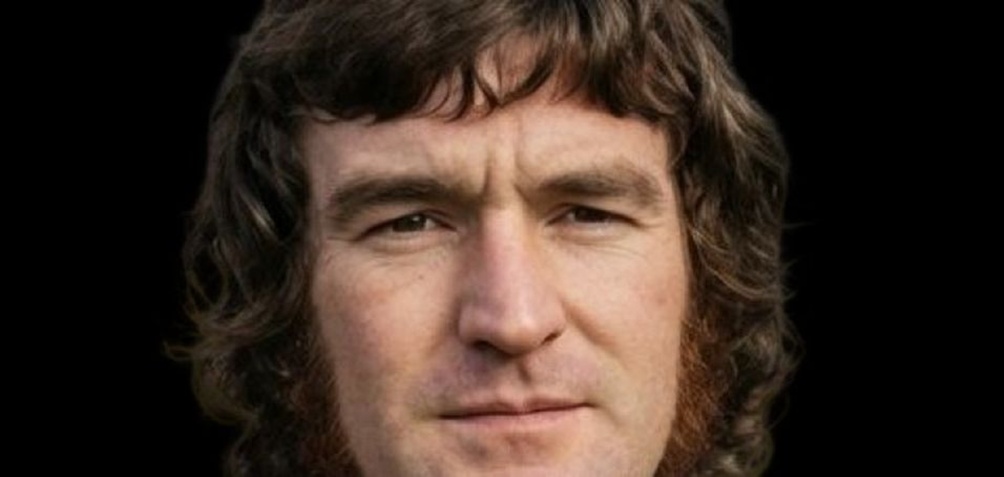
Bruce Ian Bannister, born April 14, 1947, Bradford, Yorkshire, England,
PART ONE
Bruce Bannister came up through the youth ranks at Leeds United, a club then assembling the pieces of what would become one of the most formidable sides English football had ever seen under Don Revie. But it was not at Elland Road that Bannister would write his name into the record books. Instead, aged just sixteen, he made the short journey across Yorkshire to join Bradford City — the Bantams of Valley Parade, a Division Four outfit fighting, as Division Four outfits always seem to be fighting, for a foothold in the upper world of English football. It was a move that would prove the making of him.
His debut came in September 1965 against Colchester United, the kind of late-summer afternoon that Division Four specialised in — functional, unshowy, but charged with that particular electricity that arrives whenever a teenager steps onto a senior football pitch for the first time. He did not score that day, but the promise was visible enough, and those at Valley Parade who watched the young Bannister move through the 1965/66 season with increasing assurance saw something worth nurturing. The reward came at the very end of that season when he started three consecutive matches and scored his first senior goal in May 1966, of all occasions, against Doncaster Rovers. It was not a glamorous occasion — it rarely is, with Doncaster — but it mattered, and Bannister would make a habit of making things matter.
The 1966/67 season was the one in which everything shifted. Bannister, still only a teenager, won a regular first-team berth in the Bradford City side and ended the campaign with eight goals — a solid, respectable return from a young man still learning the brutal rhythms of professional football. The following season, 1967/68, he moved onto an entirely different level, bagging seventeen goals and announcing himself as one of the more dangerous forward operators in the fourth tier. Moreover, it was in November 1967 that he produced what any striker of any era would describe as the perfect afternoon: a hat-trick against Wrexham, three goals that landed with the satisfying completeness of a paragraph that ends exactly where it should.
These were not just personal landmarks but collective ones, because goals at this level of the game carry enormous weight. They mean points, and points mean survival or, more thrillingly, escape. In the case of Bradford City, Bannister’s goals were central to the escape plan — and in the 1968/69 season, Valley Parade witnessed what supporters of struggling clubs dream about through the long winter months. The Bantams won promotion out of Division Four, and Bannister’s contribution to that ascent was not merely statistical. He was the man the side looked to when the pressure built, the forward who held the line and stretched defences and gave his teammates space to breathe. In the lower leagues, that kind of striker is worth more than his contract suggests.
He retained his place in the first team for five more seasons as Bradford City found Division Three a tougher proposition altogether, which it invariably is for newly promoted sides. The 1971/72 campaign proved one too many, and the club suffered the particular misery of relegation back to the fourth tier — a fate that arrives with all the slow inevitability of winter and all the sting of genuine surprise, even when everyone suspected it was coming. In November 1971, with the Bantams looking grim and the season already heading south, the club made the pragmatic decision that clubs in their position almost always make: they sold their best forward.
The fee was £23,000. It sounds modest now but represented a meaningful sum for a Division Four outfit in the early seventies, and Bannister left Bradford City having scored sixty-nine goals in two hundred and twenty-eight senior appearances. Those numbers deserve a moment of quiet appreciation, because they represent not just talent but reliability — the repeated, unglamorous willingness to show up, to compete, to score, across hundreds of matches in difficult conditions against organised opponents who had been told, specifically, to stop him. He had grown up at Valley Parade, in every sense, and he left it as a proven goalscorer ready for a bigger stage.
Division Three side Bristol Rovers, known affectionately to their supporters as The Gas, handed Bannister that bigger stage in November 1971, and he repaid their faith almost immediately. Within his first month at the club he scored a brace in an FA Cup tie against Telford United — two goals that told his new teammates everything they needed to know about the man who had just walked through the door. He ended his first partial season in Bristol with eight goals in seventeen starts, which is the kind of ratio that makes managers sleep easier and supporters dare to hope.
PART TWO
The 1972/73 season deepened that hope considerably. Bannister scored twenty-nine times as Rovers pushed for a promotion place and established himself as the most important forward at Eastville Stadium, a ground whose peculiar shared tenancy with a greyhound track gave it a smell all its own and an atmosphere that could be startling in its intensity. But it was in March 1973 that the story took its most significant turn yet, because that was when Bristol Rovers signed Alan Warboys from Cardiff City.
Warboys was a different kind of forward from Bannister — taller, more physical, a battering ram of a centre-forward who could hold the ball up, win headers and give defenders the sort of afternoon they tried to forget before they had even had their post-match bath. Bannister, quicker and sharper, worked the spaces that Warboys created, finishing with the instinctive ease of a man who has spent his entire adult life doing exactly this. The two took to each other immediately, and the final ten games of the 1972/73 season offered a preview of what was to come: Bannister scored ten goals in those last ten matches, a run of form that had the whole of Bristol talking. The football world had not yet coined the phrase that would eventually define them, but it was coming.
Bristol Rovers began the 1973/74 campaign in a manner that even the most optimistic supporter could not have scripted. They went twenty-seven games unbeaten, a run of results that transformed them from contenders into something approaching a force of nature in the third division, and at the centre of it all, game after game, were Warboys and Bannister — Smash and Grab, as the Bristol press had taken to calling them, and the name stuck with the joyful permanence of the best football nicknames. But if the run had a defining moment, a single afternoon that crystallised everything about what this partnership could do and what this team was capable of, it arrived on the first day of December 1973 at Goldstone Ground in Brighton. Rovers were away at Brighton and Hove Albion, recently relegated from Division Two and still adjusting to the unhappy realities of life one tier lower. What followed was not an adjustment. It was an annihilation.
The match finished 8-2 to Bristol Rovers and it stands, all these decades later, as one of the remarkable away victories in English football’s third division history. The way it unfolded deserves telling in full, because the sheer accumulation of the goals — the manner in which Rovers picked apart the Brighton defence with a combination of pace, precision and predatory finishing — was itself a kind of argument for everything the beautiful game can be when a team is truly at its best.
After just five minutes, Colin Dobson worked the ball intelligently to Alan Warboys, who took it at speed down the left wing, drew the attention of the Brighton defence and played it back across the face of goal. Bannister had timed his run with the precision of a man who had spent thousands of hours learning exactly this — arriving in the right place at exactly the right moment — and he fired home past Brighton goalkeeper Brian Powney to open the account. It was 1-0 to Rovers inside five minutes and the tone was set.
Seven minutes later, Dobson struck again, this time feeding a perfectly weighted pass to Warboys and then finding Gordon Fearnley with a centre so accurate it required nothing more than a firm header to direct it home. Two-nil, and the ground was already unsettled in that particular way grounds become when a home crowd senses that the afternoon might not end as hoped. Brighton pulled one back through Peter O’Sullivan on twenty minutes, and there was a brief, hopeful moment when the match seemed to teeter — but it lasted less than ten minutes, because in the twenty-ninth minute Trevor Jacobs overlapped down the right and drove a cross into the area that found Bannister arriving from deep, and his header beat Powney cleanly to restore the two-goal margin.
Two minutes past the half-hour mark Warboys hit a hard, low free-kick that Powney could not hold, and Bannister — who had developed the striker’s instinct for arriving where the goalkeeper doesn’t want him — tapped home the rebound. Four-one. Then, six minutes before the break, Dobson found Warboys again and the big forward simply ran at the Brighton defence and forced the ball home to make it five-one, which was how it stood at half-time, with the visiting supporters — those fortunate enough to have made the trip — in a state of near-disbelieving euphoria.
The second half continued in the same vein. Bannister turned goalmaker on fifty-five minutes, finding Warboys with a pass that the centre-forward converted to make it six-one, and three minutes past the hour Warboys added a seventh after a pass from Lindsay Parsons split the Brighton rear-guard with embarrassing ease. With ten minutes left on the clock, Brighton appealed for offside as Warboys bore down on goal again, but the flag stayed down and he drove home to make it eight-one — at which point the Goldstone Ground had gone very quiet indeed. A late consolation from Ronnie Howell from a Tony Towner centre brought the final score to 8-2, though it changed nothing about the character of the afternoon. Bristol Rovers had, quite simply, turned in one of the finest away performances their supporters would ever see.
Bannister’s four goals — his opening strike, his precise header, his rebound tap-in and his assist for the sixth — were not the flashy, spectacular variety that end up on highlight reels for generations. They were something better than that. They were the goals of a forward who understood exactly where he needed to be and got there before anyone else, and who contributed to a team performance so complete that it warranted a place in Division Three folklore.
The 1973/74 season ended with Bristol Rovers finishing second in Division Three, winning promotion to Division Two — and Bannister, who had contributed twenty goals to the cause, moved with the club into football’s second tier with all the composure of a man who had been waiting for this moment since that debut afternoon against Colchester United eight years earlier. Rovers were not favourites to thrive in Division Two, and indeed they did not dominate it, hovering around the lower reaches of the division for the next two seasons while Smash and Grab continued to fire on most cylinders and provide the goal threat that kept the club competitive.
PART THREE
Partnerships, even the most productive ones, have natural lifespans, and the endurance of the Warboys-Bannister alliance at Bristol Rovers began to fray around the edges as the 1976/77 season progressed and the pair’s wage demands created friction with a club that could not, in honesty, afford to meet them. The decision, when it came, was the kind that clubs in Rovers’ position make with heavy hearts and pragmatic minds: both strikers were sold, midway through the season, within weeks of each other.
By December 1976, after ninety-four goals in two hundred and thirty-nine senior appearances — numbers that put him comfortably among the more productive forwards of his generation in the lower divisions — Bannister left Eastville for Plymouth Argyle, Second Division strugglers who offered £10,000 plus Scottish midfielder Jimmy Hamilton in exchange for his services. It was not the most glamorous exit from a club, but then Bannister had never been about glamour. He had always been about goals, and he arrived at Plymouth and scored them: seven in total for the Pilgrims, the first coming in his second start against Southampton, and he ended the campaign with twenty-four senior appearances for a side that appreciated exactly what it had acquired.
The summer of 1977 brought another move, this time to Hull City for a £15,000 fee, and the ambition at Boothferry Park was clear enough: the Tigers wanted to escape the mid-table mediocrity of Division Two and establish themselves as a genuine force in English football’s second tier. Bannister was signed as part of the solution, and on the opening day of the league season he delivered on that promise with a goal in a 3-0 victory over Sunderland in front of a crowd that vibrated with the particular excitement of a new season not yet scarred by disappointment. The atmosphere at Boothferry Park that afternoon, febrile and full of hope, seemed to confirm that this might be Hull’s year.
It wasn’t. Poor results accumulated with the dispiriting regularity that mid-table clubs tend to know intimately, and Bannister’s goals came slowly — two in the League Cup against Southport, three in five matches during a brief October revival that coincided with the arrival, from Bristol Rovers, of Alan Warboys. The reunion of Smash and Grab at Boothferry Park generated considerable excitement in the local press, and understandably so, because the pair had done extraordinary things together at Eastville and there was every reason to believe they might do so again.
But football is not a controlled experiment and circumstances do not repeat. The partnership that had terrorised Division Three defences and lit up Goldstone Ground produced, in the Division Two cold of East Yorkshire, rather less fire than it had generated in the West Country. Bannister ended the 1977/78 season with four league goals and Hull City were relegated to Division Three, which was precisely the opposite of what the club had hoped for when they put their faith in him.
With relegation accepted and a season of consolidation required, Bannister buckled down in the 1978/79 campaign alongside new strike partner Keith Edwards and produced the kind of consistent, sustained contribution that those who had followed his earlier career recognised immediately. He scored four times in the opening six league matches, which set a tone of purposeful intent, and he ended the season with sixteen goals in all competitions having played in every League and Cup match — the sort of record that speaks to fitness, availability and the kind of professional commitment that managers value above almost everything else.
He began the 1979/80 campaign in much the same spirit, starting the season in the first team and looking to build on what he had achieved the previous year. But football has a way of making other plans, and from September 1979 onwards manager Ken Houghton began to prefer younger options in attack — Rob McDonald and Paul Moss, both of whom brought a different energy to the forward line and represented the future that a third-division club needs to be building towards. Bannister appeared sporadically, contributing where he could but finding the regular football that had defined his career increasingly difficult to secure.
In the summer of 1980 he departed Boothferry Park and made, of all things, a move to France — Union Sportive Dunkerque, a club operating in the northern French city on the edge of the English Channel, where he spent a season playing football at a different pace and a different temperature than anything he had known in the English lower leagues. But after a season at Dunkerque Bannister returned to England with a clear sense of what came next. During the latter stages of his time at Hull City he had undertaken management courses, developing the kind of commercial instincts that his playing experience had begun to sharpen, and he had no shortage of options. For a time he considered a role in football administration, which would have been a natural fit for a man who had spent two decades watching the game from the inside.
Bannister chose a different kind of playing field in the end, though. In 1982 he founded a mail order sportswear business in Bradford — his home city, to which he had returned with all the affection of a man who had travelled widely and knew where he belonged — and the enterprise proved to be an early and prescient adopter of internet sales as the digital revolution began to transform the way ordinary people bought things. It was, in its way, as forward-thinking as his movement off the ball had been in the first-team corridors of Division Three two decades earlier: getting to the right place before anyone else, arriving in the space that others hadn’t noticed yet.