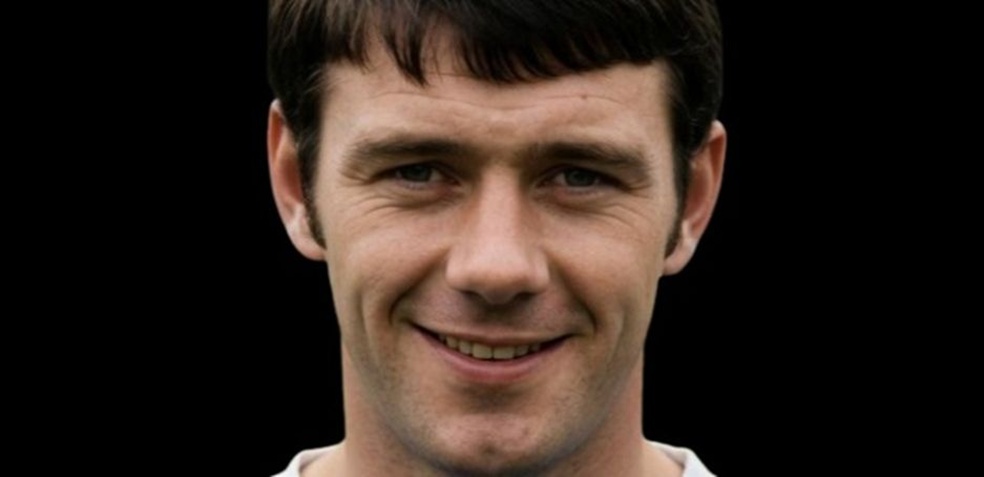
Alan Warboys, born 18 April 1949, Goldthorpe, England.
PART ONE
In 1965, Alan Warboys joined Doncaster Rovers’ ground staff, and right from the start it was clear this was no ordinary teenager simply looking for a wage packet. Despite the club’s modest status at the time, he knuckled down and began to develop into a proper forward, learning his trade on those rain-soaked training pitches where every touch had to be earned. His breakthrough with the reserves in the 1965/66 season was impossible to ignore as the young striker notched up14 goals, a tally that screamed potential and forced the first-team coaches to sit up and take notice. That promise turned into reality in April 1967 when, still not quite 18, he made his senior debut, and what a moment it proved to be because from that point onward his career would unfold in fits and starts but always with the same direct, powerful style that became his trademark.
Warboys wasted little time in making his mark at senior level, and he found the net against Scunthorpe United and Gillingham as Doncaster battled through a difficult campaign that ended in relegation to Division Four. Yet even as the team slid down the divisions, the young striker stood out like a beacon. He contributed nine goals in 37 appearances during the following season, and those strikes were not just numbers on a sheet but vital efforts that helped the side steady itself in the fourth tier. Additionally, his performances carried a sense of promise that bigger clubs could not overlook for long. But it was not just the goals; it was the way he led the line, holding up play, winning battles in the air, and always looking to turn half-chances into something more dangerous. Therefore, when Sheffield Wednesday came calling in June 1968 with an offer to step up to the First Division, it represented both a dream move and a stern test for a lad who had only just turned 19.
The jump to League Division One was always going to be tough, and Warboys found himself used sparingly in that first season at Hillsborough as he adjusted to the pace, the physicality, and the sheer quality of opposition week in and week out. Nevertheless, by the 1969/70 campaign he began to show what he could do when given a run in the side. He managed eight goals in 42 appearances, and one particular highlight still stands out vividly even now: a brace against Napoli in the Anglo-Italian Cup that demonstrated he could deliver on the bigger stage when the spotlight was brightest. On top of that, his all-round play improved noticeably, yet Sheffield Wednesday endured a wretched season and slipped into the Second Division at the end of it all in May 1970. Despite the disappointment of relegation, Warboys had done enough to prove he belonged at a higher level, and his reputation as a striker who could trouble any defence continued to grow.
The 1970/71 campaign saw Warboys start as first-choice striker for Sheffield Wednesday, but by December the winds of change had picked up once more. Cardiff City, keen to strengthen their attack, paid £42,000 for his services and he headed to South Wales in search of a fresh start. His arrival at Ninian Park could not have gone much better. In only his second start he faced his former club Sheffield Wednesday, and he marked the occasion by finding the back of the net twice, a sweet moment that set the tone for what would become a productive spell in Wales. In the remainder of that season he netted 13 goals from just 18 starts, coming agonisingly close to helping the Bluebirds win promotion back to the First Division.
Warboys’ influence only increased the following campaign as he struck another 13 goals, including a memorable hat-trick against Preston North End that had the Ninian Park crowd on their feet. Although Cardiff found themselves fighting at the wrong end of the table despite his best efforts, he remained the standout performer. In total he scored 27 goals in 72 appearances for the club, and by the early weeks of the 1972/73 season Division One came calling again, this time in the shape of Sheffield United. Crossing the city divide from Wednesday to United was never going to be straightforward, yet the move carried excitement because it offered another crack at the top flight with a club hungry for success. Unfortunately, things did not work out as hoped at Bramall Lane. Warboys struggled to settle, failed to find the net in eight starts, and after just six months the chapter came to a premature close, leaving him looking for the next opportunity to rediscover his scoring touch.
That opportunity arrived in March 1973 when he moved south to join Bristol Rovers in Division Three, and it was here at Eastville that everything finally clicked into place in the most spectacular fashion. Paired up front with fellow Yorkshireman Bruce Bannister, the two formed one of the most feared attacking partnerships in the entire Football League, soon earning the unforgettable nickname “Smash and Grab”. Warboys, with his strength and physical presence, was very much the Smash, while Bannister’s pace and clever movement provided the Grab, and together they terrorised defences up and down the country. The 1973/74 season turned into the absolute pinnacle of Warboys’ career as Rovers finished second in Division Three and won promotion to Division Two. The Smash and Grab duo contributed a staggering 40 of the team’s 64 league goals, with Warboys alone bagging 22, and one performance in particular remains etched in the memory of anyone who witnessed it.
PART TWO
On 1 December 1973 at Brighton’s Goldstone Ground, Bristol Rovers produced a result that still raises eyebrows today. After only five minutes Colin Dobson set Warboys away down the left, and he powered past Norman Gall near the byline before laying on the chance for Bannister to open the scoring. Seven minutes later another Dobson pass found its way to Gordon Fearnley who headed home to make it 2-0. Although Brighton pulled one back through Peter O’Sullivan on 20 minutes, Rovers were relentless. A strong overlap by Trevor Jacobs led to a cross that Bannister headed in for 3-1, and before half-time Warboys himself was involved again as a hard low free-kick caused chaos and Bannister tapped in the rebound for 4-1. Six minutes before the break another Dobson centre picked out Warboys, who made-up the score 5-1 at the interval.
In the second half, Bannister turned provider and Warboys made it 6-1 in the 55th minute of play. Three minutes past the hour Warboys raced through like a thoroughbred from a Lindsay Parsons pass to notch another, and despite Brighton’s desperate offside appeals he powered home to make it 8-1. A late consolation from Ronnie Howell made the final score 8-2, but the damage had been done, and Warboys had been at the heart of a demolition that showcased everything that made him such a handful. He followed that four-goal masterclass with further hat-tricks against Southport and Southend United, rattling in three trebles in the space of just five starts during an electrifying purple patch that had Rovers fans dreaming of even greater things.
Promotion to Division Two brought new challenges, yet Warboys responded with another 12 goals in the 1974/75 season that helped the club avoid an immediate return to the third tier. His physical prowess and willingness to put his body on the line week after week earned him a special place in the hearts of the Eastville faithful, and for three more full seasons he remained a first-choice forward, consistently delivering goals and leadership in attack even as the team battled against stronger opposition. However, by February 1977 the time had come for a new chapter, and he moved on to fellow Division Two outfit Fulham where the prospect of linking up with footballing royalty in George Best and Bobby Moore added extra spice to the move.
At Craven Cottage Warboys still managed to make his presence felt despite the star names around him, scoring six goals in 24 appearances and showing that his appetite for the game remained as strong as ever. Yet the stay proved short, and by September 1977 he had moved again, this time to Hull City where he was reunited with his old striking partner Bruce Bannister. There were high hopes that the Smash and Grab magic could be recreated on Humberside, and there were indeed flashes of brilliance, including a brace against Tottenham Hotspur in a 2-0 victory and a hat-trick against Millwall in March 1978. Nevertheless, consistency proved elusive, and he managed only seven goals in a difficult campaign that ended with Hull’s relegation to Division Three.
After that challenging spell, he returned home in the summer of 1979 to the club where it all began, Doncaster Rovers, now back in Division Four. The move carried a sense of homecoming, and although the surroundings were far more modest than the Division One pitches he had once graced, he threw himself into the task with characteristic determination. Over three seasons he made 107 outings and hit 25 goals, with the 1980/81 campaign standing out as he played a key role in guiding Rovers to promotion to Division Three. Yet the years of hard physical football had begun to take their toll, and by 1982 he decided the time was right to hang up his boots after a 15-year professional career that saw him net exactly 150 goals in 549 senior games.
Unlike many players of his era, Warboys did not slide into coaching or scouting once his playing days ended. A promised role at Doncaster never materialised, so instead he carved out a very different life away from the game. He ran the Rings O’ Bells pub in Swinton for a time before later becoming a lorry driver, a job that took him back on the roads of the country he had entertained so brilliantly on the pitch. It was a far cry from the roar of packed terraces, yet it spoke volumes about the grounded character he had always been.