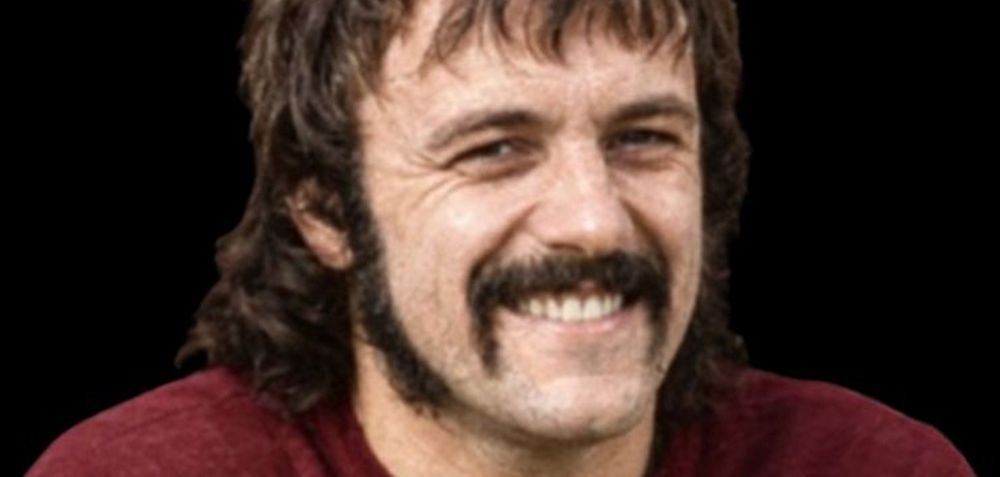
Eric John Francis Sellars, 28 November 1945, Dundee, Scotland.
PART ONE
Eric Sellars was born in Dundee, and although his name would become closely associated with Arbroath rather than the city of his birth, the route which carried him to Gayfield Park was a familiar one for a promising young Scottish footballer of the period, beginning in the local game with Carnoustie Panmure and including time with Arbroath Victoria before the senior opportunity arrived. Arbroath brought him into their ranks during the middle of the 1960s, with the club recording his arrival from Carnoustie Panmure in 1965 and his first-team registration the following year, and Sellars entered a dressing room overseen by Bert Henderson, the manager under whom he would spend his entire eleven-season run wearing the famous maroon shirt.
The flanker was 20 when he was handed his competitive debut away to Alloa Athletic on 1 October 1966, yet he immediately found himself involved in an eventful 3–3 draw rather than being allowed a quiet introduction, and a fortnight later, on 15 October, he scored his first Arbroath goal in a 1–0 victory at East Fife, giving an early indication that this quick, direct winger could provide finishes as well as crosses. The bare facts of those opening weeks were encouraging, but the greater importance lay in the opportunity ahead of him, because Arbroath were preparing to build one of the strongest sides Gayfield had seen for many years, and Sellars, with his speed on the right, his willingness to work and his ability to operate elsewhere across the forward line, had arrived at precisely the right moment.
Arbroath were already an old and proudly independent club when Sellars joined them, having been founded in 1878 and having secured a remarkable place in football history on 12 September 1885, when they defeated Bon Accord 36–0 in the Scottish Cup and Jocky Petrie scored 13 of the goals, but the club’s more recent story had been shaped by movement between Scotland’s two senior divisions rather than by anything quite so extraordinary. They had twice finished as Division Two runners-up, in 1934–35 and 1958–59, had reached the Scottish Cup semi-finals in 1946–47 and the League Cup semi-finals in 1959–60, yet by the time Henderson began shaping his side the immediate task was to lift Arbroath out of the second tier and give their supporters another chance to watch the leading Scottish clubs at Gayfield.
The flank forward quickly became part of that work, notching up 31 appearances during the 1966–67 campaign and finding the net on nine occasions, and even though the Dundonian was usually stationed on the right wing, he was never restricted to standing beside the touchline and waiting for the ball to reach him, because he could move across the front line, attack openings through the middle and exchange positions with colleagues whenever the game demanded it.
His first full season was therefore much more than an apprenticeship, and as Arbroath became increasingly difficult to contain, he supplied width, movement and a useful scoring contribution, including the opening goal in a 3–0 home victory over Montrose on 3 January 1967. The side won often enough to create genuine promotion expectations, but it fell short of the top two, and that disappointment gave Henderson and his players a clear target for the following campaign rather than breaking their progress.
PART TWO
The 1967–68 season brought the first major reward of Eric Sellars’ time at Gayfield, although his own figures do not tell the whole story, because illness and competition for places restricted him to 25 appearances, two of them as a substitute, and he scored twice as Arbroath pursued promotion behind an impressive St Mirren side. Even when flu forced him out of a 4–0 home victory over Clydebank on 10 February 1968, with George Easton taking the outside-right position, Sellars remained an established member of Henderson’s attacking group rather than a young player hovering at its edge, and the accumulated work of the season carried Arbroath to second place in Division Two and into the top flight.
St Mirren won the championship, but the second promotion position was what mattered at Gayfield, and Arbroath’s return to Division One allowed Sellars to test his speed and finishing against Celtic, Rangers, Hearts, Hibernian, Aberdeen, Dundee and the rest of Scotland’s strongest clubs. It was a considerable rise for a player who had been with Carnoustie Panmure only a few years earlier, but he did not look overawed once the 1968–69 season began, making 38 appearances in all competitions and scoring ten goals, his first double-figure return for Arbroath. He scored away to Hearts in a 3–2 defeat on 21 December 1968 and found the net against the same opponents when Arbroath drew 2–2 at Gayfield on 12 April 1969, but individual contributions could not disguise the difficulty of the campaign, and with only five wins from 34 league matches, Arbroath finished at the bottom of Division One and returned to the second tier after a single season.
Relegation might have loosened the commitment of a player eager to remain in the top division, but Sellars stayed, and this readiness to work through the less glamorous seasons became one of the defining features of his long association with Arbroath. During 1969–70 he appeared 39 times and scored nine goals, yet a promotion challenge failed to develop with sufficient consistency, while the following season began unevenly and left Arbroath needing a much stronger second half if they were to re-join the leading group. They found it, and Henderson’s side eventually climbed to third place in Division Two in 1970–71, winning 19 and drawing eight of their 36 league matches while scoring 80 goals, but only the first two clubs went up and Partick Thistle and East Fife remained beyond reach.
Sellars made 28 appearances in all competitions, three of them from the bench, and scored eight times, contributing steadily without being the only source of danger in a side whose strength lay in the number of players capable of creating or finishing an attack. Arbroath had missed promotion, but third place represented a substantial advance and provided a platform for another attempt, while the continuity supplied by Henderson was crucial, for the manager knew his players, understood what Sellars could offer on either wing or elsewhere in attack, and did not need to rebuild the side every summer. In an age when one-club service was becoming less common but had not yet disappeared, Sellars and Henderson formed part of a settled Gayfield environment in which familiarity strengthened rather than dulled ambition.
That ambition was fulfilled in 1971–72, when Arbroath produced a sustained promotion campaign and Sellars played 33 times, once as a substitute, while scoring eight goals as the side won 22 of its 36 league fixtures. Dumbarton and Arbroath finished level on points at the top of Division Two, and Dumbarton took the championship on goal average, but second place carried the same essential prize and Henderson’s team returned to Division One after three years away, having scored 71 league goals and conceded 41.
Besides providing goals of his own, Sellars offered the balance required by a side containing players such as Jimmy Cant, Billy Pirie, Tommy Walker and Bobby Waddell, and although the personnel evolved, Henderson’s football retained an attacking edge. Promotion therefore represented neither a sudden stroke of fortune nor the work of one outstanding individual; it was the result of years spent building a side capable of recovering from setbacks, and Sellars had been present through every stage.
PART THREE
Division One football returned to Gayfield in 1972–73, and Eric Sellars responded by appearing in every league match, making 42 appearances across all competitions and scoring ten goals while Arbroath fought to establish themselves against opponents with larger supports, greater resources and deeper squads. Survival was always likely to require endurance as much as flair, but the team showed that it could produce significant results away from home as well as make life awkward for visitors on the tight, exposed ground beside the North Sea, and one of the finest afternoons came at Tynecastle Park on 3 March 1973. Heart of Midlothian were defeated 3–0, with Billy Pirie scoring on the half-hour mark, Sellars adding the second in the 65th minute of proceedings and Pirie completing the victory ten minutes later, a sequence which displayed Arbroath’s capacity to punish established top-flight opponents once they gained control.
Sellars had already made a sharp contribution against Celtic at Gayfield on 16 December 1972, scoring in the opening minute before the visitors recovered to win the game 2–1 through goals from Kenny Dalglish and Harry Hood, and moments of that sort underlined both his threat and the narrow margins confronting Henderson’s side. Arbroath eventually finished 15th in the 18-club division, above East Fife, Kilmarnock and relegated Airdrieonians, so safety was secured and a second consecutive top-flight season was earned, an achievement of real substance for a part-time provincial club which could neither buy its way out of trouble nor carry passengers when the pressure increased.
If 1972–73 proved that Arbroath belonged in Division One, the following campaign supplied the result for which Henderson’s team would be remembered throughout Scottish football, and it also brought Sellars the most prolific season of his senior playing life. He appeared 40 times in 1973–74 and scored 24 goals, a remarkable return for a man identified chiefly as a winger, and his scoring began early enough to show that this was not merely a brief burst of form; on 3 November 1973, for example, he put Arbroath ahead after nine minutes at Tynecastle before Billy Pirie made it 2–0, although Hearts recovered to win 3–2.
The larger story of the campaign developed around Arbroath’s determination to preserve their status, but Sellars’ goals gave them a weapon beyond stubborn defending, because his acceleration and willingness to move infield meant that opposing full-backs could not assume he would always stay outside and cross. Arbroath still lost more often than they won, as might have been expected at that level, but they were capable of scoring freely and upsetting sides who treated the fixture too casually, and no opponent would suffer more dramatically from that capacity than Rangers when the teams met at Ibrox in February.
Rangers entered the match on Saturday, 2 February 1974, with every reason to expect a home victory, and a crowd of 22,000 watched Jock Wallace’s side take the lead through Tommy McLean in the 38th minute, but the assumption that Arbroath would now fall away proved completely mistaken. Henderson had selected Jim Marshall in goal, Jimmy Donald, Rab Rylance, Tommy Walker, Bobby Waddell and Dave Murray behind an attack containing Sellars, Jimmy Cant, Billy Pirie, Jimmy Penman and John Fletcher.
And although Sellars did not score, his work on the right contributed to a performance in which the visitors refused to be subdued by the size of the ground, the reputation of the opposition or the noise around them. Fletcher equalised in the 62nd minute, Pirie put Arbroath ahead a minute later, and when Derek Parlane converted a penalty in the 68th minute Rangers appeared to have checked the revolt, yet Arbroath continued to attack rather than protecting the draw. Four minutes from time Fletcher scored again to make it 3–2, completing the only league victory Arbroath have recorded at Ibrox and one of the greatest results in the club’s history. Arbroath again retained their top-flight place in 1973–74, finishing 13th, and Sellars’ 24 goals across the season represented the peak of his output, but the campaign which followed was complicated by an approaching reconstruction of Scottish league football.
PART FOUR
Eric Sellars managed to make made 42 appearances during the season 1974–75, five of them as a substitute, and scored eight times, while Bert Henderson’s Arbroath side struggled badly for league victories and finished 16th in the old 18-club Scottish First Division. Under the previous arrangement such a position might still have been enough for survival, because only the bottom two clubs had usually been relegated, but the creation of a new ten-team Scottish Premier Division for the 1975–76 campaign meant that Arbroath dropped into the newly named First Division as part of the wider reorganisation, even though the change was not a conventional relegation into the third level. Sellars had now passed 300 appearances for the club and was nearing his thirtieth birthday, yet he remained heavily involved rather than being retained merely because of what he had done in earlier seasons, and his eight goals showed that the sharpness which had produced the exceptional return of 1973–74 had not disappeared.
Nevertheless, younger attackers were beginning to press for regular places, and as John Mitchell and John Fletcher assumed greater responsibility, Sellars’ role gradually changed from automatic selection to experienced option. Football seldom marks these transitions with a single dramatic moment, especially at a club where long service and personal loyalty carry genuine weight, but by the beginning of 1975–76 it was becoming clear that the side was moving towards a future in which he would no longer command the right wing every Saturday.
Sellars still played 36 times during his last Arbroath season, eleven of those appearances coming from the substitutes’ bench, and he scored five goals as the club competed in the new First Division. His last scoring contribution provided a suitably lively reminder of the attacking football with which he had been associated, because on New Year’s Day 1976 he found the net when Arbroath overcame Montrose by a 5–3 margin at Links Park, and even in a season when his opportunities were becoming less regular, he could still influence a match rather than simply complete it.
Sellars´ final appearance came against the same opponents on 24 April, when Montrose and Arbroath shared the spoils in a 1–1 draw, and at the end of the campaign he was given a free transfer, closing an eleven-year association which had included two promotions, three full seasons in the old Division One and that unforgettable win at Ibrox. He signed for St Johnstone in August 1976 and later spent time with Brechin City before returning to the junior game with Arbroath Victoria, but none of those later moves could rival the scale of his contribution at Gayfield. While with Arbroath, he accumulated 354 first-team appearances and registered 93 goals, comprising 326 starts and 28 outings as a substitute.
His association with the club did not disappear once he stopped playing, and many years later the Sellars name returned to the team sheet through his son Barry, a versatile midfielder who represented Arbroath in two spells between 1998 and 2010 and was credited by the club with 185 appearances and 42 goals. Eric Sellars himself was inducted into the Arbroath Hall of Fame in 2017, an honour which placed formal recognition around something generations of supporters already understood, because they remembered not merely the totals but the circumstances in which they had been accumulated: the first promotion of 1967–68, the difficult top-flight season which followed, the years spent trying to climb again, the promotion secured in 1971–72, the fight for survival and the afternoon when Rangers were beaten at Ibrox.