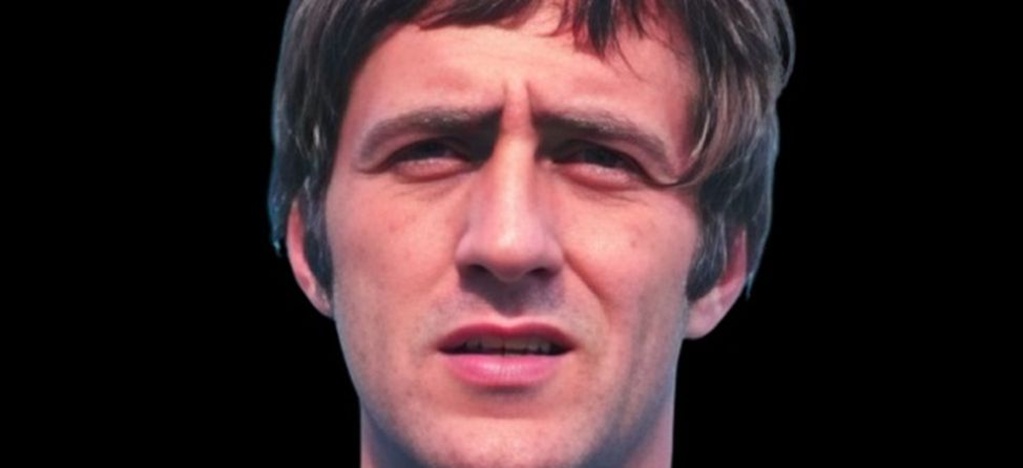
Mauro Bellugi, born 7 February 1950, Buonconvento, Tuscany, Italy.
PART ONE
Mauro Bellugi’s journey to stardom began in the heart of Italy, where he first kicked a ball on the streets of Buonconvento. Yet, his big break came in 1967, when the Nerazzurri, Inter Milan, recognized his potential and brought him into their youth ranks.
At the time, Inter was basking in the afterglow of their golden era under the tutelage of manager Helenio Herrera, with legends like Gianni Rivera and Sandro Mazzola leading the charge. Bellugi’s early years were spent honing his skills under the protective wing of these footballing titans, learning the art of defending with a precision and tenacity that would serve him well in the years to come.
In 1969, at just 19 years old, Bellugi made his debut for the Inter Milan first team. He was thrust into a side that had already secured domestic glory, but the young defender’s commitment and energy instantly impressed the club’s followers. What set Bellugi apart was not just his natural defensive abilities, but his gritty determination and an almost ruthless desire to win the ball back for his team. It was as though he wore his heart on his sleeve every time he pulled on the Nerazzurri shirt.
Bellugi would go on to make 137 appearances for Inter, a number that speaks volumes about his importance to the team. While his defensive acumen was his standout trait, his lone goal in European competition remains one of the more memorable moments in his career. In the 1971/72 European Cup, during the Round of 16, Bellugi scored an unforgettable goal against Borussia Mönchengladbach. The goal was not just a rarity for a defender but also a pivotal moment that ensured Inter Milan advanced further in European competition.
Bellugi’s time at Inter was marked by silverware, but also by his enduring commitment to the club’s cause. After securing the Scudetto in 1971, following a remarkable comeback that season, Bellugi became more than just a player; he embodied the very spirit of Inter.
His aggressive yet composed style of defending was something that would earn him respect both domestically and abroad. Even after his retirement, Mauro’s bond with Inter remained unbreakable. He stayed close to the club, forever a supporter in heart and spirit, as though he were an eternal part of the Nerazzurri family.
However, like many football careers, Bellugi’s time at Inter eventually came to an end in 1974. With the arrival of fresh faces and a shift in managerial philosophy, Mauro Bellugi made the decision to continue his career elsewhere. He joined Bologna, where he played for five seasons (1974–1979). Although his time at Bologna didn’t yield the same level of success as his Inter years, it was another step in Bellugi’s development, where he demonstrated that his tenacity and leadership could thrive in a variety of environments.
In 1979, Bellugi made the move to Napoli, a club that was soon to rise in prominence, especially with the arrival of a certain Argentine legend named Diego Maradona. Bellugi’s time at Napoli was brief but not without merit, as he helped steady the defense during his single season with the club.
After his stint in Naples, Bellugi rounded off his playing days with a final season at A.C. Pistoiese in 1980–1981. Though the glory years were behind him, his experience and wisdom continued to shine, helping younger defenders understand the essence of solid, reliable defending.
PART TWO
On the international stage, Mauro Bellugi’s contributions to the Italy national team were just as significant as those at the club level. His debut for Italy came in 1972, and over the course of his international career, he earned 31 caps, becoming a fixture in the national team’s defense. His most notable international tournament was the 1978 FIFA World Cup in Argentina. Bellugi played a key role in Italy’s fourth-place finish, appearing in five matches and proving his worth on football’s biggest stage.
Despite Italy’s near-miss in Argentina, Bellugi’s reputation as a formidable defender continued to grow. He was also included in the squad for the 1974 World Cup, although Italy’s disappointing exit at the group stage kept him from further glory that year. Nonetheless, Bellugi’s ability to read the game, his tackling precision, and his no-nonsense approach were vital assets for Italy throughout the 1970s.
Bellugi’s final game for Italy came on 17 November 1979, when Italy faced Switzerland in Udine. After this match, Bellugi’s international career came to a close, but not before he had earned his place in Italy’s footballing lore. Though he wasn’t included in Italy’s squad for UEFA Euro 1980, the tournament held on home soil, his legacy within the Italian defense remained strong.
Upon retiring from playing, Bellugi remained connected to the world of football, though not in the same high-profile manner as some of his peers. His love for the game never waned, and he took on a role as a coach and football analyst. Despite his departure from the professional playing field, Bellugi maintained a strong presence in the hearts of Italian football fans, especially those who had followed his career at Inter.
However, much of Bellugi’s later life was marked by struggles, including health challenges. In 2020, his life took a tragic turn when he suffered a severe accident that led to the amputation of both his legs. Despite this adversity, Mauro Bellugi continued to exhibit the same indomitable spirit that had defined his playing career. His resilience in the face of such hardship became a testament to his strength of character, proving that the passion that drove him on the pitch never truly faded.
Bellugi’s career was defined not just by his time at Inter Milan but by his relentless dedication, his commitment to defending, and his sheer love for football. From his youth days at Inter to his retirement years, he always carried with him the ethos of the teams he played for—dedicated, tough, and with a never-say-die attitude. His goal against Borussia Mönchengladbach will forever be etched in the minds of those who witnessed it, a rare moment of attacking brilliance from a player known more for his defensive prowess.
Today, Bellugi is remembered as one of Italy’s most uncompromising defenders, a player who embodied the spirit of his clubs and his country. He may not have won the grandest of accolades at the international level, but his contribution to the 1978 World Cup campaign, his leadership at Inter Milan, and his unwavering commitment to his craft continue to resonate in the footballing world.