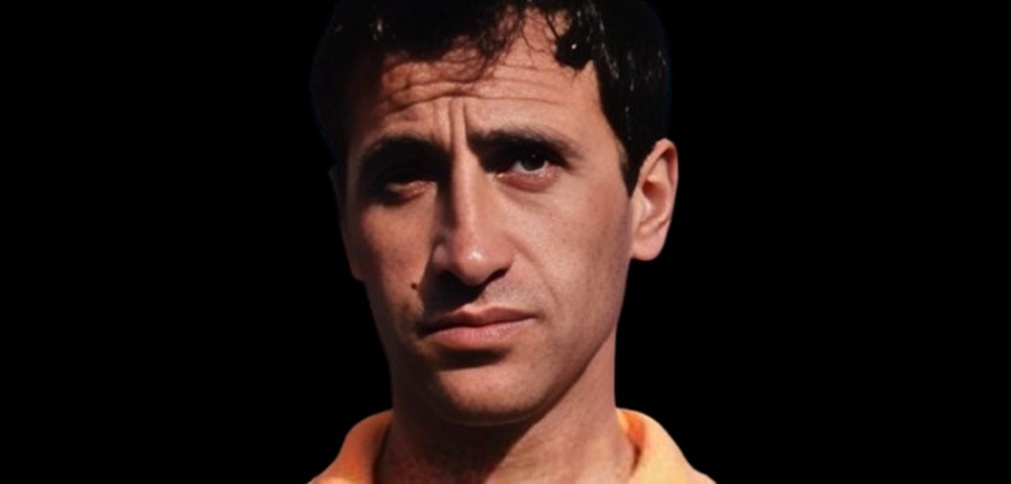
Joaquín Peiró Lucas, born 29 January 1936, Madrid, Spain.
PART ONE
Joaquín Peiró grew up in a footballing culture that valued flair but demanded results, and from an early age he showed an ability to glide past defenders and read the game a fraction quicker than those around him.
Whereas many young players struggle to translate promise into performance, he made his early breakthrough with determination, stepping into senior football through a loan spell at Real Murcia CF while still tied to Atlético Madrid, and using that opportunity to prove that he belonged at the top level.
His performances during the 1955–56 season, where he featured prominently and helped Atlético secure a respectable fifth-place finish in La Liga, ensured that he would not remain on the fringes for long, and instead he returned to Madrid ready to claim his place. Establishing oneself at Atlético was no simple task, as competition was fierce and expectations high, yet Peiró’s intelligence and movement set him apart, allowing him to gradually cement his position as a first-choice attacking force.
As a result, he became a central figure in Atlético’s forward line, combining technical ability with an eye for goal, and his knack for arriving late into the box made him a constant threat to opposing defences. In comparison to more physical forwards, Peiró relied on timing and awareness, slipping into spaces unnoticed and striking with precision, and this subtle effectiveness made him invaluable to his team.
Thus, by the early 1960s, he had developed into one of Atlético’s most important players, and his influence would soon be felt on the European stage. Indeed, the 1961–62 season proved to be a defining chapter, as Atlético Madrid competed in the European Cup Winners’ Cup, a tournament that offered Peiró the chance to showcase his talents beyond Spain.
In the final against ACF Fiorentina, he delivered when it mattered most, scoring in both legs as Atlético drew 1–1 in the first match and then triumphed 3–0 in the replay, securing the club’s first major European honour. Those goals not only underlined his importance but also elevated his reputation, marking him as a player capable of performing on the biggest stages.
PART TWO
Success often attracts attention from abroad, and in 1962, Joaquín Peiró made the bold decision to move to Italy, joining Torino FC and becoming one of the early Spanish pioneers in Serie A. In fact, his move represented a significant cultural and tactical shift, as Italian football demanded greater discipline and defensive awareness, yet he adapted with intelligence, blending his natural creativity with a more structured approach.
After impressing in Turin, he earned a transfer to Inter Milan, where he would become part of the legendary side assembled by Helenio Herrera. Similarly, alongside compatriot Luis Suárez Miramontes, Peiró contributed to a team that would dominate European football, even if his role was often less celebrated than others.
During the 1964–65 European Cup campaign, he played a crucial part, most notably in the semi-final against Liverpool FC, where Inter overturned a first-leg deficit with a 3–0 victory at home, and Peiró’s goal proved decisive in that turnaround.. As it turned out, Inter went on to lift the trophy, cementing their place among Europe’s elite, and Peiró added another major honour to his growing collection. On the other hand, his time at Inter was relatively brief, and he soon moved to AS Roma, where he would enjoy the longest spell of his Italian career.
In Rome, Joaquín Peiró found both stability and responsibility, becoming a key figure in the team and eventually earning the captain’s armband, a testament to his leadership and professionalism. He would then go on to help Roma secure the Coppa Italia, adding domestic silverware in Italy to his earlier European successes, and further enhancing his reputation as a player who could deliver results.
Even so, his career was not defined solely by club football, as he also represented Spain over a decade-long international career. And his debut on 3 June 1956 against Portugal was no doubt memorable, as he scored in a 3–1 defeat, announcing himself on the international stage with characteristic composure.
He participated in the 1962 FIFA World Cup in Chile, where he scored the only goal in Spain’s victory over Mexico, although the team ultimately exited in the group stage. He was also part of the squad for the 1966 World Cup in England, yet once again Spain fell short of progressing beyond the initial phase, reflecting the challenges faced by the national team during that era.
Regardless of this, Peiró’s contributions remained consistent, and his tally of five goals in 12 appearances demonstrated his effectiveness even at international level. But by the late 1960s, his playing career began to wind down, and he eventually returned to Atlético Madrid, the club where it had all begun, bringing his journey full circle. Accordingly, his second spell at Atlético allowed him to pass on his experience to younger players, and although his influence was no longer measured solely in goals, his presence remained valuable.
After all, footballers of the likes of Peiró do not simply disappear when their pace fades, as their understanding of the round ball game continues to shape those around them.
PART THREE
Upon retiring as a player, Joaquín Peiró transitioned into coaching in 1978, taking charge of Atlético Madrid´s reserve team and quickly demonstrating an aptitude for leadership from the sidelines.
In addition, he guided the reserves to promotion to the Segunda División, an early indication that his footballing intelligence could translate into management. But in contrast to his playing career,, his managerial journey would be more turbulent, marked by periods of success interspersed with challenges and instability.
He went on to manage several clubs across Spain’s lower divisions, including spells that tested his resilience and adaptability, yet he remained committed to his craft. Then, during the 1989–90 season, he returned to Atlético Madrid as part of a rotating managerial setup under the controversial presidency of Jesús Gil, and although the team finished fourth, the environment was far from stable.
Peiró continued to pursue his managerial ambitions, working in the Segunda División and Segunda División B, and gradually building a reputation as a coach capable of developing teams. His most notable achievement would come later in his career with Málaga, where he achieved promotion to La Liga in 1999 at the age of 63, a remarkable feat that highlighted both his experience and determination.
Under his guidance, Málaga enjoyed a period of success, winning the 2002 UEFA Intertoto Cup and reaching the quarter-finals of the UEFA Cup the following season, competing against some of Europe’s strongest sides. In the same way, his ability to organize teams and instill discipline mirrored the qualities he had displayed as a player, creating a sense of continuity between his two careers.
His managerial journey came to an end in 2003, following a difficult spell with Real Murcia, where he was unable to prevent relegation from La Liga. Finally, he stepped away from the game, leaving behind a legacy that spanned decades and encompassed both playing and coaching achievements.
In conclusion: Joaquín Peiró was a footballer of intelligence and subtlety, a player who thrived on movement and awareness rather than brute force, and whose career reflected both adaptability and resilience.