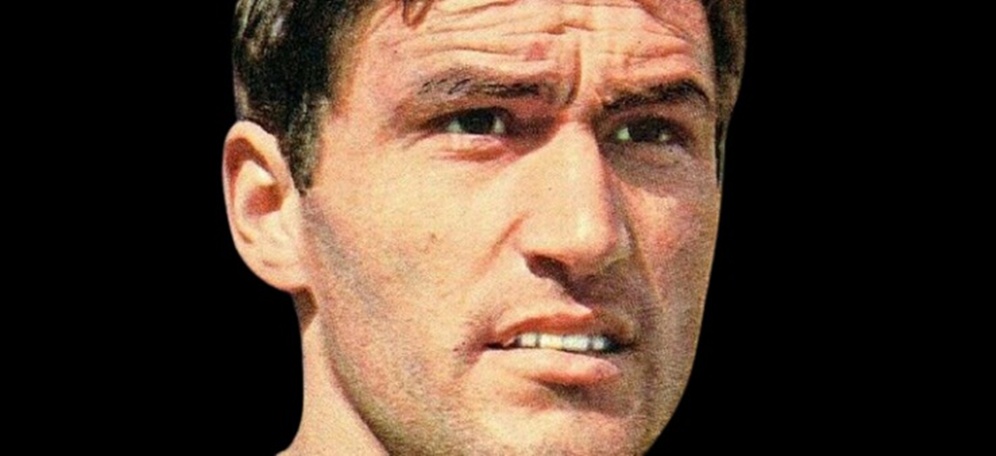
Tarcisio Burgnich, born 25 April 1939, Ruda, Friuli-Venezia Giulia, Italy.
PART ONE
Tarcisio Burgnich´s early steps into professional football with Udinese Calcio were marked by adaptation, by a gradual reshaping of his instincts, and by a willingness to embrace the harsher, less celebrated side of the game, where defenders earned respect through silence rather than spectacle.
Anyhow, his Serie A debut on 2 June 1959 could hardly have been more brutal, a 7–0 defeat away to AC Milan that exposed every weakness and demanded immediate growth, and yet it was precisely this kind of baptism that forged Burgnich’s mentality.
As a result, instead of retreating into doubt, he doubled down on his development, studying positioning, refining his tackling, and learning how to read the intentions of attackers before they could act, and those lessons would become the bedrock of everything that followed.
In comparison to the chaos of that debut, his subsequent performances began to show order, control, and an emerging authority, even if recognition remained limited, for defenders rarely command headlines unless they falter. Hence, when Juventus came calling, it represented not just a step up but a validation of his potential, a sign that his quiet work had not gone unnoticed by those who understood the game at its deepest level.
But life in Turin was not straightforward, as competition for places was fierce and opportunities had to be seized rather than offered, and Burgnich found himself learning as much from the bench as he did on the pitch. Accordingly, his contribution to the 1960–61 Serie A title-winning squad was modest in visibility but significant in experience, for he absorbed the culture of winning, the expectations, and the relentless demand for excellence that defined Juventus.
Alternatively, seeking greater responsibility and more consistent football, he moved to Palermo FC, a club where survival often took precedence over silverware, and where defenders were tested weekly against determined opposition. In fact, it was in Palermo’s colours that Burgnich began to truly assert himself, developing the tenacity and physical presence that would later earn him the nickname “La Roccia,” and establishing a reputation as a player who could not easily be beaten.
Then came the defining turn, the moment where potential met opportunity, as Inter Milan secured his signature in 1962, placing him under the command of the visionary Helenio Herrera. Indeed, Herrera’s system of catenaccio demanded absolute discipline, a collective commitment to defensive solidity combined with rapid counter-attacks, and Burgnich’s attributes made him an ideal component in this intricate machine.
Similarly, alongside Giacinto Facchetti, he formed a partnership that balanced aggression with elegance, restraint with ambition, and defence with attack, creating a dynamic that would define an era. Therefore, Inter’s rise to dominance in the mid-1960s was no accident, but rather the product of meticulous planning and flawless execution, with Burgnich serving as one of its most dependable architects.
In 1963, Inter claimed the Serie A title, and although others captured the imagination, Burgnich’s consistency ensured that the team’s defensive structure remained intact, allowing their attacking talents to flourish. On the other hand, European competition presented a different challenge, one that required composure under pressure and the ability to adapt to unfamiliar styles, yet Burgnich thrived in this environment.
In 1964, Inter defeated Real Madrid CF 3–1 in the European Cup final, a victory that announced their arrival on the grandest stage, and Burgnich’s defensive discipline played a crucial role in containing a formidable opponent. This triumph was followed by success in the Intercontinental Cup against Independiente, confirming Inter’s status as world champions and solidifying Burgnich’s growing reputation.
In addition, the 1965 European Cup victory over SL Benfica reinforced their dominance, and Burgnich’s performances continued to exemplify reliability and strength. Even so, football is rarely static, and maintaining such a high level required constant focus, yet Burgnich’s discipline ensured that he remained a cornerstone of the team through successive campaigns.
Undoubtedly, his nickname “La Roccia” was no exaggeration, for he combined physical power with tactical intelligence, creating a defender who was as difficult to bypass as he was to outthink.
PART TWO
Tarcisio Burgnich´s international career mirrored his club success, as he became a regular for the Italian national team following his debut in 1963 against the Soviet Union. Likewise, his earlier experience at the 1960 Olympics had prepared him for the pressures of representing his country, and he carried that experience into senior competition with confidence.
But the 1966 World Cup proved disappointing, with Italy’s early exit serving as a reminder that even the strongest defences can falter under unexpected pressure. Still, Burgnich remained steadfast, continuing to perform at a high level and contributing to Italy’s resurgence in the years that followed.
The 1968 European Championship on home soil provided the perfect stage for redemption, and Burgnich played a key role as Italy secured their first major international title. After all, success at international level requires not just talent but cohesion, and Burgnich’s understanding with his teammates ensured that Italy’s defence remained resolute throughout the tournament.
Then came the 1970 World Cup in Mexico, a tournament that would etch itself into football folklore, and Burgnich once again stood at the heart of Italy’s campaign. In particular, the semi-final against West Germany national football team became an epic encounter, a 4–3 win after extra time that showcased both drama and resilience.
Thus, Burgnich’s goal in that match, a rare strike from a defender, symbolized his ability to contribute in crucial moments, even when his primary duty lay at the back. Hence, Italy advanced to the final against Brazil national football team, where they faced a team led by Pelé, widely regarded as one of the greatest players in history. But despite their efforts, Italy were defeated 4–1, yet Burgnich’s performances throughout the tournament remained commendable, reinforcing his status as one of the game’s elite defenders.
Back at Inter, the passage of time began to shift the landscape, and although Burgnich remained a consistent presence, changes within the club signaled the end of an era. Eventually, in 1974, he departed after twelve seasons and 467 appearances, a move that marked the closing chapter of his time with the Nerazzurri.
Subsequently, he joined Napoli, where he adapted to a new role as a sweeper under Luís Vinício, demonstrating his versatility once more. In contrast to his earlier years, this role required greater positional awareness and leadership, and Burgnich embraced the challenge with characteristic determination.
In 1976, he helped Napoli secure the Coppa Italia and the Anglo-Italian League Cup, adding further honours to his distinguished career. Finally, in 1977, he retired from professional football, having made 494 Serie A appearances, a remarkable testament to his durability and consistency.
Afterwards, he moved into management, taking charge of several clubs, although his success in this arena never quite matched his achievements on the pitch. Equally, his legacy as a player remained untarnished, defined by discipline, intelligence, and an unwavering commitment to excellence.
To sum up, Tarcisio Burgnich was not a player who sought the spotlight, but rather one who ensured that others could shine, and in doing so he became indispensable to every team he served.