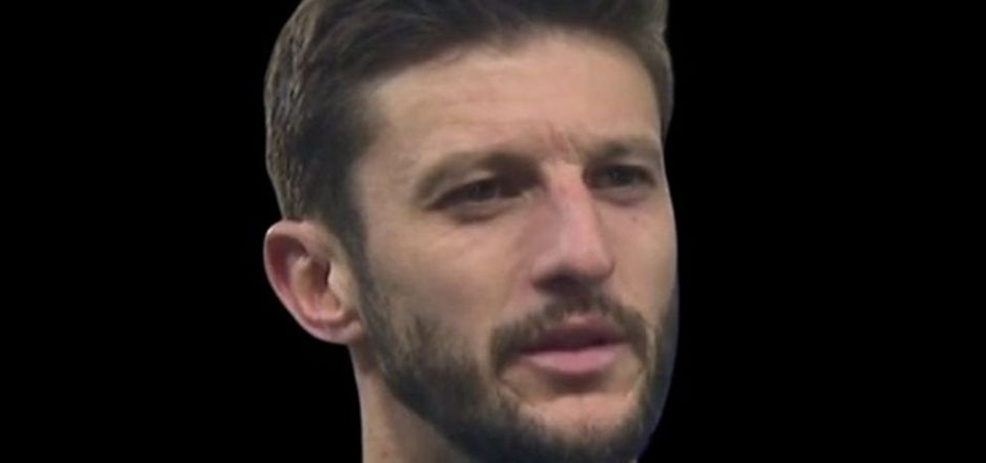
Adam David Lallana, 10 May 1988, St Albans, Hertfordshire, England.
PART ONE
Adam Lallana was never the most physically imposing footballer on any pitch he graced. He wasn’t the fastest, he wasn’t the tallest, and he certainly wasn’t the type to bully defenders into submission. What he possessed instead was something altogether rarer and more elusive, a football brain that operated at a frequency most players simply cannot reach, allied to a pair of feet that seemed to think for themselves. He was the kind of player who made you lean forward in your seat, because you never quite knew what he was going to do next, and more often than not, whatever he did was breath-taking.
His story begins at a modest youth setup at AFC Bournemouth. Spotted by a sharp-eyed talent scout from Southampton, the 12-year-old Lallana made the move to the Saints academy in September 2000, with Soton paying the not-inconsiderable sum of £3,000 compensation to Bournemouth, with further payments of £5,000 and £10,000 scheduled when he signed scholarship and professional contracts respectively. It was a modest transaction on paper, but those who watched the young boy train understood, even then, that Southampton had done rather well out of the deal.
The academy years were formative in the truest sense. Lallana was a serious young man about his football, the sort of apprentice who listened hard and absorbed everything, and he was involved in Southampton’s FA Youth Cup squads in both 2004–05 and 2005–06, campaigns that took the club to the final and semi-final respectively. These were not mere footnotes in a young man’s development; they were the crucible in which a senior professional was being forged, game by game and training session by session.
When he joined the first-team squad in July 2006, it represented a pivotal moment, and Lallana seized it with the confidence of someone who had long prepared for exactly this step. His debut came on 23 August 2006, in a 5–2 League Cup victory over Yeovil Town, and although it was only the opening chapter, the impression he made was sufficiently encouraging for Southampton to tie him down on a new contract in October of that year, keeping him at the club until December 2009.
Still, progress in football is rarely linear, and the path sometimes demands a detour. In October 2007, Lallana headed back to Bournemouth on loan for a month, a return to where his football journey had its roots, and a chance to breathe the air of regular first-team football. Yet it was back in Southampton’s colours, on 28 April 2008, that the moment every young footballer waits for finally arrived. Against West Bromwich Albion in a crucial Championship match, Lallana scored his first professional goal, a well-placed finish into the bottom left corner, and in that single moment, the boy became something measurably more than a promising academy graduate. He had announced himself as a footballer with a future worth watching.
The 2008–09 season saw him establish himself as a genuine first-team regular, and in August 2008 he signed a new three-year contract. Southampton, at this point, were a club in transition, navigating the turbulence of lower-league football after their catastrophic fall from the Premier League, but Lallana’s development continued in spite of the instability around him, or perhaps because of it.
March 2010 brought one of the more joyful afternoons in Southampton’s recent history, and Lallana was central to it. On 28 March, at Wembley, the Saints faced Carlisle United in the Football League Trophy final, and what followed was a display of composed, clinical authority that made it clear Southampton were ready to climb back up the football ladder.
Southampton seized control early, and from the spot, Rickie Lambert, that most dependable of marksmen, converted to give his side the lead, his 32nd goal of a remarkable season. Carlisle, to their credit, tried to respond, and there was a spell of genuine pressure from them, with Marc Bridge-Wilkinson and Ian Harte both going close. But the killer blow came before half-time. Michael Antonio’s long throw-in from the right was flicked on by Lambert, and there was Lallana, steaming in unmarked to head emphatically into the net and give his side a commanding two-goal cushion at the interval.
The second half told the same story, Southampton in control, Carlisle chasing shadows. Papa Waigo made it three, nodding into an empty net after goalkeeper Adam Collin was dispossessed by Antonio, and a smart left-footed finish from Antonio himself put the game firmly beyond Carlisle just before the hour. George Madine grabbed a late consolation for the men from the north, but the afternoon belonged comprehensively to Southampton and, in no small measure, to their increasingly irresistible number ten.
That 2009–10 season finished with Lallana scoring 20 goals in all competitions, his 20th coming on the final day against Southend United, making him the first Southampton midfielder to reach that landmark since the great Matt Le Tissier had managed 30 back in 1994–95. The comparison with Le Tissier, a man who remains a deity in the city of Southampton, was not made lightly, but it was not made carelessly either. Something genuinely special was developing on the south coast.
PART TWO
In January 2011, Lallana signed yet another new contract, this time running until the summer of 2015, and in the 2010–11 season he contributed 11 goals as Southampton won promotion from League One, finishing three points behind champions Brighton & Hove Albion. He earned a well-deserved place in the League One PFA Team of the Year; recognition from his peers that he was operating at a level that transcended his division.
But it was the Championship season that followed, 2011–12, in which Lallana truly caught the attention of the wider football world, and the manner in which he did it was spectacular from the first kick. On the opening day, Southampton beat Leeds United 3–1 at St Mary’s, a result that ended a 12-year hoodoo of the club failing to win their opening league match of the season, and Lallana scored. Five days later, on 16 August, he registered a brace in a quite astonishing 5–2 away victory at Ipswich Town, a result so comprehensive that the Portman Road faithful were booing their own players well before the final whistle.
It was at Ipswich that you could see, in vivid relief, what Lallana was becoming. His quick feet created the third goal for Connolly. Later in the match, after Ipswich had pulled it back to 3–2 and the game had briefly crackled with tension, it was Lallana who extinguished the home side’s hopes entirely, sent clear by a chip from substitute Morgan Schneiderlin to make it 4–2. He broke clear again in stoppage time to complete a stunning 5–2 rout, a performance that announced, unmistakably, that this midfield man was far too good for the Championship.
He finished that campaign with 13 goals, 11 in the league, and alongside Rickie Lambert and Kelvin Davis, was named in the Championship PFA Team of the Year. His 150th start for the club came in a 1–1 draw against south coast rivals Portsmouth, a milestone that meant something given how turbulent Southampton’s journey had been. He scored in the final league match of the season as Saints clinched their second consecutive promotion and, against all apparent probability, prepared themselves for life back in the Premier League.
The 2012–13 Premier League season was Southampton’s first back in the top division for seven years, and Lallana adjusted to the elevated demands of the league with a fluency that suggested he had always belonged there. He wore the captain’s armband on the opening day against Manchester City, the reigning champions no less, set up a goal in a 3–2 defeat, and demonstrated immediately that if the occasion was going to overawe anyone in white and red, it was not going to be him.
His first Premier League goal came in a 4–1 defeat away to West Ham United, and his second arrived on 25 November in a 2–0 home win over Newcastle United, opening the scoring with the kind of composed certainty that had become his calling card. The 50th goal of his career arrived in a 2–0 victory at Reading. And in April 2013, Southampton rewarded his commitment and quality with a new five-year contract, a statement of intent from a club that understood exactly what they had.
But the moment that defined the campaign, and perhaps the whole Southampton chapter of his career, arrived on 9 November 2013, against Hull City. Lallana received the ball 30 yards from goal, and what followed was the kind of individual brilliance that earns immortality. He dribbled his way past five Hull players, threading through traffic that would have daunted a far more experienced man, before sliding the ball past shot stopper Steve Harper with a finish as precise as it was inevitable. It won the club’s goal of the season award. It also, in all likelihood, won him a transfer.
By April 2014, he had been shortlisted for the PFA Players’ Player of the Year, losing out only to the exceptional Luis Suárez, who was at that moment perhaps the most feared striker on the planet, and in the same month he was named in the PFA Team of the Year alongside teammate Luke Shaw. Southampton’s Players’ Player of the Year and Fans’ Player of the Year followed in May, and the picture was complete: Adam Lallana had arrived as one of the finest midfielders in the English top flight.
Even before his Premier League exploits had reached their peak, Lallana had been cutting his international teeth. He had represented England at under-18 level, notably scoring on his debut against Slovenia, a debut that carried extra meaning given that it came 18 months after he had undergone an operation to correct an irregular heartbeat, a medical detail that adds a layer of quiet bravery to his whole story. Brief appearances for the under-19s and under-21s followed, but it was in September 2012 that the big moment arrived: a first call-up to the senior England squad, for a World Cup qualifier against Ukraine.
His actual debut for the Three Lions came on 15 November 2013, starting a friendly against Chile at Wembley. England lost 2–0, and yet Lallana’s performance drew broadly positive reviews, which, given the difficulty of making an impression in a losing team on international debut, said a great deal. Four days later he started again, in another defeat, this time against Germany, and he then collected his third cap in March 2014 in a 1–0 friendly win over Denmark, coming on as a substitute for Jack Wilshere and delivering a cross that Daniel Sturridge headed home for the only goal.
In May 2014, Lallana was named in Roy Hodgson’s 23-man squad for the FIFA World Cup in Brazil — recognition, at the highest level, that he was among the finest English players of his generation. His competitive debut came on 14 June, entering the fray for the final ten minutes of the group-stage opener against Italy in Manaus, in which England lost by a 1–2 margin. It was a baptism of fire in the Amazon heat, and while England’s tournament was a brief and unhappy one, Lallana himself emerged from it with his reputation intact and his future as an England player very much alive.
PART THREE
Prior to the 2014 World Cup, the whispers about Liverpool’s interest in Adam Lallana had grown steadily louder, and after prolonged negotiation, Southampton accepted a reported £25 million bid, a record sale for the club at the time, and Lallana joined Liverpool on 1 July 2014. It was, to put it plainly, a colossal fee for a player who had spent his whole career in Hampshire, and it placed an enormous amount of expectation on shoulders that had proved robust enough to carry their share of pressure before.
There was an ironic footnote to the transfer. Bournemouth, the club where Lallana had begun his journey as a youngster, had originally included a 25% sell-on clause in his contract when he joined Southampton. However, after some negotiation, they received £4 million from the deal, considerably less than the clause would have generated, but a significant sum for a club of their standing nonetheless.
The start of his Liverpool career was frustratingly delayed. Just days after signing, on 25 July, the club confirmed he had injured his knee during pre-season training in Boston, Massachusetts, ruling him out for six weeks and ensuring he missed Liverpool’s opening Premier League fixture, against, somewhat pointedly, his former club Southampton. When he finally made his debut, on 13 September, he started in a 1–0 home defeat to Aston Villa, being substituted after 61 minutes for Raheem Sterling. It was an inauspicious beginning, and there would be those, in those early uncertain weeks, who questioned whether the price tag was justified.
The answer came on 4 October, when Lallana opened a 2–1 home triumph against West Bromwich Albion, scoring seconds before half-time with the kind of incisive, intelligent run that had made him so devastating at Southampton. His second goal followed on 2 December, in a 3–1 victory away against Leicester City. But it was on 29 December, at Anfield against Swansea City, that Lallana served notice that he was settling into life in Merseyside magnificently.
Liverpool won 4–1, and Lallana scored twice in a match that ebbed and flowed with dramatic intensity. The first came in faintly bizarre circumstances — Ashley Williams’s back-pass cannoning off Lallana and into the net with 51 minutes played — but the second, just past the hour, was the real article. Philippe Coutinho’s superb flicked pass sent Lallana racing towards goal, and after feinting twice past defenders who simply could not read what he was going to do next, he slotted into the far corner with the composure of a man who had scored in front of packed stadiums his entire adult life.
Then, on 14 February 2015, Valentine’s Day, appropriately enough for a player supporters were beginning to genuinely adore, Lallana scored the winning goal in an FA Cup fifth-round tie against Crystal Palace. His first season at Liverpool was not without its inconsistencies, and the adjustment to the demands of a club of Liverpool’s scale was real and considerable, but the green shoots of something genuinely promising were visible by the spring.
The summer of 2015 brought a transformation that would alter the trajectory of Lallana’s career in ways he could barely have imagined. Jurgen Klopp arrived at Anfield in October of that year, and in the German manager’s high-energy, high-intensity, press-from-the-front philosophy, Lallana found an environment perfectly calibrated to bring out the very best in him. Klopp did not merely want technique; he wanted work-rate, intelligence, desire and the willingness to press relentlessly from the front, and Lallana, who had always possessed those qualities even when the spotlight was less bright, now deployed them in a system that made them count for everything.
On 17 September 2015, Lallana opened the scoring in Liverpool’s Europa League group-stage away match at Bordeaux, the Stade Chaban-Delmas bearing witness to a goal that suggested the new era at Anfield had a midfield heartbeat. The match ended 1–1, but the momentum was building. Two weeks later, on 1 October, he scored again in a 1–1 draw against Sion in the same competition, and the cumulative impression was of a player growing in authority and confidence under new management.
January 2016 provided one of the season’s most vivid moments. Coming on as a second-half substitute in a wild, careering 5–4 victory at Norwich City on 23 January, Lallana scored an injury-time winner to complete a remarkable comeback. Football in its most breathless, absurd and glorious form; and Lallana right at the centre of it. The very next month brought one of his rare low moments: coming off the bench in the League Cup final against Manchester City, he missed the decisive kick in a penalty shootout as Liverpool fell to defeat. It hurt, as missing a penalty always does, but what followed demonstrated the character the man possessed.
Just three days later, on 3 March 2016, he scored and assisted in a 3–0 home triumph over Manchester City, an act of redemptive sport that the script writers could not have improved upon. He found the net again against Newcastle United in April, a goal that briefly seemed to be sending Liverpool to victory, only for the match to end 2–2, and then, on 5 May, delivered one of the most significant goals of his Liverpool career, completing the scoring in a 3–1 second-leg win over Villarreal in the Europa League semi-final to send the Reds to the final in Basel. It was a goal that mattered, scored at a moment when it mattered, and it encapsulated everything that made Lallana such a crucial contributor in those Klopp years.
The 2016–17 season was, in purely statistical terms, arguably the finest of his Anfield career. He opened it by scoring Liverpool’s second goal in a breathless 4–3 opening-day win at Arsenal on 14 August 2016, chesting down Georginio Wijnaldum’s cross and slotting past Petr Cech to put the Reds ahead in a match that swung one way and then the other with barely a pause for breath, and which announced the new Liverpool campaign in the most dramatic fashion imaginable.
But the jewel in the crown of that season was his performance in the international arena. On 4 September 2016, in a World Cup qualifier away to Slovakia at the Anton Malatinský Stadium, Lallana produced a stoppage-time winner for England, the kind of goal that changes the mood of a whole campaign, the sort of late, crucial intervention that earns a footballer a place in supporters’ hearts for years. Two months later, on 11 November, he scored again for England in a 3–0 qualifying win over Scotland, with Gary Cahill and Daniel Sturridge completing the scoring. And in January 2017, to cap a calendar year of sustained excellence in a red shirt with three lions on it, Lallana was named the England Player of the Year for 2016. It was the crowning achievement of his international story, acknowledgement, at the most official level possible, that he had been the best English player of that particular twelve months.
On the club front, he finished 2016–17 with 42 appearances and 11 goals, among them a crucial strike on the final day of the season against Middlesbrough to secure Liverpool’s top-four finish and their Champions League place for the following year. He also signed a new long-term contract in February 2017, keeping him at the club until 2020. Everything seemed settled, sustained and on the rise.
And then, as so often happens in football careers of great promise, the body began to argue with the ambition. August 2017 saw Lallana suffer a long-term injury during the Audi Cup final against Atletico Madrid, a setback that kept him out until mid-November. When he finally returned, it was as an 89th-minute substitute against Chelsea in a 1–1 draw, barely enough time to stretch his legs and remind himself what a football pitch felt like beneath his feet. Then in March 2018, against Crystal Palace, he came on as a substitute and within minutes was back off again with yet another injury, this time keeping him out for weeks.
The cruelty of it was considerable, because Lallana was the sort of football player, technically creative, perpetually mobile, deeply intelligent about the game, for whom sustained fitness was the essential prerequisite of maximum impact. Without it, he could only offer glimpses, fragments, cameos of what he was capable of, and the increasingly fractured nature of his seasons became genuinely painful to observe for anyone who really understood his quality.
He made only 13 appearances in 2017–18, without scoring, and a similar tally of 13 league appearances in 2018–19, also without a goal. Yet he was on the bench on 1 June 2019, at the Wanda Metropolitano in Madrid, as Liverpool beat Tottenham Hotspur 2–0 to win the Champions League for the sixth time in the club’s history. It was, by any measure, the most significant night of his professional life, his first major honour, earned across six years of effort, setback, recovery and persistence.
October 2019 provided one of the more romantically satisfying moments of Lallana´s later career. On 20 October, the playmaker came off the substitutes´ bench at Old Trafford, and in the 85th minute, with Liverpool trailing Manchester United 1–0, he equalised to earn his side a 1–1 draw and keep their unbeaten league record intact. It was his first goal in over two years, and that it came at Old Trafford, in such circumstances, with such a weight of expectation, made it all the more luminous. The sense of a footballer stealing a decisive moment from the jaws of irrelevance was hard to shake.
The 2019–20 season was, of course, one of the strangest in football history. Interrupted and ultimately concluded behind closed doors as the COVID-19 pandemic swept across the world, it nonetheless ended with Liverpool lifting the Premier League title on 25 June 2020, their first league championship in 30 years. Lallana had been part of the squad throughout, even signing a short-term extension in June to remain at the club until the season’s completion. It was a fitting final gift from a club that had given him so much and received, despite the injuries and the frustrations, rather a lot in return. He departed at the end of the season with three major honours, the Champions League, the Premier League, and the UEFA Super Cup, and the undimmed affection of the Anfield crowd.
PART FOUR
In July 2020, Lallana joined Brighton & Hove Albion on a three-year contract, a free transfer that represented genuine value for a club under Graham Potter’s thoughtful stewardship. He was 32 years old, which in the currency of a footballer’s career is an age at which you expect to be managing minutes and making contributions in shorter bursts, but Lallana had always been most eloquent when he had the ball at his feet, and that eloquence had not deserted him.
His Brighton debut came on the opening day of the 2020–21 season, a 3–1 home defeat to Chelsea, though injury again disrupted his early months at the club. He came on against former champions Liverpool in November in a 1–1 draw but was quickly withdrawn again, another injury, another interruption. Yet the moments of quality continued to emerge when his body permitted. On 3 February 2021, he made his first return to Anfield as a Brighton player, and Albion won 1–0, their first league victory at Anfield since 1982. There was something delightfully poignant about that.
His first Brighton goal came on 6 March 2021, opening the scoring in a 2–1 home defeat to Leicester City, and in May of that year he contributed something even more dramatic: coming on as a substitute with Brighton two goals down against Manchester City, the reigning champions, he helped inspire a Seagulls comeback that ended in an improbable and magnificent 3–2 victory. It was exactly the kind of moment that reminds you why veteran players of intelligence and experience matter.
The autumn of 2021 brought another Anfield chapter. On 30 October, Lallana assisted Leandro Trossard’s equaliser as Brighton came from two goals down to draw 2–2 with Liverpool, his second appearance at Anfield since leaving. And when the final whistle blew, something rather beautiful occurred. Lallana walked to the Kop and applauded them, and in return, the Liverpool supporters chanted his name back at him, a spontaneous, affectionate tribute to a man they had loved and who clearly loved them in return. Football produces relatively few moments of genuine warmth between rival supporters; this was one of them.
He captained Brighton for the first time on Boxing Day 2021, in the absence of Lewis Dunk, guiding the side to a 2–0 home win over Brentford, and three days later led them again at Chelsea, where Danny Welbeck’s injury-time equaliser salvaged a 1–1 draw. He was, at 33, still a leader in the dressing room and on the pitch.
The 2022–23 season brought his second Brighton goal, 20 months after his first, in a 3–2 away victory at Wolverhampton Wanderers, and in the same match he set up Kaoru Mitoma’s first goal for the club, a moment that illustrated the generosity with which he had always approached his football: never merely accumulating for himself, always looking to elevate those around him.
In March 2023, he signed a one-year contract extension. But in May 2024, Lallana announced he would be leaving Brighton, citing family reasons as his primary motivation. After four years on the south coast, it was time to go home in a more fundamental sense than simply a return to a football club. On 14 June 2024, Adam Lallana returned to Southampton, the club where it had all properly begun, where his talent had been nurtured through the hard years in the lower leagues and the glorious Championship promotion seasons, signing a one-year contract on a free transfer. He was 36 years old, and the symmetry of the thing was not lost on anyone.
His second debut for the Saints came on 28 August 2024, in a 5–3 EFL Cup victory at Cardiff City, entering the fray in the 64th minute. The result was bright, the occasion was warm, and for those who had followed his career from the very beginning, who remembered the teenager in the 2005 FA Youth Cup squad, who recalled the first goal against West Brom in 2008, who had watched him dazzle at Hull and terrorise Ipswich and score stoppage-time winners for England in Bratislava, it felt like a fitting final act.
There were complications, though. Southampton struggled in the Premier League, and when manager Ivan Juric departed in April 2025, Lallana found himself stepping into a coaching capacity alongside interim manager Simon Rusk, a transition that hinted at the next phase of a life in football that clearly was not going to end at the final whistle of any particular match. And then, on 25 June 2025, came the announcement the football world had known was coming but was not entirely ready for nonetheless: Lallana retired from professional football.
It would be remiss, in any accounting of Lallana’s career, to give inadequate space to his service to the England national team. From his youth caps, including a debut goal for the under-18s against Slovenia, scored with particular courage given that it came just 18 months after surgery to correct an irregular heartbeat, through to his later, decisive contributions for the senior team, Lallana served his country with the same intelligence and commitment he brought to his clubs.
His first senior cap came on 15 November 2013, in a friendly against Chile at Wembley. England lost 2–0, but Lallana’s performance earned positive reviews, a decent enough return for a first outing at the highest level. He was named in the 23-man World Cup squad for Brazil 2014, making his competitive debut as a substitute in the 1–2 defeat to Italy in the oppressive Amazonian heat of Manaus, and if the tournament itself was a grim experience for English football, Lallana’s individual reputation suffered no lasting damage.
His nine minutes against Italy in Manaus would become, in retrospect, one of the most significant moments of England’s footballing narrative that summer, not because of what Lallana did, but because of what the experience of that whole World Cup meant for the national team’s approach and ambition in the years that followed. Lallana was part of the rebuilding, and his performances in the subsequent qualifying campaign, culminating in that stoppage-time winner in Slovakia in September 2016 and a goal in the 3–0 rout of Scotland two months later, confirmed that he was not merely along for the ride but was, during that particular period, the ride’s most important passenger.
The England Player of the Year award for 2016, received in January 2017, was the summit of his international achievement. He finished with a respectable number of caps, goals that mattered at crucial moments, and the knowledge that he had worn the Three Lions shirt with genuine pride and delivered genuine quality when called upon. In the often difficult and sometimes thankless context of international football, that is more than most footballers manage.