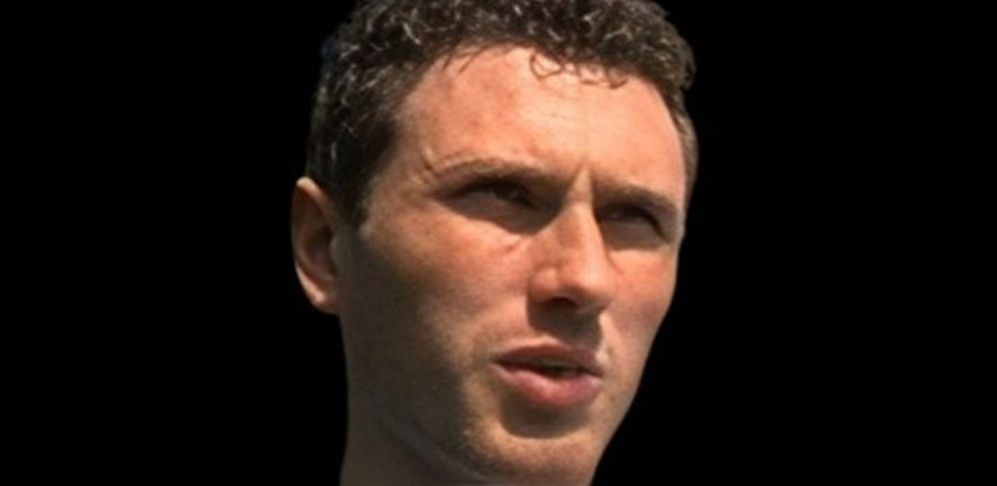
Corry John Evans, born 30 July 1990, Belfast, Northern Ireland.
PART ONE
Corry Evans grew up in a household already tuned to football’s rhythm, not least because his older brother Jonny Evans was carving out his own path in the game, and, as a result, the younger sibling found himself both inspired and challenged from an early age. However, unlike many players who drift between youth setups, Evans’ route was clearly defined, beginning with Greenisland Boys FC, a club that also produced talents like Craig Cathcart, and where the basics of positioning, tackling and composure were drilled into him.
When he secured his move to Manchester United, the entire Evans family relocated to England, and that shift, both geographical and emotional, marked the beginning of Corry’s immersion into elite football. Consequently, he joined the Manchester United youth system, initially as a schoolboy, and signed his trainee contract on his 16th birthday in July 2006, although by that point he was already making waves within the club’s youth ranks.
Evans demonstrated versatility early on, operating primarily in central midfield but also showing the intelligence required to drop into defence when needed, and that adaptability would become a defining feature of his career. Moreover, his development was steady rather than spectacular, and while he did not always dominate headlines, he quietly built a reputation for reliability.
Although he featured regularly for the Under-18s during the 2006–07 season, making 19 appearances and scoring once, his involvement with the reserve team was initially sporadic. He made his reserve debut as early as October 2005 against Oldham Athletic, a sign that the coaching staff saw potential beyond his years.
Evans began to establish himself more firmly within the reserve setup during the 2008–09 season, and he was even entrusted with the captain’s armband at times, highlighting the trust placed in him by then reserve manager Ole Gunnar Solskjaer. His role evolved, and he found himself increasingly deployed as a centre-back rather than a midfielder, a shift that would influence his future trajectory.
His performances did not go unnoticed, and towards the end of that season he was nominated for the Denzil Haroun Reserve Player of the Year award alongside James Chester and Tom Cleverley, although he ultimately missed out on the honour.
Breaking into Manchester United’s first team was a daunting prospect, given the strength and depth of the squad, and although Evans was named on the bench for the final Premier League game of the 2008–09 season against Hull City, opportunities remained limited.
He featured in the club’s pre-season tour of North America in July 2010, and while he was an unused substitute in the opening match against Celtic, he did get minutes against Philadelphia Union, sharing the pitch with his brother, a moment that carried both personal and professional significance.
The reality of senior football soon beckoned, and in October 2010 Evans joined Football League One Carlisle United on a one-month loan, seeking the kind of competitive experience that youth football could not provide. And even though the spell was brief, it offered a glimpse into the demands of the lower leagues, where physicality and tempo often outstrip finesse.
A more substantial opportunity arrived in January 2011, when he joined Championship outfit Hull City on loan, a move that would prove pivotal. Making his debut on 22 January 2011 against promotion rivals Reading at the Madejski Stadium, Evans seized the moment, capitalising on a mistake when Ian Harte’s weak header fell kindly, and he calmly tapped home six minutes into the second period. Harte turned from villain to hero, though, as he redeemed himself with late a penalty goal after Shane Long had been fouled.
That goal was not merely a moment of fortune but a reflection of his willingness to contribute in key moments, and his performances during the loan spell convinced Hull City to make the move permanent at the end of the season. And as a result, Evans left Manchester United without making a competitive first-team appearance, but with the foundation laid for a solid professional career.
PART TWO
If Evans’ time at Manchester United was about learning the trade, then his spell at Hull was about applying it under pressure, and, in many ways, proving that he belonged in the tough world of English league football.
Having made his move permanent in 2011, Evans quickly settled into life at Hull, and, in particular, his first full appearance arrived in a 1–0 Championship victory against Ipswich Town at Portman Road on 13 August 2011, a result that set a positive tone for the campaign. His ability to switch between midfield and defence also provided tactical flexibility, something that managers value highly in the Championship.
Evans began to show a knack for scoring important goals, and on 10 December 2011, in a match against Coventry City, he produced a composed finish, controlling a high cross before firing a low volley past Joe Murphy, a goal that highlighted his technical ability under pressure. His confidence grew, and he became a regular figure in the Hull side, contributing not only defensively but also in transitional play. Besides, his understanding of the game allowed him to read situations effectively, often breaking up opposition attacks before they developed.
He continued to contribute goals, and on 29 December 2012 he opened the scoring in a 2–0 Championship win against Leeds United at the KC Stadium, placing the ball neatly beyond Republic of Ireland goalkeeper Paddy Kenny, and once again demonstrating his composure in front of goal.
Come August 2013, and Evans made the move to Blackburn Rovers, seeking a new challenge and greater responsibility. Despite a groin injury delaying his debut, he soon made an impact, scoring his first goal for the Blue and Whites on 31 August 2013 with a superb long-range volley.
Hs time there was not without difficulties, though, and recurring injuries, particularly groin problems, disrupted his rhythm. In December 2016, during a Championship match against Brighton & Hove Albion at Ewood Park, he was forced off due to the issue, and by March 2017 it was confirmed that he would miss the remainder of the season following surgery.
Evans now faced one of the toughest periods of his career, dealing not only with physical rehabilitation but also with the mental challenge of returning to form. His resilience came to the fore, however, and he worked his way back into contention, continuing to serve Blackburn with determination.
His commitment to the club was recognised when he signed a contract extension in November 2015, keeping him at Ewood Park until 2019, and, as a result, he became a senior figure within the squad. Even so, the club’s fluctuating fortunes meant that stability was often elusive.
And by the time he departed Rovers at the end of the 2020–21 season, he had accumulated significant experience, and, more importantly, demonstrated the kind of professionalism that defines a reliable player. Then, in the summer of 2021, he stepped into a new role when he signed with Sunderland, and, in many ways, this move represented both a fresh start and a culmination of everything he had learned.
Signing a two-year deal, he was quickly appointed club captain by Lee Johnson on 4 August 2021, a decision that spoke volumes about his character and leadership qualities. Results were not always straightforward, however, and on 5 February 2022 Evans scored his first goal for Sunderland in a 2–1 loss to Doncaster Rovers, a moment that, despite the loss, highlighted his willingness to contribute in difficult circumstances.
As time progressed, the physical demands of the game started to take their toll, and by May 2024 it was announced that Evans would be released at the end of his contract. In October 2024, he moved on to Bradford Cityon a short-term deal, seeking to extend his playing career.
But his stay in Bradford was brief, and by January 2025 he had moved again, this time to Oldham Athletic. Unfortunately, his debut on 18 January 2025 against Aldershot Town ended prematurely due to injury, and that moment, in many ways, symbolised the closing stages of his playing days.
Meanwhile, on the international stage, Evans’ contributions to the Northern Ireland national football team were significant, beginning with his debut against Italy in June 2009, where he played 78 minutes in a heavy 3–0 defeat. Redemption came on 3 September 2010, however, when he scored the winning goal against Slovenia with his first touch, a moment of instinct and composure.
That night in Maribor, Nigel Worthington’s Northern Ireland side showed more urgency early on, closing down quickly and hustling the hosts, but they created little until half-time. Slovenia threatened more as the game wore on, yet they could not break through. Following 67 minutes of play, Worthington introduced Kyle Lafferty and Corry Evans for David Healy and Grant McCann.
Only three minutes later Craig Cathcart swung in a low cross to the far post, and Evans sneaked ahead of his marker to slot home from two yards. It was Northern Ireland’s first win in 11 matches, an unlikely smash-and-grab on the road that sent players and away supporters wild at the final whistle.
Evans was also part of the squad for UEFA Euro 2016, a historic tournament for Northern Ireland, although his involvement on the pitch was limited. In contrast, his role within the squad remained important, contributing to the collective spirit that carried the team to the knockout stages.
Not all international moments were positive, and during the 2018 World Cup qualifying play-off against Switzerland, Evans conceded a controversial handball penalty that proved decisive, a reminder of how fine the margins can be at the highest level.
Thus, when reflecting on Corry Evans’ career, one sees not a tale of headlines and glamour, but a story of persistence, adaptability and quiet leadership, and, in many ways, that is what makes it compelling.