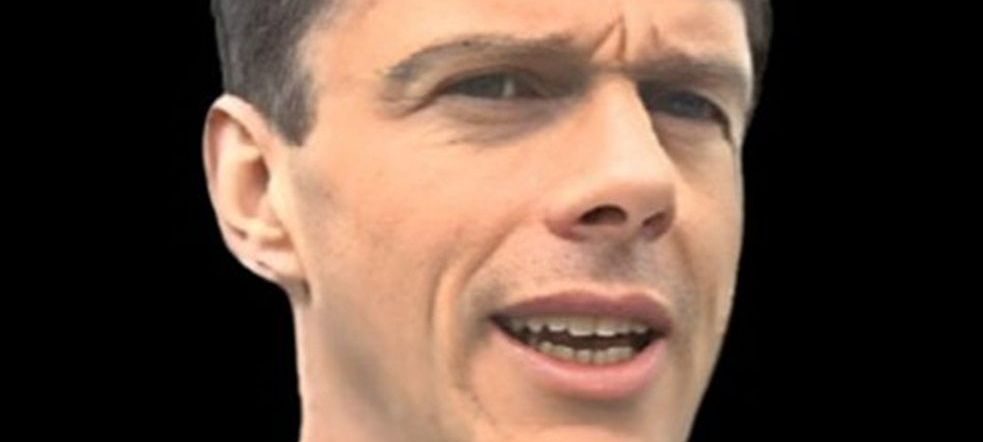
David Anthony O’Leary, born 2 May, 1958, Stoke Newington, Greater London, England.
PART ONE
Born in in Stoke Newington to an Irish father who was a die-hard Arsenal supporter working as a contractor, David O´Leary grew up with football in his blood and the Gunners in his heart. He had a brief trial at Manchester United that lasted just two weeks, yet he chose Arsenal as an apprentice in 1973, a decision his old man celebrated for years afterwards. That choice set the stage for one of the most remarkable careers at Highbury, where calm defending and quiet reliability became his trademarks.
O’Leary made his first-team debut at the age of 17 against Burnley in a goalless draw at Turf Moor on the opening day of the 1975-76 season. He slotted into a side struggling for confidence, and he racked up 30 appearances that campaign, but Arsenal could only finish 17th in the old First Division with little joy in the cups either. The mood around the club felt flat back then, yet the teenager showed poise beyond his years, reading the game with intelligence and rarely rushing into tackles. In the summer of 1976, Terry Neill arrived as manager after Bertie Mee stepped down, and this change helped steady the ship. O’Leary began to establish himself more firmly, and for the next decade he delivered consistency that few defenders could match, turning out for more than 40 matches in most seasons.
He missed significant time only once in that spell, during the 1980-81 campaign when an ankle injury restricted him to 27 games, but even then he returned stronger. His style stood out because he stayed composed under pressure, positioned himself cleverly to intercept passes, and brought an elegant touch that made defending look almost graceful rather than gritty. Alongside that, he contributed in big matches and built a reputation as someone teammates trusted completely. Undoubtedly, those early years laid the foundation, and his breakthrough moment arrived in 1979 when Arsenal lifted the FA Cup against Manchester United in one of the most dramatic finals Wembley has ever witnessed.
For more than 85 minutes that May afternoon in 1979, the contest looked routine, with Neill´s Arsenal holding a comfortable 2-0 lead at half-time courtesy of goals from Brian Talbot and Frank Stapleton. Liam Brady orchestrated play from midfield, and the Gunners seemed in control. Yet football has a habit of delivering chaos when you least expect it. In the 86th minute, Gordon McQueen pulled one back for the Old Trafford men from a set-piece, and just two minutes later Sammy McIlroy dribbled past a couple of Arsenal men to ram home a dramatic equaliser. Celebrations erupted among the United fans and players, who thought extra time was certain, but the drama refused to pause.
With virtually the last kick of normal time, Alan Sunderland slid in to convert a cross from Graham Rix and snatched a 3-2 victory for Arsenal. That match earned the nickname the “Five-minute Final” because three goals flew in during those frantic closing moments, and O’Leary played his part in a backline that held firm until the madness unfolded. It gave him his first major honour and etched his name into the history of Arsenal.
Building on that success, O’Leary featured in other cup finals during the late 1970s and early 1980s, although luck deserted the Gunners on those occasions. He played in the 1978 and 1980 FA Cup finals, both of which Arsenal lost, and he also lined up in the 1980 European Cup Winners’ Cup final, another defeat. Despite the disappointments, his performances earned recognition beyond north London, and in 1980 he received a nomination for the Ballon d’Or, a rare honour for a central defender at the time.
When Manchester United came calling again in 1981, O’Leary turned them down and signed a new four-year contract instead, a move that spoke volumes about his commitment to the club where he had grown up as a player. In 1982 he took on the captaincy at Highbury, though he handed the armband to Graham Rix after about 18 months. Throughout it all, he showed loyalty that ran deep.
O´Leary´s durability set records that still stand. He became the youngest Arsenal player to reach 100 and 200 first-team appearances, and he clocked up his 400th game while still only 26 years old. In November 1989 he surpassed George Armstrong’s long-standing club record of 621 matches, and by the end of his time at Highbury he had totalled 722 appearances, a figure that remains the all-time benchmark. Yet the later years brought competition. Under manager George Graham, the central defensive partnership of Tony Adams and Steve Bould took centre stage, and O’Leary found himself no longer an automatic starter. Nevertheless, he contributed more than 20 appearances as Arsenal clinched the 1988-89 First Division title in the most thrilling fashion possible, with a 2-0 victory at Anfield on the final day that ended Liverpool’s dominance. He collected another league winner’s medal in 1991, and in 1993 he picked up an FA Cup and League Cup double, although by then he operated mainly as a squad player and substitute.
He missed the 1988 League Cup final defeat to Luton Town because of an Achilles tendon rupture, an injury that would haunt him later too. Still, his professionalism never wavered, and remarkably he was never sent off in his entire active career, a testament to his discipline and reading of the game. After 19 years at Arsenal and a total of 722 outings with 14 goals across all competitions, he left Highbury in 1993 and joined Leeds United on a free transfer. The move north marked the start of the end of his playing days. He managed only 12 games for Leeds before another Achilles injury forced his retirement in 1995 at the age of 37. It was a quiet close to a footballing life defined by longevity, two league titles, an FA Cup triumph, and that unforgettable night in 1979.
On the international stage, O’Leary’s path with the Republic of Ireland proved eventful but patchy at times. He earned his first cap as a teenager in a 1-1 friendly draw to England on 8 September 1976. Yet his relationship with the national team hit bumps, particularly after Jack Charlton took charge and O’Leary found himself frozen out for two years. He missed Euro 88 after being left out of a squad for a tournament in Iceland in May 1986 and choosing not to cancel a family holiday when a late call-up arrived. He did not feature again until November 1988, but he still accumulated 68 caps overall. The pinnacle arrived at the 1990 World Cup in Italy, where Ireland reached the quarter-finals thanks to one of the most famous moments in Irish sporting history.
In the second-round clash against Romania, the match ended in a penalty shootout. Packie Bonner produced a crucial save to deny Daniel Timofte, and then O’Leary stepped forward to take the decisive fifth kick for Ireland. He kept his nerve, slotted the ball home, and sent Ireland through by a 5-4 margin. That strike has since been voted the greatest moment in Irish football history, and it captured the imagination of a nation watching back home. O’Leary’s cool head under the fiercest pressure defined him once more. Later, on 17 October 1990, he scored his only senior international goal in a 5-0 Euro 92 qualifier victory over Turkey.
He captained the side in his final appearance on 17 February 1993, a 2-1 friendly triumph against Wales at Tolka Park, although he picked up an injury in the opening minutes and had to withdraw. His brother Pierce also represented Ireland, winning seven caps, while nephew Ryan later opted for Scotland at youth level.
PART TWO
When his playing days finished, O’Leary stayed in the game and moved into coaching. He joined Leeds United as assistant to former Arsenal boss George Graham in September 1996 and spent two years in that role.
In Graham’s final match, a UEFA Cup tie away to C.S. Marítimo, O’Leary was sent off for arguing with officials, yet Leeds advanced on penalties. Graham departed for Tottenham, and O’Leary stepped up as caretaker on 3 October 1998. His first game brought a 1-0 home loss to Leicester City, managed by Martin O’Neill, who had been linked with the vacancy. After a goalless draw with Chelsea, chairman Peter Ridsdale handed O’Leary the job permanently on a two-and-a-half-year contract worth £600,000 a year, which ranked among the highest managerial salaries in England at the time.
O’Leary quickly stamped his mark on Leeds. At the end of the 1998-99 season the club finished fourth in the Premier League and qualified for the UEFA Cup. The following campaign delivered more excitement as they reached the UEFA Cup semi-finals, only to lose to Galatasaray amid tragic off-field violence that claimed the lives of two Leeds fans. Domestically they placed third and earned a Champions League spot, their first since the early 1990s. In August 2000, O’Leary signed a lucrative six-year deal worth around £10 million in total. His side then produced their finest hour in 2000-01 by storming to the Champions League semi-finals, where they eventually fell to Valencia, the eventual runners-up. Along the way they beat sides like AC Milan and Deportivo La Coruna, and the team played with energy and pressing intensity built around youthful talent.
O’Leary earned praise for promoting young players who injected freshness and fearlessness into the side. Names like Jonathan Woodgate, Lee Bowyer, Alan Smith, Harry Kewell, Stephen McPhail, Eirik Bakke, Ian Harte, and Danny Mills, signed for £4 million from Charlton, formed the core of an exciting outfit that relied on enthusiasm and high-tempo football. Leeds finished fourth in the Premier League that season but slipped just outside the expanded Champions League spots the next year. The 2001-02 campaign started brightly, with the team often topping the table in the first half and sitting top on New Year’s Day, yet a slump in the second half saw them end in fifth place and settle for another UEFA Cup campaign.
By June 2002, O’Leary had spent close to £100 million on transfers in less than four years without delivering silverware, although he had never finished outside the top five. Peter Ridsdale sacked him that summer and replaced him with Terry Venables. O’Leary always maintained he never wanted to leave Leeds, and his departure triggered a financial spiral for the club. Ridsdale had borrowed heavily against future gate receipts expecting continued European riches, but the sales of key players followed, and Leeds tumbled down the leagues, eventually reaching League One. The phrase “doing a Leeds” entered football parlance as a warning about over-ambition and financial mismanagement. O’Leary later settled a compensation claim with the club for £2 million plus legal costs in February 2003 after disputing the terms of his exit.
After the Leeds chapter closed, O’Leary linked up with Sunderland briefly in speculation but signed a three-year deal with Aston Villa on 21 May 2003. Villa had finished 16th under Graham Taylor, and O’Leary set an ambitious target of sixth place within two years. His first match brought a 2-1 defeat at newly promoted Portsmouth, and early signs suggested tough times ahead. In January 2004 he publicly criticised chairman Doug Ellis for insufficient transfer funds, noting that Villa had offloaded 13 players while bringing in only Sunderland pair Thomas Sørensen and Gavin McCann for a combined £4.5 million, forcing striker Dion Dublin to fill in at centre-back at times. Despite the constraints, Villa finished sixth that season, although they missed Europe because of other teams’ cup successes.
O’Leary strengthened the squad ahead of 2004-05 with arrivals including AC Milan’s Martin Laursen, Carlton Cole from Chelsea, and Mathieu Berson, yet the team ended 10th. Further signings like Milan Baroš and Kevin Phillips arrived the next summer, but results dipped sharply, and Villa scraped 16th in 2005-06, only two places above relegation. They remained the sole Midlands representative in the Premier League that year after local rivals Birmingham and West Brom went down. On 19 July 2006, Villa terminated O’Leary’s contract by mutual consent following an internal investigation into alleged squad comments about Ellis. Within days Ellis sold the club to Randy Lerner, and Martin O’Neill took over as manager.
O’Leary returned to management in July 2010 with Al-Ahli in the United Arab Emirates, where he signed World Cup-winning captain Fabio Cannavaro and made him skipper. The stint proved short and difficult, though. On 2 April 2011, Al-Ahli succumbed an embarrassing 5-1 defeat at the hands of Al Jazira, and by 22 April the club sacked him, with two years remaining on his three-year contract.
He took the case to FIFA and in May 2013 won $5.2 million in compensation after the players’ status committee ruled in his favour. Al-Ahli had claimed he abandoned his post, but earlier statements contradicted that.