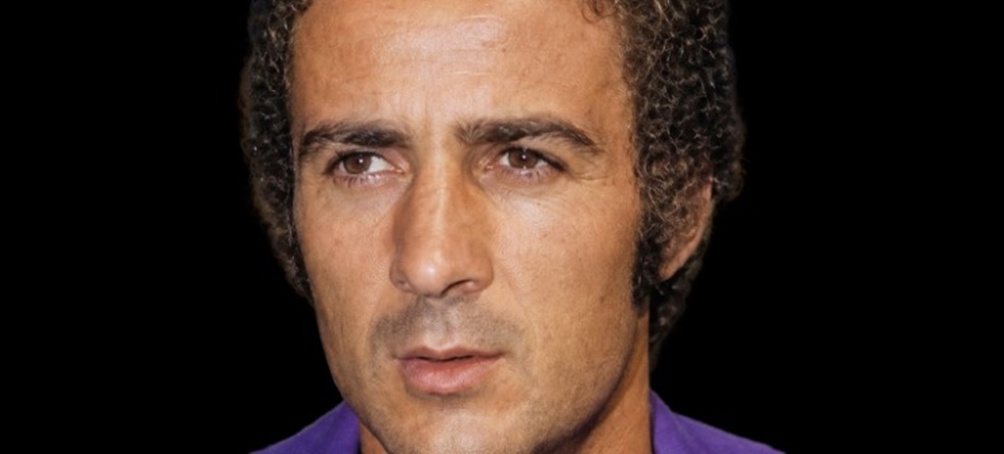
Luciano Chiarugi, born 13 January 1947, Ponsacco, Italy.
PART ONE
Luciano Chiarugi´s footballing days began close to home with Fiorentina, where the coaches soon discovered a left-sided attacker who was quick, technically gifted and wonderfully difficult to predict. He could stay wide and cross, cut inside to shoot, exchange positions with a centre-forward or suddenly run directly at a defender who had expected him to pass, and because his decisions were often made at full speed, opponents found him hard to read and his own coaches did not always find him much easier.
Fiorentina brought him through their youth system before introducing him to Serie A during the 1965–66 campaign, when he was still only nineteen, and his first four league appearances brought no goals but offered enough evidence of his pace and confidence to keep him around a strong senior side containing experienced men such as Kurt Hamrin, Giuseppe Brizi, Mario Bertini and the newly arrived Giancarlo De Sisti. Chiarugi was not yet an automatic choice, but he had already acquired the nickname that would follow him through Italian football—Cavallo Pazzo, the Mad Horse—and it fitted because he played with a restless energy, changing direction sharply, chasing opportunities that other players had not seen and refusing to move at a comfortable pace when there was a defender waiting to be attacked.
Although his league involvement was limited in that first season, Chiarugi was trusted when Fiorentina reached the Coppa Italia final against Catanzaro at Rome’s Stadio Olimpico on 19 May 1966, and he started as the Viola won 2–1 after extra time, with Hamrin putting them ahead, Giuseppe Marchioro equalising and Mario Bertini converting the penalty that decided the match. It was an important night for a young forward who had barely established himself in Serie A, while Fiorentina’s season became still better one month later when they defeated Jednota Trenčín 1–0 in Florence to win the Mitropa Cup, giving Chiarugi two medals before he had completed his first full year among the senior players. Yet early honours did not guarantee him an easy place, and during 1966–67 he had to turn promise into regular work, making 25 league appearances and scoring twice as Fiorentina finished fifth, while his willingness to take on defenders brought excitement but also irritation whenever one run ended with possession lost or one ambitious shot flew wide.
That was part of the bargain. Chiarugi was never designed to be a safe footballer who merely moved the ball sideways and waited for somebody else to make something happen, because his value lay in upsetting the shape of a match, forcing a full-back to turn and run and creating danger through movement that could look untidy until the opening suddenly appeared. He added another two league goals in 20 appearances during 1967–68, and although those figures were modest, he was learning how to combine his natural impatience with the tactical demands of Serie A, where space was guarded closely and adventurous forwards were often met by defenders who regarded subtlety as strictly optional.
The reward arrived in 1968–69, when Fiorentina appointed Bruno Pesaola and produced one of the finest seasons in the club’s history, losing only once in 30 league matches and winning their second Scudetto with 45 points, four clear of Cagliari and Milan. Pesaola had a balanced side built around goalkeeper Franco Superchi, the authority of Ugo Ferrante and Giuseppe Brizi in defence, the intelligence of De Sisti and Amarildo and the attacking movement of men such as Chiarugi and Maraschi, and within that structure the young winger was allowed to be bold without turning every possession into a personal adventure. He made 18 league appearances, 17 of them from the start, and scored seven goals, a substantial return in an Italian championship where Fiorentina won the title with only 38 goals, while his speed on the left gave the team a means of changing a patient passing move into a direct attack within seconds.
The championship was secured on 11 May 1969 with a 2–0 victory away to Juventus, where Chiarugi scored the opening goal before Maraschi added the second, and that was an appropriate contribution from a player whose unpredictability had become one of Pesaola’s most useful weapons. Fiorentina’s triumph was based on discipline, defensive strength and remarkable consistency, but it also required somebody prepared to disturb an organised opponent, and Chiarugi supplied that disturbance with his feints, sudden accelerations and fierce left-footed shooting. He was still only twenty-two when the title was won, yet he had already collected a Scudetto, a Coppa Italia and a Mitropa Cup with the club that had raised him. Fiorentina’s official history records the side finishing on 45 points, four ahead of Cagliari and Milan.
PART TWO
Chiarugi´s influence increased during 1969–70, when he played 27 Serie A matches and scored 12 goals, the best league return of his seven seasons in Florence, and his performances also took him into the Italian national side. Chiarugi made his debut against East Germany in Naples on 22 November 1969, in the final qualifying match for the 1970 World Cup, and he operated from the left as Italy won 3–0 through two goals from Luigi Riva and another from Roberto Boninsegna.
He helped create Riva’s second goal with a fast break and cross, but despite a lively first appearance he was not selected for the finals in Mexico, where Ferruccio Valcareggi preferred established attacking options and Italy reached the final before losing to Brazil. At club level, Fiorentina’s defence of the championship never developed into another title challenge, although Chiarugi’s goals showed that he was becoming more than a winger who decorated matches with dribbles, and he also appeared in the European Cup as the Viola reached the quarter-finals before losing 3–1 on aggregate to Celtic.
The following two seasons were less productive in Serie A, bringing five goals in 25 appearances in 1970–71 and another five in 20 during 1971–72, but his work in the Mitropa Cup remained notable and he finished as the competition’s leading scorer in 1971–72. By then, however, Fiorentina were changing, Giancarlo Antognoni was arriving as the young man around whom a new side would be built, and Chiarugi had reached the point where leaving Florence offered a fresh challenge rather than a retreat. His Fiorentina league record closed at 139 appearances and 33 goals, while his total across all competitions stood far higher, reflecting seven seasons in which he had grown from an academy prospect into one of Italy’s most recognisable attackers.
Milan signed him in the summer of 1972, and the move placed Chiarugi inside a dressing room led by Nereo Rocco and Gianni Rivera, two men with very different manners but an equally sharp understanding of how matches were won. Rocco demanded organisation, sacrifice and obedience, while Rivera saw possibilities before most players had recognised the problem, and Chiarugi had to fit his impulsive football into a side that expected every attacker to contribute to its structure. He did so without losing the qualities that made him dangerous. In his first league season at San Siro he hit 12 goals in 27 outings as Milan pushed Juventus all the way in the title race, and he developed a productive understanding with Rivera, Alberto Bigon, Romeo Benetti and Pierino Prati, although the campaign would ultimately be remembered in Milan for the championship that slipped away.
Four days after playing a European final in Greece, Rocco’s tired side went to Verona on 20 May 1973 needing victory to secure the Scudetto but lost 5–3, allowing Juventus to take the title with a late win against Roma. Chiarugi scored Milan’s second goal at Verona, reducing the deficit to 4–2, but the recovery came too late and the day entered club history as the Fatal Verona. Even so, that painful finish should not obscure how quickly he had settled after leaving Fiorentina, because he had become a decisive scorer as well as a crowd-pleasing winger, and his ability to strike from distance, deliver set-pieces and attack either side of a defender gave Milan several ways of opening a match.
PART THREE
Europe provided the great achievement of Luciano Chiarugi´s Milan years. Entering the 1972–73 Cup Winners’ Cup as Coppa Italia holders, the Rossoneri defeated Red Boys Differdange, Legia Warsaw, Spartak Moscow and Sparta Prague on their way to the final, while Chiarugi scored repeatedly and reached the deciding match as the competition’s most dangerous finisher. Leeds United awaited at the Kaftanzoglio Stadium in Thessaloniki on 16 May 1973, and Don Revie’s English side were physically strong, experienced and determined to make Milan uncomfortable, but only a few minutes had passed when Chiarugi won and then took a free-kick from the left side of the penalty area. His low shot travelled through the defensive wall, beat David Harvey and entered the net, giving Milan a lead they defended for the remainder of a severe, increasingly controversial contest.
Leeds pressed, Peter Lorimer struck the crossbar and the Greek crowd became furious with several decisions made by referee Christos Michas, but Milan survived and Chiarugi’s goal stood as the only one of the final. It was his seventh in the tournament, making him the Cup Winners’ Cup’s leading scorer, and while the match itself became surrounded by arguments over the refereeing, nothing altered the precision or importance of the early free-kick that won Milan’s second Cup Winners’ Cup. Four days later came the collapse in Verona, so celebration and disappointment were packed brutally close together, but Chiarugi still ended his first Milan season with European silverware and then added the Coppa Italia on 1 July, converting one of Milan’s penalties as Juventus were beaten in a shootout after a 1–1 draw. Milan’s official account credits Chiarugi with the early winning goal against Leeds and seven goals in the tournament.
The 1973–74 season brought 11 league goals in 28 matches, and Chiarugi again played a major part in Europe as Milan returned to the Cup Winners’ Cup final, although suspension kept him out of the decisive defeat against East Germany’s Magdeburg in Rotterdam. Earlier in the campaign he had scored the goal that gave Milan a 1–0 home victory over Ajax in the first leg of the European Super Cup, but the return in Amsterdam became a miserable night as Ajax won 6–0, one of the heaviest defeats experienced by that Milan side.
Even through such extremes, Chiarugi remained a substantial attacking figure, and on 26 February 1974 his club form earned him a second appearance for Italy, a goalless draw against West Germany at the Stadio Olimpico in Rome. His third and final cap came on 29 December 1974, another 0–0 friendly, this time against Bulgaria in Genoa, and three appearances without a goal represented a surprisingly small international return for a forward who had won the league with Fiorentina and decided a European final for Milan.
Competition for attacking places was fierce, while Chiarugi’s free-running approach did not always suit selectors who valued tactical certainty, but his limited international record remains one of the oddities of his playing years. Back at Milan, he supplied one of his most unusual goals on 24 November 1974 against Ascoli, scoring directly from a corner as the ball bent beyond goalkeeper Fabrizio Grassi and into the net. Chiarugi’s set-piece ability had already settled the final against Leeds, yet the goal against Ascoli showed another side of it: technique combined with nerve and the willingness to try something that might have looked foolish had it failed.
Milan were no longer the commanding European force of Rocco’s greatest period, and while Chiarugi scored seven league goals in 26 games in 1974–75 and repeated that total in 23 appearances during 1975–76, the side could not add another trophy. His four seasons in Milan produced 104 Serie A appearances and 37 goals, while his complete record for the club reached 155 matches and 60 goals in all competitions, figures that underline how much more he supplied than one celebrated free-kick. He had joined as an exciting but sometimes undisciplined winger, and he left as a proven scorer who had handled the demands of San Siro, the methods of Rocco and the expectations surrounding Rivera’s team.
PART FOUR
There was always another side to Chiarugi´s reputation, because defenders accused him of going to ground too easily and Italian football even produced the word chiarugismo to describe theatrical falling or an attempt to deceive the referee, but reducing him to that argument would ignore the genuine contact he invited by running at opponents and the considerable skill required to beat them. Chiarugi played close to risk: he risked losing the ball, risked the ambitious shot and risked the challenge by moving towards it rather than away, and the same approach that irritated some observers made him loved by supporters who wanted an attacker to create disorder. By 1976 he was twenty-nine and Milan were ready to alter their squad, so he moved south to Napoli in an exchange involving Giorgio Braglia, another attacker who had also been called Cavallo Pazzo. It was a fittingly unusual transfer, with one Mad Horse effectively traded for another.
Napoli had just won the 1975–76 Coppa Italia before Chiarugi arrived, so that trophy should not be placed among his honours, but he joined in time for the Anglo-Italian League Cup against Southampton, which matched the Italian and English domestic cup winners over two legs. Napoli lost 1–0 at The Dell on 21 September 1976 but overwhelmed Southampton 4–0 at the Stadio San Paolo on 14 November, completing a 4–1 aggregate victory and giving Chiarugi another international club honour only a few months after leaving Milan. His first season also took Napoli into the Cup Winners’ Cup, where they eliminated Bodø/Glimt, APOEL and Śląsk Wrocław before meeting Anderlecht in the semi-finals, and although Napoli won the home leg 1–0, a 2–0 defeat in Brussels ended their attempt to reach the final.
His two seasons in Naples produced 48 appearances and 10 goals in all competitions, including seven hits in 42 Serie A matches, and while he was no longer scoring as heavily as he had in Milan, he still offered width, invention and experience to a side containing Giuseppe Bruscolotti, Antonio Juliano, Giuseppe Savoldi and goalkeeper Luciano Castellini. The San Paolo crowd admired bold attackers but demanded commitment, and Chiarugi’s willingness to run, chase and confront defenders suited that environment, even if Napoli’s league positions—seventh in the 1976–77 campaign and sixth in the 1977–78 season—fell short of a title challenge. When he left Naples in 1978 he was thirty-one, and rather than remaining in Serie A as a decreasingly used squad player, he accepted a move to Sampdoria in Serie B, beginning the long final part of his playing life.
Sampdoria were attempting to recover after relegation in 1977, but the 1978–79 campaign ended with them ninth in Serie B, and Chiarugi’s five goals in 30 league appearances could not push the Genoese club into the promotion contest. Yet those figures showed that he was still physically capable of playing regularly, and Bologna returned him to Serie A in 1979–80, where he amassed 13 appearances and registered three goals. His first league match for Bologna, against Catanzaro on 30 September 1979, brought a goal, and there was something neatly circular about scoring against the club he had faced in the 1966 Coppa Italia final more than thirteen years earlier.
Bologna were involved in a difficult campaign overshadowed by the developing betting scandal in Italian football, but on the field they accumulated enough points to finish safely in mid-table before receiving a five-point penalty, and Chiarugi’s role, although limited, showed that his left foot and eye for an opening could still trouble top-flight defenders. That season proved to be his last in Serie A. Across his spells with Fiorentina, Milan, Napoli and Bologna, he recorded 298 league appearances and 80 goals in the top division, a strong return for a footballer often described simply as a winger, and those numbers also covered a period when Italian football was defensively severe, tactical space was narrow and attackers received little protection. He could have stopped there with his reputation secure, but stopping was not in his nature, and he instead dropped back into Serie B with Rimini for the 1980–81 campaign, making 13 appearances and finding the back of the net once as the club struggled near the bottom of the division.
Chiarugi´s final years took him through the smaller grounds of Tuscany, far from the European nights of Milan and the championship celebrations of Florence, but he continued to play because football still mattered more than status. Rondinella, a modest Florence club, signed him for the 1981–82 season, and Chiarugi responded with seven goals in 22 league matches, lending experience and drawing power to a side competing in Serie C2. He then joined forces with Massese in 1982 and remained there for three seasons, scoring regularly during the first two before his appearances became more limited in 1984–85, and it was after that campaign, at the age of thirty-eight, that his active playing days effectively ended.
Luciano Chiarugi later returned to Fiorentina as a coach and youth-team figure, and on three occasions—1993, 2001 and 2002—he briefly took charge of the senior side during periods of managerial change, before later managing Poggibonsi in Serie C2. Those appointments kept him connected to Tuscan football, but the strongest picture remains the player in full movement: shirt outside his shorts, body leaning towards the defender, left foot ready and no guarantee of what would happen next.