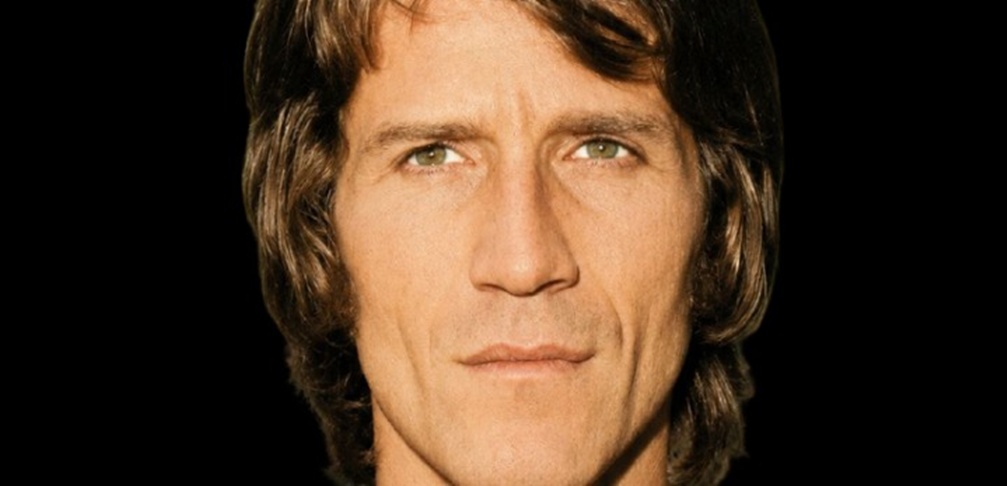
Giulio Zignoli, born 19 April 1946, Verona, Italy.
PART ONE
Giulio Zignoli was born and raised in Verona, and although his name would eventually be attached to one of the greatest surprises in Italian football and to a run of major honours with Milan, his progress began without noise or special treatment. He developed in Milan’s youth system at a time when a young defender had to learn his work properly before he could expect a place among the established men, and there was little value in keeping him on the fringes of the first team when hard senior football could teach him far more.
Thus, in 1966, at the age of 20, he was sent south to Taranto, then competing in Serie C, where the football was demanding, the grounds were unforgiving and defenders were tested as much by the physical pressure of the game as by the ability of the opposing forwards. Zignoli responded by playing 34 league matches during the 1966–67 campaign, missing very little of the season and scoring the only league goal of his professional years, while Taranto finished third in their section with 38 points. It was a useful beginning because he was not being protected by a powerful club or eased into occasional matches; he was playing week after week, learning when to advance, when to hold his position and how to deal with forwards who regarded a young full-back as someone to be examined immediately. Milan still held his registration, but Taranto gave him the practical education, and by the end of that first season he had shown that he was ready for a stronger division.
Bari offered that next step in the summer of 1967, having just gained promotion from Serie C, and Zignoli again found himself in Puglia, although this time he was required to operate in Serie B against sharper attacks and more experienced opponents. He accumulated 38 league appearances in the 1967–68 campaign, an impressive total for a 21-year-old defender entering the second level for the first time, and Bari did far more than struggle for survival, finishing fourth with 47 points won and putting together a season that confirmed the strength of the side which had come up. Zignoli did not score, nor was that the chief purpose of his place in the team, but his value rested in regularity: he could defend the left side, retain his concentration and provide the same dependable performance from one Sunday to the next.
Besides, 72 league appearances across two seasons at Taranto and Bari had changed his standing completely, for he was no longer merely a Milan youngster being lent out in the hope that he might develop; he had proved himself in two demanding competitions and had done so while scarcely missing a match. Italian football was still shaped by tight marking, tactical patience and a widespread belief that a defender’s first responsibility was to stop trouble before it became visible, and Zignoli fitted those requirements. Cagliari, building a side capable of challenging the northern powers, saw enough to take him to Sardinia in 1968, and that move carried him into Serie A at precisely the moment when the club was approaching its finest period.
His first season at Cagliari brought only one league appearance, but the lack of immediate football should not be mistaken for failure, because the side already possessed a well-organised defence and was pushing close to the championship. Under Manlio Scopigno, Cagliari finished second in 1968–69, four points behind Fiorentina, and Zignoli spent much of the campaign watching, training and adjusting to a standard in which one poor decision could settle a match. He had been accustomed to playing almost every week, so patience was required, but his chance came properly in 1969–70 when the balance of the team shifted and he established himself at left-back, wearing the number three shirt in 25 league matches.
Cagliari had fine footballers throughout the side: Enrico Albertosi was an international-class goalkeeper, Mario Martiradonna, Comunardo Niccolai and Giuseppe Tomasini supplied defensive strength, Pierluigi Cera brought intelligence and authority, while Nené and Angelo Domenghini supported an attack led by the now legendary Luigi Riva, the most feared goalscorer in Italy. Yet the side’s achievement was not built around Riva alone, for Scopigno had created a unit in which every man understood the ground that he had to cover, and Zignoli’s disciplined work on the left was part of that structure. He was not a tall defender at roughly 1.75 metres, but he was strong, resistant and difficult to unsettle, and he could move forward when the opening appeared without forgetting the work waiting behind him.
Cagliari’s title was won through an extraordinary combination of Riva’s goals and a defence that conceded only 11 times in 30 league matches, a figure which remains the clearest measure of how difficult they were to break down. They lost only two games, gathered 45 points under the two-points-for-a-win system and finished four points ahead of Internazionale, but figures alone cannot fully explain the scale of the result, because the championship had never previously left mainland Italy. Juventus, Milan and Inter were accustomed to possessing the money, the depth and the attention, while Cagliari carried the expectations of an island which had waited a long time to be treated as more than an outpost of the national game.
Zignoli played his part without attracting the headlines reserved for Riva, and that was the nature of his football: he stayed close to his man, closed the route towards goal and supplied the covering run that allowed someone else to attack. The decisive moment arrived on 12 April 1970, when Cagliari defeated Bari 2–0 at the Amsicora through goals from Riva and Sergio Gori, and results elsewhere meant that the title was secure with two matches still to play. For Zignoli, who had been playing for Bari only two years earlier, the change was remarkable — from Serie B football in Puglia to a starting place in Italy’s champion side — but it had been earned through steady improvement rather than sudden promotion. He left Cagliari after 26 league appearances across two seasons, yet those 25 matches in the championship year gave him a permanent place in the club’s history.
Milan brought Zignoli back in the summer of 1970, although he returned as a proven Serie A defender and a champion rather than the young player they had once sent to Taranto. Competition was severe, with Karl-Heinz Schnellinger, Angelo Anquilletti, Roberto Rosato and Giovanni Trapattoni among the experienced defensive men available, but Zignoli was not there merely to complete the squad. He could play at left-back, understood a closely organised defensive system and had the stamina to meet the demands of league, cup and European football, while Nereo Rocco valued men who could be trusted with a precise job. Milan finished second in Serie A in 1970–71, four points behind Inter, and also reached the concluding stages of the Coppa Italia, where the competition was decided through a final group followed by a play-off against Torino.
Zignoli started that play-off in Genoa on 27 June 1971, a match which remained goalless through 120 minutes before Torino won 5–3 in the penalty shoot-out. It was a disappointing finish, but Milan were forming a side that would repeatedly challenge for honours, and Zignoli was becoming a useful and increasingly familiar part of it. The pattern continued in 1971–72 as Milan again finished second in the league, this time one point behind Juventus after losing only three of their 30 matches, but the Coppa Italia supplied the trophy that had escaped them a year earlier and gave Zignoli his first major success since leaving Sardinia.
PART TWO
The 1972 Coppa Italia final was played against Napoli at Rome’s Stadio Olimpico on 5 July, and Giulio Zignoli started at left-back as Milan won the match by a comfortable 2–0 margin, with Roberto Rosato scoring in the first half before Gianni Rivera converted a penalty after the interval. It was a controlled victory and a proper reward for a demanding season, but Milan were about to enter an even more intense campaign in which three competitions remained alive almost until the end. During 1972–73 they scored freely in Serie A, with Rivera directing the football and Luciano Chiarugi providing pace, invention and goals from the left, while Romeo Benetti supplied strength in midfield and Alberto Bigon worked through the centre.
Zignoli’s responsibility was different and no less important, for Milan’s attacking ambition required defenders who recognised danger early and did not become careless when the team was pressing forward. He appeared regularly in the European Cup Winners’ Cup as Rocco’s side eliminated Red Boys Differdange, Legia Warsaw, Spartak Moscow and Sparta Prague, although the route was not as comfortable as the list of victories might suggest. Legia forced Milan into extra time at San Siro before Chiarugi settled the second-round tie, while the later rounds demanded concentration because away goals or one defensive lapse could overturn months of work. Milan reached the final after beating Sparta Prague 1–0 in each leg of the semi-final, and Leeds United awaited them in Thessaloniki on 16 May 1973.
Leeds were experienced, powerful and exceptionally difficult opponents, with Don Revie selecting men such as Paul Reaney, Norman Hunter, Paul Madeley, Peter Lorimer, Joe Jordan and Mick Jones, but Milan struck almost immediately at the Kaftanzoglio Stadium. Chiarugi won a free-kick near the edge of the penalty area and drove the ball beyond David Harvey after three minutes, giving the Italians a 1–0 lead which they then had to protect for almost the entire match. Zignoli started in his customary number three shirt alongside Giuseppe Sabadini, Angelo Anquilletti, Maurizio Turone and Rosato, with Villiam Vecchi in goal, and the defenders came under sustained pressure as Leeds searched for an equaliser.
The match later became notorious because of the performance of Greek referee Christos Michas and the anger of the Leeds players and supporters, but Zignoli’s task remained immediate and practical: close his side, compete for loose balls and prevent Lorimer, Jordan or Jones from finding the opening that would change the final. Milan held on, Chiarugi’s early goal remained the only one and Zignoli became a European trophy winner. There was little time to enjoy it, however, because four days later Milan faced Verona on the last afternoon of the Serie A season needing a result to secure the title. They lost 5–3, Juventus won at Roma and Milan finished second by one point, making it their third successive runners-up finish and turning what might have been a celebrated double into one of the club’s most painful missed opportunities.
Even so, the season was not finished, and the Coppa Italia offered Milan one final chance to place another trophy beside the Cup Winners’ Cup. Zignoli played through the concluding group stage and started the final against Juventus at the Stadio Olimpico on 1 July 1973, when the champions of Italy took the lead through Roberto Bettega before Benetti equalised from the penalty spot. The score remained 1–1 after extra time, but Milan prevailed 5–2 in the shoot-out, with Vecchi making the decisive contribution in goal, and Zignoli ended the campaign with two winners’ medals gained in the space of six and a half weeks.
Those matches in Thessaloniki and Rome showed why Rocco continued to use him: he did not need to dominate possession or turn the match into a personal exhibition, because his usefulness lay in carrying out difficult work with concentration. Milan challenged again in the 1973–74 season, but the side was no longer moving with quite the same force, and the defence of the Cup Winners’ Cup ended painfully in the final against Magdeburg at Feyenoord Stadium in Rotterdam. Zignoli was not in the starting side for the 2–0 defeat, and his league involvement had also begun to decrease as Milan changed personnel and attempted to renew an ageing group. Across his first four campaigns back at the club he made 56 Serie A appearances, while his participation in the cups raised his importance far beyond that league total.
Regular football was again the priority in 1974, and Zignoli moved to Varese for the 1974–75 season. The supplied squad was not strong enough to remain in Serie A, but he played 24 league matches and brought experience to a defence operating under constant pressure as results slipped away. Varese finished 16th and last, winning only three of their 30 fixtures and conceding 50 goals, so relegation was confirmed rather than narrowly avoided, but Zignoli’s willingness to play through such a difficult campaign was consistent with everything that he had done since Taranto.
He returned to Milan for 1975–76, although by then his place had almost disappeared, and he made only two further Serie A appearances. His complete league record for Milan stood at 58 matches without a goal, but the club recorded 110 official appearances across all competitions during his five active seasons in the senior squad, a total that reflects how frequently Rocco called upon him in Coppa Italia and European matches. In the summer of 1976, now 30, he dropped into Serie C with Seregno and appeared nine times during 1976–77, again without scoring. That final season brought him back to the sort of unglamorous football in which his senior life had started, and once it ended he stopped playing professionally with 190 league appearances and one goal: 34 matches for Taranto, 38 for Bari, 26 for Cagliari, 58 for Milan, 24 for Varese and nine for Seregno. Football did not disappear from his life, and in April 2010 he returned to Cagliari with Riva, Albertosi, Domenghini, Nené and other members of the championship side to mark the 40th anniversary of the club’s greatest campaign.