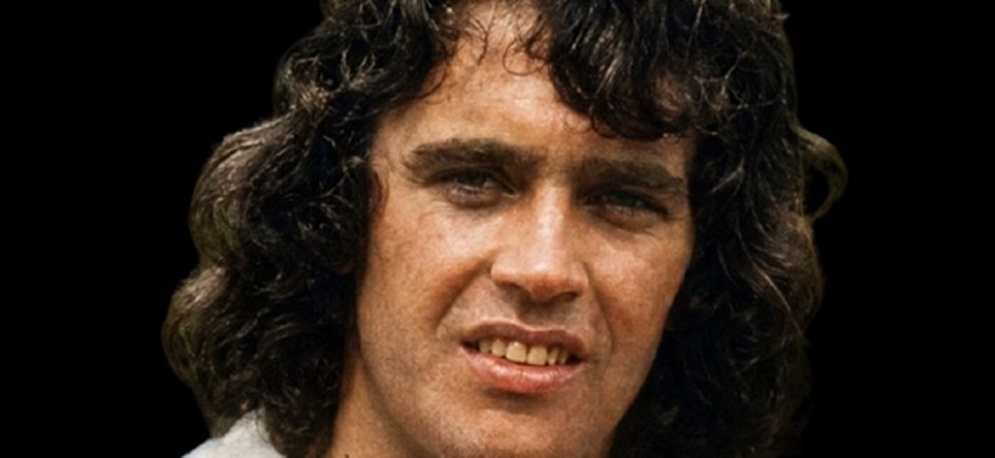
John Stuart Parsons, born 10 December 1950, Cardiff, Wales.
PART ONE
Cardiff born John Parsons played local football through the 1950s, and by the turn of the following decade he was good enough to be picked for Cardiff Boys, turning out for the representative side in the 1960–61 season in company with Terry Yorath. Scouts noticed him in school and youth football and the pathway into Cardiff City’s junior ranks felt almost inevitable. He trained alongside the club’s brightest young hopefuls, sharpened his game in reserve and trial matches through the mid-1960s, and did what every forward with half an eye on the first team must do: he scored goals, and kept scoring them, until the club could no longer ignore him.
Cardiff City had come from unlikely beginnings, founded in 1899 as Riverside AFC, a winter pastime dreamed up to keep the summer cricketers of the Riverside club together and in shape once the bats had been put away. They played friendlies that first season against local opposition at Sophia Gardens, then joined the Cardiff & District League in 1900 for a first taste of competitive football, and when King Edward VII granted the city its royal status in 1905 the club tried, and failed, to have themselves renamed Cardiff City on the grounds that the South Wales and Monmouthshire Football Association didn’t yet rate them highly enough. So they went and joined the South Wales League in 1907 instead and got their new name the following year.
Even then the climb was slow: they had to turn down a place in the newly formed Southern League Second Division because Sophia Gardens simply wasn’t fit for it, and spent two seasons playing exhibition fixtures against the likes of Middlesbrough, Bristol City and Crystal Palace, testing the water in towns across South Wales to see whether anybody would actually pay to watch them. Enough people did. Ninian Park was built and opened in 1910, the club turned professional the same year, and a season later they made their first-ever signing, Jack Evans, plucked from fellow Welsh side Cwmparc.
Cardiff City handed Parsons a professional contract in 1968, when he was seventeen, and for a while it looked as though the road ahead might be a short and straight one. But football rarely works that way for a young forward at a club that already has options, and Cardiff had options in abundance. Brian Clark, John Toshack and Alan Warboys all stood between Parsons and a regular place in the senior side, and no matter how prolific he was in the reserves — and by most accounts he was prolific — there simply wasn’t room at the top table. So he waited. And waited some more. Two and a half years passed between his signing and his first taste of first-team football, an eternity for a young player desperate to prove himself, and it would have broken lesser men. Parsons stuck at it, though, training on and trusting that his chance would eventually come.
It arrived on 6 February 1971, when he was sent on as a substitute against Oxford United at Ninian Park. What happened next read like something from the pages of a boy’s comic: Parsons came off the bench and scored, and Cardiff won 1–0, the goal that separated the sides bearing his name. A week later, on 13 February, he was named among the substitutes again, this time away at Sunderland, and once more he found the net as Cardiff ran out 4–0 winners on Wearside. Two substitute appearances, two matches on the scoresheet — it was the kind of impact that gets a player noticed, and it earned him a run in the starting eleven soon afterwards.
Yet for all the promise of that fortnight in February, Parsons never did manage to force his way into becoming a first-team fixture. Between 1968 and 1973 he made just fifteen league appearances for his hometown club, scoring six goals along the way, numbers that tell the story of a player good enough to make an instant impression but never quite good enough, or perhaps never quite lucky enough with timing, to dislodge the forwards ahead of him. In the middle of the 1972-73 campaign the inevitable happened, and Parsons left Ninian Park for Bournemouth on a transfer that closed the book on his Cardiff City years.
Bournemouth in the early 1970s were a Third Division outfit with modest ambitions, and Parsons arrived hoping to finally get the sustained run of games that had eluded him at Cardiff. Instead, injuries got in the way, and got in the way repeatedly, restricting him to just eight league outings and a single goal across two seasons on the south coast. It was a frustrating, stop-start spell, the sort that can quietly derail a young forward’s prospects even as the calendar keeps turning and the games keep passing him by. Whatever ambitions Parsons carried down to Dean Court with him, persistent physical setbacks meant Bournemouth never saw the best of him, and by March 1975 he was on the move again, heading back across the Severn to Wales and to Newport County.
PART TWO
If Cardiff City had been a tale of promise held in check and Bournemouth a tale of promise undone by injury, then Newport County finally gave Parsons the stage he had been waiting for since he was a teenager. Freed from the burden of competing with the likes of Toshack and Clark, and freed too from whatever run of bad luck had dogged him on the coast, Parsons settled into the Fourth Division side and became precisely what every lower-league club craves: a reliable, regular goalscorer. Over two seasons at Somerton Park, between 1975 and 1977, he made sixty league appearances and struck twenty-three goals, numbers that dwarfed anything he had managed at either of his previous clubs and stood as proof, if any were needed, that all he had ever required was a manager willing to build around him rather than around three other forwards first.
His first season set the tone. Parsons was Newport’s leading scorer by late November 1975, having already found the net seven times, and he kept the goals flowing as the campaign wore on. One afternoon in particular stood out amid the grind of a relegation battle: on 25 October 1975, Newport travelled to St James Park to face Exeter City and found themselves three goals down, the sort of scoreline that usually signals a long, miserable coach journey home. Parsons had other ideas. He struck twice in the second half of the tie — a scrambled tap-in after a defensive mix-up, followed soon after by a header from a cross — dragging his side back from the brink and helping secure a 3–3 draw that felt, in the context of relegation-threatened Newport’s campaign, almost like a victory. It was the sort of afternoon supporters still talk about decades later, not because it settled anything grand, but because it showed exactly the kind of forward Parsons had become: sharp in the box, alert to half-chances, and never willing to accept that a game was already lost.
Newport finished that season in twenty-second place, saved from relegation only through re-election rather than results, a reminder of just how precarious life could be at the foot of the Football League in the mid-1970s. Parsons, though, had done his job and more, and he carried his form into the following campaign. In 1976–77 Newport settled into a steadier mid-table position, finishing twentieth with thirty-eight points from forty-six matches, and Parsons continued to be a central figure in whatever attacking threat the side could muster. But by the end of that second season, with 1977 rolling around, his time in the Football League came to a close. He departed Newport at the season’s end, and with him went his last involvement in league football proper.
Retirement from the professional game rarely means retirement from football itself, not for men who have spent their whole lives around it, and Parsons was no exception. He dropped down into non-league football after leaving Newport, turning out in regional Welsh competitions including the Cardiff Combination, still lacing up his boots for the love of the game rather than for a first-team place or a transfer fee. That spell in the lower reaches of Welsh football carried him into the early 1980s, by which point he was approaching thirty.
For all his industry at club level, and despite growing up in a city and a country obsessed with its football, Parsons never won international recognition at any level. There were no youth caps during his development at Cardiff City in the late 1960s and early 1970s, and there were no senior caps either, not so much as a call-up or a trial, despite the goals he scored regularly during his best years at Newport County. It wasn’t for a lack of eligibility but rather a matter of era and competition. Wales in the 1970s had no shortage of gifted forwards fighting for a handful of places, and the men occupying those places happened to be exceptional.
Toshack, who had shared a dressing room with Parsons in the Cardiff City ranks during their early years together, went on to win forty caps for Wales between 1969 and 1980 and scored thirteen international goals, establishing himself as one of the era’s genuine stars. Ron Davies collected twenty-nine caps and nine goals between 1964 and 1974, while Wyn Davies added thirty-four caps and six goals across a similar period. Between them, that trio and others like them formed a wall of talent that made breaking into the Welsh forward line an almost impossible task for a player of Parsons’ standing, however well he was playing for Newport at the time. It is one of football’s quieter injustices: a man scoring regularly in the Football League, watching from the outside as places he might once have dreamed of filling went instead to genuine internationals.
When his footballing boots finally came off for good, Parsons did not drift into coaching, scouting or the media, the paths so many ex-professionals take. Instead, he found work as a dustman for the local council back in Cardiff, the city where it had all begun, trading Saturday afternoons under floodlights for early starts and bin rounds through streets not unlike the ones he had once kicked a ball along as a boy. It is a detail that says something about football in that era, an age before wages in the lower divisions could set a man up for life, when a spell of Fourth Division goalscoring had to be followed by a proper job and an honest wage.