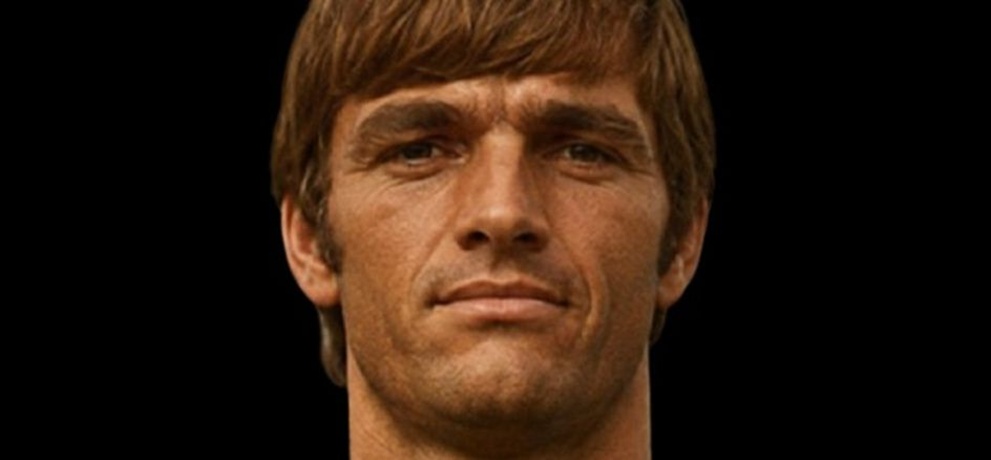
William David Garner, born 14 December 1947, Leicester, England.
PART ONE
Bill Garner´s first organised football came in his home city with Leicester Victoria, and from there he moved through Loughborough United and Midland Athletic, gathering experience in a part of the country rich in works teams, local leagues and hard matches played far beyond the attention of the national newspapers. At Midland Athletic he came under the guidance of Johnny Grogan, the former Leicester City inside-forward who had played more than 200 league matches for his hometown club, and Grogan saw enough in the young attacker to contact Manchester United manager Matt Busby and recommend him for a trial, which was no casual compliment when Busby’s United were among the biggest clubs in England.
Nothing lasting came of the approach, but it showed how rapidly Garner had begun to stand out, because he was already developing into a six-foot centre-forward who could protect possession, rise above defenders and continue competing after challenges that might have discouraged a less determined player. Besides, the disappointment did not persuade him to step away from football or wait for another manager to rescue him, and his willingness to keep working in modest surroundings became important, for his route was about to take him into the Football League and then, almost immediately, send him back out again.
Notts County offered that first professional chance in 1966, when Garner was 18 and approaching his nineteenth birthday, but Meadow Lane proved to be an introduction rather than a breakthrough, and he made only two league appearances during the 1966–67 season without scoring. For a young forward who had been noticed because of his physical advantages and his eye for goal, two outings were barely enough to establish a rhythm, let alone convince a manager that he should lead the attack every week, while professional football also demanded quicker decisions, better movement and the ability to cope with experienced defenders who understood every trick available to them.
Garner was released after that single season and returned to Loughborough United, which might have felt like a sharp backward step after reaching the Football League, but regular football was more useful than sitting in a reserve side and waiting for an opportunity that might never arrive, and the setback hardened rather than diminished him. He had discovered how narrow the gap could be between earning professional terms and losing them, yet he had also learned that rejection at 19 did not have to settle the matter, so he went back into non-league football with something to prove and began the patient rebuilding that eventually carried him far beyond his two quiet appearances for Notts County.
Regular matches allowed Garner to sharpen the rougher parts of his game, and after returning to Loughborough he moved to Dunstable Town, where he scored 25 goals and began to look like a forward capable of earning another chance in the Football League. Southern League football demanded resilience because defenders could be uncompromising, pitches were often heavy and the service supplied to a centre-forward was rarely delicate, but those conditions suited a player who relished aerial challenges and refused to be bullied, while his goals demonstrated that he was becoming more than a willing target for long clearances.
Even so, strength alone would not have carried him upwards, and his growing effectiveness came from learning when to contest the first ball, when to lay it off and when to turn for goal, which made him increasingly difficult to contain as he gathered confidence. Bedford Town brought him in during 1969, continuing a sequence of moves that might have looked unsettled from the outside but was taking him steadily towards a more suitable professional opening, and his spell at the Eyrie proved decisive, because Southend United were watching and believed that the forward who had briefly failed to establish himself at Notts County had matured sufficiently to handle the weekly demands of Fourth Division football.
PART TWO
Southend paid Bedford £12,000 for Garner in November 1969, a substantial investment in a player recruited from the Southern League, and he made his debut against York City at Roots Hall on 22 November, becoming the 606th player to represent the club. The move placed him under manager Ernie Shepherd, whose Southend side had begun the 1969–70 season badly and required more power and purpose in attack, and Garner arrived with the immediate responsibility of justifying a fee that left no room for him to disappear quietly into the reserves.
There was a pleasing directness about the match between player and club, because Southend needed a commanding centre-forward and Garner needed a manager willing to judge him on what he had become rather than on the two unproductive appearances he had made for Notts County three years earlier. Roots Hall also offered a close, vocal crowd who appreciated visible effort, and Garner’s willingness to challenge for difficult balls, compete with large defenders and keep moving towards goal gave the supporters something recognisable to back, while the experience accumulated at Loughborough, Dunstable and Bedford meant that he was no longer the untested teenager who had entered professional football the first time.
The remaining months of 1969–70 were not easy for Southend, who finished seventeenth in the Fourth Division table, and Garner was joining a United team that required improvement rather than one ready to carry him along, but he scored eight league goals after his November arrival and supplied convincing evidence that the club had invested wisely. Those goals were important for more than their immediate value, because they confirmed that he could transfer his non-league scoring form into the Football League, while the regular demands of travelling, training and playing against seasoned opponents no longer appeared to trouble him as they had during his relatively brief Notts County stay.
Particularly encouraging was the way he established himself without needing an extended period of protection, for the fee and Southend’s position meant that he had been bought to play, and he responded by becoming a dependable focal point through whom the attack could operate. The season ended without promotion excitement and without any grand flourish, but Garner had moved from Bedford Town to a permanent Football League place in the space of a few months, and this time he was not merely passing through, because Southend had found a centre-forward suited to their needs and he had found the club prepared to build its forward play around his particular mixture of strength, persistence and improving judgement.
The 1970–71 season brought greater responsibility, and Garner played through a campaign in which Southend attempted to climb out of the lower reaches without quite sustaining the consistency required for promotion, although his contribution again gave the side a reliable attacking base. He scored seven times in 21 league outings as United mounted their first serious promotion attempt with him in the side, but interruptions and changes meant that neither player nor team developed the uninterrupted momentum they would find a year later, and the club eventually finished second from the promotion places rather than among the four sides going up.
Still, the figures only told part of the story, because Garner’s physical work created room for Billy Best and the other attackers around him, and every month spent facing Fourth Division centre-halves improved his timing, movement and understanding of how to turn pressure into chances. Compared with the uncertain teenager released by Notts County, he was now a settled Football League striker with a clearly defined role, and although 15 league goals across his first season and a half at Roots Hall represented a respectable return, the best was still to come, because Southend were assembling a side capable of challenging again and Garner was approaching the most productive season of his footballing life.
PART THREE
Southend entered 1971–72 carrying the frustration of having come close, but Bill Garner began it as an established member of the Roots Hall side rather than an outsider required to prove that he belonged, and that difference showed as he produced goals with a regularity that transformed both his standing and his team’s prospects. He was supported by the clever movement and finishing of Billy Best, while Terry Johnson, Gary Moore, Bernie Lewis and others contributed to an attack with several routes towards goal, but Garner remained the force through the middle, contesting high balls, occupying defenders and driving into the penalty area whenever play opened in front of him.
There was no guarantee that Southend would last the pace, especially after a 2–0 opening-day defeat at Peterborough United on 14 August 1971, yet a 3–0 home victory over Darlington one week later steadied the side before draws at Hartlepool United and at home to Bury were mixed with a 3–2 Roots Hall defeat against Scunthorpe United. Those uneven August results left plenty to repair, although the underlying signs were encouraging, because Southend were scoring, Garner was finding the positions from which he could hurt opponents and the team had enough attacking depth to turn a hesitant opening into a sustained promotion drive.
The change gathered force during September, when Southend followed a goalless draw at Aldershot with three successive victories, beating Grimsby Town 3–1 at Roots Hall, winning 2–0 at Doncaster Rovers and defeating Newport County 3–1 at home, and the sequence carried them rapidly towards the leading places. A 2–1 home success against Southport on 1 October lifted them to second, while a draw at Chester City and a 2–1 victory over Peterborough showed that the opening-day loss had done no permanent harm, and although Colchester United stopped them with a 1–0 defeat at Layer Road on 18 October, Southend answered by winning 2–1 at Brentford and edging Barrow 1–0 at Roots Hall.
Garner’s goals were central to the advance, but so was his ability to give the side a fixed attacking point during close matches when clear chances were scarce, because he could turn an ordinary cross or a hurried clearance into a contest near the opposition penalty area. By the end of October Southend had reached the top of the Fourth Division, and the forward who had been unable to find a place at Notts County was now leading the line for a side with promotion firmly within reach.
Southend’s first spell at the top was interrupted by a 3–1 defeat at Workington on 6 November 1971, but promotion sides are usually revealed by what they do after an awkward result, and Ernie Shepherd’s team reacted with the assurance of one that had begun to believe in itself, overcoming Exeter City 3–0 at Roots Hall before winning 4–2 at home to Stockport County on 26 November. Garner was flourishing because the side now understood how to make full use of him, with crosses delivered early enough for him to attack rather than merely retrieve, and when he won the first header there were colleagues close enough to compete for the second ball, so Southend’s forward play had acquired both shape and force.
A 2–0 victory at Northampton Town on 4 December maintained the advance, while subsequent draws against Cambridge United and Crewe Alexandra did little damage, and although a 1–0 defeat at Reading was a reminder of the small margins involved, Southend completed the calendar year by beating Lincoln City 2–1 at Roots Hall on 27 December. Garner’s personal figures continued to grow, but his greater achievement was consistency, for defenders knew exactly what was coming and still found it difficult to prevent him from reaching the ball.
PART FOUR
The new year opened with a painful 4–1 defeat at Grimsby Town, and another heavy reverse followed at Newport County, where Southend lost 2–0, but the campaign never slipped completely out of their control because their home form and attacking strength continued to carry them through uncertain periods. There were further setbacks, including a startling 4–1 home defeat by Colchester United, yet Garner kept scoring and Southend retained the capacity to answer a poor performance with several good ones, which mattered in a division where even the strongest sides dropped points on difficult grounds.
As winter began to loosen its grip, Shepherd’s men rediscovered the rhythm that had taken them to the summit during the autumn, while Garner and Billy Best formed a partnership based on contrasting qualities, with the former doing much of the heavy work through the middle and the latter using his movement and finishing around him. It was direct football when circumstances demanded it, but it was not thoughtless, because the centre-forward’s ability to control an awkward pass or guide a header into a colleague’s path allowed Southend to move up the field quickly without immediately surrendering possession, and his willingness to absorb punishment gave the more mobile players a chance to influence matches in advanced areas.
March brought the decisive acceleration, beginning with a 4–2 home victory over Chester City and continuing through a 4–1 defeat of Crewe Alexandra at Roots Hall, a 3–2 win at Darlington and a thumping 4–1 success away to Reading, results that restored Southend’s place among the leading sides and placed growing pressure on the clubs around them. A 1–0 home victory over Aldershot on 24 March lifted them back into second place, and every match now carried the additional strain of a promotion contest nearing its end, when players were tired, pitches had taken months of punishment and one careless afternoon could undo much of the work completed since August.
Garner was well suited to that kind of struggle because he did not require perfect conditions or elaborate service, and if a match became untidy he could compete within the disorder, turn hopeful clearances into attacking possessions and unsettle opponents who wanted time to organise themselves. Besides, his goals were no longer the occasional returns of a useful front man, for he was compiling the most productive total of his life, and as Southend moved closer to the Third Division the value of every header, rebound and close-range finish became more obvious.
A 1–1 draw at Lincoln City and a narrow 1–0 victory at Southport kept the promotion calculation finely balanced, but Southend then defeated Reading 4–1 at Roots Hall on 7 April and followed a goalless draw at Bury with another 4–1 home win, this time against Northampton Town on 17 April. Cambridge United caused late anxiety by winning 2–1 at Roots Hall four days later, yet Southend recovered sufficiently to reach their final fixture with the outcome still in their own hands, and on 3 May 1972 a crowd of 17,081 gathered at Roots Hall to see whether a season of hard work would end with promotion.
Gillingham twice led, first through Damien Richardson and then through Brian Yeo, but Southend twice replied, with Terry Johnson supplying the second equaliser in a 2–2 draw that secured the point they needed and confirmed runners-up position behind Grimsby Town. The final table showed Southend with 61 points from 46 matches, one ahead of third-placed Brentford and five clear of Barrow in the last promotion position, while Garner finished as the club’s leading scorer with 26 league goals and was voted Player of the Season, honours that properly recognised how much of the campaign had rested upon his strength, goals and reliability.
Promotion did more than reward Southend, because it changed the level at which Garner could be assessed, and by August 1972 he was facing Third Division defenders as the leading striker of a side that had just climbed from the fourth tier. He had scored 41 goals in 102 league appearances for the club, and the broader total of 47 in 111 matches across all competitions showed that his contribution was sustained rather than confined to one brief burst, although the 26-goal promotion season was undoubtedly the period that attracted the greatest attention.
Southend wanted to establish themselves after going up, but the danger attached to a successful lower-division side was that wealthier clubs could examine its strongest players, and Garner’s particular qualities were easily transferable, because a commanding centre-forward could be useful at almost any level if he continued to win the ball and finish chances. Even then, nobody could have expected the next move to develop quite so quickly, for it took one League Cup evening against Chelsea to carry him from Roots Hall to Stamford Bridge, and the speed of the transaction demonstrated how strongly his performance impressed a club accustomed to competing near the top of English football.
Chelsea made the comparatively short trip to Roots Hall for a League Cup second-round on Wednesday, 6 September 1972, bringing a team filled with well-known players and carrying the status of recent FA Cup and European Cup Winners’ Cup holders, while Southend approached the occasion as recently promoted members of the Third Division. The West Londoners won 1–0, but Garner made such an impression against their defence that Stamford Bridge boss Dave Sexton acted almost immediately, and three days later Chelsea paid £100,000 for him, making him the first Southend player to be sold for a six-figure sum.
PART FIVE
The transfer fee represented a remarkable rise for a man who had returned to non-league football after two appearances for Notts County, while it also created a demanding comparison with Chelsea’s established attacking figures, particularly Peter Osgood, whose skill, personality and record at Stamford Bridge made him one of the most admired forwards of the period. Garner had not been purchased to imitate Osgood, however, because his game was built differently, with less decoration and more emphasis on direct physical pressure, and the sensible judgement was to measure him by the work he performed for the side rather than by asking whether he could reproduce the qualities of a player who already occupied a special place with the Chelsea crowd.
There was scarcely time for Garner to learn the names of all his new colleagues before his First Division debut, because the Pensioners faced West Ham United at Stamford Bridge on 9 September, the same day his transfer was recorded, and an early injury to midfield playmaker Alan Hudson brought the new signing from the substitutes’ bench. He entered a difficult match in which Chelsea fell behind to Tommy Taylor after four minutes, equalised through ex-Bristol City ace Chris Garland three minutes later and then conceded further goals to Bobby Moore and Clyde Best in a 3–1 defeat, so there was no gentle introduction and no victory with which to disguise the size of the step he had taken.
Chelsea then lost 2–1 to Sheffield United at Bramall Lane before beating Ipswich Town 2–0 at Stamford Bridge, and Garner had to wait until 30 September for his first start, which came against Coventry City at Highfield Road. He needed only five minutes to score, putting Chelsea ahead before an own goal by Jeff Blockley and a late Peter Houseman effort completed a 3–1 victory, with John Radford replying for Coventry, and the early finish was precisely what Garner required, because it proved at once that the instincts developed in the Fourth Division could still function against First Division defenders.
His second Chelsea goal arrived in a 1–1 home draw with Leicester City on 11 November, when Jon Sammels put the visitors ahead before Garner equalised two minutes later, and another followed against Norwich City at Stamford Bridge on 9 December, his 48th-minute strike helping Chelsea to a 3–1 triumph. The adjustment was not straightforward, because his rugged method invited injuries and First Division defenders were quicker to punish an imperfect touch, but he continued to offer Sexton a forceful alternative in attack, whether selected alongside Osgood or asked to carry the central burden himself.
On 3 February 1973, Garner produced his most effective Chelsea performance to that point, finding the back of the net twice in a 2–0 FA Cup fourth-round victory over Ipswich Town, and three weeks later he struck again as Chelsea won 2–1 against Division Two Sheffield Wednesday in the fifth round, although his afternoon at Hillsborough ended with a dismissal. Arsenal stopped Chelsea in the quarter-final, but Garner finished his first partial season with seven goals from 21 league appearances and three from four FA Cup ties, making ten in 25 competitive outings, a useful return from a player who had begun September in the Third Division and ended the campaign as a recognised First Division centre-forward.
Nevertheless, the figures could not conceal the difficulty of the environment into which Garner had arrived, because Chelsea’s glamorous side was beginning to pull apart as financial trouble, disputes and declining results replaced the successes of the opening years of the decade. The expensive construction of the East Stand placed the club under severe pressure, while the relationship between Sexton and several senior players deteriorated, and although Chelsea still possessed Peter Bonetti, Ron Harris, John Hollins, Alan Hudson, Osgood, Houseman and other richly gifted footballers, the unity required to challenge the leading sides was weakening.
Garner therefore joined at an awkward point, too late to share fully in the great victories and early enough to bear much of the hard work that followed, but his first season had established that he could score at the level, and his FA Cup goals against Ipswich and Sheffield Wednesday gave the Stamford Bridge crowd a clear view of his strengths. What he needed next was a settled side and freedom from injury, yet Chelsea were moving in the opposite direction, and the 1973–74 season would test his durability amid illness, internal division and a gathering struggle near the bottom of the First Division.
PART SIX
Chelsea opened 1973–74 without the stability Garner needed, and although the squad still contained enough talent to trouble any opponent, the results soon reflected the arguments, financial pressure and declining confidence surrounding the club. A difficult opening brought only two points from the first five league matches, and Garner was used in different attacking arrangements as Dave Sexton searched for an effective balance, sometimes operating alongside Peter Osgood and on other occasions starting from a wider position before moving inside to challenge for crosses.
His first goal of the season came at Stamford Bridge against Wolverhampton Wanderers on 29 September, when he scored in the 72nd minute and Osgood equalised six minutes later to rescue a 2–2 draw, but that recovery was followed by only one victory in the next five league fixtures. A viral infection then disrupted Garner’s progress and denied him the continuous run of matches required by any centre-forward, particularly one whose effectiveness depended on physical sharpness, yet he returned to a side that was becoming increasingly difficult to understand, because Chelsea could still produce spells of bright attacking football while remaining vulnerable to sudden collapses and damaging mistakes.
The tension reached an ugly point on Boxing Day, when Chelsea led West Ham United 2–0 at half-time at Stamford Bridge but conceded four times after the interval and lost 4–2, and the breakdown accelerated the dispute between Sexton and two of the club’s most gifted players, Osgood and Alan Hudson. Both were placed on the transfer list, Hudson subsequently moving to Stoke City and Osgood joining Southampton in March 1974, and their departures removed a large amount of imagination and personality from a side already struggling to replace the quality lost elsewhere.
Garner was not responsible for the feud and possessed neither the authority nor the particular gifts required to repair its consequences, but he was one of those left to carry the attacking responsibility after the established stars had gone, and the comparison was unavoidably harsh. Osgood could drift away from a marker, control a difficult pass and produce something unexpected, while Hudson saw openings before most players knew they existed, whereas Garner’s strengths were more direct and depended upon service, support and a team willing to push forward around him. Nevertheless, he continued working through the disorder, and on 19 January 1974 he scored Chelsea’s goal in a 1–1 home draw with Derby County, providing a useful result during a winter in which victories had become scarce.
Two weeks later Garner struck at Elland Road as Chelsea drew 1–1 with a Leeds United side moving towards the First Division championship, and the goal demonstrated that he could trouble the country’s best defenders when supplied with the right ball and allowed to attack it decisively. His outstanding personal afternoon followed at Stamford Bridge on 23 February, when Queens Park Rangers crossed west London for a match that developed into a 3–3 draw, and Garner twice rose to head past the visiting defence as Chelsea fought through another unsettled contest. Rangers possessed a strong side under Gordon Jago and would finish eighth, but Garner’s aggression in the air repeatedly disturbed them, with his two goals standing out in a season during which illness and Chelsea’s wider problems had prevented him from building a regular sequence.
The performance showed both sides of his position at the club, because he could be highly effective when crosses arrived in useful areas, but too much was now being expected of a forward signed to supplement a successful team rather than replace its most creative figures. Even so, he finished 1973–74 with seven goals, and Chelsea ended seventeenth after winning only twelve of their 42 league matches, five points above the relegation places but a long distance from the side that had lifted trophies only a few years earlier.
PART SEVEN
The summer offered little relief, for the East Stand redevelopment continued to consume money and Chelsea could not simply buy replacements of the quality that had departed, while Sexton entered 1974–75 under pressure after two seasons of decline. Garner, however, began sharply and scored three times in the opening four league matches, first finding the net in a 3–3 home draw with Burnley on 21 August, then scoring as Chelsea won 3–1 at Coventry City three days later and striking again in a 2–1 victory at Burnley on 27 August. Charlie Cooke and Gary Locke completed the scoring at Highfield Road, while Ian Hutchinson supplied the other goal at Turf Moor, and those successive away wins briefly suggested that Chelsea might have rediscovered some of their old assurance after losing the opening match 2–0 at Stamford Bridge to newly promoted Carlisle United.
Garner was now 26 and entering what should have been his strongest years, and the early burst brought recognition beyond Stamford Bridge when Don Revie, newly appointed as England manager, included him among a huge group of 84 players identified for possible international consideration. It was not a formal cap or even a place in a match-day squad, but it confirmed that his form had been noticed, and for a player who had passed through Leicester Victoria, Midland Athletic and Southern League football, even preliminary England attention represented considerable progress.
Unfortunately, neither Chelsea nor Garner sustained the promising August form, and a 3–0 home defeat by Bob Paisley´s Liverpool was followed by a run without a league victory that placed Sexton’s position under unbearable strain. Middlesbrough, Luton Town and Sheffield United held Chelsea to draws, while good old Arsenal won 1–0 at Stamford Bridge on 28 September, and on 3 October 1974 Sexton was removed after seven years in charge, bringing a sad end to a period that had included victory in the 1970 FA Cup, the 1971 European Cup Winners’ Cup and an appearance in the 1972 League Cup final.
His assistant Ron Suart took temporary command, but a change of manager could not correct the financial restrictions or restore the players already sold, while Garner’s early goals dried up as the side struggled to construct clear chances. Chelsea did produce a stirring 4–2 League Cup victory over Newport County and later drew 3–3 with Stoke City, but they were eliminated from the competition by York City after a replay, and their league position remained dangerous. Garner’s form reflected the uncertainty around him, for he was selected, omitted and occasionally used as a substitute, and a centre-forward who had looked confident during August was left chasing a limited supply of hurried passes.
As autumn became winter, Suart increasingly turned to different combinations, including Chris Garland, Ian Hutchinson and Peter Houseman, while the young Steve Finnieston entered first-team consideration and 17-year-old Ray Wilkins took on responsibilities far beyond his age. Garner remained involved, but the imposing attacker who had scored freely for Southend was now fighting for rhythm within a side that rarely kept the same shape for long, and every goalless appearance increased the pressure upon him.
Chelsea went out of the FA Cup in January after a replay against Leicester City, and their league position continued to deteriorate through a damaging series of defeats, including a 2–0 loss at Liverpool and a 2–1 home reverse against Birmingham City. Yet Garner found a late winner against Carlisle United at Brunton Park on 15 February 1975, scoring in the 90th minute after John Hollins had seen a penalty saved, and the 1–0 victory offered a precious lift against a club enjoying a remarkable first season in the top division. The moment briefly recalled his Southend days, when a difficult match could be settled by one forceful intervention from the centre-forward, but Chelsea’s troubles were now too deep for isolated goals to resolve, and the side entered March with relegation becoming an immediate threat.
A 7–1 defeat against Wolverhampton Wanderers at Molineux on 15 March exposed the full extent of Chelsea’s collapse, with John Richards scoring twice and Willie Carr, Kenny Hibbitt, Mike Bailey, Steve Kindon and Dave Wagstaffe adding the other goals, and Garner returned to the starting side four days later for an away fixture against Manchester City. He scored in the 37th minute at Maine Road, but Chelsea lost 2–1, and although it was his sixth league goal of the season, it proved to be his last of a campaign that had begun with such promise. Suart was replaced in April by Eddie McCreadie, the former Chelsea left-back who had been coaching the club’s younger players, but there was insufficient time to escape, and a 1–1 draw with Sheffield United at Stamford Bridge on 23 April confirmed relegation after twelve consecutive seasons in the First Division.
Chelsea finished twenty-first with only nine victories from 42 league matches played, above Carlisle United but behind Tottenham Hotspur and Luton Town, while Garner’s total of six league goals placed him just one behind Ian Hutchinson, the club’s leading scorer in the division. The figures were modest, but the surrounding circumstances mattered, because Chelsea had been weakened by departures, destabilised by managerial change and trapped by severe financial problems.
Relegation naturally altered the position of every player at Stamford Bridge, although for Garner it also offered the possibility of more settled football at a slightly lower level, where his strength and First Division experience ought to have made him a useful centre-forward. McCreadie inherited a club that could no longer live on the reputation of Osgood, Hudson and the cup-winning sides, and his task was to develop younger players, reduce expectations and make Chelsea competitive with the resources available.
Garner remained one of the more experienced attacking options, but he was approaching 28 and carried the effects of a combative style that had subjected his body to repeated collisions, while the emergence of Finnieston and other younger forwards meant that his place could no longer be assumed. Still, he had scored 20 goals across his first three Chelsea seasons despite injuries, illness and the side’s decline, and his willingness to compete had never been in question, so the move into the Second Division did not immediately suggest an ending. Instead, 1975–76 became a test of whether he could rediscover the regular scoring pattern of Southend, and whether McCreadie could construct a side in which the older centre-forward and Chelsea’s younger players strengthened rather than obstructed one another.
PART EIGHT
Chelsea’s first season outside the top division since 1962 began with a 2–1 home defeat by Sunderland on 16 August 1975, but they recovered to collect useful early results and briefly suggested that an immediate return might be possible. Garner was involved regularly and scored six league goals during the campaign, although once again his output arrived in sections rather than as one uninterrupted run, and the side’s fluctuating form prevented any lasting promotion challenge. McCreadie placed growing faith in Wilkins, Finnieston, Gary Locke, John Sparrow and Ian Britton, while established men such as Ron Harris, John Hollins and Charlie Cooke remained, creating a team positioned awkwardly between two generations.
Garner’s experience was valuable in difficult away matches, and his capacity to occupy centre-halves helped the younger attackers, but the pace of his game had been affected by accumulated injuries and he no longer dominated defenders as consistently as he had during Southend’s promotion season. Chelsea eventually finished eleventh, winning twelve, drawing sixteen and losing fourteen of their 42 league fixtures, which was neither disastrous nor sufficient for a club whose support and history encouraged hopes of much more.
Garner’s six goals in 1975–76 took his Chelsea league total to 26, but the campaign also indicated that he was moving away from the central place he had occupied during the first months after Osgood’s departure, and competition for attacking positions continued to increase. Finnieston’s development was particularly important because he brought youthful movement and became a regular scorer, while McCreadie’s reconstruction demanded players who could remain fit and develop together over a full season.
Garner’s body would not allow him that opportunity, and injury removed him from the entire 1976–77 campaign, leaving him unable to make a single first-team appearance as Chelsea mounted another promotion challenge. It was cruel timing, because the side at last acquired the determination and consistency that had been missing since relegation, and the experienced centre-forward had to watch from outside while younger colleagues carried Chelsea towards the First Division. Yet his absence did not end his time at Stamford Bridge, for after a full season without senior football he would return in 1977–78 and produce several of his most memorable performances, including a goal against FA Cup holders Manchester United at Old Trafford and a central part in one of Chelsea’s finest FA Cup victories of the decade.
Garner’s absence throughout 1976–77 meant that he could contribute nothing on the field as Chelsea finally recovered their direction, but from the sidelines he saw Eddie McCreadie’s young side develop the pace, confidence and togetherness that had been missing during the relegation season. Steve Finnieston led the attack with 24 league goals, while Ray Wilkins, still only 20, captained a team containing Gary Locke, Graham Wilkins, Steve Wicks, Ian Britton, Ray Lewington, Ken Swain and Garry Stanley, and the freshness of those players gave Chelsea an identity built upon movement and enthusiasm rather than memories of former stars.
They opened with a 1–0 victory at Orient on 21 August 1976, climbed to the top of the Second Division during the autumn and remained among the promotion places despite the usual difficult patches, while Garner worked towards fitness without knowing whether there would be a place for him once he returned. Chelsea eventually finished second behind Wolverhampton Wanderers with 55 points from 42 matches, scoring 73 goals and gaining promotion alongside Wolves and Nottingham Forest, and a 4–0 home victory over Hull City on 7 May 1977 completed the job before a jubilant Stamford Bridge crowd. It was a fine achievement, but for Garner there was an unavoidable frustration, because the club had regained its First Division place during the one season in which injury prevented him from making any first-team contribution.
PART NINE
The summer of 1977 brought another unexpected change when Eddie McCreadie departed and Ken Shellito, formerly one of Chelsea’s most reliable full-backs and then a respected coach at the club, took charge of the promoted side. Shellito inherited a young squad with limited First Division experience, while the club’s financial problems remained severe and allowed little opportunity for the expensive reinforcement normally required after promotion, so men already at Stamford Bridge had to fill the gaps. Garner himself returned to contention at nearly 30, and even though a full season without senior football inevitably affected his sharpness, his strength and knowledge of top-flight defenders offered something different from the quick movement of Finnieston, Tommy Langley and Clive Walker.
He was no longer expected to play every week or carry the attack alone, but he could still occupy centre-halves, attack high service and provide an outlet when Chelsea needed to escape pressure, and those qualities were particularly useful for a young side likely to spend long periods defending. The task was difficult from the outset, because Chelsea opened with a 3–0 defeat at West Bromwich Albion on 20 August, and although Birmingham City were beaten 2–0 four days later, a home loss to Coventry City and an away defeat at Ipswich Town quickly demonstrated how demanding the return to the First Division would be.
A 1–1 home draw with Derby County on 10 September left Chelsea with three points from five matches under the old two-points-for-a-win system, and their next assignment was an intimidating visit to Manchester United, managed by Dave Sexton, the man who had brought Garner from Southend five years earlier. Old Trafford held a crowd of 54,764 on 17 September 1977, but the visitors silenced most of them before the match had properly settled, because Kenny Swain delivered a cross after only two minutes and Garner ran behind the United defence before directing his header past Alex Stepney. It was a classic Garner goal, created by decisive movement and finished in the air, and it gave Chelsea something to protect for the remaining 88 minutes, while the centre-forward nearly added another around the half-hour only for Stepney to stop his close-range effort.
United captain Martin Buchan left the field with a groin strain seven minutes into the second half and was replaced by Chris McGrath, but Chelsea retained their organisation and continued to threaten whenever they moved forward, with Stepney preventing a wider margin. The 1–0 victory was Chelsea’s first away success since promotion, and Garner’s display earned him the man-of-the-match distinction on an afternoon when his experience, strength and early goal gave Shellito’s young side one of its most impressive results.
That Old Trafford header was Garner’s only league goal before Christmas, and his appearances remained intermittent as Shellito changed his attack and attempted to find enough goals to keep Chelsea clear of trouble. A sequence of low-scoring matches brought a 1–1 draw at Queens Park Rangers, defeats against Leeds United and Liverpool, goalless draws with Leicester City and Middlesbrough and a 1–0 loss at Newcastle United, before narrow home victories over Bristol City and Nottingham Forest provided some relief. The strain returned sharply on 26 November, when Manchester City won 6–2 at Stamford Bridge, and an Everton defeat followed, although Chelsea responded with a 3–1 home success over Wolves before drawing at Norwich City.
Garner had to remain patient through much of that period, because his long absence meant he was still searching for match sharpness and the younger forwards naturally received opportunities, but he remained useful whenever Chelsea required a more forceful central presence. The festive programme then brought him back towards the front of the story, beginning after a 3–0 Boxing Day defeat by Arsenal, and in the space of seven extraordinary days he scored in three consecutive league matches, helping Chelsea collect five points and showing that his finishing instincts had survived the injuries and long months away.
West Ham United visited Stamford Bridge on 27 December before a crowd of 44,093, and Chelsea recovered from the previous day’s defeat to win 2–1 through goals from Langley and Garner, a result that brought both relief and local satisfaction. Four days later they travelled to St Andrew’s and became involved in one of the wildest First Division matches of the season, beating Birmingham City 5–4 after an afternoon in which defending repeatedly gave way to attack, and Garner scored again while Langley completed a hat-trick and Walker supplied the remaining Chelsea goal.
PART TEN
West Bromwich Albion arrived at Stamford Bridge on 2 January 1978, and after Ally Brown put the Black Country outfit ahead in the 21st minute of the contest, Garner equalised two minutes into the second period, Walker then gave Chelsea the lead and Tony Brown’s last-minute goal made the final score 2–2. Garner had therefore scored against West Ham, Birmingham and West Bromwich in successive matches, contributing to a seven-day spell in which Chelsea collected five of the six points available, and his revival could hardly have been better timed, because the next fixture brought the European champions to Stamford Bridge for an FA Cup tie that few expected the home side to win.
Liverpool came to town on 7 January as reigning league champions and European Cup holders, with Ray Clemence, Phil Neal, Emlyn Hughes, Ray Kennedy, Kenny Dalglish, Ian Callaghan, Steve Heighway and David Fairclough among a side carrying formidable experience, while Chelsea entered as a financially restricted and inconsistent young team still trying to secure its First Division position. Garner started through the middle and performed the demanding work required against Liverpool’s accomplished defence, contesting long passes, preventing Hughes and Phil Thompson from settling and helping to create room for Walker, Langley and the runners coming from midfield. Chelsea took the lead through Walker after 16 minutes, and soon after half-time Finnieston made it 2–0 before Langley headed a third in the 52nd minute, with Garner’s physical presence contributing to the pressure that repeatedly unsettled the visitors.
David Johnson reduced the deficit after an hour, but Walker struck again five minutes later to make it 4–1, and although Dalglish added Liverpool’s second, Chelsea completed a memorable 4–2 victory. Garner did not score, yet his performance was central to the way the match developed, because he supplied the resistance and disruption around which the younger attackers could operate, and Stamford Bridge had witnessed an upset built as much upon collective work as individual finishing.
Chelsea followed that cup triumph with a bewildering 5–1 league defeat at Coventry City, which captured the inconsistency of the side, but they immediately answered by beating Ipswich Town 5–3 at Stamford Bridge, with Swain scoring twice and Finnieston, Wicks and Langley adding the other goals. The FA Cup continued with a 6–2 fourth-round replay victory over Burnley, but Orient held Chelsea to a goalless draw at Stamford Bridge in the fifth round and then won the replay 2–1 at Brisbane Road, ending hopes of a prolonged run.
Garner’s opportunities became more limited as the season moved towards spring, although he remained part of the group fighting to keep Chelsea in the division, and the team gathered enough points through a series of draws and occasional victories to remain above the relegation places. A 2–2 home draw with Manchester United, a goalless match at Middlesbrough and a valuable 1–0 victory over Newcastle United contributed to their survival effort, while April brought important wins against Leicester City and Bristol City. Chelsea finished sixteenth with 36 points, four clear of relegated West Ham United, Newcastle United and Leicester City, and considering the youth of the squad, the lack of money and the injuries that had weakened it, remaining in the First Division represented a solid achievement.
For Garner, 1977–78 had been a personal recovery after an entire season without first-team football, and although he was no longer a permanent selection, his goals carried unusual weight, beginning with the winner at Old Trafford and continuing through the three-match festive burst. The performance against Liverpool also demonstrated that a centre-forward could influence an important tie without appearing on the scoresheet, because his pressure gave Chelsea a route through Liverpool’s defence and allowed Walker, Finnieston and Langley to attack the spaces created around him.
Nevertheless, the physical cost of his methods was increasingly apparent, and a player who had built his game upon challenging defenders could not simply remove the contact from it in order to protect himself, while Chelsea’s younger attacking options were now moving ahead. He had completed six seasons at Stamford Bridge, made more than 100 league appearances and survived a period of dramatic decline, relegation, managerial upheaval and promotion, but the coming summer brought no promise of a substantial role. Shellito remained in charge, Chelsea again had little money to strengthen and Garner entered 1978–79 knowing that another injury or poor result could push him towards the edge of the side.
PART ELEVEN
The new campaign began badly for Chelsea, who lost 1–0 at home to Everton on 19 August 1978 and then drew 1–1 at Coventry City before suffering a 3–0 defeat away to Derby County on 2 September. Garner appeared in that loss at the Baseball Ground, but it proved to be his final first-team match for the club, and the side’s subsequent collapse meant there was little room for patience or sentiment as Shellito searched desperately for a successful combination. Manchester City won 4–1 at Stamford Bridge, Liverpool inflicted another defeat and Chelsea failed to win any of their opening twelve league matches, a sequence that pointed towards relegation almost from the beginning.
Garner remained at the club through the early autumn without returning to the side, and in November Cambridge United offered him the chance to continue in the Second Division, which brought his six-year stay in west London to an end on a free transfer. He left Chelsea after 105 league appearances and 31 league goals, while his complete record stood at 119 competitive matches and 36 goals, figures achieved during one of the most difficult periods in the club’s history.
Those totals require their proper setting, because Garner did not join the stable cup-winning Chelsea side of 1970 and 1971 and simply enjoy its success, but arrived in September 1972 as the divisions within the club were widening and remained while many more celebrated players departed. He played under Dave Sexton, Ron Suart, Eddie McCreadie and Ken Shellito, experienced relegation in 1975, missed the promotion season through injury and then returned to help Chelsea survive in 1978, and throughout those changes he performed the same physically demanding job without ever pretending to be a different kind of forward.
His best scoring return had come at Southend, but Stamford Bridge supplied the greater tests and the more widely remembered afternoons, including his quick goal at Coventry, his FA Cup double against Ipswich Town, two headers against Queens Park Rangers, the late winner at Carlisle, the Old Trafford header and his work in the defeat of Liverpool. However, Garner was not yet finished, because Cambridge United gave him another Football League opening at the age of 30, and after that came three seasons with Chelmsford City, an unexpected final return with Brentford and a life in the Southend area that kept him closely involved in sport long after his last professional match.
Before leaving Chelsea’s 1977–78 season behind, one final goal belongs in its proper place, because after scoring against Manchester United and then in successive matches against West Ham United, Birmingham City and West Bromwich Albion, Garner found the net once more in a 3–1 defeat at West Ham on 25 March 1978. It was his fifth league goal of the campaign and his last for Chelsea, completing a season in which he had returned from a year without senior football and still contributed several valuable moments to the club’s survival.
By the time he appeared in the 3–0 defeat at Derby County on 2 September, his final match in blue, his six years at Stamford Bridge had taken him through almost every change available to a footballer, from First Division promise to illness and injury, from relegation to a promotion campaign he could not join and then back into the top flight. Chelsea’s terrible start to 1978–79 left Ken Shellito searching for immediate answers, and Garner, now 30 and behind younger forwards, was allowed to leave in November, closing his Chelsea record at 119 appearances and 36 goals in all competitions, of which 105 appearances and 31 goals came in the league.
PART TWELVE
Cambridge United represented a fresh opening, but it was no comfortable step into a lower level, because the Abbey Stadium club had just reached the Second Division after two successive promotions and were determined to prove that their rapid rise had not taken them beyond their proper station. Ron Atkinson had led Cambridge out of the Fourth Division in 1977 before moving to West Bromwich Albion early in 1978, and John Docherty completed promotion from the Third Division as runners-up behind Wrexham that May, so Garner entered a group accustomed to winning and still carrying the confidence generated by its advance through the divisions.
Cambridge did not require him to be the central figure he had been at Southend, nor could they expect a 30-year-old forward with a long injury record to play every week, but his knowledge of the First and Second Divisions gave Docherty another option during a demanding campaign. He joined on a free transfer in November 1978 and made his appearances in sections, using his body to protect the ball and offering experience to a squad facing clubs with greater resources, while the modest surroundings bore a resemblance to the football in which he had first made his name.
Garner played 24 league matches for Cambridge across 1978–79 and 1979–80, scoring three goals, and although those figures were far removed from his Southend totals, his role had changed with age and circumstance. He was no longer an automatic selection expected to supply most of the goals, and the injuries accumulated through his confrontational years at Chelsea inevitably restricted the speed and sharpness with which he could attack defenders, but he remained capable of giving a side a different route when a match required direct pressure.
Cambridge established themselves safely in the Second Division rather than immediately falling back, and the value of experienced players could be measured in the calm they brought as much as in goals, particularly during difficult away matches when the younger men needed a forward able to receive the ball under heavy challenge. Still, Garner’s limited number of appearances showed that full-time Football League demands were becoming harder for him to meet, and in 1980 he left the Abbey Stadium to return to non-league football with Chelmsford City. It was not a sudden break with the game but a sensible adjustment, allowing him to continue playing at a competitive level without the same expectations that had followed him from his £100,000 move to Chelsea.
Chelmsford competed in the Alliance Premier League when Garner arrived, and the football remained serious, physical and demanding, with many former professionals spread across a national competition that had been created in 1979 to bring the leading English non-league clubs together. He spent three seasons at New Writtle Street from 1980 to 1983, and the move carried him back towards the kind of setting he understood from Loughborough, Dunstable and Bedford, although he now brought more than a decade of Football League experience with him. Younger defenders might have possessed fresher legs, but Garner understood positioning, knew how to use his body without wasting movement and could recognise when a match demanded a lay-off rather than an attempted turn, while younger teammates could learn from the practical way he approached training and competition.
By 1983 he was 35, and a quiet conclusion in non-league football would have been understandable, yet one more Football League opportunity appeared. Brentford manager Fred Callaghan entered 1983–84 with Tony Mahoney still recovering from a broken leg, and Garner was brought from Chelmsford on non-contract terms to provide temporary depth in attack. His return was brief, comprising three Third Division appearances, but it contained one last goal and supplied an appropriate final glimpse of the forward he had always been, for on 17 September 1983 he scored away to Wigan Athletic at Springfield Park. Brentford lost 2–1 before a crowd of 3,034, so there was no victorious farewell, but Garner had found a Football League net almost fourteen years after making his Southend debut and seventeen years after his first two appearances for Notts County.
The frontman played only twice more for Brentford and did not appear in the cup competitions, with Callaghan able to select younger forwards such as Francis Joseph, Keith Cassells and the returning Mahoney, and the short arrangement then ended. Garner’s final Football League totals stood at 236 appearances and 76 goals: two matches and no goals for Notts County, 102 and 41 for Southend United, 105 and 31 for Chelsea, 24 and three for Cambridge United, and three and one for Brentford.
After his final professional appearances, Garner settled in the Southend-on-Sea area, the part of the country where his reputation had first taken proper shape, and became a schoolteacher. The change suited a man accustomed to direct communication and practical work, while the game of football remained part of his life through coaching and the development of younger players, including holiday courses and involvement with Southend United’s Centre of Excellence.
Cricket also became a serious part of his life in the Southend area, and he played to a good club standard for Southend Cricket Club during the 1980s as a hard-hitting all-rounder and exceptional fielder. The qualities were recognisable from football, because he competed intensely, struck the ball powerfully and relied upon quick reactions and physical commitment in the field, while his long experience of dressing rooms enabled him to guide younger teammates.
Cricket asked for different movements and greater patience, but its individual contests within a team setting appealed to the same competitive nature that had carried him into aerial battles with First Division centre-halves, and he approached it without treating the sport as a casual retirement pastime. Moreover, Bill Garner´s involvement in teaching, football coaching and cricket showed how firmly he had become part of the local sporting community, not as a former Chelsea player arriving occasionally to tell stories, but as someone prepared to train, instruct and compete. Southend had provided the decisive second chance in 1969, and the area remained central to his life after the last whistles at Cambridge, Chelmsford and Brentford.