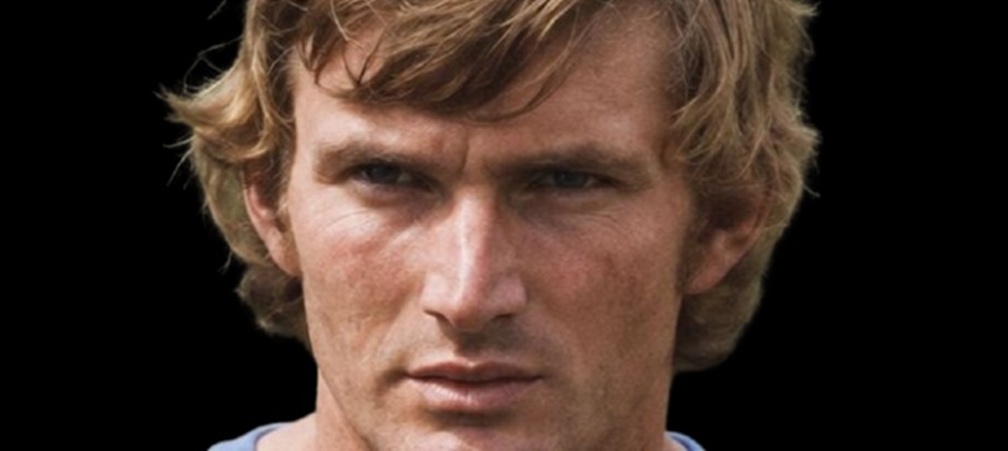
Leighton James, born16 February 1953, Swansea, Wales.
PART ONE
Leighton James signed for Burnley as a fifteen-year-old in 1968, turned professional at seventeen, and within a matter of months had done enough in training to convince manager Harry Potts and then Jimmy Adamson that here was a rare kind of talent, quick enough to leave defenders grasping at thin air, strong enough to shrug off the kind of tackles that were meant to end careers before they began, and blessed, unusually for a winger of his generation, with a shot in either foot that made him almost impossible to show down one flank with any confidence. Consequently, when the call came for his Football League debut in November 1970 against Nottingham Forest, there was no sense that Burnley were rushing a boy into a man’s game; rather, they were simply confirming what everybody at Turf Moor already suspected.
It helped, too, that James arrived at exactly the moment when the winger, as a breed, was supposedly becoming extinct in English football. Alf Ramsey’s wingless wonders had lifted the World Cup in 1966 playing without recognised wide men at all, and for a while it appeared as though every ambitious young coach in the country wanted to copy the template. James, however, paid the fashion no attention whatsoever, since he had shone in schools football on Gowerton’s playing fields precisely as wide attackers were being written off elsewhere, and Burnley, to their eternal credit, never once tried to convert him into something he was not.
Standing at 5ft 9in, he was also built rather more solidly than the archetypal jinking, diminutive winger of popular imagination, a physical presence that gave opposing full-backs an additional headache on top of his searing pace, since knocking him off the ball with a fair shoulder charge proved rather harder than the coaching manuals suggested it ought to be. Nor did he lack for confidence even as a raw teenager thrust into the unforgiving surroundings of Turf Moor; team-mates and coaching staff alike would later recall a young player entirely unbothered by reputation, happy to run at established First Division defenders as though they were no more troublesome than the boys he had left behind on the school playing fields of Gowerton.
That first full season in the senior side brought harsh lessons, since Burnley, so recently among the elite of the English game, were relegated from the First Division at the end of the 1970-71 campaign after twenty-four years among the top flight, a fall from grace that stung an ambitious young club and stung an even more ambitious young winger who had tasted top-level football and did not care to lose it. But Jimmy Adamson, never a man short of conviction, rebuilt around a spine of Colin Waldron at the back and James in the forward line, and famously predicted his young side would become the team of the Seventies, a boast that looked faintly ridiculous after relegation, yet one that would not seem quite so absurd within a couple of years.
By the summer of 1972, James was no longer simply a promising winger; he was becoming the heartbeat of a Burnley side determined to prove Adamson right, and the 1972-73 season delivered exactly that. Burnley opened with a 2-2 draw at home to Carlisle United on 12 August, followed it with another stalemate away at Fulham, and then found their rhythm with a 4-1 demolition of Aston Villa at Turf Moor before beating Preston North End three days later. Victories over Portsmouth, Blackpool, Swindon Town, Sheffield Wednesday and Cardiff City followed in a run that carried Burnley toward the top of the table, though there were stumbles too, not least a 2-1 home defeat to Orient in November and a heavy 3-0 reverse at Nottingham Forest at the end of March. Still, momentum told, and further wins over Huddersfield Town, Hull City, Sunderland, the Oxford United double, Brighton, Millwall and Luton Town confirmed Burnley as champions of the Second Division, finishing above Queens Park Rangers, who claimed the second promotion spot.
It had been a campaign shot through with the kind of direct, attacking football that suited James perfectly, since a winger with genuine pace thrives when his side is committed to pushing forward rather than sitting deep, and under Adamson, Burnley rarely sat deep against anybody. Nor was the title race itself a procession, however tidy the eventual points margin over Queens Park Rangers appeared in the final table. Draws at Hull City, Orient and Middlesbrough kept the chasing pack interested through the autumn, and a stumble at Queens Park Rangers themselves in January briefly threatened to unsettle Burnley’s rhythm, yet victories at Huddersfield Town and Hull, followed by another away success at Cardiff City in March, restored the momentum that carried Burnley over the line. A resounding 4-0 home win over Portsmouth in late March underlined just how ruthless Adamson’s side could be on their day, James invariably at the centre of the best of it, ghosting past tiring defenders in matches that had, by then, become as much about stamina and nerve as about raw ability.
PART TWO
Promotion alone would have made 1973 a memorable year, yet there was more still to come because Burnley’s title triumph earned them an invitation to the 1973 FA Charity Shield against holders Manchester City at Maine Road on 18 August. It was no formality: City, boasting Denis Law in his first appearance back at the club, Colin Bell and Rodney Marsh among others, dominated for long spells, and only a crossbar-rattling effort from Alan Oakes stood between them and the lead before half-time arrived goalless.
Burnley, though, grew into the occasion after the interval, and on 66 minutes came the moment that settled the argument: Doug Collins shaped to take a free-kick on the edge of the City box, dummied it cleverly, and left the ball instead for Frank Casper, whose cross was met with a thumping header from centre-half Colin Waldron that flew beyond Joe Corrigan and into the net. Burnley held out from there, Paul Fletcher rattling the post as they searched for a second, Collins forcing a smart save from Corrigan with a low drive of his own, and when referee Gordon Hill blew for full time it was Burnley, the Second Division upstarts, who had lifted the Shield for a second occasion, following the shared trophy of 1960. Captain Martin Dobson collected the silverware from FA chairman Andrew Stephen, and for a club of Burnley’s modest resources, beating the champions of England on their own patch represented an almost unthinkable triumph.
Restored to the First Division, Burnley did not merely survive; under Adamson they thrived, playing a bold, expansive style that made them one of the most watchable sides in the country, and James, still only twenty years old, was central to almost everything positive they produced going forward. Along the way there were notable statements of intent too, none more emphatic than the afternoon Burnley travelled to face Oldham Athletic in the FA Cup on 26 January 1974, when their manager Jimmy Frizzell made the mistake of suggesting publicly that James would get nowhere against his own full-back, Ian Wood. It was, in hindsight, about as unwise a piece of pre-match needle as English football produced that decade, for James simply tore Wood and Oldham apart inside the opening five minutes, setting up three goals in that period alone, one of them harshly disallowed, and leaving Frizzell to reflect on the perils of underestimating a winger already being spoken of in the same breath as the finest of his generation.
That spirit carried Burnley deep into the FA Cup during the 1973-74 season, all the way to a semi-final meeting with Newcastle United at Hillsborough on 30 March 1974. Some 55,000 spectators packed into the Sheffield Wednesday ground to watch a tie that, on paper, offered Burnley every reason for optimism, yet Newcastle possessed in Malcolm Macdonald a centre-forward in irresistible form, and it was Macdonald who broke Burnley hearts, scoring twice to send his side through 2-0 and leave James, so accustomed by then to winning things, facing the bitter taste of Wembley slipping from view before it had even come into sight.
Even so, there could be no doubting the impact James was having, both at club level and increasingly on the international stage. He had, in fact, already announced himself in a Wales shirt some years earlier, winning his first cap as an eighteen-year-old against Czechoslovakia in Prague on 27 October 1971, a 1-0 defeat at the Letenský Stadion that nonetheless marked the beginning of an association with the Welsh national side that would stretch across more than a decade. His first international goal followed in March 1973, when he found the net in a 2-0 victory over Poland at Ninian Park in Cardiff, a result that hinted at the quality Wales now had at their disposal on the flank. Between club and country, then, James by the mid-1970s had become one of the most talked-about young players outside the First Division’s traditional grandees, a Burnley player whose reputation had long since spread beyond East Lancashire.
By 1975, in fact, that reputation had grown to the point where a move away from Turf Moor felt almost inevitable, since clubs of genuine ambition rarely allow a player of James’s calibre to remain unmolested for long. He had played almost four hundred times for Burnley across what would eventually become three separate spells at the club, a figure that leaves him tenth on Burnley’s all-time appearance list to this day, and had scored more than eighty goals in the process, remarkable output for a wide player rather than an out-and-out striker. Still, in November 1975, following a heavy 5-1 home defeat to Wolverhampton Wanderers the previous week, the news broke that James had signed for reigning League champions Derby County under Dave Mackay, in exchange for a fee in excess of £300,000, a club-record sum for the Rams and confirmation, as one Burnley supporter later reflected, that the super-star had grown too big for the small-town club that raised him.
Derby, fresh from winning the First Division title under Mackay, offered James the kind of stage his talent demanded, and though he would never quite recapture the electric consistency of his best Burnley form in the East Midlands, he remained a significant figure in a Rams side still packed with internationals, among them Roy McFarland, Colin Todd, Archie Gemmill and Bruce Rioch. It was, in truth, a daunting dressing room for any new arrival to walk into, stacked as it was with players who had already won a League title under Brian Clough before doing so again under Mackay, yet James, never a man troubled by reputations, slotted into that Derby side with a directness that belied the size of the fee attached to his signature.
The highlight of his time at the Baseball Ground arrived during the 1975-76 season, when Derby fought their way through to another FA Cup semi-final, having eliminated Everton, Liverpool, Southend United and Newcastle United en route to a last-four meeting with Manchester United at Hillsborough on 3 April 1976. Manchester United, rebuilt under former Scotland boss Tommy Docherty into a young, exhilarating attacking force, had themselves accounted for Oxford United, Peterborough United, Leicester City and Wolves to reach the same stage, and the match that followed was tense and tightly contested rather than one-sided, even though the scoreline would eventually read as comfortable for the Old Trafford side.
Gordon Hill, the mercurial winger signed from Millwall who formed United’s own attacking double-act with Steve Coppell, gave Docherty’s side the lead after only twelve minutes, exchanging passes with Gerry Daly before curling a shot from the edge of the box beyond Graham Moseley and into the top corner. Derby toiled to find an equaliser, Roger Davies twice going close, but United’s rearguard held firm, and with six minutes remaining it was Coppell, breaking clear, who was hauled down by Derby’s Steve Powell to concede the free-kick from which Hill struck again, curling a second effort past Moseley to settle the tie at 2-0.
Afterwards, Docherty, never a man to resist a quip even at an opponent’s expense, remarked that the game had effectively decided the Cup final at Hillsborough rather than at Wembley itself, a jibe that would prove only partly accurate once United went on to lose the actual final to Southampton the following month. For James and his Derby teammates, though, there was precious little consolation in United’s own subsequent disappointment; a semi-final defeat is a semi-final defeat, however it later plays out for the winners.
PART THREE
International recognition continued to build around Leighton James throughout his Derby years, and it reached its unforgettable peak in May 1977, when Wales travelled to Wembley to face England in the British Home Championship. It was James, cutting inside from the left as he so often did, who won and then converted the decisive penalty, the only goal of a contest that handed Wales victory over England on English soil for the only time in the fixture’s long history. That he did it with his weaker foot only added to the folklore surrounding the moment; James was in truth marginally stronger on his left, yet he struck the penalty with his right, and it mattered not one jot to the travelling Welsh supporters who celebrated long into the Wembley evening.
Despite that individual triumph, James’s time at the Baseball Ground was drawing to a close, and in October 1977 he moved to Queens Park Rangers in a straight swap that took Scottish midfielder Don Masson in the opposite direction to Derby. Masson himself had been one of the more improbable success stories of English football that decade, arriving at Loftus Road from Notts County in December 1974 at almost twenty-nine years of age and going on to underline the shrewdness of Dave Sexton’s judgement with a string of accomplished performances in midfield; the queens Park Rangers side he left behind had come agonisingly close to the League title in 1975-76, pipped by Liverpool on the final day. James, by contrast, was moving in the other direction at the peak of his powers, aged twenty-four, and was expected to provide the Hoops with precisely the width and unpredictability that had made him so admired at both Burnley and Derby.
He made his Queens Park Rangers debut against West Bromwich Albion that same month, though London never quite suited him the way Lancashire or, eventually, home in Wales would; he struggled to settle at Loftus Road, playing his football always with contact lenses in as a matter of habit, and finding a Rangers side then labouring under manager Frank Sibley altogether less equipped to bring out his best than the ambitious, attacking teams he had grown used to at Burnley and Derby. After only a single season he was on the move again, back to Burnley in a deal reportedly worth £165,000, a homecoming of sorts even if the club he returned to bore only passing resemblance to the free-scoring outfit he had left three years earlier.
Burnley’s return to First Division survival mode by the end of the 1970s proved beyond even James’s rejuvenating influence, however, and the 1979-80 season ended in relegation to the Third Division for the first time in the club’s long history, a grim campaign that nonetheless produced one moment of pure theatre, a wonderful individual goal scored on a snow-covered Turf Moor against Fulham in a televised match that reminded everybody, however briefly, of the player James had been in his pomp. It could not prevent the dreaded drop, though, and by the time Burnley completed that miserable season with a defeat to Watford at Vicarage Road, James had already departed, having signed for Swansea City during the very week of Burnley’s final fixture; while his old club were losing on the south coast, he was turning out for the Swans against Charlton Athletic, such was the speed with which his move had been completed.
If Burnley had made James, then Swansea City, under the management of John Toshack, gave him the chance to write himself into the affections of his own people in the way that only a hometown club truly can. His return to south Wales, shortly after starring for his country in a rampant 4-1 victory over England at Racecourse Ground in Wrexham, a performance in which one contemporary report suggested he had left the England defence with twisted blood, felt something close to destiny. Toshack signed him for £130,000 in 1980, part of a wider plan to build a squad capable of completing an extraordinary rise through the divisions, and James repaid that faith immediately, finishing as the club’s leading scorer in his first season at the Vetch Field as Swansea won the Second Division title at the very first attempt.
The manner of the achievement bordered on the theatrical: on the final day of the season, away at Preston North End, it was James himself who struck the opening goal in a victory that confirmed Swansea’s promotion to the First Division for the first time in the club’s history, a moment so cherished by Swans supporters that Toshack himself, decades later, would still describe it as a magnificent goal and a classic example of the ability James possessed. His Swansea teammate Alan Curtis, who shared in that promotion triumph, later put it more bluntly still, describing James as a nightmare for defenders precisely because he was so comfortable cutting inside off either flank and shooting with either foot, a rare enough quality among wingers of any era, let alone one already well into his late twenties by the time he arrived at the Vetch Field.
Nor did the story end there, because James went on to finish the following campaign, Swansea’s maiden season among the elite, as a key contributor once more, forming a productive partnership down the left flank with the Yugoslav international Dzemal Hadziabdic as Swansea somehow finished sixth in the First Division, an almost unimaginable position for a club that had been playing Fourth Division football only a handful of years earlier. It was widely felt, both at the time and in the years that followed, that James had become one of the finest players ever to wear the white shirt of Swansea City, high praise indeed given the club’s subsequent list of celebrated names, and praise that would be echoed, in almost identical language, by the club itself when it came to mourn his passing more than four decades later.
PART FOUR
As the 1980s wore on, Leighton James, now approaching his thirties, embarked on the kind of nomadic final stretch familiar to so many players whose legs, if not their footballing brains, begin to slow: spells followed at Sunderland between 1983 and 1984, then at Bury during the 1984-85 campaign, then at Newport County the year after that, each shorter than the last, each offering fewer of the electric moments that had characterised his younger years but each still benefiting, in some measure, from a player whose reading of the game had only sharpened with experience even as his pace inevitably dimmed.
None of those clubs enjoyed prolonged spells of good fortune during his time on their books, and it would be dishonest to pretend that James, by then well past thirty, was anything like the irresistible force who had torn Ian Wood and Oldham Athletic apart at Boundary Park a decade earlier; but old wingers, even fading ones, retain a habit of finding an extra yard precisely when a struggling side needs it most, and there were enough flashes of the old craft at Roker Park, Gigg Lane and Somerton Park to remind supporters exactly why he had once commanded a club-record fee.
And then, in 1986, came a full-circle moment that few could have predicted when he first left Burnley for Derby more than a decade earlier: James returned to Turf Moor for a third spell, this time combining the role of youth-team manager with occasional first-team appearances, a dual role that spoke both to the trust the club still placed in him and to the modesty of Burnley’s circumstances by the mid-1980s. That third and final Burnley chapter came to an end in 1989, when James was dismissed from his youth-team post and, with it, brought the curtain down on a playing spell that had begun almost two decades earlier as a fifteen-year-old apprentice.
On the international front, the closing years of his Wales career mirrored the pattern of loyalty and longevity that defined his club football. He earned the honour of captaining his country for the first time against Iceland at the Vetch Field in October 1981, a fitting stage given the ground’s significance to his own footballing story, and he continued to represent Wales into his thirtieth year, his final cap coming as a substitute against England in a 2-1 defeat in February 1983. By the time he hung up his boots for Wales, James had amassed fifty-four caps and ten goals across a period stretching from 1971 to 1983, figures that placed him comfortably among the most durable and productive Welsh internationals of his generation, particularly remarkable given that he had first been capped as a teenager still learning his trade in the lower reaches of the Football League.
Taken as a whole, his club record stood comparison with almost any attacking player of his era outside the very biggest clubs in the country: well over six hundred Football League appearances stretched across nineteen seasons and six different clubs, a longevity built as much on professionalism and physical resilience as on natural talent, since wingers reliant purely on pace tend not to survive so long in a game that grows crueller to fading legs with every passing year.
Retirement from playing rarely means retirement from football for men built like James, and so it proved here, as he moved almost seamlessly into coaching, taking up a position at Bradford City before, in October 1993, succeeding Gary Simpson as manager of Gainsborough Trinity. It was, on the face of things, a modest enough stage for a man who had once shared a dressing room with League champions and captained his country, yet James threw himself into non-League management with the same directness that had once terrorised full-backs, unafraid to make his views known to players, directors and journalists alike.
Management, though, brought a different set of pressures entirely, and results did not always follow the pattern James might have wished; a subsequent stint at Morecambe ended after only five months, while a spell at Netherfield followed shortly afterward, each appointment a reminder that the qualities which make a great flanker, self-belief bordering on stubbornness among them, do not always translate neatly into the more collaborative demands of the dugout. In October 1995 he took charge of Southern League Premier Division outfit Ilkeston Town, where an encouraging start, three wins from his opening three matches, gave way to a wretched run of twenty games without a single victory, and James eventually left the club in February 1996, with ex-Saint Lucia international Keith Alexander appointed as his successor.
Two years later, on 29 September 1997, James took over the managerial reins at Accrington Stanley, succeeding Tony Greenwood in the Crown Ground hotseat, though this spell too proved short-lived; he resigned in February 1998, citing other work commitments that were pulling him increasingly toward the media rather than the touchline. There followed two separate spells in charge of League of Wales side Llanelli, the second of which, in the 2002-03 campaign, ended with relegation, a disappointing note on which to close that particular chapter. Sandwiched between the two Llanelli spells came arguably his most successful managerial achievement, guiding Garden Village of the Welsh Football League to the Second Division championship in the 2001-02 season, sealed with victory on the final day away at Chepstow Town. Later still, James would take charge of Aberaman Athletic from December 2009 and subsequently Haverfordwest County, extending a coaching involvement that, in total, spanned close to two decades and touched nine different clubs.
Yet it was arguably away from the dugout altogether that James found the role best suited to his temperament in later life, since radio punditry gave him a platform for the kind of forthright, unfiltered opinion that had always been part of his character, and Welsh football broadcasting proved the perfect home for it. His combination of Football League pedigree, celebrated Welsh international status and evident willingness to say precisely what he thought made him one of the most recognisable voices on the Welsh football scene, his phone-in appearances becoming must-listen entertainment for supporters up and down the country, memorably including an on-air exchange with Robbie Savage that longtime listeners still recall with a smile decades later.