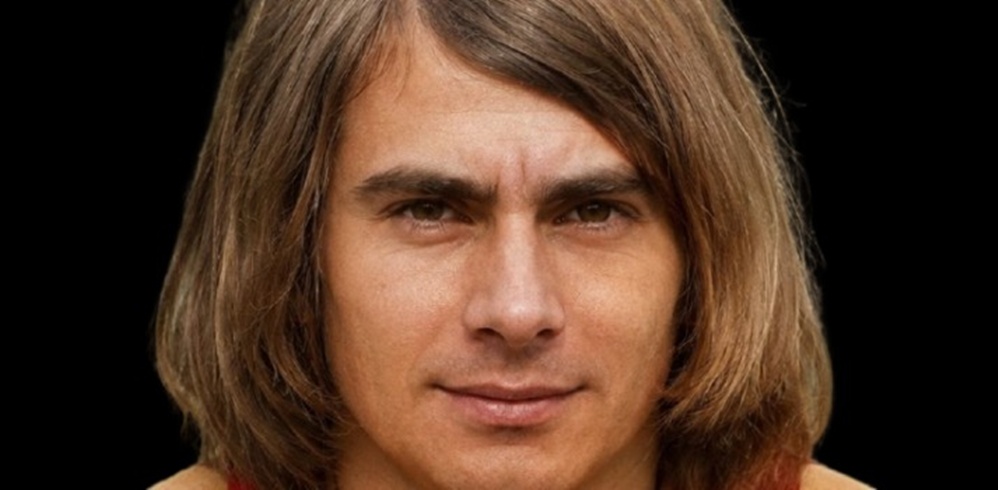
Peter Watson Middleton, born 13 September 1948, Rawmarsh, England.
PART ONE
Peter Middleton grew up supporting Sheffield Wednesday the way most boys in that corner of South Yorkshire did, without ever quite choosing to, and by the time he was old enough to sign schoolboy forms the choice had more or less made itself. Wednesday took him on, and in 1965, still a teenager but already sturdy enough to hold his own in reserve-team football, he turned professional with the club. In Sheffield, Middleton became a fixture of Wednesday’s reserves, a consistent, industrious midfielder who did nothing to embarrass himself and plenty to suggest he belonged somewhere in professional football, even if that somewhere wasn’t Hillsborough.
The Owls were themselves labouring in those years, scrapping against relegation from the First Division and finishing as low as seventeenth in 1965–66, and a struggling top-flight side has little patience for developing reserve talent when survival is the more pressing concern. Middleton watched the seasons tick past — 1965–66, 1966–67, 1967–68 — named often enough in and around the first-team squad to know he was close, yet never quite summoned. It is one of football’s quieter cruelties that a player can do everything asked of him in training and reserve football and still find the door to the top team simply doesn’t open, and so it proved for Middleton. By the summer of 1968, with his contract at Hillsborough offering diminishing returns and his patience understandably thinning, the move away became not just sensible but necessary.
Bradford City were the club waiting for him, and few clubs in England needed a lift more urgently than the Bantams did in that summer of 1968. The 1960s had treated Valley Parade harshly. City had finished bottom of the entire Football League in 1963 and again in 1966, a wretched run interrupted only by fractional improvement, and a genuine financial crisis in 1966 had come close to finishing the club off altogether before new chairman Stafford Heginbotham arrived to steady the ship.
Then, in March 1968, tragedy struck when manager Grenville Hair collapsed and died during a training session, a shock that left the club without direction just as it was attempting to rebuild. His replacement, appointed that June, was Jimmy Wheeler, a 34-year-old former Reading striker stepping into his first managerial post and inheriting a club with grand ambitions but a threadbare chequebook. Wheeler’s transfer policy that summer was dictated as much by necessity as by preference: broadly speaking, one player in for every one out, and no room for extravagance. Against that backdrop, Middleton’s arrival — alongside forward Ron Bayliss from Reading and an Australian trialist goalkeeper named John Roberts — represented not a marquee signing but a calculated bet on a player City believed had been undervalued at Hillsborough. Bradford City paid Sheffield Wednesday £500 for him, a fee that, even by the modest standards of Fourth Division recruitment in 1968, reflected a club counting every pound rather than one throwing money at a problem.
Middleton settled into Bradford City’s forward line as a pacey, direct player, and though the early months of the 1968–69 season gave little hint of what was to come — City had managed only seven wins from their first half of fixtures and sat a middling thirteenth by mid-January — the turning point arrived that same month in the unlikely shape of a centre forward from Lincoln City. Norman Corner, a rugged target man who had scored steadily for the Imps, cost Bradford City £4,000, a fee that dwarfed what they’d paid for Middleton but one Wheeler judged essential if City were to have any focal point to their attacking play.
The gamble paid off with startling speed. Corner scored eight times in twenty-one consecutive outings, and with Middleton, Bobby Ham and Charlie Rackstraw feeding off him from deeper positions, Bradford City discovered a shape and a rhythm that had eluded them for years. From that January signing came a twenty-one match unbeaten run, one of the finest sustained sequences the club had managed since the war, and City climbed steadily back into contention for the promotion places that had felt, only weeks earlier, like a fantasy.
Nothing about the run was straightforward, however, and nor should it have been, because football rarely allows its underdogs an easy final stretch. A 2-1 defeat at Brentford in the penultimate fixture of the season threatened to unravel the whole campaign at the very moment triumph seemed within touching distance, dropping City back into the anxious territory of fifth place with just one match remaining. Everything, then, came down to a trip to Feethams on Friday 9 May 1969, where Bradford City needed victory over Darlington to guarantee the promotion that had escaped them for forty-one years.
An extraordinary 11,851 spectators — a figure that dwarfed anything City had drawn at home in years — packed into the ground to witness what remains one of the most cherished nights in the club’s post-war story, and the Bantams did not disappoint, winning 3–1 in a match that included an own goal along with strikes from Bobby Ham and Bruce Bannister. Doncaster Rovers finished the season as champions, with Halifax Town and Rochdale joining City in going up, and Bradford’s fourth-place finish, modest as it might sound on paper, ended the longest exile from the game’s middle tiers that the club had endured in its history. Ham, an ever-present that season, finished as top scorer with eighteen goals and had struck up a productive partnership with Bannister, who contributed seven from thirty league appearances, while John Hall added nine, Tony Leighton eight, and Rackstraw seven — Middleton himself among the supporting cast of contributors whose consistency, rather than any individual burst of brilliance, had underpinned the whole campaign.
PART TWO
Promotion secured, Peter Middleton’s role at Bradford City evolved rather than diminished. Across three further seasons in the Third Division, under Jimmy Wheeler initially and later Bryan Edwards, he settled into a reliable midfield presence, less the pacey forward who’d arrived from Hillsborough and more a dependable, energetic provider of the kind every promoted side needs if it is to consolidate rather than immediately fall back through the trapdoor it has just climbed out of. Consistency was the watchword of those middle seasons — City finished mid-table in both 1969–70 and 1970–71, holding their own without threatening a further promotion push — and Middleton’s own contribution reflected that steadiness.
Middleton was, by this stage, arriving late into the penalty area often enough to trouble opposition defences, and his scoring record bore that out handsomely for a player operating primarily from midfield: he found the net three times in the FA Cup and six times in the League Cup across twenty cup appearances, a return that speaks to a player comfortable finishing chances rather than merely creating them for others. Across his four full seasons at Valley Parade, from 1968 to 1972, Middleton made 131 league appearances and scored 25 goals, numbers that, though unremarkable in isolation, represented exactly the sort of unglamorous reliability that keeps a club moving forward season after season.
The 1971–72 campaign, though, brought an abrupt reversal of fortune. City finished bottom of Division Three that season and were relegated amid a wretched run of results, the kind of collapse that unsettles a dressing room and prompts a club to reconsider who fits and who doesn’t as it plots a way back. Middleton, having given the club four years of unstinting effort, found himself among those the Bantams were prepared to let go, and in September 1972 a move materialised — though not, initially, the one that had seemed most likely.
A transfer to Bolton Wanderers had been on the table and collapsed at the eleventh hour, a frustration for a player who must by then have wondered where his next chapter would be written, but Bradford City moved swiftly to broker an alternative, and the result was a swap deal that sent Middleton south-west to Plymouth Argyle in exchange for forward Ronnie Brown. It was, in its way, a fitting closure to a Valley Parade spell defined less by individual glory than by steady, unfussy service: Middleton had arrived a promising young forward with a point to prove after Hillsborough, and he departed a mature, well-regarded midfielder who had played his part in the club’s finest post-war achievement.
At Home Park, under manager Ellis Stuttard, Middleton was brought in to add depth to a Plymouth Argyle side chasing a mid-table push in the 1972–73 Third Division campaign, and whatever doubts existed about how quickly he would settle into a new dressing room were answered in spectacular fashion on his very first appearance. On 16 September 1972, Middleton started as Argyle beat Shrewsbury Town 3–0 at Home Park, and he marked his debut with a superb solo goal, precisely the kind of instant impact that suggests a player is about to become an established fixture rather than a passing name on a team sheet. It should have been the beginning of something. Instead, it turned out to be the entirety of it.
Shortly after that Shrewsbury match, Middleton travelled back to Yorkshire to see family ahead of Plymouth Argyle’s next away fixture at Blackburn Rovers, and it was there, while out on the road — by some accounts having just finished a call to the club to confirm his travel arrangements for the following game — that he was struck by a car. The injuries he sustained were severe and centred on his back, the kind of damage that does not resolve itself on a physiotherapist’s table in a matter of weeks.
Middleton spent months in treatment and rehabilitation, and to his enormous credit he did not simply accept the setback; he pushed himself through a full pre-season in 1973 and even found the back of the net twice in a reserve fixture, a small but stubborn signal that he still believed a route back to the first team existed. But football, unlike sentiment, does not bend to willpower alone, and a further knock to his back during that comeback attempt brought him to a specialist whose advice was blunt and unambiguous: retirement from professional football was the only sensible course. Middleton continued to search for ways around that verdict for a while longer, training and hoping, before Plymouth Argyle ultimately released him. Even that was not quite the end of his attempts to salvage something from his ability. In 1975 he tried once more, this time with non-league Stafford Rangers, but the physical toll of top-level football on an already compromised back proved simply too much, and Middleton’s playing days closed for good.
In recognition of a Home Park career that had lasted all of ninety minutes but had cost him, in effect, everything, Plymouth Argyle and the Professional Footballers’ Association organised a testimonial match against Manchester United, staged at Home Park and drawing a substantial crowd — the kind of gesture the game reserves for players it feels it owes something to, even when the ledger of appearances looks thin. Middleton did not attend his own testimonial. His father stood in his place that evening, representing a son who, for reasons that were not widely understood at the time, could not bring himself to be there.
What lay behind that absence would only become fully apparent later, and it is where this story, so often told as a tale of misfortune and unfulfilled promise, in fact takes a far darker turn than the football alone suggests. Unknown to most who followed his story through match reports and testimonial programmes, Middleton had for some time been suffering from chronic depression, a condition that, in the mid-1970s, carried none of the openness or understanding it might attract today, and one that he seems to have carried largely alone. In April 1977, at the age of just 28, he was found dead in his car at Braithwell, near his native Rawmarsh, having taken his own life by carbon monoxide poisoning. It brought to a close, in the cruellest and most abrupt way imaginable, a life that had already been shaped by one devastating accident of fate on a Yorkshire road in 1972.
Middleton was there for Bradford City’s climb out of the basement in 1969, a contributor rather than a headline name, which is so often how the most meaningful football is actually played. One of his brothers, John Middleton, followed him into a Bradford City shirt a few years later, extending a family connection to Valley Parade that outlasted Peter’s own truncated time there. What remains of Peter Middleton’s story, in the end, is not simply a record of appearances but a reminder of how thin the line can be between a footballer’s public career and the private struggles that so rarely made it into the match-day programme.