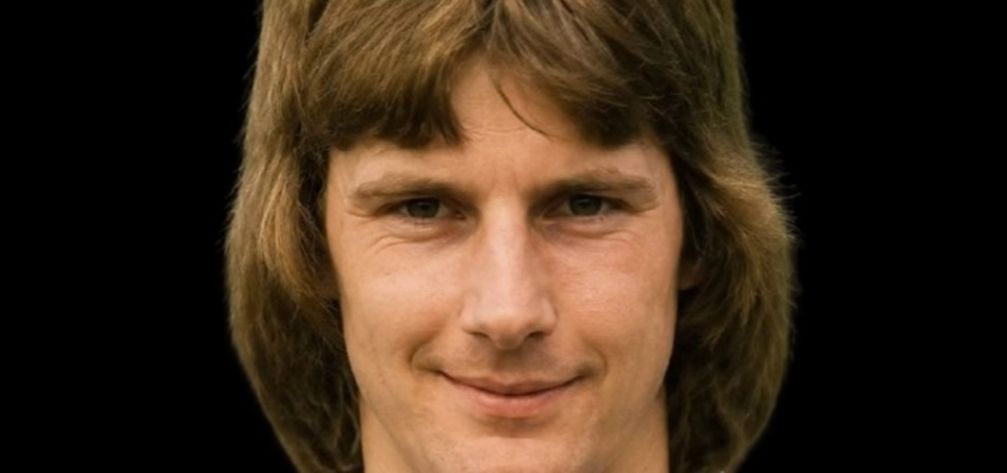
Keith Brian Oakes, born 3 July 1956, Bedworth, England.
PART ONE
Keith Oakes was born and raised in Bedworth in Warwickshire , the younger brother of Dennis Oakes, a defender who would go on to turn out for Coventry City, Notts County and, in a small twist that later mattered enormously, Peterborough United. Dennis left Bedworth first and blazed a trail of sorts, and it was hardly a surprise when Keith followed him into the game, first through Bedworth United’s junior ranks and then, in October 1971, into a professional apprenticeship at Peterborough United, the East Midlands club that would give him his beginning and, decades later, his final working home.
He turned professional there in 1972, aged just sixteen, a slight but sturdy central defender learning his trade under the watchful eyes of coaches who had seen a thousand apprentices come and go. Full-time training suited him. He was not blessed with electric pace, nor with the kind of showy footwork that got a boy noticed in the stands, but he possessed something more durable: an appetite for the unglamorous side of defending, the blocking and the covering and the willingness to put his head where braver men might hesitate. His senior debut arrived on 9 March 1973, a Friday-into-Saturday initiation into a Fourth Division that showed no mercy to the young or the unprepared, and Oakes, still a teenager, was thrown straight into it.
That first Peterborough spell ran from 1972 to 1978, six years in which he built himself from fringe squad man into a recognised first-team presence, racking up 75 appearances and 2 goals along the way — modest figures on paper, yet each one earned the hard way, through winters on frozen Fourth Division pitches and reserve fixtures nobody outside the club ever remembered. In 1973–74 he was on the periphery of something significant: Peterborough won the Fourth Division title that season, and although Oakes started only twice in five appearances, a boy of seventeen picking up a champion’s medal, even a peripheral one, leaves a mark on a young defender’s confidence that outlasts the scoreline.
Three seasons later, in 1976–77, he had grown into something closer to a regular, playing 27 times and scoring once, his tackling sharper and his positioning more assured, the awkward teenager of 1973 now a recognisable member of the Posh backline. There were moments that told supporters what sort of defender he would become: in a League Cup replay against Reading in 1976, thrown on as a young reinforcement, Oakes tidied up around the edge of his own box with a composure beyond his years and helped Peterborough over the line in extra time, 3–1. It was not a night that made headlines beyond Cambridgeshire, but it was the kind of night that shaped reputations inside a dressing room, and reputations inside dressing rooms are, more often than not, how a young pro earns his next contract.
By the summer of 1978 word had spread that Peterborough had a defender worth having, and Newport County came calling. The Welsh club, managed by Len Ashurst, moved for Oakes and, after Peterborough knocked back an initial offer, paid what was then a club record fee to take him to Somerton Park in September 1978. It was, in every sense, a gamble on potential rather than reputation — Oakes was twenty-two, unproven at anything above the basement division, and stepping into a club with grand designs on climbing the pyramid. Newport, as it turned out, got exactly what they paid for.
PART TWO
Six years is a long stay by the standards of the lower divisions, where managers come and go with the seasons and players drift between clubs like tumbleweed, and in that time Oakes became not merely a fixture at Newport but the beating heart of the club’s finest era. He made 284 appearances in Exiles colours and scored 34 goals, an extraordinary tally for a central defender, most of them arriving from the kind of set-piece work that turned him from a mere stopper into a genuine attacking outlet. He headed in corners. He rose above bigger men at free kicks. And, on one occasion at least, he did all this with a broken arm, playing on for half an hour rather than leave his side a man light — the sort of story that gets exaggerated with each retelling in a clubhouse bar, except in this case the supporters who watched it happen swear it needs no exaggeration at all.
Appointed captain, Oakes led Newport through the 1979–80 season, a campaign that turned an unfashionable Fourth Division outfit into a club with a genuine claim on romance. County finished third, 70 points from 46 matches, securing promotion to the Third Division with a run-in built on the kind of gritty away performances that captains are supposed to inspire — a 2–1 win at Brentford, a 1–0 victory at Chesterfield, matches in which Oakes organised a defence under pressure while still finding time to get forward and add to the goal tally. He struck 10 times that season from the back, and for his efforts he was named in the 1980 Fourth Division PFA Team of the Year, official recognition of what Newport supporters already knew.
Yet it was not merely the league form that made 1979–80 a season for the ages at Somerton Park. Oakes also captained Newport to the Welsh Cup, County dispatching Shrewsbury Town 5–1 across two legs of the final — a 2–1 win in the first leg at home, followed by a hammering 3–0 second-leg victory that put the aggregate beyond doubt. A domestic double of promotion and cup glory would have been remarkable enough for a club of Newport’s modest resources, but the Welsh Cup carried Newport into Europe, and it was here that Oakes’s leadership found its grandest stage.
The 1980–81 European Cup Winners’ Cup remains, to this day, the high-water mark of Newport County’s history, and Oakes stood at the centre of it as captain. County brushed aside Crusaders of Northern Ireland 4–0 on aggregate in the first round, hardly breaking sweat, before eliminating Norway’s Haugar 6–0 across two legs in the second — Oakes, for all his usual composure in front of goal, somehow contriving to miss a presentable chance in a goalless away leg in Norway, a rare blemish in an otherwise imperious European campaign. The quarter-final draw handed Newport a fixture that would have terrified far grander clubs: Carl Zeiss Jena, the East German side who had already knocked out both Roma and Valencia on their way through the competition.
Newport, extraordinarily, matched them. A 2–2 draw in Jena, Oakes heavily involved from set-pieces as County twice came from behind, set up a home leg that will live long in Welsh football folklore. Newport lost it 1–0, going out 3–2 on aggregate amid bitter complaints about the officiating and, according to those who were there, several goal-line clearances denying Oakes headers that looked, in the moment, destined for the net. It was not the fairytale ending the romantics wanted, but reaching the last eight of a European competition remains, decades later, the single greatest achievement in the club’s history, and Oakes wore the armband throughout.
PART THREE
Every captain’s spell must end somewhere, and for Oakes it ended at Newport in the summer of 1984, when he moved to Gillingham, then plying their trade in the Third Division under the management of Keith Peacock. He was twenty-eight by now, no longer the raw kid who had left Peterborough six years earlier but a seasoned professional with a promotion and a European quarter-final on his résumé, and Gillingham signed him alongside fellow defender Joe Hinnigan, arriving from Preston North End, in what amounted to a deliberate rebuilding of the Priestfield backline. The pairing clicked quickly. Peacock built his side around defensive solidity, a compact unit designed to frustrate the promotion-chasers of the division, and Oakes, drawing on everything he had learned marshalling a defence at Somerton Park, slotted into the leadership role almost by instinct.
The numbers from his two full seasons at Gillingham tell a story of remarkable consistency: 84 league appearances, 7 goals, and involvement in a team that punched well above its station. In 1984–85 Oakes played 45 league games and scored 5 times, contributing to strikes in a 4–2 win over Orient, a lively 3–3 draw with Plymouth Argyle, and a one-sided 5–1 victory over Wigan Athletic that underlined Gillingham’s home form that year. He was, in fact, the club’s most-used player across all competitions that season, appearing in all 54 of Gillingham’s fixtures as the Gills finished fourth in the Third Division on 83 points, their best return in years, conceding a miserly 62 goals along the way. There was cruel disappointment attached to missing out on promotion by a single place, but nobody at Priestfield was blaming the defence, and certainly nobody was blaming its captain in all but name.
The following season, 1985–86, brought 39 further league outings — one from the bench — and 2 more goals, including strikes against Cardiff City and Notts County as Gillingham settled for fifth on 79 points, a slight dip from the previous campaign but a season that nonetheless kept the club competitive near the top of the table. There were memorable cup nights too: a hard-fought FA Cup fourth-round tie against First Division Ipswich Town, in which Gillingham’s lower-division underdogs pushed their illustrious visitors before eventually succumbing, Oakes marshalling a defence that refused to be overawed by the occasion. Not every afternoon went to plan, of course — a chastening 4–1 home defeat to local rivals Millwall was as painful as derby losses always are — but even in defeat, teammates and supporters alike pointed to Oakes’s calm authority at the back as the glue holding a resilient dressing room together through the inevitable ups and downs of a mid-table Third Division campaign.
In 1986, with Gillingham’s two-year experiment at the top of the Third Division behind him, Oakes moved on to Fulham, another club fighting the unglamorous fight of the third tier. He spent two seasons at Craven Cottage, making 76 league appearances and scoring 3 goals, his role there less about leadership and silverware and more about the steady, unspectacular business of shoring up a defence during a period when Fulham, like so many London clubs of the era, were simply trying to stay afloat and stable rather than chase promotion dreams.
Then, in 1988, came the move that closed the circle: Oakes returned to Peterborough United, the club that had given him his start sixteen years earlier, for a second stint that would run until 1991. He featured in 97 league appearances during that spell and scored 9 goals, his legs a little heavier now but his reading of the game sharper than ever, the sort of veteran presence every club needs when they are trying to build something. And it was during this second Peterborough chapter that the next part of his working life quietly began to take shape, because Oakes was already studying for a future away from playing, working towards a physiotherapy degree even as he pulled his boots on for training each morning.
His final season as a paid player came in 1992, at non-league Boston United, where physical decline — the accumulated toll of two decades of tackling, heading and, on at least one memorable occasion, playing through a broken bone — limited him to a single appearance before retirement arrived in 1993, at the age of thirty-six. Across every level and every club, Oakes amassed well over 500 league appearances and 48 goals, staggering longevity for a man who made his name not through flair but through unglamorous, bone-jarring reliability.
PART FOUR
Few professional footballers plan quite so methodically for the day the whistle blows on their playing days, but Keith Oakes did precisely that, completing a bachelor’s degree in physiotherapy at the University of Salford while still turning out for Peterborough United. The transition, when it came, was seamless rather than sudden: during the summer of 1991 he succeeded Bill Harvey as physiotherapist at Peterborough, swapping the number on his shorts for a medical bag, though he remained around the club that he loved until 1997, treating strains and sprains rather than causing them, part of the medical team that helped steer the London Road outfit to promotion to the Second Division in 1992.
In 1997 he moved on to Lincoln City, taking up the physiotherapist’s role at Sincil Bank, a post he would hold for almost a decade until 2006. It was not always a job confined to the treatment table. During the 1997–98 season, following the sacking of manager John Beck in March 1998, Oakes found himself drawn into a caretaker management arrangement, assisting Shane Westley and Phil Stant as Lincoln fought to keep their promotion hopes alive — hopes they ultimately realised on the final day of the season against Brighton & Hove Albion, a result that owed something, at least, to the calm heads who kept the club together through a turbulent managerial upheaval.
There was an even more direct taste of management to come. In February 2001, following the dismissal of Phil Stant, Oakes stepped briefly into a co-caretaker manager’s role at Lincoln alongside youth-team boss John Schofield and senior player Steve Welsh. The trio oversaw the Imps’ Football League fixture against Mansfield Town on 3 March 2001, and Lincoln won it by a 3–2 score — a short but not insignificant footnote in a working life that had already given the club plenty of service from the treatment room.
Oakes eventually returned to Peterborough United as physiotherapist in May 2006, arriving at the same time as new manager Keith Alexander, part of a wave of familiar Lincoln faces — Gary Simpson and Richard Butcher among them — who followed Alexander to London Road. He remained there until May 2010, when he left the club by mutual consent, a slightly abrupt end considering he had signed a new four-year contract only the previous year. By 2013, Oakes had stepped away from professional physiotherapy altogether and, in one of those quietly humbling footnotes that so often mark the later years of unheralded footballers, was reported to be working in a warehouse near Lincoln — a long way, in earthly terms if not in spirit, from a European quarter-final against a side that had already knocked out Roma.
Throughout both spells in physiotherapy, at Peterborough and at Lincoln, colleagues remembered Keith Oakes for the same qualities that had defined him as a player: unflashy competence, a willingness to put in the hours that nobody saw, and an instinctive understanding of what it took to get a professional footballer back on his feet and back in contention. It was, in its own way, an extension of everything that he had done as a central defender for two decades — reading the situation, doing the unglamorous work, and making sure the team around him held together when it mattered the most.