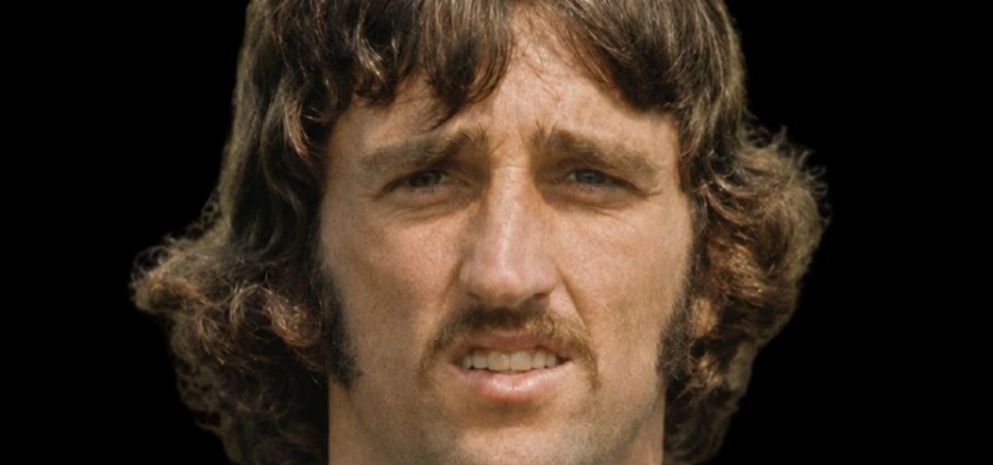
David Edward Johnson, born 23 October 1951, Liverpool, England.
PART ONE
Born and raised in the city of Liverpool, David Johnson entered professional football through Everton in May 1967, when he was only 15, and although the decision to join the Toffeemen may have caused a little surprise in a Liverpool-supporting household, it also placed him inside one of the strongest and most demanding clubs in England, where a gifted schoolboy could learn from leading internationals but could expect no favours when the time came to compete for a place.
Johnson had grown up in a city where football loyalties were established early and discussed endlessly, and he belonged to a generation of local boys who played whenever and wherever they could, using crowded streets, school grounds and patches of spare land to sharpen their touch before any professional coach had taken an interest. Everton saw enough in him to offer an apprenticeship, but that was merely permission to enter the building rather than a promise of anything beyond it, because Harry Catterick presided over a club with money, ambition and one of the deepest playing staffs in the country, and any teenage forward hoping to reach the First Division had to develop while surrounded by men who already knew how to win major honours.
Johnson accepted those conditions without fuss, worked through the youth and reserve ranks and scored on his Central League debut, beginning a striking sequence in which first appearances would repeatedly bring goals, yet the greater lesson was that natural finishing alone would not carry him into Everton’s senior side. He had to become stronger, more adaptable and more useful away from the penalty area, and those early years taught him that a forward at the top level could not simply wait for the ball to arrive, because he had to challenge defenders, chase poor passes, make space for others and keep working when an afternoon produced no clear chance at all.
Everton had already won the First Division championship under Catterick in 1962–63 and the FA Cup in 1966, and as Johnson began learning his trade the manager was assembling another formidable team, built around an outstanding midfield and supported by experienced defenders who understood exactly what was expected of them. Alan Ball had arrived from Blackpool after helping England win the 1966 World Cup, Howard Kendall supplied intelligence and balance, Colin Harvey carried the ball with a natural ease, and together they formed the celebrated midfield combination that became known as the Holy Trinity, while captain Brian Labone commanded the defence and Joe Royle led the attack with the assurance of an established First Division centre-forward. Roger Kenyon, John Hurst, Tommy Wright and later Keith Newton gave Everton strength around that central group, and although Johnson could hardly have asked for better footballers from whom to learn, their quality made his own route into the team considerably harder.
A successful side did not require a young striker merely because he had scored in the reserves, and Catterick, a cautious manager who trusted experience and valued tactical discipline, was unlikely to weaken an accomplished first eleven simply to accelerate one apprentice’s development. Johnson therefore spent much of his adolescence playing below senior level, improving his physique and learning how seasoned defenders attempted to control forwards before the ball had even entered their part of the field, but he was not wasting his time, because Everton’s reserve structure was strong and competitive and the standard of training forced young players to think more quickly. Besides, he was watching at close quarters as the club moved towards another championship, and the daily example of Ball, Kendall, Harvey, Labone and Royle showed him that talent became valuable only when it could be repeated under pressure.
PART TWO
The lesson was reinforced during 1969–70, when Everton produced one of the finest seasons in their history and won the league championship with a side that combined skill, strength and remarkable control, finishing nine points ahead of Leeds United under the old system of two points for a victory. Ball brought energy and invention, Kendall understood when to quicken or slow the play, Harvey could escape pressure with the ball at his feet, and Royle gave the midfielders a strong target in attack, while Catterick’s team possessed enough defensive authority to protect a lead without surrendering the initiative. Johnson was still waiting beneath that level, and Everton’s success created a difficult contradiction for him because he was learning within a championship club but had less chance of displacing anyone in it, while supporters naturally wanted the established team retained for as long as possible.
Yet football rarely allows even its strongest sides to remain unchanged, and the Everton that had looked so complete in the spring of 1970 began to lose its certainty during the following season, as injuries became troublesome, Labone moved closer to the end of his playing days, the great midfield combination approached its break-up and Catterick’s health placed an increasing strain on the manager. Arsenal moved towards the championship, Leeds remained powerful and Liverpool were building another dangerous side under Bill Shankly, so Everton’s position was no longer as secure as it had appeared, and that gradual decline brought an opportunity for the young forward who had waited patiently. Johnson was 19 by then, no longer merely a promising apprentice, and although he had not been allowed a gentle introduction to senior football, he had developed the physical strength and forceful running needed to compete against First Division defenders.
His first-team chance arrived at Turf Moor on 8 January 1971, when Everton faced Burnley in a Friday evening league match, and Johnson continued the pattern he had begun on his Central League debut by scoring at the first attempt. Burnley’s ground was hardly an inviting place for a young forward to begin, particularly in winter, because the home side competed strongly, the crowd stood close to the pitch and experienced defenders were unlikely to allow a newcomer time to settle, but Johnson did not play as though he had been overwhelmed by the occasion. Everton drew 2–2, and while a single goal could not guarantee him a regular place, it immediately showed that the finishing instinct seen in reserve football had survived the considerable step into the First Division.
More importantly, Johnson had taken his chance without asking the rest of the team to carry him, and that mattered to Catterick, whose young players were expected to contribute at once rather than be protected indefinitely. The goal also offered a glimpse of the forward he would become, because Johnson was direct without being limited, strong enough to disturb central defenders and alert whenever the ball broke loose near goal, while his willingness to move across the attacking line made him harder to mark than a centre-forward who remained in one position. He was not polished in every part of his play and made no claim to be, but he possessed the useful habit of becoming involved in important moments, and within weeks he was given another opportunity in a different competition against opposition of the highest domestic quality.
Everton met Derby County at Goodison Park in the fifth round of the FA Cup on 6 February 1971, and the tie gave Johnson his first appearance in the competition against a side rapidly improving under Brian Clough and Peter Taylor. Derby had been promoted from the Second Division in 1969, but Clough had already turned them into far more than ambitious newcomers, with Dave Mackay supplying experience, Roy McFarland developing into an outstanding centre-half, Archie Gemmill driving the midfield and Colin Todd soon to strengthen a team that would win the league championship in 1971–72.
The cup tie was tight, tense and decided by a single goal, and once again Johnson supplied it on his debut in a competition, giving Everton a 1–0 victory and sending them into the quarter-finals. Scoring against Burnley had announced him to First Division football, but settling an FA Cup tie against Derby carried a different weight because there could be no recovery the following week if a chance was missed, and Johnson’s finish suggested that the size of the occasion did not reduce his appetite. Everton then defeated Colchester United 5–0 in the quarter-final, ending the remarkable run of the Fourth Division side that had beaten Leeds United in the previous round, and a semi-final against Liverpool began to loom on the horizon. Before that contest, however, Johnson made a third memorable entrance, this time in Europe, and again he found the net on his first appearance.
Panathinaikos visited Goodison Park for the first leg of the European Cup quarter-final on 9 March 1971, with the Greek champions managed by Ferenc Puskás and carrying a threat that many English observers had underestimated. Everton were expected to establish a commanding home advantage, but the match became increasingly awkward as Panathinaikos defended with discipline and denied Catterick’s side the space they needed, and the danger grew during the second half when Antonis Antoniadis scored an away goal for the visitors. With time disappearing, Everton faced a damaging home defeat that would leave them requiring a considerable recovery in Athens, and Johnson was sent on as a substitute with the match moving into its final seconds.
He could scarcely have entered in more difficult circumstances, because there was no opportunity to become accustomed to the pace or assess his opponent, but when Everton mounted one last attack he reacted quickly and drove a right-footed equaliser into the net with virtually the final kick. It was his first European appearance and his first European goal, completing the unusual sequence in which he had scored on his Central League, First Division, FA Cup and European debuts, and for a few moments it appeared that his intervention might have rescued Everton’s continental hopes. Yet the away goal remained decisive, because the return match in Athens ended 0–0 and Panathinaikos advanced under the away-goals rule before eventually reaching the final, where Ajax defeated them at Wembley.
The European disappointment was followed almost immediately by another painful result, because Everton met Liverpool in the FA Cup semi-final at Old Trafford on 13 March, only four days after the Panathinaikos match, and Johnson was not selected. Everton led through Alan Ball, but Liverpool recovered with goals from Alun Evans and Brian Hall to win 2–1, and a season that had offered two possible routes to a major final lost both of them within a matter of days.
Johnson had played a dramatic part in one competition and scored the decisive goal against Derby in the other, yet he could only watch as the final opportunities disappeared, and the episode told him something important about life inside a leading club: a young player might make an impact, but selection in the largest matches would still depend on the manager’s faith, the balance of the side and the experience of those around him. Even so, he had moved from reserve football into Everton’s senior plans and had demonstrated that he could score against First Division and European opposition, while the weakening of Catterick’s championship team meant that further chances were likely to come. The old order at Goodison was beginning to break apart, and although that decline troubled supporters who had expected Everton to remain among England’s dominant clubs, it also created the room Johnson needed to establish himself.
PART THREE
The 1971–72 season became his first proper campaign as a senior player, and while Everton continued to drift away from their championship standards, Johnson began to show that his early goals had not been fortunate accidents. He played more regularly, finished the season with 11 goals in all competitions and developed an increasingly useful combination of pace, strength and persistent movement, because he could operate through the middle but was willing to pull towards either flank, compete for high passes or drop deeper when Everton struggled to connect midfield with attack. His game was built on effort but was not restricted to it, and although he lacked the delicate touch of some celebrated forwards, he could finish with either foot, attack the ball in the air and respond quickly to rebounds or defensive mistakes.
Those qualities were particularly valuable in a side that no longer controlled matches as smoothly as the champions of 1970 had done, because Everton sometimes required their forwards to create something from poor service rather than wait for a carefully constructed opening. Johnson’s local background also helped him understand the intensity surrounding the club’s matches against Liverpool, and on 13 November 1971 he entered his first Merseyside derby before 56,563 spectators at Goodison Park, facing the club he had supported as a boy and a goalkeeper, Ray Clemence, who was becoming one of the finest in the country.
The match was closely fought and remained goalless until Johnson created the moment by which many Everton supporters would remember his first spell at the club, and the finish revealed both his aerial strength and his speed of reaction. He directed a header towards Clemence, the goalkeeper pushed the ball against a post and Johnson followed his effort rather than pausing to admire it or assume the danger had passed, meeting the rebound on the volley and driving it into the net in front of the Gwladys Street end. Everton won 1–0, Johnson had settled his first derby and Liverpool’s defenders had been given a long afternoon by a forward who never allowed them to relax, while Shankly had received a close view of a player whose qualities suited the football being developed across Stanley Park.
Scoring against Liverpool naturally delighted Everton supporters, but it also carried a peculiar personal edge for Johnson because his family’s sympathies lay with the other side of the city, and he had now defeated them while wearing blue. There was no need for him to manufacture an extravagant celebration or turn the occasion into something more than it was, because the goal and result were enough, and the honesty of his performance helped earn respect even from people who would have preferred him to be playing for the opponents. Liverpool’s interest soon became more than admiration. Shankly wanted Johnson at Anfield and reportedly attempted more than once to persuade Everton to sell him, but Catterick refused because transferring a promising local forward directly to the club’s greatest rival would have strengthened Liverpool and provoked anger around Goodison Park.
Crystal Palace also offered £100,000, a considerable sum for a young attacker, and Everton’s willingness to listen suggested that Johnson’s position was less secure than his performances might have implied, but the Liverpool approaches were rejected even though the player’s style appeared well suited to Shankly’s demands. Johnson worked hard, competed aggressively without requiring constant encouragement and could play with or around another striker, and Liverpool valued forwards who understood that pressing a defender or making a decoy run could matter as much as scoring. Nevertheless, Catterick was not prepared to accept the political consequences of sending him across Stanley Park, and Johnson remained at Everton as the club entered the early weeks of 1972–73.
By then, however, a different move was developing. Everton needed to reshape a side that had declined since the 1970 championship, while Ipswich Town manager Bobby Robson was building one of the most energetic young teams in the First Division and wanted a forward whose directness could complement Trevor Whymark’s subtler movement. In October 1972 Everton agreed an exchange in which Rod Belfitt, Ipswich’s leading scorer, moved to Goodison Park along with £40,000, while Johnson left Merseyside for Suffolk.
It was a significant decision for a 20-year-old who had spent his entire life in Liverpool, and from the outside Ipswich may have appeared a smaller destination than either Everton or the Liverpool side that had tried to sign him, but Robson’s club offered something neither Merseyside team could guarantee at that moment: regular football in a developing First Division side whose manager believed Johnson could become central to its attack. He departed Everton after demonstrating his promise rather than completely fulfilling it, and he left behind the memory of debut goals, a dramatic European equaliser and a derby winner, but the transfer was not a retreat from the highest level. It was the move that gave him the space to grow, and under Robson he would become a more complete forward, play in Europe, challenge for domestic honours and force his way into the England team.
PART FOUR
David Johnson arrived at Ipswich Town in October 1972 with enough First Division experience to avoid being treated as an untested youngster but with plenty still to prove, and the move offered him precisely the combination he required, because Bobby Robson was prepared to give young players responsibility while demanding that every one of them worked within the shape and rhythm of the team. Ipswich could not match the spending power, attendances or national profile of Liverpool, Manchester United, Leeds United, Arsenal or the Everton side Johnson had left, but Robson had already recognised that the club’s limitations could become a source of strength if he built patiently, coached carefully and trusted players before richer rivals realised how good they were.
He had taken charge at Portman Road in January 1969 after a playing life spent mainly with Fulham and West Bromwich Albion, and his opening period in management had been difficult, with Ipswich fighting to remain in the First Division rather than challenging its strongest teams, but the foundations were gradually being laid. Mick Mills developed into a dependable full-back and captain, Allan Hunter brought authority to central defence, Colin Harper offered strength and versatility, and young men including George Burley, Kevin Beattie, Brian Talbot and Eric Gates would emerge from a system that Robson understood Ipswich had to maintain if they were to compete without exhausting their limited resources. Johnson was one of the comparatively few established players brought from elsewhere, and that alone showed how strongly Robson wanted him, because the manager believed his pace, physical power and constant movement could add a more forceful edge to a side already capable of playing thoughtful football.
The central attacking partnership became the key to Johnson’s development, for Trevor Whymark was not an orthodox target man who occupied the same ground and demanded the same passes, but a subtle, technically secure forward who drifted away from central defenders, linked with midfield and opened spaces for somebody else to attack. Johnson supplied the directness, Whymark provided much of the disguise, and although the division was never quite that simple, their contrasting qualities gave Ipswich several ways of moving forward. A high pass could be directed towards Johnson, whose strength allowed him to challenge a centre-half and bring midfielders into play, while Whymark could withdraw, turn in possession and send his partner into the channels, and behind them Bryan Hamilton and Colin Viljoen understood when to arrive in the areas the forwards had emptied.
Peter Morris passed neatly from midfield, Mick Mills advanced intelligently from full-back, and Allan Hunter’s composure gave Ipswich the confidence to build from defence rather than clear the ball without thought, so Johnson joined a team whose organisation helped him without removing his individuality. Robson did not ask him to become a delicate imitation of Whymark, nor did he judge him only by his scoring total, because the manager valued the run that pulled a defender away, the aerial challenge that produced a loose ball and the burst towards the corner that gave Ipswich time to move up the pitch. Still, Johnson had been signed as a forward and goals remained the clearest evidence that the exchange with Everton had worked, so his opening weeks carried a pressure that regular selection could ease but never entirely remove.
His Ipswich debut came against Don Revie’s Leeds United at Portman Road on 4 November 1972, one of the hardest introductions the First Division could provide, because Leeds were experienced, physically imposing and skilled in preventing opponents from establishing any comfortable pattern. Johnson was not required to wait on the bench or learn Ipswich’s football slowly, for Robson placed him straight into the side, and although the match ended 2–2 he contributed to the move that allowed Whymark to put the home team 2–1 ahead. Leeds possessed international players throughout their team and could punish the slightest loss of concentration, but Johnson competed from the opening minutes, showing that the transfer had not disturbed his confidence, and his willingness to engage their central defenders helped Ipswich play farther up the field than a more hesitant newcomer might have allowed.
His first goal for the club followed at Maine Road on 2 December, where Manchester City took the lead but Johnson answered with a first-time left-footed finish from inside the penalty area to secure a 1–1 draw. The goal was important not merely because it opened his Ipswich account, but because it displayed the decisiveness Robson had expected: Johnson did not require an extra touch or a perfect angle, and when the opportunity reached him he struck before the defence could reset. That equaliser began a run of four goals in three league matches, including both in a 2–1 home victory over Crystal Palace, and the early uncertainty surrounding any transfer began to disappear as Johnson settled into the work of playing every week.
PART FIVE
Regular football changed his position quickly. At Everton he had been a young forward trying to persuade Catterick that he deserved selection ahead of established men, but at Ipswich he was part of Robson’s preferred attack and could develop through matches rather than isolated appearances, and the difference showed in the confidence of his movement. He began making runs earlier because he trusted the pass to be attempted, challenged more aggressively because he knew a missed header would not necessarily cost him his place and learned Whymark’s habits well enough to recognise where the next opening might appear.
Ipswich were also gathering momentum as a team, and on 17 February 1973 Manchester United arrived at Portman Road to face a side no longer satisfied merely to survive in the First Division. Roughly 32,000 spectators, then a record attendance at the ground, watched Ipswich win 4–1, and although Johnson did not appear among the scorers, his aerial pressure contributed to two of Hamilton’s goals and illustrated how much damage a centre-forward could cause without receiving the final touch. Hamilton scored from close range in the opening minutes, Harper headed in a corner to make it 2–0, and shortly after the interval Manchester United goalkeeper Alex Stepney struggled with another Hamilton effort before Lou Macari reduced the deficit and Viljoen converted a penalty to restore the three-goal advantage. Johnson had occupied defenders, competed for set pieces and helped create the disorder from which midfielders profited, and Robson regarded that work as part of the forward’s proper responsibility rather than an excuse offered when he failed to score.
A week later Johnson did find the back of the net at Anfield, although the Portman Road team succumbed to a 2–1defeat against Liverpool, and his goal carried an obvious interest because Shankly had tried to take him there before Everton agreed the Ipswich exchange. Johnson was now showing Liverpool exactly why they had wanted him, but he belonged to a team making its own progress and had no reason to regard Suffolk as a temporary stopping place.
Arsenal visited Portman Road on 10 March and won 2–1 before another record crowd, this time approaching 35,000, yet individual setbacks could not disguise the scale of Ipswich’s improvement. Johnson appeared in every league match following his transfer, Ipswich lost only six of their final 27 fixtures and the club finished fourth in the First Division, above far wealthier and more celebrated opponents, while qualification for the UEFA Cup provided the first reward for Robson’s patient construction. Johnson completed the campaign with eight goals from 33 appearances in all competitions, a respectable return for a forward who had arrived after the season began, but the greater value of those months lay in his immediate fit within the side. Ipswich had not merely purchased his goals; they had acquired a runner who made Whymark more dangerous, a physical opponent who created room for Hamilton and Viljoen, and a young man whose appetite matched Robson’s belief that the club could challenge the traditional powers rather than applaud them from a respectful distance.
There was also a trophy at the end of 1972–73, although the Texaco Cup did not possess the standing of the championship, FA Cup or European competitions that Ipswich hoped one day to win. The tournament brought together clubs from England and Scotland that had not qualified for Europe, and its importance varied according to the opponents and circumstances, but a final against Norwich City carried a sharp local meaning that neither team could dismiss. Ipswich won both legs 2–1 to complete a 4–2 aggregate victory, with Johnson playing in the Portman Road match but missing the return at Carrow Road, and Robson’s young side gained the useful experience of completing a cup run and lifting a trophy. Success against their East Anglian rivals pleased supporters, but the season’s league position mattered far more because fourth place had earned Ipswich the opportunity to test their football beyond Britain, and that prospect appealed greatly to Johnson.
He had scored against Panathinaikos on his European debut for Everton but had been eliminated without defeat after the goalless return in Athens, and now he would enter continental competition as an established member of a team rather than a substitute sent on during the final desperate seconds. Ipswich could not approach Europe with the financial strength of the largest English clubs, but Robson’s players possessed fitness, organisation and youthful confidence, and their first UEFA Cup opponents would give them an immediate opportunity to prove that those qualities could unsettle even the most famous names.
PART SIX
Real Madrid came to Portman Road in September 1973, carrying the history of six European Cup victories and a reputation that could have intimidated players unused to such occasions, but Ipswich refused to treat the visitors as untouchable. Robson prepared his team carefully, aware that Madrid’s name must not be allowed to decide the tie before the ball was kicked, and the home side played with enough aggression and control to win 1–0 through a Mick Mills goal. Johnson worked across the front line, challenged defenders accustomed to European football and helped ensure that Madrid could never commit every player to attack without considering the threat Ipswich carried at the other end, and the narrow victory gave Robson’s men something definite to protect in the return.
Around 80,000 spectators filled the Santiago Bernabéu for the second leg, creating a scale and noise far removed from an ordinary afternoon at Portman Road, but Ipswich defended with discipline, resisted the pressure and drew 0–0 to eliminate the Spanish giants. The result changed outside perceptions of the club because a fourth-place finish in England might have been dismissed as one exceptional season, whereas defeating Real Madrid over two legs required concentration, nerve and tactical maturity. Johnson had now played in one of Europe’s great stadiums and contributed to a victory that travelled far beyond Suffolk, but the next round would provide a very different experience, combining Ipswich’s finest attacking display of the season with a night of violence and disorder in Rome.
Lazio visited Portman Road for the first leg in October 1973, and Ipswich overwhelmed them 4–0 as Whymark scored all four goals, producing a performance that brought together the forward’s intelligent movement and the team’s quick, accurate service. Johnson’s own night ended painfully after Giancarlo Oddi caught him with a dangerously high challenge around the waist and groin, and he had to be carried from the field before receiving treatment, but even his injury could not halt Ipswich’s attacking control. Whymark’s four goals gave them what appeared to be an unassailable advantage, yet the return in Rome became notorious because Lazio approached the match with an aggression that moved far beyond ordinary competitive pressure.
Ipswich knew the Italians would attack quickly and attempt to unsettle them, but the evening descended into repeated confrontations, fierce challenges and crowd hostility, while objects were thrown and the atmosphere around the Stadio Olimpico became increasingly threatening. Lazio won 4–2, but Ipswich advanced 6–4 on aggregate, and Johnson scored both of his side’s goals in circumstances that demanded far more than calm technical football. His first came at an important stage when Lazio were attempting to build the momentum required for an extraordinary comeback, and his second further protected Ipswich’s aggregate advantage, while the abuse and aggression around the pitch continued.
Robson’s players left with their European place intact but with little affection for the experience, and Johnson had shown that he could respond to intimidation by scoring rather than disappearing from the contest. The Lazio tie no doubt placed a physical strain on Ipswich, but the UEFA Cup allowed no gentle pause, and the third round brought FC Twente, one of the strongest Dutch sides of the period. The first leg at Portman Road ended in a 1–1 draw, leaving Town in a difficult position before the return in the Netherlands, where Twente controlled the decisive match and won 2–1 to complete a 3–2 aggregate victory.
Ipswich’s first European campaign had therefore ended before Christmas, but it had included the elimination of Real Madrid, six goals across two fierce matches with Lazio and a demanding tie against technically accomplished Dutch opposition, and Johnson had emerged from it with his reputation strengthened. He could score under pressure, endure physical treatment and work within Robson’s disciplined shape, while the experience of Madrid, Rome and Enschede broadened him considerably beyond the young forward who had left Everton only a year earlier. Domestic football continued without sympathy, however, and Ipswich needed to demonstrate that European nights had not distracted them from the First Division, where the strain of additional matches could expose a squad without the depth of its wealthier rivals.
Robson’s side responded by finishing fourth again in 1973–74, confirming that the previous campaign had not been a brief rise built on surprise. Leeds United won the championship after beginning the season with a remarkable unbeaten run, Liverpool finished second and Derby County took third place, but Ipswich remained firmly among the division’s strongest teams and secured another UEFA Cup qualification. Johnson scored 12 goals in all competitions, improving his first-season return, and his partnership with Whymark grew more fluent as each understood how the other reacted to different kinds of service.
When Whymark withdrew towards midfield, Johnson attacked the central space; when Johnson moved wide to chase a pass or confront a full-back, Whymark slipped nearer to goal, and Hamilton’s forward runs added another threat that defenders found difficult to track. Along with their attacking improvement, Ipswich possessed one of the most exciting young defenders in England, because Kevin Beattie combined speed, power and remarkable confidence, while Hunter’s experience and Mills’s reliability gave Robson a defensive platform capable of supporting the adventurous football ahead of them. Beattie was still only 20 during the season, Johnson was 22 and several other important players had their best years in front of them, so fourth place felt less like the limit of Ipswich’s possibilities than another stage in their development.
Johnson’s own progress was becoming impossible for England’s selectors to overlook. He had represented the under-23 side and was playing regularly for a club that had finished fourth in consecutive seasons, while his work could be measured not only in goals but in the effect he had upon defenders and teammates. Yet senior international football remained crowded with centre-forward candidates, and England were still trying to understand the consequences of failing to qualify for the 1974 World Cup. Sir Alf Ramsey had been dismissed, Joe Mercer took temporary charge and Don Revie was appointed during the summer of 1974, beginning a period in which numerous players would be tried as the new manager searched for a dependable combination. Johnson could not force himself into the side through reputation alone, and Ipswich still lacked the weekly national attention given to Liverpool, Leeds or Manchester United, but another strong domestic campaign would place him firmly in contention.
PART SEVEN
Ipswich Town entered 1974–75 with their ambitions raised by consecutive fourth-place finishes, and although Bobby Robson continued to work within financial limits that did not trouble Liverpool, Leeds United, Manchester United or several other First Division rivals, his team had developed beyond the stage at which another respectable position would satisfy them. They had already defeated Real Madrid, survived a violent encounter with Lazio and established themselves among the strongest sides in England, while the young core of the team was maturing together and David Johnson, approaching his 23rd birthday, had become an essential part of Robson’s plans.
He was no longer the promising Everton forward who required regular football to discover how far he could go, because two years at Portman Road had made him a forceful, experienced attacker who could lead the line, move into wider areas, combine with Trevor Whymark and occupy defenders so that Bryan Hamilton, Colin Viljoen or Brian Talbot could advance beyond him. Johnson’s football remained direct and down to earth, but there was more thought behind it than opponents sometimes appreciated, for he recognised when to challenge for a high pass, when to pull a centre-half away from the penalty area and when to delay his run for a second before attacking the opening created by Whymark. Robson had not attempted to turn him into a different kind of player; instead, he had refined the speed, strength, finishing and persistent movement already present, and Johnson began the season as one of the most troublesome forwards in the First Division.
Ipswich’s European involvement ended early, although not through defeat in either match, when FC Twente drew 2–2 at Portman Road and 1–1 in Enschede to advance on away goals in the first round of the UEFA Cup. That removal reduced their fixture load, but it also left Robson’s players determined to make something substantial of the domestic season, and they quickly demonstrated that another challenge near the top of the table was possible.
Liverpool arrived at Portman Road on 2 November as league leaders, bringing the strength and experience of a side that had won the FA Cup the previous May, but Johnson escaped the attention of Emlyn Hughes and Chris Lawler before supplying the opening from which Talbot scored the only goal. Ipswich’s 1–0 victory showed that the previous two fourth-place finishes had not been achieved through surprise, while Johnson’s contribution illustrated why his value could not be measured only by his own scoring figures, because his movement had disturbed Liverpool’s defensive arrangement and created the decisive chance for a midfielder. Two weeks later he produced the only hat-trick of his Ipswich years as Coventry City were beaten 4–0 at Portman Road, and by the turn of the year Robson’s team were involved in a crowded championship contest with Everton, Liverpool, Derby County and Stoke City.
The pressure increased on 11 January 1975, when Ipswich defeated Middlesbrough 2–0 and moved to the top of the First Division, with Johnson scoring the second goal through a right-footed shot from outside the penalty area. There was nothing accidental about Ipswich’s position, because the team could build patiently through midfield, use Mick Mills and George Burley to supply width or play more directly towards Johnson when the match required it, while Allan Hunter and Kevin Beattie provided pace, authority and strength in central defence.
Yet the table remained tight enough for every dropped point to carry a severe cost, and the FA Cup was about to place another demand upon a squad that did not possess the depth of the richest clubs. Robson refused to treat the competition as an inconvenience, while his players had no interest in choosing between the league championship and Wembley when both prizes remained within reach, and Ipswich began a cup run in which every opponent came from the First Division. Johnson scored as Wolverhampton Wanderers were beaten 2–1 at Molineux in the third round, and holders Liverpool then came to Portman Road for a fourth-round tie played before 34,709 spectators, a new record attendance at the ground at that time. Ipswich won 1–0, removing the holders and advancing to a fifth-round home match against Aston Villa.
That tie, played on 15 February, became one of the most dramatic afternoons of Ipswich’s season because Aston Villa established a 2–0 lead through Bobby McDonald and Alun Evans, leaving the home side in serious danger of elimination. Johnson began the recovery by scoring the goal that brought Ipswich back into the contest, and with the crowd responding to the change in momentum, Robson’s players completed a 3–2 victory. The comeback carried them into a quarter-final against Leeds United, but nobody could have anticipated that the tie would last through four matches and almost seven hours of football before a winner emerged.
The first meeting took place at Portman Road on 8 March before 38,010 spectators, a ground record that still stands, and the sides drew 0–0 after Johnson came close to settling the contest. Three days later they met again at Elland Road, where Johnson headed Ipswich ahead after 17 minutes, and his goal appeared likely to be enough until substitute Duncan McKenzie struck an equaliser with only seconds remaining. The 1–1 draw after extra time required a second replay at the neutral ground of Filbert Street on 25 March, but another 120 minutes produced no goal, so the teams were ordered back to Leicester only 48 hours later for a third replay. By then, the tie had become an examination of stamina as much as football, and both clubs were still competing for major honours elsewhere.
The fourth match on 27 March finally brought the goals that had been missing from the earlier contests, and Ipswich led after five minutes when Whymark converted following a Mick Mills cross, but Allan Clarke equalised for Leeds before the interval. Johnson had begun the night despite carrying a hamstring problem and tried to play through it, yet he could continue for only 35 minutes before Roger Osborne replaced him, and his departure added to Robson’s concerns because Beattie and Mick Lambert had already missed the match through injury.
Hamilton restored Ipswich’s lead early in the second half when Viljoen’s shot struck him and wrong-footed goalkeeper David Stewart, although Johnny Giles headed Leeds level once more, and the tie appeared to be heading towards still more extra time. With nine minutes remaining, however, Clive Woods stepped inside Giles near the edge of the penalty area and struck a curling right-footed shot beyond Stewart to give Ipswich a 3–2 victory. Whymark, Hamilton and Woods had supplied the goals, while a 17-year-old John Wark made an outstanding first-team debut in place of Beattie, and Robson’s side had at last reached the first FA Cup semi-final in the club’s history. The achievement had required four matches, three replays and six hours and 49 minutes of football, but Johnson’s hamstring injury meant that he had paid a personal price for the victory. The match sequence, teams and scorers are recorded by the Ipswich archive Pride of Anglia.
PART EIGHT
West Ham United awaited Ipswich in the semi-final at Villa Park on 5 April, only nine days after the exhausting conclusion of the Leeds tie, and Johnson was unable to play because of the injury that had forced him off at Filbert Street. Robson’s team therefore entered the first semi-final in their history without their regular centre-forward, while the physical cost of the previous round remained visible throughout the side, but they defended firmly and drew 0–0. The result required a replay at Stamford Bridge on 9 April, and Johnson was again absent as Ipswich attempted to reach Wembley without one of the men who had helped carry them through the earlier rounds.
Alan Taylor scored twice for West Ham, first breaking the deadlock and then placing John Lyall’s side two goals ahead, while Ipswich’s reply was credited as a Billy Jennings own goal, but the London club protected its 2–1 advantage and advanced to the final. West Ham subsequently defeated Fulham 2–0 at Wembley, with Taylor again scoring both goals, while Ipswich were left to consider how differently the semi-final might have developed had their first-choice attack and strongest side been available. There was no certainty that Johnson’s presence would have changed the result, but his absence plainly mattered because his running, physical pressure and understanding with Whymark had shaped Ipswich’s attacking play throughout the season. The replay was played at Stamford Bridge before 45,344 spectators, with Taylor scoring both West Ham goals.
The FA Cup disappointment did not allow Ipswich to forget the championship, and the remaining league matches gave them little time to recover from the physical and mental strain. Derby County, Liverpool and Everton were still involved in the contest, and the margins were so narrow that one result could change the order completely. Ipswich beat Birmingham City 3–2 three days after the semi-final replay and defeated Queens Park Rangers 2–1 on 16 April, but the decisive setback came at Elland Road on 19 April, where they lost 2–1 to Leeds United on an afternoon when Liverpool and Everton were also beaten.
Four days later Ipswich drew 1–1 at Manchester City in their game in hand, and that result made Derby County champions before Dave Mackay’s side played their final fixture. Ipswich completed the season in third place with 51 points, level with second-placed Liverpool and only two behind Derby, while Everton finished fourth on 50, and the narrow gaps showed how close Robson’s side had come. A single additional victory would have placed Ipswich level with the champions, but the draining sequence against Leeds, followed immediately by the two semi-final matches with West Ham, had removed energy and players at the worst possible time.
Johnson finished 1974–75 with 15 goals from 48 appearances in all competitions, not 20 as previously stated, and his contribution included the hat-trick against Coventry, the goal that placed Ipswich top of the league against Middlesbrough, strikes in the FA Cup victories over Wolverhampton Wanderers and Aston Villa, and the header at Elland Road that came within seconds of deciding the long quarter-final struggle. His total was strong without telling the whole story, because he also created the winning goal against Liverpool in November and continued performing the physical work that allowed Whymark and the midfield runners to find space. Ipswich had finished fourth, fourth and third during Johnson’s first three seasons, and although the league championship and FA Cup had both escaped them in 1975, he had established himself as one of the strongest English centre-forwards outside the country’s largest clubs.
Ipswich began 1975–76 with Johnson still central to Robson’s side, and he scored four times in five matches during the early weeks, including the opening goal in a 2–0 home victory over Liverpool on 13 September. Four days later he scored the winner as Ipswich defeated Feyenoord 2–1 in Rotterdam in the first leg of their UEFA Cup tie, and a 2–0 victory at Portman Road completed a convincing 4–1 aggregate success. Club Brugge appeared to have been placed in an impossible position when Ipswich won the home leg of the second round 3–0, but Robson’s side endured a disastrous return in Belgium, losing 4–0 and going out 4–3 on aggregate.
The collapse was difficult to explain because Ipswich had carried such a commanding advantage abroad, and the result removed them from Europe before the end of October. Their league form lacked the sustained authority of the previous season, although they remained among the First Division’s better sides, and Johnson later scored with a header from an Eric Gates cross during a 3–3 draw against Everton at Goodison Park. Ipswich finished sixth, the lowest position of Johnson’s four seasons at Portman Road but still another top-six placing, and he completed 1975–76 with eight goals from 43 appearances in all competitions.
Johnson´s final Ipswich total stood at 46 goals in 178 matches, and those figures had been accumulated during four seasons in which the club finished fourth, fourth, third and sixth in the First Division. Tottenham Hotspur made an unsuccessful attempt to sign him, but Johnson later made clear that only Liverpool could have persuaded him to leave the club where he had enjoyed four successful years under Robson. Liverpool offered £200,000 in August 1976, then a record fee for the Anfield club, and Johnson accepted the opportunity to return to Merseyside and compete for the largest honours.
He left Ipswich as a far more complete player than the young forward who had arrived from Everton in 1972, and although he had not won the league championship or reached Wembley, he had helped Robson’s side establish itself among the country’s best, scored in major European victories, survived the long struggle with Leeds and earned his first three England caps. Now the examination would become harder, because Liverpool were already champions, their squad contained established internationals and Johnson would have to win his place in a team that expected trophies rather than merely hoped for them.
PART NINE
David Johnson returned to Merseyside as a Liverpool player on 12 August 1976, when Bob Paisley paid Ipswich Town £200,000 and broke the Anfield transfer record to secure a forward whom Bill Shankly had wanted several years earlier, but the size of the fee did not purchase an automatic place. Liverpool were the reigning league champions and UEFA Cup holders, Kevin Keegan and John Toshack had developed one of the most effective attacking partnerships in English football, Steve Heighway could move forward from the left, and 19-year-old David Fairclough had already shown how much damage he could cause when introduced against tiring defenders.
Johnson therefore arrived as an England international with 46 Ipswich goals behind him, but he entered a dressing room in which achievements elsewhere carried less weight than the work performed each day at Melwood. Paisley was quiet in manner but exacting in judgement, and he expected a new signing to learn Liverpool’s movement, understand when possession should be retained and recognise that the obvious pass was not always the correct one. Johnson possessed strength, speed and a readiness to compete, yet Liverpool required their centre-forward to do more than challenge for crosses or finish chances, because he had to connect with Keegan, make room for midfield runners and begin the defensive work by pressing opponents at the proper moment. The opportunity was immense, but so was the possibility of spending long periods outside the side.
His Liverpool debut came on the opening day of the league season, 21 August 1976, when Norwich City visited Anfield and were beaten 1–0, with Fairclough scoring the only goal. Johnson had now represented both Merseyside clubs in the First Division, although the afternoon brought no immediate scoring entrance of the kind he had produced for Everton in the league, FA Cup and European Cup, and he had to wait only one more week for his first Liverpool goal. Birmingham City defeated Paisley’s side 2–1 at St Andrew’s on 28 August, but Johnson scored for the visitors, opening his account even though the result prevented any real celebration.
Liverpool’s early form was uneven, while Johnson moved in and out of the team as Paisley considered the qualities of Toshack, Fairclough and his record signing, and the new forward discovered that adapting to a successful side could be harder than joining one still being built. At Ipswich, Bobby Robson had brought Johnson directly into a partnership with Trevor Whymark and allowed their understanding to develop through regular matches, but Liverpool already possessed settled combinations, and every selection altered the balance of an attack accustomed to Keegan’s movement and Toshack’s aerial presence. Johnson sometimes appeared too eager to justify the fee, chasing into areas where Liverpool wanted him to remain patient, while on other occasions the speed of the passing demanded decisions before he had fully read the intentions of the men around him.
Paisley did not panic when the immediate return fell short of outside expectations, because Liverpool’s manager understood that some players required months rather than weeks to absorb the club’s methods. Johnson continued to receive opportunities in the league and domestic cups, but his most important contribution during the autumn came in the European Cup, a competition Liverpool had never won. The opening round brought Trabzonspor, who defeated them 1–0 in Turkey on 20 October and carried that narrow advantage to Anfield two weeks later, where the possibility of an embarrassingly early elimination created a tense atmosphere.
Liverpool attacked from the beginning and Johnson responded with two goals as the deficit was overturned, while Keegan added another to complete a 3–0 victory and send Paisley’s team through 3–1 on aggregate. The goals mattered beyond their value to Johnson’s personal standing, because Liverpool were about to discover a new level in European football, and without the recovery against Trabzonspor none of the celebrated nights that followed during the spring would have occurred. Johnson had shown that his strength and alertness could be useful against opponents defending deeply, but the competition for attacking places remained severe, and one successful evening could not settle a question Paisley reconsidered before every match.
Liverpool defeated Baník Ostrava in the second round and reached a quarter-final against Saint-Étienne, the French champions who had lost the previous season’s European Cup final to Bayern Munich and were regarded as one of the most accomplished teams on the continent. Saint-Étienne won the first leg 1–0 in France, and the return at Anfield on 16 March 1977 became one of the defining European nights of Paisley’s time. Keegan scored early, Dominique Bathenay replied with a fierce shot that restored the French advantage on aggregate, and Ray Kennedy then made it 2–1 on the night, but Liverpool still required another goal because of Saint-Étienne’s away strike.
Fairclough replaced Toshack with 16 minutes remaining and raced on to Kennedy’s pass before scoring in front of the Kop, giving Liverpool a 3–1 victory and a 3–2 aggregate success. Johnson watched as another forward delivered the decisive contribution, and although he shared the celebration, Fairclough’s goal emphasised the competition around him. FC Zürich were then beaten 6–1 on aggregate in the semi-finals, and Liverpool reached their first European Cup final, but Johnson’s place in the most important team of the season remained uncertain.
PART TEN
The league required a different kind of endurance because Liverpool had to maintain their position across 42 matches while pursuing both cups, and Johnson’s value often lay in giving Paisley another kind of forward when Toshack’s injuries disrupted the established partnership. Keegan was the constant figure in attack, moving quickly between midfield and the penalty area, harrying defenders and combining naturally with whichever centre-forward was selected, while Johnson offered physical work, direct running and enough mobility to move outside the central channel.
Some performances were quieter than the fee encouraged people to expect, and Liverpool supporters accustomed to immediate success from leading players could be demanding, but Johnson continued to contribute as the championship contest moved towards its conclusion. Liverpool remained unbeaten at Anfield throughout the league season and finished one point ahead of Manchester City, securing the title after a 0–0 draw at West Ham United on 14 May. Johnson had made enough appearances to earn his first major domestic medal, and although he had not yet become the commanding first-choice forward he hoped to be, he had played a meaningful part in a championship-winning side.
The title formed the first part of a possible treble, and one week after the draw at West Ham, Liverpool met Manchester United in the FA Cup final at Wembley. Paisley selected Johnson alongside Keegan on 21 May, giving his record signing the position he wanted on the largest domestic afternoon of the season, while Liverpool stood within two victories of winning the league championship, FA Cup and European Cup. The opportunity was enormous, but the match never settled into the smooth pattern that Liverpool preferred, because United defended fiercely, contested midfield and denied Johnson the kind of sustained service from which he might have imposed his strength.
The first half ended goalless, Stuart Pearson put Manchester United ahead six minutes after the interval and Jimmy Case equalised almost immediately with a splendid finish, but Liverpool remained level for only a few minutes. Lou Macari’s shot struck Jimmy Greenhoff and deflected beyond Ray Clemence, giving United a 2–1 lead that Tommy Docherty’s side protected until the end, while Johnson was replaced by Ian Callaghan during the second half. His first Wembley final had passed without a decisive contribution, and Liverpool’s attempt to win three major trophies was over.
Only four days later Liverpool faced Borussia Mönchengladbach in the European Cup final at Rome’s Stadio Olimpico, but Johnson was left among the substitutes. Paisley selected Keegan and Heighway in the attacking positions, supported by Case and Terry McDermott, and Liverpool won 3–1 through goals from McDermott, Tommy Smith and Phil Neal after Allan Simonsen had equalised early in the second half. Johnson received a winner’s medal and celebrated Liverpool’s first European Cup, but he had not entered the match, and for a competitive forward there was an unavoidable difference between belonging to the squad and helping decide the final on the field.
He finished his first Liverpool season with 38 appearances and eight goals in all competitions, including the two against Trabzonspor that had rescued the European campaign, and he had started the FA Cup final, won a league championship and collected a European Cup medal. Those achievements represented an extraordinary first year by ordinary standards, but Liverpool’s standards were no longer ordinary, and Johnson entered the summer knowing that a permanent place had still not been secured. Liverpool’s seasonal record lists Johnson among the club’s 38-appearance players in 1976–77.
PART ELEVEN
Keegan’s departure for Hamburg after the European Cup triumph appeared to create an opening, because Liverpool had lost the tireless and inventive forward around whom their attack had been constructed, and Johnson could reasonably have expected more regular football in 1977–78. Paisley, however, moved quickly and signed Kenny Dalglish from Celtic for £440,000, replacing one outstanding player with another whose style was different but whose effect proved immediate.
Dalglish received the ball with defenders close behind him, protected it through balance rather than size and saw passing angles before most players realised they existed, while his finishing was calm and accurate. Johnson later described him as the finest footballer he had played with or against, and admiration was easy because Dalglish’s quality was unmistakable, but his arrival also removed any idea that Keegan’s departure had left an uncomplicated vacancy. Liverpool now needed to discover the most effective partner for Dalglish, and Johnson had to compete again with Toshack, Fairclough and Heighway while coping with injuries that repeatedly interrupted his rhythm.
Liverpool began the season by drawing 0–0 with Manchester United in the Charity Shield, and Dalglish soon established himself so firmly that the question was no longer whether he would play but who would accompany him. Johnson’s opportunities were limited during the opening months, and Liverpool’s league defence began to weaken as newly promoted Nottingham Forest, managed by Brian Clough and Peter Taylor, produced an extraordinary run of form.
Forest were organised, confident and difficult to break down, and they moved towards the championship while Liverpool struggled to repeat the consistency of the previous season. Johnson’s lack of a settled run prevented him from building the understanding with Dalglish that regular matches might have produced, while Toshack still offered aerial power and Fairclough remained capable of changing a contest from the bench. The European Cup, however, continued to provide Liverpool with a route towards another major honour, and although Johnson’s role was uneven during the earlier rounds, he would eventually make a vital contribution in the semi-final.
Before then came the European Super Cup against Hamburg, a two-legged contest delayed until November and December 1977, and the presence of Keegan with the German club added considerable interest. Liverpool drew 1–1 in Hamburg and then overwhelmed their opponents 6–0 at Anfield on 6 December, with McDermott scoring a hat-trick and Paisley’s team winning 7–1 on aggregate. Johnson took part in the triumph and added another European honour to his collection, but the season’s central questions remained unanswered because Forest were ahead in the league and Liverpool’s attacking positions continued to change. Forest also frustrated them in the League Cup final at Wembley on 18 March 1978, when the teams drew 0–0 after extra time, and Johnson was not included in Liverpool’s side. Three days later a replay at Old Trafford was settled by John Robertson’s penalty, giving Forest a 1–0 victory and another success over the reigning European champions.
The European Cup semi-final brought Borussia Mönchengladbach, the team Liverpool had defeated in Rome the previous May, and the first leg was played in Düsseldorf on 29 March 1978. Liverpool fell behind through Wilfried Hannes and remained one goal down as the match approached its conclusion, but Johnson entered as a substitute for McDermott and equalised in the 88th minute, scoring a precious away goal when he headed beyond Wolfgang Kneib.
The finish appeared to have secured a 1–1 draw, yet Rainer Bonhof struck almost immediately to give Mönchengladbach a 2–1 victory, and Liverpool returned home trailing but strengthened by Johnson’s goal. At Anfield on 12 April, Ray Kennedy scored early, Dalglish added the second and Case completed a 3–0 victory, sending Liverpool through 4–2 on aggregate. Johnson’s late intervention in Germany had altered the shape of the tie because it meant a 1–0 home victory would have been enough, and he had again supplied an important European goal after beginning outside Paisley’s starting side.
Between the two semi-final matches came an achievement that belonged entirely to Johnson. Liverpool travelled to Goodison Park on 5 April, and seven years after scoring Everton’s derby winner against the Reds, he appeared in the fixture wearing Liverpool colours. The match was settled by one goal, and Johnson scored it at the Gwladys Street end, becoming the first player to register in Merseyside derbies for both clubs. The symmetry was remarkable: he had scored Everton’s only goal against Liverpool at Goodison in November 1971, and now he scored Liverpool’s only goal against Everton at the same ground in April 1978. He did not attempt to hide his pleasure, but the respect he retained among many supporters on both sides reflected the honesty of his play, because Johnson had never disguised his Liverpool background when representing Everton and never treated his Everton years with contempt after moving to Anfield.
Just as his position appeared to be improving, injury intervened. Leicester City visited Anfield on 8 April, three days after the derby, and only six minutes into the match Johnson suffered serious knee-ligament damage. The timing was cruel because he had scored in the European Cup semi-final, settled the Merseyside derby and begun to force his way into Paisley’s most important plans, but his season ended immediately and rehabilitation replaced the prospect of another European final. Liverpool met Club Brugge at Wembley on 10 May and won 1–0 through Dalglish’s second-half goal, retaining the European Cup, while Johnson watched on crutches rather than waiting among the substitutes as he had in Rome. He received another medal because of his contribution to the campaign, particularly the goal in Germany, but for the second year running Liverpool had won Europe’s greatest prize without him entering the final.
Johnson’s frustration was understandable because the circumstances differed sharply. In 1977 Paisley had chosen other players, leaving him fit but unused, whereas in 1978 his own knee had removed any possibility of selection after he had begun to produce decisive goals. Liverpool ended the season as European champions but finished second to Nottingham Forest in the league and lost the League Cup final replay to the same opponents, while Johnson entered the summer facing a long recovery. He had spent two seasons at Anfield, collected two European Cup medals, a league championship and the European Super Cup, started an FA Cup final and scored important goals in continental competition, yet he still had not become a permanent member of the side or played in a winning European final. The next season would begin with doubts over his knee and his position, but it would develop into the period in which Johnson finally moved from the edge of Liverpool’s greatest achievements to the heart of their championship attack.
PART TWELVE
David Johnson spent the summer of 1978 recovering from the knee-ligament injury suffered against Leicester City in April, and while Liverpool prepared to defend the European Cup and recover the league championship from Nottingham Forest, he faced the more immediate question of whether his body would allow him to regain the momentum created by his goals against Borussia Mönchengladbach and Everton. Rehabilitation could be lonely work for a forward accustomed to competing every day, because the rest of the squad moved towards another season while he repeated exercises designed merely to restore strength and movement, but Johnson understood that impatience might cause another breakdown.
Bob Paisley and Liverpool’s medical staff did not hurry him, and he began 1978–79 outside the starting side as Kenny Dalglish remained the central figure in attack, supported by Steve Heighway, David Fairclough and the midfield runners who had become increasingly important to Liverpool’s football. Yet the opportunity to announce his recovery arrived in extraordinary circumstances on 2 September, when Tottenham Hotspur visited Anfield with a newly promoted team containing the Argentine World Cup winners Ossie Ardiles and Ricardo Villa. Tottenham expected a demanding afternoon but possessed enough attacking talent to believe they could trouble Liverpool, while Johnson began among the substitutes and could not have known that he was about to enter one of the most celebrated league matches in Anfield’s history.
Liverpool were already ahead when Emlyn Hughes suffered an injury during the first half, and Paisley responded by sending on Johnson, replacing a defender with a forward and rearranging the side rather than making a cautious alteration. Tottenham were unable to cope with the additional attacking pressure, and after Dalglish, Ray Kennedy and Graeme Souness established a 3–0 interval lead, Johnson scored the fourth and fifth goals during the opening 12 minutes of the second half. His first was struck right-footed from approximately 15 yards, his second came with his left after Dalglish created the opportunity, and the two finishes provided immediate evidence that the damaged knee had not removed his sharpness or confidence.
Phil Neal converted a penalty for the sixth, and then came the seventh goal, a sweeping counter-attack that moved from Liverpool’s own penalty area to Tottenham’s net within seconds. The home side cleared a corner, Dalglish released Johnson into space and Johnson quickly sent the ball across towards Heighway on the left, who measured his cross to the far post, where Terry McDermott completed a long run with a powerful diving header. Every stage of the move carried purpose, and Johnson’s pass mattered because he recognised Heighway’s position immediately and moved the ball without slowing the break. Liverpool won 7–0, and Johnson had returned from a serious injury with two goals and an important part in a move remembered long after the other details of the afternoon had faded.
One great performance did not give him an automatic place, because Paisley continued managing his recovery and Liverpool possessed several attacking choices, while the standards within the squad ensured that yesterday’s goals offered no protection against tomorrow’s poor training session. Dalglish was indispensable, Fairclough remained dangerous and Heighway could operate from a forward position, but Johnson gradually became more consistent as his knee strengthened and his understanding with Dalglish developed.
Their partnership worked because the two men were different without being incompatible, for Johnson could lead the line, challenge for high passes and attack the penalty area with force, while Dalglish often withdrew from the centre, received the ball with his back to goal and drew defenders towards areas they did not want to enter. When a centre-half followed Dalglish, Johnson attacked the space behind him, but their roles were flexible enough to prevent opponents from relying upon that single pattern, because Johnson could also drop towards midfield and connect with Souness or McDermott, while Dalglish possessed the finishing ability of a natural goalscorer and needed no invitation to move into the penalty area.
The strength behind them helped the partnership grow. Souness, signed from Middlesbrough in January 1978, had become the controlling presence in midfield, combining physical authority with the ability to pass over short or long distances, while McDermott made forceful runs through the centre and Ray Kennedy supplied calmness from the left. Jimmy Case added shooting power and competitive strength, Phil Neal advanced from right-back, and Alan Kennedy, signed from Newcastle United during the summer, gave Liverpool another attacking route from the opposite side.
Johnson therefore received service from several directions, but he was not excused from the collective labour that made the system effective, and his willingness to chase a loose pass, pressure a defender or occupy an awkward position gave the more gifted creators time to influence the match. He did not possess Dalglish’s exceptional touch and never pretended otherwise, but Liverpool did not require two identical forwards, and Johnson’s speed, power and readiness to accept physical punishment enlarged the effect of the man beside him.
PART THIRTEEN
Liverpool’s 1978–79 league season developed into one of the finest produced under the old system of two points for a victory, as Paisley’s side combined relentless home form with a defensive record that opponents found almost impossible to disturb. Ray Clemence kept goal behind Neal, Phil Thompson, Alan Hansen and Alan Kennedy, and the team conceded only 16 times across 42 league matches, while no visitor won at Anfield. The championship contest included Nottingham Forest, whose organisation under Brian Clough remained formidable, but Liverpool gathered momentum and gradually established a lead that even the defending champions could not close.
Johnson contributed 16 league goals and 18 in all competitions, while Dalglish scored 21 in the First Division, and the partnership gave Liverpool a reliable source of goals whether matches opened into fluent attacking contests or became difficult struggles decided by one opportunity. Johnson was no longer the club-record signing waiting behind Toshack or the injured forward watching a European final from the sidelines, because he had become part of Paisley’s preferred team and was scoring regularly enough to justify the faith shown during his recovery.
Liverpool were eliminated from the European Cup in the first round by Nottingham Forest, who won 2–0 at the City Ground and protected their advantage through a goalless draw at Anfield before retaining the trophy themselves, and the early exit removed the possibility of a third successive continental triumph. Yet it also reduced Liverpool’s fixture load and concentrated their attention upon regaining the league, which they pursued with an authority rarely matched in the First Division.
They won 30 of their 42 matches, scored 85 goals and collected a record 68 points, eight more than Forest, and the title was secured by defeating Aston Villa 3–0 at Anfield on 8 May 1979. Johnson had now won his second championship medal, but this success felt different from 1976–77 because he had been central to it, starting regularly and scoring 18 times rather than moving between the team and the bench. The knee injury that had threatened to halt his progress had instead been followed by his most productive season to that point, and at the age of 27 he had finally established himself in the strongest side in England.
The summer brought no suggestion that Liverpool would become satisfied, because Paisley’s management depended upon constant examination and gradual renewal, and even a player who had scored 18 goals understood that his position had to be earned again. Hughes left for Wolverhampton Wanderers, Thompson became captain and younger men including Sammy Lee continued to push for greater responsibility, but the central structure of the team remained intact.
PART FOURTEEN
Liverpool opened 1979–80 by defeating Arsenal 3–1 in the Charity Shield at Wembley on 11 August, with McDermott, Dalglish and Johnson scoring, and the forward began the season as he intended to continue it. The partnership with Dalglish had moved beyond the early stage in which each man merely reacted to the other, because they now anticipated movements without requiring a signal, and Johnson recognised the spaces Dalglish’s passing would reach before defenders had turned to see them. Equally, Dalglish knew that his partner would contest the difficult ball, run across a centre-half or continue towards goal after an initial attack appeared to have failed, and their contrasting methods became parts of the same pattern.
Liverpool’s attempt to regain the European Cup again ended in the first round, this time against Dinamo Tbilisi. Paisley’s side won the opening leg 2–1 at Anfield on 19 September, but the narrow advantage offered little protection in Georgia, where Dinamo produced a superb performance and won 3–0 to advance 4–2 on aggregate. The defeat was severe and demonstrated that Liverpool’s European reputation could not rescue them when their passing and defensive organisation were disrupted, while Johnson and Dalglish received little space against an opponent that attacked with speed and confidence.
Nottingham Forest also removed Liverpool from the League Cup in the semi-finals, continuing their troublesome record against Paisley’s side, and the FA Cup ended with another exhausting disappointment when Arsenal eventually won a semi-final requiring four matches. The first meeting at Hillsborough finished 0–0, and three replays were needed before Brian Talbot scored the only goal at Highfield Road on 1 May, bringing Liverpool’s cup programme to an end and leaving the championship as their remaining prize.
Johnson’s individual form remained outstanding throughout those setbacks. He could score with either foot, was strong in the air and understood where rebounds were likely to fall, but his improvement lay as much in the variety of his movement as in the finishing itself. Opponents who expected him to remain between the centre-halves found him pulling towards a full-back, while those who followed him too far created the opening Dalglish wanted, and a defence that concentrated solely upon the Scotsman gave Johnson the chance to attack the penalty area directly.
Some of his goals were forceful and untidy, others arrived through sharp first-time finishes, but they all carried the same value in a league contest that remained close because Manchester United, managed by Dave Sexton, refused to fall away. Fairclough also scored regularly when selected, contributing 13 goals despite making only 12 starts in all competitions, and that competition ensured Johnson could never drift into comfort. Paisley possessed several different attacking weapons and used them according to the opponent, but Johnson and Dalglish gave the side its most dependable balance over a full match.
As Liverpool moved through the winter, Johnson’s scoring kept them in front during a campaign less overwhelming than the previous one but no less demanding. The team remained unbeaten at Anfield, yet their away results allowed Manchester United to maintain pressure, and there was no eight-point cushion of the kind established in 1978–79. Every narrow victory mattered, and Johnson’s readiness to convert ordinary pressure into a goal became increasingly important as the season approached its closing weeks. By then, Ron Greenwood had restored him to the England squad, ending an international absence of almost four and a half years, but Liverpool remained his daily concern and the championship could not be treated as secure. Arsenal’s FA Cup victory on 1 May removed the final distraction, and only two days later Aston Villa visited Anfield for the penultimate league match, with Liverpool requiring a victory to make certain of retaining the title.
Johnson delivered two goals in a 4–1 win on 3 May 1980, giving his most productive season the appropriate conclusion. The first helped Liverpool take command, the second ensured that Manchester United could no longer extend the contest, and Johnson had scored the goals that confirmed a championship in front of the Kop. Liverpool finished with 60 points, two ahead of United, and Johnson’s 21 league goals made him the club’s leading scorer in the First Division, while his total reached 27 in all competitions.
Dalglish scored 28 across the season, so the pair produced 55 between them, a remarkable combined return that reflected both their individual finishing and the understanding developed over two years. Johnson’s performances were recognised by his fellow professionals, who selected him in the PFA First Division Team of the Year alongside Dalglish and McDermott, and that judgement carried particular value because it came from opponents who had spent the season attempting to control him. He was not simply a serviceable forward fortunate enough to play beside exceptional men; during 1979–80 he was one of the leading strikers in English football.
PART FIFTEEN
Liverpool went into the 1980–81 campaign as champions for the second successive season, and David Johnson began it from a position of considerable strength, because he had scored 27 goals in all competitions, earned selection in the PFA First Division Team of the Year and returned from the European Championship as an established England international. He and Kenny Dalglish had produced 55 goals between them during the previous campaign, and Bob Paisley had little reason to disturb a partnership that combined Johnson’s power and persistent movement with Dalglish’s exceptional touch, vision and finishing.
Yet Liverpool never allowed the previous season to decide the next one, and Paisley’s constant renewal continued quietly even while the first team collected trophies. In April 1980 he had paid Chester £300,000 for Ian Rush, an 18-year-old Welsh forward whose thin build and lack of senior experience made him appear a signing for the distant future rather than an immediate threat, but the Liverpool staff saw qualities that could not be measured by appearance alone. Rush moved intelligently, attacked space without waiting for the ball to be played and possessed a natural desire to reach the penalty area, although Paisley understood that throwing him directly into the strongest side in England could do more harm than good. Johnson therefore remained the senior centre-forward as the new season began, but another stage in Liverpool’s gradual rebuilding had already started.
The campaign opened with a 1–0 Charity Shield victory over West Ham United at Wembley on 9 August 1980, when Terry McDermott scored the only goal, and Liverpool appeared ready to maintain the authority of the previous two years. The league season, however, did not develop with the same smooth control, because injuries affected important players, Dalglish’s remarkable run of 180 consecutive appearances came to an end and the champions began dropping points away from Anfield.
Opponents had also studied the Johnson-Dalglish partnership closely and became more careful about following Dalglish into midfield, while central defenders attempted to deny Johnson the physical contests from which Liverpool often created second balls. He still worked across the line and remained capable of finishing sharply, but the chances arrived less frequently and interruptions prevented the attack from establishing its previous rhythm. Johnson scored 13 goals in all competitions, a respectable return by ordinary standards but a clear reduction from the 18 and 27 he had produced during the previous two seasons, while Liverpool’s difficulties meant that every missed opportunity attracted greater attention than it had when victories came almost automatically.
Paisley was also altering the team around him. Emlyn Hughes, Tommy Smith and Ian Callaghan had already departed, Alan Hansen had become the main figure in central defence, Sammy Lee was forcing his way into midfield and Ronnie Whelan was approaching first-team football, while Rush trained among senior players and learned what Liverpool expected from a forward. Johnson did not treat the young Welshman as an immediate replacement, because he had seen promising attackers arrive before and understood that reserve goals did not necessarily survive the move into First Division football, but Rush’s speed of movement and appetite were apparent.
Johnson was stronger, more experienced and far more accomplished in linking the play, and Paisley continued to trust him when Liverpool required a forward capable of holding possession under pressure, particularly away from home in Europe. Nevertheless, Johnson was approaching his 29th birthday, had already suffered serious knee-ligament damage and knew that Liverpool’s selection policy did not protect an older player when a younger one became more effective. There was no hostility between the two men, but the existence of Rush introduced a question that would become increasingly important over the next 18 months.
The league season became unexpectedly troublesome as Aston Villa, managed by Ron Saunders, developed a championship challenge built around a small and remarkably settled side, while Bobby Robson’s Ipswich Town remained involved in the title race and also pursued the FA Cup and UEFA Cup. Liverpool lost too many matches away from Anfield, failed to establish a long period of consistency and eventually finished fifth, their lowest First Division position since 1970–71, but cup football gave the season a completely different shape.
PART SIXTEEN
The League Cup had never been won by Liverpool, despite their dominance of the championship and European Cup, and Paisley’s side advanced to the final against Second Division West Ham United at Wembley on 14 March 1981. Johnson missed the match through injury, and after 90 goalless minutes the contest moved into extra time, when Alan Kennedy gave Liverpool the lead before Ray Stewart equalised from the penalty spot in the final moments. The 1–1 draw required a replay at Villa Park on 1 April, but Johnson was again unavailable, and Rush was selected for only his second senior appearance. Paul Goddard put West Ham ahead, Dalglish equalised and Hansen scored the winner as Liverpool recovered to win 2–1, lifting the League Cup for the first time.
Johnson received a medal because of his contribution to the earlier rounds, but the manner of Liverpool’s success carried an uncomfortable echo of the 1978 European Cup, when injury had removed him shortly before the final. This time, however, the young forward introduced in his absence represented more than a temporary replacement, even though Rush had not yet scored for Liverpool and soon returned to the reserves.
Johnson remained first choice for the European Cup, where the demands placed upon a lone or isolated striker suited his experience, and Liverpool’s campaign had begun against the Finnish champions Oulun Palloseura. A disappointing 1–1 draw in Finland was followed by a 10–1 victory at Anfield, and the second round brought Aberdeen, the Scottish champions managed by Alex Ferguson. Liverpool won 1–0 at Pittodrie through a McDermott goal and then dominated the return 4–0, advancing 5–0 on aggregate and showing the gap that still existed between Ferguson’s rapidly improving side and Paisley’s European experience.
CSKA Sofia came to Anfield for the first leg of the quarter-final on 4 March 1981, and Liverpool established complete control through a 5–1 victory, with Souness scoring three times and Johnson adding another. The large advantage made the return in Bulgaria appear a formality, but Paisley disliked careless assumptions and selected a strong side to finish the work properly. Johnson scored during the opening minutes at the Vasil Levski Stadium on 18 March, giving Liverpool a 1–0 victory on the night and a 6–1 aggregate success, while any faint Bulgarian belief in an extraordinary comeback disappeared almost immediately. Bayern Munich awaited in the semi-final, bringing a side containing Karl-Heinz Rummenigge, Paul Breitner and several players capable of deciding a match through one swift attack, and Liverpool understood that their previous European experience would not remove the danger.
The first leg at Anfield on 8 April ended 0–0, a result that appeared to favour Bayern because Liverpool would have to score in Munich while resisting one of Europe’s strongest attacks. Paisley’s difficulties increased before the return because captain Phil Thompson was unavailable, Alan Kennedy played with his wrist protected in plaster, Dalglish was carrying fitness concerns and several members of the side were below full strength.
The second leg took place at the Olympiastadion on 22 April, and Liverpool’s situation worsened almost immediately when Dalglish was injured by a challenge from Wolfgang Dremmler and had to leave the field during the opening minutes. Howard Gayle replaced him and used his speed to trouble Bayern, but the young winger became exhausted and was later substituted himself, while Johnson remained through the middle, chasing isolated passes, absorbing challenges and attempting to give Liverpool’s defence enough time to move away from its own penalty area.
The match remained goalless as the closing minutes approached, and with Bayern applying pressure, Liverpool appeared to be fighting merely to reach extra time, but Johnson continued working despite carrying an injury of his own. With seven minutes remaining he gained possession on the right and directed the ball towards Ray Kennedy, who advanced into the penalty area and drove a right-footed shot beyond Walter Junghans.
The away goal changed everything, because Bayern now needed to score twice, and although Rummenigge equalised shortly afterwards, Liverpool protected the 1–1 draw and advanced under the away-goals rule. Johnson’s contribution had been decisive, for he had led the attack without Dalglish, competed while hurt and supplied the pass from which Kennedy scored, and Liverpool had reached their third European Cup final in five seasons. After watching the 1977 final from the bench and missing the 1978 match on crutches, Johnson was fit as the club prepared to meet Real Madrid in Paris.
PART SEVENTEEN
The final was played at the Parc des Princes on 27 May 1981, and Paisley selected Johnson alongside Dalglish, giving him the opportunity he had sought since leaving Ipswich five years earlier. Real Madrid had not won the European Cup since 1966, but their name, experience and quality ensured that Liverpool could expect no comfortable evening, and the match developed into a cautious, physically demanding contest with few clear chances. Johnson worked against central defenders Andrés Sabido and Antonio García Navajas, challenging for difficult passes and attempting to create room for Dalglish, while Liverpool’s midfield refused to allow Vicente del Bosque, Uli Stielike and their teammates to establish control. Santillana and Juanito remained dangerous for Madrid, but Clemence was protected by a defence that maintained its concentration, and as the second half continued the possibility of extra time grew.
With nine minutes remaining, Ray Kennedy’s throw released Alan Kennedy down Liverpool’s left, and the full-back drove forward, escaped Rafael García Cortés and struck a powerful shot beyond goalkeeper Agustín from a tight angle. Liverpool led 1–0 and protected the advantage through the remaining minutes, with Case replacing Dalglish as Paisley strengthened the midfield, while Johnson stayed on the pitch to the end. When the final whistle sounded, he had completed the full match and could celebrate as a participant rather than a substitute or injured spectator, and Liverpool had won their third European Cup while Paisley became the first manager to lift the trophy three times.
Johnson had not scored in Paris, but his work in Munich and the final had mattered, and the evening carried an importance beyond another medal because it removed the frustration attached to Rome and Wembley. “It meant so much to me after being on the bench in ’77 and on crutches in ’78,” he later recalled, and the simple statement explained why the Paris victory stood apart from the other European successes listed beside his name. Liverpool’s account records Johnson’s full participation in the 1981 final after his absence from the two earlier winning teams.
Success in Paris rescued a season that had produced only fifth place in the league, and it ensured that Liverpool qualified to defend the European Cup, but the celebration could not prevent further change. Clemence left for Tottenham Hotspur during the summer, allowing Bruce Grobbelaar to take over in goal, while Whelan and Lee moved closer to regular selection and Rush continued his development. Johnson began 1981–82 as an established senior forward, but Liverpool’s opening form was uneven and the team remained in the middle of the table as winter approached.
The European Cup brought Oulun Palloseura for the second season in succession, and after Liverpool won the first leg 1–0 in Finland, the return at Anfield on 30 September became a turning point in the competition for attacking places. Johnson started the match and Liverpool overwhelmed their opponents 7–0, but Rush replaced him and scored his first senior goal for the club. The finish did not instantly remove Johnson from the team, yet it gave the younger forward the confidence and public proof he had been waiting for.
Rush scored twice in a 3–0 league victory over Leeds United on 10 October and then found the net in a 3–1 win against Everton at Anfield on 7 November, and his progress accelerated rapidly. He moved with a speed that central defenders found difficult to follow, ran beyond Dalglish at precisely the moment the Scotsman wanted to release the ball and finished chances before goalkeepers could set themselves, while his appetite for chasing defenders suited Liverpool’s collective work. Johnson was not abandoned immediately and continued receiving opportunities, but an injury created additional room for Rush, and once the partnership with Dalglish began producing goals, Paisley had no reason to interfere with it. The pattern carried a familiar cruelty, because Johnson had once attempted to replace Toshack alongside Keegan and now found himself in the senior man’s position, watching a younger forward establish the understanding he had worked years to secure.
Liverpool’s league position remained disappointing during the first half of the season, and they were tenth around Christmas, but the team’s form changed sharply after a Boxing Day defeat at Manchester City. Paisley’s players began winning with increasing authority, Rush scored repeatedly and the midfield combination of Souness, Lee and Whelan gave Liverpool renewed energy, while Grobbelaar settled after an uncertain opening period in goal. Johnson remained available as an experienced alternative, but his role had moved from first choice to deputy, and the number of opportunities naturally declined as Liverpool gathered momentum with Rush leading the line. There was no practical argument for selecting an older forward merely because he had played in Paris, because Paisley judged the requirements of the present rather than the achievements of the past, and Johnson understood that reality even though accepting it could not have been easy.
His final Liverpool goal came on 19 January 1982 in an FA Cup third-round replay against Brighton and Hove Albion at Anfield, when Paisley’s side won 3–0, and his last appearance followed on 20 March in a 1–1 league draw against Southampton. By then Rush had become the first-choice striker and would finish the season with 30 goals in all competitions, while Johnson watched Liverpool’s revival carry them towards two domestic honours. The League Cup final against Tottenham Hotspur was played at Wembley on 13 March, and Steve Archibald gave Tottenham an early lead that remained intact until the closing minutes. Whelan equalised in the 87th minute, sending the match into extra time, and Johnson entered as a substitute for McDermott as Liverpool sought greater attacking strength. Whelan scored again before Rush completed a 3–1 victory, and Johnson had taken part in Liverpool’s second successive League Cup triumph rather than receiving a medal from outside the side.
The championship contest produced an even greater recovery. Liverpool moved steadily from tenth place to the top, while Ipswich again provided the main opposition, and Rush’s goals combined with the team’s experience to create the familiar late-season momentum. Ipswich pursued the title with determination but could not match Liverpool’s closing run, and Paisley’s team finished four points ahead to win the First Division for the fourth time during Johnson’s six seasons at Anfield. He had made enough appearances to earn another championship medal, but the final months confirmed that his regular years with Liverpool were over. Johnson was 30, Rush represented the immediate future rather than distant promise, and Fairclough, Whelan and other younger players gave Paisley further options, while Johnson wanted to play rather than wait for injury or occasional rotation to create an opening.
He left Liverpool in August 1982 and returned across Stanley Park to Everton, completing a remarkable movement through the two Merseyside clubs. His official Liverpool record stood at 213 appearances and 78 goals in all competitions, while the honours accumulated during those six years included four league championships, three European Cups, two League Cups and the European Super Cup. The bare list could be misleading because he had contributed to those successes in very different ways: he was an unused substitute in Rome in 1977, injured before Wembley in 1978 and a full participant in Paris in 1981, while his championship medals included the supporting role of 1976–77, the established partnership of 1978–79, the 27-goal peak of 1979–80 and the deputy’s place during the 1981–82 recovery. Liverpool’s official record gives Johnson 213 appearances and 78 goals between 1976 and 1982.
PART EIGHTEEN
David Johnson crossed Stanley Park for the second time in August 1982, when Howard Kendall paid Liverpool £100,000 to return him to Everton almost ten years after Harry Catterick had exchanged him for Rod Belfitt and £40,000, and the circumstances could hardly have differed more from those surrounding his departure. Johnson had left Goodison Park in October 1972 as a 20-year-old forward with promise, a Merseyside derby winner and several memorable debut goals but no major honour, whereas he returned at 30 after six demanding seasons with Liverpool, carrying four league championship medals, three from the European Cup, two from the League Cup and one from the European Super Cup.
He had played beside Kenny Dalglish, Kevin Keegan and Graeme Souness, had represented England at the 1980 European Championship and had completed a European Cup final against Real Madrid, but none of that could stop the natural changes brought by age, injuries and years of physical contests with First Division defenders. Kendall understood those facts because he had been one of Everton’s senior midfielders when Johnson first entered the team, and his decision to bring the forward home was not based upon the belief that he remained the same quick young attacker who had scored against Liverpool in November 1971. Everton needed experience, leadership and greater competition in attack, and Johnson could supply all three while Kendall attempted to rebuild a club that had spent too many recent seasons watching its neighbours collect the game’s largest prizes.
Everton’s position in 1982 was frustrating rather than hopeless, because the club possessed promising players but lacked the consistency and authority needed to challenge seriously near the top of the First Division. Kevin Ratcliffe was developing into a strong and quick central defender, Steve McMahon brought force and determination to midfield, Neville Southall was beginning to establish himself in goal and Graeme Sharp, signed from Dumbarton in 1980, had the height, touch and finishing ability to become an outstanding centre-forward, but the pieces had not yet settled into a dependable side. Kendall’s first season as manager had ended with Everton eighth in 1981–82, an improvement upon some of the club’s poorer recent campaigns, and the return of Johnson gave him a forward who understood what a championship team required each day rather than only on the grandest afternoons.
Johnson knew how Liverpool trained, prepared and reacted to setbacks, and although he could not simply transfer Anfield’s methods across the park, his standards in practice and his willingness to accept the difficult physical work offered an example to younger teammates. Yet experience could not guarantee goals, and Everton supporters who remembered the boy who had beaten Ray Clemence in the derby were now watching a footballer whose speed had diminished and whose knee had absorbed considerable punishment.
His second Everton spell began during 1982–83, and Johnson appeared regularly enough to contribute across the forward line, but his role differed sharply from the one held beside Dalglish three years earlier. Liverpool’s midfield had supplied him through Souness, McDermott, Ray Kennedy and the overlapping full-backs, while Everton were still searching for an attacking pattern and could not maintain the same territorial pressure, so Johnson often worked at a distance from goal and received fewer of the chances he once converted so confidently.
He remained willing to chase, challenge and link play, but the final yard of pace could not be restored by experience, and defenders who might once have been hurried by his movement had more time to recover. Sharp was also progressing rapidly and represented the future of Everton’s attack, while Adrian Heath, signed from Stoke City in January 1982, brought sharp movement and a natural eye for goal. Johnson could help both men and compete with them, but Kendall’s larger responsibility was to build a side capable of improving over several seasons, and the manager could not organise that plan around a 30-year-old forward merely because they had once shared a dressing room.
Everton finished seventh in 1982–83, only one place higher than the previous season, and continued to produce good performances without sustaining them long enough to become a serious force. Johnson’s experience proved useful, but his goals arrived far less frequently than they had during his strongest Liverpool years, and as 1983–84 began, his place became increasingly uncertain. The early months of that season were difficult for Kendall, whose team struggled badly enough for pressure to grow around the manager, while attendances fell and supporters questioned whether the rebuilding work was moving quickly enough.
Yet the foundations of a much stronger side were being formed beneath those poor results, with Ratcliffe, Southall, Sharp, Heath, Peter Reid and Trevor Steven either established or moving towards important roles, and the decisive attacking change came in November 1983 when Everton signed Andy Gray from Wolverhampton Wanderers. Gray brought aggression, aerial courage and the ability to unsettle central defenders, and his arrival gave Kendall a powerful partner for Sharp, but it also reduced Johnson’s remaining opportunities.
Johnson had made 40 league appearances and scored four goals during his second Everton period, with five goals in all competitions, and those figures reflected the practical difference between returning to a familiar club and recreating the past. He had come home with medals, experience and a genuine desire to contribute, but Everton were moving towards a younger and more forceful attack, and the same unsentimental process that had allowed Rush to replace him at Liverpool now favoured Sharp and Gray at Goodison.
Johnson did not see out the 1983–84 season as part of Kendall’s first-team plans, even though Everton themselves were about to reach two cup finals and begin the improvement that would transform the club. There was a particular irony in their League Cup run, because the final at Wembley in March 1984 brought Everton and Liverpool together for the first all-Merseyside domestic cup final, but by then Johnson was no longer involved. The sides drew 0–0 at Wembley and Liverpool won the replay 1–0 at Maine Road through a Souness goal, while Everton later defeated Watford in the FA Cup final and moved towards the most successful period in their history.
PART NINETEEN
Johnson’s search for regular football took him to Barnsley on 2 February 1984, when he joined the Second Division club on a one-month loan under Norman Hunter. The move carried him away from the First Division for the first time in his senior playing life, and the surroundings were very different from Anfield, Goodison Park or the European stadiums he had known, but he was still motivated by the simple desire to play. Barnsley were an ambitious and competitive Second Division side rather than a comfortable destination for a well-known veteran, and Hunter, one of the hardest and most accomplished defenders of Johnson’s generation, expected him to contribute rather than trade upon his reputation.
Johnson made four league appearances during the loan, and the most memorable came at Elland Road on 25 February, when Barnsley defeated Leeds United 2–1 and he scored the winning goal. The result carried special satisfaction for Hunter, whose name remained inseparable from the great Leeds side built by Don Revie, while Johnson had his own long history against the club after the four-match FA Cup quarter-final struggle with Ipswich in 1975. Nine years after leaving the decisive contest at Filbert Street with a hamstring injury, he had returned to score against Leeds on their own ground.
The loan did not become a permanent move, and Johnson completed the 1983–84 season with Manchester City, who were attempting to recover from relegation to the Second Division under Billy McNeill. City possessed the resources and support to expect an immediate return to the First Division, but the pressure of that expectation could make every dropped point heavier, and Johnson arrived as an experienced reinforcement rather than the centrepiece of a long-term plan.
He made six league appearances and scored once, but the brief stay did not produce promotion, because City finished fourth and missed the final promotion position by a narrow margin. At 32, Johnson was now being used by clubs for particular needs and limited periods, and the long-term security he had enjoyed during four years at Ipswich and six at Liverpool had disappeared. That was a common experience for ageing forwards, especially those whose football depended partly upon speed and physical effort, but Johnson was not yet ready to stop, and the summer of 1984 carried him farther from Merseyside than any previous move.
Tulsa Roughnecks brought him to the North American Soccer League, a competition that had once attracted Pelé, Franz Beckenbauer, Johan Cruyff, George Best and numerous other international names but was now approaching financial collapse. The league’s rapid expansion, high costs and uneven support had weakened several clubs, and the glamour surrounding the New York Cosmos could no longer conceal the difficulties elsewhere, but Tulsa entered 1984 as the defending Soccer Bowl champions after winning the title the previous year.
The Roughnecks were coached by the former Netherlands defender Wim Suurbier, and Johnson joined a squad adapting to the unusual demands of American football, where enormous distances separated away fixtures, summer heat altered the physical rhythm and matches were staged within a sporting culture that remained less familiar with the game than Britain or continental Europe. Johnson made 17 league appearances and scored four goals, experiencing a different pace and setting after nearly two decades within English football, but the NASL’s problems were beyond the control of any player. The competition ceased operations after the 1984 season, bringing an abrupt end to a league that had attempted to establish football as a major American spectator sport through famous signings and ambitious promotion.
PART TWENTY
Johnson returned to England and signed for Preston North End on 10 October 1984, only 13 days before his 33rd birthday, joining a club with proud traditions but immediate problems in the Third Division. Preston had once stood among the central names of English football, and memories of Tom Finney remained part of the club’s identity, but the reality at Deepdale during 1984–85 was a struggle near the bottom of the table. Manager Alan Kelly hoped Johnson’s experience would steady younger players and add authority to the attack, but one veteran forward could not repair all the weaknesses surrounding a relegation battle.
The grounds, pitches and preparation of the Third Division represented a sharp change from the European Cup, yet the football was neither gentle nor simple, because defenders competed fiercely, space disappeared quickly and teams under pressure often played directly. Johnson made 24 league appearances and scored three goals, continuing to work through a demanding season, but Preston finished 23rd and were relegated to the Fourth Division. His final period as a Football League player had therefore ended with relegation rather than a trophy, and his senior league figures closed at 424 appearances and 114 goals.
There was no attempt to pretend that the descent from Liverpool to Preston had been smooth or romantic, because the final years of a player’s working life rarely follow the pattern supporters might prefer. Johnson had moved from a championship side to an Everton team being rebuilt, then through short spells at Barnsley and Manchester City, across the Atlantic to Tulsa and back into a relegation struggle at Deepdale, but the sequence also showed how strongly he wanted to remain involved. He did not retire as soon as the largest crowds and best wages disappeared, nor did he believe his European medals made lower-division football beneath him, and in August 1985 he joined non-league Barrow. The club operated under restrictions far removed from the specialist structure Johnson had known at Liverpool, with smaller crowds, tighter finances and players whose working lives did not always begin and end at the training ground, but he accepted the practical conditions and soon took on greater responsibility.
Johnson became Barrow’s player-manager in October 1985, moving from one demanding position into two, and the appointment required him to organise teammates while continuing to train and play beside them. Management at that level involved much more than selecting a formation, because restricted budgets affected recruitment, travel and preparation, difficult pitches could destroy the neatest tactical plan and a manager had to understand the personal circumstances of part-time or semi-professional players.
Johnson possessed immense experience, but experience of being coached by Catterick, Robson and Paisley did not automatically provide answers at Barrow, where the available time, money and playing quality were completely different. His period in charge lasted approximately six months and did not lead to a longer life in management, perhaps because the daily complications offered less attraction than the direct work of playing and coaching, while his lively personality was better suited to environments in which he could engage with people without carrying responsibility for every result.
One final playing opportunity arrived in August 1986, when Johnson joined Naxxar Lions in Malta at the age of 34. The arrangement was unusual, because he continued training at Liverpool’s Melwood ground and reportedly flew to Malta once a fortnight to play, maintaining his fitness in familiar surroundings before travelling to a football culture operating on a much smaller scale. Naxxar were beginning an ambitious rise under president Michael Zammit Tabona and wanted experienced British professionals who could improve standards, attract attention and help local players, and Johnson brought knowledge gathered from English championship races, European finals and international football. The grounds and crowds could not compare with Anfield, Wembley or the Bernabéu, but that difference did not make the matches meaningless to the people involved, and Johnson’s willingness to participate without treating the assignment as a joke mattered.
Naxxar won the Maltese Second Division championship in 1986–87 and began a sequence of three promotions in three years that eventually carried the club into the country’s top division for the first time. Johnson belonged to the opening stage of that rise rather than the whole of it, and his stay formed an unexpected final playing period for a man whose football had begun as a 15-year-old Everton apprentice nearly 20 years earlier. The Malta Football Association lists Johnson among the notable established English players recruited by Naxxar Lions. His legs no longer possessed the power that had troubled First Division defenders, but his understanding of movement, preparation and forward play could still help teammates working at a different level, and Malta allowed him to leave the pitch gradually rather than through one abrupt decision.
PART TWENTY-ONE
David Johnson had already spent several seasons proving himself among the best forwards in the First Division before England finally called in May 1975, and when the opportunity arrived the Ipswich Town striker did not waste much time introducing himself, because within the space of four days at Wembley he scored three goals against Wales and Scotland and helped Don Revie’s side win the British Home Championship. Johnson was 23, strong in the air, quick enough to trouble defenders running towards their own goal and increasingly important to an Ipswich side which had just finished third in the First Division after challenging seriously for the championship, yet his arrival in the England team came at a difficult time for the national side, with Revie still trying to work out exactly what he had inherited after succeeding Sir Alf Ramsey.
England had failed to qualify for the 1974 World Cup, Ramsey had gone, and although Revie had been enormously successful with Leeds United he was discovering that international management presented a very different problem, because there was no daily training ground on which to drill players into his methods and there was no settled group available week after week. Instead he kept changing personnel, searching for combinations and trying new players, and when England prepared to meet Wales at Wembley on 21 May 1975 there were five changes from the team which had drawn with Northern Ireland four days earlier. Johnson was one of the newcomers, and while some England debuts are cautious affairs in which a player spends half the evening trying not to make a mistake, his was nothing of the sort.
Wales arrived at Wembley having drawn 2–2 with Scotland and were developing into a useful side themselves, with Liverpool centre-forward John Toshack giving them a powerful focal point in attack, while England had experienced disruption even before the match because Toshack’s Liverpool partner Kevin Keegan had walked out of the England camp after discovering that he had not been selected. Revie nevertheless had considerable attacking talent available, with Mick Channon restored to the side and Johnson leading the attack, while Johnson also had the considerable advantage of playing alongside a familiar Ipswich colleague in Colin Viljoen, and that understanding soon became important as England made an encouraging start on a warm Wembley evening.
Colin Todd, the Derby County defender, played the ball beyond the Welsh defence towards Queens Park Rangers midfielder Gerry Francis who moved it on to Viljoen on the left. Viljoen then drove the ball across goal, where a Welsh challenge sent it looping upwards and suddenly Johnson had the simplest-looking opportunity imaginable, although a striker still had to be in precisely the right place to take it. Johnson climbed and headed into an almost empty goal from close range, giving England the lead on his international debut. Channon then forced goalkeeper Dai Davies into action after carrying the ball towards the edge of the penalty area, while Johnson and Viljoen combined again when captain Alan Ball released the Ipswich midfielder down the right and his cross picked out Johnson, whose diving header went over the bar. It was a missed chance, but Johnson was getting into the right positions repeatedly and Wales were finding him difficult to contain.
England’s control did not last, because Wales were much stronger after half-time and the home defence began making the sort of errors that would continue to concern Revie. A Welsh corner caused the first serious damage as England failed repeatedly to clear the ball, Arfon Griffiths became involved in the scramble and Ray Clemence could only parry before Toshack forced the loose ball into the net for 1–1, and almost immediately the situation became worse.
Toshack flicked on a long throw, the ball struck Ian Gillard and confusion followed between Gillard, Todd and Clemence, none of whom took command of the situation, allowing Griffiths to react first and put Wales 2–1 ahead. Johnson’s dream beginning suddenly threatened to become a losing debut, while Revie responded by sending on Aston Villa forward Brian Little, another newcomer who was winning what would prove to be his only England cap, and Little immediately brought some fresh movement to an attack which had lost much of its first-half sharpness. He went close himself, but his more important contribution came as England searched for an equaliser and time began disappearing.
Little attacked from the right and delivered an excellent cross into the penalty area, Johnson attacked it decisively and rose above Davies to head home his second goal of the evening. England had rescued a 2–2 draw, Johnson had scored both goals on his debut, and while the result itself was hardly enough to suggest Revie had solved England’s wider problems, there could be little argument about the centre-forward’s contribution. He had been given his first opportunity at international level and had responded with two goals, both headers and both produced by the instinct which had served him so well with Ipswich.
PART TWENTY-TWO
There was barely time for Johnson to enjoy what he had done because three days later, on 24 May, Scotland came to Wembley for the traditional closing fixture of the British Home Championship, and the arithmetic was straightforward enough after Scotland had beaten Northern Ireland 3–0: England needed victory to take the championship. Revie changed his side again and Keegan returned, while Johnson retained his place after his two goals against Wales, and England tore into Scotland from the opening minutes with a force that the visitors simply could not handle.
Gerry Francis opened the scoring after only six minutes when the ball broke kindly to him outside the penalty area and he drove a shot from around 20 yards beyond Rangers goalkeeper Stewart Kennedy, whose afternoon would become increasingly uncomfortable, and barely a minute later England were two ahead. Ball lifted a pass into space for Keegan, who accelerated away down the flank before crossing towards the far post, where Johnson’s Ipswich colleague Kevin Beattie had made a tremendous run forward and headed past Kennedy. Scotland had hardly settled and were already staring at a two-goal deficit, although they did respond and created enough chances to suggest the contest was not yet finished.
Hibernian winger Arthur Duncan appealed for a penalty after his cross struck Ball on the arm, but East German referee Rudi Glöckner allowed play to continue, and Scotland went close again when Kenny Dalglish carried the ball from midfield and found Rangers striker Derek Parlane, whose shot beat Clemence but struck the outside of the post. Alfie Conn then drove narrowly wide following a partially cleared corner, so although the scoreboard showed England in command, the football on the field was considerably less comfortable.
Scotland’s failure to turn those opportunities into goals proved expensive, and five minutes before half-time England stretched their lead when Colin Bell lost control around 20 yards from goal but recovered sufficiently to drive a shot beyond Kennedy for 3–0. Even then England could not completely remove the defensive uncertainty which had been so obvious against Wales, and shortly before the interval Dave Watson missed his attempted clearance on the edge of the penalty area, allowing Norwich City striker Ted MacDougall to gain possession before Todd handled as he tried to recover.
This time Glöckner pointed to the penalty spot and Bruce Rioch converted, reducing Scotland’s deficit to 3–1 and giving them some hope for the second half. That hope might have grown considerably had Scotland accepted another opportunity after the restart, because Todd underhit a back-pass and Duncan raced beyond the defence, rounded Clemence and then, with the goal apparently available, shot into the side-netting.
England escaped, and soon afterwards the match swung decisively away from Scotland through one of the stranger passages of the afternoon. England were awarded a free-kick around 20 yards from goal and attempted a rehearsed routine in which Bell rolled the ball through Ball’s legs for Francis to shoot, but the referee stopped play because he had not yet signalled for the kick to be taken. Scotland had therefore received a warning of exactly what England intended to do, but when permission was finally given the home side tried virtually the same move again, Francis struck firmly and a deflection helped the ball beyond Kennedy. It was 4–1, and Scotland were finished.
Johnson had been involved throughout without yet adding to the two goals he had scored against Wales, but his moment arrived as England pressed for a fifth. A free-kick from the right was met by Keegan, whose header beat Kennedy but crashed against the crossbar, and when the rebound fell to Watson only a couple of yards from goal the defender somehow struck the post rather than scoring. The ball remained alive, however, and Johnson was waiting exactly where a centre-forward should have been, reacting quicker than the Scottish defenders and knocking it into the net to complete England’s 5–1 victory.
It was not the spectacular sort of goal that would dominate highlight reels, but it said plenty about Johnson because he had followed the play, remained alert while everybody else reacted to Keegan’s header and Watson’s miss, and then finished the job when the ball reached him. England might even have scored again when Channon miskicked from close range, while Clemence produced an outstanding late save to deny substitute Tommy Hutchison, but five were more than enough and the final whistle confirmed England as British Home Champions.
They finished with four points, one ahead of Scotland and Northern Ireland and two clear of Wales, and Johnson could hardly have asked for a more productive introduction to international football: two appearances, three goals, both games at Wembley and a championship medal at the end of it. For a striker who had spent the previous seasons working his way into the national selectors’ thinking through his performances at Portman Road, it appeared to be the beginning of something substantial. Yet international football does not always reward a player according to the strength of his beginning, and Johnson was about to discover that more sharply than most. His three goals in those two May internationals did not establish him as England’s regular centre-forward, partly because Revie continued altering his selections and partly because the competition for attacking places remained considerable.
PART TWENTY-THREE
In February 1980, almost five years after his explosive introduction against Wales and Scotland, Johnson was recalled to the senior England squad. The gap itself was remarkable. Johnson had scored three times in his first two England appearances in May 1975 and then spent the better part of five years outside the side, yet he returned at a time when his football was arguably stronger and certainly more experienced than it had been during his first spell. Greenwood’s England were also a very different proposition from Revie’s unsettled team of 1975, because qualification for the European Championship had restored some confidence and there was genuine anticipation surrounding the summer in Italy.
Johnson therefore had only a short period in which to make himself part of Greenwood’s tournament plans, and his strongest argument came at Wembley on 13 May 1980 when England faced Argentina, the reigning world champions. The match carried considerable interest because Argentina had won the World Cup on home soil two years earlier and now possessed an extraordinary young talent in Diego Maradona, who was playing in England for the first time, but Johnson was not interested in becoming a spectator to somebody else’s occasion. Five years after announcing himself at Wembley with two goals against Wales, he again used the national stadium to remind England what he could do.
England won 3–1 and Johnson scored twice, a return which made his inclusion for the European Championship increasingly difficult to dispute. The significance was not merely that he had scored against Argentina but that he had done so against the reigning world champions only weeks before England travelled to Italy, and the timing could hardly have been better. Johnson had spent much of the season scoring for the best team in England, Liverpool had retained the League championship and now he had transferred that form into international football.
His England record consequently had an unusual appearance: opportunities had been limited and separated by years, but when he had been selected he had repeatedly scored. Three goals had come in his opening two appearances in 1975, and now two more arrived in one of England’s most demanding warm-up matches before a major tournament. For Greenwood, who had several attacking options available, Johnson offered experience, physical strength and the confidence of a striker coming from a championship-winning side, while his ability to work with other forwards rather than simply remain fixed in the penalty area gave England useful flexibility.
The European Championship began for England on 12 June 1980 against Belgium at the Stadio Comunale in Turin, and Greenwood selected Johnson for the opening group match. It should have represented the start of the biggest international week of his life, because after waiting five years for his England recall he was finally appearing at a major championship, but the evening instead became his last match for his country. England took the lead through Ray Wilkins, who produced a beautifully judged finish, but Belgium responded through Jan Ceulemans and the match ended 1–1. The result immediately put England under pressure in a group which also contained hosts Italy and Spain, because only the group winners would progress to the final, and Greenwood altered his side as the tournament continued.
England lost 1–0 to Italy in Rome and although they defeated Spain 2–1 in Naples in their final group game, Belgium finished top and reached the final against West Germany. England were eliminated, and Johnson did not appear again after the opening draw. At 28 he could reasonably have expected further opportunities once the disappointment of Italy had passed, particularly because he was still playing for Liverpool, but Greenwood moved towards other attacking choices and Johnson’s international playing days were over.