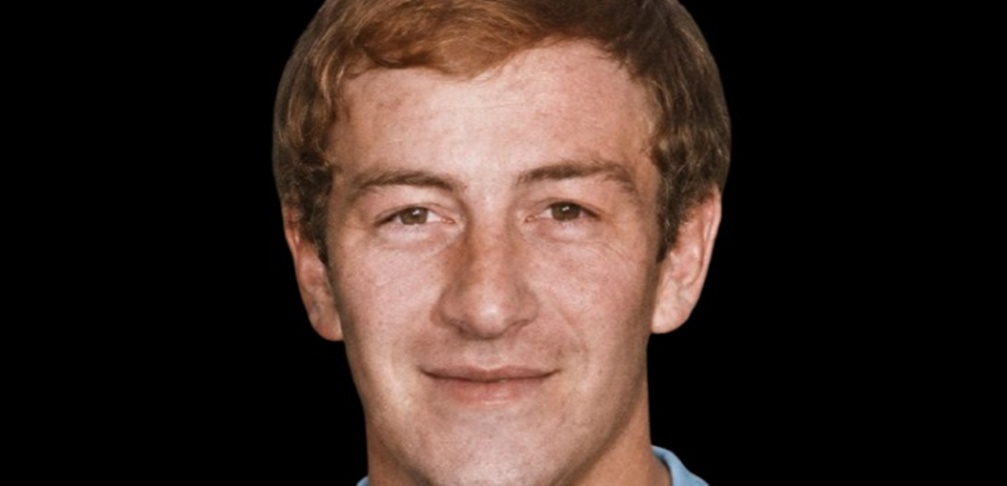
Ralph Coates, 26 April 1946, Hetton-le-Hole, England.
PART ONE
Ralph Coates signed amateur forms with Burnley in October 1961, beginning an association with the Turf Moor club that would carry the ferociously fast flank forward from youth football to the England team. Coates turned professional shortly before his 17th birthday, but a professional contract did not bring an immediate place in the senior side, and he still had to serve his time in the Central League while Burnley assessed how his game would stand up against seasoned defenders.
Burnley Football Club had been formed in 1882 and had become one of the Football League’s founder members six years later. They had won the FA Cup in 1914 and went on to secure their first League championship in 1920–21. Burnley had eventually been relegated to the Second Division in 1930, remaining there until football resumed after the Second World War. Promotion in 1946–47 was accompanied by an appearance in the FA Cup final, and under chairman Bob Lord and manager Harry Potts the club gradually built the structure that would produce the League championship in 1959-60.
Lord could be blunt, controlling and difficult, but he refused to accept that a town of Burnley’s size had to surrender its ambitions, while Potts encouraged a passing style that depended on players understanding one another rather than waiting for an expensive individual to rescue them. Gawthorpe, the club’s training ground, became crucial to that approach, and the flow of young footballers through Turf Moor allowed Burnley to replace established names without abandoning their identity. Thus, when Coates moved towards the first team, he was not simply another teenager receiving an opportunity; he was the latest product expected to sustain a carefully built method.
First Division football in the early 1960s offered little protection to a lightly built attacker, because full-backs were allowed to challenge with a force that would later bring an instant caution, and a young winger who advertised his intentions soon found himself pushed into the crowd or left on the turf. Coates therefore had to become clever as well as brave, releasing the ball before contact when necessary but attacking his opponent directly whenever space appeared, and this mixture of caution and sudden aggression became central to his play. He was not a decorative touchline specialist waiting for a perfect pass, nor was he content to produce one dribble and disappear for ten minutes, because his energy kept him involved and his willingness to work backwards appealed to a club that demanded collective responsibility.
Burnley remained well supplied in attacking positions, with established men such as Andy Lochhead, Willie Irvine, John Connelly, Ray Pointer and Gordon Harris either present or competing during Coates’s development, so he could not expect to advance because of reputation alone. Yet the side was changing, as all successful teams eventually must, and Connelly’s departure for Manchester United in April 1964 removed one outstanding wide player while opening the possibility that someone younger might soon be required.
By the beginning of the 1964–65 season Coates had spent three years inside the Burnley system, and although supporters knew little about him, the club’s staff had watched his progress through training sessions, reserve games and the daily tests that determine whether a young professional can be trusted. Burnley started the campaign unevenly, winning only one of their opening five League matches, but they improved during the autumn and climbed into the upper half of the First Division as Willie Irvine’s goals supplied increasing encouragement.
Coates continued waiting until injuries began to affect the available forwards, and his summons finally arrived for the home match against Sheffield United on Saturday, 19 December 1964. Andy Lochhead was unavailable, so Potts selected the 18-year-old in a side facing opponents who had begun the season strongly and were difficult to break down, while a Turf Moor crowd of more than 17,000 gathered without knowing whether the new boy would manage an afternoon, a month or several years at the highest level.
A debutant could not hide in that Burnley team because the passing demanded participation, but Coates did not treat the ball as though it were something dangerous and instead showed the movement and persistence that had carried him through the junior sides. The contest finished 2–2, giving him neither the satisfaction of victory nor the misery of defeat, but the importance lay in his ability to cope, and Potts had seen enough to keep him within the senior group rather than returning him immediately to obscurity.
The first appearance did not establish him overnight, and Burnley used him selectively during the remaining months of the season, but every further selection helped to reduce the distance between promising reserve and genuine First Division footballer. His first senior goal arrived at Turf Moor against Leicester City on 6 March 1965, although the supplied account’s 3–1 score requires correction, because Burnley won the League match 2–0, with Coates scoring one of the goals and Willie Irvine the other. Leicester possessed an accomplished goalkeeper in Gordon Banks and had reached the League Cup final, so this was no convenient afternoon against weak opposition, while for Coates the goal gave substance to his growing confidence and showed that he could contribute more than energetic approach work.
He made nine League appearances in 1964–65 and scored once as Burnley finished 12th, a position below the club’s recent standards but respectable enough during a period of alteration. More importantly for the young attacker, Potts was beginning to see a place for him beyond emergency cover, and Burnley’s coaching staff understood that his adaptability could solve several problems. He had entered football as an inside-forward, but he could play from the right, operate from the left or move through central areas, and although tactical versatility can sometimes prevent a young player from making one position his own, Coates used it to increase his chances of selection. Each role demanded slightly different decisions, but the common requirements were movement, courage and work, and he possessed all three in generous quantities.
PART TWO
Burnley entered the 1965–66 season with Liverpool, Manchester United, Leeds United, Chelsea and Tottenham Hotspur among the clubs expected to challenge near the top, while Potts’s side appeared to some observers to have passed its strongest point. Those doubts were understandable because several members of the 1960 championship team had departed, but Burnley still possessed an exceptionally productive system, and the emergence of Coates, Willie Morgan and other young players allowed Potts to renew the side without abandoning the quick, accurate football that had carried the club through its finest post-war years.
The campaign opened at Stamford Bridge on 21 August, where Burnley earned a 1–1 draw against Chelsea, and three days later they defeated Blackpool 3–1 at Turf Moor before sharing four goals with Arsenal in a 2–2 home draw on 28 August. A return meeting with Blackpool followed only two days later, and Burnley again won 3–1, this time at Bloomfield Road, leaving them unbeaten after their opening four League fixtures. Everton brought that sequence to an end with a 1–0 victory at Goodison Park on 4 September, but Burnley answered immediately and emphatically, beating newly promoted Northampton Town 4–1 at home three days later and then producing their most impressive result of the early weeks when Manchester United were defeated 3–0 at Turf Moor on 11 September.
Another meeting with Northampton followed on 15 September, and Burnley completed a League double by winning 2–1 at the County Ground, although the momentum was checked three days later when Newcastle United beat them 3–2 at St James’ Park. Potts’s men therefore entered the League Cup looking to recover quickly, and they did so with a comfortable 4–0 second-round victory away to Doncaster Rovers on 22 September, before returning to League duty and defeating West Bromwich Albion 2–0 at Turf Moor three days later.
Coates was now functioning as a genuine first-team regular rather than a youngster filling an occasional vacancy, and his constant movement gave Burnley another means of carrying the ball from midfield into attack, but the side’s promising start received a severe jolt when Blackburn Rovers came to Turf Moor on 9 October and won 4–1. A heavy home defeat against the club’s closest rivals was particularly painful, yet Burnley did not allow it to damage the following weeks, and Southampton were beaten 3–2 in the third round of the League Cup on 13 October. Three days later Burnley travelled to Filbert Street and defeated Leicester City 1–0, and a 2–0 home victory over Sheffield United followed on 23 October, while the month ended with a useful 1–1 draw against Leeds United at Elland Road.
The League Cup continued at Stoke City on 3 November, when a goalless draw required the clubs to meet again, but before the replay Burnley defeated West Ham United 3–1 at Turf Moor and maintained their strong home League record. Stoke visited Lancashire on 9 November and were beaten 2–1 in the replay, carrying Burnley into the fifth round, while the League campaign gathered further force four days later when Potts’s team produced an outstanding 4–0 victory over Sunderland at Roker Park. That result was among Burnley’s best away performances of the season, yet the sharp contrast between League and cup football became apparent at London Road on 17 November, where Third Division Peterborough United inflicted a remarkable 4–0 defeat and removed them from the League Cup.
There was no opportunity to linger over that disappointment because Aston Villa arrived at Turf Moor three days later, and Burnley responded with a 3–1 victory before travelling to Anfield on 27 November for an important meeting with Liverpool. Bill Shankly’s side won 2–1, giving Burnley their fourth League defeat and establishing an advantage that would become increasingly important as the season developed, but Potts’s players remained well placed and began December with a 1–1 home draw against Tottenham Hotspur.
The point was followed by another excellent attacking display on 11 December, when Burnley won 5–2 away to Fulham, and Leicester City were then beaten 4–2 at Turf Moor, giving Burnley nine goals from two successive League matches and confirming that their attacking strength extended well beyond any single forward. Christmas brought two matches against Stoke City on consecutive days, and the results demonstrated the unevenness that occasionally prevented Burnley from applying still greater pressure to Liverpool. Stoke won 3–1 at the Victoria Ground on 27 December, but Burnley reversed the score emphatically at Turf Moor the following afternoon, winning 4–1 and ending 1965 with their home form intact.
PART THREE
The new year began just as positively, for Blackburn Rovers were beaten 2–0 at Ewood Park on 1 January, a satisfying answer to the 4–1 defeat at Turf Moor in October, and Fulham were edged out 1–0 at Turf Moor a week later. However, Sheffield United brought the run to an end by overcoming Burnley 2–1 at Bramall Lane on 15 January, after which attention turned to the FA Cup and a potentially awkward third-round visit to Third Division outfit Bournemouth.
Burnley could manage only a 1–1 draw at Dean Court on 22 January, but the replay at Turf Moor three days later produced a completely different contest as Potts’s side won 7–0 and moved into the fourth round with their largest victory of the season. That success was followed by a 2–1 home League defeat against Chelsea on 29 January, and although Burnley recovered sufficiently to draw 1–1 with Arsenal at Highbury on 5 February, their FA Cup hopes ended in a dramatic match at White Hart Lane a week later. Tottenham won 4–3, leaving Burnley to concentrate entirely upon a League programme in which Liverpool and Leeds United were proving difficult to catch.
The closing weeks of February and the beginning of March formed Burnley’s most difficult League sequence of the campaign, and the points lost during that period weakened what had remained of their championship hopes. Everton earned a 1–1 draw at Turf Moor on 19 February, Manchester United avenged their September defeat by winning 4–2 at Old Trafford a week later, and Nottingham Forest then beat Burnley 1–0 at the City Ground on 8 March. Three League matches had therefore yielded only one point, but Potts’s side steadied themselves with a 1–0 home victory against Newcastle United on 12 March and followed it with an important 2–1 win away to West Bromwich Albion seven days later. Nottingham Forest arrived at Turf Moor on 26 March having defeated Burnley less than three weeks earlier, yet the return match produced a decisive reversal as the home side won 4–1.
Coates’s energy remained important during this recovery because Burnley’s football required the wide men to do considerably more than wait beside the touchline, and he was expected to move inside, support the forwards and assist the midfield whenever possession changed hands. His willingness to cover ground suited those demands, while his growing experience enabled him to judge his forward runs more carefully than he had during his first handful of senior appearances. A 1–1 draw away to West Ham United opened April, and Burnley then collected home victories over Sunderland and Sheffield Wednesday, winning 1–0 on 9 April and 2–1 two days later.
A 2–1 defeat at Aston Villa on 16 April appeared to have ended any realistic possibility of Burnley catching Liverpool, but the response at Turf Moor a week later demonstrated that Potts’s players were determined to complete the season strongly. Liverpool arrived on 23 April closing in on the championship, yet Burnley defeated them 2–0 and prevented Shankly’s side from settling the matter that afternoon, while the result also kept Burnley’s pursuit of second-placed Leeds alive. Another important victory followed at White Hart Lane on 30 April, when Tottenham Hotspur were beaten 1–0, and Burnley consequently approached their last two fixtures with the runners-up position still available.
Leeds visited Turf Moor on 7 May and won 1–0, a result that ensured Don Revie’s team would finish above Burnley, but Potts’s side concluded their work two days later with a 2–0 victory over Sheffield Wednesday at Hillsborough. The final totals were exact and impressive: Burnley had played 42 League matches, winning 24, drawing seven and losing 11, while scoring 79 goals and conceding 47. At Turf Moor they won 15, drew three and lost three, with 45 goals scored and 20 conceded, whereas their 21 away matches produced nine victories, four draws and eight defeats, with 34 goals for and 27 against. Their 55 points placed them third in the First Division, behind champions Liverpool and runners-up Leeds United, and although the gap to first place showed that Burnley had not quite maintained a championship pace, third represented a considerable achievement for a club continuing to rebuild from within.
For Coates, the season brought the decisive change from promising newcomer to established First Division player, because he appeared in 35 League matches and scored five goals while learning to influence contests from several attacking positions. Burnley’s forward play centred heavily upon Willie Irvine, who finished level with Liverpool’s Roger Hunt as the First Division’s leading scorer with 29 League goals, but Irvine’s finishing depended upon the movement and service around him, and Coates supplied both while also contributing with his own direct running. His performances did not always possess the smoothness associated with a traditional winger, for he could appear untidy when forcing his way through a challenge, but defenders found his persistence difficult to contain and his willingness to re-enter a move after releasing the ball gave Burnley attacks a valuable extra runner.
He was still learning, and Potts continued correcting the moments when eagerness carried him into a crowded part of the field, yet the overall progress was plain. Only a year earlier Coates had been trying to hold a place after seven League appearances during his first senior season, but by May 1966 he had helped Burnley finish third in the country, had played in victories over Manchester United, Liverpool and Tottenham Hotspur, and had taken his first substantial step towards international recognition. The 1965–66 campaign had not restored the League championship to Turf Moor, but it proved that Burnley remained a major First Division force and that Ralph Coates was ready to become one of their most important players.
PART FOUR
Burnley went into the 1966–67 campaign with the considerable satisfaction of having finished third in the First Division, but the new campaign would develop very differently, for the team remained capable of exciting attacking football and memorable individual victories while becoming far less dependable over the full League programme. Coates, now 20, began the season as an established member of the senior squad, and the opening results suggested that Burnley might again challenge near the top, because Sheffield United were beaten 4–0 at Turf Moor on 20 August 1966, Fulham were defeated 3–0 at the same ground three days later and West Bromwich Albion were overcome 2–1 at The Hawthorns on 27 August.
A goalless draw away to Fulham on 29 August completed an unbeaten opening sequence, while further draws followed against Leeds United, Everton and Newcastle United, leaving Potts’s side without a League defeat after seven matches. The Leeds match at Turf Moor on 3 September ended 1–1, as did the visits to Goodison Park on 6 September and St James’ Park four days later, and although four successive draws slowed the accumulation of points, Burnley had at least maintained their solid beginning. Coates was being used within an attack that still included Willie Irvine, Andy Lochhead, Gordon Harris and Willie Morgan, and his role demanded movement between the flank and inside positions rather than a rigid attachment to one strip of grass.
The first cup assignment arrived on 14 September, when Burnley travelled to Gay Meadow and drew 1–1 with Third Division Shrewsbury Town in the second round of the League Cup, but the greater excitement surrounded the club’s return to continental competition. Their third-place finish had earned entry to the Inter-Cities Fairs Cup, and the first-round draw paired them with VfB Stuttgart, who welcomed Burnley to the Neckarstadion on 20 September.
A crowd reported at 74,000 watched Willie Irvine score in a 1–1 draw, giving Potts’s side an encouraging result to carry back to Lancashire, although the European tie was separated by a difficult League fixture at Old Trafford. Manchester United beat Burnley 4–1 on 24 September, inflicting their first League defeat of the season, but Coates and his colleagues answered three days later when Stuttgart visited Turf Moor. Andy Lochhead put Burnley ahead and Coates scored the other goal in a 2–0 victory, completing a 3–1 aggregate success and registering his first goal in European football. It was an important contribution from a player still experiencing the unfamiliar rhythms of two-legged competition, where a draw away from home could be treated as valuable preparation rather than an incomplete result. Two days later Burnley settled their League Cup tie against Shrewsbury with a 5–0 replay victory at Turf Moor, and on 1 October they returned to League duty by beating Blackpool 1–0 at home.
Sheffield United ended Burnley’s League Cup interest with a 2–0 victory at Bramall Lane on 5 October, but Potts’s team quickly recovered in the First Division and produced two of their strongest attacking displays of the autumn. Chelsea were beaten 3–1 at Stamford Bridge on 8 October, with Lochhead scoring twice and Morgan adding the third, and Leicester City were then defeated 5–2 at Turf Moor on 15 October. Harris, Lochhead, Irvine, Coates and Alex Elder shared the five goals against Leicester, and Coates’s strike was his first in the League that season. Four days later the Fairs Cup carried Burnley to Switzerland for the first leg of their second-round meeting with Lausanne-Sports, and the visitors established control of the tie by winning 3–1 through goals from Coates, Harris and Lochhead.
Coates had therefore scored in successive matches and in both of Burnley’s opening European rounds, but the significance extended beyond his finishing, because he was increasingly comfortable against defenders whose positioning and methods differed from those he met each week in England. Lausanne arrived at Turf Moor on 25 October and were beaten 5–0, with Lochhead scoring three and Brian O’Neil and Irvine adding the others, giving Burnley an emphatic 8–1 aggregate victory. Two European opponents had been removed, Coates had scored in both rounds and the club’s first continental campaign for six years was gathering genuine force.
The League form surrounding those European victories was much less secure, and the contrast became sharper as autumn moved towards winter. Manchester City won 3–2 at Turf Moor on 29 October, then Leicester City avenged their heavy defeat by beating Burnley 5–1 at Filbert Street on 5 November, while Liverpool added a 2–0 victory at Anfield four days later. Three consecutive League defeats had produced 10 goals against and only three for, exposing a defensive weakness that would trouble Burnley throughout the season, although Southampton were beaten 4–1 at Turf Moor on 12 November to offer immediate relief.
The recovery lasted only a week, because Burnley then surrendered a 3–1 lead against Sunderland at Roker Park on 19 November and lost 4–3. Irvine put Burnley ahead, Neil Martin equalised for Sunderland, and goals from Lochhead and Irvine sent Potts’s side two clear, but George Mulhall scored in the 64th minute, John O’Hare levelled in the 77th and Mulhall struck again a minute later to complete a remarkable reversal. Coates played throughout a match in which Burnley’s attacking quality had appeared sufficient for victory, yet their inability to control the closing stages left them with nothing. Aston Villa were beaten 4–2 at Turf Moor on 26 November, with Lochhead scoring all four Burnley goals, but the larger pattern remained clear: this was a side capable of scoring freely without possessing the balance that had supported the previous season’s third-place finish.
December opened with a goalless draw at Arsenal, and Burnley then defeated West Ham United 4–2 at Turf Moor on 10 December before drawing 1–1 away to Sheffield United a week later. The Christmas programme was far more damaging, for Stoke City won 2–0 at Turf Moor on Boxing Day and followed it with a 4–3 victory at the Victoria Ground on 27 December, meaning Burnley had conceded six goals in two matches against the same opponents. Once again there was an emphatic reaction rather than a lasting correction, because West Bromwich Albion were beaten 5–1 at Turf Moor on New Year’s Eve, with Irvine and Lochhead scoring twice each after a John Talbut own goal had helped Burnley on their way.
The result sent supporters into 1967 with renewed encouragement, but the continued alternation between heavy scoring and defensive vulnerability made it difficult for Potts’s team to establish a steady position in the table. Coates remained a tireless presence and was developing beyond the responsibilities of an orthodox outside-forward, moving across the attacking line and helping the midfield, yet individual energy could not solve the wider inconsistency. Burnley had enough ability to overwhelm opponents when their passing and movement worked, but they were also being opened up with a frequency that had rarely been associated with Potts’s best sides, and their position was drifting towards the middle and lower half.
PART FIVE
The new year began badly in the League when Leeds United won 3–1 at Elland Road on 7 January, although Coates scored Burnley’s goal and thereby completed his League total of two for the season. Newcastle United then won 2–0 at Turf Moor on 14 January, but four days later attention turned back to Europe and a demanding third-round tie against Napoli. The Italian side arrived with a reputation for defensive organisation and contained several accomplished players, yet Burnley produced a fine performance to win 3–0 through goals from Lochhead, Les Latcham and Coates.
His strike was his third of the Fairs Cup campaign, following those against Stuttgart and Lausanne, and the advantage gave Burnley a realistic opportunity to reach the last eight, although another League defeat followed when Tottenham Hotspur won 2–0 at White Hart Lane on 21 January. Everton then held Burnley to a goalless draw at Turf Moor in the FA Cup third round on 28 January, and the replay at Goodison Park three days later ended in a 2–1 Everton victory, with Irvine scoring Burnley’s only goal. Thus, by the end of January both domestic cups had been lost in the third round, while the League form had deteriorated sharply, but Europe continued to offer a different picture and remained the strongest part of an increasingly uneven season.
Manchester United visited Turf Moor on 4 February and were held to a 1–1 draw, with Gordon Harris scoring Burnley’s goal from the penalty spot, before Potts’s team travelled to Naples for the second leg of their Fairs Cup tie on 8 February. A 3–0 advantage looked substantial, but Burnley still had to withstand the pressure of playing before approximately 60,000 spectators in the San Paolo Stadium, where Napoli attempted to force an early opening that might unsettle the visitors. Burnley defended with far greater concentration than they had shown in several League matches, kept the contest goalless and advanced 3–0 on aggregate, confirming that they could adapt their normal attacking instincts when the situation demanded patience.
The result placed them in the quarter-finals and represented one of the most impressive European achievements in the club’s history, particularly because the return match had been negotiated without surrendering any part of the advantage established at Turf Moor. A 2–0 League victory at Blackpool followed on 11 February, with Colin Blant scoring both goals, but Chelsea won 2–1 at Turf Moor on 25 February and Manchester City defeated Burnley 1–0 at Maine Road on 4 March. The difference between the controlled performance in Naples and the uncertain weekly League form was becoming difficult to ignore, and Burnley’s hopes of returning to the upper reaches of the table had effectively disappeared.
A 1–0 home victory over Liverpool on 18 March briefly reminded everyone of the level Burnley could still reach, with Latcham scoring the decisive goal, but it was followed by three damaging defeats in quick succession. West Ham United won 3–2 at Upton Park on 25 March, Nottingham Forest beat Burnley 4–1 at the City Ground two days later and Forest completed a rapid double with a 2–0 victory at Turf Moor on 28 March. Burnley had therefore conceded nine goals while losing three League matches in four days, and although the congested programme placed a heavy physical burden on the players, the results also demonstrated how far the side had slipped from the consistency of 1965–66.
PART SIX
On 1 April 1967, Sheffield Wednesday were beaten 2–0 at Turf Moor, with Latcham and Harris scoring, and three days later Burnley travelled to West Germany for the first leg of their Fairs Cup quarter-final against Eintracht Frankfurt. Brian Miller gave Burnley a valuable goal in a 1–1 draw on 4 April, and the result appeared to place them in a strong position before the return at Turf Moor. However, the League again supplied a warning when Southampton defeated Burnley 4–0 at The Dell on 8 April, and although a 1–0 home victory over Sunderland followed on 15 April, the team entered the second leg against Frankfurt without the settled confidence their European record might otherwise have provided.
Turf Moor welcomed Eintracht Frankfurt on 18 April with a semi-final place at stake, but the evening ended in disappointment as the German side won 2–1 and eliminated Burnley 3–2 on aggregate. Miller scored Burnley’s goal, just as he had in Frankfurt, yet the home side could not recover sufficiently to preserve their European interest, and a competition that had brought victories over Stuttgart, Lausanne-Sports and Napoli ended at the quarter-final stage. Coates had played his part with three goals, each coming in a different round, while the experience of facing German, Swiss and Italian opposition had broadened his football considerably at the age of 20.
Burnley returned to League duty four days later and won 1–0 at Aston Villa through a Colin Withers own goal, but the final weeks produced two severe defeats. Arsenal won 4–1 at Turf Moor on 29 April, with Fred Smith scoring Burnley’s goal, and Sheffield Wednesday then overwhelmed Potts’s side 7–0 at Hillsborough on 6 May, their heaviest loss of the season. The campaign concluded on 13 May with a 1–1 home draw against Everton, when Blant scored and the highly regarded young winger Dave Thomas made his Burnley debut. Thomas’s arrival would eventually affect Coates’s place and position, but at that moment it also represented another example of Burnley attempting to renew the team through youth.
The final League figures gave an accurate measure of the decline from the previous season. Burnley played 42 matches, winning 15, drawing nine and losing 18, while scoring 66 goals and conceding 76; their 39 points placed them 14th in the First Division, 11 places below the third position secured in 1965–66. They had exited both the League Cup and FA Cup in the third round, but their passage to the Fairs Cup quarter-finals provided a substantial counterweight and gave the season a distinction that the League table alone could not convey. Coates made 33 League appearances and scored twice, against Leicester City at Turf Moor on 15 October and Leeds United at Elland Road on 7 January, while his European goals against Stuttgart, Lausanne-Sports and Napoli underlined his importance during Burnley’s strongest run of the campaign.
He remained only 21 when the season ended, and although the side around him had become unreliable, his own standing continued to rise because he could operate on either flank, move into midfield and maintain his work rate through crowded sequences of domestic and European fixtures. Burnley were no longer the smooth and consistent team that had won the championship in 1960 or challenged again in 1966, but Coates had proved he could retain his influence while circumstances became more difficult, and that quality would matter increasingly as the club entered several seasons of transition.
The 1966–67 campaign therefore marked a dividing line at Turf Moor, for Burnley could still defeat major opponents, score heavily and carry their football into Europe, yet the League results showed that the old certainty was disappearing. Their 15 victories included notable successes against Chelsea, Liverpool and West Bromwich Albion, but 18 defeats included the concession of five at Leicester, four at Manchester United, four at Nottingham Forest and seven at Sheffield Wednesday.
Coates experienced both sides of that change at close quarters, contributing to accomplished European victories while also being required to chase and recover during afternoons when Burnley’s shape had broken apart. His two League goals might appear modest, but he scored five times when the Fairs Cup is included, and three of those goals helped Burnley through successive European rounds. Moreover, the season strengthened his understanding of a wider midfield role, because the game was gradually moving away from the strict division between outside-forward and wing-half, and his stamina made him well suited to the change. Burnley had finished 14th with 39 points and a negative goal difference, but Coates emerged with his reputation intact, ready to accept greater responsibility in a team that could no longer rely upon the methods and personnel of its championship years.
PART SEVEN
Burnley began 1967–68 with another important change taking place inside Harry Potts’s squad, because Frank Casper arrived from Rotherham United and immediately strengthened an attack that still contained Andy Lochhead, Willie Irvine, Willie Morgan, Gordon Harris and Coates, while Martin Dobson and Colin Waldron were among the younger players moving towards regular first-team football. Coates had returned from his first season in Europe with greater tactical understanding and a growing ability to work from either flank or through midfield, but Burnley as a whole remained difficult to predict, capable of overwhelming a strong opponent at Turf Moor and then conceding heavily away from home.
Their League campaign opened on 19 August 1967 with a 2–1 home victory over newly promoted Coventry City, with Casper scoring on his debut and Irvine adding the other goal, but West Ham United beat Burnley 4–2 at Upton Park two days later and Sheffield Wednesday won 2–1 at Hillsborough on 26 August. The return meeting with West Ham took place at Turf Moor on 29 August and ended in a 3–3 draw, with Lochhead, Arthur Bellamy and Harris, from the penalty spot, scoring for Burnley. Four matches had therefore produced one win, one draw and two defeats, with eight goals scored and 10 conceded, and the figures already suggested that the defensive uncertainty of the previous campaign had not disappeared.
That uneven opening was followed by one of Burnley’s finest performances of the season, for Tottenham Hotspur visited Turf Moor on 2 September and were beaten 5–1. Lochhead and Casper scored twice each, while Coates registered his first goal of the campaign against the club he would later join, and the result demonstrated the speed and variety Burnley could produce when their attacking players found room to move. A difficult visit to Old Trafford followed on 9 September, but Potts’s team earned a 2–2 draw against Manchester United through two Lochhead goals, and three days later Cardiff City were beaten 2–1 at Turf Moor in the second round of the League Cup.
Burnley then defeated Sunderland 3–0 at home on 16 September, with Lochhead, Coates and Morgan scoring, giving Coates two goals from his opening League appearances and confirming that he was beginning the season with greater finishing confidence. However, two away defeats followed in rapid succession, because Leeds United won 2–1 at Elland Road on 20 September and Wolverhampton Wanderers beat Burnley 3–2 at Molineux three days later, despite two Harris penalties. The Wolves match also brought Dobson’s Burnley debut, adding another gifted young footballer to a side being rebuilt while still competing in the First Division, and on 30 September Burnley returned to Turf Moor to defeat Fulham 2–0, with Coates scoring the opening goal and Casper supplying the second.
Coates had now scored three League goals by the end of September, already halfway to what would become his best seasonal League total for Burnley, but the following weeks were shaped as much by cup football as by the First Division. Nottingham Forest earned a 1–1 League draw at Turf Moor on 7 October, with Irvine scoring Burnley’s goal, then returned to the same ground three days later and were beaten 3–0 in the League Cup third round, as Irvine struck twice and Lochhead added the other.
Burnley maintained their improvement by winning 2–0 at Stoke City on 14 October, through O’Neil and Irvine, while a 1–1 home draw against Liverpool on 24 October and a 2–2 draw at Southampton four days later extended their unbeaten League sequence to five matches. The run did not bring enough victories to lift them among the leading clubs, but it suggested that the early defensive problems were being brought under greater control. On 31 October the League Cup took Burnley to Loftus Road, where Second Division Queens Park Rangers were beaten 2–1 through goals from Irvine and Casper, sending Potts’s side into the fifth round. QPR had won the competition at Wembley only eight months earlier and therefore could not be treated as ordinary lower-division opposition, but Burnley handled the assignment successfully and kept open their strongest prospect of winning an honour that season.
Chelsea drew 1–1 at Turf Moor on 4 November, with Morgan scoring for Burnley, but the modest progress of the previous month was shattered at The Hawthorns on 11 November when West Bromwich Albion won 8–1. Bellamy scored Burnley’s only goal, but the match became an increasingly painful collapse and represented the club’s heaviest defeat since Sheffield Wednesday had beaten them 7–0 only six months earlier. Such a result could damage a team for weeks, yet Burnley responded seven days later by defeating Newcastle United 2–0 at Turf Moor, with Harris and Lochhead scoring, and that ability to answer humiliation with a victory remained one of the side’s more admirable qualities.
Manchester City then won 4–2 at Maine Road on 25 November, with Casper and Morgan scoring for Burnley, and the contrast between home resilience and away vulnerability became still more pronounced. Arsenal arrived at Turf Moor on 29 November for the League Cup fifth round and shared six goals in a 3–3 draw, with Lochhead, O’Neil and Irvine scoring for Burnley, before the same clubs met again in a League fixture three days later. On that occasion Harris scored the only goal and Burnley won 1–0, but the League Cup replay at Highbury on 5 December went Arsenal’s way by 2–1, Irvine supplying Burnley’s goal as Potts’s men were eliminated one stage short of the semi-finals.
The loss at Arsenal began an uncomfortable December sequence, because Sheffield United defeated Burnley 1–0 at Bramall Lane on 9 December and Coventry City won 5–1 at Highfield Road a week later. Lochhead scored Burnley’s goal at Coventry, but another heavy away defeat emphasised the imbalance within their results, and the team needed a 2–1 home victory over Sheffield Wednesday on 23 December to restore some confidence before Christmas. Casper and Lochhead scored in that win, yet Everton beat Burnley 2–0 at Goodison Park on Boxing Day, making it four successive away League defeats since the October draw at Southampton. Everton then visited Turf Moor on 30 December and were beaten 2–1 through goals from Morgan and Les Latcham, so Burnley ended 1967 with consecutive home victories but continued to find points much harder to obtain on their travels.
PART EIGHT
Ralph Coates´ general contribution remained important as Harry Potts adjusted the shape of the Turf Moor side and attempted to find the right balance between an abundance of attacking players. The postponement of the scheduled visit to Tottenham Hotspur on 6 January 1968 delayed the start of Burnley’s new year, and they did not return to competitive action until 20 January, when a 2–2 draw at Sunderland finally ended their sequence of away defeats. Casper and Coates scored at Roker Park, giving the latter his fourth League goal of the season, but the FA Cup brought immediate disappointment when West Ham United won 3–1 at Turf Moor in the third round on 27 January.
Casper scored Burnley’s goal, yet the home defeat meant that both major domestic cups had now been lost, leaving the club to concentrate upon improving an indifferent League position. Wolverhampton Wanderers earned a 1–1 draw at Turf Moor on 3 February, and Burnley then suffered another high-scoring away defeat when Fulham won 4–3 at Craven Cottage on 10 February. Lochhead, Casper and a John Dempsey own goal accounted for Burnley’s three, but once more an afternoon of useful attacking work brought no reward because four goals had been conceded at the other end.
The response was impressive, for Manchester United visited Turf Moor on 17 February and were beaten 2–1 through goals from O’Neil and Dobson, giving Burnley three points from their two League meetings with the eventual champions. Nevertheless, the improvement did not continue, and Nottingham Forest won 1–0 at the City Ground on 24 February before Manchester City left Turf Moor with a 1–0 victory on 2 March. Burnley had scored only once in three matches, while Coates’s appearances were being interrupted during a season in which he would start 27 League games rather than approaching the near ever-present status he had enjoyed in 1965–66.
A blank weekend in the League programme allowed Burnley to play a 2–2 friendly against Preston North End at Deepdale on 8 March, with Lochhead and Morgan scoring, but the competitive action resumed in dramatic fashion at Anfield on 16 March. Liverpool won 3–2, yet Coates scored both Burnley goals and produced his most productive individual performance of the season against one of the strongest teams in the country. The two strikes took his League total to six, which would remain his highest return in a single First Division campaign, and they also showed that his game was developing beyond the conventional expectation that a winger should provide chances while leaving the finishing entirely to others.
He had scored against Tottenham, Sunderland, Fulham and Sunderland again before striking twice at Liverpool, and those goals had come against a wide range of opponents and in both home and away fixtures. Burnley followed the Anfield defeat with a 2–0 home victory over Southampton on 23 March, through Morgan and O’Neil, but the familiar away difficulties returned a week later when Tottenham avenged their 5–1 loss at Turf Moor by winning 5–0 at White Hart Lane. The two matches against Spurs therefore produced an extraordinary aggregate score of 6–6, with each club dominant on its own ground, although the March defeat again displayed Burnley’s disturbing tendency to lose heavily once a match began moving against them.
PART NINE
On 6 April 1968, West Bromwich Albion were held to a goalless draw at Turf Moor, and Newcastle United then beat Burnley 1–0 at St James’ Park on 13 April before an unusual pair of League fixtures against Leicester City on consecutive days. Leicester earned a 1–1 draw at Turf Moor on Easter Monday, 15 April, with Lochhead scoring for Burnley, but Potts’s side travelled to Filbert Street the following evening and won 2–0 through goals from Casper and Dobson. The victory was only Burnley’s third away success in the League all season and their first since beating Stoke City on 14 October, a gap of more than six months which explained much about their inability to rise above the lower half of the table.
A convincing 4–0 home win over Stoke followed on 20 April, with Morgan scoring twice and Lochhead and Casper adding the others, but Burnley were unable to carry that form into the last weeks. Chelsea won 2–1 at Stamford Bridge on 22 April, Arsenal defeated them 2–0 at Highbury five days later and Sheffield United won 2–0 at Turf Moor on 4 May. Three consecutive defeats had produced only one Burnley goal, scored by Lochhead at Chelsea, and the home loss against Sheffield United left Potts’s side needing a strong final performance to prevent the campaign from ending in complete disappointment.
That performance arrived against Leeds United at Turf Moor on 11 May, when Burnley defeated Don Revie’s powerful side 3–0 through an O’Neil penalty and goals from Lochhead and Dobson. Leeds had finished fourth, reached the FA Cup semi-finals and won both the League Cup and Inter-Cities Fairs Cup during a crowded campaign, but Burnley overcame them decisively and ended their own League programme with one of their most satisfying victories. The final table nevertheless placed Burnley 14th for the second successive season, and their record was only marginally different from that of 1966–67: 42 League matches produced 14 wins, 10 draws and 18 defeats, with 64 goals scored and 71 conceded, giving them 38 points.
They had finished one point worse off than in the previous campaign, although they conceded five fewer goals, while the League Cup provided their longest cup run before Arsenal eliminated them in the fifth round after a replay. The FA Cup ended in the third round against West Ham, and there was no European competition to supply the excitement that had carried Burnley to the Fairs Cup quarter-finals a year earlier. Their final match of the season came in the Lancashire Senior Cup final on 13 May, when Morecambe won 2–1 and Dobson scored Burnley’s goal, bringing a demanding and inconsistent nine months to a subdued conclusion.
Coates’s figures told a more encouraging story than Burnley’s final position, because he scored six goals in 27 League appearances, improving substantially upon the two goals he had managed from 33 appearances in 1966–67. His goals were recorded in the 5–1 home victory over Tottenham on 2 September, the 3–0 defeat of Sunderland on 16 September, the 2–0 win against Fulham on 30 September, the 2–2 draw at Sunderland on 20 January and the 3–2 defeat at Liverpool on 16 March, when he scored twice. Those six strikes formed an exact and complete sequence, and although injuries or selection changes prevented him from playing every week, he continued to establish himself as one of Burnley’s most recognisable footballers.
His work was increasingly performed from the left side rather than the right, while the arrival of Dave Thomas and the development of Dobson offered Potts new options and encouraged further tactical adjustment. Coates could still attack the full-back directly, but he was becoming equally useful when carrying the ball diagonally towards central midfield, combining with a forward or making a late run into shooting range. That flexibility helped to explain why his influence survived even as Burnley’s results became more erratic, because he was not dependent upon one fixed position or one repeated method of attack.
The final League statistics also revealed the precise nature of Burnley’s problems. Fourteen victories and 10 draws provided 38 points, but 18 defeats meant they had lost as many matches as in 1966–67, and several of those losses were particularly severe: West Bromwich Albion scored eight, Tottenham and Coventry City scored five each, while West Ham, Fulham and Manchester City were among the sides to score four. Burnley had nevertheless beaten Tottenham 5–1, Manchester United 2–1, Arsenal 1–0 and Leeds United 3–0 at Turf Moor, results which proved that ability was not missing, but the difference between their strongest and weakest performances had become too wide.
Coates found himself playing within that uncertainty, contributing during commanding home victories and attempting to retrieve matches when the defence was being overwhelmed away from Lancashire. He was only 22 when the season ended and his own football still appeared to be advancing, yet the club around him was no longer moving in the same direction, and the contrast would grow more obvious over the next three years. Burnley had again survived comfortably enough in 14th place, but another campaign of 18 defeats and a second successive negative goal difference indicated that remaining in the First Division could no longer be taken for granted.
PART TEN
The summer of 1968 brought another stage in Burnley’s reconstruction, because several of the men who had carried the club through the earlier part of the decade were reaching the end of their time at Turf Moor, while a younger group containing Martin Dobson, Dave Thomas, Steve Kindon, Doug Collins and John Murray was beginning to alter the character of the side. Coates, still only 22, now stood between those generations, having played alongside established championship figures while remaining young enough to form part of the developing team, and his experience gave him increasing responsibility as Potts attempted to maintain Burnley’s First Division position without the spending power of the leading clubs.
The League programme began on 10 August with a 2–2 draw away to Nottingham Forest, where Colin Waldron and Frank Casper scored, but Everton defeated Burnley 3–0 at Goodison Park three days later. A John McNamee own goal provided a 1–0 home victory over Newcastle United on 17 August, and Southampton were beaten 3–1 at Turf Moor three days after that through two Casper goals and one from Arthur Bellamy. However, West Bromwich Albion won 3–2 at The Hawthorns on 24 August, West Ham United overwhelmed Burnley 5–0 at Upton Park on 26 August and Coventry City then earned a 1–1 draw at Turf Moor on the final day of the month, leaving Potts’s side with two wins, two draws and three defeats from their opening seven League fixtures.
The defensive weakness that had repeatedly damaged Burnley during the previous two seasons became even more alarming in early September, although the League Cup offered a route towards better results. Burnley drew 1–1 with Third Division Grimsby Town at Blundell Park in the second round on 4 September, with Lochhead scoring, but three days later Tottenham Hotspur inflicted a 7–0 defeat at White Hart Lane. It was Burnley’s second seven-goal League loss in little more than a year and arrived only 10 months after West Bromwich Albion had scored eight against them, yet the team again displayed its capacity to recover rapidly from humiliation.
Grimsby were beaten 6–0 in the League Cup replay at Turf Moor on 10 September, with Casper and Lochhead scoring twice each and Thomas and Murray adding the others, before Manchester United were defeated 1–0 in the League on 14 September through an O’Neil goal. Sheffield Wednesday then won 1–0 at Hillsborough on 21 September, but Burnley returned to cup duty four days later and beat Workington 1–0 at Borough Park, Colin Blant scoring the goal that carried them into the fourth round. Chelsea were defeated 2–1 at Turf Moor on 28 September through two goals from Thomas, and although Burnley’s League position remained uncertain, their results now contained enough important victories to suggest that a difficult opening had not become an irreversible decline.
Liverpool arrived at Turf Moor on 5 October and won 4–0, providing another reminder that Burnley could lose heavily whenever their organisation failed, but the response was their finest sequence of the season. West Ham United were beaten 3–1 at Turf Moor on 8 October, with Murray, Kindon and Dobson scoring, and Burnley then travelled to Stoke City on 12 October and won by the same score through goals from Blant, Murray and Coates. It was Coates’s first League goal of the campaign, and he followed it with another a week later when Leeds United were defeated 5–1 at Turf Moor.
Casper scored twice against Don Revie’s side, while Murray and Kindon joined Coates on the scoresheet, and the result stood in extraordinary contrast to the 7–0 loss at Tottenham and the 4–0 home defeat by Liverpool. Burnley had now won three consecutive League matches while scoring 11 goals, and their improvement continued on 26 October when Casper’s penalty and a Murray goal secured a 2–0 victory away to Leicester City. Between those League successes, Burnley had beaten Leicester 4–0 at Turf Moor in the fourth round of the League Cup on 16 October, with Thomas, Casper and two goals from Murray, while Crystal Palace were defeated 2–0 in the fifth round on 30 October through a Casper penalty and another Murray strike.
PART ELEVEN
The victory over Crystal Palace on 30 October 1968, placed Burnley in the League Cup semi-finals, providing the club with its strongest opportunity to reach Wembley since the 1962 FA Cup final, and the League results surrounding the cup run remained encouraging. Ipswich Town were beaten 1–0 at Turf Moor on 2 November through Blant, and Burnley then won 2–0 away to Queens Park Rangers on 9 November, with Murray and Casper scoring, extending the League sequence to six consecutive victories. Those six matches had produced 16 goals for and only three against, briefly replacing the defensive disorder of August and September with the balance Potts had been seeking, while Ralph Coates’s goals at Stoke and against Leeds formed a vital part of the revival. Wolverhampton Wanderers ended the winning sequence by earning a 1–1 draw at Turf Moor on 16 November, after which Third Division Swindon Town arrived for the first leg of the League Cup semi-final on 20 November.
Swindon were progressing strongly under Danny Williams and could not be dismissed as ordinary lower-division opposition, but Burnley were nevertheless expected to establish an advantage on their own ground. Instead, Swindon won 2–1, leaving Burnley in serious difficulty, although Coates’s goal kept the tie within reach and gave him another important contribution in a cup competition. His strike meant Burnley required a victory at the County Ground, and the semi-final would soon become a prolonged struggle stretching across three matches.
Before the return leg, Burnley’s League improvement came to an abrupt end. Sunderland won 2–0 at Roker Park on 23 November and Arsenal left Turf Moor with a 1–0 victory a week later, but Potts’s team travelled to Swindon on 4 December and forced the semi-final into a replay by winning 2–1 after extra time. Casper and Kindon scored, making the aggregate score 3–3, and with penalty shoot-outs not yet used to settle such ties, a third meeting was required at a neutral ground. Burnley’s satisfaction at remaining in the cup was followed by a devastating League result on 7 December, when reigning champions Manchester City won 7–0 at Maine Road, and the defeat was the fourth occasion in 16 months on which Burnley had conceded seven or more in a First Division match.
A 1–1 home draw against Stoke City followed on 14 December, with Casper scoring, before the League Cup replay against Swindon took place at The Hawthorns on 18 December. Thomas and Casper scored for Burnley, but Swindon won 3–2 after extra time and advanced to Wembley, where they would eventually defeat Arsenal 3–1 in the final. Burnley had come within one match of Wembley but had failed to beat Third Division opposition in three attempts, and the disappointment was magnified by the energy spent during two extra-time contests.
The effects of that exhausting period remained visible three days later when Burnley travelled to Elland Road and lost 6–1 to Leeds United, with Coates scoring their only goal. His strike was his third in the League and fourth in all competitions, but it offered little comfort during another heavy defeat, and Burnley had now conceded 13 goals in successive away matches against Manchester City and Leeds. Boxing Day brought a much-improved performance at Anfield, where Casper scored in a 1–1 draw against Liverpool, and Leicester City were then beaten 2–1 at Turf Moor on 28 December through goals from Collins and Kindon.
PART TWELVE
On 4 January 1969, Burnley defeated Second Division Derby County 3–1 at Turf Moor in the third round of the FA Cup, with Blant scoring once and Casper twice. The new year had therefore opened with encouragement, but the League remained troublesome, and Ipswich Town beat Burnley 2–0 at Portman Road on 11 January before Queens Park Rangers secured a 2–2 draw at Turf Moor a week later. Latcham and Kindon scored against QPR, yet two points from three League matches since Christmas left Burnley still lodged in the lower half, while their cup hopes were transferred from the League Cup to the FA Cup.
Liverpool provided the fourth-round opposition at Anfield on 25 January and won 2–1, with Latcham scoring for Burnley, ending the club’s FA Cup interest before it had gathered anything like the force of the earlier League Cup run. A 1–1 League draw at Wolverhampton Wanderers followed on 1 February, with Collins scoring, but Burnley’s scheduled home match against Sunderland on 8 February was postponed and Arsenal then won 2–0 at Highbury on 15 February. By this stage Burnley’s League season had settled into a familiar struggle for consistency, because the long run of victories in October and November had been surrounded by extended periods in which points were collected too slowly.
Yet another revival began on 1 March when Nottingham Forest were beaten 3–1 at Turf Moor, with Casper scoring and Dobson adding two, and Manchester City were defeated 2–1 at the same ground three days later through Thomas and Dave Merrington. The victory over City was particularly satisfying after the 7–0 loss at Maine Road, but Burnley could not maintain the momentum and Newcastle United won 1–0 at St James’ Park on 8 March. West Bromwich Albion then drew 2–2 at Turf Moor on 15 March, with Dobson and Latcham scoring, leaving Potts’s side still searching for the sustained run that might carry them clear of danger.
Coventry City won 4–1 at Highfield Road on 22 March, with Collins scoring Burnley’s goal, and Tottenham Hotspur then earned a 2–2 draw at Turf Moor on 29 March. Eric Probert and Coates scored against Spurs, giving Coates his fourth official League goal of the campaign and his fifth in all competitions, while the match also offered another example of his growing influence from the left side of midfield. Two days later Burnley faced Sunderland at Turf Moor in the rearranged League fixture, and Casper’s penalty gave them a 1–0 half-time lead, but snow made the pitch unplayable and referee Kevin Howley abandoned the contest during the interval. The score and Casper’s goal were removed from the official record because the match had to be replayed in full, an important distinction when calculating Burnley’s final totals and individual scoring figures.
Chelsea were then beaten 3–2 at Stamford Bridge on 5 April, with Thomas and two Collins goals, but the recovery was halted sharply at The Dell on 7 April when Southampton won 5–1. Blant scored Burnley’s only goal, and the result meant that another opponent had reached five against a defence whose better performances had never lasted long enough to transform the season. Everton visited Turf Moor on 8 April, only one day after the heavy defeat at Southampton, and won 2–1 despite a goal from Coates, who thereby completed his official League total of five for the campaign. The schedule was punishing, but Burnley responded by defeating Sheffield Wednesday 2–0 at home on 12 April through Collins and Casper, before Manchester United won 2–0 at Old Trafford on 19 April.
The replayed Sunderland match finally took place at Turf Moor on 23 April, but the outcome was entirely different from the abandoned fixture, because the Rokerites won 2–1 and Probert scored Burnley’s goal. Burnley therefore finished their League programme with 15 victories, nine draws and 18 defeats from 42 matches, scoring 55 goals and conceding 82, and their total of 39 points placed them 14th for the third consecutive season. The 82 goals against represented the worst defensive record in the First Division, four more than relegated Queens Park Rangers conceded, yet Burnley survived with a margin of seven points over Leicester City, who occupied the second relegation position. Their ability to win 15 matches had protected them, but the scale of their defeats prevented any serious advance, and a goal difference of minus 27 accurately reflected the damage caused by the heaviest afternoons.
Coates made 37 League appearances and scored five goals, striking in the 3–1 victory at Stoke City on 12 October, the 5–1 home win over Leeds United on 19 October, the 6–1 defeat at Leeds on 21 December, the 2–2 home draw against Tottenham on 29 March and the 2–1 defeat by Everton on 8 April. In addition, he scored Burnley’s goal in the 2–1 first-leg loss to Swindon Town in the League Cup semi-final, giving him six goals across all competitions. More than the figures, however, the season confirmed how central he had become to Potts’s plans, because he appeared with regularity while the attacking personnel around him changed and the younger players took on larger duties.
Coates´ combination of stamina and flexibility suited Burnley’s increasing use of a midfield line in which the wide players were expected to defend as well as attack, and he was now less an old-fashioned outside-left than a modern left-sided midfielder. Thomas possessed greater natural speed and preferred to attack from the wing, while Coates was inclined to move inside and involve himself in the construction of play, allowing the two men to operate without simply duplicating each other. Dobson’s emergence also gave Burnley a polished central midfielder capable of combining with Coates, and the younger shape of the team was becoming clearer even though the results remained unreliable.
The League Cup supplied the season’s most sustained source of hope, and Coates was involved as Burnley progressed past Grimsby Town after a replay, then defeated Workington, Leicester City and Crystal Palace before meeting Swindon in the semi-final. He scored in the first leg at Turf Moor, but Burnley’s 2–1 defeat forced them to win the return at the County Ground, where Casper and Kindon produced a 2–1 victory after extra time. A second period of extra time was required in the replay at The Hawthorns, and Swindon finally advanced by winning 3–2, leaving Burnley close to Wembley but empty-handed. The disappointment was considerable, yet it would be misleading to describe Swindon’s success as an isolated accident, because the Wiltshire club went on to defeat First Division Arsenal in the final and was also moving towards promotion from the Third Division.
For Coates, 1968–69 represented further personal progress amid Burnley’s broader difficulties, because he had become one of the dependable figures around whom the younger side could be arranged. He was no longer selected as a developing player who might eventually replace an older man, and he could not escape responsibility when results went badly, but his work remained energetic, direct and increasingly mature. His distinctive thinning hair made him instantly identifiable in photographs and from the terraces, while his willingness to keep running made him equally recognisable once a match began. He had now completed five full First Division seasons, played in Europe and reached a major domestic semi-final, yet he was still only 23 and had not reached the England side, despite accumulating eight under-23 appearances between 1966 and 1969.
PART THIRTEEN
Burnley came into the 1969–70 campaign after three consecutive 14th-place finishes, and although that repeated position suggested stability, the results beneath it showed a club attempting to arrest a gradual decline while introducing another group of young players. Coates was now 23 and had become one of the senior attacking figures, while Thomas, Dobson, Kindon, Casper and Collins supplied the energy of a side that no longer depended upon the men who had won the championship in 1960.
Goalkeeper Peter Mellor made his League debut in the opening fixture against newly promoted Derby County at the Baseball Ground on 9 August 1969, where Burnley earned a goalless draw, but Tottenham Hotspur defeated them 4–0 at White Hart Lane four days later. Sunderland were then beaten 3–0 at Turf Moor on 16 August through two Casper goals and one from Kindon, before Tottenham completed an early League double over Burnley by winning 2–0 in Lancashire on 19 August. A lively 3–3 draw at Liverpool followed on 23 August, with Thomas, Casper and Dobson scoring, while home draws against Leeds United and Manchester City completed the month. O’Neil scored in the 1–1 draw with Leeds on 26 August and Dobson did the same against City four days later, leaving Burnley with one victory, four draws and two defeats from their opening seven League matches.
The League Cup began on 3 September with a 2–0 triumph over Tony Waddington´s Stoke City at Victoria Ground, where Thomas and Kindon scored a goal each, but Burnley’s League progress remained slow. O’Neil earned them a 1–1 draw against Southampton at The Dell on 6 September, after which Arsenal won 1–0 at Turf Moor and Chelsea defeated Burnley 2–0 at Stamford Bridge. Casper scored in a 1–1 draw to Wolverhampton Wanderers at Molineux on 20 September, but another lower-division opponent then caused difficulty in the League Cup when Burnley drew 1–1 with Rotherham United at Millmoor on 24 September, with Dobson scoring.
Ipswich Town emerged 1–0 winners at Turf Moor three days later, extending Burnley’s winless League sequence to six matches, although Rotherham were beaten 2–0 in the League Cup replay on 30 September through goals from Geoff Nulty and Dobson. West Ham United then defeated Burnley 3–1 at Boleyn Ground on 4 October, with Kindon providing the visitors’ only goal, and Potts’s side entered their next fixture having collected only one League victory from 12 attempts. Coates had appeared regularly without scoring, but he ended both his own wait and Burnley’s difficult sequence at Roker Park on 8 October, when his goal secured a 1–0 victory over Sunderland.
The Sunderland result began Burnley’s best League spell of the autumn, and three days later Coates scored again as Crystal Palace were beaten 4–2 at Turf Moor. Dobson, Wilf Wrigley and Casper added the other goals, giving Burnley consecutive victories for the first time that season, and Coates’s contribution showed the attacking value of his movement from the left side of midfield. Manchester United then visited Turf Moor in the League Cup fourth round on 15 October and earned a goalless draw, after which Burnley defeated Sheffield Wednesday 4–2 in the League, with Murray converting a penalty and Collins, Dobson and Kindon completing the scoring.
The League Cup replay at Old Trafford followed on 20 October, and Manchester United won 1–0 before a crowd of more than 50,000, ending Burnley’s progress in the competition. A 1–1 draw at Nottingham Forest came next, with Kindon scoring, but Newcastle United won 1–0 at Turf Moor on 1 November and Stoke City beat Burnley 2–1 at the Victoria Ground seven days later, Casper scoring the visitors’ goal. Coventry City then secured a goalless draw at Turf Moor on 15 November, so the improvement that had appeared during October had again been interrupted before it could alter Burnley’s League position decisively.
Everton beat Burnley 2–1 at Goodison Park on 22 November, although Coates scored his third League goal of the season, and Manchester United then earned a 1–1 draw at Turf Moor on 29 November through a goal from Nulty. Burnley recovered with a useful 1–0 away victory against West Bromwich Albion on 6 December, when Kindon scored, but Arsenal won 3–2 at Highbury a week later despite another Kindon goal and a Peter Storey own goal. The scheduled home fixture against Southampton on 20 December was postponed, and Burnley did not play again until Boxing Day, when Liverpool won 5–1 at Turf Moor and O’Neil scored the home side’s only goal.
PART FOURTEEN
Burnley began 1970 in better fashion by beating Wolverhampton Wanderers 3–0 in the FA Cup third round on 3 January, with Dobson, Casper and O’Neil scoring. A rearranged visit to Manchester City three days later ended 1–1, Dobson scoring for Burnley, but Wolves returned to Turf Moor in the League on 10 January and won 3–1. Coates supplied Burnley’s goal, taking his seasonal League total to four, and although the result was disappointing after the FA Cup victory over the same opponents, the winger’s form was beginning to draw increasing attention beyond Lancashire.
The Lancastrians defeated Ipswich Town 1–0 at Portman Road on 17 January through Casper, and one week later travelled to Stamford Bridge for an FA Cup fourth-round meeting with Chelsea. Dobson scored twice in a 2–2 draw, earning a replay at Turf Moor on 27 January, where Coates found the net but Chelsea won 3–1 after extra time. Burnley had twice led during the first match in London but could not finish the tie, and their elimination brought another cup run to a relatively early end.
Yet Coates’s goal in the replay strengthened an increasingly impressive personal sequence, and he scored again on 31 January as West Ham United were beaten 3–2 at Turf Moor, with Thomas and Kindon adding the other two. It was Coates’s fifth and final League goal of the campaign, giving him the same total he had recorded in 1968–69, while his FA Cup strike against Chelsea took him to six in all competitions. His influence could not be reduced to those goals, because Burnley were now using him mainly as a left-sided midfielder within a developing 4–4–2 shape, and the role suited his stamina, his willingness to recover possession and his preference for moving inside rather than remaining close to the touchline.
Crystal Palace were beaten 2–1 at Selhurst Park on 11 February through a John Loughlan own goal and a Kindon strike, before Derby County drew 1–1 at Turf Moor three days later, with Casper scoring. Burnley then defeated Nottingham Forest 5–0 at home on 21 February, Kindon completing a hat-trick while an own goal by Bob Chapman and a Bellamy strike accounted for the others, and the emphatic victory proved to be Harry Potts’s last match in direct charge of the team.
Potts had managed Burnley since February 1958, winning the First Division championship in 1959–60, reaching the European Cup quarter-finals in 1961 and taking the club to second place in both the League and FA Cup in 1961–62, but tensions had grown behind the scenes and he was moved into the position of general manager. Jimmy Adamson, the former Burnley captain who had worked on the coaching staff since retiring as a player, became team manager in February 1970. Adamson knew the club, the players and the methods that had sustained Burnley for more than a decade, but the alteration still closed a major period in Turf Moor history, and Coates now found himself playing under the man who had once controlled Burnley’s midfield.
PART FIFTEEN
Jimmy Adamson’s first weeks at Burnley produced mixed results, beginning with a 2–0 defeat away to Sheffield Wednesday on 28 February and a 2–1 home loss against Everton on 7 March, when Kindon scored Burnley’s goal. A 3–3 draw at Manchester United followed on 17 March, with Kindon and two Thomas goals, and Burnley then defeated West Bromwich Albion 2–1 at Turf Moor through Kindon and Bellamy. Three successive draws came next: Southampton and Stoke City each left Turf Moor with a 1–1 result, after goals from Bellamy and Probert respectively, while Burnley drew 1–1 at Coventry City on 28 March through another Kindon goal.
A Bobby Moncur own goal then gave Burnley a 1–0 victory at Newcastle United on 30 March, continuing an unbeaten sequence that reached five League matches, but Leeds United won 2–1 at Elland Road on 4 April, with a John Faulkner own goal providing Burnley’s score. The campaign ended on 15 April when Chelsea were beaten 3–1 at Turf Moor, Dobson scoring once and Kindon twice, and that victory ensured Adamson’s first partial season finished with encouragement rather than another difficult result.
Burnley’s final figures were 42 League matches, 12 victories, 15 draws and 15 defeats, with 56 goals scored and 61 conceded, giving them 39 points and 14th position for the fourth consecutive year. The identical placing concealed several improvements: Burnley conceded 21 fewer League goals than in 1968–69 and lost three fewer matches, while 15 draws reflected a side that had become more difficult to beat but had not turned enough close contests into victories.
Their home and away form had produced no sustained challenge towards the upper half, and the absence of a long winning sequence kept them fixed near the middle and lower regions of the table. They reached the League Cup fourth round before losing to Manchester United in a replay, and Chelsea removed them from the FA Cup at the same stage after another replay, while the Lancashire Senior Cup ended with a 3–2 final victory over Barrow on 9 April. Coates completed 39 League appearances and scored five times, against Sunderland on 8 October, Crystal Palace on 11 October, Everton on 22 November, Wolverhampton Wanderers on 10 January and West Ham United on 31 January. He also scored against Chelsea in the FA Cup replay, giving him six goals from 47 appearances in all competitions.
The importance of Coates’s season became still clearer on 21 April 1970, six days after Burnley had completed their League programme, when Alf Ramsey selected him for England against Northern Ireland in the British Home Championship at Wembley. England were preparing to defend the World Cup in Mexico, and the match allowed Ramsey to examine several players before confirming his travelling party, while Bobby Charlton was making his 100th international appearance.
Coates began on the bench but replaced Manchester City forward Francis Lee, earning his first senior cap at the age of 23. Martin Peters gave England the lead after six minutes, George Best equalised for Northern Ireland in the 50th, Geoff Hurst restored England’s advantage in the 57th and Charlton completed a 3–1 victory in the 81st. Coates did not score, and his time on the field was limited, but his inclusion confirmed that sustained form for a team finishing 14th had been noticed by Ramsey. He became Burnley’s first new England international for several years, and the call placed him within reach of a World Cup position that would have appeared distant when he was making his League debut in December 1964.
Ramsey subsequently named Coates among the 28 players taken across the Atlantic before the final World Cup squad was chosen. England travelled first to Colombia and then Ecuador to acclimatise to altitude and different conditions, and Coates trained alongside the core of the side that had won the competition four years earlier. He did not play in the official 4–0 victory over Colombia in Bogotá on 20 May or the 2–0 win against Ecuador in Quito on 24 May, but he appeared for an FA XI against Liga Deportiva Universitaria in Quito and operated in an attacking position as England’s fringe players were given a further opportunity to impress.
Reports from the training period were favourable, and his fitness and energetic style appeared well suited to the physical demands of the tournament, but Ramsey still had to remove six names before submitting his final party of 22. The competition for attacking and midfield places included Charlton, Peters, Alan Ball, Colin Bell, Lee, Hurst, Jeff Astle, Peter Osgood and Allan Clarke, while Ramsey also had to consider the balance of the entire squad rather than selecting every player who had performed well in preparation.
On 25 May the decision was made, and Coates was left out along with Brian Kidd, Bob McNab, Peter Shilton, Peter Thompson and David Sadler. Coates, Kidd, McNab and Shilton returned home, while Thompson and Sadler remained with the party as cover, and England proceeded to the finals without the Burnley winger. It was a painful conclusion to a month in which Coates had moved from his first international appearance to the edge of the World Cup, particularly because he had travelled so far and trained in the conditions without receiving an official match in South America.
Yet Ramsey’s decision did not mean that Coates had failed, for he had entered serious selection consideration at a time when England were the reigning world champions and possessed an unusually strong collection of established players. His first cap had come less than four years after Burnley’s championship challenge of 1965–66, but unlike several members of that side, he had continued improving while the club settled into repeated lower-half finishes. The disappointment of Mexico would remain with him, but he had broken into the England squad through performances rather than reputation and would receive further opportunities during the following year.
PART SIXTEEN
Coates returned to Burnley in the summer of 1970 having come within one selection decision of appearing at the World Cup, but the club he re-joined was entering its first full season under Jimmy Adamson and was about to endure its worst campaign for nearly a quarter of a century. Adamson possessed talented young footballers in Dobson, Thomas, Kindon and Waldron, and goalkeeper Tony Waiters arrived from Blackpool to add experience, yet the loss of older players and the steady weakening of Burnley’s defensive structure had created problems that could not be solved by optimism alone.
The season opened on 15 August 1970 with a 2–1 home defeat against Liverpool, Thomas scoring for Burnley and Waiters making his debut, before a 1–1 draw at Everton three days later brought their first point. Another draw followed at Manchester City on 22 August, this time without goals, but Manchester United won 2–0 at Turf Moor on 25 August and Leeds United defeated Burnley 3–0 on the same ground four days later. Chelsea were held to a goalless draw at Turf Moor on 1 September, yet Ipswich Town then won 3–0 at Portman Road, leaving Burnley without a victory after seven League matches and with only two goals scored.
The League Cup offered no improvement, for Third Division Aston Villa defeated Burnley 2–0 at Villa Park in the second round on 9 September, and Arsenal then won 2–1 at Turf Moor in the League three days later, with a John Roberts own goal supplying Burnley’s score. A new competition provided a brief change of mood when Heart of Midlothian visited Turf Moor for the first leg of the Texaco Cup opening round on 15 September, and Burnley won 3–1 through goals from Mick Docherty, Dave Merrington and Kindon.
Nevertheless, the League remained the measure of the team’s immediate condition, and Derby County defeated Burnley 1–0 at the Baseball Ground on 19 September before Wolverhampton Wanderers won 3–2 at Turf Moor a week later, despite a Thomas penalty and a Waldron goal. Hearts then overturned their two-goal deficit by winning the Texaco Cup return 4–1 at Tynecastle on 30 September, with Casper scoring for Burnley, and Adamson’s team were eliminated 5–4 on aggregate. By the end of September Burnley had been removed from two cups and still had not won in the League, while the hopeful talk surrounding the young side was being overtaken by results that placed them in immediate relegation trouble.
Coates scored his first League goal of the season at Upton Park on 3 October, but West Ham United won 3–1, and a goalless home draw with Coventry City seven days later did little to improve Burnley’s position. Liverpool then won 2–0 at Anfield on 17 October and Southampton defeated Burnley by the same score at The Dell on 24 October, extending the winless start to 14 League matches. During that sequence Burnley had lost nine and drawn five, scored only six goals and failed to score in nine matches, figures which demonstrated that their difficulties now extended well beyond the occasional heavy defensive defeat.
The first victory finally arrived at Turf Moor on 31 October, when two Eric Probert goals secured a 2–1 success against Crystal Palace, but there was no sustained recovery and Tottenham Hotspur won 4–0 at White Hart Lane a week later. Spurs had now beaten Burnley in four successive League meetings in London by scores of 7–0, 4–0, 4–0 and 4–0, and the latest defeat gave Bill Nicholson a direct view of Coates during the season that would eventually take him to North London.
Huddersfield Town, themselves trying to preserve their First Division position after promotion, won 3–2 at Turf Moor on 14 November, with Alan West and Kindon scoring for Burnley, but Nottingham Forest were beaten 2–1 on the same ground a week later through Nulty and Probert. The Forest victory was only Burnley’s second in 17 League matches, and another setback followed when Newcastle United won 3–1 at St James’ Park on 28 November, Probert again scoring for Adamson’s side.
West Bromwich Albion drew 1–1 at Turf Moor on 5 December, with Kindon supplying the goal, and Burnley then earned a goalless draw at Stoke City, yet Manchester City arrived in Lancashire on 19 December and won 4–0. The result left Burnley embedded in the relegation places as Christmas approached, and although a 1–1 Boxing Day draw at Blackpool prevented defeat against their local rivals, Casper’s goal could not disguise the lack of victories. Burnley had played 22 League matches by the end of 1970 and won only twice, while Coates had scored once and the side as a whole had managed only 14 goals.
PART SEVENTEEN
The new year began with a thrilling 2–2 draw against Everton at Turf Moor on 9 January 1971, Casper and Dobson scoring, but the FA Cup brought one of the season’s bleakest afternoons two days later when Third Division outfit Oxford United defeated Burnley 3–0 at the Manor Ground. The tie had originally been scheduled for 2 January but was postponed, and when it finally took place Burnley were removed from the competition without scoring.
On 16 January Adamson’s team travelled to Old Trafford and earned a 1–1 League draw against Manchester United, the match supplied in the original material, although the exact order of the scoring must be kept clear. John Aston put Manchester United ahead in the 47th minute, and Burnley equalised 12 minutes from the end when Thomas delivered a corner, Waldron headed the ball on and Dobson drove it beyond Alex Stepney. Coates worked tirelessly and Thomas caused repeated problems from the flank, while Burnley’s first-half performance deserved more than the goalless score it produced, but the eventual point still left the team deep in trouble. A friendly defeat at Blackburn Rovers filled the following weekend before Newcastle United drew 1–1 at Turf Moor on 30 January, Probert scoring for Burnley. West Bromwich Albion then won 1–0 at The Hawthorns on 6 February and Nottingham Forest defeated Burnley by the same score at the City Ground two weeks later, while a 1–1 home draw against Stoke City on 23 February brought only another isolated point.
Burnley had gone nine League matches without a victory since beating Nottingham Forest in November, but that sequence ended at Selhurst Park on 27 February when Coates and Dobson scored in a 2–0 victory over Crystal Palace. It was Coates’s second League goal of the campaign and ultimately his last for Burnley, while the victory briefly encouraged the belief that survival remained possible. Southampton halted the improvement by winning 1–0 at Turf Moor on 6 March, but Waldron scored the only goal as Burnley defeated Huddersfield Town at Leeds Road on 13 March. Two away victories in three matches had provided four valuable points, and a goalless home draw against Tottenham followed on 20 March, yet the position remained extremely difficult because Burnley had won only five of their first 31 League games.
Ipswich Town earned a 2–2 draw at Turf Moor on 27 March, with Casper and Nulty scoring, before Leeds United overwhelmed Burnley 4–0 at Elland Road on 3 April. The defeat placed still greater pressure upon the remaining fixtures, and although Burnley then achieved consecutive 1–0 home victories over Blackpool and West Ham United, those four points arrived too late to restore control of their position. Paul Fletcher scored against Blackpool on 10 April and Nulty supplied the goal against West Ham three days later, but Coventry City defeated Burnley 3–0 at Highfield Road on 17 April.
Adamson’s side then travelled to Highbury on 20 April to face Arsenal, who were pursuing the League championship, and a first-half goal from Charlie George gave the home team a 1–0 victory. The result confirmed Burnley’s relegation with three matches still to play and ended 24 consecutive seasons in the First Division, a period stretching back to the club’s promotion in 1946–47 and containing the championship of 1960, the second-place finish of 1962, an FA Cup final and two European campaigns.
For Coates, the day after relegation brought the strange contrast of another England appearance, because Ramsey selected him among the substitutes for the European Championship qualifying match against Greece at Wembley on 21 April. England won 3–0 and Coates replaced Alan Ball in the 80th minute, earning his second cap almost exactly one year after making his debut against Northern Ireland. The opportunity confirmed that Burnley’s collapse had not destroyed his international standing, but it also sharpened the difference between his personal position and the condition of his club.
He was now a 25-year-old England player preparing for further international football, while Burnley were bound for the Second Division and urgently needed to consider the financial value of their most saleable men. The League programme continued with a 2–1 home defeat against Derby County on 24 April, Casper scoring for Burnley, before a Kindon goal earned a 1–0 victory at Chelsea on 26 April, Coates’s 25th birthday. The final match took place at Molineux on 1 May, when Wolverhampton Wanderers won 1–0 and brought Burnley’s long unbroken spell in the top division to a losing conclusion.
The final table provided no room for argument: Burnley had played 42 League matches, won seven, drawn 13 and lost 22, while scoring only 29 goals and conceding 63. Their 27 points placed them 21st, four points above bottom club Blackpool but three behind Nottingham Forest, who finished 20th and survived. Burnley had won fewer matches and scored fewer goals than every other team in the division, while only Blackpool lost more often. They were eliminated by Aston Villa in the League Cup second round, by Oxford United in the FA Cup third round and by Hearts in the opening round of the Texaco Cup.
Coates played 38 League matches and scored twice, against West Ham United on 3 October 1970 and Crystal Palace on 27 February 1971, and he made 42 appearances in all competitions without adding to those two goals. His personal Burnley totals now stood at 216 Football League appearances and 26 League goals, comprising 214 starts and two appearances as a substitute, while he had played 261 times and scored 32 goals when every senior competition was included.
PART EIGHTEEN
Relegation made Coates’s departure increasingly likely, and Tottenham Hotspur moved rapidly. Nicholson had been looking for a player capable of adding energy, flexibility and experience to his midfield and attack, and Coates’s qualities had been displayed over seven First Division seasons as well as in Europe and for England. Tottenham paid Burnley £190,000 on 5 May 1971, a club-record fee for Spurs at that time, and the transfer ended Coates’s association with Turf Moor almost 10 years after he had first signed amateur forms.
The move was not a rejection of Burnley, because he retained a deep affection for the club and had developed there from a teenage trialist into an international footballer, but at 25 he could not afford to spend his strongest years in the Second Division when one of England’s leading clubs wanted him. Burnley required the money, Tottenham required his running and adaptability, and Coates required a new challenge at the highest level. He left having served as captain towards the end of his time at Turf Moor, although Dobson had also taken on leadership responsibilities, and his departure removed one of the few remaining players with substantial experience of Burnley’s 1965–66 title challenge.
Coates’s third England appearance came only one week after his transfer, when he started the European Championship qualifier against Malta at Wembley on 12 May. Although he had not yet played for Tottenham, he was officially listed as a Spurs player, and England won 5–0, not 5–1, through two goals from Martin Chivers and one each from Francis Lee, Allan Clarke and Chris Lawler. Coates operated in midfield as England controlled the match, and the appearance represented his first senior international start after entering as a substitute in each of his opening two caps.
One week later he started again against Wales in the British Home Championship at Wembley, but the match ended 0–0 and proved to be his fourth and final England appearance. Coates therefore completed his senior international record with four caps and no goals between 21 April 1970 and 19 May 1971, playing once as a substitute and starting three times. Two of those caps were earned while he belonged to Burnley and two after signing for Tottenham, although all four had been secured through the form and reputation he built at Turf Moor.
His England record was brief but must be understood in the context of the competition he faced, because Ramsey could choose midfield and attacking players from Ball, Peters, Bell, Lee, Hurst, Chivers, Clarke and several others, while the team’s tactical requirements did not always suit a free-running wide midfielder. Coates had reached the 28-man party before the 1970 World Cup and then returned one year later to start consecutive internationals, so he had moved well beyond the status of a fringe player who had merely been called up once.
Nevertheless, the goalless draw against Wales ended his international involvement at the age of 25, and he would receive no further opportunity after beginning his Tottenham football. The timing was unfortunate, for he was joining a stronger club and would soon win European and domestic honours, but England’s selectors moved towards other combinations and his place disappeared as quickly as it had arrived. Four caps did not fully represent his standing in the First Division, yet they remained a significant achievement for a footballer who had emerged from Burnley’s youth structure while the club’s national prominence was steadily declining.
PART NINETEEN
Ralph Coates arrived at Tottenham Hotspur carrying a £190,000 fee, four England caps and almost seven full seasons of First Division experience, but none of that guaranteed an easy introduction to Bill Nicholson’s side. Tottenham had finished third in the 1970–71 campaign and won the Football League Cup by beating Third Division Aston Villa 2–0 at Wembley Stadium, while the dressing room contained established internationals such as Pat Jennings, Alan Mullery, Martin Peters, Martin Chivers, Mike England, Cyril Knowles and Alan Gilzean. Steve Perryman was becoming increasingly important, Joe Kinnear supplied attacking runs from right-back and John Pratt competed strongly for a midfield place, so Coates was entering a successful team rather than one looking for a single player to transform it.
Nicholson expected newcomers to understand Tottenham’s passing game, but he also demanded hard running and discipline, and those requirements appeared to suit Coates perfectly. Even so, the move from Burnley was substantial, because he had been one of the dominant personalities at Turf Moor and now had to establish his place among players who had already won trophies together. He was handed his Tottenham debut by Nicholson at Molineux on 14 August 1971, when Spurs opened their League programme with an evenly contested 2–2 draw against Wolverhampton Wanderers, the club they would meet again in the UEFA Cup final nine months later.
In other season openers, Manchester City lost 1-0 to Leeds United at Maine Road, Coventry City were held to a 1-1 draw against Stoke City at Highfield Road, Sheffield United defeated Southampton 3-1 at Bramall Lane, West Ham United were beaten 1-0 by West Bromwich Albion at Upton Park, Everton managed a 0-0 draw against Ipswich Town at Portman Road, Arsenal emerged 3-0 victors over Chelsea at Highbury, Liverpool beat Nottingham Forest 3-1 at Anfield, Huddersfield Town and Leicester drew 2-2 at Leeds Road, and Crystal Palace overcame Newcastle United 2-0 at Selhurst Park.
The opening weeks of the 1971-72 campaign did not bring the immediate impact Coates or the Tottenham supporters might have expected from a club-record signing. He had been used mainly on the left side of Burnley’s midfield, but Nicholson initially deployed him in a variety of positions and searched for the combination that would make best use of his stamina without disrupting the established understanding between Peters, Chivers and Gilzean. Tottenham began the League campaign steadily rather than spectacularly, and Coates sometimes appeared caught between his natural instinct to roam in search of possession and Nicholson’s demand that he retain the side’s shape.
At Burnley he had been encouraged to carry a heavy share of the attacking responsibility, whereas at White Hart Lane the ball could pass through Peters, Perryman, Mullery or Gilzean before it reached him, and there were matches in which he struggled to impose himself upon the pace of the play. The transfer fee added to the examination, because a £190,000 player was expected to improve an already strong side quickly, but Coates’s value lay in repeated movement and useful work rather than one dazzling piece of skill that could immediately justify the expense. Tottenham supporters admired effort, yet they also expected polish, and his first months therefore became a period of adjustment rather than instant success.
PART TWENTY
European football gave him a more encouraging beginning, because Tottenham entered the first season of the UEFA Cup, the competition that had replaced the Inter-Cities Fairs Cup, and were drawn against Icelandic club Keflavík in the opening round. The first leg took place in Iceland on 14 September 1971, and Spurs won 6–1 through two goals from Mullery, three from Gilzean and one from Coates. It was Coates’s first goal for Tottenham and arrived only four months after he had left relegated Burnley, while the match also became the only senior appearance Graeme Souness made for Spurs.
Souness replaced Mullery as a substitute but later became impatient for first-team football, and Nicholson eventually sold him to Middlesbrough in January 1973. Tottenham approached the return against Keflavík at White Hart Lane on 28 September with the tie effectively settled, yet Nicholson still selected a strong side and his players won 9–0. Knowles, Perryman and Phil Holder scored once each, Chivers completed a hat-trick, Gilzean scored twice and Coates added another, giving Spurs a 15–1 aggregate victory. Coates had therefore scored in both legs and opened his Tottenham account in emphatic fashion, but the standard of the opposition meant that sterner examinations remained ahead.
Nantes provided the second-round opposition and presented a completely different challenge, because Tottenham travelled to France on 20 October and were held to a goalless draw. Nicholson’s side could find no route through a disciplined defence, but they returned to White Hart Lane with the tie level and won the second leg 1–0 on 3 November through a Peters goal. The narrow aggregate victory demanded greater patience than the two matches against Keflavík, and Coates’s willingness to work without the ball became important during a contest in which Tottenham could not simply overwhelm their opponents.
Rapid Bucharest were drawn against Spurs in the third round, and the first leg at White Hart Lane on 24 November produced a 3–0 home victory, with Chivers scoring twice and Peters supplying the other goal. Tottenham travelled to Romania on 8 December with a useful advantage but encountered extremely physical opposition, and Nicholson later described Rapid as the dirtiest team he had faced. Chivers and substitute Jimmy Pearce scored in a 2–0 victory, completing a 5–0 aggregate success, but Pearce’s appearance lasted only 12 minutes because he replaced the injured Gilzean, scored and was then sent off.
The fourth round required another visit to Romania, this time to face UT Arad, and Tottenham secured a 2–0 first-leg victory on 8 March 1972 through goals from Mike England and Roger Morgan. Morgan was attempting to re-establish himself after an absence of approximately 18 months through injury, and his goal gave Spurs a commanding position before the return at White Hart Lane on 22 March. Gilzean scored in a 1–1 draw and Tottenham progressed 3–1 on aggregate, earning a semi-final against AC Milan.
By this stage Coates had become part of a side balancing its European progress with a demanding domestic programme, for Tottenham were also competing strongly in both cups and attempting to remain near the leading places in the First Division. Nicholson rotated when necessary but relied heavily upon a relatively small group, and Coates’s ability to play wide or centrally increased his usefulness even while he had not fully convinced everyone that his best position had been found. The European matches suited his energy because the game could become more tactical and less frantic than an English League fixture, allowing him to move into space and help Tottenham control possession, but AC Milan represented a far more experienced and accomplished opponent than any Spurs had met in the earlier rounds.
The first leg of the semi-final took place at White Hart Lane on 5 April, and Tottenham won 2–0 through two goals from Perryman. Mullery’s involvement carried its own story, because injury and Pratt’s form had previously led the captain to request a loan move, and he had briefly joined Fulham before Nicholson recalled him when Pratt was injured. Milan began strongly and placed Spurs under pressure, but Perryman equalised the balance of the match with a goal from the edge of the penalty area before half-time and struck again during the second half. The two-goal advantage was valuable, although Tottenham understood that the tie remained dangerous before the return at the San Siro on 19 April.
Milan attacked from the opening minutes, but Spurs broke forward in the seventh and Mullery scored, giving them an away goal and leaving the Italians requiring four. Milan equalised from the penalty spot during the second half, yet Tottenham defended their position and drew 1–1, advancing 3–1 on aggregate. Coates had now helped Spurs move through six European opponents without defeat, and although the side’s leading scorers attracted most of the attention, his running and positional flexibility allowed Nicholson to alter the midfield according to the demands of each tie.
PART TWENTY-ONE
The final brought Tottenham back to Molineux, where Coates’s first League match for the club had ended in a draw, but this time Wolverhampton Wanderers stood between Spurs and the first UEFA Cup. An all-English final was not the exotic conclusion many supporters had imagined after trips to Iceland, France, Romania and Italy, yet Wolves had eliminated Juventus and Ferencváros and possessed a forceful side containing Derek Parkin, Frank Munro, Mike Bailey, Kenny Hibbitt, John Richards and Derek Dougan.
The first leg was played at Molineux on 3 May, and Jennings became vital as Wolves applied strong pressure, but Chivers gave Tottenham the lead with a powerful header. Jim McCalliog equalised for Wolves, leaving the contest finely balanced, before Chivers carried the ball forward and drove a fierce long-range shot beyond Phil Parkes to give Spurs a 2–1 victory. Coates played his part within a midfield required to withstand Wolves’ direct running and physical pressure, and the away win placed Tottenham in control without settling the contest. One week later the clubs met again at White Hart Lane before more than 54,000 spectators, with Spurs needing to protect their advantage but knowing that a single Wolves goal would change the argument.
Mullery put Tottenham ahead in the second leg after 29 minutes, diving to meet a Peters free-kick and injuring himself while scoring, but Wolves equalised through David Wagstaffe before half-time and continued to threaten. Jennings again produced important saves, while Tottenham’s players worked through the exhaustion created by a season that eventually stretched to 68 competitive matches. Coates could offer no hiding place within such a contest, because Wolves attacked through the midfield and forced every Tottenham player to defend, but Spurs held the score at 1–1 and completed a 3–2 aggregate victory. Mullery lifted the UEFA Cup in his final match for Tottenham before returning to Fulham, while Coates received his first major winner’s medal only one year after leaving Burnley.
Tottenham had played 12 UEFA Cup matches, winning eight and drawing four, while scoring 30 goals and conceding six, and they had remained unbeaten throughout the entire competition. Coates’s two goals, both against Keflavík, had come during the opening round, but he remained involved as the opposition strengthened and the margin for error narrowed, and the success vindicated his decision to remain in the First Division after Burnley’s relegation.
The European triumph was the high point of a season in which Tottenham also competed strongly on three domestic fronts. In the First Division they played 42 matches, won 19, drew 13 and lost 10, scoring 63 goals and conceding 42, and their 51 points placed them sixth. Derby County won the championship with 58 points, followed by Leeds United, Liverpool, Manchester City and Arsenal, so Spurs finished seven points behind the champions and only one behind Arsenal in fifth.
Chivers scored 25 League goals and 42 in all competitions, providing the finishing power around which much of Tottenham’s attack was constructed, while Peters and Gilzean continued to supply experience and intelligence. Coates made 32 League appearances and scored twice, a modest return for a player who had managed five in each of his previous two seasons with Burnley, and the figures reflected his difficulty in finding a settled attacking role. Yet Nicholson continued selecting him because his work extended beyond the goals column, and the manager understood that Coates could help connect midfield and attack while covering considerable ground.
PART TWENTY-TWO
Tottenham’s League Cup defence carried them to the semi-finals, where Chelsea ended their hopes of returning to Wembley, and their FA Cup run lasted until the sixth round. Spurs defeated Margate 6–0 at White Hart Lane in the third round, beat Middlesbrough 2–1 after a replay in the fourth and won 2–0 away to Everton in the fifth, but Leeds United defeated them 2–1 at Elland Road in the quarter-final. The number of fixtures placed a heavy physical demand upon the squad, particularly because European rounds were played over two legs and domestic replays could add further midweek matches, and the season’s total of 68 competitive games explained why Tottenham appeared exhausted by the second leg of the UEFA Cup final.
Ralph Coates’s stamina, developed through the repeated demands Burnley had placed upon him, became particularly valuable during that crowded programme, although the need to move between positions did not always help him establish a clear identity within the team. He could appear on the flank in one match and operate more centrally in the next, but he accepted the assignments and continued working rather than demanding that the side be reorganised around him.
The contrast with his final year at Burnley was considerable. During 1970–71 Coates had played in a team that won only seven League matches, scored 29 goals and finished 21st, but one season later he was part of a Tottenham side that won 19 League games, finished sixth and lifted a European trophy. The difference did not mean that he had found every aspect of the transfer easy, because his first months at White Hart Lane contained uncertain performances and the pressure created by the fee remained visible, but the move had taken him into precisely the kind of football he wanted.
He was again playing important matches against leading domestic and European opposition, and Nicholson’s trust endured even when his scoring figures were lower than expected. Moreover, he was learning a different form of tactical discipline, for Burnley’s game had allowed him to roam freely from the flank whereas Tottenham’s more experienced players already occupied many of the central spaces he preferred. Coates had to judge when to move inside and when to retain width, and that adjustment took time.
Mullery’s departure at the end of the campaign would create a significant alteration in Tottenham’s midfield, while the advancing Perryman was assuming greater responsibility and Pratt remained a strong competitor for selection. Coates therefore entered the summer of 1972 with a UEFA Cup medal but without absolute certainty regarding his position, and his England opportunities had already disappeared after the draw with Wales in May 1971.
Nevertheless, he had proved his worth during a draining season and had contributed to a European success achieved without a single defeat. His running might not have possessed the elegance of Peters or the authority of Mullery, but it gave Nicholson another kind of force, one capable of carrying the ball rapidly through midfield, pursuing an opponent and appearing unexpectedly near the penalty area. Those qualities would become still more important when Coates requested a move into central midfield during 1972–73, and the change would lead directly towards the afternoon for which he became best remembered at Tottenham.
The 1971–72 season therefore ended with Coates still adapting but already a winner. He had made 32 League appearances and scored twice as Tottenham finished sixth with 51 points, and he had scored in both matches against Keflavík before taking part in a UEFA Cup run that continued through Nantes, Rapid Bucharest, UT Arad, AC Milan and Wolverhampton Wanderers. Spurs won the final 3–2 on aggregate, defeating Wolves 2–1 at Molineux and drawing 1–1 at White Hart Lane, with Chivers scoring both first-leg goals and Mullery providing the decisive goal in the return. Those dates, opponents and results formed an exact sequence, and they gave Coates the major honour that had eluded him during his best Burnley years. It had not been a smooth first season and he had not yet become the player Tottenham supporters hoped the £190,000 signing would be, but he had survived the difficult opening, earned Nicholson’s confidence and finished with the UEFA Cup in his hands.
PART TWENTY-THREE
The departure of Mullery after the UEFA Cup triumph in May 1972 left Tottenham without their captain and most forceful central midfielder, and Coates believed that moving inside would allow him to contribute more consistently than he had during his unsettled first season. He had spent much of his Burnley time attacking from the left, but his natural tendency was always to move towards the centre, collect the ball, pursue opponents and carry possession forward, so he asked Nicholson to consider him for a midfield role rather than treating him only as a winger.
Tottenham opened 1972–73 by beating Coventry City 2–1 at White Hart Lane on 12 August through two Peters goals, and a single goal by the same man then secured a 1–0 victory at West Bromwich Albion four days later. Wolverhampton Wanderers defeated Spurs 3–2 at Molineux on 19 August, with Pratt and Peters scoring, but Coates registered his first League goal of the campaign when Birmingham City were beaten 2–0 at White Hart Lane on 23 August, Chivers supplying the other. A goalless home draw against Leeds United followed, and Kinnear scored in a 1–0 victory at Newcastle United on 30 August, giving Tottenham seven points from their opening six matches and suggesting that they might again remain close to the leading sides.
A 1–1 draw at Ipswich Town opened September, Peters scoring from the penalty spot, before Tottenham began their League Cup defence by beating Huddersfield Town 2–1 at White Hart Lane on 6 September through goals from Gilzean and Chivers. Crystal Palace were defeated 2–1 in the League three days later, with Mike England and Peters scoring, but Manchester City beat Tottenham 2–1 at Maine Road on 16 September and Derby County won by the same score at the Baseball Ground on 30 September.
Between those League defeats Tottenham began the defence of their UEFA Cup, travelling to Norway on 13 September and beating Lyn Oslo 6–3 in a remarkably open first leg. Peters and Pratt scored once each, Gilzean and Chivers twice apiece, and Tottenham returned to White Hart Lane on 27 September with a commanding advantage. The second leg was even more decisive, for Spurs won 6–0 as Chivers completed a hat-trick, Pearce scored once and Coates struck twice, giving Nicholson’s team a 12–3 aggregate victory. Coates had scored in both matches against Keflavík during the previous season’s opening round, and his two goals against Lyn continued his productive record during the early stages of European competition.
The League Cup immediately became more complicated, because Tottenham drew 1–1 at Middlesbrough in the third round on 3 October, with Pearce scoring, and the first replay at White Hart Lane eight days later ended goalless. A second replay was therefore required on 30 October, again at White Hart Lane, and Spurs finally won 2–1 through goals from Gilzean and Peters. While that tie stretched across three matches, Tottenham’s League form moved between impressive wins and avoidable defeats. Stoke City were beaten 4–3 at White Hart Lane on 7 October, with Pratt scoring twice and Gilzean and Coates adding the others, giving Coates his second and final League goal until the closing days of the season.
Norwich City then won 2–1 at Carrow Road, Chelsea defeated Tottenham 1–0 in North London and Spurs answered with an exceptional 4–1 victory against Manchester United at Old Trafford on 28 October, when Peters scored all four goals. That performance showed what the side could produce when the midfield moved with purpose, but the inconsistency prevented Tottenham from gathering a genuine title challenge, and Coates’s own position continued to change according to the opposition and the availability of colleagues.
The UEFA Cup second round brought Olympiacos to White Hart Lane on 25 October, and Tottenham won 4–0 through two Pearce goals and one each from Chivers and Coates. It was Coates’s third European goal of the campaign, but Olympiacos won the return match 1–0 in Piraeus on 8 November, leaving Spurs comfortable aggregate winners by 4–1. Two domestic draws against Birmingham City and West Bromwich Albion came either side of the European trip, before Chivers scored the only goal in a 1–0 League victory at Leicester City on 18 November.
Liverpool won 2–1 at White Hart Lane on 25 November, but the clubs were already moving towards two further confrontations in separate cup competitions. Red Star Belgrade provided Tottenham’s third-round UEFA Cup opposition, and Chivers and Gilzean scored in a 2–0 home victory on 29 November, after which Spurs drew 1–1 at Southampton in the League on 2 December. Two days later Tottenham travelled to Anfield for a League Cup fifth-round tie and earned a 1–1 draw through Peters, forcing Liverpool into a replay at White Hart Lane on 6 December. Pratt scored and Chivers struck twice as Spurs won 3–1, carrying the holders into the semi-finals and removing one of the strongest sides remaining in the competition.
The League Cup victory over Liverpool was followed by a 2–1 home League defeat against Arsenal, and Tottenham then travelled to Belgrade for the second leg of their UEFA Cup tie on 13 December. Red Star won 1–0 before approximately 75,000 spectators, but Spurs protected their advantage and advanced 2–1 on aggregate. Everton defeated Tottenham 3–1 at Goodison Park on 16 December, with Neighbour scoring for Spurs, before the first leg of the League Cup semi-final took Nicholson’s side back to Molineux on 20 December.
The Lilywhites had beaten Wolves in the UEFA Cup final seven months earlier, and they again gained the advantage through a 2–1 victory, with Pratt and Peters scoring. Sheffield United were defeated 2–0 in the League on 23 December, Perryman and Chivers providing the goals, but West Ham United secured a 2–2 draw at Upton Park on Boxing Day. Four days later Spurs welcomed Wolves to White Hart Lane for the second leg of the semi-final, and goals from Chivers and Peters earned a 2–2 draw and completed a 4–3 aggregate success. Tottenham had therefore reached Wembley after a League Cup run containing 10 matches, including two replays against Middlesbrough and one against Liverpool, while Coates remained involved without scoring in the competition.
PART TWENTY-FOUR
The new year opened with a 2–1 League defeat at Leeds United, followed by a 6–0 FA Cup victory away to Southern League Margate on 13 January. Knowles, Pratt and Peters scored once each, Pearce added another and Chivers struck twice, but Tottenham’s League form remained uneven and Ipswich Town won 1–0 at White Hart Lane on 20 January before Crystal Palace held Spurs to a goalless draw at Selhurst Park a week later. Derby County then drew 1–1 with Tottenham in the FA Cup fourth round at the Baseball Ground on 3 February, Chivers scoring, and the replay at White Hart Lane four days later became one of the wildest matches of the season.
Mike England converted a penalty, Alan Gilzean and Martin Chivers also scored, but Derby won 5–3 after extra time and removed Spurs from the competition. Manchester City followed by winning 3–2 at White Hart Lane in the League, despite two Chivers goals, and Tottenham had now gone seven League matches without a victory since beating Sheffield United before Christmas. Pratt ended the sequence by scoring in a 1–0 win away to Coventry City on 17 February, while Everton were beaten 3–0 at White Hart Lane a week later through Gilzean, Chivers and Pearce.
The League Cup final took place at Wembley on 3 March 1973, with Norwich City appearing at the stadium for the first time and Tottenham seeking to become the first club to win the competition twice. Norwich were struggling near the bottom of the First Division, but their cup run had generated confidence and their goalkeeper Kevin Keelan was in exceptional form, while Tottenham entered as favourites without producing anything like their best football.
Coates began on the bench, partly because Nicholson selected Pratt in midfield, but Pratt was injured after approximately 25 minutes and could not continue. Coates entered the match much earlier than any substitute would normally expect, and his first duty was to settle into a tense contest in which Norwich defended stubbornly and Keelan repeatedly frustrated Spurs. Tottenham had Chivers, Peters and Gilzean available, but they could not find the fluent attacking rhythm that had carried them through earlier rounds, while Norwich remained dangerous enough to prevent Nicholson’s side from committing everyone forward.
The match remained goalless until the 72nd minute, when Coates received the ball just outside the Norwich penalty area and struck a low right-footed shot towards the left corner. Keelan, who had dealt with almost everything Tottenham had produced, was finally beaten, and Coates turned away with the decisive goal in front of a Wembley crowd of 100,000. Norwich attempted to recover during the remaining minutes but Tottenham protected the advantage and won 1–0, allowing captain Peters to lift the League Cup.
Coates had begun the afternoon as a substitute and finished it as the match-winner, while his goal secured Tottenham’s second victory in the competition after their success over Aston Villa in 1971. It also answered some of the doubts that had surrounded his £190,000 transfer, because no player could provide a clearer return than the only goal in a Wembley final. He had not enjoyed a particularly productive League season and had sometimes struggled to secure his preferred midfield place, but one controlled strike changed the entire shape of his Tottenham years and ensured that his name would remain permanently attached to one of the club’s major honours.
There was no long pause for celebration, because Tottenham returned to League duty on 10 March and defeated Norwich 3–0 at White Hart Lane through two Chivers goals and one from Pearce, exactly one week after the clubs had met at Wembley. Spurs then drew 1–1 at Stoke City on 14 March before resuming their UEFA Cup defence against Vitória de Setúbal. Ray Evans scored the only goal in the first leg at White Hart Lane on 7 March, four days after the League Cup final, and Tottenham travelled to Portugal on 21 March with the narrowest possible advantage. Setúbal won the return match 2–1, but Chivers’s away goal carried Tottenham through after the tie finished 2–2 on aggregate.
A 1–1 home League draw against Manchester United followed on 24 March, and Spurs then drew by the same score at Liverpool on 31 March before beating Chelsea 1–0 away on 3 April through Pratt. Soton won 2–1 at White Hart Lane on 7 April, but the greater concern was the approaching UEFA Cup semi-final against Liverpool, whose strength Nicholson’s side already understood from their domestic meetings. Liverpool won the first leg 1–0 at Anfield on 10 April through an Alec Lindsay goal, leaving Tottenham needing to overturn the deficit at White Hart Lane on 25 April. Peters scored twice for Spurs in the second leg, but Steve Heighway’s away goal gave Liverpool the score they required, and although Tottenham won the match 2–1, the aggregate result was 2–2 and Bill Shankly’s side advanced under the away-goals rule. Liverpool subsequently beat Borussia Mönchengladbach 3–2 on aggregate in the final, while Tottenham surrendered the UEFA Cup without losing the semi-final on aggregate.
Coates had scored three goals in the competition, twice against Lyn Oslo and once against Olympiacos, and he had again appeared throughout an extended European programme, but there would be no second successive final. The elimination arrived between League matches against Arsenal and Derby County, and Tottenham completed April by drawing 1–1 at Highbury, beating Derby 1–0, drawing 1–1 with Leicester City and defeating Newcastle United 3–2.
On 30 April Tottenham drew 2–2 at home to Wolves, and Coates scored his third League goal of the season before Collins added the other. The appearance was also Coates’s 100th for Tottenham in all competitions, giving him a personal landmark less than two months after his Wembley goal. Spurs completed the campaign on 2 May with a 3–2 loss at Sheffield United, Collins and Chivers scoring, and the final League table placed the side eighth. Tottenham had played 42 games, won 16, drawn 13 and lost 13, scoring 58 goals and conceding 48, and their 45 points left them 15 behind champions Liverpool. As for Coates, the strong-running performer amassed 32 appearances and found the net on three occasions in the league.
PART TWENTY-FIVE
Ralph Coates began the 1973–74 season in a stronger position at Tottenham Hotspur than he had occupied twelve months earlier, because the winning goal against Norwich City in the League Cup final had given him a place of his own in the club’s history, yet neither he nor the team could rely on that moment to carry them through what lay ahead. Tottenham remained under Bill Nicholson, still had Pat Jennings in goal, Mike England and Phil Beal among the defenders, Steve Perryman, Martin Peters and John Pratt in midfield, and Martin Chivers and Alan Gilzean as experienced forwards, but the side was no longer as settled or as consistently powerful as it had been when Coates arrived from Burnley in May 1971.
Age was beginning to affect some of the leading players, injuries were harder to absorb, and Nicholson was working with a squad whose best performances could still trouble almost anybody but whose ordinary displays were becoming increasingly uneven. Coates´ appearance record during 1973–74 confirmed that he was an important member of the side: he played in 36 of Tottenham’s 42 First Division matches and scored three League goals, while also taking a central part in another long UEFA Cup run. The season would not bring another winner’s medal, however, and its closing weeks would leave Tottenham with a mixture of achievement, disappointment and concern that could not be tidied away simply by pointing to a place in a European final.
Tottenham’s First Division programme opened on Saturday 25 August 1973, and the early weeks offered only an uncertain indication of where the team stood. The results soon began to alternate between encouraging victories, disappointing defeats and draws in which Tottenham played well enough to suggest improvement without sustaining it for the full match. A particularly personal fixture for Coates arrived at Turf Moor on Tuesday 11 September, when Tottenham visited newly promoted Burnley, the club he had represented from his first-team debut in December 1964 until his transfer to London in 1971. Burnley had won the Second Division championship in 1972–73 and returned to the top flight with a young and confident side under Jimmy Adamson, so this was not a sentimental homecoming played against a struggling former club; it was a hard League match against opponents determined to re-establish themselves in the First Division.
The game ended 2–2, with Cyril Knowles’s deputy Terry Naylor and the rest of the Tottenham defence having to contend with Burnley’s movement, while David Jenkins and Paul Fletcher scored for the home side and Roger Hoy and Martin Peters scored for Spurs. Coates was back on familiar ground but now represented a club with different expectations, and the draw fitted the pattern of Tottenham’s domestic season: respectable in isolation, yet part of a sequence in which too few promising positions were converted into victories. Four days earlier Spurs had won 1–0 away to West Ham United through a Martin Chivers goal, but their results were not gathering the momentum required for a sustained challenge near the top.
Coates scored his first League goal of the season on Saturday 29 September, when Derby County came to White Hart Lane. Derby had won the First Division championship only seventeen months earlier and remained a formidable side, but Tottenham defeated them 1–0, Coates supplying the match’s only goal in front of 31,408 spectators. A goalless draw away to Ipswich Town followed on 6 October, before Tottenham beat Arsenal 2–0 at White Hart Lane on 13 October through goals from Gilzean and Chivers. For a few weeks, therefore, there were grounds for thinking that the team might overcome its uneven opening and move into the upper group, although the League programme would repeatedly prevent that hope from becoming firm.
PART TWENTY-SIX
The domestic cups brought unusually little relief. Tottenham entered the League Cup as holders, but their defence ended at the first hurdle when they lost 1–0 away to Queens Park Rangers in the second round on Monday 8 October. The FA Cup lasted only one match as well: on Saturday 5 January 1974, Leicester City beat Spurs 1–0 at Filbert Street in the third round. Those two early exits stood in sharp contrast to the previous season, when Tottenham had required replays and a second replay to get past Middlesbrough before continuing all the way to Wembley. They also placed greater emphasis on the UEFA Cup, for without a domestic cup run and without sufficient League consistency to mount a championship challenge, Europe became the part of the season in which the team’s quality was most clearly expressed.
Tottenham had qualified for the 1973–74 UEFA Cup by winning the League Cup, rather than through their eighth-place League finish in 1972–73, and their first-round opponents were Grasshopper Club Zürich. The opening leg was played in Switzerland on Wednesday 19 September. Tottenham won 5–1, Chivers scoring twice, Gilzean twice and Ralph Evans once, which effectively settled the tie before the clubs met again in London. Spurs completed a 9–2 aggregate victory by winning the return 4–1 at White Hart Lane on Wednesday 3 October, with Peters scoring twice, Mike England adding another and Heinz Lader putting through his own goal. Coates did not score in either game, but he was part of a Tottenham side that continued to look more fluent and decisive in Europe than it regularly did in the First Division.
The second round took Tottenham to Aberdeen, whose side under Jimmy Bonthrone offered a much sterner examination than Grasshoppers had managed. The first leg at Pittodrie on Wednesday 24 October finished 1–1, and it was Coates who scored Tottenham’s goal. An away draw represented a useful result under the two-legged format, but the match was competitive enough to ensure that Spurs could not treat the return as a formality. At White Hart Lane on Wednesday 7 November, Tottenham won 4–1, with goals from Peters, Jimmy Neighbour and two from John McGrath, taking the aggregate score to 5–2. The size of the second-leg victory perhaps made the tie appear easier than it had felt after the match in Scotland, where Coates’s equalising contribution had helped protect Tottenham from returning home behind.
His European performances were becoming an important part of his value to Nicholson. He could carry the ball through midfield, move outside when the shape of the match required width, or push into an advanced position when Chivers held the opposing centre-backs closer to their own goal. He was also difficult to read because his appearance gave defenders few obvious clues: the thinning hair, hunched running style and rather ordinary build did not suggest a polished international footballer, but he had quick feet, an alert football mind and the confidence to try a pass or change of direction before the opening disappeared. His play could sometimes frustrate supporters when an ambitious movement failed, yet Nicholson valued footballers prepared to use the ball constructively, and Coates remained involved because he offered more than simple touchline speed.
Tottenham faced Dinamo Tbilisi in the third round, with the first leg played in Georgia on Wednesday 28 November. Travel to the Soviet Union presented practical and tactical difficulties, and Dinamo possessed technically accomplished players who were comfortable keeping the ball, but Spurs earned another 1–1 away draw, again through a Coates goal. It was his second European goal of the season and, like the one at Aberdeen, it came away from White Hart Lane in the opening leg of a tie that was still finely balanced. Tottenham then produced one of their best attacking performances of the season in the return on Wednesday 12 December, winning 5–1 and going through 6–2 on aggregate. McGrath scored once, Chivers twice and Peters twice, while Dinamo’s goal came from Givi Ebralidze. Although Coates did not add to his total in the second leg, his contribution in Tbilisi had laid down a secure starting point, and Spurs took full advantage once they had their opponents in London.
This result sent them into the quarter-finals with 18 goals scored in six UEFA Cup matches, an output far removed from their domestic difficulties. The contrast could be explained partly by styles: European opponents were often more willing to play through midfield and leave space in areas Tottenham could exploit, whereas First Division sides could make matches tight, physical and direct. There was also a psychological element. Several Tottenham players, including Coates, had already experienced success in the competition, and European evenings at White Hart Lane carried a sense of purpose that was not always present during an ordinary League fixture in a cold and unsettled winter.
That winter placed Tottenham in the middle of the First Division rather than among its leading sides. After beating Manchester United 2–1 at home on 10 November through Cyril Knowles and Chivers, Spurs drew 1–1 at Southampton, lost 3–1 at home to Wolverhampton Wanderers and were beaten 3–0 away by Leicester City. A 2–1 home victory over Stoke City on 8 December was followed by a 2–0 home loss against Manchester City and another 2–0 defeat at Derby County. Tottenham drew 0–0 at home to Queens Park Rangers on Boxing Day, then closed 1973 with a 2–0 victory over West Ham United, Pratt and Chivers scoring.
PART TWENTY-SEVEN
On New Year’s Day 1974, Tottenham drew 1–1 away to Leeds United, who were setting an extraordinary pace at the top and would eventually become champions with 62 points. McGrath scored Tottenham’s goal at Elland Road, and gaining a draw there was one of Spurs’ more impressive League results, yet it did not signal a lasting change. Coates scored his second League goal of the season in a 2–2 draw away to Sheffield United on 12 January, with McGrath providing Tottenham’s other goal, after which two Peters goals secured a 2–1 home victory over Coventry City. A goalless draw at Manchester City, a 4–2 home win against Birmingham City and a 1–0 victory away to Arsenal followed. Chivers scored a hat-trick against Birmingham, with John Dillon adding the other goal, while McGrath struck the winner at Highbury on 16 February. Those results again suggested a team capable of climbing, but Tottenham never maintained the sequence for long enough.
By the beginning of March, the UEFA Cup resumed after its winter break, and Tottenham were paired with 1. FC Köln in the quarter-finals. The first leg took place in Cologne on Wednesday 6 March, four days after Spurs had lost 3–1 away to Queens Park Rangers in the League. Tottenham responded by winning 2–1 in Germany, McGrath and Peters scoring, and that away victory placed them in a commanding position. The second leg at White Hart Lane on Wednesday 20 March was even more convincing: Tottenham won 3–0 through Chivers, Coates and Peters, completing a 5–1 aggregate success. Coates’s goal was his third in the season’s UEFA Cup, each coming in a different round and each against progressively demanding opposition.
Three days after scoring against Köln, Coates registered his third and final League goal of the campaign. Tottenham travelled to Old Trafford on Saturday 23 March and defeated Manchester United 1–0, with Coates scoring the only goal. Although United remained one of England’s biggest clubs, this was a troubled season for them, and they would be relegated to the Second Division in twenty-first place. A week after the Old Trafford success, however, Tottenham suffered a 2–0 home defeat at the hands of Everton and then lost 2–1 at home to Chelsea on 3 April, reminders that one fine result rarely led to a dependable run.
In the UEFA Cup semi-final Tottenham met 1. FC Lokomotive Leipzig, with the first leg staged in East Germany on Wednesday 10 April. Spurs won 2–1 through goals from Peters and McGrath, a result that extended their remarkable sequence of successful European away performances. In six away legs during the competition, Tottenham had beaten Grasshoppers 5–1, drawn 1–1 with Aberdeen, drawn 1–1 with Dinamo Tbilisi, beaten Köln 2–1 and now beaten Lokomotive 2–1, with only the final in Rotterdam still to come.
The return at White Hart Lane on Wednesday 24 April brought a 2–0 victory, McGrath and Chivers scoring as Tottenham progressed 4–1 on aggregate. They had now reached their third successive UEFA Cup semi-final and their second final in three seasons, an exceptional record in a competition requiring twelve matches to win. Coates had been involved in all three campaigns: a winner in 1971–72, a losing semi-finalist against Liverpool in 1972–73 and now a finalist again. His own recollections later made clear that European football held a particular appeal for that Tottenham team, which often seemed more motivated and expressive in those matches than it did in the League. The figures support that impression. Spurs scored 31 goals in their twelve UEFA Cup fixtures during 1973–74, while managing only 45 in 42 League games.
The First Division season ended with Tottenham in eleventh place. Their complete record was 42 matches, 14 wins, 14 draws and 14 defeats, with 45 goals scored and 50 conceded, producing 42 points. The symmetry of the wins, draws and losses neatly expressed their inconsistency: they were neither close to relegation nor capable of mounting a serious challenge to Leeds United, Liverpool or Derby County at the top. After the defeat by Chelsea, Tottenham drew 1–1 away to Wolves on 6 April, beat Southampton 3–1 at home on 13 April and drew 0–0 away to Chelsea two days later.
They lost 1–0 at Stoke City on 20 April, then beat Leicester City 1–0 at White Hart Lane through a Chivers goal on 27 April. Because the UEFA Cup final was not played until late May, the League programme extended unusually deep into the month: Tottenham drew 1–1 at home to Liverpool on 8 May, McGrath scoring, before completing their domestic fixtures with a 2–0 victory away to Newcastle United on Saturday 11 May, Chivers and Gilzean getting the goals. Burnley, meanwhile, finished sixth in their first season back in the First Division, five places above Tottenham, an outcome that would not have escaped Coates’s notice even though his decision to join Spurs had already brought him two major trophies and another European final.
PART TWENTY-EIGHT
UEFA Cup final was against Feyenoord, the Rotterdam club that had won the European Cup in 1970 and possessed sufficient skill, physical strength and experience to test Tottenham in every area. The first leg was played at White Hart Lane on Tuesday 21 May before a crowd of 46,281. Tottenham twice led but could not hold either advantage, and the match finished 2–2. Mike England scored Spurs’ first goal, while Tottenham’s second was recorded as an own goal by Theo van Daele; Feyenoord’s goals came from Willem van Hanegem and Theo de Jong.
The result was frustrating because Tottenham had been at home and now needed to succeed in Rotterdam, yet a draw left the tie open. Coates played in a match whose atmosphere carried both excitement and unease, with the prospect of another European trophy set against the knowledge that Feyenoord had shown enough at White Hart Lane to make the second leg exceptionally difficult. Spurs had negotiated every previous away tie without defeat, but De Kuip would present a different scale of pressure. Feyenoord were not merely attempting to survive and counterattack; they were capable of controlling possession, contesting the midfield and attacking with conviction, and the 2–2 first leg meant Tottenham had no margin in which to settle cautiously.
The decisive match was played at De Kuip on Wednesday 29 May in front of approximately 68,000 spectators. Feyenoord won 2–0, with goals from Wim Rijsbergen and Peter Ressel, and took the UEFA Cup 4–2 on aggregate. Tottenham were unable to reproduce the authority they had shown in Zürich, Cologne or Leipzig, and the evening became notorious because of serious crowd disorder involving visiting supporters. Fighting broke out on the terraces, seats were torn up and missiles were thrown, leaving many people injured and casting a dark shadow over the football.
Nicholson was appalled by what he witnessed. He had spent decades helping to build Tottenham into a club admired for adventurous play and conduct as well as results, and seeing supporters associated with Spurs involved in violence caused him deep distress. The defeat itself was painful enough: Tottenham had come through five rounds without losing, had scored freely and had reached Rotterdam with a reasonable chance, only to be beaten clearly in the second leg. The disorder made the occasion far worse and contributed to Nicholson’s growing weariness with the direction in which the game appeared to be moving. Coates, who had known the ordered environment established by Harry Potts at Burnley and then Nicholson’s equally exacting standards at Tottenham, was present as one of the proudest periods in Spurs’ history began to show unmistakable signs of ending.
For Coates personally, 1973–74 had contained much solid work and several important contributions, even though it did not end with a trophy. He made 36 League appearances and scored three League goals, against Derby County at home, Sheffield United away and Manchester United away. Tottenham’s League totals were 14 wins, 14 draws and 14 defeats, 45 goals for and 50 against, giving them 42 points and eleventh place. They went out of the League Cup in the second round at Queens Park Rangers and out of the FA Cup in the third round at Leicester City, but reached the UEFA Cup final after overcoming Grasshoppers 9–2 on aggregate, Aberdeen 5–2, Dinamo Tbilisi 6–2, Köln 5–1 and Lokomotive Leipzig 4–1. Coates scored three times in that European run, once away to Aberdeen, once away to Dinamo Tbilisi and once at home to Köln.
Feyenoord’s 4–2 aggregate victory prevented a third major Tottenham medal from being added to the UEFA Cup and League Cup honours he had already won, but reaching another final confirmed that he remained a substantial part of a side still capable of producing high-quality football on the European stage. At the same time, Tottenham’s ordinary League position, their two immediate domestic cup exits, the declining influence of several older players and Nicholson’s increasing disillusionment all pointed towards change. The 1973–74 season did not close one period cleanly, but it left little doubt that the Tottenham Coates had joined in 1971 was beginning to come apart, and the consequences would become clearer within months.
PART TWENTY-NINE
Tottenham Hotspur returned for the 1974–75 season carrying the effects of their UEFA Cup final defeat by Feyenoord, the crowd violence in Rotterdam and the growing sense that the side Bill Nicholson had built was nearing the end of its useful life, and Ralph Coates, now twenty-eight, found himself playing in a team very different from the one he had joined three years earlier. The names remained familiar, with Pat Jennings, Cyril Knowles, Mike England, Steve Perryman, Martin Peters, John Pratt, Alan Gilzean and Martin Chivers still available, but familiarity could not hide the problems caused by age, injuries and the failure to replace important players before their performances declined.
The warning arrived immediately. Tottenham opened at home to Ipswich Town on Saturday 17 August 1974 and lost 1–0, then went to Maine Road on Wednesday 21 August and were beaten 1–0 by Manchester City. Three days later they travelled to Carlisle United, newly promoted to the First Division for the first time, and lost by the same score, leaving Spurs without a point or a goal after three matches. The return fixture against Manchester City was brought forward to Wednesday 28 August and gave Tottenham an opportunity to stop the decline at White Hart Lane, but the Citizens won 2–1, Martin Peters scoring Tottenham’s first League goal of the season without preventing a fourth consecutive defeat. Nicholson decided to step down, bringing an end to a managerial reign that had begun in October 1958 and had transformed Tottenham into one of the best-known clubs in Europe.
The timing was startling even though the underlying strain had been visible, because the season was less than two weeks old and Tottenham had entered it expecting to recover from the disappointment of Rotterdam, not lose the man whose standards had shaped almost every part of the club. Nicholson wanted a carefully planned succession and favoured a structure involving Danny Blanchflower and Johnny Giles, but the directors chose a different course, and Terry Neill, the former Arsenal captain who had been managing Hull City, was appointed in September. For established players such as Coates, the change went beyond formations or team selection: Nicholson had signed them, instructed them and judged them, and his departure removed the central authority around which Tottenham had operated for sixteen years.
Before Neill could begin repairing the damage, Tottenham finally collected their first points by beating Derby County 2–0 at White Hart Lane on Saturday 31 August, Jimmy Neighbour scoring both goals, but the improvement did not last through the following week. Spurs lost 5–2 away to Liverpool on 7 September, with Perryman and Chivers scoring, and then went out of the League Cup at home to Middlesbrough on Wednesday 11 September. Middlesbrough, recently promoted as Second Division champions under Jack Charlton, won 4–0, ending Tottenham’s involvement in a competition they had lifted in 1971 and 1973.
The result confirmed how quickly the club’s position had changed: eighteen months after Coates’s goal had beaten Norwich City at Wembley, Spurs were eliminated in their opening League Cup tie without scoring. Neill officially took charge in the middle of this troubled period, inheriting experienced players who had known considerable success but also a team that had lost five of its opening six League games. His Arsenal background did not help him gain immediate acceptance among Tottenham supporters, and he was being asked to renew the side while ensuring it did not slide further down the First Division. Coates remained a regular, but his responsibilities could not be separated from the wider uncertainty. The team no longer had European football to break up the domestic programme, the League Cup had disappeared after one match, and every weakness would now be exposed during a long fight for points.
Tottenham responded with two useful League victories, beating West Ham United 2–1 at home on 14 September through goals from Mike England and Chivers, then winning 3–2 away to Wolverhampton Wanderers on 21 September as Chivers scored twice and Peters once. Those results gave Neill something on which to work, but another unsteady sequence followed. Middlesbrough won 2–1 at White Hart Lane on 28 September, Neighbour scoring for Spurs, and Burnley then arrived in north London on 5 October and won 3–2, despite goals from Pratt and England. Coates was facing his former club in difficult circumstances, and Burnley’s victory was deserved confirmation that Adamson’s team, sixth in the First Division the previous season, remained further advanced than Tottenham.
Spurs lost 1–0 away to Chelsea on 12 October before drawing 1–1 at home to Carlisle four days later, Chivers scoring, but a 2–0 home victory over Arsenal on 19 October provided a badly needed lift, with Perryman and Chivers finding the net. A 1–1 draw at Luton Town on 26 October, a 2–2 draw at Stoke City on 2 November and another 1–1 draw at home to Everton on 9 November then extended Tottenham’s unbeaten run to five matches, although four of those games had finished level. Barry Daines and Jennings competed for the goalkeeping place at different stages, while Neill tried to establish a team capable of defending more securely without removing its attacking strength, and Coates’s adaptability allowed him to operate across midfield as those adjustments continued.
Coates scored his only League goal of the season on Saturday 16 November, when Tottenham visited Leicester City and won 2–1. Martin Peters supplied Tottenham’s other goal, and the victory was significant because it extended the unbeaten sequence to six matches while giving Spurs their second away win of the campaign. Coates would finish the season with 30 First Division appearances and one goal, a reduced return from his 36 appearances and three goals in 1973–74, although the figures should be read against the upheaval occurring around him.
Neill was changing the side, several younger players were receiving opportunities, and the kind of flowing midfield football Tottenham had produced during their European runs was increasingly difficult to achieve in League matches dominated by anxiety and the need to avoid mistakes. Coates remained capable of taking possession in tight areas and carrying the ball forward, but he was no longer surrounded by a settled combination of experienced players operating at their highest level. His goal at Leicester proved valuable, since every point collected during the autumn would matter by the end of April, yet neither he nor Tottenham built upon it decisively. A goalless home draw with Birmingham City followed on 23 November, then a Mike Duncan goal secured a 1–0 away victory against Sheffield United on 30 November, leaving Spurs unbeaten in eight League games and suggesting that Neill’s work was beginning to have an effect.
The sequence ended at Elland Road on 4 December, where Leeds United beat Tottenham 2–1 despite another goal from Duncan, but Spurs recovered three days later by defeating Newcastle United 3–0 at White Hart Lane, Cyril Knowles scoring twice and Chivers once. At that point the season still appeared recoverable, although the results that followed through Christmas made Tottenham’s position dangerous again. Ipswich Town beat them 4–0 at Portman Road on 14 December, Queens Park Rangers won 2–1 at White Hart Lane a week later, and Spurs could manage only two 1–1 draws over the holiday period, away to West Ham United on Boxing Day and at home to Coventry City on 28 December. Peters scored at Upton Park, while Coventry’s Mick Coop put through his own goal in the second match. Tottenham had therefore won only one of their final six League fixtures of 1974, and their earlier eight-match unbeaten run had not carried them safely into mid-table.
PART THIRTY
With no European competition and no League Cup programme, the FA Cup offered the only route towards a successful conclusion, but Tottenham’s involvement there would also be brief. They drew 1–1 to Second Division Nottingham Forest at the City Ground in the third round on Saturday 4 January 1975, Martin Chivers scoring, before losing the replay 1–0 at White Hart Lane four days later. Between those two FA Cup ties, Tottenham produced their most emphatic away victory of the League season, beating Newcastle United 5–2 at St James’ Park on Saturday 11 January. Cyril Knowles scored once, John Duncan once and Alfie Conn three times, and the size of the win looked especially striking because Newcastle had attracted 40,000 spectators and Spurs had not displayed that kind of attacking force consistently.
Yet the Newcastle result again became an isolated high point rather than the start of a reliable run. Sheffield United won 3–1 at White Hart Lane on 18 January, Duncan scoring Tottenham’s goal, and after a break in the League programme, Everton beat Spurs 1–0 at Goodison Park on 1 February. Stoke City then won 2–0 at White Hart Lane on 8 February, and although Duncan’s goal earned a 1–1 draw at Coventry City a week later, Tottenham lost 1–0 at Birmingham City on 18 February and were beaten 3–0 at home by Leicester City four days afterwards. The November victory at Filbert Street, when Ralph Coates had scored, now appeared increasingly distant as Leicester reversed that result emphatically in London.
The worsening run placed Tottenham directly in the relegation struggle. Derby County beat them 3–1 at the Baseball Ground on 1 March, with Chris Jones scoring for Spurs, and Martin Peters left Tottenham for West Ham United at the beginning of that month, removing one of the side’s most experienced and intelligent players at a point when calm leadership was badly needed. Peters had joined from West Ham in March 1970 and had helped Tottenham win two League Cups and the UEFA Cup, as well as reaching the 1974 UEFA Cup final, but Neill was reshaping the squad and the former England international returned to Upton Park.
Coates had worked closely with him in midfield, and Peters´ departure further altered the structure in which he had operated since moving from Burnley. Tottenham did not play another League match for two weeks, but the pause failed to bring an improvement: Middlesbrough beat them 3–0 at Ayresome Park on 15 March, then Liverpool won 2–0 at White Hart Lane on 22 March. From the beginning of February through the Liverpool match, Tottenham had taken only one point from eight League games, losing seven, scoring three goals and conceding sixteen. They had fallen into the bottom three and were no longer discussing the possibility of relegation as a distant danger. Luton Town, Chelsea, Carlisle United and Leicester City were also involved, but Tottenham’s name and recent honours offered no protection under a system in which the bottom three clubs would go down.
Neill’s side finally stopped the collapse during an unusual weekend containing two League matches in successive days. On Good Friday, 28 March, Tottenham trashed Wolverhampton Wanderers 3–0 at White Hart Lane, Steve Perryman finding the back of the net twice and Duncan once, and on Saturday 29 March they crossed London to face Queens Park Rangers at Shepherd´s Bush and won 1–0 through another Duncan goal. Four points in approximately twenty-four hours transformed the immediate picture, because Tottenham had won as many League games in two days as they had managed in the preceding four months.
The players had little time to recover between the fixtures, but the physical demand was common during Easter programmes, and Spurs handled it at precisely the moment when another pair of defeats could have left them in severe trouble. They added a third consecutive victory on Saturday 5 April by beating Luton Town 2–1 at White Hart Lane, Conn and Duncan scoring. Since Luton were direct relegation rivals, the value of that result went beyond the two points: Tottenham improved their own total while denying Luton the chance to move above them. Coates’s appearances were becoming less frequent as Neill selected different combinations, yet he remained part of a squad whose survival now depended upon maintaining the urgency shown against Wolves, QPR and Luton.
A return to Turf Moor on 12 April brought a setback when Burnley edged out Tottenham by a 3–2 score. Perryman and Duncan netted for Spurs, but the result gave the Lancashire side a League double over Coates’s present club and left Tottenham requiring further points from a difficult closing programme. Chelsea visited White Hart Lane on Saturday 19 April for a match carrying enormous consequences at the bottom of the table, and the crowd of 51,000 was Tottenham’s largest home attendance of the League season. Chelsea were also fighting to remain in the First Division, so defeat for either side threatened to leave the loser facing relegation, but Tottenham won 2–0 through goals from Conn and Perryman.
The penultimate fixture was away to old rivals Arsenal on Saturday 26 April. The Gunners won the derby encounter 1–0 at Highbury, leaving Tottenham’s position unsettled going into their final game, at home to Leeds United on Monday 28 April. Luton Town and Chelsea both remained close enough to take advantage if Spurs failed, and Leeds, although no longer the champions, still possessed many of the players who had dominated English football under Don Revie.
Nearly 50,000 spectators gathered at White Hart Lane, where Tottenham produced the decisive performance their situation demanded and won 4–2. Knowles scored twice, one from the penalty spot, while Chivers and Conn added the other goals. The victory over the Peacocks carried Tottenham to 34 points and ensured their survival in nineteenth place, one point above both Luton Town and Chelsea, who finished twentieth and twenty-first with 33 points and were relegated alongside bottom club Carlisle United, whose 29 points placed them four adrift of the other two. Tottenham’s final record was 42 matches, 13 wins, eight draws and 21 defeats, with 52 goals scored and 63 conceded.
Coates completed 1974–75 with 30 League appearances and one League goal, scored in the 2–1 victory away to Leicester City on 16 November. Tottenham played only three domestic cup matches, losing 4–0 at home to Middlesbrough in the League Cup, drawing 1–1 away to Nottingham Forest in the FA Cup and losing the replay 1–0, so there was no extended cup programme through which Coates could add to his season. More important than his individual total was the change in his place at the club. He had arrived in 1971 to play for Nicholson, won the UEFA Cup in his first season, scored Tottenham’s League Cup final winner in his second and reached another European final in his third, but his fourth season brought no European football, immediate elimination from both domestic cups, a change of manager and a relegation fight settled only in the final match.
PART THIRTY-ONE
Tottenham Hotspur started the 1975–76 campaign relieved to have escaped relegation but fully aware that finishing nineteenth with only 34 points had exposed problems that one dramatic victory over Leeds United could not remove, and Terry Neill therefore entered his first complete season as manager needing to rebuild confidence while gradually changing a squad still associated with Bill Nicholson’s years. Ralph Coates remained at White Hart Lane, but his position was no longer as secure as it had been during Tottenham’s European campaigns, because Neill had Jimmy Neighbour, Chris Jones, John Pratt, Keith Osgood, Alfie Conn and Steve Perryman available across the attacking and midfield areas, while the emergence of younger players gave him further alternatives.
Coates was approaching thirty and still possessed his close control, awareness and willingness to carry the ball into congested areas, but a player who had made 36 League appearances in 1973–74 and 30 during the relegation struggle of 1974–75 would be used only 24 times in the First Division this season, three of them as a substitute. He scored two League goals, both in away victories, yet his reduced involvement reflected a wider change taking place at Tottenham, where the established side was breaking up and the next one had not been completed. Pat Jennings and Perryman remained dependable central figures, Martin Chivers was still present, and John Duncan was developing into the leading scorer, but Martin Peters had already returned to West Ham United, Alan Gilzean’s time at the club was ending, and several younger men were being asked to take responsibilities previously carried by experienced internationals.
The League season began with a 1–1 home draw against Ipswich Town on Wednesday 20 August 1975, John Duncan scoring Tottenham’s goal, before Spurs produced one of their best results of Neill’s time by winning 2–0 away to Liverpool on Saturday 23 August. Duncan and Chris Jones scored within ten minutes of one another before half-time, and Tottenham protected their lead against a Liverpool side that would eventually win the championship. The result was striking because Spurs had lost 5–2 at Anfield the previous September and had spent the second half of that season close to the relegation places, yet the early victory showed that Neill’s team could compete with the strongest opposition when its organisation and attacking movement came together.
Two days later Tottenham visited West Ham United and lost 1–0, Billy Jennings scoring the home side’s goal, and the quick reversal established a pattern that would continue for much of the season. Spurs were better equipped than they had been in 1974–75 and much less likely to become trapped near the bottom, but they struggled to turn promising runs into lasting progress. Manchester United, back in the First Division after winning the Second Division championship, defeated Tottenham 3–2 at Old Trafford on 6 September, despite goals from Jones and Chivers, although the opening weeks contained enough constructive football to suggest that the previous season’s narrow escape would not be repeated.
Tottenham’s most promising route towards a trophy emerged in the League Cup, a competition with which Coates already had a lasting connection, and their run began away to Fourth Division Watford on Tuesday 9 September. Spurs won 1–0 and advanced without requiring a replay, then travelled to Crewe Alexandra for the third round on Wednesday 8 October and won 2–0. Neither match was treated as a formality by Neill, because Tottenham had gone out at their first League Cup hurdle in each of the previous two seasons, losing 1–0 at Queens Park Rangers in October 1973 and 4–0 at home to Middlesbrough in September 1974.
The victories over Watford and Crewe restored some assurance, while the League programme remained mixed. Tottenham drew 0–0 away to Queens Park Rangers on 8 November, and a week later they were held 1–1 at home by Stoke City, Ian Moores scoring for the visitors. Coates had not yet added a League goal, but he continued to move in and out of Neill’s side according to the balance required, sometimes beginning in midfield and sometimes being retained as an experienced substitute. His place could no longer be assumed, although that did not mean his usefulness had disappeared, and when he was selected for the trip to Leicester City in late October he supplied an early reminder of his finishing ability.
That match was played at Filbert Street on Saturday 25 October, and Coates gave Tottenham the lead after seven minutes. Keith Weller equalised six minutes later and scored again in the sixty-second minute to put Leicester 2–1 ahead, but Chivers levelled in the sixty-ninth minute before Perryman scored almost immediately, completing a 3–2 Tottenham victory. Tottenham followed it by beating Wolverhampton Wanderers 2–1 at White Hart Lane on 1 November, with Willie Young and Neighbour scoring, and those consecutive victories helped move the side towards the middle of the table. Coates was contributing within a changing group rather than controlling its direction, but the Leicester goal demonstrated that he could still influence a First Division match when Neill called upon him.
The League Cup fourth round paired Tottenham with West Ham United, and a crowd of 49,126 gathered at White Hart Lane on Wednesday 12 November for a match that finished 0–0. With neither side able to score, the replay was held at Upton Park on Monday 24 November, where Tottenham won 2–0 after extra time and advanced to the quarter-finals. The tie demanded patience rather than expansive football, and keeping two clean sheets against a West Ham side containing Billy Bonds, Trevor Brooking, Frank Lampard and former Tottenham captain Martin Peters represented a substantial achievement.
Spurs then received a home quarter-final against Third Division Doncaster Rovers on Wednesday 3 December, but the visitors resisted strongly enough to turn the match into something much more demanding than the final score might suggest. Doncaster were level at 2–2 early in the second half before Tottenham pulled away and won 7–2, with Duncan completing a hat-trick as Neill’s side exploited the spaces that opened once their opponents were forced to chase the game. The seven goals placed Tottenham within two matches of Wembley, and the League Cup again appeared capable of giving the club a successful season when its League position alone would not.
The domestic programme around Christmas produced several entertaining but uneven performances. Tottenham possessed greater scoring power than they had shown in 1974–75, largely because Duncan was becoming increasingly reliable near goal, but defensive weaknesses prevented the side from climbing as high as its better attacking displays suggested it should. Neill had moved the side a considerable distance from the previous season, but there was still no fixed combination around which the team could be organised for several years.
PART THIRTY-TWO
Tottenham entered January 1976 with both domestic cups still available, beginning their FA Cup programme with a third-round tie at home to Stoke City on Saturday 3 January. John Mahoney put Stoke ahead, but Duncan equalised and the match finished 1–1, requiring a replay at the Victoria Ground. Before that replay could be played, Spurs faced a crowded and important sequence containing League fixtures and both legs of their League Cup semi-final against Newcastle United. They won 3–2 away to reigning champions Derby County on 10 January, then defeated Newcastle 1–0 at White Hart Lane in the semi-final first leg on Wednesday 14 January. John Pratt scored the only goal in front of 40,215 spectators, leaving Tottenham ninety minutes away from returning to Wembley three years after Coates had netted the winner against Norwich City there.
A 1–1 League draw at home to Manchester United followed on 17 January, after which Spurs travelled to St James’ Park for the second leg on Wednesday 21 January carrying their narrow advantage. Newcastle scored after only three minutes through Alan Gowling, levelling the aggregate score, and Glenn Keeley added a second immediately after half-time before Geoff Nulty made it 3–0 on the night. Don McAllister replied in the seventieth minute, giving Tottenham renewed hope, but Newcastle held on to win 3–1 and progressed 3–2 on aggregate.
The semi-final defeat was particularly disappointing because Tottenham had reached the last four without losing and had carried a lead to Newcastle, but their failure to protect it followed the season’s familiar pattern of promising positions being lost through defensive uncertainty. Spurs had little time to recover before facing Stoke City in the delayed FA Cup replay on Saturday 24 January. Perryman scored after twenty-nine minutes, but Moores equalised six minutes later and Geoff Salmons converted an eighty-eighth-minute penalty to give Stoke a 2–1 victory. Coates’s appearance at the Victoria Ground was his 200th for Tottenham in all competitions, yet the milestone came in defeat and completed a damaging four-day period in which Spurs had been eliminated from both cups.
One week after the FA Cup defeat, Coates scored his second League goal of the season when Tottenham travelled to Portman Road to face Ipswich Town on Saturday 31 January. He struck after three minutes, giving Spurs an early lead against a team competing near the upper end of the First Division, and Keith Osgood converted a penalty in the eighty-third minute before David Johnson replied for Ipswich three minutes from the end. Tottenham won 2–1, and Coates’s goal therefore helped secure another notable away victory, following his opening strike in the 3–2 success at Leicester.
The victory at Ipswich helped Spurs move away from immediate concern at the bottom, although February and March did not bring a serious push towards the leading positions. Tottenham drew 1–1 at home to Leicester City on 28 February, Chivers scoring, while other matches underlined the side’s tendency to follow encouraging results with points carelessly lost. Neill’s men remained capable of competing against sides above them but also conceded too freely against opponents they might reasonably have expected to beat.
Tottenham completed the League season in ninth place with 43 points, having played 42 matches, won 14, drawn 15 and lost 13, scored 63 goals and conceded exactly 63. Liverpool won the championship with 60 points gained, finishing one point ahead of second-placed Queens Park Rangers, while Manchester United finished in third position on 56 points. Spurs ended level on points with eighth-placed Manchester City but were separated under the goal-average system. Ninth represented an improvement of ten positions and nine points from 1974–75, while the team had scored eleven more goals and conceded the same number, but the defensive total remained too high for a club hoping to return to European competition.
Although Tottenham’s final placing suggested that Neill had stabilised the side, his own position did not extend beyond the summer. He left on 30 June 1976 to become Arsenal’s manager, returning to the club where he had spent most of his playing years, and Tottenham appointed Keith Burkinshaw, who had joined the coaching staff under Nicholson and later worked as Neill’s assistant. Neill’s two seasons had contained a narrow escape from relegation followed by a ninth-place finish and a League Cup semi-final, so the team Burkinshaw inherited appeared healthier than the one taken over in September 1974, but the squad remained in transition. Chivers was about to depart for Servette in Switzerland, while Mike England, Cyril Knowles and other survivors of Nicholson’s successful period were nearing the end of their Tottenham years. Coates, for his part, had been used less frequently during 1975–76, yet his total of 24 League appearances showed that he was not merely a fringe player.
PART THIRTY-THREE
Keith Burkinshaw took charge of Tottenham Hotspur on 14 July 1976 and inherited a club that had finished ninth in the First Division and reached the League Cup semi-finals, yet the apparent improvement of 1975–76 hid the extent to which the side had weakened since Bill Nicholson’s departure. Martin Peters had gone to West Ham United, Alan Gilzean had left after eleven years at White Hart Lane, and Martin Chivers moved to the Swiss club Servette before the new season began, taking away a centre-forward who had scored 174 goals for Tottenham in all competitions. Burkinshaw signed Ian Moores from Stoke City and Peter Taylor from Crystal Palace, while John Duncan, Chris Jones, Keith Osgood, Don McAllister and a teenage Glenn Hoddle remained available, but he was trying to reorganise a squad in which too many established partnerships had disappeared at once.
Ralph Coates, thirty years old and entering his sixth full season with Tottenham, returned to more regular League involvement after making only 24 appearances under Terry Neill in 1975–76. He played 31 First Division matches and scored three goals, including a winner against eventual champions Liverpool, but his improved individual contribution could not prevent Tottenham falling out of the top flight for the first time since 1950. The problems were spread throughout the side, although the most damaging difference between home and away performances would become unmistakable: Spurs collected 25 points at White Hart Lane and only eight on their travels, conceding 52 goals in 21 away matches.
The League programme opened away to Ipswich Town on Saturday 21 August 1976, where Tottenham lost 3–1 despite a goal from Jones, and four days later Newcastle United won 2–0 at White Hart Lane. A goalless home draw with Middlesbrough on 28 August supplied the first point, while the League Cup offered a more encouraging result three days later when Spurs travelled to Ayresome Park and beat Middlesbrough 2–1 in the second round, Moores scoring on his debut and Neighbour adding the other goal.
Burkinshaw was therefore still waiting for a League victory when Tottenham went to Old Trafford on Saturday 4 September to face Manchester United, who had finished third the previous season and were playing before a crowd of 60,723. United led 2–0 through Steve Coppell and Stuart Pearson, but Tottenham changed the match completely after half-time, with Coates scoring in the fifty-fifth minute, Moores equalising five minutes later and Pratt completing a 3–2 victory in the seventy-eighth. It was Tottenham’s first League win under Burkinshaw and a result achieved at one of the hardest grounds in the country, while Coates’s goal began the recovery and demonstrated that his sharpness around the penalty area remained intact. After being used less often by Neill, he had responded early in the new manager’s first season with an important finish in a match that appeared lost.
Tottenham strengthened that victory by beating Leeds United 1–0 at White Hart Lane on 11 September, Jones scoring the only goal, and six points from those two fixtures offered a reasonable platform after the difficult start. Liverpool stopped the brief run by winning 2–0 at Anfield on 18 September, before Hoddle scored in a 1–1 home draw with Norwich City a week later. Tottenham then lost 4-2 to West Bromwich Albion at The Hawthorns on 2 October, Jones and Taylor scoring for Spurs, and after a fortnight without a League fixture they travelled to the Baseball Ground on Saturday 16 October and suffered one of the heaviest defeats in the club’s history.
Derby County won 8–2, with Tottenham’s replies coming from an Osgood penalty and Perryman. Burkinshaw’s side were overwhelmed by opponents who had scored 75 League goals the previous season and retained considerable attacking strength, but conceding eight could not be dismissed as an isolated bad afternoon. The result damaged confidence, exposed Tottenham’s lack of defensive pace and organisation, and created a goal difference that would remain deeply negative.
Spurs responded four days later by beating Birmingham City 1–0 at home, Osgood converting a penalty, yet Coventry City then won 1–0 at White Hart Lane on 23 October. A 3–3 home draw against Everton followed, Pratt, McAllister and Osgood scoring, before another extraordinary away defeat arrived at Upton Park on 6 November. West Ham United won 5–3, although goals from Hoddle, another Osgood penalty and Duncan kept Tottenham in contention during a match in which their attacking work was repeatedly undone at the other end. Within three weeks Spurs had conceded thirteen goals in two away games, and a season that had contained victories at Manchester United and against Leeds was beginning to turn into a fight near the bottom.
Bristol City, newly promoted to the First Division, won 1–0 at White Hart Lane on 13 November, and Sunderland defeated Tottenham 2–1 at Roker Park a week later, Moores scoring the Spurs goal. Since both opponents were expected to spend much of the season near the relegation places, those defeats carried greater weight than losses against the leading sides. Tottenham stopped the run by beating Stoke City 2–0 at home on 27 November through two Osgood goals, one from the penalty spot, but the pressure had already begun to shape Burkinshaw’s decisions.
His side could produce controlled performances at White Hart Lane, where opponents were less able to exploit the uncertainty in Tottenham’s defence, yet the away record was becoming ruinous. Coates continued to offer hard running and an ability to retain possession, but at thirty he could not repair structural weaknesses on his own, and the removal of Chivers had reduced the team’s capacity to turn midfield possession into a dependable supply of goals. Jones would ultimately lead Tottenham’s League scoring with nine, while Taylor contributed regularly and Hoddle began to show his quality, but no player approached the 20 League goals Duncan had scored in 1975–76.
After a 2–2 home draw with Manchester City on 11 December, Taylor scoring both Tottenham goals, Spurs travelled to Leicester City on Saturday 18 December and lost 2–1. Coates scored Tottenham’s consolation, his second goal of the season and his fourth against Leicester in a little over two years, but it was not enough to earn a point. The result left Tottenham to enter Christmas with only four League wins from seventeen matches. Nine days later, however, a crowd of almost 50,000 people attended the north London derby at White Hart Lane where Willie Young and Duncan scored in a 2–2 draw with Arsenal.
PART THIRTY-FOUR
Tottenham Hotspur began 1977 by beating West Ham United 2–1 at White Hart Lane, Osgood converting another penalty and Duncan supplying the other goal. The New Year’s Day victory offered temporary encouragement, but Tottenham’s position remained precarious because their away form continued to yield almost nothing. Ten days later, Queens Park Rangers beat Spurs 2–1 at Loftus Road where Duncan netted for the visitors, while the FA Cup provided no distraction from the League struggle. Tottenham entered in the third round away to Second Division Cardiff City on Saturday 8 January and lost 1–0, going out of the competition without scoring for the second successive season.
Their League Cup run had already ended on 22 September 1976, when Third Division minnows Wrexham won 3–2 at White Hart Lane, despite goals from Hoddle and Moores, so by the middle of January Tottenham had only the League remaining. The two cup defeats were damaging in different ways: Wrexham had beaten them at home during the first month of the season, and Cardiff eliminated them at Ninian Park when a longer FA Cup run might have relieved some of the pressure surrounding the side. Instead, every remaining match belonged to the relegation struggle. Tottenham beat Ipswich Town 1–0 at White Hart Lane on 22 January through a Taylor goal, an excellent result against opponents who would finish third, but another sequence of defeats followed and dragged Spurs back towards the bottom.
Middlesbrough overcame Tottenham 2–0 at Ayresome Park on 5 February, Manchester United emerged 3–1 victors at White Hart Lane a week later despite a Jones goal, and Leeds United won 2–1 at Elland Road on 19 February, with Gerry Armstrong hitting a consolation goal for Spurs. Newcastle United then defeated Burkinshaw’s side 2–0 at St James’ Park on 26 February, giving Tottenham four consecutive losses and leaving them in urgent need of a change.
They found it at Norwich City on Saturday 5 March, winning 3–1 through goals from Pratt, Armstrong and Taylor. This was only Tottenham’s second away League victory since the comeback at Manchester United six months earlier, and it set up one of the season’s most memorable fixtures when champions Liverpool visited White Hart Lane four days later. Liverpool were attempting to retain the First Division title and possessed a powerful side containing Ray Clemence, Phil Neal, Emlyn Hughes, Ray Kennedy, Terry McDermott, Kevin Keegan and John Toshack, while Tottenham were fighting to remain in the division. The contrast in their positions could hardly have been greater, but Spurs won 1–0, and Coates scored the only goal.
The victory over Liverpool on Wednesday 9 March was Coates’s finest moment of the season and one of the most valuable goals he scored after his League Cup final winner in 1973. Tottenham did not dominate the match, nor could they afford to play with unnecessary risk against the eventual champions, but Coates supplied the decisive finish and Burkinshaw’s side defended their lead in front of 32,098 spectators. Liverpool would lose only eight League games all season and finish one point above Manchester City, so beating them was not merely a result gained against a famous name; it was a victory over the strongest team in the division.
West Bromwich Albion won 2–0 at White Hart Lane on 12 March, only three days after the Liverpool victory, although Tottenham responded by beating Birmingham City 2–1 at St Andrew’s on 19 March through goals from Jones and Hoddle. A goalless home draw with Derby County followed on 23 March, but Everton then defeated Spurs 4–0 at Goodison Park, another heavy away loss that wiped away much of the benefit gained from the results at Norwich, against Liverpool and at Birmingham.
Tottenham drew 1–1 away to Coventry City on 2 April, Taylor scoring, and then beat Queens Park Rangers 3–0 at White Hart Lane on 9 April through two goals from Jones and another from Taylor. The QPR victory was convincing and timely, leaving supporters with renewed belief that the home fixtures might provide enough points, yet Tottenham faced an awkward schedule in which matches had been rearranged and the number played did not always match those of their relegation rivals. Points on the board could create the appearance of safety even when teams below still had games in hand, so every position had to be judged against what Bristol City, Coventry City, Sunderland and Stoke City might collect from their remaining programmes.
PART THIRTY-FIVE
Tottenham’s situation deteriorated during a punishing sequence in April 1977. Arsenal won 1–0 at Highbury on Monday 11 April, and less than twenty-four hours later Spurs travelled to Ashton Gate, where Bristol City also beat them 1–0. Two away defeats on consecutive days left Burkinshaw’s men exhausted and returned them to immediate danger. A 1–1 home draw with Sunderland on 16 April, Jones scoring, prevented one direct rival from taking both points but did little to lift Tottenham clear, and Aston Villa then won 2–1 at Villa Park on 20 April despite an Armstrong goal.
A goalless draw against Stoke City at Victoria Ground on 23 April was useful in isolation, although Tottenham needed victories rather than single points, and their match against Aston Villa at White Hart Lane on 30 April became essential. Spurs won 3–1, with Hoddle, Jones and Taylor all finding the net, and the performance kept alive their chance of surviving. The result took their home League record to nine wins, seven draws and five defeats by the end of the season, a respectable return for a relegated side, but the away figures remained disastrous: three wins, two draws and sixteen defeats, with 22 goals scored and 52 conceded.
Tottenham travelled to Maine Road on Saturday 7 May knowing that defeat could settle their fate. Manchester City were challenging Liverpool for the championship and needed the points themselves, while Spurs had to extend the fight into the final week. City won 5–0, and the margin reflected the gulf between a team competing for the title and one whose defence had been vulnerable away from home throughout the season. The defeat confirmed Tottenham’s relegation to the Second Division after twenty-seven successive seasons in the top flight.
Pat Jennings later described the damage as something that had been developing for several years rather than appearing suddenly in 1977, and the completed record supported that view: Tottenham had finished eleventh in 1973–74, nineteenth in 1974–75, recovered to ninth in 1975–76 and then collapsed to twenty-second. The departures of Nicholson, Peters, Gilzean and Chivers had not been followed by a sufficiently strong rebuilding programme, while Burkinshaw’s first season arrived before he had time to make the changes that would later transform the side.
One League match remained after relegation had been confirmed. Leicester City visited White Hart Lane on Saturday 14 May, and Tottenham won 2–0 through goals from Pratt and young forward Colin Holmes. The victory allowed Spurs to finish with some dignity, but it could not lift them from bottom place. Their final First Division record was 42 matches, 12 wins, nine draws and 21 defeats, with 48 goals scored and 72 conceded, giving them 33 points.
Stoke City and Sunderland were also relegated, each finishing with 34 points, while Bristol City and Coventry City survived with 35. Coventry and Bristol City drew 2–2 on the final evening after the kick-off had been delayed by crowd congestion, and news of Sunderland’s defeat by Everton reached Highfield Road before their match had finished, allowing both teams to recognise that a draw would keep them up. Tottenham’s own fate had already been decided, and their 33 points left them one behind Sunderland and Stoke, two behind Bristol City and Coventry, and three behind West Ham United.
For Coates, relegation carried an uncomfortable repetition. He had left Burnley for Tottenham in May 1971 after the Clarets dropped out of the First Division, joining a London club that offered European football and the expectation of competing for trophies, and six years later Tottenham had followed Burnley into the Second Division. His individual record of 31 League appearances and three goals was stronger than his 24 appearances and two goals in 1975–76, and the quality of his scoring contributions could not reasonably be questioned: he began the recovery from two goals down in the 3–2 victory at Manchester United on 4 September, scored in the 2–1 defeat at Leicester City on 18 December and supplied the winner against Liverpool on 9 March.
The relegation also forced Burkinshaw to make decisions about experienced players whose best years had been spent under Nicholson. Coates remained at Tottenham for the beginning of the Second Division season, but his place was becoming increasingly limited as Hoddle developed, Taylor established himself and the manager attempted to create a side capable of winning immediate promotion. Pat Jennings, one of the outstanding goalkeepers of his generation, would move across north London to Arsenal during the summer, while other senior players also left or found their roles reduced.
Coates had played 185 League matches for Tottenham by the end of 1976–77 and had scored 14 League goals, the totals that would stand as his final League figures for the club because his remaining Tottenham appearances came in cup competitions and the opening months of the following season without another League start. He had won the UEFA Cup, scored the deciding goal in a League Cup final and helped Spurs reach a second UEFA Cup final, but his sixth full season ended at the opposite end of English football’s scale, with a 5–0 defeat confirming relegation and a Second Division programme waiting in August.
PART THIRTY-SIX
Tottenham’s first Second Division match since April 1950 was played at White Hart Lane against Sheffield United on Saturday 20 August 1977, and Keith Burkinshaw’s side won 4–2 through two Keith Osgood penalties and goals from Duncan and Chris Jones. A goalless draw away to Blackburn Rovers followed four days later, then Duncan scored twice in a 2–1 home victory over Notts County on 27 August, giving Tottenham five points from their first three fixtures under the two-points-for-a-win system.
The early results helped reduce some of the embarrassment attached to relegation, but promotion could not be treated as automatic simply because Tottenham had a large support and several players with international or European experience. Bolton Wanderers, Southampton, Brighton and Hove Albion, Sunderland, Stoke City and Blackburn all had reasonable promotion ambitions, and most Second Division opponents regarded Tottenham’s visit as one of their biggest fixtures of the season. Crowds increased when Spurs arrived, tackles were committed firmly, and Burkinshaw’s side had to prove that its passing football could survive on tight grounds against teams prepared to compete for every loose ball. Coates understood those demands, having grown up in County Durham and learned his football in Burnley’s disciplined system, but he was no longer central to the manager’s plans.
The first month continued with a 0–0 draw at Cardiff City on 3 September and a 1–0 home victory over Fulham a week later, Jones scoring, before Hoddle and Duncan secured a 2–0 win away to Blackpool on 17 September. Tottenham then beat Luton Town 2–0 at White Hart Lane, through an Osgood penalty and another Jones goal, and by the end of September their defensive improvement was clear. A team that had conceded 72 First Division goals during the relegation season had allowed only three in its opening seven Second Division matches, keeping five clean sheets, and the difference gave the attacking players time to win games without feeling that two or three goals would always be required.
Barry Daines had replaced Jennings in goal, while Perryman supplied leadership and Hoddle increasingly controlled the midfield. Coates’s experience remained available, but Burkinshaw preferred players capable of developing together over several seasons, and the gap between the thirty-one-year-old former England international and the twenty-year-old Hoddle represented the direction in which Tottenham were moving. Coates had once been the expensive signing brought to White Hart Lane to strengthen a trophy-winning side; he was now competing for occasional involvement in a team rebuilding in the Second Division.
Tottenham drew 1–1 away to Orient on 1 October, Taylor scoring, in a fixture that later gained personal significance for Coates, although nobody then knew that Brisbane Road would become his next English League ground. A 2–0 defeat at Hull City three days later was Tottenham’s first League loss, but their response was emphatic. Oldham Athletic visited White Hart Lane on 8 October and were beaten 5–1, with Duncan scoring twice, Martin Robinson once and Taylor twice, before Charlton Athletic brought Spurs sharply back to earth by winning 4–1 at The Valley on 15 October.
The following Saturday produced the most remarkable result of Tottenham’s season and the largest League victory in the club’s history. Bristol Rovers were beaten 9–0 at White Hart Lane on 22 October, Colin Lee scoring four on his debut, Ian Moores completing a hat-trick, and Taylor and Hoddle adding the other goals. Lee had joined from Torquay United and was immediately placed in a side creating chances with ease, but scoring four on his first appearance exceeded any reasonable expectation. The result improved Tottenham’s goal difference enormously and gave supporters an afternoon that replaced some of the gloom left by relegation, although Coates could only watch as a new attacking combination took control.
The scale of the Bristol Rovers victory could have encouraged complacency, but Tottenham followed it by beating Stoke City 3–1 at the Victoria Ground on 29 October through a Pratt goal and two from Gerry Armstrong. A week later Burnley came to White Hart Lane for the first meeting between the clubs since both had dropped into the Second Division, and Tottenham won 3–0, with Hoddle, McNab and Taylor scoring. For Coates, the fixture brought together the two clubs that had shaped his life as a professional player, but he was no longer a leading figure in Tottenham’s team and did not receive the kind of central role he had occupied during earlier meetings.
Burnley were struggling to adjust after relegation and would finish thirteenth, whereas Spurs were gathering momentum near the top. A 2–1 victory against Crystal Palace at Selhurst Park followed on 12 November, Moores and Duncan scoring, before Tottenham drew 0–0 to Brighton and Hove Albion at White Hart Lane on 19 November in front of a crowd of close to 50,000 people, an exceptional attendance for a Second Division match and evidence of the support Burkinshaw’s team continued to attract.
Seven days later, Bolton Wanderers beat Spurs 1–0 at Burnden Park in a match between promotion contenders, and a goalless home draw with Southampton followed on 3 December. Those results tightened the upper part of the table, although Tottenham stayed firmly involved because defeats remained uncommon. Duncan scored both goals in a 2–1 win at Sunderland on 10 December, Hoddle scored twice in a 2–2 home draw with Crystal Palace a week later, and Tottenham beat Millwall 3–1 at The Den on Boxing Day through Duncan, Lee and Taylor. A 1–1 home draw with Mansfield Town followed the next day, Duncan scoring again, before Blackburn Rovers were beaten 4–0 at White Hart Lane on New Year’s Eve, with goals from Hoddle, Pratt and two from Lee. By the turn of the year Spurs had established themselves as one of the division’s leading sides, but the number of drawn matches meant that Bolton, Southampton and Brighton remained close.
PART THIRTY-SEVEN
Tottenham began 1978 with successive away draws, finishing 2–2 at Sheffield United on 2 January and 3–3 at Notts County on 14 January. Duncan and Taylor scored at Bramall Lane, while Pratt struck twice and Lee once at Meadow Lane. Cardiff City were beaten 2–1 at White Hart Lane on 21 January through two Duncan goals, but draws remained frequent as the winter developed. Spurs finished 1–1 away to Fulham, drew 2–2 at home to Blackpool and then won 4–1 at Luton Town on 22 February, Hoddle scoring twice while McAllister and Duncan supplied the other goals. Orient held Tottenham to a 1–1 draw at White Hart Lane three days later, Lee scoring for Spurs, and Oldham Athletic earned the same result at Boundary Park on 4 March. Tottenham were difficult to beat and possessed the strongest scoring record in the division, although too many single points prevented them from establishing a secure lead over their promotion rivals.
The spring brought an important sequence of victories. Tottenham beat Charlton Athletic 2–1 at home on 11 March through a Hoddle penalty and a Pratt goal, won 3–2 away to Bristol Rovers a week later through Pratt, McNab and Jones, and defeated Stoke City 3–1 at White Hart Lane on 22 March, McAllister scoring once and Lee twice. Those three wins strengthened Tottenham’s position, but consecutive 3–3 draws against Mansfield Town and Millwall again slowed them, with Hoddle scoring twice and Jones once at Field Mill before Hoddle and two Jones goals earned the point against Millwall. On 1 April, Burnley managed to edge out Tottenham 2–1 at Turf Moor, Taylor scoring for Spurs. Tottenham responded by beating leaders Bolton Wanderers 1–0 at White Hart Lane on 8 April, McAllister scoring before a crowd of over 50,000 on-lookers, and that victory appeared to place promotion within firm reach.
Instead, Tottenham’s position became uncertain during the final weeks. Brighton beat them 3–1 at the Goldstone Ground on 15 April, Jones scoring, and Sunderland then won 3–2 at White Hart Lane on 22 April, with Taylor and Duncan replying for Spurs. Two consecutive defeats arrived at precisely the wrong time, allowing Brighton to draw level on points and placing greater importance upon goal difference. Tottenham beat Hull City 1–0 at home on 26 April through a Perryman goal, leaving them needing a point from their final match away to Southampton three days later.
Southampton had already secured promotion and could still win the championship, while Brighton were waiting to take advantage if Spurs lost. The match at The Dell on Saturday 29 April ended 0–0, and Tottenham’s point secured third place and immediate promotion. Bolton won the Second Division championship with 58 points, Southampton finished second with 57, and Tottenham placed third with 56, level with Brighton but promoted because their goal difference was nine better: Spurs had scored 83 and conceded 49 for plus 34, whereas Brighton’s 63 goals for and 38 against produced plus 25.
Tottenham’s completed League record was 42 matches, 20 wins, 16 draws and only six defeats, with 83 goals scored and 49 conceded. At White Hart Lane they won 13, drew seven and lost once, scoring 50 goals and allowing 19; away from home they won seven, drew nine and lost five, scoring 33 and conceding 30. Duncan finished with 20 competitive goals, Hoddle scored 13, Taylor 12 and Lee 11, while Pratt added eight, giving Burkinshaw several reliable scoring sources. Coates did not register a competitive goal and appeared only three times in the League, so although he belonged to the squad that won promotion, he could not claim a substantial playing part in it.
The domestic cups brought limited success. Tottenham beat non-League Wimbledon 4–0 at White Hart Lane in the League Cup second round on 31 August, Osgood scoring from the penalty spot and Duncan completing a hat-trick, but Coventry City won 3–2 at White Hart Lane in the third round on 26 October, despite goals from Pratt and Armstrong. In the FA Cup, Tottenham drew 2–2 at home to Bolton Wanderers on 7 January 1978, Hoddle and Duncan scoring, then lost the replay 2–1 after extra time at Burnden Park three days later, Taylor converting a penalty.
After the League programme ended, Tottenham played several friendlies and tour matches, but Coates’s time at the club had effectively closed. His final season contained seven appearances when friendlies are included and one goal, scored against Arsenal in November, yet Burkinshaw’s choices had made the longer-term position clear. Hoddle was now the creative centre of the side, Taylor supplied goals and width, McNab was becoming established, and the manager had younger options throughout midfield and attack. Remaining at White Hart Lane after promotion would have offered Coates little prospect of regular First Division football, and at thirty-two he chose to move overseas rather than spend another season waiting for occasional selection. He joined St George Budapest in Australia’s National Soccer League during 1978, beginning a short but worthwhile spell that restored him to regular football before his return to London later that year.
Coates left Tottenham with two major winner’s medals and a record that went far beyond the three quiet appearances of his final season. He had joined from Burnley for £190,000 in May 1971, made his debut in a 2–2 draw away to Wolverhampton Wanderers on 16 August and helped Spurs win the UEFA Cup in his first campaign. He scored the only goal against Norwich City in the League Cup final on 3 March 1973, played in the UEFA Cup semi-final against Liverpool later that spring and contributed three European goals as Tottenham reached another UEFA Cup final in 1974. His final totals were 188 Football League appearances and 14 League goals, with the club recording 248 senior matches and 24 goals in all competitions.
PART THIRTY-EIGHT
Tottenham’s promotion in May 1978 did not restore Ralph Coates to the place he had once held in the side. He had made only three League appearances during the entire Second Division campaign, and at thirty-two he needed regular football rather than another season spent principally in the reserves. During the English close season he accepted a six-month loan arrangement with St George-Budapest in Sydney, one of the clubs contesting the recently established Australian National Soccer League.
It was a practical move for all concerned: St George obtained an experienced England international who had played in major domestic and European matches, Tottenham removed a player who was no longer central to Keith Burkinshaw’s plans, and Coates received an opportunity to play senior football again. The arrangement was short, however, and should not be mistaken for a full Australian season. He joined St George after their 1978 programme was already under way, made eleven League appearances and scored three goals, appeared once without scoring in the NSL Cup, and returned to England before the end of the calendar year.
Australian club football in 1978 was very different from the game Coates had known in England. The National Soccer League was only in its second season and brought together clubs from widely separated cities, producing journeys between Sydney, Melbourne, Adelaide, Brisbane and Canberra that bore little resemblance to an English Saturday away trip. St George-Budapest, founded by members of Sydney’s Hungarian community, had been one of the strongest clubs in New South Wales before the national competition began.
By the time Coates arrived, the squad included goalkeeper Martin Coe, Australian international defender Doug Utjesenovic, George Harris, John O’Shea, Brendan Grosse, Carlos Mendez, Neville Morgan and forward Phil O’Connor. The head-coaching duties during the season were held by Ilija Takac and Joe Vlasits. The presence of former Tottenham goalkeeper Ray Clemence in surviving squad records can cause confusion, but it related to a guest appearance rather than a permanent transfer; Coates, by contrast, played a measurable part in St George’s League programme.
He was normally listed as a midfielder and wore number three in the club’s squad numbering, another reminder that fixed positional shirt numbers did not always follow the English convention with which he had grown up. His value was not based solely on pace by then. He could receive the ball in confined areas, change the direction of an attack, deliver accurately with his left foot and help younger colleagues understand when a match needed to be hurried and when it needed to be slowed.
PART THIRTY-NINE
St George’s results before Coates became involved had been uneven. Their National Soccer League season began on 5 March with a 2–0 home defeat by South Melbourne, followed by a 4–1 victory away to West Adelaide on 12 March. They then lost 1–0 at Adelaide City on 26 March, beat Canberra City 2–1 at home the following day and suffered consecutive defeats against Sydney Olympic and Newcastle KB United. A goalless draw away to Brisbane Lions on 15 April was followed by a 2–0 home victory over Fitzroy United, but further fluctuations prevented the side from settling near the top.
St George lost 2–0 away to Footscray JUST on 29 April, defeated Brisbane City 2–0 at home on 7 May and then lost 2–1 at Marconi Fairfield. Their results reflected the competitive balance of the new national competition: they were capable of scoring freely and beating good opponents, but they also conceded too many goals and could not put together a sustained sequence of wins. Coates entered that setting as an experienced reinforcement rather than as a player around whom the original squad had been constructed. His eleven League appearances amounted to fewer than half of St George’s twenty-six fixtures, yet his three goals represented a useful return from midfield. He also played once in the NSL Cup, in which St George beat APIA Leichhardt in the first round before going out in the second. His complete St George total was therefore twelve competitive appearances and three goals, not eleven appearances in all competitions.
The most severe result of St George’s season came on 10 June, when they lost 5–2 away to South Melbourne. At that point the club was moving towards the foot of the table, and after fifteen rounds it stood fourteenth, having collected only nine points under the two-points-for-a-win system. That position gives the proper setting for the recovery that followed. St George drew their sixteenth match, then began to gather victories with much greater regularity. Across the final ten rounds they won seven times, drew once and lost twice, climbing from fourteenth to seventh. Coates was part of the squad during this improvement, contributing experience and three League goals without displacing Phil O’Connor as its principal scorer.
O’Connor finished with twelve League goals, four times Coates’s total, and remained the main attacking reference point. St George’s largest victories were all by 4–1, a score they achieved on three occasions, while the largest home League attendance was 4,953 for the match against Brisbane Lions on 16 July. The overall attendance figures remained modest beside those Coates had known at Turf Moor, White Hart Lane or Wembley, with St George averaging 2,534 spectators for home League matches. The difference in crowd size did not make the football inconsequential. The NSL was attempting to create a genuinely national competition in a country where the sport lacked the financial security and public position enjoyed by Australian rules football, rugby league and cricket, and many of its clubs were drawing heavily upon immigrant communities for players, officials and support.
St George completed the League season on 27 August and finished seventh. Their twenty-six matches produced eleven victories, three draws and twelve defeats, with forty-one goals scored and forty conceded. Under the scoring system then in use, those results brought twenty-five points. Their home record was seven wins, one draw and five defeats, with twenty goals scored and seventeen conceded; away from home they won four, drew two and lost seven, scoring twenty-one and conceding twenty-three. They finished level on twenty-five points with eighth-placed Sydney Olympic but stayed above them through their superior goal difference: St George had a positive difference of one, whereas Olympic’s was minus eight.
Brisbane Lions and Fitzroy United immediately above them both collected twenty-six points, so St George ended only one point short of fifth despite having occupied last place during the second half of the programme. The late recovery was substantial, although seventh position in a fourteen-club division remained a mid-table outcome rather than a challenge for the championship. The NSL Cup added two more team matches: one victory and one defeat, with two goals scored and two conceded, ending in the second round. Across League and Cup, St George played twenty-eight competitive matches, winning twelve, drawing three and losing thirteen. Coates’s part was brief but productive, and the spell demonstrated that he could still contribute in senior football when he was given matches rather than occasional reserve duty.
PART FORTY
Australia might have offered Ralph Coates the possibility of remaining beyond 1978, but his family and working life were still rooted in England, and the English season was already under way when he returned. Tottenham released him, allowing him to sign for Orient in October 1978 at the age of thirty-two. The club was officially known simply as Orient at the time, having changed its name from Leyton Orient in 1966; the longer name was not restored until 1987.
Jimmy Bloomfield, the Orient manager, was attempting to maintain an established Second Division side with limited resources, and Coates arrived as both a player and an experienced football figure who could assist younger members of the squad. His first recorded appearance came on Friday 6 October at The Valley against Charlton Athletic. Orient won 2–0 before 11,024 spectators, with Ian Moores scoring both goals, in the fifteenth and twenty-fifth minutes. Coates started in the number-eleven shirt, joining John Jackson, Bobby Fisher, Bill Roffey, Henry Hughton, Nigel Gray, Paul Went, John Chiedozie, Moores, Joe Mayo and Peter Kitchen in Bloomfield’s side. The result was an excellent beginning for a player returning from the other side of the world: an away victory, a clean sheet and a place in a functioning team rather than on the edge of a large First Division squad.
Orient had already played eight League matches before Coates arrived. Their season had begun with a 1–0 defeat away to Sunderland on 19 August, and the opening weeks brought mixed results. They lost 1–0 at home to Stoke City on 9 September and beat Leicester City 1–0 at Brisbane Road on 30 September, the weekend immediately before Coates’s appearance at Charlton. Consequently, he joined a side whose season was established but still open to influence. Bloomfield used him mainly from the left, where he could combine with Kitchen, Moores and the rapidly developing Chiedozie.
At seventeen, Chiedozie was almost half Coates’s age and possessed the direct speed that had characterised Coates’s own early years at Burnley; Coates supplied different qualities, particularly experience, passing and the ability to occupy defenders without needing to beat them repeatedly in a straight race. The move also returned him to familiar surroundings in London. He did not have to carry the expectations attached to a large transfer fee, as he had when Tottenham paid Burnley £190,000 in 1971, and Orient did not require him to reproduce the player he had been at twenty-five. They needed him to improve their present side, and his thirty League appearances during what remained of 1978–79 show that Bloomfield considered him capable of doing so.
Coates scored three League goals in those thirty appearances. That was not a large total, but it matched the number he had scored in eleven NSL appearances for St George and confirmed that his contribution had not become wholly defensive or instructional. Orient’s attacking responsibility was spread across several players, including Kitchen, Moores, Mayo and Chiedozie, and Coates operated as part of that group rather than as its main finisher. His work could still be recognised in important team results. One surviving photograph from the season records him in action during Orient’s 2–0 victory away to West Ham United at Upton Park, a notable Second Division success against a club that had been relegated from the First Division only months earlier.
Orient were often difficult to predict: capable of winning away against opponents with larger crowds and greater financial strength, but also liable to lose matches that prevented them from approaching the promotion places. That unevenness is accurately expressed by their final record. They played forty-two League matches, won fifteen, drew ten and lost seventeen, scoring fifty-one goals and conceding fifty-one. Their forty points placed them eleventh in the twenty-two-club Second Division, exactly halfway down the table and safely removed from both the promotion contest and the relegation places.
The leading positions were settled by a much tighter contest. Crystal Palace won the Second Division championship with fifty-seven points, Brighton and Hove Albion were second with fifty-six, and Stoke City took the third promotion place with fifty-five. Sunderland finished fourth, followed by West Ham United, Notts County, Preston North End and Newcastle United. Orient’s forty points left them seventeen behind the champions and fifteen short of promotion, but they were also nine points clear of relegated Blackburn Rovers and eleven above both Millwall and bottom club Sheffield United.
Their zero goal difference was appropriate for a side whose good and bad results largely cancelled one another out. Because victories were still worth two points, their fifteen wins provided thirty of their forty points, with the ten draws supplying the remainder. Converting that record to the later three-points-for-a-win method would distort the contemporary standings and is unnecessary: Orient finished eleventh with forty points under the rules in force, having won fifteen, drawn ten and lost seventeen.
The FA Cup gave Coates and Orient a shorter but more conspicuous sequence. They progressed to the fourth round, where they faced Ipswich Town, the holders of the trophy after defeating Arsenal in the 1978 final. The initial tie at Portman Road finished 0–0, earning Orient a replay at Brisbane Road. On Tuesday 30 January 1979, a crowd of 18,672 watched Bloomfield name John Jackson in goal; Bobby Fisher, Bill Roffey, Henry Hughton, Nigel Gray and Paul Went behind John Chiedozie, Ian Moores, Joe Mayo, Peter Kitchen and Coates. Ipswich manager Bobby Robson fielded Paul Cooper, George Burley, Les Tibbott, Mick Mills, Russell Osman, Dale Roberts, John Wark, Arnold Mühren, Paul Mariner, Trevor Whymark and Clive Woods.
Orient held the First Division side scoreless through the opening half, but Mariner scored two minutes after the interval and added a second in the seventy-fourth minute. Ipswich won 2–0 and advanced, while Coates completed the match in Orient’s number-eleven shirt. There was no upset, yet the goalless draw away to the FA Cup holders and the large replay attendance showed what Bloomfield’s team could produce at its best.
PART FORTY-ONE
Ralph Coates began 1979–80 as an established member of Jimmy Bloomfield’s Orient side rather than the late-season addition he had been ten months earlier, and the opening fixture brought him face to face with Burnley at Brisbane Road on Saturday 18 August 1979. Eight years had passed since Burnley sold him to Tottenham Hotspur for £190,000, yet the connection remained strong enough for the match to carry considerable personal meaning, and Coates marked it by scoring both Orient goals in a 2–2 draw.
At thirty-three he was no longer the slender young winger who had broken into Harry Potts’s Burnley team during the winter of 1964, but the left foot, awareness and willingness to move into scoring positions were still there, and his two goals offered an immediate answer to anyone who imagined that he had returned from Australia merely to fill a coaching role. Burnley collected a point and Coates did not celebrate their difficulties, but the afternoon supplied the most striking beginning possible to what became his most productive League season. He had scored three times in thirty Second Division appearances during 1978–79; within the opening ninety minutes of the new programme he had already scored twice, and although he would add only seven more League goals across the remaining forty-one matches, his final total of nine was the highest he recorded in any single season.
The draw with Burnley established a pattern which Orient never entirely escaped, for they became one of the Second Division’s hardest sides to defeat without converting enough level matches into victories. Bloomfield retained an experienced core around Coates, including goalkeeper Mervyn Day, full-backs Bobby Fisher and Bill Roffey, central defenders Tommy Taylor and Nigel Gray, and midfielders Henry Hughton and Ian Moores, while John Chiedozie supplied pace and direct running and Joe Mayo and Billy Jennings carried much of the responsibility near goal. Orient did not possess the depth or money available to Leicester City, Sunderland, Birmingham City and Chelsea, all of whom expected to compete for promotion, but neither did they enter the season as obvious relegation candidates.
Their eleventh-place finish in 1978–79 had rested upon fifteen victories and ten draws, whereas the new campaign would bring fewer wins but considerably more drawn matches. Coates’s role was consequently wider than that of an orthodox outside-left. He began many matches in the number-eleven shirt, but he moved inside when the situation demanded it, helped to connect midfield with the forwards and used his experience to organise play around younger teammates. His selection in every League fixture is the clearest evidence of his importance: Orient played forty-two Second Division matches and Coates appeared in all forty-two, starting each of them rather than building his total through substitute appearances.
Early results showed how fragile Orient could be when their defensive shape failed. After the opening draw, they attempted to establish themselves during a programme that soon brought demanding opposition, and on Saturday 8 September they suffered a heavy 4–1 home defeat against Newcastle United. Alan Shoulder converted an eighth-minute penalty, Peter Cartwright scored in the twenty-sixth minute, Peter Withe added another four minutes later and Terry Hibbitt made it four in the sixty-fifth, leaving Jennings’s ninetieth-minute goal as no more than a late reply. The crowd of 5,700 at Brisbane Road had seen Newcastle establish a three-goal advantage inside half an hour, and even an experienced player such as Coates could do little once Orient had surrendered control so early.
Yet their season did not collapse after that defeat, because they possessed sufficient organisation to recover and sufficient attacking variety to earn points from matches in which they were placed under pressure. Coates continued to contribute goals at intervals rather than in a concentrated run, while Jennings and Mayo emerged as the team’s leading scorers. The contrast between the opening draw with Burnley and the defeat by Newcastle was revealing: Orient could compete with almost anyone when their passing settled and their defence remained compact, but once opponents forced them backwards and scored first, the side lacked the power to alter the match quickly.
The League Cup provided the first interruption to the League programme. Orient entered in the second round and faced Wimbledon over two legs, beginning at Brisbane Road on Wednesday 29 August. Coates started alongside Chiedozie, Jennings, Mayo and Hughton, with Bloomfield selecting the strongest available side rather than treating the competition as an opportunity for wholesale changes. Wimbledon were then in their third season as a Football League club and had already established the combative qualities that would take them rapidly through the divisions during the following decade, so the tie was not as comfortable as the difference in divisional standing might have suggested.
Orient failed to progress beyond the second round, bringing an early end to a competition in which Coates had once enjoyed his most famous afternoon. Six and a half years had passed since his late shot defeated Norwich City at Wembley, but at Orient there was no realistic expectation that the club would challenge for the trophy. Their priorities lay in maintaining Second Division stability and using the cups to produce useful income, and the League Cup exit removed one possible distraction while leaving Bloomfield with a squad strong enough to remain clear of serious danger but too inconsistent to approach the leading positions.
Autumn brought fluctuating results, although Coates remained an automatic selection and continued moving steadily towards his nine-goal total. Orient’s difficulties were illustrated most brutally on Saturday 10 November, when Chelsea visited Brisbane Road and won 7–3. Chelsea had been relegated from the First Division in May and were attempting to return immediately under Geoff Hurst, while Orient were unable to control a match that became unusually open and damaging. Conceding seven at home was the worst defensive result of the season and accounted for a significant part of the fifty-four League goals Orient eventually allowed. It also helps explain why the club’s seventeen draws were so important: Bloomfield’s side often defended well enough to remain competitive, but occasional heavy defeats pulled their goal difference down and exposed the limitations of a relatively small playing staff.
Coates’s presence could improve decision-making in possession, though it could not correct every defensive failure, and the same player who had helped Orient begin with an encouraging draw against Burnley now found himself trying to maintain shape in a match that had escaped control. Even so, Bloomfield did not respond by dismantling the side, and Coates’s place was never threatened. He continued through the winter as both player and senior influence, one of only three men—alongside Fisher and Taylor—to finish the season with forty-seven competitive appearances.
PART FORTY-TWO
The FA Cup began for Orient with a third-round tie against Altrincham, the leading non-League club of the period. The opening match required a replay, which was staged at Brisbane Road on Wednesday 9 January 1980 before 8,841 spectators. Bloomfield selected Day in goal, Fisher and Roffey at full-back, Taylor and Gray in central defence, and a forward arrangement containing Moores, Kevin Godfrey, Hughton, Mayo, Jennings and Coates. Altrincham’s side included Alex Stepney, while John King, Graham Heathcote, Barry Whitbread and Jeff Johnson provided the experience and organisation which had made the Cheshire club particularly dangerous to Football League opponents. The first half ended goalless, but Mayo put Orient ahead in the forty-sixth minute and Jennings added a second in the sixty-eighth. Johnson reduced the deficit six minutes from time, although Orient protected their advantage and won 2–1.
The fourth-round draw brought West Ham United to Brisbane Road on Saturday 26 January, and the circumstances were formidable because John Lyall’s side was pursuing promotion from the Second Division while also assembling the FA Cup run that would end with victory over Arsenal at Wembley. A crowd of 21,521, Orient’s largest home attendance of the season, watched Bloomfield select Sean Rafter in goal, Fisher and Roffey in the full-back positions, Taylor and Gray in defence, and a forward six of Moores, Chiedozie, Hughton, Jennings, John Margerrison and Coates.
Orient took the lead in the twelfth minute when Taylor converted a penalty, but Gray equalised for West Ham in the twenty-seventh and Ray Stewart scored from another penalty eight minutes later. Chiedozie made it 2–2 in the sixty-third minute, giving Orient a genuine opportunity to force a replay or complete an upset, but Stewart struck again in the eighty-second and West Ham won 3–2. Coates played the whole match from the left, facing a side containing Phil Parkes, Paul Brush, Frank Lampard, Billy Bonds, Alvin Martin, Alan Devonshire, Paul Allen, Stuart Pearson, Geoff Pike, Stewart and Jimmy Neighbour. Orient had lost, but they had twice held or recovered equality against the eventual winners and had contributed fully to one of the afternoon’s closest fourth-round ties.
With both cup competitions over, the League programme occupied the remainder of the season, and Orient’s capacity to draw became increasingly prominent. Seventeen of their forty-two matches ended level, meaning that more than two-fifths of the programme produced one point. At home they won seven, drew nine and lost five, scoring twenty-nine goals and conceding thirty-three; away they won five, drew eight and lost eight, scoring nineteen and allowing twenty-one. Those figures also show that Brisbane Road was not an overwhelming advantage. Orient collected twenty-three points at home and eighteen away, and although they scored ten more goals on their own ground, the heavier home defeats against Newcastle and Chelsea contributed to an inferior defensive total there.
Coates’s nine League goals placed him behind Mayo and Jennings, who each scored thirteen in all competitions, but his return remained notable because he was operating chiefly from midfield or the left rather than as the central striker. His opening-day pair against Burnley remained the emotional highlight, while his other seven goals were spread through a campaign in which he also had to contribute defensively and help regulate the tempo of matches. This was not a brief revival based upon a handful of good weeks; he sustained his place from August until May and completed more first-team football than in any season since his regular years at Tottenham.
Orient’s final position was fourteenth, three places lower than in 1978–79, although their points total rose from forty to forty-one. The apparent contradiction came from the unusual distribution of results: in 1978–79 they had won fifteen, drawn ten and lost seventeen, whereas in 1979–80 they won twelve, drew seventeen and lost thirteen. They suffered four fewer defeats but also achieved three fewer victories, and because a win was worth only two points, the additional seven draws improved their total by just one point. Their forty-eight goals scored and fifty-four conceded produced a goal difference of minus six.
Shrewsbury Town also finished with forty-one points but took thirteenth place with a positive goal difference of seven, while Cardiff City ended one point behind Orient in fifteenth. Wrexham followed with thirty-eight points, Notts County and Watford collected thirty-seven, Bristol Rovers finished with thirty-five, and Charlton Athletic, Luton Town and Fulham occupied the relegation places. Orient’s advantage over relegated Fulham was thirteen points, so fourteenth position did not result from a final-day escape; Bloomfield’s side remained safely within the division despite never finding the sequence of victories required to climb into its upper reaches.
At the opposite end, Leicester City won the championship with fifty-five points from twenty-one wins, thirteen draws and eight defeats. Sunderland finished second with fifty-four, and Birmingham City secured the third promotion position with fifty-three, edging Chelsea—also on fifty-three—through superior goal difference. The comparison with Orient was instructive. Bloomfield’s team lost only five more matches than champions Leicester and five fewer than fourth-placed Chelsea, but Orient’s twelve wins were nine fewer than either promoted Leicester or Birmingham managed.
Their seventeen draws were the joint-highest total in the division, and the two-points-for-a-win system reduced the punishment for failing to convert those tight matches, though it also limited the reward available whenever they did break through. Coates had spent his earlier years in Burnley and Tottenham teams expected to attack the leading positions, but at Orient success was measured differently. A secure Second Division place, worthwhile cup matches and the development of players such as Chiedozie represented a reasonable return for a club working with smaller crowds and restricted finances. Average home League attendance fell to about 7,241, slightly below the previous season, but the West Ham cup tie demonstrated that Brisbane Road could still draw more than 20,000 when the occasion justified it.
Coates finished 1979–80 with forty-two League appearances and nine goals, and five further appearances in the FA Cup and League Cup took him to forty-seven competitive matches. He therefore shared the club’s highest appearance total with Bobby Fisher and Tommy Taylor, while his nine goals made this the most productive season of his senior playing years. Combining the figures with 1978–79, he had now made seventy-two League appearances and scored twelve goals for Orient; adding his cup matches took his overall club total to eighty appearances, also with twelve goals.
PART FORTY-THREE
The Second Division programme began in August 1980, and Coates was still involved when Orient defeated Cambridge United 3–0 at Brisbane Road on Tuesday 19 August. Bloomfield selected Mervyn Day in goal, Bobby Fisher and Bill Roffey at full-back, Tommy Taylor and Nigel Gray in central defence, and an attacking half of Parsons, Chiedozie, Coates, Joe Mayo, Jennings and Bowles. Jennings opened the scoring in the twenty-fourth minute, Parsons made it 2–0 one minute before half-time and Chiedozie added the third in the eighty-second, giving Orient their first home victory of the campaign before a crowd of 5,109.
Coates wore number eight rather than the number-eleven shirt associated with him during the previous two seasons, while Bowles operated from the left-sided number-eleven position. That change was more than cosmetic, because it demonstrated how Bloomfield intended to use the older player: Coates was being drawn infield, where his passing and judgment remained useful, while the running on the outside could be supplied by Chiedozie, Parsons or Bowles. He did not score against Cambridge, but he was part of a convincing victory in which Orient controlled the match, kept a clean sheet and obtained goals from three different players. It was the kind of balanced performance that had been missing too often during their draw-heavy 1979–80 campaign.
Eight days later Coates faced Tottenham Hotspur at Brisbane Road in the first leg of the League Cup first round, and the meeting placed him opposite several players and officials who had been part of his seven years at White Hart Lane. The tie was played on Wednesday 27 August before 20,087 spectators, almost four times the crowd that had watched the Cambridge League match, and Bloomfield selected Day, Fisher, Roffey, Taylor, Gray, Parsons, Chiedozie, Jennings, Mayo, Bowles and Coates, with Moores named as substitute. Keith Burkinshaw’s Tottenham team contained Mark Kendall, Gordon Smith, Chris Hughton, Terry Yorath, John Lacy, Steve Perryman, Ossie Ardiles, Steve Archibald, Ricky Villa, Glenn Hoddle and Garth Crooks.
It was a strong First Division side containing two members of Argentina’s 1978 World Cup-winning squad, one of England’s most gifted young midfielders in Hoddle, a new centre-forward partnership of Archibald and Crooks, and Perryman, who had shared so many matches with Coates during the earlier part of the decade. Tottenham won 1–0 through Lacy’s thirty-seventh-minute goal, and Coates completed the match in Orient’s number-eleven shirt. Unlike his two goals against Burnley a year earlier, the reunion brought no personal scoring success, yet it gave him one last competitive appearance against the club with which he had won the UEFA Cup and League Cup.
Coates’s four League appearances in 1980–81 proved to be the final additions to a Football League record that had begun at Burnley in December 1964. Orient continued without Coates as a regular member of the team and finished the 1980–81 Second Division season in seventeenth place. Their forty-two League matches produced thirteen wins, twelve draws and seventeen defeats, with fifty-two goals scored and fifty-six conceded, giving them thirty-eight points under the two-points-for-a-win system. They finished three points above the relegation places, which were occupied by Bristol Rovers, Preston North End and Bristol City, while West Ham United won the championship and Notts County and Swansea City secured the other promotion positions.
Although Coates ceased playing League football during 1980–81, he did not immediately stop playing altogether. He subsequently appeared for several non-League sides, including Hertford Heath, Ware and Nazeing. His working life after full-time football was varied and practical. He initially became a travel agent, a job far removed from the routine of daily training and Saturday matches, before moving into the leisure industry. He managed leisure centres in Chelmsford and Boreham Wood, handling responsibilities that required organisation and contact with the public rather than the narrower authority available to a former player on a training pitch. He also coached children with disabilities, applying his knowledge of football in circumstances where patience, encouragement and an understanding of individual needs mattered more than results.