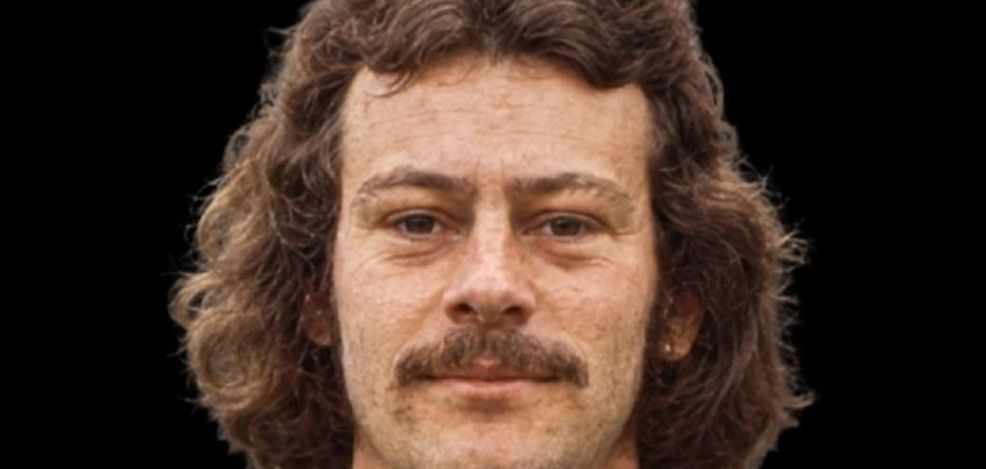
Brian Edward Pollard, born 22 May 1954, York, England.
PART ONE
Brian Pollard started with York City as an amateur before he signed professional forms in March 1972. He represented England at youth level five times between 1971 and 1972, an important achievement for a teenager attached to a Third Division club and ha clear indication that York had somebody worth developing. He was still learning when the 1972–73 campaign began, but he gradually pushed himself into the first-team picture, and a second-half goal in a 2-0 win against Southend United at Bootham Crescent on 2 December 1972 offered an early glimpse of the contribution he would make as York moved steadily towards one of the most important periods in their history.
York had spent much of the post-war period moving between the Third and Fourth Divisions, and although the club had won promotion in 1970–71, remaining in the Third Division had proved difficult, with the side finishing close to the bottom in each of the following two seasons, so the prospect of challenging for a place in Division Two appeared ambitious when 1973–74 began. Yet manager Tom Johnston had assembled a strong, settled group in which Graeme Crawford provided reliability in goal, Barry Swallow, Chris Topping and Phil Burrows brought experience to the defence, Ian Butler and Barry Lyons supplied quality further forward, and Jimmy Seal and Chris Jones offered the goals, while Pollard gave the side youthful pace and a willingness to carry the ball into areas where opposing defenders were least comfortable.
Oldham Athletic set the pace and Bristol Rovers also remained strong, but York stayed with the leading clubs, winning enough tight matches to keep control of third place and showing a resilience that had been developed during those previous battles near the bottom, and Pollard’s value lay not merely in isolated flashes but in his ability to stretch a defence, create room for the central attackers and turn a routine clearance into an immediate counter-attack. The promotion contest remained tense because Charlton Athletic pushed hard from behind, but York held their nerve, finished third behind Oldham and Bristol Rovers, and earned promotion to the Second Division for the first time in the club’s history, with Pollard having developed from a promising local teenager into a genuine first-team footballer.
Promotion brought excitement to Bootham Crescent in the summer of 1974, but it also brought a considerable rise in standard, with Aston Villa, Manchester United, Sunderland, Norwich City, West Bromwich Albion and Nottingham Forest among the clubs waiting in Division Two, and York’s first task was to establish that they belonged there rather than enjoy the occasion and disappear after one season. A 1–1 home draw to Aston Villa on 17 August provided a respectable beginning, although a 3–1 loss at Oxford United followed, before York earned their first victory by beating Cardiff City 1–0 at Bootham Crescent on 27 August, and after a 2–2 draw with Notts County they produced an excellent 2–0 win at Fulham on 7 September.
York moved between promising victories, hard-earned draws and sobering defeats, beating Portsmouth and Bristol Rovers 3–0 at home, winning 3–2 at Oldham Athletic and overcoming Millwall 2–1, but losses against Sunderland, West Bromwich Albion, Bolton Wanderers, Orient, Sheffield Wednesday, Nottingham Forest and Southampton prevented them from settling comfortably in the upper half, and the pressure increased during a difficult December in which they were beaten 4–0 at Aston Villa, lost 1–0 at home to Manchester United and went down 2–0 at Sunderland. Even so, a 3–0 victory over Hull City on 28 December steadied them, and although Johnston left on 11 January 1975, with Clive Baker taking temporary charge until Wilf McGuinness arrived on 15 February, York never lost their determination to remain in the division.
Pollard’s most important contribution of that demanding season arrived on 8 March 1975, when Bristol City visited Bootham Crescent and York needed points to maintain breathing space between themselves and the relegation positions, for the winger scored the only goal in a 1–0 victory which lifted the side from sixteenth to thirteenth and gave McGuinness an invaluable result during his first weeks in charge. York lost 1–0 at Portsmouth seven days later, but they answered by defeating Fulham 3–2 at home, and although Manchester United beat them 2–1 before a crowd of 46,802 at Old Trafford and Hull City won 2–0 at Boothferry Park, draws against Blackpool and Bolton Wanderers prevented the slide from becoming uncontrollable.
A 3–1 defeat by West Bromwich Albion at Bootham Crescent on 12 April caused further concern, yet the response was decisive, as York travelled to Bristol Rovers on 19 April and won 3–1 at Eastville through goals from Chris Topping, Barry Swallow and Jimmy Seal, before a goalless draw with Oldham Athletic completed the programme and secured fifteenth place with 38 points. Nottingham Forest also collected 38 points, Portsmouth finished one point behind them, and Oldham and Bristol Rovers survived below that trio, while Millwall, Cardiff City and Sheffield Wednesday were relegated.
The strain of competing in Division Two became much clearer during the 1975–76 campaign, when York could no longer reproduce the balance and consistency of their first season at that standard, and Pollard, now more established and carrying greater attacking responsibility, found himself playing in a team that spent far too much time responding to opponents rather than imposing itself upon them. McGuinness had inherited a group whose promotion had been founded upon stability, organisation and shared understanding, but players moved on, confidence weakened and defeats accumulated, while the winger’s speed remained a threat without being enough to correct problems throughout the side.
The Minstermen finished nest to bottom in the Second Division and returned to Division Three, only two years after reaching their highest point. However, York’s return to the Third Division did not produce an immediate recovery, for the side again became involved near the bottom, and although Pollard supplied pace and goals during an anxious campaign, the club spent much of the season trying to preserve its place rather than challenge to regain the status it had lost.
PART TWO
By the autumn of 1977, York City were competing in the Fourth Division after suffering a second successive relegation, and although dropping from the second tier to the fourth in two years was a severe reversal, Brian Pollard’s performances had ensured that clubs elsewhere continued to recognise his ability, particularly when he was given enough possession to run at a retreating defence. One of those clubs was Watford, newly managed by Graham Taylor and chaired by Elton John, and the connection became stronger after Pollard scored against the Vicarage Road outfit for York, offering Taylor a close look at the speed and direct play he wanted on the right side of his developing team.
Watford paid a club-record fee reported as £33,000 to sign him in November 1977, although contemporary Watford accounts have also placed the basic figure at £30,000, and the move ended Pollard’s first spell at Bootham Crescent after 162 league appearances and 34 goals. He was leaving his birthplace and the club that had taken him from amateur football into the Second Division, but he was also joining a side with purpose, money, growing support and a manager whose methods demanded hard running, physical preparation and complete commitment from every member of the squad.
Pollard entered a Fourth Division promotion campaign already moving at speed, and he had to adjust quickly rather than expect the entire team to be rebuilt around him, with Ross Jenkins leading the attack, Alan Mayes and Keith Mercer contributing goals, Bobby Downes operating with intelligence and Alan Garner providing strength and reliability. Pollard brought width on the right, attacked full-backs and delivered the ball into areas where Jenkins and the other forwards could work, and on Boxing Day Watford beat Northampton Town 3–0 at Vicarage Road as their challenge gathered force.
Watford did not merely win promotion in the 1977–78 season, for they won the Fourth Division championship with 71 points gained, recording thirty league victories, eighteen of them at home and twelve away, and finishing eleven points clear of second-placed Southend United, while the scale of the achievement showed why Taylor had wanted players who could perform a defined role without weakening the collective shape. Pollard was fast and direct, and although he could be inconsistent, his presence on the right gave Watford the width they required and prevented opponents from narrowing the pitch to crowd Jenkins and the central midfielders, while his experience of promotion with York meant that he understood how a campaign could tighten as the finishing line came into view.
Watford’s rise continued immediately in 1978–79, even though Division Three offered stronger opposition and demanded another adjustment, and Pollard remained part of the side as Taylor added further quality, with Steve Sims, Steve Harrison and Kenny Jackett among the men helping to strengthen a squad whose ambitions were growing almost by the month. On 30 September 1978 Watford beat Tranmere Rovers 4–0 at Vicarage Road, a result belonging to a powerful early-season run, and the team maintained its challenge sufficiently well to finish second behind Shrewsbury Town and earn a second successive promotion.
Pollard had therefore climbed from the Fourth Division to the Second in consecutive seasons, just as he had helped York rise from the Third Division five years earlier, and although others attracted more attention because they scored more goals or later remained with Watford as the club reached the First Division, his contribution during those formative Taylor seasons was practical and necessary. A Watford history describes him as the recruit who provided much-needed width on the right during both promotion campaigns, even while acknowledging that his displays could vary from match to match.
Division Two football returned Pollard to a level he already knew, but Watford had altered enormously since his arrival and competition for places was growing, so the 1979–80 season became a period of transition rather than another uninterrupted advance. In January 1980 Mansfield Town paid £45,000 for him. The transfer gave Watford a profit and offered Pollard a new start at Field Mill, although Mansfield were heading for the Fourth Division. He completed his Watford spell with 71 league appearances and eight goals, numbers that do not fully explain the tactical value of a winger asked to maintain width, chase full-backs and supply central scorers, but which place him firmly inside the group that carried the club through two divisions during Taylor’s first two years.
PART THREE
Brian Pollard started 1980–81 as an established member of Mick Jones’s squad, playing alongside men such as John McClelland, Kevin Bird, Arthur Mann, Noel Parkinson, Neville Hamilton and Terry Austin. Mansfield finished seventh in the Fourth Division in 1980–81, close enough to the promotion race to feel the frustration of missed opportunities but not close enough to claim a place in the top four, and Pollard’s contribution across the season amounted to twenty-five league starts, nine substitute appearances and one league goal, together with two further goals in cup football. His complete Mansfield league record eventually stood at 54 appearances and five goals, but by the summer of 1981 his time at Field Mill was ending, and in August he travelled to Blackpool on trial, attempting to earn a place with another Football League club at a moment when permanent contracts were becoming harder to secure.
Pollard made one league appearance for Blackpool, yet the trial did not lead to a longer agreement, and in September he returned to York City, the move taking him back to Bootham Crescent almost four years after his departure for Elton John´s Watford. York were again in the Fourth Division and were no longer the confident promotion side of the 1973–74 season, but Pollard was still only twenty-seven years of age, possessed broad experience and could offer goals as well as width, while the familiarity between player, club and crowd allowed him to settle quickly. Pollard´s second York spell lasted from 1981 until 1984 and produced 102 league appearances and 26 goals, a strong return for a winger, and those figures demonstrated that he retained his attacking instinct even after the explosive pace of his youth had been tempered by years of tackles, heavy pitches and constant competition. He had left York as a saleable asset during a decline, but he returned as a more seasoned footballer expected to help pull the Yorkshiremen upwards.
The 1981–82 and 1982–83 campaigns brought improvement in stages rather than one clean surge, and Pollard worked within squads containing men of the likes of Barry Lyons, Derek Hood, Chris Jones, Alan Hay, Keith Walwyn and John MacPhail, while the managerial position also changed before Denis Smith took charge in March 1982 and began constructing a younger, fitter and more forceful team. Pollard’s goals remained useful because York needed contributions from beyond the central strikers, and his knowledge of Bootham Crescent, the opposition grounds and the demands of Fourth Division football made him an experienced figure during Smith’s early rebuilding work, but the passing seasons were also producing younger alternatives and altering the pace of the side.
York finished seventh in 1982–83, an encouraging rise which suggested that a genuine promotion attempt was approaching, and during 1983–84 the team broke loose from the division, playing with confidence, scoring heavily and becoming the first Football League club to collect more than 100 points under the three-points-for-a-win system. By then Pollard’s first-team role had diminished and he did not play enough league matches to qualify for a championship medal, yet his second spell had helped carry York from uncertainty towards the edge of that outstanding season, and his overall league contribution across two periods at the club stood at 264 appearances and 60 goals.
Pollard left York for Scarborough in June 1984 and entered the Football Conference, where the surroundings were different but the game remained serious, physical and demanding, particularly for a player whose reputation ensured that opposing defenders knew what he could do. He scored four goals in ten appearances in all competitions during his first stay, nine of those appearances and three of the goals coming in the league, before moving to Chesterfield on non-contract terms in September, but that opportunity produced only one Football League appearance as a substitute and he soon returned to Scarborough.
His second spell there brought ten further appearances and three goals in all competitions, including eight league games and two league goals, and in January 1985 he joined Hartlepool United, again without the security of a full contract. Pollard made two league appearances for Hartlepool without scoring, and although his years as a regular Football League winger were now closing, he continued playing after moving to North Ferriby United for the 1985–86 season, before later turning out for Sherburn in the Scarborough and District League. By then football existed alongside ordinary working life, and Pollard also ran a pub in Sherburn, remaining within the sort of local community from which his playing days had begun.