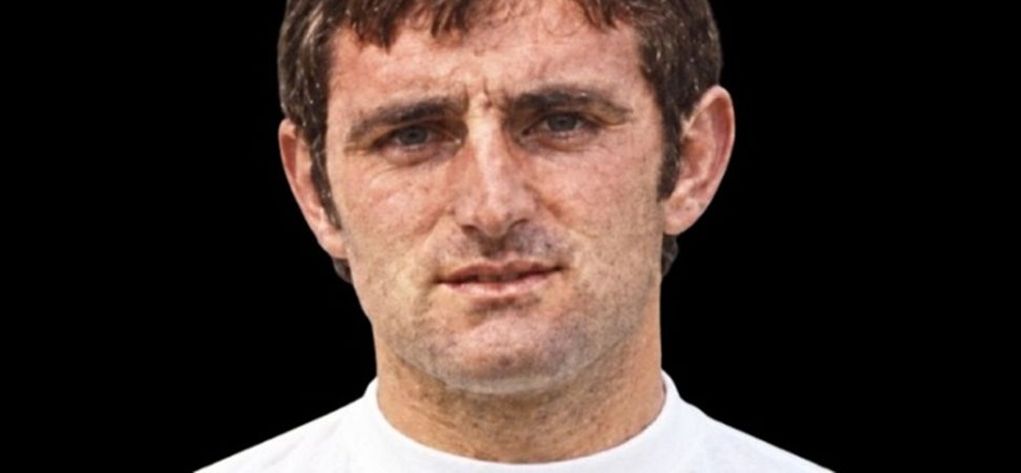
Raymond Henry Whittaker, born 15 January 1945, London, England.
PART ONE
A Londoner, Ray Whittaker grew up within easy reach of some of the capital’s strongest football territory, and Arsenal offered him the chance to develop among young players who knew that every training session was being measured against the standards demanded at the club, but his time there in the early 1960s passed without a first-team appearance. Luton Town provided the opening in 1964, however, when they took him to Kenilworth Road at a moment when the club required energy rather than patience, and the move carried him away from the scale and expectation of Highbury into a hard relegation fight in the Third Division, where points mattered immediately and nobody had much time to worry about whether a newcomer was still learning his trade.
Luton’s position made Whittaker’s arrival all the more striking, because this was a club that had risen into the First Division for the first time in 1955 under manager Dally Duncan, finished second behind Birmingham City in the Second Division and then enjoyed several seasons among the country’s leading sides, with the high point arriving in 1959 when the Hatters reached the FA Cup Final and lost 2–1 to Nottingham Forest at Wembley. The decline had been quick, though, and relegation from the First Division in 1960 was followed three years later by another drop from the Second, leaving Luton in the Third Division for 1963–64 and still sliding when Whittaker came through the door.
He entered a side trying to stop that fall, and although an eighteen-year-old winger could not be expected to mend every weakness, he supplied the sort of speed and direct running that could lift a nervous team and draw a crowd into the game. Luton eventually finished eighteenth with 42 points, ahead of Walsall, Barnsley, Millwall, Crewe Alexandra, Wrexham and Notts County, and although they were clear enough to survive, the final position gave little comfort to anyone who remembered recent First Division afternoons at Kenilworth Road. Whittaker, however, had broken into senior football at last, and rather than waiting on the edge of Arsenal’s first team he was now meeting experienced defenders, taking knocks, learning when to cross and when to shoot, and discovering that the lower divisions allowed little room for a winger who disappeared once the pitch became heavy and the tackling grew fierce.
The difficulties deepened in 1964–65, for Luton won only eleven of their 46 League matches, conceded 94 goals and finished bottom of the Third Division with 33 points, six behind twenty-third-placed Barnsley and a long way from safety, but amid that dismal campaign Whittaker continued to establish himself as a genuine first-team player. Relegation into the Fourth Division meant that the club which had faced Nottingham Forest in an FA Cup Final only six years earlier had fallen from the first tier to the fourth, and Kenilworth Road required more than comforting talk about former glories, because Luton now needed footballers prepared to scrap through a division filled with clubs fighting for their Football League places.
Whittaker’s slight build might have suggested that he would struggle in such company, yet he possessed enough bravery to keep asking for the ball and enough acceleration to escape challenges before they arrived, while his instinct for drifting into scoring positions made him more than a winger whose entire contribution could be measured in crosses. He was learning to survive in a struggling side, and that education was important, because the young man now had to contend with uneven pitches, cramped grounds, long journeys and matches in which a clever touch could be answered by a heavy tackle. There was no sudden transformation in Luton’s fortunes, but Whittaker was becoming stronger, sharper and more useful, and when the club entered its first Fourth Division season in 1965–66 he was ready to contribute to the attempt to climb back.
Luton improved considerably during 1965–66, winning 24 League matches, scoring 90 goals and collecting 56 points, but they finished sixth and missed promotion by four points, with Whittaker’s contribution including the opening goal in a home victory over Notts County on 20 November 1965. The result belonged to a campaign in which the Hatters rediscovered the habit of attacking sides rather than merely trying to survive against them, and although sixth place represented progress after the misery of relegation, it also carried frustration because the top four went up and Luton had been close enough to see what was possible. Whittaker’s ability to score from a wide position became increasingly valuable, since Fourth Division matches could turn on a loose ball, a sudden burst behind a full-back or a winger arriving unnoticed at the far post, and he was no longer simply the promising youngster from Arsenal but a regular League footballer whose opponents knew that he had to be watched.
The following season brought a setback for the club, which slipped to seventeenth despite collecting 41 points, yet Whittaker enjoyed his most productive League campaign at Kenilworth Road and finished as joint leading scorer with Bruce Rioch, both men supplying eleven goals. Rioch would later become a powerful midfielder at the highest level and represent Scotland in the World Cup, but in 1966–67 he was still another young Luton player finding his way, and the fact that Whittaker matched his total said much about the winger’s eye for goal. Among those efforts was the opening goal against Tranmere Rovers on 27 December 1966, when he scored with his head, a reminder that anticipation could sometimes compensate for a lack of height.
PART TWO
There was an odd contradiction about Luton Town by the spring of 1967, because they possessed young players capable of much better football than their League position suggested, but week after week they had remained trapped near the wrong end of the Fourth Division, and the task facing manager Allan Brown was to turn promise into a reliable side. The change during 1967–68 was dramatic. Luton won 27 of their 46 League fixtures, drew twelve, lost only seven and scored 87 goals while conceding 44, and their total of 66 points carried them to the Fourth Division championship, five points clear of Barnsley in second place, six ahead of third-placed Hartlepools United and eight ahead of fourth-placed Crewe Alexandra.
Ray Whittaker registered ten League goals, one fewer than he had managed in the previous campaign, but his importance could not be judged by that small reduction because he was operating in a much stronger attacking unit, stretching opponents from the flank, delivering chances and adding his own finishes while others shared the scoring. On Boxing Day 1967 he converted a penalty-kick for Luton’s second goal against Bradford Park Avenue, and as winter gave way to spring there was a growing certainty around Kenilworth Road that the years of decline were finally being reversed. Keith Allen provided experienced finishing, Ian Buxton added strength and goals, and Rioch continued to develop, while Whittaker supplied quick feet and width, giving the side a different route whenever the middle of the pitch became congested. The Bedfordshire team were not promoted through one forward alone, but Whittaker had lived through their fall into the Fourth Division and now played a central part in carrying them out of it.
The championship was the clearest reward of Whittaker’s years at Luton, and it came at a good age, for he was still only twenty-three when the medal was secured and might reasonably have expected the promotion to begin another long spell in the side, but football can alter its mind quickly and the following season did not unfold as he hoped. Luton returned to the Third Division with confidence and finished a respectable third in 1968–69, missing a second successive promotion by three points as Watford and Swindon Town, level on 64 points apiece, went up in their place, yet Whittaker’s own place became less secure after the arrival of Mike Harrison.
Harrison had played First Division football with Chelsea and Blackburn Rovers and brought both experience and quality to the wide positions, and although competition for places might have strengthened the team, it also left Whittaker facing long periods outside the starting eleven. He had already given Luton more than five years of senior service and had come through the worst part of the club’s decline, but sentiment could not provide him with regular football, and by the summer of 1969 the sensible answer was to move on. His full Luton record amounted to 170 Football League outings and 40 League goals, a substantial return for a winger who had joined during a relegation battle and left after helping the side win one division and challenge strongly in the next.
On 23 June 1969 Whittaker left Kenilworth Road on a free transfer and signed for Colchester United, dropping back into the Fourth Division but gaining the opportunity to play regularly, and his start at the Essex club suggested that the change had arrived at exactly the right time. Colchester opened the League season at Lincoln City on 9 August, drawing 3–3 at Sincil Bank in a match that immediately showed the division’s capacity for disorder and entertainment, and one week later Whittaker made his home League debut against Wrexham at Layer Road. Colchester won 2–0, Brian Gibbs scoring before Whittaker added the second, and the new winger had introduced himself to the home support with a goal at the first opportunity.
He continued to find the net during 1969–70 and finished with seven League goals, making him one of several Colchester players to reach the target as the side produced 64 goals and finished tenth with 50 points. Ken Jones led the way with sixteen, Gibbs scored fourteen, Roy Massey supplied seven League goals and Micky Brown contributed nine, so Colchester possessed several attacking options, but they lacked the consistency needed to force their way into the promotion places and ended six points behind fourth-placed Aldershot. Whittaker had nevertheless answered any suggestion that his best football had been left at Luton, for all seven of his Colchester goals came during that first season and his pace still troubled Fourth Division defenders.
The 1970–71 campaign brought a very different challenge, and although Whittaker continued to appear for Colchester, he did not add another goal to his total and gradually moved towards the edge of manager Dick Graham’s plans. Colchester’s League form was modest once again, but the season became famous for an FA Cup run in which Graham’s experienced side defeated Ringmer, Cambridge United and Barnet before producing one of the great shocks in the competition’s history by overcoming Don Revie’s Leeds United by 3–2 at Layer Road in the fifth round. Whittaker was not part of the side that defeated Leeds, however, and after having scored seven goals in 45 League appearances for the U´s he was released by the Essex club in May 1971.
That release ended Whittaker’s Football League playing days at an age when many footballers are approaching their peak, and it is tempting to wonder whether another club might have taken him, especially as he had accumulated 215 League appearances, notched up 47 League goals and remained young enough to offer several further seasons, but the game was crowded with wingers and there was little security for those released into the summer market.
Whittaker continued in non-League football and although the surroundings were quieter than a packed Kenilworth Road, the switch allowed him to keep playing without the demands that had governed his life since his teenage years. Once he stopped playing, Whittaker returned to the more ordinary business of earning a living, and the contrast could hardly have been greater, for he worked as a messenger in the City of London before later running a sweet shop in Upminster.