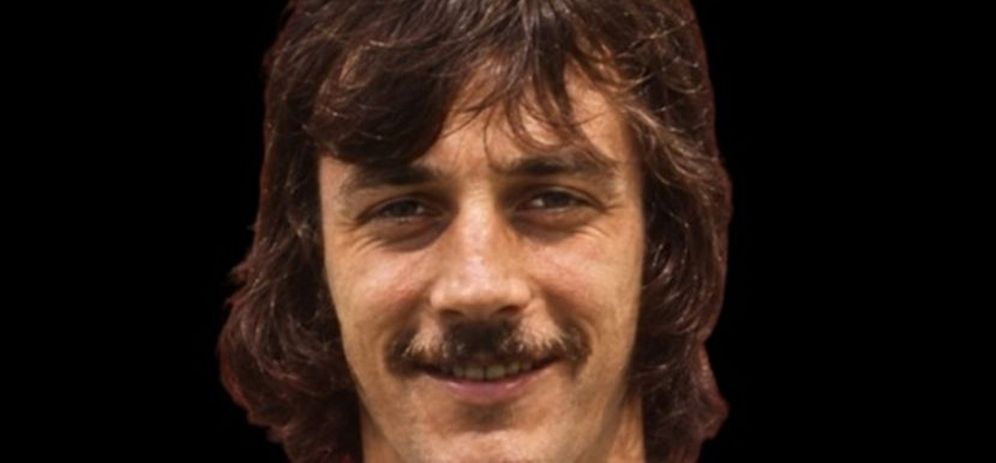
David Kenneth Syrett, born 20 January 1956, Salisbury, England.
PART ONE
Dave Syrett signed as an apprentice at Swindon Town in July 1972, by which time former Scotland interntioanl Dave Mackay had taken charge of team affairs, and it did not take long before the winger was making a name for himself in the club’s youth ranks. In the 1972–73 FA Youth Cup, Syrett scored four times as Swindon marched to the fifth round, and along the way they accounted for Cheltenham Town, then Bristol Rovers, then Aston Villa in a 4–0 replay victory that must have felt like a statement of intent, and then Bournemouth, before Ipswich Town, the eventual winners of the competition, brought the run to a 1–0 halt. It was an encouraging beginning, and it persuaded the Swindon staff that they had a forward worth nurturing.
Syrett eventually made his debut for Swindon when he took the field as a substitute in a 1-1 draw with Bobby Charlton´s Preston North End at Deepdale on 1 September 1973, and by October he had earned a starting berth against Nottingham Forest in a goalless draw at the County Ground. He went on to score his first goal for Swindon in a 4-2 defeat against recently relegated Crystal Palace at Selhurst Park on 1 December and he found the back of the net again in a 2-2 draw with Orient at the County Ground three weeks later.
Progress continued through the winter and he formed a promising strike partnership under manager Les Allen with Peter Eastoe, though results elsewhere in the team told a bleaker story, and Swindon finished bottom of the Second Division and went down. The following campaign, 1974–75 in the Third Division, proved trickier still for the young forward, and as Eastoe’s goals began to pile up Syrett found himself squeezed out of the side, losing his place to ex-Manchester United player Trevor Anderson that November.
A turning point of sorts arrived in September 1975, when Syrett was loaned out to First Division Wolverhampton Wanderers for a month. He made a good impression while he was there, but a clerical error on Swindon’s part in submitting the necessary paperwork meant the loan could not be extended, and so he missed the chance of a scheduled appearance against Tottenham Hotspur at Molineux. He never did play a first-team match for Wolves. Still, rather than let the setback weigh on him, Syrett returned to Swindon and simply started scoring: five goals in as many games at the turn of the year set the tone, and by the time the 1975–76 season was finished he had struck fifteen times, level with Anderson as the club’s joint top scorer.
He kept up that form into 1976–77, when he again reached fifteen goals in total and struck in every round of a memorable FA Cup run, six goals in seven ties, missing only three league matches all season as Swindon pushed for promotion in the Third Division. Across those four full seasons at the County Ground, from 1973 to 1977, Syrett made well over a hundred first-team appearances and scored close to thirty goals as a forward, a record that made him one of the more reliable finishers outside the top two divisions. But in the summer of 1977 the new manager Danny Williams chose to bring in a big, physical centre-forward in Chris Guthrie instead, and Syrett, sensing that his path forward at Swindon had narrowed, agreed to move on.
PART TWO
At the beginning of the 1977-78 campaign, Dave Syrett joined Mansfield Town for club a record transfer fee of £25,000. Mansfield had just been crowned champions of that division and were about to sample Second Division football for the only time in the club’s history. Twenty-one years old and eager to prove his worth at a higher level, Syrett formed an immediate understanding with the veteran Ernie Moss, and the pairing paid off within minutes of the new season starting: on the opening day, against George Eastham´s Stoke City side at Victoria Ground, he pounced on a misplaced back-pass to beat England international goalkeeper Peter Shilton and win the match by a 2–1 score. It was the kind of start that announces a forward has arrived, and Syrett went on to finish the campaign as Mansfield’s leading scorer with sixteen goals, a return good enough to see him voted Player of the Season by the club’s supporters, even though the team itself endured a difficult year and were relegated back to the Third Division having finished twenty-first with thirty-one points.
Of all the goals he scored in that Mansfield shirt, none is remembered more fondly than the hat-trick he claimed against Tottenham Hotspur on 25 March 1978, a match played in driving rain on a pitch so waterlogged that conditions bordered on farcical. Syrett’s third goal, struck after he intercepted a loose pass and pounced on a mishandled clearance from the Spurs goalkeeper Barry Daines, briefly put Mansfield back in front, only for England U21 international Glenn Hoddle to equalise late on with a free kick and leave the game finishing 3–3. Moments such as that one showed off everything that made Syrett dangerous: quick anticipation, a cool head in front of goal, and composure that belied his slender frame, qualities that shone through even as his side toiled through a fraught relegation battle that year.
If the 1977–78 campaign had brought personal triumph amid team disappointment, the following season offered rather less of either. Mansfield were adjusting to life back in the Third Division, Moss had departed, and with him went much of the service that had fed Syrett’s finishing the year before; his goals dried up and his appearances became less frequent as the campaign wore on. By March 1979 the writing was on the wall, and Syrett was sent to Walsall as part of a swap deal that brought Terry Austin the other way, bringing an eighteen-month stay at Field Mill to a close during which he had become something of a favourite among the Mansfield faithful for his part in their brief flirtation with the second tier. His time at Walsall turned out to be short and largely unremarkable: five months in the Third Division, limited chances, and no real opportunity to establish himself before August 1979 brought another move.
That next move reunited Syrett with Peter Morris, the man who had brought him to Mansfield two years earlier and who was now in charge at Peterborough United. The Fourth Division suited him well enough, and over the next three seasons at London Road he settled into a role as a reliable if unspectacular source of goals, finishing with twenty-four in seventy-five appearances even though the promotion push he and his teammates aimed for never quite materialised, and the play-offs, in the years before they existed in their modern form, remained out of reach regardless.
Syrett then made what would prove to be his final move within the Football League, joining forces with Northampton Town at the start of the 1982-83 campaign, for a fee that was not widely reported at the time. He spent the best part of two seasons with the Cobblers in the Fourth Division, offering a steady, experienced presence as the club aimed for nothing more dramatic than mid-table security, and for a while it looked as though he might see out the remainder of his playing days quietly and without incident. That was not to be. During the 1983–84 campaign a serious spinal injury struck him down, and the damage was severe enough that surgeons had to insert a metal plate, six inches long by some accounts, into his back; Syrett was only twenty-seven, and the injury forced him into premature retirement from the professional game.