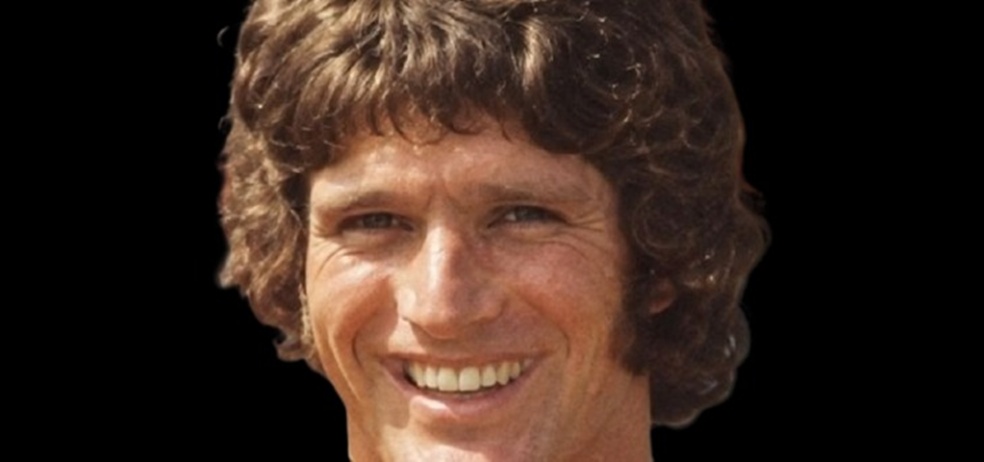
Philip Boersma, 24 September 1949, Kirkby, England.
PART ONE
Phil Boersma grew up only a short distance from Anfield and joined Liverpool as a youngster in 1965 before signing professional terms in 1968, by which stage he had already begun learning his trade in the reserves, where matches in the Central League gave young players a hard education against experienced professionals. He stood around five feet ten inches and was strongly built, and although he could operate in midfield, his pace, direct running and willingness to attack the penalty area made him most useful further forward. Nothing came easily, for Shankly still had Roger Hunt, Ian St John, Bobby Graham and Alun Evans among his attacking choices, and Boersma therefore had to wait until his 20th birthday, 24 September 1969, before being given his first-team debut in a League Cup third-round tie against Manchester City at Maine Road.
Liverpool were behind when Boersma replaced Alun Evans after 67 minutes that night, and although the young substitute could not rescue the tie as City won 3–2, merely stepping into Shankly’s first team represented a considerable move forward for a player who had spent the previous seasons trying to catch the manager’s eye below senior level. A few days later he made his League debut from the start in a 2–2 draw away to West Bromwich Albion, where Evans replaced him after 70 minutes, but regular football did not immediately follow and he finished 1969–70 with only four League appearances, together with two outings in cup competition.
In March 1970 he was sent to Wrexham on loan, making seven League appearances without scoring, and the spell gave him competitive football at a time when another run in Liverpool’s reserves would have done little to answer questions about whether he could cope with the senior game. He returned to Anfield in April and ended the season as a member of the reserve side that won the Central League championship, a useful reward but not the one he wanted most, because Boersma had now tasted first-team football and understood how difficult it would be to earn more of it. Shankly was beginning to break up the great side of the middle 1960s, and that offered younger men an opening, but it also brought new competition as the manager searched for the players who could form Liverpool’s next successful team.
Boersma’s first Liverpool goal came not on 4 April, as it has sometimes been recorded, but on 4 November 1970, and it arrived during a difficult European night against Dinamo Bucharest at the 23 August Stadium in Romania. Liverpool had won the first leg of the Inter-Cities Fairs Cup second-round tie 3–0 at Anfield, yet the return match presented a different examination and Shankly was forced into an early change when Evans suffered an injury after only 15 minutes. Boersma came from the bench, waited until two minutes into the second half and then scored the goal that earned Liverpool a 1–1 draw and completed a comfortable 4–1 aggregate victory.
It was an important response from a player who had spent the opening weeks of the season outside the side, and a few days later he started the goalless League draw against Derby County at the Baseball Ground. With Evans unavailable, Boersma was given his first sustained run and made 21 appearances in all competitions during 1970–71, including three from the bench, while scoring three goals, two of them in the Fairs Cup. Liverpool reached the final of that competition before losing to Leeds United over two legs and also reached the FA Cup final, where Arsenal beat them 2–1 after extra time, but Boersma was not part of either decisive occasion and remained a young forward attempting to turn occasional selection into a settled place.
That task became harder during the summer of 1971 when Kevin Keegan arrived from Scunthorpe United and immediately formed a productive understanding with John Toshack, because Keegan’s movement, appetite and sharp finishing fitted neatly alongside the Welshman’s strength in the air and ability to bring colleagues into play. Boersma made only three first-team appearances in 1971–72 and did not score, yet he stayed prepared and continued working rather than allowing a lost season to become a final verdict. His patience was rewarded in September 1972 when an injury to Toshack opened a space in the forward line, and Boersma seized it with the best run of senior football he had known.
PART TWO
On 9 September Phil Boersma scored in a 2–1 victory over Derby County at Anfield, and four days later he struck twice as Liverpool began their UEFA Cup campaign by beating Eintracht Frankfurt 2–0, which gave him an immediate part in a European run that would stretch across the season. He scored again during the 3–0 home victory over Dynamo Berlin in the next round and found the net against Dynamo Dresden in the quarter-finals, giving him four European goals, while his League contribution included seven goals from 14 appearances. He was not simply filling space while Toshack recovered; for those weeks he was giving Liverpool pace, muscle and goals, and his work helped the side remain in contention on two demanding fronts.
Toshack returned after two months and the familiar partnership with Keegan resumed, so Boersma again found himself moving between the starting line-up and the substitutes’ bench, but his earlier contribution could not be rubbed out and he remained involved as the pressure increased during the spring of 1973. The Merseysiders overcame Dynamo Dresden and Tottenham Hotspur to reach the UEFA Cup final against Borussia Mönchengladbach, and after the first leg at Anfield was abandoned because of heavy rain, Shankly made a telling alteration for the rearranged match by bringing Toshack into the team after seeing that the German defence looked vulnerable in the air.
Liverpool won 3–0 through two goals from Keegan and another from Larry Lloyd, while Boersma remained an unused substitute, but he was required in the second leg at the Bökelbergstadion on 23 May, replacing Steve Heighway after 77 minutes as the Reds protected their advantage. Mönchengladbach won 2–0 on the night through two first-half goals from Jupp Heynckes, yet Liverpool held on for a 3–2 aggregate success and lifted their first European trophy. The League championship had already been secured after a goalless draw with Leicester City at Anfield on 28 April, and Boersma’s seven League goals and four in Europe meant that his medals had been earned through genuine contributions rather than mere association with the squad. Across all competitions he made 31 appearances and scored 13 times, his finest complete season in Liverpool colours.
The difficulty was carrying that position into 1973–74, when Toshack, Keegan and Heighway still formed the preferred front line and Shankly demanded consistency from every player trying to displace them. Boersma appeared 22 times in all competitions and scored four goals, with 15 of those outings coming in the League, while his five FA Cup appearances brought one goal as Liverpool worked their way past Doncaster Rovers, Carlisle United, Ipswich Town, Bristol City and Leicester City to reach Wembley. He hoped that his contribution would at least bring him a place on the bench for the final against Newcastle United on 4 May 1974, but Shankly instead chose experienced full-back Chris Lawler as substitute, a decision that hit Boersma hard.
Angry and disappointed, Boersma left Anfield and reportedly declared that he would never play for Liverpool again, which was not the measured response expected from a squad player but was understandable from a forward who had played throughout the cup run and then found himself excluded from its biggest afternoon. Liverpool went on to win 3–0 through two goals from Keegan and one from Steve Heighway, and although the club’s official record credits Boersma among its 1974 FA Cup winners because of his part in the competition, he missed the celebration on the Wembley pitch. Time cooled the argument, Liverpool and Boersma repaired the damage, and Shankly’s retirement that summer brought Bob Paisley into the manager’s office before the beginning of the 1974–75 campaign.
Boersma responded with a remarkable rush of goals, starting at Wembley in the Charity Shield against Leeds United on 10 August 1974, when he scored Liverpool’s equaliser after Trevor Cherry had put Leeds ahead. The match finished 1–1, both Kevin Keegan and Billy Bremner were sent off after fighting, and Liverpool won the penalty shootout 6–5, giving Paisley a trophy in his first competitive match as manager. After missing the opening League fixtures, Boersma returned at Chelsea on 31 August and scored twice in a 3–0 Liverpool victory, and one week later, on 7 September, he produced a first-half hat-trick against Tottenham Hotspur at Anfield as the Reds won 5–2.
He then scored during a 2–0 League Cup victory over Brentford on 10 September, and seven days later added two more in the extraordinary 11–0 European Cup defeat of Norwegian side Strømsgodset, which remains Liverpool’s record competitive victory. His tenth goal in five weeks came during the 2–0 League triumph against Stoke City at Anfield on 21 September, and suddenly the man who had nearly walked out a few months earlier was the most productive forward at the club. Yet the scoring stopped just as sharply as it had begun, and that Stoke goal proved to be his last for Liverpool, even though he continued to appear during the rest of the season. In all, his Liverpool record reached 120 first-team appearances and 30 goals, including 82 League appearances and 17 League goals. Liverpool’s official profile confirms both totals and identifies that five-week burst as his most productive spell for the club.
PART THREE
By 1975–76 the route into Bob Paisley’s side was narrowing again, because Kevin Keegan and John Toshack remained ahead of him and David Fairclough was emerging as a quick, fearless young substitute capable of changing matches late on. Phil Boersma’s final Liverpool appearance came in a 1–0 defeat at Burnley on 25 October 1975, and in December he left for Middlesbrough in a £72,000 transfer, ending an association with his local club that had begun a decade earlier. His Liverpool years could look uneven when separated into appearances and absences, but the whole record said more: he had scored in the League, League Cup, European Cup, Fairs Cup, UEFA Cup and Charity Shield, and he had contributed directly to a League and UEFA Cup double while pushing past the frustration of repeated exclusion.
Middlesbrough offered something different, because Jack Charlton’s side required him mainly as a midfielder and could give him more regular First Division football. Boersma made his debut at Ayresome Park on 6 December 1975 in a 0–0 draw against Manchester United and played 20 matches in all competitions during the remainder of the season, scoring his first Middlesbrough goal in a 1–0 home victory over Queens Park Rangers on 10 April 1976. The move did not turn him into a prolific scorer, partly because of his deeper role, but it gave him the steady involvement that had so often been denied at Liverpool.
During 1976–77 Boersma made another 34 appearances in all competitions and scored three times, finding the net against Hull City on 7 August, Birmingham City on 16 October and West Ham United on 4 December, and he completed his Middlesbrough spell with 54 senior appearances and four goals, of which 47 appearances and three goals came in the League. More important to his later working life, he became friendly with Graeme Souness, the forceful Scottish midfielder who had joined Middlesbrough from Tottenham Hotspur in 1972 and was developing into one of the outstanding players in the country.
That friendship would matter years later, but in August 1977 Boersma was still concerned with playing and moved to Luton Town for a transfer fee somewhere in the region of £35,000, finally joining a club whose manager, Harry Haslam, had wanted him before Middlesbrough secured his signature. The Bedfordshire outfit were in the Second Division and Boersma’s quick feet and willingness to run at defenders gave them a useful attacking option, while the lower level also brought back the goals that had become scarce on Teesside. One of his best arrived against Brighton and Hove Albion at Kenilworth Road in December 1977, when a diving header won the match in front of the television cameras. He finished his principal Luton season with eight goals from 36 League appearances, while his complete record for the club stood at 40 appearances and 11 goals once his cup matches were included. Those figures, including three FA Cup appearances and one in the League Cup, are preserved by Hatters Heritage.
A managerial change altered the situation once more, because David Pleat replaced Haslam and allowed Boersma to leave after only one full season, and in 1978 he joined Swansea City, where his old Liverpool colleague John Toshack was building a side capable of rising rapidly through the divisions. Swansea had just won promotion from the Fourth Division and were gathering players with top-level knowledge, including Ian Callaghan and Tommy Smith, and Boersma seemed well suited to a group combining experienced men with younger Welsh talent. He made 18 League appearances and scored once, but his playing days were cut short when he broke an ankle against Swindon Town, and the injury proved too serious for him to regain the level required for regular professional football.
He did not leave the game, because his understanding of players, injuries and preparation opened another kind of role at the Vetch Field, first in coaching and then as assistant manager, and he remained at Swansea as Toshack’s team completed its startling rise. Having reached Division Three in 1979, the club climbed into Division Two in 1980 and then entered the First Division in 1981, where Swansea briefly led the table and eventually finished sixth in 1981–82. Boersma had arrived as a player at a lower-division club and remained as part of the staff while it rose to the highest level, but financial trouble and relegation followed, and he left in 1983.
From Swansea he moved to Lincoln City as assistant manager, and during most of 1986–87 he worked as first-team coach at Doncaster Rovers, where the demands of a small staff even led to him turning out for the reserves in the Central League. The friendship made at Middlesbrough then pulled his work in a new direction when Souness, appointed Rangers manager in 1986, brought Boersma to Ibrox as physiotherapist and coach. Rangers were spending heavily and attempting to end Celtic’s domestic control, and Boersma became part of a backroom group operating under intense pressure as Souness drove the team to the Scottish championship in 1986–87 and again in 1988–89 and 1989–90.
When Souness returned to Liverpool as manager in April 1991, Boersma followed him and joined a staff that already included men with deep Anfield roots, and he was on the bench when Liverpool beat Sunderland 2–0 in the 1992 FA Cup final. The circumstances were very different from 1974: then he had been the angry forward left out of the Wembley party, but 18 years later he was part of the staff helping another Liverpool side win the same trophy. Results under Souness did not meet the club’s expectations, though, and when the manager resigned in January 1994, Boersma’s second spell at Anfield also came to a close.
Souness continued to value him, and Boersma subsequently worked alongside him at Southampton, Blackburn Rovers and Newcastle United, applying the practical knowledge he had gathered as a player, coach and physiotherapist. He was at Southampton during Souness’s single season in charge in 1996–97, then moved to Blackburn after Souness took over at Ewood Park in March 2000, and their work there included promotion to the Premier League in 2001 and victory over Tottenham Hotspur in the 2002 League Cup final. Newcastle appointed Souness in September 2004 and Boersma again joined the staff, although his stay ended by mutual consent in May 2005 during a difficult period for the club.
In January 2008 he briefly returned to Welsh football as assistant manager of Llangefni Town, adding one last senior appointment to more than four decades spent inside the game. There had been 190 League appearances and 29 League goals across Liverpool, Wrexham, Middlesbrough, Luton and Swansea, but numbers alone could not explain the useful adaptability that kept him involved long after his ankle injury, because Boersma had been a forward, midfielder, reserve, substitute, title contributor, European scorer, coach, assistant and physiotherapist. He was rarely the first name discussed when Liverpool’s great side of the early 1970s was remembered, yet he was there when places were hard-won, and when his chance came in 1972–73 or during those five furious weeks in 1974, the Kirkby lad made sure nobody could say he had failed to take it.